Charles Stanley – The Key to the Good Things in Life


Ezra 8:22

Perhaps the title of today’s devotion sounds like that of a self-help book promising fame, wealth, and prestige if you’ll follow 10 easy steps. But when you consider how the culture defines the good things in life, you’ll realize that God’s definition doesn’t quite match the world’s—truly good things are achieved only by seeking Him. When we make God our top priority, we can expect His blessings of. . .

An intimate love relationship. Those who earnestly seek God learn to know Him deeply and experience an amazing sense of oneness with Him. Then He’s no longer a distant deity but He becomes a close friend. As your commitment grows, you’ll experience a love that transcends any human relationship.

Satisfaction.Only the Lord can fill the empty place in every heart. All earthly pursuits of pleasure or purpose fade in comparison to the satisfaction found in His presence.

Joy. When seeking the Lord is your priority, you’ll find a new joy that circumstances cannot steal, since it’s based in your relationship with Christ. Suffering and difficulties won’t devastate you, because you’ll trust Him and see the situation from His perspective.

God’s help. As today’s verse explains, the Lord’s hand of favor is upon those who seek Him. In fact, He delights in coming to their aid and providing for their needs.

Are these the kind of good things you’re experiencing, or have worldly values sidetracked you? Your thoughts reveal your true priorities. If you can go all day without thinking of the Lord, you’re not earnestly seeking Him. But when He’s the delight of your life, you won’t be able to forget Him.

Bible in One Year: John 14-16

Our Daily Bread — He Trains My Hands


Read: Exodus 4:10-17

Bible in a Year: Jeremiah 37-39; Hebrews 3

Praise be to the Lord my Rock, who trains my hands for war, my fingers for battle. —Psalm 144:1

When former NBA player David Wood was playing for Taugrés de Baskonia, I was with him at a Spanish Basketball Cup final. Before one game, he read Psalm 144:1: “Praise be to the Lord my Rock, who trains my hands for war, my fingers for battle.” He turned to me and said, “You see? It’s as if God has written this verse just for me! He trains my hands to catch rebounds and my fingers to shoot!” David felt called to play basketball and had learned that God takes us as we are and enables us to do what He calls us to do.

We can easily dismiss ourselves as having little use to God because we feel we have nothing to offer. When God appeared to Moses and assigned him the task of telling the Israelites that He would deliver them from the Egyptians (Ex. 3:16-17), Moses felt inadequate. He said to the Lord, “I have never been eloquent . . . . I am slow of speech and tongue” (4:10). Perhaps Moses had some kind of speech impediment, or he was just afraid, but God overcame his inadequacy with His sufficiency. God said, “Now go; I will help you speak and will teach you what to say” (v. 12).

All God wants from us is to follow His plans. He will sort out the rest. In His mighty hands, you can be a blessing to others. —Jaime Fernández Garrido

Here I am, Lord, ready to serve You in whatever way You desire. Lead me.

Dr. Jaime Fernández Garrido is director of the evangelical radio and television program Born Again

God’s call to a task includes His strength to complete it.

INSIGHT: When God called Moses to deliver the Jews from Egyptian bondage, Moses protested and offered various reasons why he was not the right candidate for the job (Ex. 3). He questioned his own identity (v. 11), his lack of authority (v. 13), and his credibility and acceptability (4:1). God responded by assuring Moses of His power and presence (4:1-9). Moses then continued his protest, saying he lacked eloquence and was “slow of speech and tongue” (v. 10). But God assured Moses He would enable him to speak powerfully and effectively (v. 12). Running out of excuses, Moses asked God to “send someone else” (v. 13). He was angry with Moses for his lack of trust and being unwilling to take up the assignment (v. 14). God told Moses that He would enable him to do what He called him to do. Sim Kay Tee

Ravi Zacharias Ministry –  Out of Obscurity


A trend continues to take place in the online world of anonymity. Several websites offer the opportunity to air one’s darkest confessions. Visitors put into words the very thing they have spent a lifetime wanting no one to know about themselves. While visiting, they can also read the long-hidden confessions of others, and recognize a part of humanity that is often as obscured as their own secrets—namely, I am not the only one with a mask, a conflicted heart, a hidden skeleton. “Every single person has at least one secret that would break your heart,” one site reads.  “If we could just remember this, I think there would be a lot more compassion and tolerance in the world.” Elsewhere, one of these sites made news recently when one of its anonymous users posted a cryptic message seemingly confessing to murder, catching the attention of Chicago Police.(1)

So often the world of souls seems to move as if instinctively to the very things asked of us by a sagacious God. The invitation to confess is present in the oldest stories of Scripture. After his defiance of God’s request, Adam is asked two questions that invite an admission of his predicament; first, “Where are you?” and later, “Who told you that you were naked?” God similarly inquires of Cain after the murder of Abel, “Where is your brother?” Through centuries of changing culture and the emerging story of faith, this invitation to confess is given consistently. “Therefore confess your offenses to one another and pray for one another so that you may be healed,” writes the author of James 5:16. A similar thought is proclaimed in 1 John 1:7. “If we walk in the light, as he is in the light, we have fellowship with one another, and the blood of Jesus, his Son, purifies us from all sin.” Perhaps the call to transparency is not from a God who delights in the impoverishment of his subjects, but a God who knows our deepest needs.

The hope of an online confessional brings us one step nearer to meeting the need of bringing what is hidden to light, and it is commendable that so many are giving in to the impulse to explore the ancient gift of confession. But perhaps such an impulse to haul the truth from obscurity is worthy of something even greater than anonymity. Light is not meant to be kept in shadows; the benefit of openness is not meant to be experienced alone. The stories and scriptures mentioned above speak of the element of community in confession, the promise of fellowship where there is courage to be honest about our selves and our needs. On websites of nameless visitors, though I tell you my darkest secret, we remain nameless to one another. While it may help significantly to know that I am not the only one with a mask, my mask remains. The anonymity factor offers the glimpse of light while maintaining the security of darkness. But isn’t this undermining the very light we seek? It is akin to lighting a lamp and putting it under a bowl.

Jesus reminded crowds full of secrets and sinners that there was no reason to do this. When a hemorrhaging woman in a swarm of people reached out to touch the fringe of his robe, she did so anonymously. Her condition would have classified her among the unclean, and it was therefore illegal to touch anyone. She probably calculated, “If I could just touch the hem of his robe, I could be healed.  The crowd will keep me hidden. He won’t be bothered; he won’t even need to know.” But this was not what happened.  Jesus knew he had been touched and immediately called the woman out of her anonymity. Before him, she was not lost in the crowd.

While we may successfully remain shrouded in disguise from the community around us, the Christian story invites the world to see that we stand unobscured before Christ and united with him nonetheless. Such a thought can indeed be terrifying: before him, we are not disguised. But more than this, it is inherently a gift. In his presence, none are kept in obscurity, hidden in mask or shroud; there are no shadows of anonymity that can hide, nor crowd large enough to keep us hidden. We are not disparaged for the flesh and blood and material of our humanity, but shown instead its true and greatest fulfillment.

The invitation to emerge from our darkest failings, lies, and secrets is not an invitation to dwell in our own impoverishment but rather a summons to light, reconciliation, and true humanity. The unique message of Jesus is that there is no reason to hide. Before we came up with plans to improve our images or learned to pretend with masks and swap for better identities, he saw who we were and was determined to approach regardless. Before we found a way to conceal our many failings or even weighed the possibilities of unlocking our darkest secrets, God came near and called us out of obscurity by name.

Jill Carattini is managing editor of A Slice of Infinity at Ravi Zacharias International Ministries in Atlanta, Georgia.

(1) Gabe Falcon, “It’s creepy and cryptic, but is PostSecret murder confession real?” CNN, September 2, 2013.

Alistair Begg – The Longing of the Thirsty


For I will pour water on the thirsty land. Isaiah 44:3

When a believer has fallen into a low, sad state of feeling, he often tries to lift himself out of it by chastening himself with dark and gloomy fears. That is not the way to rise from the dust, but to continue in it.

We may as well chain the eagle’s wing to make it fly as doubt in order to increase our grace. It is not the law but the Gospel that saves the seeking soul at first; and it is not a legal bondage but gospel liberty that can restore the fainting believer afterwards.

Slavish fear does not bring the backslider back to God, but the sweet wooings of love attract him to Jesus. This morning are you thirsting for the living God and unhappy because you cannot find him to the delight of your heart? Have you lost the joy of the Lord, and is your prayer, “Restore to me the joy of your salvation”?1

Are you conscious also that you are unproductive, like the dry ground, that you are not bringing forth the fruit that God has a right to expect of you, that you are not as useful in the church or in the world as your heart desires to be?

Then here is exactly the promise that you need: “For I will pour water on the thirsty land.” You will receive the grace you so desperately need, and you will have it in abundance.

Water refreshes the thirsty: You will be refreshed; your desires shall be satisfied. Water revives sleeping vegetable life: Your life will be restored by fresh grace.

Water makes the bud develop and makes the fruit ripen; and so by God’s grace you will be made fruitful in His ways. Whatever good quality there is in divine grace, you will enjoy it to the full. All the riches of divine grace you will receive in plenty; you shall be as it were drenched with it: And as sometimes the meadows become flooded by the bursting rivers, and the fields are turned into pools, so shall you be-the thirsty land shall be springs of water.

1) Psalm 51:12

The Family Bible Reading Plan

  • 2 Kings 19
  • Hebrews 1

Devotional material is taken from “Morning and Evening,” written by C.H. Spurgeon, revised and updated by Alistair Begg.

Charles Spurgeon – Let us pray


“But it is good for me to draw near to God.” Psalm 73:28

Suggested Further Reading: James 4:1-8

Draw near to God with living, loving prayer; present the promise, and you shall obtain the fulfilment. Many things I might say of prayer; our old divines are full of high praise concerning it. The early fathers speak of it as if they were writing sonnets. Chrysostom preached of it as if he saw it incarnate in some heavenly form. And the choicest metaphors were gathered together to describe in rapturous phrase the power, nay, the omnipotence of prayer. Would to God we loved prayer as our fathers did of old. It is said of James the Less, that he was so much in prayer that his knees had become hard like those of a camel. It was doubtless but a legend, but legends are often based on truths. And certain it is that Hugh Latimer, that blessed saint and martyr of our God, was accustomed to pray so earnestly in his old age, when he was in his cell, that he would often pray until he had no strength left to rise, and the prison attendants had need to lift him from his knees. Where are the men like these? Oh angel of the covenant, where can you find them? When the Son of Man comes shall he find prayer on the earth? Ours are not worthy of the name of supplication. Oh that we had learned that sacred art, that would draw near to God, and plead his promise. Cowper has put several things together in one hymn.

Prayer clears the sky; “Prayer makes the darkened cloud withdraw.”

Prayer is a heaven-climber; “Prayer climbs the ladder Jacob saw.”

Prayer makes even Satan quake; “For Satan trembles when he sees,

The weakest saint upon his knees.”

For meditation: Do you regard your prayer-life as a dead, boring routine? May God teach us to draw near to him and enjoy the relationship in a living and meaningful way (Luke 11:1-4).

Sermon no. 288

6 November (1859)

John MacArthur – Leaving a Righteous Legacy


“By faith Abel offered to God a better sacrifice than Cain, through which he obtained the testimony that he was righteous, God testifying about his gifts, and through faith, though he is dead, he still speaks” (Heb 11:4).

The character of your life will determine the legacy you leave to others.

Bible scholar James Moffatt wrote, “Death is never the last word in the life of a . . . man. When a man leaves this world, be he righteous or unrighteous, he leaves something in the world. He may leave something that will grow and spread like a cancer or a poison, or he may leave something like the fragrance of perfume or a blossom of beauty that permeates the atmosphere with blessing.”

That’s illustrated in the lives of Adam and Eve’s first sons: Cain and Abel. Cain was an unrighteous man who sought to please God by his own efforts. God rejected him (Gen. 4:5). Abel was a righteous man who worshiped God in true faith. God accepted Him (v. 4).

In a jealous rage, Cain murdered Abel, becoming the first human being to take the life of another. He forever stands as a testimony to the utter tragedy of attempting to please God apart from true faith. For “without faith,” Hebrews 11:6 says, “it is impossible to please Him.” Cain tried and failed—as have millions who have followed in his footsteps.

Abel, on the other hand, was the first man of faith. Prior to the Fall, Adam and Eve had no need of faith in the same way as their descendants. They lived in the paradise of Eden and had direct contact with God. Their children were the first to have need of faith in its fullest sense.

Cain’s legacy is rebellion, heartache, and judgment. Abel’s is righteousness, justice, and saving faith. His life proclaims the central message of redemption: righteousness is by faith alone.

What legacy will you leave to those who follow? I pray they will see in you a pattern of righteousness and faithfulness that inspires them to follow suit.

Suggestions for Prayer

  • Praise God for righteous Abel and all who have followed his example.
  • Ask Him to guard you from ever rebelling against His Word.

For Further Study

Read Genesis 4:1-16 and 1 John 3:11-12.

  • What was God’s counsel to Cain after rejecting his offering?
  • Why did Cain kill Abel?
  • How did God punish Cain?

Joyce Meyer – God Will Never Give Up on You


…Yes, I have loved you with an everlasting love; therefore with loving-kindness have I drawn you and continued My faithfulness to you.—Jeremiah 31:3

What your life amounts to is directly connected to what you think of yourself. We need to learn to think like God thinks. We must learn to identify with Christ and the new person He has made us to be.

In Scripture, God uses words such as “beautiful,” “honored,” “valued,” and “precious” when He is speaking of His children. There is no doubt that we are far less than perfect, that we have faults and weaknesses, but God is God and He views us the way He knows we can be.


He sees us as a finished project while we are making the journey. He sees the end from the beginning and is not worried about what takes place in between. He is not pleased with our sin and bad behavior, but He will never give up on us and He always encourages us to press on. God believes in you!

Prayer of Thanks: I am grateful, Father, that You are a good Father who loves me unconditionally. Help me to see myself as You see me. Thank You that even though I am a work in progress, You already have the finished result in mind.

From the book The Power of Being Thankful by Joyce Meyer.

Campus Crusade for Christ; Bill Bright – How to Obey God’s Laws


“So now we can obey God’s laws if we follow after the Holy Spirit and no longer obey the old evil nature within us” (Romans 8:4).

Are you not glad that the Word of God make things so simple? If we really want to obey God’s laws, His resources are available to us. First and foremost, the Holy Spirit abides within to guide us. While it is true that we have all of the Holy Spirit at the time of conversion, we cannot expect the full blessing and power of God until the Holy Spirit has full control of all of us.

As we appropriate the fullness of His Holy Spirit by faith, we are supplied with supernatural power to obey God’s laws. That supernatural power, even, is contingent upon our cooperation in that we must not only commit ourselves to the Holy Spirit but we must also be familiar with the Word of God if we are indeed to obey its commands.

Obedience is a key word in the Christian life. This verse points it out quite clearly, for we either obey God’s laws or we obey the old evil nature. The choice is ours as we are controlled and empowered by the Holy Spirit.

Someone has well pointed out that all of life, really, is nothing more nor less than a series of choices. The secret of the successful Christian life is in making the right choices. And even the wisdom to make the right choices is available – as a gift from God.

That leaves us, you and me, without excuse. We can, if we choose, through the enabling of the Holy Spirit, obey God’s laws and thus accomplish His purpose for us as believers.

Bible Reading: Galatians 5:16-26

TODAY’S ACTION POINT: Drawing upon the supernatural resources of the Holy Spirit I choose to obey God’s laws rather than yield to the pull of my old evil nature

Presidential Prayer Team; C.H. – Light Therapy


Ancient Egypt, ancient Greece and ancient Rome were among those who practiced heliotherapy or the use of light as therapy to heal. That practice is still around today in a variety of forms – one being the bili light to treat jaundice in premature babies. In the presence of a special blue light, the infants are able to rid their bodies of too much bilirubin.

As many as touched it were made well.

Matthew 14:36

The presence of God, through Jesus, healed people, too. Christ said, “I am the light of the world.” (John 8:12) His light heals all sickness and pain. In today’s passage, the people of Gennesaret asked to touch the hem of Christ’s clothes. God’s presence was so mighty that even the garments on Jesus’ body were full of His power.

Every time you pray, you enter God’s throne room and are ushered into His presence…and in His presence, there is power. Remember when Moses returned from being with God on Mt. Sinai? His face glowed! Pray for God’s people to spend so much time with Him that their faces reflect His light and start a healing process for this nation and its leaders.

Recommended Reading: John 8:12-19

Greg Laurie – The Perspective of Eternity


So teach us to number our days, that we may gain a heart of wisdom.—Psalm 90:12

Have you ever wasted your time? Let me restate the question: Do you have a television or a smartphone?

There are so many television channels now. Yet I’ve sat with a remote control in hand and hardly found a single thing worth watching. I’ve also found myself wasting a lot of time. And now we have smartphones, which people can’t seem to stop looking at. They look at them while they’re driving. They look at them while they’re standing in line. They look at them while they’re walking down a crowded street. Everyone is sidetracked with this current technology, and I wonder how much time we waste.

It isn’t good to waste time, but it’s much worse to waste a life. In Matthew 26 we find the story of a woman who was accused of great waste. Interestingly, this accusation was made by a man whose life actually was a complete waste.

I’m convinced that when we get to Heaven, we’ll see things much differently. I think some things that we will have thought of as good during our lives on this earth may not be perceived as good in the same way. We think that good obviously means excellent health and having a lot of money. We think good means having a very successful career or ministry. I am not saying these things are bad. But maybe they won’t be as good as we once thought they were.

On the other hand, we may think of any kind of a setback, sickness, or failure in life as a horrible thing. But I think that when we get to Heaven, we will realize that some of those setbacks and failures actually produced more spiritual fruit in our lives than the so-called good things. Things are not always as they appear.

Max Lucado – How Bold Are Your Prayers?


As John Wesley was crossing the Atlantic Ocean, heavy winds came up. He was reading in his cabin when he became aware the winds were knocking the ship off course, and he responded in prayer. Adam Clarke, a colleague, wrote it down.

“Almighty and everlasting God. . .Thou holdest the winds in thy fists and sittest upon the water . . .command these winds and these waves that they obey thee, and take us speedily and safely to the haven whither we would go.”

Wesley stood up from his knees, took up his book, and continued to read. Dr. Clarke went on deck where he found calm winds and the ship on course. Wesley made no remark about the answered prayer. Clarke wrote, “So fully did he expect to be heard that he took it for granted that he was heard.”

How bold are your prayers?

From Glory Days

Night Light for Couples – Ragamuffin Brother

Night Light for Couples – Ragamuffin Brother

by Ron Mehl

Roy Angel was a dirt‐poor preacher with a millionaire brother. Back in the oil boom days of the late 1940s, Roy’s older brother happened to own the right piece of Texas prairie at the right time. When he sold, he became a multimillionaire overnight. Parlaying that good fortune, the elder Angel made some strategic investments in the stock market and then cashed in on several mushrooming business enterprises. He moved into the penthouse of a large apartment building in New York City and managed his investments from a posh Wall Street office.

A week before Christmas one year, the wealthy businessman visited his preacher‐brother in Chicago and presented him with a new car—a gleaming, top‐of‐the‐line Packard. Roy always kept his new car down the street in a parking garage, under the careful eye of an attendant. That’s why when he came to get his Packard one morning, he was surprised to see a ragamuffin ghetto boy with his face pressed up against one of the car windows. The little boy wasn’t doing anything suspicious; he was obviously just peering into the new car’s interior with wide, admiring eyes.

“Hello, son,” Roy said. The boy spun around and looked at him. “Is this your car, mister?” “Yes,” Roy replied, “it is.” “How much did it cost?” “Well, I really don’t know.” The boy’s face registered surprise. “You mean, you own this car, and you don’t know how much it cost?” “No, I don’t—because my brother gave it to me. As a present.” At this the boy’s eyes grew even wider. He thought for a moment, and then said wistfully, “I wish… I wish….” Roy thought he knew how the boy would finish the sentence. He

thought he was going to say, “I wish I had a brother like that.”

But he didn’t. The boy looked up at Roy and said, “I wish… I wish I could be a brother like that.”

That intrigued the minister, and because those were more innocent times, he said, “Well, son, would you like to take a ride?”

The boy immediately replied, “You bet!”

So they got in the car together, exited the parking garage, and drove slowly down the street. The little boy ran his hand across the soft fabric of the front seat, inhaled the new‐car smell, touched the shiny metal of the dashboard. Then he looked at his new friend and said, “Mister, would you—could you—take me by my house? It’s just a few blocks from here.”

Again, Roy assumed he knew what the lad had in mind. He thought the boy wanted to show off the car he was riding in to some of the neighborhood kids. He thought, Well, why not? So at his young passenger’s direction, Roy pulled up in front of an old, run‐down tenement building.

“Mister,” the boy said as they stopped at the curb, “would you stay here just a minute? I’ll be right back!”

Roy let the car idle as the boy rushed upstairs and disappeared.

After about ten minutes, the preacher began to wonder where the boy had taken himself. He got out of the car and looked up the unlighted stairwell. As he was looking up the dark stairs, he heard someone slowly coming down. The first thing he saw emerging from the gloom was two limp little legs. A moment later, Roy realized it was the little boy carrying an even smaller boy, evidently his younger brother.

The boy gently sat his brother down on the curb. “See?” he said with satisfaction. “It’s just like I told you. It’s a brand new car. His brother gave it to him, and someday I’m going to buy you a car just like that!”

Looking ahead…

In this story of two benevolent brothers, the millionaire certainly gave a nice present—but it’s the little boy who is the better example of a generous spirit. How many children dream of giving a new car to their brother or sister? Somehow I get the feeling that this little fellow wouldn’t squander a fortune if it came his way later in life.

During the coming week, we’ll be talking about the incredible power of generosity for good—both inside our marriage and in our relationships with others. Tonight I leave you with a question: Do you have a generous spirit?

– James C Dobson

From Night Light For Couples, by Dr. James & Shirley Dobson

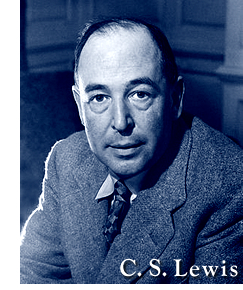
C.S. Lewis Daily – Today’s Reading


TO RHONA BODLE: On not forcing books on others; and on the providence of reading.

14 September 1953

I have had ‘Miss Bodle’s colleague’ in my daily prayers for a long time now: is that the same young man you mention in your letter of July 3rd, or do I now say ‘colleagues’? Yes: don’t bother him with my books if an aunt (it somehow would be an aunt—though I must add that most of my aunts were delightful) has been ramming them down his throat.

You know, The Pilgrim’s Progress is not, I find (to my surprise) everyone’s book. I know several people who are both Christians and lovers of literature who can’t bear it. I doubt if they were made to read it as children. Indeed, I rather wonder whether that ‘being made to read it’ has spoiled so many books as is supposed. I suspect that all the people who tell me they were ‘put off’ Scott by having Ivanhoe as a holiday task are people who would never have liked Scott anyway.

I don’t believe anything will keep the right reader and the right book apart. But our literary loves are as diverse as our human! You couldn’t make me like Henry James or dislike Jane Austen whatever you did. By the bye did Chesterton’s Everlasting Man (I’m sure I advised you to read it) succeed or fail with you?

From The Collected Letters of C.S. Lewis, Volume III

Compiled in Yours, Jack