Charles Stanley – The Faith to Press On


James 1:2-12

When the difficult times come into your life, what is your response? While it may seem tempting to look for a shortcut out of the discomfort, that’s not the kind of attitude God desires from us. Instead, He wants His children to remain submitted to Him, though that may not end the affliction. But it is the Lord’s will that we hold our heads high and press on through the pain.

This comes as a shock to many new believers. After placing their faith in Jesus, they are often surprised when some unexpected hardship appears. However, it’s a misconception to expect an easy life once we trust God’s Son as Lord. In fact, the Bible assures us of quite the opposite. Jesus Himself declared that if we are found in Him, the world will give us great trouble and heartache (John 16:33).

In James 1:2, we are instructed to consider our struggles as a source of “pure joy” (NIV). This makes sense only when we see our difficulties through God’s eyes, as opportunities for growth. An untested faith is weak and ineffective. Just like our muscles, our faith must be exercised against some resistance. When we face trials with wisdom and endure them with godly perseverance, we will find blessings we never thought possible.

At the end of the struggle, we will see God standing with our reward: the crown of life (v. 12). To use an example from the world of sports, the “crown of life” is essentially God’s gold medal for a job well done. Do you want the Lord’s recognition of your spiritual victory? Then press on through the hardship and discover what lies just beyond the trial.

Bible in One Year: Acts 1-2

Our Daily Bread — Charity Island


Read: Psalm 107:23-32

Bible in a Year: Jeremiah 46-4; Hebrews 6

The Lord is good, a refuge in times of trouble. He cares for those who trust in him. —Nahum 1:7

Charity Island is the largest island in Saginaw Bay in the Michigan waters of Lake Huron. For many years the island has provided a lighthouse for navigational aid and a safe harbor for those sailing these waters. The island received its name because sailors believed it was there “through the charity of God.”

Sometimes in life we have to navigate through seas of troubling circumstances. Like those sailors we need guidance and a place of safety; we might wish for our own Charity Island. The psalmist understood that God is the one who can bring tranquility to troubled waters and guide us to safe harbors. He wrote, “He stilled the storm to a whisper; the waves of the sea were hushed. They were glad when it grew calm, and he guided them to their desired haven” (Ps. 107:29-30).

While no one asks for the storms of life, they can multiply our appreciation for the guidance and refuge God provides. He offers the light of His Spirit and His Word to guide us. It is the safe harbor of His love that we long for. He alone can be our ultimate “Charity Island.” —Dennis Fisher

Father, help me to seek Your light to guide me through the storms of life.

Share your story of how the Lord has been your light in the comments section below.

The living God will always be our shelter.

INSIGHT: Today’s psalm reminds us that God can indeed guide us to safe havens in the midst of life’s storms and trials. However, this psalm also reminds us that the same God who calms the storm and points the way to our “desired haven” (v. 30) is the God who sometimes stirs up the oceans in our lives. It is God who “stirred up a tempest” (v. 25) that caused the sailors to melt with fear and reel and stagger (vv. 26,27). Then “they cried out to the Lord . . . and he brought them out of their distress” (v. 28). The God who stirs the seas wants us to turn to Him for help. J.R. Hudberg

Ravi Zacharias Ministry – Out of Place


I have not spent much of my life as a foreigner, though my relatively short bouts with being a cultural outsider remind me of the difficulty of always feeling on the outside of the circle. Just as the distance between outside and inside seems to be closing, something happens or something is said and you are reminded again that you do not really belong. On a visit with Wellspring International to Northern Uganda some years ago, the thought never left us. Everywhere the director and I went, children seemed to sing of “munos,” a term essentially (and affectionately) meaning “whiteys.” It made us smile every time we heard it. But even when communicated playfully, it can be both humbling and humiliating to always carry with you the sober thought: I am out of place. I am an outsider.

The book of Ruth scarcely neglects an opportunity to point out this reality. Long after hearers of the story are well acquainted with who Ruth is and where she is from, long after she is living in Judah, she continues to be referred to as “Ruth the Moabite” or even merely “the Moabite woman.” Her perpetual status as an outsider brings to mind the vision of Keats and the “song that found a path/ through the sad heart of Ruth, when, sick for home/ She stood in tears amid the alien corn.”

And yet, while Ruth was undoubtedly as aware of being the foreigner as much as those around her were aware of it, she did nothing to suggest a longing to return to Moab. Her words and actions in Judah are as steadfast as her initial vow to Naomi: “Where you go I will go, and where you stay I will stay. Your people will be my people and your God my God. Where you die I will die, and there I will be buried” (Ruth 1:16-17a). This is Ruth’s pledge to her mother-in-law, repeatedly.

In these early pages of the story, little is known about Naomi’s God or her people. The brief mention of each comes as a distant report: “Then she arose with her daughters-in-law to return from the country of Moab, for she had heard in the fields of Moab that the LORD had visited his people and given them food” (1:6). Moreover, Naomi’s first mention of the God of her people holds a similar sense of detachment. Though she recognizes God’s sovereignty over her situation, it is blurred with bitterness: “The Almighty has dealt very bitterly with me. For I went away full, and the LORD has brought me back empty” (1:20-21). Her description was hardly a compelling glimpse for the outsider looking in.

And yet, Ruth clearly embraces all of Naomi: the people who would only see her as the foreigner and the God who was not her own. In fact, ironically, it is Ruth the Moabite whose voice is the first in the story to call on the divine name. After her resolute declaration of loyalty to her mother-in-law, Ruth adds the plea, “May the LORD deal with me, be it ever so severely, if anything but death separates you and me” (1:17b). It is the foreigner who has taken Yahweh to be her God and calls on this God accordingly. In fact, it is this foreigner whose adoption into God’s presence can be traced in blood all the way to the throne of King David and to the reign of Christ. Ruth the Moabite is forever remembered an outsider. But at the same time, she is remembered a woman with a crucial link to the Son of God.

In moments when I am feeling most isolated, displaced with pain or fear, or even playfully reminded that I am out of place, I am also most conscious of my belonging somewhere else. The psalmist cries with the identity of one who knows he belongs in another country, “Hear my prayer, O LORD, listen to my cry for help; be not deaf to my weeping. For I dwell with you as an alien, a stranger, as all my fathers were” (39:12). The stories of Scripture give voice to both a nagging sense of homelessness and a compelling call of welcome, reminding in comfort and in pain that we are both strangers and welcomed guests in countries not our own. We are men and women moving toward a greater kingdom. And the life of a foreigner named Ruth illustrates how great is the longing of God to see each of us enter in and fully belong.

Jill Carattini is managing editor of A Slice of Infinity at Ravi Zacharias International Ministries in Atlanta, Georgia.

Alistair Begg – The Practice of Walking


So walk in him. Colossians 2:6

If we have received Christ Himself in our inmost hearts, our new life will display its intimate acquaintance with Him by a walk of faith in Him. Walking implies action. Our Christian life is not to be confined to our closet; our belief must be revealed in our practice. If a man walks in Christ, then he must act as Christ would act; since Christ is in him-his hope, his love, his joy, his life-he is the reflection of the image of Jesus; and men will say of that man, “He is like his Master; he lives like Jesus Christ.”

Walking signifies progress. “So walk in him.” Proceed from grace to grace; run forward until you reach the ultimate degree of knowledge that a man can attain concerning Christ. Walking implies continuance. There must be a continual abiding in Christ

Many Christians think that in the morning and evening they ought to come into the company of Jesus, but regard the rest of the day as their own: But this is poor living; we should always be with Him, treading in His steps and doing His will.

Walking also implies habit. When we speak of a man’s walk and conversation, we mean his habits, the constant theme of his life.

Now, if we sometimes enjoy Christ and then forget Him, sometimes call Him ours and then lose our hold, that is not a habit; we do not walk in Him. We must keep to Him, cling to Him, never let Him go, but live and have our being in Him.

“Therefore, as you received Christ Jesus the Lord, so walk in him”; persevere in the same way in which you began, and, just as at the beginning Christ Jesus was the trust of your faith, the source of your life, the principle of your action, and the joy of your spirit, so let Him be the same until life’s end, the same when you walk through the valley of the shadow of death and enter into the joy and the rest that remain for the people of God. O Holy Spirit, enable us to obey this heavenly precept.

The Family Bible Reading Plan

  • 2 Kings 22
  • Hebrews 4

Devotional material is taken from “Morning and Evening,” written by C.H. Spurgeon, revised and updated by Alistair Begg.

Charles Spurgeon – One antidote for many ills


“Turn us again, O Lord God of hosts, cause thy face to shine; and we shall be saved.” Psalm 80:19

Suggested Further Reading: Revelation 3:1-6

We want a revival, if we would promote the glory of God. The proper object of a Christian’s life is God’s glory. The church was made on purpose to glorify God; but it is only a revived church that brings glory to his name. Do all the churches honour God? I tell you no; there are some that dishonour him—not because of their erroneous doctrines, nor perhaps because of any defect in their formalities, but because of the want of life in their religion. There is a meeting for prayer; six people assemble beside the minister. Does that proclaim your homage to God? Does that do honour to Christianity? Go to the homes of these people; see what is their conversation when they are alone; mark how they walk before God. Go to their sanctuaries and hear their hymns; there is the beauty of music, but where is the life of the people? Listen to the sermon; it is elaborate, polished, complete, a masterpiece of oratory. But ask yourselves, “Could a soul be saved under it, except by a miracle? Was there anything in it adapted to stir men up to goodness? It pleased their ears; it instructed them in some degree, perhaps, but what was there in it to teach their hearts?” God knows there are many such preachers. Notwithstanding their learning and their wealth, they do not preach the gospel in its simplicity, and they do not draw near to God our Father. If we would honour God by the church, we must have a warm church, a burning church, loving the truths it holds, and carrying them out in the life. Oh that God would give us life from on high, lest we should be like that church of old of whom it was said, “Thou hast a name to live, and art dead.”

For meditation: Is the revival of God’s church and the glory of his name in this land a great concern to you (Psalm 85:6-9)?

Sermon no. 284

9 November (1856)

John MacArthur – Walking by Faith


“By faith Enoch was taken up so that he should not see death; and he was not found because God took him up; for he obtained the witness that before his being taken up he was pleasing to God” (Heb 11:5).

When you walk by faith, you enjoy intimacy with God.

Our second hero of faith is Enoch. Genesis 5:21-24 records that “Enoch lived sixty-five years, and became the father of Methuselah. Then Enoch walked with God three hundred years after he became the father of Methuselah, and he had other sons and daughters. So all the days of Enoch were three hundred and sixty-five years. And Enoch walked with God; and he was not, for God took him.”

What a wonderful epitaph: “Enoch walked with God.” His life exemplifies the walk of faith. Adam and Eve had walked with God in the Garden of Eden, but their sin separated them from such intimacy. Enoch experienced the fellowship with God they had forfeited.

Enoch’s faithful walk pleased God greatly. And after more than three hundred years on earth, Enoch was translated to heaven without ever experiencing death. It’s as if God simply said, “Enoch, I enjoy your company so much, I want you to join me up here right now.”

Like Enoch, there is coming a generation of Christians who will never see death. Someday—perhaps soon—Jesus will return for His church, “then we who are alive and remain shall be caught up . . . in the clouds to meet the Lord in the air, and thus we shall always be with the Lord” (1 Thess. 4:17). Enoch is a beautiful picture of that great future event, which we call the rapture of the church.

As you walk with God, He delights in you. You’re His child and your praises and fellowship bring Him joy. Psalm 116:15 says, “Precious in the sight of the Lord is the death of His godly ones.” Even death itself simply ushers you into His presence for all eternity.

Let the joy of intimacy with God, and the anticipation of seeing Christ face to face—either by rapture or by death— motivate you to please Him more and more each day of your life.

Suggestions for Prayer

Thank God for the promise of Christ’s return.

For Further Study

Read 1 Thessalonians 4:13-18.

  • What events surround the rapture of the church?
  • How were the Thessalonians to respond to Paul’s teaching about the rapture?
  • How should you respond?

Joyce Meyer – Off the Treadmill


But to him who does not work but believes on Him who justifies the ungodly, his faith is accounted for righteousness, just as David also describes the blessedness of the man to whom God imputes righteousness apart from works. —Romans 4:5-6 NKJV

If we spend years on the performance/acceptance treadmill, it is hard to get off it. It becomes a way of living. It affects our thoughts, perceptions, and decisions. We can become so addicted to feeling good about ourselves only when we perform well that we willingly endure a life of misery. It is a cycle of trying and failing, trying harder and failing again, feeling guilty and rejected, trying again and failing again, and on and on.

God does not want us on the performance/acceptance treadmill. He wants us to feel good about ourselves whether we perform perfectly or not. He doesn’t want us to be filled with pride, but He certainly did not create us to reject ourselves. This is where a revelation concerning our “who” and our “do” is so valuable. We should be able to separate the two and take an honest look at both. If we perform poorly, we can be sorry and hope to do better the next time. We can try to improve our performance (our “do”), but our worth and value (our “who”) cannot be determined by our performance.

Lord, thank You for providing me with a way off the treadmill of trying to gain Your acceptance. By faith through grace, I stand in Your complete acceptance and righteousness. Amen.

From the book The Confident Woman Devotional: 365 Daily Devotions by Joyce Meyer

Campus Crusade for Christ; Bill Bright – Chosen to be Glorified


“And having chosen us, He called us to come to Him; and when we came, He declared us ‘not guilty,’ filled us with Christ’s goodness, gave us right standing with Himself, and promised us His glory” (Romans 8:30).

A famous Christian leader insisted to me that anyone could lose his salvation. I asked him if he felt that he would ever lose his. Quickly, he replied, “Absolutely not. I am sure I will not lose my salvation.”

Can we lose our salvation? Personally, I believe there is too much controversy over this issue. Some fear that the individual who has assurance of salvation and knows that he will spend eternity with God might have a tendency to compromise his conduct, which would result in disobedience to God and would be an insult to Christ and His church. Others think that the individual who does not live like a Christian – although he professes faith in Christ – has never experienced the new birth, does not have eternal life and will be forever separated from God.

It is quite likely that the person who insists on “doing his own thing” – going his own way while professing to be a Christian – is deceived and should be encouraged to look into the mirror of God’s Word. For if his salvation is real, the evidence should proclaim it.

The caterpillar which goes through a metamorphosis to become a butterfly, lives like a butterfly, not a caterpillar. In the same way, the man or woman who has experienced new life in Christ will witness to it in his life.

Our beginning Scripture deals with seven marvelous truths:

  1. He chose us.
  2. He called us.
  3. We came.
  4. He declared us not guilty.
  5. He filled us with Christ’s goodness.
  6. He gave us a right standing with Himself.
  7. He promised us His glory.

For centuries, man has been mystified by predestination and eternal security. One famous theologian put it this way: “How would it be a source of consolation to say…that whom God foreknew, He predestinated, and whom he predestinated, He called, and whom He called, He justified, and whom He justified might fall away and be lost forever?”

We should praise and worship God because of His promises to all who receive Him that He will never leave them nor forsake them (Hebrews 13:5).

Bible Reading: Ephesians 1:3-6

TODAY’S ACTION POINT: I will meditate upon the truths in this marvelous Word from God. And as an expression of my gratitude for the privilege of living a supernatural life, I will praise and thank God constantly for His goodness and will encourage other believers to do the same

Presidential Prayer Team; A.W. – One Decision


Can a Godly heritage that impacts an entire nation start with the decision or actions of just one person? Yes! One example is King David. David, who established Jerusalem, was a man after God’s own heart. He was also the great grandson of Boaz and Ruth. But how did he come to know about God in the first place?

Where you go I will go…Your people shall be my people, and your God my God.

Ruth 1:16

Today’s verse explains it stemmed from a decision made generations earlier by one woman. Ruth, David’s great grandmother, was so moved by her mother-in-law Naomi’s faith, she chose to leave her homeland and family to travel to an unknown land and accept Naomi’s God. That decision, to begin a Godly heritage, has lasting impact even today.

America’s first leader, George Washington, also established a Godly heritage for the United States. He dedicated the country to God in his inaugural address in 1789. Even though the nation has strayed since, just as some of David’s descendants did, it only takes one decision to redirect the future – the decision to follow God. Start doing your part today by praying for yourself and the nation to have a Godly heritage that will make a lasting impact for generations to come.

Recommended Reading: Psalm 61:1-8

Greg Laurie –A Gift for Jesus


And when Jesus was in Bethany at the house of Simon the leper, a woman came to Him having an alabaster flask of very costly fragrant oil, and she poured it on His head as He sat at the table. —Matthew 26:6

Things were clearly coming to a head in the ministry of Jesus. There had been a number of confrontations with the religious leaders, and it was evident they wanted Him dead. But Jerusalem was swarming with visitors for Passover, so they couldn’t risk an arrest.

Meanwhile, Jesus decided to spend some time with friends at the home of a man known as Simon, whom Jesus had healed of leprosy. There was a lot to talk about. Jesus had just delivered what we know as the Olivet Discourse (see Matthew 24), essentially an overview of end times events. The newly resurrected Lazarus was there, along with his sister Mary.

In the midst of all the animated discussion, Mary saw something that no one else saw. It dawned on her that Jesus was about to die, and this unique understanding produced a response. Mary took an alabaster flask of fragrant oil and poured it on Jesus’ head. The oil was worth a lot of money and may have been a family heirloom. But Mary didn’t care about that. She wanted to show her love and devotion to Jesus, and it made a significant impression on the Lord.

Jesus said, “Assuredly, I say to you, wherever this gospel is preached in the whole world, what this woman has done will also be told as a memorial to her” (Matthew 26:13).

Did Mary deliver a great sermon? No. Did she pray an incredible prayer of faith? No. Mary simply gave the most precious thing she owned to Jesus. The value was in the cost to her. Nothing is ever wasted when it is done from a right motive for the glory of God. And the more we know of what God has done for us, the more we will want to do for Him.

Max Lucado – Consult God in Everything


How bold are your prayers? Boldness in prayer is an uncomfortable thought for many. We think of humbling ourselves before God or having a chat with God. But agonizing before God…or storming heaven with our prayers…or pounding on the door of the Most High…or wrestling with God? Isn’t such prayer irreverent and presumptuous? It would be had God not invited us to pray as such.

The writer of Hebrews says in Hebrews 4:16, “So let us come boldly to the very throne of God and stay there to receive his mercy and to find grace to help us in our times of need.” Paul warns in 2 Corinthians 11:14 that “Satan masquerades himself as an angel of light.” He’s crafty, so it is essential that we consult God in everything! Is this opportunity from you, God? Are you in this venture, God? Acknowledge Him, heed Him, and ask Him. He will guide you.

From Glory Days

Night Light for Couples – Someone Is Listening


“[The righteous] are always generous and lend freely; their children will be blessed.” Psalm 37:26

Be careful what you say in the presence of your babies. That’s the advice of a researcher at Johns Hopkins University, who tells us that children only eight months of age are capable of hearing and remembering words, good and bad. In a study by Dr. Peter Juscyzk, babies were exposed to three recorded stories for a period of about ten days. When they were tested in the lab two weeks later, they clearly recognized the words in the stories but failed to respond to those they hadn’t heard. According to Robin Chapman, a University of Wisconsin language specialist, the study demonstrates that very young children attend to the sounds of language and are able to pick out those that are familiar. Chapman concludes that “a lot of language learning is happening in the first year of life.”

Whether we like it or not, almost everything we say and do is observed and recorded—by the patrolman with a radar gun, by the convenience store video camera, and even by our young children. If our marriage models a spirit of generosity worth imitating, it will lead to blessings for everyone.

Just between us…

  • What are some of your earliest memories of your parents’ words and actions?
  • If we videotaped ourselves, would we be pleased by what we saw?
  • Besides each other, whom do we influence with our everyday words and deeds? Are we modeling a spirit of generosity for them?

Lord, we know that our every action has a tremendous impact on those around us, and we want to be mature, responsible and positive ambassadors for You. Help us glorify You in how we think, act, and speak. Amen.

From Night Light For Couples, by Dr. James & Shirley Dobson

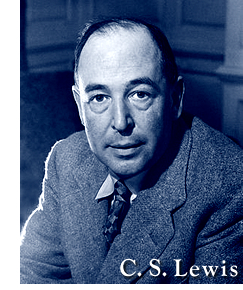
C.S. Lewis Daily – Today’s Reading


I hope no reader will suppose that ‘mere’ Christianity is here put for- ward as an alternative to the creeds of the existing communions. . . . . It is more like a hall out of which doors open into several rooms. If I can bring anyone into that hall I shall have done what I attempted. But it is in the rooms, not in the hall, that there are fires and chairs and meals. The hall is a place to wait in, a place from which to try the various doors, not a place to live in. For that purpose the worst of the rooms (whichever that may be) is, I think, preferable. It is true that some people may find they have to wait in the hall for a considerable time, while others feel certain almost at once which door they must knock at. I do not know why there is this difference, but I am sure God keeps no one waiting unless He sees that it is good for him to wait. When you do get into your room you will find that the long wait has done you some kind of good which you would not have had otherwise. But you must regard it as waiting, not as camping. You must keep on praying for light: and, of course, even in the hall, you must begin trying to obey the rules which are common to the whole house. And above all you must be asking which door is the true one; not which pleases you best by its paint and panelling. In plain language, the question should never be: ‘Do I like that kind of service?’ but ‘Are these doctrines true: Is holiness here? Does my conscience move me towards this? Is my reluctance to knock at this door due to my pride, or my mere taste, or my personal dislike of this particular door-keeper?’

When you have reached your own room, be kind to those who have chosen different doors and to those who are still in the hall. If they are wrong they need your prayers all the more; and if they are your enemies, then you are under orders to pray for them. That is one of the rules common to the whole house.

From Mere Christianity

Compiled in A Year with C.S. Lewis