Charles Stanley – Praying With Authority


1 Kings 18:19-39

God has given His children the privilege of calling upon Him for all they need, and what’s more, He’s promised to respond. He has also included the right to petition Him on behalf of others. In fact, Scripture tells us that the prayers of a righteous person can accomplish much (James 5:16).

To be righteous in the Father’s sight, we must accept His offer of salvation. Before redemption, we were unrighteous people under His judgment (Eph. 2:1, 3). Through faith in Christ as our Savior, we are made new and declared holy in His sight. Then, after we are able to approach Him as righteous people, we must align our prayers with His will—that’s the only way for our petitions to be powerful and effective (1 John 5:14-15). And the key to aligning our requests with His plan is getting to know our heavenly Father’s character and priorities.

Elijah is a good example of someone who prayed with authority. The Lord sent him into battle against the evil king Ahab and the 450 prophets of Baal. This was a spiritual conflict to prove who was the real God—Baal or the Lord of Israel. Elijah’s weapons were his knowledge of the Father’s plan and the authority he had in prayer as a prophet of God. His request—that Jehovah would make Himself known, voiced publicly before his opponents, matched the Lord’s will (Ex. 7:5; 1 Kings 18:37). And when God responded to Elijah’s prayer, the people declared, “The Lord, He is God” (1 Kings 18:39).

Are you a child of God? If so, you can pray with spiritual might by making sure your requests are in agreement with His will.

Bible in One Year: Acts 10-11

Our Daily Bread — The Big Stink


Read: Genesis 3:6-13,22-24

Bible in a Year: Lamentations 1-2; Hebrews 10:1-18

God knows that when you eat from it your eyes will be opened, and you will be like God, knowing good and evil. —Genesis 3:5

In August 2013, large crowds gathered at the Phipps Conservatory in Pittsburgh, Pennsylvania, to witness the blooming of the tropical plant known as the corpse flower. Since the flower is native to Indonesia, and may flower only once every several years, its blooming is a spectacle. Once open, the huge spiky, beautiful, red bloom smells like rotten meat. Because of its putrid fragrance, the flower attracts flies and beetles that are looking for rotting meat. But there is no nectar.

Like the corpse flower, sin holds out promises but in the end offers no rewards. Adam and Eve found this out the hard way. Eden was beautiful until they ruined it by doing the one thing God urged them not to do. Tempted to doubt God’s goodness, they ignored their Creator’s loving warning and soon lost their innocence. The God-given beauty of the tree of the knowledge of good and evil became like a corpse flower to them. The reward for their disobedience was alienation, pain, emptiness, toil, and death.

Sin looks inviting and may feel good, but it doesn’t compare with the wonder, beauty, and fragrance of trusting and obeying God, who has made us to share His life and joy. —Marvin Williams

What temptations are you facing today? Remember that God promises to help you fight against temptation. Ask Him to help you remember to rely on Him.

God’s commands can overpower Satan’s suggestions.

INSIGHT: Today’s passage records the entrance of sin into an innocent world. But it also records God’s grace in response to sin. Rather than let Adam and Eve eat from the tree of life and live forever in their sin, God graciously blocked the way to that tree (vv. 22-23). J.R. Hudberg

Ravi Zacharias Ministry –    Gaining Consciousness


The line between real and imagined is sometimes a little blurry. At least this is the conclusion of one report on the business of cyberspace, where thousands of peoplehave imaginary lives and quite a few are actually making a living at it. The creators of several popular online role-playing games completed a year-long study of the very real transactions that are taking place in their imaginary worlds. The results portray a flourishing economy that is rapidly grabbing advertisers’ attention. The sellers are role players who have taken the time to find marketable goods in their virtual worlds—and they are clearly putting in the time. In one popular game, a gnome is sold with a basic skill set for $214; in another, a virtual cherry dining set for a virtual home runs about 250 actual dollars. Between June 2005 and June 2006, 9,042 role players spent $1.87 million dollars on virtual goods from swords to special powers. According to analyst estimates for 2015, U.S. virtual goods revenue alone will top $1 billion and could even rake in over $2 billion.

It is entertainment I don’t claim to fully understand. But it is fascinating (and maybe worrisome) to see how seamless the real and the virtual can become. Of course, this is a reality that runs through far more than worlds of online gaming. The imagination is always at work in the way we see the world itself; this is both instinctive and instructive. Moreover, to note that something is imaginary is not to dismiss it as void of truth or reality. Fans of Bill Watterson’s Calvin and Hobbes cartoon remember significant lines of truth coming from a stuffed tiger. Yet, there are also times that what is not real can become so intertwined with what is real that we scarcely notice a difference. That is, until something real reminds us otherwise—like a jolt of consciousness, an outsider’s perspective, or a credit card receipt.

The Hebrew prophet Jonah was a prophet by profession. He knew the liturgy and worship of the people of Israel by heart. So it is not unreasonable that as his life was ebbing away in the depths of the sea, Jonah would cry out with the words of a psalm he had heard countless times before. And yet, the words no doubt had a depth of meaning for him unlike anything he had known before. As he was losing consciousness—literally in Hebrew, “in the feebleness of his person,”—Jonah not only remembered God by name, but in some ways was seeing God for the first time. Like one awakened to enmeshed worlds both real and unreal, Jonah quickly clung to what was real.

Up until this point Jonah’s behavior suggests a mentality that God was not entirely omnipresent, but present only in Israel, in the temple, and in the places of his own interest. As Jonah ran to Tarshish to avoid the call of God to go to Nineveh, he ran believing there was a place he could go where God could not find him. But as he sunk further into the depths of the sea, the prophet realized that he was mercifully mistaken. His language evokes a play on words—As I was losing consciousness, I remembered the LORD. Or else, it was a sudden recognition of the Really Real in the imaginary world he had occupied. Losing consciousness, Jonah was actually gaining it.

Perhaps not wanting to consider the discomfort it would take to uproot our own embedded fallacies, tellers of Jonah’s story often minimize the distress that broke his silence with God. But the popular notion that Jonah went straight from the side of the ship and into the mouth of the fish is not supported by either the narrative as a whole or Jonah’s cry for help. H. L. Ellison suggests that “[Jonah] was half drowned before he was swallowed. If he was still conscious, sheer dread would have caused him to faint—notice that there is no mention of the fish in his prayer. He can hardly have known what caused the change from wet darkness to an even greater dry darkness. When he did regain consciousness, it would have taken some time to realize that the all-enveloping darkness was not that of Sheol but of a mysterious safety.”(1)

In that mysterious safety, Jonah shows us the strange world that unwound his imaginary one, and in it, the God who hears in both. Though the deep surrounded him and reeds were bound to his head, Jonah was heard—and his awareness of this was an essential turning point in his story. In prayer and darkness, Jonah admitted that the role of salvation cannot be in his hands. If only momentarily, the drowning prophet clung to a truth more hopeful than escapism and far more able than idols: “Salvation belongs to the LORD.”

It is hard to believe that Jonah could have considered being swallowed alive a rescue, and yet it is precisely Jonah’s considerations from which he needed to be rescued. In truth, at times, the deliverance we need most is that of deliverance from ourselves. Though our thoughts toward God be wound in self and seaweed, and the depths of our imagined autonomy threaten to drown us, rescue is indeed a valid hope. What if God is far more real than we often imagine?

Jill Carattini is managing editor of A Slice of Infinity at Ravi Zacharias International Ministries in Atlanta, Georgia.

(1) H.L. Ellison, “Jonah,” The Expositors Bible Commentary, ed. Frank E. Gaebelein (Grand Rapids: Zondervan, 1985), 374.

Alistair Begg – Trusting For Fruit


The branch cannot bear fruit by itself.

John 15:4

How did you begin to bear fruit? It was when you came to Jesus and cast yourself on His great atonement and rested on His finished righteousness. What fruit you had then!

Do you remember those early days? Then the vine flourished, the tender grape appeared, the pomegranates budded, and the beds of spices produced their fragrance. Have you declined since then?

If you have, we charge you to remember that time of love, and repent, and do your first works. Commit yourself fully to the activities that you have proved to draw you closest to Christ, because it is from Him that all your fruits proceed.

Any holy activity that will bring you to Him will help you bear fruit. The sun is, no doubt, a great worker in fruit-creating among the trees of the orchard: And Jesus is even more so among the trees of His garden of grace.

When have you been the most fruitless? Has it not been when you have lived farthest from the Lord Jesus Christ, when you have slackened in prayer, when you have departed from the simplicity of your faith, when your graces have engrossed your attention instead of your Lord, when you have said, “My mountain stands firm, I will never be moved” and you have forgotten where your strength lies-has not it been then that your fruit has ceased?

Some of us have been taught that we have nothing apart from Christ by terrible humiliation of heart before the Lord; and when we have seen the utter emptiness and death of all earthly power, we have cried in anguish, “From Him all my fruit must be found, for no fruit can ever come from me.”

We are taught by past experience that the more simply we depend upon the grace of God in Christ and wait upon the Holy Spirit, the more we will bring forth fruit unto God. We must trust Jesus for fruit as well as for life.

The Family Bible Reading Plan

  • 1 Chronicles 1, 2
  • Hebrews 8

Devotional material is taken from “Morning and Evening,” written by C.H. Spurgeon, revised and updated by Alistair Begg.

Charles Spurgeon – The sweet uses of adversity


“Shew me wherefore thou contendest with me.” Job 10:2

Suggested Further Reading: Psalm 119:65-72

There was a fair ship which belonged to the great Master of the seas; it was about to sail from the port of grace to the haven of glory. Before it left the shore the great Master said, “Mariners, be brave! Captain, be bold! For not a hair of your head shall perish; I will bring you safely to your desired haven. The angel of the winds is commissioned to take care of you on your way.” The ship sailed confidently with its streamers flying in the air. It floated along at a swift rate with a fair wind for many days. But suddenly there came a hurricane which drove them from the course, strained their mast until it bent as if it could snap in two. The sail was torn to ribbons; the sailors were alarmed and the captain himself trembled. They had lost their course. They were off the right track, and they mourned exceedingly. When the day dawned the waves were quiet, and the angel of the winds appeared; and they spoke unto him, and said, “Oh angel, were you not asked to take charge of us, and preserve us on our journey?” He answered, “It was even so, and I have done it. You were steering on confidently, and you knew not that a little ahead of your vessel lay a quicksand upon which she would be wrecked and swallowed up quick. I saw that there was no way for your escape but to drive you from your course. See, I have done as it was commanded me: go on your way.” This is a parable of our Lord’s dealings with us. He often drives us from our smooth course which we thought was the right track to heaven. But there is a secret reason for it; there is a quicksand ahead that is not marked in the chart. We know nothing about it; but God sees it, and he will not permit this fair vessel, which he has himself insured, to be stranded anywhere; he will bring it safely to its desired haven.

For meditation: If an ass can inconvenience a false prophet to deliver him from imminent danger (Numbers 22:21-34), God is able to obstruct his people in one way or another when they are heading for trouble. We can only see the benefits later (Hebrews 12:11).

Sermon no. 283

13 November (1859)

John MacArthur – Obeying Faith


“By faith Noah, being warned by God about things not yet seen, in reverence prepared an ark for the salvation of his household, by which he condemned the world, and became an heir of the righteousness which is according to faith” (Heb. 11:7).

True faith works.

When James said, “Faith without works is dead” (James 2:26), he stated a principle that’s consistent throughout Scripture: True faith always produces righteous works.

The people described in Hebrews 11 made their genuine faith known in the things they did. The same applies to us today. Paul said, “The grace of God has appeared, bringing salvation to all men, instructing us to deny ungodliness and worldly desires and to live sensibly, righteously and godly in the present age” (Titus 2:11-12).

Perhaps better than anyone else in history, Noah illustrates the obedience of faith. Scripture characterizes him as “a righteous man, blameless in his time . . . [who] walked with God” (Gen. 6:9).

I remember a sportscaster interviewing a professional football player and asking him what he thought of his team’s chances of winning the Super Bowl. The player replied, “We believe that if we just do what the coach says, we’ll win.” The team had absolute confidence in their coach, but they realized they had to do their part as well.

That illustrates the quality of faith Noah had in God, whom he trusted absolutely as he pursued a task that seemed utterly foolish and useless from a human perspective. Imagine instantly surrendering all your time and effort to devote 120 years to building something you’d never seen (a vessel the size of a ocean liner or battleship) to protect you from something you’d never experienced (rain and flooding). Yet Noah did it without question.

Noah’s faith is unique in the sheer magnitude and time span of the task God gave him to do. He didn’t argue with God or deviate from his assignment. Is that true of you? Are you pursuing your ministry as faithfully and persistently as Noah did his? Is your faith a faith that works?

Suggestions for Prayer

Thank God for the ministry He’s called you to. If you sense there’s more you could be doing, ask Him for guidance. Pray for added faithfulness and tenacity in serving Him.

For Further Study

Read the account of Noah in Genesis 6:1—9:17.

Joyce Meyer – Don’t Lose Focus


For the weapons of our warfare are not physical [weapons of flesh and blood], but they are mighty before God for the overthrow and destruction of strongholds.—2 Corinthians 10:4

Sometimes we lose our focus. We can be walking in love all day, going along fine, until someone comes along and offends us. As soon as we forget our focus of love, we stop making progress and come to a standstill—aggravated, upset, and offended.

Understand that the mind is a battlefield. If you don’t stop Satan when he gets into your thoughts, you are not going to stop him from getting into your life. Stay focused. Ask God to help you remain full of love, no matter what comes your way today.

From the book Starting Your Day Right by Joyce Meyer.

Campus Crusade for Christ; Bill Bright – Wonderful Friendship


“God will surely do this for you, for He always does just what He says, and He is the one who invited you into this wonderful friendship with His Son, even Christ our Lord” (1 Corinthians 1:9).

You and I do not always prove faithful, but the apostle Paul wants us to know, by way of his letter to the believers in Corinth, that our God will surely do what He has promised; in this case, make us “blameless in the day of our Lord Jesus Christ” (verse 8).

The apostle wants the Corinthians to know that they can depend upon the faithfulness of God, who had begun a good work among them, and certainly would see them through to the end. He did the inviting; He would do the keeping.

Christians are able to participate with Christ in several ways. First in His trials and sufferings, for we are subjected to temptations and trials similar to His: “But rejoice, inasmuch as ye are partakers of Christ’s sufferings” (1 Peter 4:13, KJV).

Second, in His feelings and views (Romans 8:9).

Third, in His heirship to the inheritance and glory which awaits Him: “And if children, then heirs; heirs of God, and joint-heirs with Christ” (Romans 8:17, KJV).

Fourth, in His triumph in the resurrection and future glory: “Ye which have followed Me, in the regeneration when the Son of man shall sit on the throne of His glory, ye also shall sit upon twelve thrones, judging the twelve tribes of Israel” (Matthew 19:28, KJV).

Are you not glad for that kind of friendship?

Bible Reading: 2 Thessalonians 3:3-5

TODAY’S ACTION POINT: When I look for a faithful friend, my first thought will be of Christ Himself, who truly qualifies as my very best friend

Presidential Prayer Team; C.H. – Too Good Not to Share


“Share a Coke and a smile,” is a slogan made popular by one of America’s favorite soft drinks. Win tickets to a concert and, most likely, it’ll be a pair so you can take a friend. Order a dessert and it’ll be delivered with two forks. Good things are meant to share.

He first found his own brother Simon and said to him, “We have found the Messiah.”

John 1:41

In today’s passage, Andrew wanted to share a new discovery with his brother Simon. Andrew was spending time with John the Baptist when Jesus walked past. “Behold, the Lamb of God!” (John 1:36) John pointed out that Jesus was God’s Son. When Andrew realized the truth in John’s statement, he wanted to tell his brother the good news.

Creating a Godly heritage is more than passing your faith to your children. It’s sharing His love and grace with those who haven’t heard. It’s bringing others to know Jesus and making them brothers and sisters in Christ. Thank God today for the one who shared Christ with you. Ask your Heavenly Father to create a desire in you to reach those who aren’t a part of the family of God. Pray especially for your nation’s leaders who don’t know Him. God is too good not to share.

Recommended Reading: John 1:43-51

Greg Laurie – “All Is Vanity”


I have seen all the works that are done under the sun; and indeed, all is vanity and grasping for the wind.—Ecclesiastes 1:14

After his futile search for the meaning of life, Solomon concluded, ” ‘Vanity of vanities,’ . . . ‘Vanity of vanities, all is vanity.’ What profit has a man from all his labor in which he toils under the sun?” (Ecclesiastes 1:2–3).

The word vanity Solomon used didn’t mean the same thing it means to us today. When we think of vanity, we think of people who’ve never met a mirror they didn’t like. But the vanity Solomon spoke of could just as easily be translated “emptiness,” “futility,” “meaningless,” or “nothingness.” Solomon was saying, “There is nothing on this earth that will satisfy us completely: no thing, no pleasure, or no relationship.”

It’s not unlike riding a stationary bike. You see on the little video screen that you’re going uphill, so it gets a little more difficult to pedal. Then you go downhill, and it becomes a little easier. But the reality is that you haven’t moved an inch. You’ve spun your wheels without going anywhere. That is the idea Solomon was conveying. He was describing a life without God.

Have you ever wondered why the super rich or super famous often have substance abuse issues or other problems? I think it’s because they get to do what others only dream of. They accomplish a certain thing, and then they move on to the next thing. They experience another success, and then they move on to something else. They can’t keep that high they were on, so they turn to the next thing.

You might say that Solomon tried it all, and he realized that it all was meaningless. He was saying, “I’m a seasoned pro. I know what I’m talking about here. If you take God out of the picture, your life will be empty, meaningless, and futile.”

Max Lucado – You at Your Best


Call it what you wish. A talent…a skill set…a gift. The terms are different, but the truth is the same. Paul says in 1 Corinthians 12:7, “The Spirit has given each of us a special way of serving others.”

You aren’t the only person with your skill. But you are the only person with your version of your skill. You entered the world uniquely equipped. Psalm 139:13-15 describes it as “knit together, woven together in the dark of the womb, intricately and curiously wrought.”

Each of us! Not some of us, a few of us, or the elite among us. Each of us has a beauty that longs to be revealed and released. It is you at your best! When you stand at the intersection of your skill and God’s call, you are standing at the corner of Promised Land Avenue and Glory Days Boulevard.

From Glory Days


Night Light for Couples –Hi There!


by Nancy Dahlberg

One year our family spent the holidays in San Francisco with my husband’s parents. Christmas was on a Sunday that year, and in order for us to be back at work on Monday, we had to drive the four hundred miles back home to Los Angeles on Christmas Day.

When we stopped for lunch in King City, the restaurant was nearly empty. We were the only family, and ours were the only children. I heard Erik, our one‐year‐old, squeal with glee: “Hi there. Hi there.” He pounded his fat baby hands—whack, whack—on the metal tray of the high chair. His face was alive with excitement, eyes wide, gums bared in a toothless grin. He wriggled, chirped, and giggled. Then I saw the source of his merriment—and my eyes could not take it all in at once. It was a man wearing a tattered rag of a coat, obviously bought eons ago, and dirty, greasy, worn pants. His toes poked out of used‐to‐be shoes, and his shirt had ring‐around‐the‐collar all over. He had a face like none other—with gums as bare as Erik’s. “Hi there, baby,” the disheveled man said.

“Hi there, big boy. I see ya, buster.” My husband and I exchanged a look that was a cross between “What do we do?” and “Poor devil.” Our meal came, and the cacophony continued. Now the old bum was shouting from across the room: “Do you know patty‐cake? Atta boy—do ya know peek‐a‐boo? Hey, look—he knows peek‐a‐boo!”

Erik continued to laugh and answer, “Hi there.” Every call was echoed. Nobody thought it was cute. The guy was a drunk and a disturbance. I was embarrassed. My husband, Dennis, was humiliated. Even our six‐year‐old said, “Why is that old man talking so loud?”

As Dennis went to pay the check, he whispered for me to get Erik and meet him in the parking lot. Lord, just let me out of here before he speaks to me or Erik, I prayed as I bolted for the door.

It was soon obvious that both the Lord and Erik had other plans. As I drew closer to the man, I turned my back, trying to sidestep him—and any air he might be exhaling. As I did, Erik, with his eyes riveted on his new friend, leaned far over my arm and reached out with both hands in a baby’s “pick me up” position.

In the split second of balancing my baby and turning to counter his weight, I came eye‐to‐eye with the old man. Erik was lunging for him, arms spread wide.

The bum’s eyes both asked and implored, “Would you let me hold your baby?”

There was no need for me to answer because Erik propelled himself from my arms into the man’s. Suddenly a very old man and very young baby clutched each other in a loving embrace. Erik laid his tiny head upon the man’s ragged shoulder. The man’s eyes closed, and I saw tears hover beneath his lashes. His aged hands—roughened by grime and pain and hard labor—gently, so gently, cradled my baby’s bottom and stroked his back.

I stood awestruck. The old man rocked and cradled Erik in his arms for a moment, and then his eyes opened and set squarely on mine. He said in a firm, commanding voice, “You take care of this baby.”

Somehow I managed to squeeze the words “I will” from a throat that seemed to have a stone lodged in it.

He pried Erik from his chest—unwillingly, longingly—as though he were in pain.

I held my arms open to receive my baby, and again the gentleman addressed me.

“God bless you, ma’am. You’ve given me my Christmas gift.” I could only mutter, “Thanks.” With Erik back in my arms, I hurried toward the car. Dennis wondered why I was crying and holding Erik so tightly and saying, “My God, my God, forgive me.”

Looking ahead…

Imagine for a moment viewing the world from a baby’s perspective. Everything would fascinate you: the bright colors, the strange noises, and most certainly, the people. You’d want to touch, taste, and explore each one. Would you avert your eyes at the sight of a friendly bum? Of course not—even if he was toothless. Curious and trusting, you would return the bum’s smile, then hold out your hands to give him a hug.

Babies see the world in a different light, don’t they? They don’t worry about what others think, and they don’t prejudge others on the basis of appearance. Unfortunately, as adults we tend to go “blind”—to each other and to those around us—to what God is doing in our world. This week we’ll talk about how we can learn to see in a fresh way— through God’s loving eyes.

– James C Dobson

From Night Light For Couples, by Dr. James & Shirley Dobson

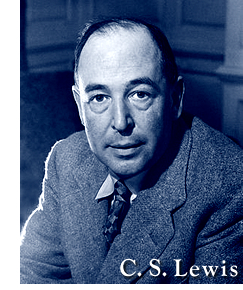
C.S. Lewis Daily – Today’s Reading


On goodness

It has sometimes been asked whether God commands certain things because they are right, or whether certain things are right because God commands them. . . . I emphatically embrace the first alternative. The second might lead to the abominable conclusion . . . that charity is good only because God arbitrarily commanded it—that He might equally well have commanded us to hate Him and one another and that hatred would then have been right. I believe, on the contrary, that “they err who think that of the will of God to do this or that there is no reason besides His will.” God’s will is determined by His wisdom which always perceives, and His goodness which always embraces, the intrinsically good. But when we have said that God commands things only because they are good, we must add that one of the things intrinsically good is that rational creatures should freely surrender themselves to their Creator in obedience. The content of our obedience—the thing we are commanded to do—will always be something intrinsically good, something we ought to do even if (by an impossible supposition) God had not commanded it. But in addition to the content, the mere obeying is also intrinsically good, for, in obeying, a rational creature consciously enacts its creaturely role, reverses the act by which we fell, treads Adam’s dance backward, and returns.

From The Problem of Pain

Compiled in Words to Live By