Charles Stanley – Wandering From the Word


Psalm 119:9-16

Jim bought his grandchildren a new toy. After a brief glance at the directions, he set the booklet aside and got busy building. A few frustrating hours later, Jim humbly opened the instructions again and followed the steps to put the toy together. Soon he was done, and the grandkids were playing happily.

Jim knew that the manufacturer had a plan for assembling the toy. But he’s a smart fellow and assumed he could figure it out on his own. Many people take the same approach to Scripture that Jim took with those directions. Instead of treating God’s Word like a manual to live by, they glance at it only when they aren’t sure what to do next.

The Bible is like the Father’s diagram of Himself. He teaches believers who He is, what He thinks, and how He acts. Knowing the ways of the Lord ensures that we can make wise decisions that honor Him.

The Bible is also God’s instruction book for living. I emphasize that it should be read every day because believers cannot be spiritually successful or victorious without it. In today’s passage, we read that if a person wants to be righteous, his or her life must comply with scriptural principles. Of course, the only way to know what those principles are is to read, study, and meditate upon the Word.

God’s Word is our most valuable possession. Casting it aside is as foolish as tossing away a wallet full of money. Among the Bible’s riches are stories teaching us how to serve the Lord and principles about pleasing Him. It also contains a wealth of instruction for building a righteous and meaningful life.

Bible in One Year: Acts 16-17

Our Daily Bread — Shared Struggles


Read: Galatians 6:1-10

Bible in a Year: Ezekiel 3-4; Hebrews 11:20-40

Share each other’s burdens, and in this way obey the law of Christ. nlt —Galatians 6:2

April 25, 2015, marked the 100th commemoration of Anzac Day. It is celebrated each year by both Australia and New Zealand to honor the members of the Australian and New Zealand Army Corps (ANZAC) who fought together during World War I. It marks a time when neither country had to face the dangers of war alone; soldiers from both countries engaged in the struggle together.

Sharing life’s struggles is fundamental to the way followers of Christ are called to live. As Paul challenged us, “Share each other’s burdens, and in this way obey the law of Christ” (Gal. 6:2 nlt). By working together through life’s challenges we can help to strengthen and support one another when times are hard. By expressing toward one another the care and affections of Christ, the difficulties of life should draw us to Christ and to each other—not isolate us in our suffering.

By sharing in the struggles of another, we are modeling the love of Christ. We read in Isaiah, “Surely He has borne our griefs and carried our sorrows” (Isa. 53:4 nkjv). No matter how great the struggle we face, we never face it alone. —Bill Crowder

Thank You, Father, that I don’t have to walk my life’s journey alone. You are near.

Read more about the nearness of God in The Lord Is My Shepherd at discoveryseries.org/hp952

We can go a lot further together than we can alone.

INSIGHT: In Galatians 6:2 Paul instructs the Galatian believers to carry each other’s burdens. However, in verse 5 Paul says that each person should carry his own load. In the case of carrying each other’s burdens, we are to do so in the context of someone caught in sin (v. 1). However, in the case of carrying our own load, it is so that we do not compare ourselves to others and become unduly disheartened by our progress (or lack of it). J.R. Hudberg

Ravi Zacharias Ministry – Definitive Fingerprints


He seemed to brace himself for what had become the typical barrage of questioning after stating his occupation. The once unrecognized field of “forensic science” now comes attached with visions of beautiful men and women swabbing for DNA, replicating gunfire trajectories, decoding cyber movement, and piecing together the truth with hair, bugs, and CODIS. The tremendous popularity of forensic dramas has made crime scene investigating a household subject. So with a real forensic scientist standing in front of me, I admit it was hard to repress my enthusiasm. Predictably, I asked if he watched any of the shows. Humoring my line of questioning for the moment, he admitted that he did not.

The vast public intrigue with forensic science has been increasing as feverously as the viewerships of crime scene television. In Great Britain alone, the increase in students applying for forensic programs is up nearly 33 percent, attributed entirely to the influence of CSI, NCIS, Bones, and many similar programs.(1) They come into their programs believing they already know a great deal about the job because they have seen it all performed. In a more damaging vein, criminologists note the pervasive misinformation that is powerfully influencing criminal justice systems in various ways, particularly and significantly in the minds and expectations of jurors.(2)

Analysts refer to this global phenomenon of forensic pop culture and its consequences as the “CSI Effect,” though speculation on the reasons for our feverish embrace of the motif is wider ranging. In my own right, I find something compellingly clean in the uncomplicated movement from mystery and crisis through clues and evidence to truth. In less than an hour, viewers are taken from dark riddle to conclusive resolution. Truth and justice emerge plainly, even where deception, obscurity, and injustice once reigned. In the rare instance when the suspect does not personally own up to the crime after the facts have emerged, the science and its expert witnesses are so definitive that it hardly matters. The truth is clear.

Of course, I know in reality that mysteries are not typically so easily dissected nor the truth so mechanically laid out for the taking. But in that brief hour, I am relieved at the clarity of truth, presented to me quickly and with watertight certainty. English professor Scott Campbell further speculates on the allure of “a longed-for world where deceit is no longer possible and where language finds a close, unbreachable connection to the events it seeks to describe.”(3) On the nature of truth in such a world he notes, “If we know how to look for it, the truth is self-evident. It will, in effect, narrate itself.”

In a world where the category of truth is often subjected to the murkiness of taste and opinion, the attraction to a self-evident, one-dimensional truth is understandable. All the lofty humility of the abstract pluralist cannot beautify the noise of a million clashing voices and truth claims; eventually, we grow weary of the end product and seek a less polluted scene. In the words of the illustrious detective Joe Friday, “All we want are the facts.”

And yet, we must be wary of simplifying the nature of truth in our attempts to simplify our investigations of it. This is precisely what the pluralist must do to make room for all his claims and voices. But mercifully, in the world of the Christian, the world of truth is far from flat. Nor is its true song a raucous cacophony. Quite the opposite, Swiss theologian Hars Urs von Balthasar oft reflected on truth as “symphonic.” Elaborating, professor Anthony Baker explains, “Truth is not simply a completed score, but the action of playing it back to God the way it was written. Only by following Christ into the cacophony, by descending into hell ourselves, by actively engaging in the redemption of fallen melody, can the church be alive with the resurrective power of the Spirit.”(4)

In other words, truth is not simply something passive that we intercept, like the outcome of a CSI episode that leaves us entirely certain of “what really happened.” Truth certainly has this definitive element; to be sure, the Logos which became flesh is God’s definitive account of truth. But this is something far deeper and more dimensional than cold, unresponsive facts, as further evidenced in John’s description of Christ as one “full of grace and truth” in himself. There is a corresponding, interactive, participatory quality to truth, which takes longer than an hour to absorb and is best understood by engaging its depth and character within a world of impersonal, simplistic alternatives. For if truth is personal—indeed, a Person—it demands a lifetime of shared engagement with the one who is truth and the Spirit who actively leads us into a discovery of this truth.

Without any doubt, the mystery of the Christian religion is great—mystery not in the hidden CSI sense, but mystery revealed. Paul’s description of Jesus is as full of inscrutable truths as it is compelling evidences: “He was revealed in flesh, vindicated in spirit, seen by angels, proclaimed among Gentiles, believed in throughout the world, taken up in glory.”(5) Evidences of the heights and depths of this divine mysterious truth can indeed be received as factual, definitive fingerprints. But so they are clues that point to a multi-dimensional, inexhaustible Person full of grace and truth.

Jill Carattini is managing editor of A Slice of Infinity at Ravi Zacharias International Ministries in Atlanta, Georgia.

(1) Paul Hackett, “Want a Career in Forensics? Here’s Some Hard Evidence,” The Guardian, March 28, 2007.

(2) “Forensics and the Media: A 3-Year Project Examining the ‘CSI Effect’ and a Forensic Pop Culture” presented at the annual meeting of the American Society of Criminology (ASC), Los Angeles Convention Center, Los Angeles, Nov. 1, 2006.

(3) Scott Campbell, “‘Dead Men Do Tell Tales’: CSI: Miami and the Case Against Narrative,” Americana: The Journal of American Popular Culture, Spring 2009, Volume 8, Issue 1.

(4) Anthony D. Baker, “Fiddling with the Melody: Illuminating von Balthasar’s Symphony of Truth,” The Other Journal, Issue 15, May 11, 2009.

(5) 1 Timothy 3:16.

“The Lord is my portion,” says my soul.


Lamentations 3:24

It does not say, “The Lord is partly my portion,” nor “The Lord is in my portion”; but He Himself makes up the sum total of my soul’s inheritance. Within the circumference of that circle lies all that we possess or desire.

The Lord is my portion. Not His grace merely, nor His love, nor His covenant, but Jehovah Himself. He has chosen us for His portion, and we have chosen Him for ours.

It is true that the Lord must first choose our inheritance for us, or else we will never choose it for ourselves; but if we are really called according to the purpose of electing love, we can sing-

Lov’d of my God for Him again

With love intense I burn;

Chosen of Him ere time began,

I choose Him in return.

The Lord is our all-sufficient portion. God fills Himself; and if God is all-sufficient in Himself, He must be all-sufficient for us. It is not easy to satisfy man’s desires. When he dreams that he is satisfied, instantly he wakes to the perception that there is still something more, and his longings remain unfulfilled.

But for the believer all that we can wish for is to be found in our divine portion, so that we ask, “Whom have I in heaven but you? And there is nothing on earth that I desire besides you.”1 We can then delight ourselves in the Lord who allows us to drink of the river of His pleasures.

Our faith stretches her wings and soars like an eagle into the heaven of divine love, her proper dwelling-place. “The lines have fallen for me in pleasant places; indeed, I have a beautiful inheritance.”2 Let us rejoice in the Lord always; let us show the world that we are a happy and a blessed people and cause them to exclaim, “Let us go with you, for we have heard that God is with you.”

1) Psalm 73:252) Psalm 16:6

The Family Bible Reading Plan

  • 1 Chronicles 7, 8
  • Hebrews 11

Devotional material is taken from “Morning and Evening,” written by C.H. Spurgeon, revised and updated by Alistair Begg.

Charles Spurgeon – God’s barriers against man’s sin


“Fear ye not me? saith the Lord: will ye not tremble at my presence, which have placed the sand for the bound of the sea by a perpetual decree, that it cannot pass it: and though the waves thereof toss themselves, yet can they not prevail; though they roar, yet can they not pass over it? But this people hath a revolting and rebellious heart; they are revolted and gone.” Jeremiah 5:22-23

Suggested Further Reading: Isaiah 1:1-4

God here contrasts the obedience of the strong, the mighty, the untamed sea, with the rebellious character of his own people. “The sea,” saith he, “obeys me; it never breaks its boundary; it never leaps from its channel; it obeys me in all its movements. But man, poor puny man, the little creature whom I could crush as the moth, will not be obedient to me. The sea obeys me from shore to shore, without reluctance, and its ebbing floods, as they retire from its bed, each of them says to me, in the voices of the pebbles, ‘O Lord, we are obedient to thee, for thou art our master.’ But my people”, says God, “are a revolting and a rebellious people; they go astray from me.” And is it not, my brethren, a marvellous thing, that the whole earth is obedient to God, save man? Even the mighty leviathan, who maketh the deep to be hoary, sinneth not against God, but his course is ordered according to his Almighty Master’s decree. Stars, those wondrous masses of light, are easily directed by the very wish of God; clouds, though they seem erratic in their movement, have God for their pilot; “he maketh the clouds his chariot;” and the winds, though they seem restive beyond control, yet do they blow, or cease to blow just as God wills. In heaven, on earth, even in the lower regions, we could scarcely find such a disobedience as that which is practised by man; at least, in heaven, there is a cheerful obedience; and in hell there is constrained submission to God, while on earth man makes the base exception, he is continually revolting and rebelling against his Maker.

For meditation: Jonah, a great wind, a great fish, a plant, a worm, an east wind (Jonah 1:3,4,17; 2:10; 4:6-8)—which is the odd one out?

Answer: God’s servant Jonah—the rest obeyed God at once. This should humble us!

Sermon no. 220

16 November (1856)

John MacArthur – Stepping out in Faith


“By faith Abraham, when he was called, obeyed by going out to a place which he was to receive for an inheritance; and he went out, not knowing where he was going” (Heb. 11:8).

The life of faith begins with a willingness to forsake everything that displeases God.

Abraham is the classic example of the life of faith. As the father of the Jewish nation, he was the most strategic example of faith available to the writer of Hebrews. But the people to whom Hebrews was written needed to understand that Abraham was more than the father of their race; he also was, by example, the father of everyone who lives by faith in God (Rom. 4:11).

Contrary to popular first-century Jewish thought, God didn’t choose Abraham because he was righteous in himself. When called by God, Abraham was a sinful man living in an idolatrous society. His home was in the Chaldean city of Ur, which was located in ancient Mesopotamia between the Tigris and Euphrates rivers.

God’s call to Abraham is recorded in Genesis 12:1-3: “Go forth from your country, and from your relatives and from your father’s house, to the land which I will show you; and I will make you a great nation, and I will bless you, and make your name great; and so you shall be a blessing; and I will bless those who bless you, and the one who curses you I will curse. And in you all the families of the earth shall be blessed.”

Note Abraham’s response: “So Abram went forth as the Lord had spoken to him” (v. 4). He listened, trusted, and obeyed. His pilgrimage of faith began when he separated himself from the pleasures of a pagan land to pursue God’s plan for his life.

So it is with you if you’re a man or woman of true faith. You’ve forsaken sinful pleasures to follow Christ. And as your love for Christ increases, there’s a corresponding decrease in worldly desires.

I pray your focus will continually be on fulfilling God’s will for your life, and that you’ll always know the joy and assurance that comes from following Him.

Suggestions for Prayer

Ask God for the grace and spiritual fortitude to walk by faith today.

For Further Study

Memorize 1 John 2:15 as a reminder to remain separate from the world.


Joyce Meyer – Every Day Is Thanksgiving


Let us come before His presence with thanksgiving; let us make a joyful noise to Him with songs of praise! —Psalm 95:2

Thanksgiving is not just a day to eat turkey and pumpkin pie, as we do in America. It was a day originally set aside to remember and give thanks to God for what He had done in protecting the first men and women who came to America, fleeing religious persecution in Europe. It was a type of harvest celebration like the one that the Jews celebrated; a day to give thanks for the crops they were able to harvest.

In addition to thanking God as we go through life, it is also a good idea to set aside special times of gratitude and giving thanks. Sometimes our family sits together and remembers where God has brought us from, and we thank Him for all He has done. Dave and I talk about our life when our children were all young and we lived in a tiny three-room apartment and had to cash in soda pop bottles to make it through until payday. I am sure you can recall times similar to those we had, and remembering them makes us thankful for how God brought us through them, and for all the progress we have made by His goodness.

Prayer of Thanks: Father, help me to realize that Thanksgiving is more than just a day on the calendar. I am grateful for all You have done in my life, not just today, but every day of the year.

From the book The Power of Being Thankful by Joyce Meyer.

Campus Crusade for Christ; Bill Bright – He Gives the Victory


“But thanks be to God, which giveth us the victory through our Lord Jesus Christ” (1 Corinthians 15:57, KJV).

In our busy lives, yours and mine, there are days when victory seems an impossibility. Heartaches, trials, burdens, or just the ordinary cares of the day, all seem foreign to the idea of being victorious.

And yet the fact remains that we are “more than conquerors” even when we do not feel like it. God graciously allows His children to be human and to express our doubts and fears when suffering and pain and testing and trial seem to overwhelm us.

“I have to be very honest,” confessed Joyce Landorf, well-known Christian author and speaker, during a long period of illness. “One of the things I have learned from severe pain is that I have felt totally abandoned by God. I didn’t think he’d let that happen to me, but He has.

“And maybe the feeling of abandonment when pain is at its writhing best..maybe that’s what makes it so sweet after the pain goes and the Lord says, ‘I was here all the time. I haven’t left you. I will never forsake you.’ Now those words get sweeter to me because I know what it has felt like to not feel His presence.”

We do not have all the answers, but we know one who does. And that is where our victory begins – acknowledging (1) that God is a God of love, one who never makes a mistake, and (2) he will never leave us or forsake us.

Bible Reading: Romans 7:18-25

TODAY’S ACTION POINT: I will consider myself a victor, whatever may transpire, because I serve the victorious one

Presidential Prayer Team; A.W. – In This Time


American General Robert E. Lee once said, “Knowing that intercessory prayer is our mightiest weapon and the supreme call for all Christians today, I pleadingly urge our people everywhere to pray. Let us pray for our nation. Let us pray for those who have never known Jesus Christ and redeeming love, for moral forces everywhere, for our national leaders…Let prayer be our passion. Let prayer be our practice.” These words, spoken after the Civil War, still apply today. Prayers are needed for those who don’t know Jesus – and for the nation and its leaders.

I do not cease to give thanks for you, remembering you in my prayers.

Ephesians 1:16

In the scriptures surrounding today’s verse, Paul calls for believers to pray just as Robert E. Lee did. He models intercessory prayer. He prays continually without ceasing. He prays with thanksgiving. And he prays mindfully, remembering specific requests and needs.

Just as it was needed during Paul’s time and during Lee’s time, prayer is desperately needed today – in this time. Pause each day to follow their example and petition God on behalf of the nation, its leaders and all believers in the United States.

Recommended Reading: Nehemiah 1:1-11

Greg Laurie –The Advice of Kings


Let us hear the conclusion of the whole matter: Fear God and keep His commandments, for this is man’s all. —Ecclesiastes 12:13

Before Solomon was anointed king, his father said to him, “As for you, my son Solomon, know the God of your father, and serve Him with a loyal heart and with a willing mind; for the LORD searches all hearts and understands all the intent of the thoughts. If you seek Him, He will be found by you; but if you forsake Him, He will cast you off forever” (1 Chronicles 28:9).

David was saying, “Son, listen to me. I know a thing or two about life. I’ve made my mistakes, but I also followed the Lord and served Him. You need to serve the Lord with an undivided heart. You can’t live off my faith, son. You need your own faith.”

Initially Solomon followed David’s advice. His heart wasn’t divided at first. But then he started opening himself up to things that he had no business being a part of. Things went from bad to worse. He went on a little research project to see what was out there. Solomon did everything and tried everything. In the end, here was his conclusion: “Fear God and keep His commandments, for this is man’s all” (Ecclesiastes 12:13).

The word for fear that Solomon used also could be translated “reverence,” “respect,” or “awe.” God is the Creator of the universe. He is holy and righteous. To fear Him means to have reverence for Him. It’s a healthy respect. Solomon was saying, “Have reverence for God. Keep His commandments.”

God’s commandments are like guardrails on the road of life, which keep us from getting ourselves into trouble. When Solomon said, “This is man’s all,” he was saying, “This is what will make a whole man.” If you want to be a whole man or a whole woman, then you need to fear God.

Max Lucado – What You Were Made to Do


Many people stop short of their destiny. They settle for someone else’s story. Grandpa was a butcher, Dad was a butcher, so I guess I’ll be a butcher. Everyone I know is in farming, so I guess I’m supposed to farm. Consequently, they risk leading dull, joyless, and fruitless lives. They never sing the song God wrote for their voices. They never cross a finish line with heavenward-stretched arms and declare, I was made to do this!  They fit in, settle in, and blend in. But they never find their call.

Don’t make the same mistake. Ephesians 2:10 says: “It is God himself who has made us what we are and given us new lives from Christ Jesus; and long ages ago planned that we should spend these lives in helping others.” Your existence is not accidental. Your skills are not incidental. God shaped each person in turn!

From Glory Days

Night Light for Couples – Wandering Sheep


“If a man owns a hundred sheep, and one of them wanders away, will he not leave the ninety-nine… and go to look for the one that wandered off?” Matthew 18:12

I f you are parents of small children, you know exactly how the shepherds mentioned in the Bible felt as they watched over their flocks. Even for a mother with “eyes in the back of her head,” keeping one active child from wandering off can seem as big a challenge as corralling a hundred sheep!

Jesus is called a shepherd, too, but His flock is all of humanity and He watches over us day and night. That’s why He called Himself the Good Shepherd. He came to earth to die so that not one soul would have to be lost. During His earthly ministry, He was always on the lookout for lost souls. He stayed up late to talk to Nicodemus (John 3:2). He wouldn’t let Zacchaeus hide unnoticed in a tree (Luke 19:5). And when the Pharisees were about to stone a despised adulteress, Jesus intervened with a message of forgiveness and direction—“Go, and sin no more” (John 8:11).

Every day, we have divine appointments to lead others into God’s flock—not just our family, friends, neighbors, and coworkers, but also people we’ve never met before and may never see again. God’s wisdom and power are at our disposal. We just have to keep our eyes open.

Just between us…

  • Do you see Jesus as your Good Shepherd? Why or why not?
  • As a couple, are we watching for “lost sheep”?
  • How can we be more watchful for opportunities to reach unbelievers? Is there anyone “lost” with whom we can talk this week?

Lord Jesus, show us how to demonstrate Your great love and compassion to those around us. We, too, want to be shepherds of lost souls. Amen.

From Night Light For Couples, by Dr. James & Shirley Dobson

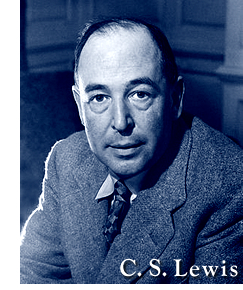
C.S. Lewis Daily – Today’s Reading


Prudence means practical common sense, taking the trouble to think out what you are doing and what is likely to come of it. Nowadays most people hardly think of Prudence as one of the ‘virtues’. In fact, because Christ said we could only get into His world by being like children, many Christians have the idea that, provided you are ‘good’, it does not matter being a fool. But that is a misunderstanding. In the first place, most children show plenty of ‘prudence’ about doing the things they are really interested in, and think them out quite sensibly. In the second place, as St Paul points out, Christ never meant that we were to remain children in intelligence: on the contrary. He told us to be not only ‘as harmless as doves’, but also ‘as wise as serpents’. He wants a child’s heart, but a grown-up’s head. He wants us to be simple, single-minded, affectionate, and teachable, as good children are; but He also wants every bit of intelligence we have to be alert at its job, and in first-class fighting trim. The fact that you are giving money to a charity does not mean that you need not try to find out whether that charity is a fraud or not. The fact that what you are thinking about is God Himself (for example, when you are praying) does not mean that you can be content with the same babyish ideas which you had when you were a five-year-old. It is, of course, quite true that God will not love you any the less, or have less use for you, if you happen to have been born with a very second-rate brain. He has room for people with very little sense, but He wants every one to use what sense they have.

From Mere Christianity

Compiled in A Year with C.S. Lewis