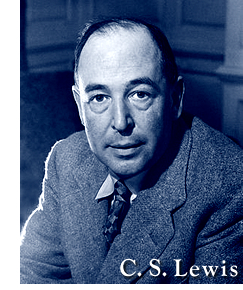
Charles Stanley – Victory Over Unforgiveness


Matthew 18:21-35

Immediately after teaching His followers to pray, Jesus gave a warning about allowing unforgiveness to reside in the heart. He said that those who refuse to forgive others won’t be forgiven by the Father.

Do not misunderstand Jesus’ meaning here. Believers don’t lose their salvation when they refuse to forgive. Rather, they break fellowship with God because their unrepentant attitude gets in the way of regular confession and repentance. The Lord cannot ignore sin, and His Spirit will bring wrong behavior to the believer’s attention until he or she deals with it.

Forgiveness is an act of will more than an act of the heart. Often people don’t feel like being merciful to someone who has wronged them. But a resentful spirit grows into a terrible burden. The Lord knows that forgiveness is best, even when it is difficult.

You won’t deal with a sin until you see it as God does. So assume full responsibility for your unforgiving attitude, and acknowledge that it is a violation of His Word. Claim the divine mercy He offers, and ask Him to enable you to lay aside anger and resentment. As part of the decision to move forward in grace, make a habit of praying for those who hurt you. And if God so leads, seek their forgiveness for your wrong attitude.

A bitter and resentful spirit doesn’t fit who we are in Christ. Nor is it healthy to carry an angry attitude through life. That’s why Scripture emphasizes the need to forgive. Choose to be liberated from your burden; Jesus promised to make us free when we confess our sins to Him (John 8:36).

Bible in One Year: Acts 25-26

Our Daily Bread — Our Main Concern


Read: Galatians 1:6-10

Bible in a Year: Ezekiel 14-15; James 2

If I were still trying to please people, I would not be a servant of Christ. —Galatians 1:10

Peer pressure is part of everyday life. Sometimes we base our decisions on what other people will think or say rather than on our convictions and on what will please God. We’re worried that we’ll be judged or made fun of.

The apostle Paul experienced his fair share of peer pressure. Some Jewish Christians believed that Gentiles should be circumcised to be truly saved (Gal. 1:7; see 6:12-15). However, Paul stood his ground. He continued to preach that salvation is by grace through faith alone; no further works are required. And for that he was accused of being a self-appointed apostle. They further asserted that his version of the gospel had never received the apostles’ approval (2:1-10).

Despite the pressure, Paul was very clear about whom he served—Christ. God’s approval mattered most, not man’s. He made it his goal not to win the approval of people, but of God (1:10).

Similarly, we are Christ’s servants. We serve God whether people honor or despise us, whether they slander or praise us. One day “each of us will give an account of ourselves to God” (Rom. 14:12). That doesn’t mean that we shouldn’t consider what people think or say, but ultimately, we make pleasing God our main concern. We want to hear our Savior say, “Well done, good and faithful servant!” (Matt. 25:23). —Jaime Fernández Garrido

Dear Lord, no matter what others may say or do, give me the courage to be faithful to You today.

Keep following Jesus.

INSIGHT: Because the risen Christ called Paul to be an apostle on the Damascus Road (Acts 9:1-18; 22:1-15; 26:9-18), Paul acknowledges that his apostleship was different from the original 12 apostles (Gal. 1:11-17), but it was clearly accepted by them (1:18; 2:7-10). Because Christianity was birthed in Judaism, adhering to the Mosaic law became an issue as more Gentiles became believers. The Judaizers taught that Christians must follow Jewish laws and practices in order to be saved. Paul wrote this letter to counter and condemn this false teaching (vv. 8-9), affirming that salvation is by grace through faith in Jesus Christ, not by observing the law (Gal. 2:16,20-21; 3:11,24).

Ravi Zacharias Ministry – The Property of Tears


Five year-old Samantha was the victim of a cruel and tragic murder, and her own tears were the evidence that sealed the case against her abductor. “[S]he solved the crime,” said her young mother. “She was her own hero.”(1) DNA in the form of teardrops was found on the passenger-side door of the killer’s car, irrevocably making their mark on the crime scene and everyone who imagines them.

It is impossible to hear stories like this, of heinous murders, of calculated school shootings, without retreating to the deepest whys and hows of life. The abrupt ending to these lives is another wretched symptom of a sick and desperate world. The problem of evil is a problem that confronts us, sometimes jarringly. The problem of pain is only intensified by the personal nature of our experience with it.

The first time I heard Samantha’s story my numbed mind was startled by this property of tears. I had no idea that our tears were so personally our own. Samantha’s tears solved the case because there were none others like hers. They were unique to the eyes they came from, intricately a part of Samantha herself. In the pains and joys that cause us to weep and to mourn, we leave marks far more intimate than I ever realized. We shed evidence of our own makeup, leaving behind a complex, yet humble message: I was here, and my pain was real. There are a lot of really bad and unhelpful things that people say in the face of tragedy and to those who mourn. For me this brings new meaning to the wisdom of being silent with the grief-striken, sharing tears instead of advice.

There is something deeply necessary in the Christian hope that pain will one day be removed and tears will be no more. We are rightly comforted by the hope of a God who will wipe away every tear from the eyes of the weeping and the promise that there will one day be no more death or mourning or crying or pain.(2) But perhaps there is something deeply necessary about a God who has marked our tears so specifically even now, declaring that our pain is far from a generic or empty occurrence.

There is a line uttered by the psalmist that was comforting to my grandmother through many years of loss and life. To God the psalmist confesses, “You have kept count of my tossings, put my tears in your bottle” (Psalm 56:8). Tear-bottles were small urns of glass or pottery created to collect the tears of mourners at the funerals of loved ones. They were placed in the sepulchers at Rome and in Palestine where bodies were laid to rest. In some ancient tombs these bottles are found in great numbers, collecting tears that were shed with great meaning to the ones unique to them.

How assuring to know that our pain is not haphazardly viewed by the one who made tear ducts able to spill over with grief and anguish. God keeps count of our sorrowful struggling, each tear recorded and collected as pain steeped with the life of the one who wept it. Like a parent grieving at a child’s wound, God knows our laments more intimately than we realize.

But also more than a parent wiping eyes and collecting tears, God has shed tears of his own, taking on the limitations and sufferings of creation personally, declaring in body that embodiment is something God takes very seriously. In her book Creed or Chaos, Dorothy Sayers writes:

“For whatever reason God chose to make man as he is—limited and suffering and subject to sorrows and death—He had the honesty and the courage to take His own medicine… He has Himself gone through the whole of human experience, from the trivial irritations of family life and the cramping restrictions of hard work and lack of money to the worst horrors of pain and humiliation, defeat, despair and death. When He was a man, He played the man. He was born in poverty and died in disgrace and thought it well worthwhile.”(3)

I know of no equal comfort in the midst of life’s sorrows, no other answer within the problem of pain and evil. God has sent as unique and personal a savior as the very tears we shed crying out for answers and consolation. Every tear is marked with the intricacies of a Creator, every cry heard by one who wept at the grave of Lazarus, every lament collected in his bottle until the day when tears will be no more.

Jill Carattini is managing editor of A Slice of Infinity at Ravi Zacharias International Ministries in Atlanta, Georgia.

(1) “Justice for Samantha,” People, June 06, 2005, Vol. 63, No. 22, pp. 73-74.

(2) Revelation 21:4.

(3) Dorothy Sayers, Creed or Chaos? (New York: Harcourt Brace, 1949), 4.

Alistair Begg – A Voice of Confidence


You have taken up my cause, O Lord; you have redeemed my life. Lamentations 3:58

Observe how positively the prophet speaks. He does not say, “I hope, I trust, I sometimes think that God has taken up my cause”; rather he speaks of it as a matter of fact not to be disputed. “You have taken up my cause.” Let us, by the aid of the gracious Comforter, shake off those doubts and fears that so easily mar our peace and comfort.

Let this be our prayer-that we may be done with the harsh, croaking voice of conjecture and suspicion and may be able to speak with the clear, melodious voice of full assurance.

Notice how gratefully the prophet speaks, ascribing all the glory to God alone! You will notice that there is not a word concerning himself or his own pleadings. He does not ascribe his deliverance in any measure to any man, much less to his own merit; but it is “you”-“You have taken up my cause, O LORD; you have redeemed my life.”

A grateful spirit should always be cultivated by the Christian; and especially after deliverances we should prepare a song for our God. Earth should be a temple filled with the songs of grateful saints, and every day should be filled with the sweet incense of thanksgiving.

How joyful Jeremiah seems to be while he records the Lord’s mercy. How triumphantly he sounds out melody!

He has been in the low dungeon, and even now he is none other than the weeping prophet; and yet in the very book that is called “Lamentations,” in as clear a song as Miriam’s when she played her tambourine, in as piercing a note as Deborah’s when she met Barak with shouts of victory, we hear the voice of Jeremiah going up to heaven-“You have taken up my cause, O LORD; you have redeemed my life.”

O children of God, seek after a vital experience of the Lord’s loving-kindness, and when you have it, speak positively of it; sing gratefully; shout triumphantly!

The Family Bible Reading Plan

  • 1 Chronicles 15
  • James 2

Devotional material is taken from “Morning and Evening,” written by C.H. Spurgeon, revised and updated by Alistair Begg.

Charles Spurgeon – Man’s ruin and God’s remedy


“And the Lord said unto Moses, Make thee a fiery serpent, and set it upon a pole: and it shall come to pass, that every one that is bitten, when he looketh upon it, shall live.” Numbers 21:8

Suggested Further Reading: Luke 23:1-5

Christ’s redemption was so plenteous, that had God willed it, if all the stars of heaven had been peopled with sinners, Christ need not have suffered another pang to redeem them all—there was a boundless value in his precious blood. And, sinner, if there were so much as this, surely there is enough for thee. And then again, if thou art not satisfied with Christ’s sin-offering, just think a moment; God is satisfied, God the Father is content, and must not thou be? The Judge saith, “I am satisfied; let the sinner go free, for I have punished the Surety in his stead;” and if the Judge is satisfied, surely the criminal may be. Oh! Come, poor sinner, come and see; if there is enough to appease the wrath of God there must be enough to answer all the requirements of man. “Nay, nay,” saith one, “but my sin is such a terrible one that I cannot see in the substitution of Christ that which is like to meet it.” What is thy sin? “Blasphemy.” Why, Christ died for blasphemy: this was the very charge which man imputed to him, and therefore you may be quite sure that God laid it on him if men did. “Nay, nay,” saith one, “but I have been worse than that; I have been a liar.” It is just what men said of him. They declared that he lied when he said, “If this temple be destroyed I will build it in three days.” See in Christ a liar’s Saviour as well as a blasphemer’s Saviour. “But,” says one, “I have been in league with Beelzebub.” Just what they said of Christ. They said that he cast out devils through Beelzebub. So man laid that sin on him, and man did unwittingly what God would have him do. I tell thee, even that sin was laid on Christ.

For meditation: Christ was truly a sign spoken against (Luke 2:34). Men called him many names which God had never given him—Beelzebub (Matthew 10:25), glutton and drunkard (Matthew 11:19), impostor (Matthew 27:63), liar (John 8:13), sinner (John 9:24), demon-possessed and mad (John 10:20), and blasphemer (John 10:33). On the cross God treated his Son as if he was everything that man had accused him of, and every other sin besides.

Sermon no. 285

20 November (1859)

John MacArthur – Passing the Test


“By faith Abraham, when he was tested, offered up Isaac; and he who had received the promises was offering up his only begotten son; it was he to whom it was said, ‘In Isaac your descendants shall be called.’ He considered that God is able to raise men even from the dead” (Heb. 11:17-19).

A willingness to sacrifice something precious to you is proof of genuine faith.

John Bunyan had a little blind daughter, for whom he had a special love. When he was imprisoned for preaching the gospel, he was deeply concerned about his family, especially that little girl. He wrote, “I saw in this condition I was a man who was pulling down his house upon the head of his wife and children. Yet, thought I, I must do it; I must do it. The dearest idol I have known, what ere that idol be, help me to tear it from Thy throne and worship only Thee.”

Despite his personal grief, Bunyan was willing to sacrifice the most precious thing he had, if God so willed. So it was with Abraham. Every promise God had made to him was bound up in his son Isaac.

Abraham believed God’s promises, and his faith was reckoned to him as righteousness (Gen. 15:6). But the moment of truth came when God instructed him to offer his son as a sacrifice. Abraham realized that to kill Isaac was to put to death God’s covenant. So he reasoned that surely God would raise Isaac from the dead. He believed in resurrection before the doctrine was revealed in clear terms.

God tested Abraham, and Abraham passed the test: He was willing to make the sacrifice. And that’s always the final standard of faith. Jesus said, “If anyone wishes to come after Me, let him deny himself, and take up his cross, and follow Me” (Matt. 16:24). Romans 12:1 says, “I urge you therefore, brethren, by the mercies of God, to present your bodies a living and holy sacrifice, acceptable to God, which is your spiritual service of worship.”

I pray that you are willing to sacrifice whatever is necessary to minister most effectively for Christ.

Suggestions for Prayer

  • Thank God for those you know who are passing the test of a sacrificial faith.
  • Pray for the courage and grace to follow their example.

For Further Study

Read the account of Abraham’s test in Genesis 22.

Joyce Meyer – Don’t Delay!


All of you must keep awake (give strict attention, be cautious and active) and watch and pray, that you may not come into temptation. The spirit is indeed willing, but the flesh is weak—Matthew 26:41

The secret of Samson’s strength was his long hair. God told him not to cut his hair and promised that as long as he obeyed, he would be able to do awesome things. Satan wanted to destroy Samson, so he sent temptation in the form of Delilah, who repeatedly pressured him to reveal the secret of his strength. After Samson eventually told her, she cut his hair while he was sleeping.

When Satan comes to tempt us, he is persistent, hoping to eventually wear us out. This is exactly what happened to Samson. Just as Satan knew Samson’s weakness for women and used it against him, he also knows our weaknesses and tries to take advantage of them.

Let me encourage you to be aware of your weaknesses and to pray regularly for God to strengthen you in them. Don’t wait until you are in deep trouble and then begin to pray; pray ahead of time. Let your new motto be: “I won’t delay; I’ll pray right away!”

In today’s scripture Jesus told His disciples to pray not to come into temptation, and He said the spirit is willing, but the flesh is weak. He never said temptation would not come. He said to pray that they would not give in when temptation comes. We will be tempted, but God will give us the ability to resist if we are faithful to pray for His strength to recognize and resist whatever attack Satan sends our way, especially when he tries to hit us in our weak spots.

Love Yourself Today: When you’re tempted, remember: Don’t delay, pray right away!

From the book Love Out Loud by Joyce Meyer

Campus Crusade for Christ; Bill Bright – God Uses Sorrow for Good


“For God sometimes uses sorrow in our lives to help us turn away from sin and seek eternal life. We should never regret his sending it. But the sorrow of the man who is not a Christian is not the sorrow of true repentance and does not prevent eternal death.” (II Corinthians 7:10).

Frank often referred to himself proudly as a self-made man. He bragged that in his youth he had been so poor he didn’t have two nickels to rub together. Now his real estate holdings and various business enterprises were worth tens of millions of dollars. He was a pillar in the community, able to give generously to civic and philanthropic causes.  His philosophy was that there was no God, and every man had to make it on his own. He laughed at the weaklings who needed the crutch of church.

Then his world began to fall apart. His only son was sent to prison for pushing drugs. His daughter had an automobile accident that left her partially paralyzed for life; and his wife, whom he had largely ignored for years, announced she was in love with someone else and demanded a divorce. Meanwhile, because he had become lax in his business dealings, one of his partners embezzled several million dollars from him.

By this time, he was devastated, and, therefore, was open to spiritual counsel. After the Holy Spirit showed him his spirit of pride and selfishness, he opened his heart to Christ and the miracle took place. Now, he frequently quotes this passage: “God sometimes uses sorrow in our lives to help us turn away from sin and seek eternal life.”

Though his son is still in prison, and his daughter still paralyzed, he and his wife are reconciling, and his heart is filled with joy and thanksgiving to God. He is no longer a proud, “successful” businessman, but a humble child of God, a servant who discovered the hard way that everyone needs God.

For every Frank there are hundreds of others experiencing heartache and tragedy who have not repented. Yet, God offers to all men and women the priceless gift of abundant and supernatural life.

Bible Reading: Proverbs 28:12-14

TODAY’S ACTION POINT: I shall seek to live the full, abundant, supernatural life, walking in faith and obedience, so that God will not find it necessary to discipline me in order to bless me.

Presidential Prayer Team; C.H. – Rep Management


Reputation is a big deal. It’s what people believe to be true about you. It’s so important that large companies hire people to manage their reputation, and laws about slander and defamation of character have been put into place for protection. While popular opinion comes and goes, what people think about you is vital.

We always thank God, the Father of our Lord Jesus Christ, when we pray for you.

Colossians 1:3

In today’s passage, Paul addresses the reputation of the church in Colossae. In his letter, he shares his gratitude because “of [their] faith in Christ Jesus and of the love that [they] have for all the saints.” (Colossians 1:4) News of their good deeds and strong faith traveled to Paul. In other words, their reputation preceded them.

Each of your national leaders has a reputation based on the laws for which they lobby and the decisions they make – both professional and personal. Thank God for those leaders who are known for their positive impact on this country – but pray, too, for those whose choices aren’t God-honoring. Finally, may all Christians care what their own reputation says about Jesus – and live in a manner worthy of the Lord.

Recommended Reading: Colossians 1:3-14

Greg Laurie – The Foolish Wise Man


I observed everything going on under the sun, and really, it is all meaningless–like chasing the wind.—Ecclesiastes 1:14

When Solomon set out to research the roots of human behavior, he started by getting the finest education available in his day. Despite that fantastic education, however, there was still an emptiness in his life. He wrote, “So I set out to learn everything from wisdom to madness and folly. But I learned firsthand that pursuing all this is like chasing the wind” (Ecclesiastes 1:17). Why was that? Because Solomon sought wisdom without God, and that left him empty. It always will.

Academic pursuit wasn’t doing it for Solomon, so he decided to check his brains at the door and just party. He concluded, “Laughter is silly. What good does it do to seek pleasure?” (Ecclesiastes 2:2). Then Solomon became a wine connoisseur and got into every kind of alcoholic drink he could think of. But he saw how empty that was too.

Solomon shifted gears again. With unlimited resources at his disposal, he decided to build the coolest palaces and the most lavish homes ever seen. But even that, he concluded, was empty.

Like Solomon, so many people today think God doesn’t know what He’s talking about. They have to go out and learn everything the hard way. How many more people will have to make this mistake? How many more marriages will be destroyed? How many more children will be deprived of both parents? How many more lives will be destroyed by substance abuse? How many more people will choose to simply chase after material things and never think of others?

Don’t waste your life as Solomon did. He self-destructed, but in the end he came around. That is why he had something to say to all of us in Ecclesiastes. It is his account of what he learned the hard way. Solomon was indeed the foolish wise man.

Max Lucado – Run Your Own Race


A little boy named Adam wanted to be like his friend Bobby.  Adam loved the way Bobby walked and talked. Bobby wanted to be like Charlie. Something about Charlie’s stride intrigued him. Charlie on the other hand, was impressed with Danny. Charlie wanted to look and sound like Danny. Danny, of all things, had a hero as well. He wanted to be just like Adam. So Adam was imitating Bobby, who was imitating Charlie, who was imitating Danny, who was imitating Adam. Turns out, all Adam had to do was be himself.

Stay in your own lane. Run your own race. Nothing good happens when you compare and compete. God’s yardstick for measuring faithfulness is how faithful you are with your own gifts. You are not responsible for the nature of your gift. But you are responsible for how you use it!

From Glory Days


C.S. Lewis Daily – Today’s Reading

TO MARY VAN DEUSEN: On the difference between wordless prayer and the practice of the presence of God (the spirituality of the seventeenth century Carmelite, Brother Lawrence of the Resurrection); on loving others too much; and on what time of day to pray.

25 November 1952

No, by wordless prayer I didn’t mean the practice of the Presence of God. I meant the same mental act as in verbal prayer only without the words. The Practice of the Presence is a much higher activity. I don’t think it matters much whether an absolutely uninterrupted recollection of God’s presence for a whole lifetime is possible or not. A much more frequent and prolonged recollection than we have yet reached certainly is possible. Isn’t that enough to work on? A child learning to walk doesn’t need to know whether it will ever be able to walk 40 miles in a day: the important thing is that it can walk to-morrow a little further and more steadily than it did to-day.

I don’t think we are likely to give too much love and care to those we love. We might put in active care in the form of assistance when it would be better for them to act on their own: i.e., we might be busybodies. Or we might have too much ‘care’ for them in the sense of anxiety. But we never love anyone too much: the trouble is always that we love God, or perhaps some other created being, too little.

As to the ‘state of the world’ if we have time to hope and fear about it, we certainly have time to pray. I agree it is very hard to keep one’s eyes on God amid all the daily claims and problems. I think it wise, if possible, to move one’s main prayers from the last-thing-at-night position to some earlier time: give them a better chance to infiltrate one’s other thoughts.

From The Collected Letters of C.S. Lewis, Volume III

Compiled in Yours, Jack