Charles Stanley – Victory Over Guilt


1 John 1:9

At times people are bound by guilt long after the feeling should have been resolved. For some, this is appropriate because they refuse to give up the sin that brought it on. Others suffer the weight of false guilt because they harbor shame that doesn’t belong to them. Whatever the root cause of your self-condemnation, the battle plan remains the same.

Victory over guilt begins with understanding that the Savior took our shame to the cross and paid our penalty. Without Jesus, this would have been impossible because there is no way that we could pay for our own sin. But we do need to honestly identify the source of our guilt and confess before God. That means we agree with His perspective on what we’ve done—in other words, we admit when we are wrong. Repentance goes a step further: We turn away from wrong and choose to do right.

Confronting guilt in this way replaces our burden of shame with peace and joy, which are far lighter and more freeing. And an amazing side effect is that we have wisdom to share. Openness about our past mistakes, consequences, guilt, burdens, and forgiveness can reveal the Lord to those in our sphere of influence. Through our witness, God may reach others who need their chains of guilt broken.

The battle to overcome guilt is one that should not be delayed. The feeling won’t just go away. Whether your condemnation is true or false, it needs to be dealt with quickly. Stop running, and face the source of your guilt. It’s time to end your captivity and start walking in the joy of God’s blessing.

Bible in One Year: Romans 7-9

Our Daily Bread — Beyond Disappointment


Read: Genesis 29:14-30

Bible in a Year: Ezekiel 22-23; 1 Peter 1

Hope in the Lord and keep his way. —Psalm 37:34

Perhaps you’ve seen the video of the little boy who learns he’s getting another sister. In the middle of his meltdown he laments, “It’s always girls, girls, girls, girls!”

The story gives an amusing glimpse into human expectations, but there’s nothing funny about disappointment. It saturates our world. One story from the Bible seems especially steeped in disappointment. Jacob agreed to work 7 years for the right to marry his boss’s daughter Rachel. But after fulfilling his contract, Jacob got a wedding night surprise. In the morning he discovered not Rachel but her sister Leah.

We focus on Jacob’s disappointment, but imagine how Leah must have felt! What hopes and dreams of hers began to die that day as she was forced to marry a man who did not love or want her?

Psalm 37:4 tells us, “Take delight in the Lord, and he will give you the desires of your heart.” Are we to believe that God-fearing people are never disappointed? No, the psalm clearly shows that the writer sees injustice all around him. But he takes the long view: “Be still before the Lord and wait patiently for him” (v. 7). His conclusion: “The meek will inherit the land” (v. 11).

In the end, it was Leah whom Jacob honored and buried in the family grave plot with Abraham and Sarah, Isaac and Rebekah (Gen. 49:31). And it was through the lineage of Leah—who in life thought she was unloved—that God blessed the world with our Savior. Jesus brings justice, restores hope, and gives us an inheritance beyond our wildest dreams. —Tim Gustafson

Lord, sometimes it’s so hard to wait patiently for good things. Forgive us for comparing ourselves to others and for complaining about what we don’t have. Help us meet You in a new way today.

Jesus is the only friend who never disappoints.

Ravi Zacharias Ministry – Gratitude


Gratitude can be easily forgotten in a world filled with terror, fear, and heightened concern for safety. It is not difficult to understand a pervasive mood of suspicion and guardedness given the recent events in Sharm el Sheikh, Beirut, and Paris. A hand-wringing anxiety replaces the open-heartedness that accompanies gratitude.

More than this, it can seem naïve or insensitive to articulate gratefulness in the midst of human suffering. How can I be thankful when so many around the world suffer in unspeakable ways? It feels more appropriate to maintain a somber outlook as a way of finding solidarity with those who are hurting. Being grateful for personal ‘blessing’ seems to add salt to the wound.

Perhaps this is why it is always amazing to encounter those who find gratitude to be healing even in the midst of loss and tragedy. A recent editorial by New York Times writer, David Brooks, introduced readers to Kennedy Odede, a Kenyan man who grew up in the infamous Kibera slums of Nairobi. Odede and his wife, Jessica, have created schools for girls and a community organization called Shining Hope for Communities. In their co-written memoir called Find Me Unafraid, Jessica and Kennedy recount the horrors of life growing up in this slum with all of its abundant evil. Kennedy was molested and abused by a priest, repeatedly beaten by his father, watched friends and family murdered before his eyes, saw others die from drug abuse, and had to survive through petty theft because of constant hunger and poverty. Yet, Brooks described Kennedy as the most joyful person he knows. How can this be, Brooks wondered, given all that he suffered? In an email to Brooks, Kennedy wrote:

“While I didn’t have food and couldn’t go to school or when I was the victim or witness of violence, I tried to appreciate things like the sunrise—something that everyone in the world shares and can find joy in no matter if you are rich or poor. Seeing the sunrise was always healing for me, it was a new day and it was a beauty to behold.”(1)

Gratitude for the sunrise was what sustained him and what fueled his desire to do more with his life than what he had been given.

Interestingly, recent studies have concluded that the expression of gratitude can have profound and positive effects on health, mood, and social connections. In one study on gratitude, researchers randomly assigned participants to groups given one of three tasks. Each week, participants kept a short journal. One group briefly described five things they were grateful for that had occurred in the past week, another group recorded five daily hassles from the previous week that displeased them, and the neutral group was asked to list five events or circumstances that affected them, but they were not told whether to focus on the positive or on the negative. Ten weeks later, participants in the gratitude group felt better about their lives as a whole and were a full twenty-five percent happier than the hassled group. They reported fewer health complaints and exercised an average of 1.5 hours more. In addition, other studies showed that participants in the gratitude group also reported offering others more emotional support or help with a personal problem, indicating that the exercise in gratitude increased their goodwill towards others and their “pro-social” motivation.(2)

Kennedy Odebe knows first-hand of a world that seeks to crush its weakest members. His days growing up in the Kibera slum confirmed this reality. With all that he suffered, it would have been easy for him to turn into a heard-hearted and abusive man. There would be ample justification for disappointment and cynicism given his experiences in the world.

But Kennedy found an authentic reason to give thanks, and his gratitude for a simple sunrise grew into a life spent giving to others. His gratitude was not borne out of an attempt to escape, or as a means of placing his head in the sand to the realities around him. Rather, it was seeing light in the darkest of realities and wanting to share that light with those still grappling with the darkness.

In times of deepest sorrow, there can be a gratitude that rises up on the heart even as thanksgiving comes with tears. Gratitude fosters a heart full of gladness, which overflows and spills out into acts of kindness and generosity towards others. When we are grateful, we cannot help but share. As the author of the letter to the Hebrews concludes: Let us continually offer up a sacrifice of praise to God that is the fruit of lips that give thanks to His name. And do not neglect doing good and sharing; for with such sacrifices God is pleased.(3)

Margaret Manning Shull is a member of the speaking and writing team at Ravi Zacharias International Ministries in Bellingham, Washington.

(1) David Brooks, “The Things They Carry,” The New York Times Op Ed, November 10, 2015.

(2) Ocean Robbins, “The Neuroscience of Why Gratitude Makes Us Healthier,” The Daily Good, October 30, 2015.

(3) Hebrews 13:15-16.

Alistair Begg – Abundance in God


But there the Lord in majesty will be for us a place of broad rivers and streams. Isaiah 33:21

Broad rivers and streams” produce fertility and abundance in the land. Places near broad rivers are remarkable for the variety of their plants and their plentiful harvests. God is all this to His Church. Having God she has abundance. What can she ask for that He will not give her? What need can she mention that He will not supply?

On this mountain the LORD of hosts will make for all peoples a feast of rich food.”1

Do you want the bread of life? It drops like manna from the sky. Do you want refreshing streams? The rock follows you, and that Rock is Christ.

If you still have any need, it is your own fault; if you are deprived, you are not deprived in Him, but in yourself. “Broad rivers and streams” also point to business.

Our glorious Lord is to us a place of heavenly merchandise. Through our Redeemer we have business with the past; the wealth of Calvary, the treasures of the covenant, the riches of the ancient days of election, the stores of eternity-all come to us down the broad stream of our gracious Lord.

We have business, too, with the future. What ships, laden to the water’s edge, come to us from heaven! What visions we have of a new heaven and a new earth!

Through our glorious Lord we have business with angels-communion with the bright spirits washed in blood, who sing before the throne. Better still, we have fellowship with the Infinite One. “Broad rivers and streams” are specially intended to set forth the idea of security.

Rivers were often a defense. Beloved, what a defense God is to His Church! The devil cannot cross this broad river of God. How he wishes he could turn the current, but do not fear, for God abides unchangeably the same.

Satan may annoy, but he cannot destroy us; no galley with oars shall invade our river, neither will a majestic ship pass through.

1) Isaiah 25:6

The Family Bible Reading Plan

  • 1 Chronicles 19, 20
  • 1 Peter 1

Devotional material is taken from “Morning and Evening,” written by C.H. Spurgeon, revised and updated by Alistair Begg.

Charles Spurgeon – The character of Christ’s people


“They are not of the world, even as I am not of the world.” John 17:16

Suggested Further Reading: Leviticus 19:35-37

Look at Jesus’ character; how different from every other man’s—pure, perfect, spotless, even such should be the life of the believer. I plead not for the possibility of sinless conduct in Christians, but I must hold that grace makes men to differ, and that God’s people will be very different from other kinds of people. A servant of God will be God’s man everywhere. As a chemist, he could not indulge in any tricks that such men might play with their drugs; as a grocer—if indeed it be not a phantom that such things are done—he could not mix aloe leaves with tea or red lead in the pepper; if he practised any other kind of business, he could not for a moment condescend to the little petty shifts, called “methods of business.” To him it is nothing what is called “business;” it is what is called God’s law, he feels that he is not of the world, consequently, he goes against its fashions and its maxims. A singular story is told of a certain Quaker. One day he was bathing in the Thames, and a waterman called out to him, “Ha! there goes the Quaker.” “How do you know I’m a Quaker?” “Because you swim against the stream; it is the way the Quakers always do.” That is the way Christians always ought to do—to swim against the stream. The Lord’s people should not go along with the rest in their worldliness. Their characters should be visibly different. You should be such men that your fellows can recognise you without any difficulty, and say, “Such a man is a Christian.”

For meditation: When the Christian thinks to himself “But everybody else does it”, he is thinking of denying Christ (Ephesians 4:17,20).

Sermon no. 78

24 November (Preached 22 November 1855)

John MacArthur – Acknowledging God’s Sovereignty


“By faith Joseph, when he was dying, made mention of the exodus of the sons of Israel, and gave orders concerning his bones” (Heb. 11:22).

God uses your present circumstances to accomplish His future purposes.

Like Abraham, Isaac, and Jacob, Joseph was an heir to the covenant promises of God. His hope was firmly fixed on God, and he knew that some day his people would be at home in the Promised Land.

Although he spent all his adult life in Egypt, never seeing the Promised Land for himself, Joseph’s faith never wavered. At the end of his life, he instructed his brothers to remove his bones from Egypt and bury them in their future homeland (Gen. 50:25). That request was fulfilled in the Exodus (Ex. 13:19).

But Joseph’s faith wasn’t in the promises of future events only, for his life was marked by exceptional trust in God and personal integrity. His understanding of God’s sovereignty was unique among the patriarchs. Even though he suffered greatly at the hands of evildoers (including his own brothers, who sold him into slavery), Joseph recognized God’s hand in every event of his life and submitted to His will.

Joseph said to his brothers, “Do not be grieved or angry with yourselves, because you sold me here; for God sent me before you to preserve life . . . and to keep you alive by a great deliverance. Now, therefore, it was not you who sent me here, but God” (Gen. 45:5, 7-8). Later, after their father’s death, he reassured them again: “Do not be afraid, for am I in God’s place? And as for you, you meant evil against me, but God meant it for good in order to . . . preserve many people alive” (Gen. 50:19- 20).

The genius of Joseph’s faith was understanding the role that present circumstances play in fulfilling future promises. He accepted blessing and adversity alike because he knew God would use both to accomplish greater things in the future.

Joseph is the classic Old Testament example of the truth that God works all things together for good to those who love Him (Rom. 8:28). That’s a promise you can rely on too.

Suggestions for Prayer

Reaffirm your trust in God’s sovereign work in your life.

For Further Study

Read of Joseph’s life in Genesis 37-50.

Joyce Meyer – Trust the Unchanging Rock


Jesus Christ (the Messiah) is [always] the same, yesterday, today, [yes] and forever.—Hebrews 13:8

Feelings are emotions that are always changing, so you cannot depend on them. As a follower of Christ, you must learn to live by truth and wisdom, not by feelings and emotions.

First Corinthians 10:4 refers to Jesus as the Rock. An important part of His nature is His emotional maturity, which includes unchanging stability. During His time on earth, Jesus did not allow himself to be led around by His emotions. He was led by the Spirit even though He was subject to all the same feelings we experience in our daily lives. Jesus was always the same.

And He is still the same . . . and will be forever. You can safely put your trust in Him tonight, knowing He will not change, but will help you develop the same kind of emotional maturity and stability that marked His own life.

From the book Ending Your Day Right by Joyce Meyer

Campus Crusade for Christ; Bill Bright – God Protects Us


“You don’t need to be afraid of the dark any more, nor fear the dangers of the day… For the Lord says, ‘Because he loves me, I will rescue him; I will make him great because he trusts in my name.’ ” (Psalm 91:5,14).

“Ladies and gentlemen, we should be out of the storm in a few moments…” The calm voice over the intercom was hardly reassuring as our Pam Am 707 pierced the fury of a storm during our flight from New York to Washington, D.C. Lightning flashed as the aircraft bounced and shuddered in the turbulence.

I gripped Vonette’s hand. “I don’t know how much longer the plane can endure this storm without breaking into pieces.”

She nodded gravely.

The 707 began to twist — first to the right, then to the left. Its wings flapped like those of a giant bird struggling against a violent downdraft. Vonette and I began praying. Convinced that our aircraft could not survive the turbulence much longer, I tenderly said goodbye to Vonette and she to me. We told our wonderful Lord that we were ready to meet Him.

Then I remembered how the Lord Jesus had calmed the winds when His disciples feared that their boat would capsize during another violent storm. If it was His will, He would protect us, too. I prayed aloud, “Lord, You control the laws of nature. You quieted the storm on the Sea of Galilee. Please quiet this storm.”

In a very short time, the rain and turbulence stopped. Amazed and thankful, Vonette and I praised God for protecting us.

Hours later, the pilot landed the plane at a freight terminal in Norvolk. The flight that should have taken sixty-five minutes had lasted four hours and taken us far from our destination. Lightning had knocked a huge hole in the fuselage near the cockpit, destroying all the radar equipment. The pilot said this was the most violent storm he had ever experienced. But God was more powerful than the storm!

God promises to protect and rescue those who trust Him. What peace and joy this gives us as we turn over the difficult circumstances in our lives to Him!

Bible Reading: Psalm 91

TODAY’S ACTION POINT: With God’s help, I will claim His promise to protect me and will not be afraid of danger

Presidential Prayer Team; G.C. – Hands Off


Toyota recently invested another $50 million in cooperation with the Stanford and MIT robotics departments to create a car that virtually cannot get into an accident. It speeds up, slows down or re-directs in response to potential events. However, recent polls show Americans are leery of a car making decisions for them; most say they would not remove their hands from the wheel if directed to do so.

I entrust to you, Timothy…that by them you may wage the good warfare.

I Timothy 1:18

In the letter Paul wrote to his young apprentice Timothy, he tells him to hold on to his reputation by keeping his life free from evil so people will listen to his message. Paul describes the same issues that shipwreck people today. Lying, immoral sexual habits, anger, chasing money, and following false teachers was as spiritually hazardous then as it is today. Paul tells Timothy the only way to avoid a spiritual crash and burn is to let Christ guide your conduct.

Pray for your fellow believers in America to conduct lives above reproach. Ask God to assist you in the decisions you make every day – especially today. Remove your hands from the wheel so many will see God’s redemption and power in your life.

Recommended Reading: Luke 1:68-79

Greg Laurie – The Thanks We Owe


Oh, that men would give thanks to the Lord for His goodness, and for His wonderful works to the children of men!—Psalm 107:21

How like us to forget to give thanks. We are so quick to come to God in times of need. We pray, “Lord, get me out of this” or “Lord intervene” or “Lord, provide for me.” We call on the Lord and then when He answers, we don’t offer up a word of thanks.

Worse yet is when we chalk it up to dumb luck. It reminds me of the guy who was on the roof of a three-story house, nailing down a loose shingle. Suddenly he lost his footing and began to slide. Knowing he was about to fall to his death, he cried out to God, praying, “Help me! Save me! God, don’t let me die! God, do something! Save me!”

Then, as he was nearing the edge of the roof, his belt loop suddenly caught on a nail, which stopped him. This allowed him to grab hold and then climb back up again. Reaching safety, he called out, “It’s okay, God! I got caught on a nail!”

That is how we are sometimes. We say, “Oh, Lord, provide for me. I have this financial need. Lord, You’ve got to come through for me.”

Then the next day, a rebate check for the exact amount arrives in the mail. “It’s okay, Lord,” we say. “The rebate check showed up.”

Do we ever stop and think, however, that God has provided that for us?

Are you giving God the glory for what He has done? We are so quick to ask for His help. But let’s remember to give Him the praise when He comes through. We should be as definite in returning thanks as we are in requesting help. Far too often we call on God in times of crisis, but we don’t follow through with our thanks.

Max Lucado – Trust God


You will never have a problem-free life. Pigs might fly. A kangaroo might swim. Men might surrender the remote control. Women might quit buying purses. It’s not likely, but it’s possible. But a problem-free, no-hassle existence of smooth sailing? Don’t hold your breath. All people have problems, but not all people see problems the same way. Some are left bitter; others are left better. Some face their challenges with fear, others with faith. What about you?

The Psalmist asked, ”Why are you downcast, O my soul? And why are you disquieted within me?” The struggles of life threatened to pull him under. But at just the right time, the writer made this decision: “Hope in God, for I shall yet praise Him!” A deliberate decision to treat his downcast soul with thoughts of God. When troubles come, we can be stressed and upset…or we can trust God!

From Glory Days


Night Light for Couples – The Bottom Line


“Train a child in the way he should go, and when he is old he will not turn from it.” Proverbs 22:6

The contradictory advice given in popular culture about what children need is enough to drive a conscientious parent to distraction. In days past, moms and dads learned child‐rearing from their parents, who learned from theirs. Rightly or wrongly, they had a sense of confidence about what they were doing. That’s because the traditional approach to parenting boils down to some very basic ideas.

Here are just a few:

—When your children ask, “Who’s in charge?” tell them.

—When they mutter, “Who loves me?” take them in your arms and surround them with affection.

—When they defiantly challenge you, win decisively. Talk to them. Set up clear boundaries and then enforce the rules firmly and fairly.

—Expose your children to interesting things. Help them use their time wisely.

—Raise them in a stable family with two parents who love each other and enjoy a strong marriage.

—Teach them to love the Lord and understand His Word.

—Treat them with respect and dignity and expect the same in return.

—Set aside time to build friendship and love between generations. Then enjoy the sweet benefits of competent parenthood and a wonderful family!

Just between us…

  • How are we doing on this list of parenting basics?
  • Where do we see progress?
  • Which ones need special attention?

Father, thank You for the timeless wisdom that we can follow to help us raise our children right. May we parent wisely and lovingly, trusting in Your blessing. Amen.

From Night Light For Couples, by Dr. James & Shirley Dobson

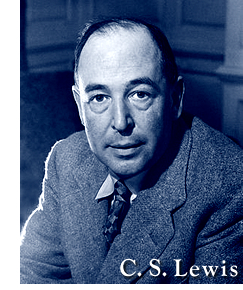
C.S. Lewis Daily – Today’s Reading


On worship

He demands our worship, our obedience, our prostration. Do we suppose that they can do Him any good, or fear, like the chorus in Milton, that human irreverence can bring about “His glory’s diminution”? A man can no more diminish God’s glory by refusing to worship Him than a lunatic can put out the sun by scribbling the word “darkness” on the walls of his cell. But God wills our good, and our good is to love Him (with that responsive love proper to creatures) and to love Him we must know Him: and if we know Him, we shall in fact fall on our faces. If we do not, that only shows that what we are trying to love is not yet God—though it may be the nearest approximation to God which our thought and fantasy can attain.

From The Problem of Pain

Compiled in Words to Live By