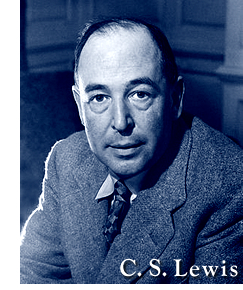
C.S. Lewis Daily – Today’s Reading


In the passage where the New Testament says that every one must work, it gives as a reason ‘in order that he may have something to give to those in need’. Charity—giving to the poor—is an essential part of Christian morality: in the frightening parable of the sheep and the goats it seems to be the point on which everything turns. Some people nowadays say that charity ought to be unnecessary and that instead of giving to the poor we ought to be producing a society in which there were no poor to give to. They may be quite right in saying that we ought to produce this kind of society. But if anyone thinks that, as a consequence, you can stop giving in the meantime, then he has parted company with all Christian morality. I do not believe one can settle how much we ought to give. I am afraid the only safe rule is to give more than we can spare. In other words, if our expenditure on comforts, luxuries, amusements, etc., is up to the standard common among those with the same income as our own, we are probably giving away too little. If our charities do not at all pinch or hamper us, I should say they are too small. There ought to be things we should like to do and cannot do because our charities expenditure excludes them. I am speaking now of ‘charities’ in the common way. Particular cases of distress among your own relatives, friends, neighbours or employees, which God, as it were, forces upon your notice, may demand much more: even to the crippling and endangering of your own position. For many of us the great obstacle to charity lies not in our luxurious living or desire for more money, but in our fear — fear of insecurity. This must often be recognised as a temptation. Sometimes our pride also hinders our charity; we are tempted to spend more than we ought on the showy forms of generosity (tipping, hospitality) and less than we ought on those who really need our help.

From Mere Christianity

Compiled in A Year with C.S. Lewis

Charles Stanley – Steps of Obedience


John 14:1, 15-17

Yesterday as we studied the necessity of increasing our trust in God, we were challenged to make waiting on Him a part of our daily lives. Today, we will look at three additional steps that are essential for the obedient life.

Meditate. If we want to know the mind of God, we must meditate upon His Word. We do not need to pick the “right” verses in order to know God’s will. He has the power to direct us from any portion of the Bible. Our part is to pursue wisdom through Scripture over a sustained period of time.

Listen. Learn to listen to the quiet prompting of the Holy Spirit, who is our Helper. The Word of God is the primary resource through which the Spirit works. If we are studying a passage of Scripture, He will illuminate our minds so that we can understand how God is directing us. Or He will bring to remembrance a passage we have learned and reveal how it applies to our situation.

Walk. Our final lesson to learn regarding obedience is that sometimes we must walk, even when the way is unclear. Abraham is a good example. God told Him to move out of his homeland but did not specify the destination. Abraham complied by faith (Heb. 11:8). We, too, can obey without a total understanding because God makes Himself responsible for the consequences. We are accountable only for obeying. This is good news!

As our class ends, consider the importance of obedience in the life of faith. Then ask God what He wants you to work on first—trusting, waiting, meditating, listening, or walking with Him?

Bible in One Year: John 8-9

Our Daily Bread — The Daily Grind


Read: Ephesians 6:5-9

Bible in a Year: Jeremiah 30-31; Philemon

Whatever you do, work at it with all your heart, as working for the Lord, not for human masters. —Colossians 3:23

The high school I attended required 4 years of Latin instruction. I appreciate the value of that discipline now, but back then it was a grind. Our teacher believed in drill and repetition. “Repetitio est mater studiorum,” she intoned over us several times a day, which simply means, “Repetition is the mother of learning.” “Repetitio est absurdum,” we muttered under our breath. “Repetition is absurd.”

I realize now that most of life is simply that: repetition—a round of dull, uninspiring, lackluster things we must do again and again. “Repetition is both as ordinary and necessary as bread,” said Danish philosopher Søren Kierkegaard. But he went on to say, “It is the bread that satisfies with benediction.”

It’s a matter of taking up each duty, no matter how mundane, humble, or trivial, and asking God to bless it and put it to His intended purposes. In that way we take the drudgeries of life and turn them into holy work, filled with unseen, eternal consequence.

The poet Gerard Manley Hopkins said, “To lift up the hands in prayer gives God glory, but a man with a [pitchfork] in his hand, a woman with a slop pail, give Him glory, too. God is so great that all things give Him glory if you mean that they should.”

If whatever we do is done for Christ, we’ll be amazed at the joy and meaning we’ll find in even the most ordinary tasks. —David Roper

Remind us today, Lord, that You are in the dull and ordinary tasks of life in a most extraordinary way. Let us not forget that we do even the smallest tasks for You.

A willing spirit changes the drudgery of duty into a labor of love.

INSIGHT: Historians say that slaves composed about one-third of the population of Ephesus. In today’s reading Paul teaches believing slaves and masters how to live in a Christlike way within the established structures of society. These instructions called for reciprocal attitudes and applied to both slaves and masters (v. 9). Because of their new relationship with Christ, believers were accountable to Him as their Master, and He would judge fairly regardless of one’s social or economic status. Both slaves and masters were to treat each other with respect, sincerity, justice, and fairness (vv. 5-9). Sim Kay Tee

Ravi Zacharias Ministry – Lost and Found


Growing up, I had a pathological fear of getting lost. It didn’t matter if it was in a nearby cornfield that bordered our burgeoning suburbia, or on the busy highways connecting the vast metropolis in which I lived. For me, getting lost was a fate worse than death. While I wish I could pinpoint the origin of this fear, I cannot. Sure, I had the normal mishaps in which I was separated from my family—and I certainly remember numerous times in which I got lost driving. In the days before GPS, I relied not only on hand-written directions, but also on my ability to interpret them when encountering the street-level reality. The twists and turns in the roads often seemed to contradict the directions I had been given! Even today, living in a world in which we have GPS and Google Maps, I can still be turned in the wrong direction. New construction and detours move cars around the city streets in ever changing patterns that conspire to make even the most sophisticated GPS system sputter and fail.

When I feel I am lost, there is a deep terror that seizes me. Gripped by a feeling of panic, I am prevented from anything like clear thinking. I feel constricted within, my mind swimming with all of the worst possibilities that will befall me because I am lost. I can only focus in on my terror and I lose all sense of perspective with regards to finding my way. Perhaps the deepest anxiety that accompanies those instances of feeling lost is that I am all alone. I am not only separated from my bearings, but also from anyone who knows me, loves me, or cares about me. In these moments of panic, I feel I will wander alone and wonder how or if I will ever be found.

In the life of people of faith, there is also the fear of being lost. What if believing the wrong thing leads one off course? What if wrong choices lead down a path from which one might never return? What if doubt separates one from all guidance and direction? Many times, we associate being lost with a deliberate turning away from faith by those who are rebellious, or who, like prodigal sons and daughters, desire escape to a far country away from the controlling gaze of those perceived to hinder freedom of movement in any way.

But what about those cases in which the directional equipment fails through no fault of those who seek their guidance? What about those unanticipated twists and turns in the road? What about the unexpected storm that arises and blows the ship far off course? There are certainly those times when disorientation, rather than rebellion obscures the path home.

Perhaps in these cases, ‘feeling’ lost is not the same thing as ‘being’ lost. The ancient Hebrew psalmist suggests that even while one might ‘feel’ lost, one is never lost to God. Where can I go from your presence? Where can I hide from your love? In the midst of his own disorienting experiences, the psalmist found comfort in the fact that even while feeling lost and submerged in the remotest parts of the sea, even there your right hand will lay hold of me. When encompassed by utter darkness, the psalmist believes that the night is as bright as the day. The psalmist felt lost—disoriented by the forces that would obstruct the clear way. Yet, in the midst of these feelings, the psalmist affirms the abiding presence of God even in the most desolate places.

This image of the ever-abiding presence of God is extended in the ministry and teaching of Jesus. Jesus expands this image of the God who is especially near, not only to those who ‘feel’ lost, but for those deemed ‘lost’ by others. When the religious leaders of his day grumbled over the tax-gatherers and sinners coming near to listen to him teach, Jesus offered three images of a God who relentlessly seeks the lost in Luke’s gospel narrative.(1) The shepherd leaves the ninety-nine sheep in order to go after the one which is lost; the woman who has ten silver coins turns her house upside down in order to find the one coin she has lost; and the father of the prodigal son is watching and waiting such that he sees his once wayward son while he is still a long way off. In fact, Jesus summarizes his ministry as one that seeks and saves that which was lost.(2)

This gives me great hope, both for the times when I feel lost, and as I wander alongside many others who have indeed lost their way home. Though some of the directions I’ve tried to follow are indiscernible, and even though I have been turned around and disoriented, I have always found the way home. But, more importantly, even when I feel I have lost my way, I am not lost to the God who pursues me. Like the servant Hagar affirmed when she was lost in the wilderness, you are the God who sees.

Margaret Manning Shull is a member of the speaking and writing team at Ravi Zacharias International Ministries in Bellingham, Washington.

(1) Luke 15

(2) Luke 19:10. Cf. Matt. 18:11

Alistair Begg – He Loves to Hear


Behold, he is praying. Acts 9:11

Prayers are instantly noticed in heaven. The moment Saul began to pray, the Lord heard him. Here is comfort for the distressed but praying soul. When our hearts are broken and we bow in prayer, we are often only able to employ the language of sighs and tears; still our groaning has made all the harps of heaven thrill with music.

That tear has been caught by God and treasured in the receptacle of heaven. “Put my tears in your bottle”1 implies that they are caught as they flow. The petitioner, whose fears prevent his words, will be well understood by the Most High. He may only look up with misty eye; but “prayer is the falling of a tear.”

Tears are the diamonds of heaven; sighs are a part of the music of Jehovah’s court and are numbered with “the sublimest strains that reach the majesty on high.” Do not think that your prayer, however weak or trembling, will be unregarded.

Jacob’s ladder is lofty, but our prayers shall lean upon the Angel of the covenant and so climb its starry rounds.

Our God not only hears prayer but also loves to hear it. He does not forget the cry of the humble. True, He does not regard high looks and lofty words; He does not care for the pomp and pageantry of kings; He does not listen to the drums of war; He does not regard the triumph and pride of man.

But wherever there is a heart enlarged with sorrow or a lip quivering with agony or a deep groan or a penitential sigh, the heart of Jehovah is open.

He marks it down in the registry of His memory; He puts our prayers, like rose leaves, between the pages of His book of remembrance, and when at last the volume is opened, there will be a precious fragrance springing from it.

Faith asks no signal from the skies,

To show that prayers accepted rise.

Our Priest is in His holy place,

And answers from the throne of grace.

1) Psalm 56:8

The Family Bible Reading Plan

  • 2 Kings 16
  • Titus 2

Devotional material is taken from “Morning and Evening,” written by C.H. Spurgeon, revised and updated by Alistair Begg.

Charles Spurgeon – The God of peace


“Now the God of peace be with you all. Amen.” Romans 15:33

Suggested Further Reading: Philippians 4:1-9

Let me briefly show you the appropriateness of this prayer. We indeed ought to have peace amongst ourselves. Joseph said to his brethren when they were going home to his father’s house, “See that ye fall not out by the way.” There was something extremely beautiful in that exhortation. You have all one father, you are of one family. Let men of two nations disagree; but you are of the seed of Israel; you are of one tribe and nation; your home is in one heaven. “See that ye fall not out by the way.” The way is rough; there are enemies to stop you. See that if you fall out when you get home, you do not fall out by the way. Keep together; stand by one another, defend each other’s character; manifest continual affection. The world hates you because you are not of the world. Oh! You must take care that you love one another. You are all going to the same house. You may disagree here, and not speak to one another, and be almost ashamed to sit at the same table, even at the sacrament; but you will all have to sit together in heaven. Therefore do not fall out by the way. Consider, again, the great mercies you have all shared together. You are all pardoned, you are all accepted, elected, justified, sanctified, and adopted. See that you fall not out when you have so many mercies. Joseph has filled your sacks, but if he has put some extra thing into Benjamin’s sack, do not quarrel with Benjamin about that, but rather rejoice because your sacks are full. You have all got enough, you are all secure, you have all been dismissed with a blessing.

For meditation: The God of love and peace will be seen to be present when his people live in peace with one another (2 Corinthians 13:11)

Sermon no. 49

3 November (Preached 4 November 1855)

John MacArthur – Having a Faith That Responds


“Faith is . . . the conviction of things not seen” (Heb. 11:1).

True faith goes beyond assurance to action.

When the writer said, “Faith is the assurance of things hoped for, the conviction of things not seen”, he used two parallel and almost identical phrases to define faith.

We’ve seen that faith is the assurance that all God’s promises will come to pass in His time. “The conviction of things not seen” takes the same truth a step further by implying a response to what we believe and are assured of.

James addressed the issue this way: “Someone may well say, ‘You have faith, and I have works; show me your faith without the works, and I will show you my faith by my works.’. . . But are you willing to recognize . . . that faith without works is useless? . . . For just as the body without the spirit is dead, so also faith without works is dead” (James 2:18, 26). In other words, a non-responsive faith is no faith at all.

Noah had a responsive faith. He had never seen rain because rain didn’t exist prior to the Flood. Perhaps he knew nothing about building a ship. Still, he followed God’s instructions and endured 120 years of hard work and ridicule because he believed God was telling the truth. His work was a testimony to that belief.

Moses considered “the reproach of Christ [Messiah] greater riches than the treasures of Egypt; for he was looking to the reward” (Heb. 11:26). Messiah wouldn’t come to earth for another 1,400 years, but Moses forsook the wealth and benefits of Egypt to pursue the messianic hope.

Shadrach, Meshach, and Abednego, when faced with a life- threatening choice, chose to act on their faith in God, whom they couldn’t see, rather than bow to Nebuchadnezzar, whom they could see all too well (Dan. 3). Even if it meant physical death, they wouldn’t compromise their beliefs.

I pray that the choices you make today will show you are a person of strong faith and convictions.

Suggestions for Prayer

  • Ask God to increase and strengthen your faith through the events of this day.
  • Look for specific opportunities to trust Him more fully.

For Further Study

Read Daniel 3:1-20. How was the faith of Shadrach, Meshach, and Abednego tested?

Joyce Meyer – Keep Balanced


For we who have believed (adhered to and trusted in and relied on God) do enter that rest. —Hebrews 4:3

It is easy to get overcommitted, burned out, bummed out, worn out, and stressed out if you are trying to keep up with too many commitments. It is out of balance to try to do everything. If you are happy doing what you do, keep doing it. But if it wears you out and robs you of peace, don’t do it. What sense does it make to commit to something, and then murmur and complain about it while you are doing it?

Being overcommitted will frustrate you. Anxiety is usually a sign that God never told you to do what you are doing in the first place. To avoid frustration in your life, keep in balance.

From the book Ending Your Day Right by Joyce Meyer.

Campus Crusade for Christ; Bill Bright – He Welcomes You


“Come unto Me, all ye that labour and are heavy laden, and I will give you rest. Take My yoke upon you, and learn of Me; for I am meek and lowly in heart: and ye shall find rest unto your souls. For My yoke is easy, and My burden is light” (Matthew 11:28-30, KJV).

Several years ago I had the privilege of meeting with a world-famous theologian. This great scholar had denied the deity of Christ and had taught thousands of seminarians who had studied under him that Jesus was only a great man and a great teacher. He was not God incarnate, and surely could not forgive sin and provide rest to His followers. Yet, in a unique way God had created a hunger in his heart for truth and for two years he had done an in-depth study of the life of Jesus.

As we met together in his office, he asked, “What do you tell a student when he asks you how to become a Christian?”

When I realized he was sincere, I proceeded to explain why I believe Jesus Christ is the Son of God and why all men everywhere need Him as their Savior and Lord, and how anyone who wants to can receive Him.

“I am persuaded,” he said after a long while, “that no honest person who is willing to consider the overwhelming evidence for the deity of Christ can deny that He is the Son of God.”

This great scholar, who had denied the deity of Christ all his life and encouraged millions of others to think likewise, bowed in prayer and received Christ into his life as Savior and Lord.

Jesus Christ stands out clearly as the one supernaturally unique figure in all of history. He is incomparable. He invites all who will to experience His love and forgiveness. “Come unto Me.” He welcomes “all you that labour and are heavy laden, and I will give you rest…My yoke is easy and My burden is light.”

Bible Reading: Matthew 11:23-27

TODAY’S ACTION POINT: Through the enabling of the Holy Spirit, I will seek to make sure that every loved one, every friend, every contact I make today is fully aware of the fact that God loves him, that Jesus Christ died for him and will welcome him into His family through a simple act of faith. I will tell him that He offers peace and rest – from life’s burdens – to all who follow Him in faith and obedience

Presidential Prayer Team; G.C. – Pray, Vote and Watch


The 1994 Wyoming race for House of Representatives ended in a tie. Republican Randall Luthi and Independent Larry Call agreed to a recount and the results were the same – dead even. Governor Mike Sullivan proposed a quick way to decide the race. He wrote each man’s name on a ping-pong ball, put them both in his cowboy hat, and pulled one out. Luthi’s name was drawn that day and he went on to serve for 13 years, eventually becoming Wyoming’s Speaker of the House.

The Lord said to Moses, “Now you shall see what I will do.”

Exodus 6:1

In Exodus, God sends Moses to the powerful Pharaoh over Egypt with a message to free His enslaved people…or else. Pharaoh’s advisers assured him no one had more power than he, and not to be concerned. Eventually, God speaks candidly to Moses the words of today’s verse – and the rest is familiar history.

As you cast your vote today, you are a faithful messenger. It’s not an elected official or chance drawing determining the future of America. God continues to unfold His providential plan to reveal His risen Son, Jesus Christ, and deliver people from darkness. Pray, vote, and then watch and see what He is doing.

Recommended Reading: Proverbs 8:12-17

Greg Laurie – The Power of Forgiveness


David and his men tore their clothes in sorrow when they heard the news. They mourned and wept and fasted all day for Saul and his son Jonathan, and for the Lord’s army and the nation of Israel, because they had died by the sword that day.—2 Samuel 1:11–12

If an enemy who had opposed you for years was finally dealt with, what would be your first thought? I doubt it would be how to show kindness to that person or to members of his or her family. Generally, we want to give the way that we get. If we get hit, we want to hit back—even harder. That is human nature.

But David had made a promise to Saul’s son Jonathan, and he was a man of his word. He would look out for Jonathan’s children and show mercy and kindness to his descendents.

After Saul and Jonathan were killed in battle, there was no king over Israel. David was the rightful king, but the battle continued between the house of David and the house of Saul. Saul had a son named Ishbosheth, and Abner, Saul’s general, made him king. He ignored the fact that God had chosen David as Saul’s successor.

Then Abner and Ishbosheth had an argument, and Abner threatened to defect. Sure enough, he went over to David’s side. But there were problems with that because Joab, David’s general, hated Abner. He couldn’t believe that David would allow Abner into their ranks. This escalated, and Joab ultimately hunted down Abner and killed him.

David was outraged. He was tired of the fighting and wanted it to end. He didn’t want to deal with his enemies in the way they had dealt with him. He wanted to forgive them. David could have engaged in some big-time payback. But he did the very opposite. Even before all of the experts figured it out, David knew the power of forgiveness.

Was David a perfect man? No. Did he have his flaws? Yes. But God loved David. And He uniquely described him as a man after His own heart.

Max Lucado – Obedience is the Key


Do you want a Promised Land life? Do you desire the fullness of Glory Days? Then obey God’s commands! What’s that? You expected something more mystical, exotic, or intriguing? You thought that the Promised Land level life was birthed from ecstatic utterances or angelic visions, mountaintop moments, or midnight messages from heaven? Sorry to disappoint you.

Obedience, wrote C.S. Lewis, is the key to all doors. Don’t think for a second you can heed the wrong voice, make the wrong choice, and escape the consequences. At the same time, obedience leads to a waterfall of goodness not just for you but for your children, your children’s children, and great-grandchildren.  It is God’s promise in Exodus 20:6 to “show love to a thousand generations of those who love me and keep my commandments.” As we obey God’s commands, we open the door for God’s favor!

From Glory Days

Night Light for Couples – The Greatest Gift


“Consider the ravens: They do not sow or reap… yet God feeds them. And how much more valuable you are than birds!” Luke 12:24

Although the battle for healthy self‐confidence is most often fought by women, many men also struggle with the issue. Unlike a woman, a man derives his sense of worth primarily from the reputation he earns in his job or profession. He draws emotional satisfaction from achieving in business, becoming financially independent, developing a highly respected skill, being the “boss,” or being loved and appreciated by his patients, clients, or business associates. When his career fails, however, look out.

His confidence often falters, and he becomes vulnerable. Depression, anger, and withdrawal are just some of his potential responses. Wives, here’s something to remember: More than anything, your man needs your respect. Compliment him on the qualities you most admire in him. Avoid comments that debase or embarrass him—especially in the eyes of others. As much as is reasonably possible, understand and support his career, but also create such an affirming atmosphere at home that he will be happy to leave career concerns at the office.

The better you understand your differences, the more you’ll appreciate the gift that is your mate.

Just between us…

  • (wife) What achievement are you proudest of?
  • (wife)
  • Are you satisfied with the current state of your career?
  • (wife) How can I help you with your career?
  • (wife) How can I show more respect for you and what you do?

(wife) Father, thank You for my husband—for the energy, skills, and ambitions you’ve placed in him. Help him to know that You love him no matter how he performs, and please help me show him the honor and respect I feel. Amen.

From Night Light For Couples, by Dr. James & Shirley Dobson

Charles Stanley – The School of Obedience


Proverbs 3:5-6

Welcome to God’s School of Obedience. Today and tomorrow we will be sitting in on a class called “Obedience 101.” For some of us, the lesson will be new material; for others, a good review. In this course, we are trying to master the essential elements of an obedient, God-honoring lifestyle. Here are a couple of things we must learn to do in order to achieve our goal:

Trust. A key requirement for obedience is trusting in God—this is something the Lord expects of us (Prov. 3:5). He knows obedient responses result from a foundation of faith, while most rebellion derives from a lack of it. Therefore, to live obedient lives, we must believe God is who He has revealed Himself to be. We must also accept His plans, methods, and timing. We can deepen our trust level by obeying and watching for the Lord’s response. Remember, God delights in blessing those who do what He says.

Wait. We seem to find the element of patience particularly challenging. When we don’t know what to do, we often rely on our own understanding, make a move, and then hope God will approve and bless it. That’s not scriptural. God is more than willing to show us what to do. He’s given us His Spirit as our teacher because He wants us to know how to proceed. We must wait in an attitude of trust until we are certain.

God assumes full responsibility for giving us direction in our lives. He desires to let us know each step along the way. But we must come to Him with a trusting heart and a willingness to wait before He reveals what to do next.

Bible in One Year: John 6-7

Our Daily Bread — Words of the Wise


Read: Ecclesiastes 9:13-18

Bible in a Year: Jeremiah 27-29; Titus 3

Words of the wise, spoken quietly, should be heard. nkjv —Ecclesiastes 9:17

My niece’s husband recently wrote these words on a social media site: “I would say a lot more online if it weren’t for this little voice that prompts me not to. As a follower of Jesus, you might think that little voice is the Holy Spirit. It isn’t. It’s my wife, Heidi.”

With the smile comes a sobering thought. The cautions of a discerning friend can reflect the wisdom of God. Ecclesiastes 9 says that the “words of the wise, spoken quietly, should be heard” (v. 17 nkjv).

Scripture warns us not to be wise in our own eyes or proud (Prov. 3:7; Isa. 5:21; Rom. 12:16). In other words, let’s not assume that we have all the answers! Proverbs 19:20 says, “Listen to advice and accept discipline, and at the end you will be counted among the wise.” Whether it is a friend, a spouse, a pastor, or a co-worker, God can use others to teach us more of His wisdom.

“Wisdom reposes in the heart of the discerning,” declares the book of Proverbs (14:33). Part of recognizing the Spirit’s wisdom is discovering how to listen and learn from each other. —Cindy Hess Kasper

Dear Lord, thank You for Your Word that teaches me how to love You and others. Thank You also for the people You place in my life to remind me of Your truth.

True wisdom begins and ends with God.

INSIGHT: The author of the book of Ecclesiastes is unknown. Many believe it to be Solomon, the legendary wise son of King David. However, we are only told that the author is “the Teacher, son of David, king in Jerusalem” (Eccl. 1:1). This description would fit King Solomon. J.R. Hudberg

Ravi Zacharias Ministry – My World


There is something about an inbox that subtly (and not so subtly) conveys the notion that we are important. With three missed calls on the cell phone, 18 unread e-mails, and two messages on the answering machine, we are pelted with the enticing idea: “Someone needs me!” The immediate ring, buzz, or pop-up note proclaiming the arrival of these new messages is somehow complimentary, even as it demands our attention—”Check your mailbox now! Someone is looking for you!”

The language of technology seems to further our sense of importance by bidding us to claim and personalize these worlds. I am only one click away from “my documents,” “my calendar,” “my favorites,” “my music,” “my pictures,” and “my shopping cart.” Anthropologist Thomas de Zengotita calls it “MeWorld.” In a book that examines the ways in which the world of media shapes our lives, de Zengotita portrays the technologically advanced, media-saturated West as a world filled with millions of individual “flattered selves,” each living in its own insulated, personalized world.(1) He believes the narcissism that comes from living in MeWorld has been fashioned and is constantly being fed by media representations in all areas of our lives, from those private representations that purport us the star (home videos, wedding photos, Facebook) to the public advertisements, television, and magazines that ever address us personally.

Subtle as it may be, the most precarious part of flattered living is that we gradually lose sight of both life and self. Despite all of the overt declarations on my computer, this is not, in fact, “my world.” Though I am flattered by the attention of MeWorld, I am not the center of all existence. French philosopher Rene Descartes outlined one reason why: “Now, if I were independent of all other existence, and were myself the author of my being…I should have given myself all those perfections of which I have some idea, and I should thus be God.” In other words, if I were truly independent, if the world truly revolved around me, why should I find in myself any imperfection at all? Is it not then irrational to live as if I am the center of the world?

The Christian worldview takes this inquiry one step further. Namely, how do I cultivate an awareness that this is God’s world in a world that reminds me at every turn that it is mine? The counter-cultural admission that we are not our own nor walking alone is certainly a starting point. A poem called “The Avowal” by Denise Levertov speaks to such an awareness:

As swimmers dare

to lie face to the sky

and water bears them,

as hawks rest upon air

and air sustains them,

so would I learn to attain

freefall, and float

into Creator Spirit’s deep embrace,

knowing no effort earns

that all-surrounding grace.

For the Christian, living both coherently and authentically involves an understanding of what truly undergirds us. Hence the fitting prayer of the hymnist: This is my Father’s world. O let me ne’er forget.

When Jesus looked to the disciples on one of his last nights with them on earth, he covered their hearts with a similar notion. “Do not let your hearts be troubled. Trust in God; trust also in me. In my Father’s house are many rooms; if it were not so, I would have told you. I am going there to prepare a place for you. And if I go and prepare a place for you, I will come back and take you to be with me that you also may be where I am. You know the way to the place where I am going… I am the way and the truth and the life.”(2)

As I Christian, there is some relief in confessing that my world is surely the Lord’s and all that is in it. It is also my starting point, the place where I begin the journey toward home. We are not flattered on our way to this house, but transformed by the very one who prepares the way.

Jill Carattini is managing editor of A Slice of Infinity at Ravi Zacharias International Ministries in Atlanta, Georgia.

(1) Thomas de Zengotita, Mediated: How the Media Shapes Your World and the Way You Live in It (New York: Bloomsbury Publishing, 2005), 21.

(2) John 14:1-4, 6.

 

Alistair Begg – Unaffected by Change


For I the Lord do not change Malachi 3:6

It is just as well for us that in all the variableness of life there is One whom change cannot affect, One whose heart can never alter, and on whose brow inconsistency can make no furrows.

All other things have changed-all things are changing. The sun grows dim with age; the world is growing old; the final chapter of the worn-out vesture has begun; the heavens and earth must soon pass away; they will perish-they shall grow old like a garment. But there is One who only has immortality, of whose years there is no end, and in whose person there is no change.

The delight that the sailor feels when, having been tossed about on the waves, he steps again upon the solid shore is the satisfaction of a Christian when, in all the changes of this distressing life, he rests the foot of his faith upon this truth-“I the LORD do not change.”

The stability that the anchor gives the ship when it has at last obtained a solid hold is like that which the Christian’s hope provides him when it fixes itself upon this glorious truth. With God “there is no variation or shadow due to change.”1

Whatever His attributes were in the past, they are now; His power, His wisdom, His justice, His truth are unchanged. He has forever been the refuge of His people, their stronghold in the day of trouble, and He is still their sure Helper.

He is unchanged in His love. He has loved His people with “an everlasting love”;2 He loves them now as much as ever He did, and when the creation itself is set free from its bondage to decay, His love will still endure.

Precious is the assurance that He does not change! The wheel of providence revolves, but its axle is eternal love.

Death and change are busy ever,

Man decays, and ages move;

But His mercy waneth never;

God is wisdom, God is love.

1) James 1:17

2) Jeremiah 31:3

The Family Bible Reading Plan

  • 2 Kings 15
  • Titus 1

Devotional material is taken from “Morning and Evening,” written by C.H. Spurgeon, revised and updated by Alistair Begg.

Charles Spurgeon – The exaltation of Christ


“Wherefore God also hath highly exalted him, and given him a name which is above every name: That at the name of Jesus every knee should bow, of things in heaven, and things in earth, and things under the earth; And that every tongue should confess that Jesus Christ is Lord, to the glory of God the Father.” Philippians 2:9-11

Suggested Further Reading: John 17:1-5

Look at him! Can your imagination picture him? Behold his transcendent glory! The majesty of kings is swallowed up; the pomp of empires dissolves like the white mist of the morning before the sun; the brightness of assembled armies is eclipsed. He in himself is brighter than the sun, more terrible than armies with banners. See him! See him! Oh! Hide your heads, you monarchs; put away your gaudy pageantry, you lords of this poor narrow earth! His kingdom knows no bounds; without a limit his vast empire stretches out itself. Above him all is his; beneath him many a step are angels, and they are his; and they cast their crowns before his feet. With them stand his elect and ransomed, and their crowns too are his. And here upon this lower earth stand his saints, and they are his, and they adore him; and under the earth, among the infernals, where devils growl their malice, even there is trembling and adoration; and where lost spirits, with wailing and gnashing of teeth for ever lament their being, even there, there is the acknowledgement of his Godhead, even though the confession helps to make the fire of their torments. In heaven, in earth, in hell, all knees bend before him, and every tongue confesses that he is God. If not now, yet in the time that is to come this shall be carried out, that every creature of God’s making shall acknowledge his Son to be “God over all, blessed for ever. Amen.” Oh! My soul anticipates that blessed day, when this whole earth shall bend its knee before its God willingly! I do believe there is a happy era coming, when there shall not be one knee unbent before my Lord and Master.

For meditation: For meditation: Those who refuse to acknowledge the Lord Jesus Christ in this life (2 John 7) will be forced to acknowledge him in the next—but it will be too late to do them any good. Those who trust in him now will enjoy praising him for ever.

Sermon no. 101

2 November (1856)

John MacArthur – The Hope That Assures


“Faith is the assurance of things hoped for” (Heb. 11:1).

Faith is the solid ground on which we stand as we await the fulfillment of God’s promises.

An elderly man who, on his seventy-fifth birthday, received an invitation to fly over the little West Virginia town in which he had spent his entire life. Although he had never before flown, the man accepted the gracious offer.

After circling the town for about twenty minutes, the pilot safely returned his passenger to the ground. The man’s grandson greeted him excitedly, asking, “Were you scared, Grandpa?” “No,” he replied sheepishly, “but I never did put my full weight down.”

Unlike that hesitant grandfather, true faith trusts fully in its object. For the Christian, that means resting in God and His promises. That’s the primary characteristic of each faithful individual listed in Hebrews 11. They all believed God and responded accordingly.

People often confuse faith with a wistful longing that something, however unlikely, will come to pass in the future. But “assurance” in Hebrews 11:1 speaks of essence and reality— the real thing, as opposed to mere appearance. Faith, then, involves absolute certainty.

For example, the Old Testament saints had the promise of a coming Messiah who would take away sin. They believed God, even though their understanding of Messiah was incomplete and somewhat vague. They knew their hopes would be fulfilled, and that assurance dominated their lives.

It’s the same for New Testament believers. Peter said, “Though you have not seen [Christ], you love Him, and though you do not see Him now, but believe in Him, you greatly rejoice with joy inexpressible and full of glory, obtaining as the outcome of your faith the salvation of your souls” (1 Pet. 1:8-9).

Man’s natural tendency is to trust only in the things he can see, hear, touch, or taste. But our physical senses may lie, whereas God cannot (Titus 1:2). Far better to believe God and trust in His promises.

Suggestions for Prayer

Which promises of God are especially meaningful to you today? Thank Him for them and reaffirm your commitment to living on the basis of His Word.

For Further Study

Skim Hebrews 11 and note all the divine promises you find there. To gain a fuller understanding of each one, find other Scripture references that mention the same promises.


Joyce Meyer – Let the Holy Spirit Guide You


For this God is our God forever and ever; He will be our guide [even] until death. —Psalm 48:14

Often when my husband, Dave, and I travel, we hire a guide to show us the best and most important sites to see. Once, however, we decided to explore by ourselves; that way we could do what we wanted to, when we wanted to.

We quickly found that our independent trips were nearly wasted. We often spent a large part of the day getting lost and then trying to find our way again. We have found it to be the best use of our time to follow a guide rather than wandering aimlessly to find places ourselves.

I believe this example relates to how we are in life. We want to go our own way so we can do what we want to do, when we want to do it, but we end up getting lost and wasting our lives. We need the Holy Spirit guiding us through every day of our time on this earth. God is committed to guide us even until we leave this life, so it seems important to learn how to hear what He is telling us.

The Holy Spirit knows both the mind of God and God’s individual plan for you. His road map for you is not necessarily like anybody else’s, so it doesn’t work to try to pattern your life after someone else or what he or she has heard from God. God has a unique plan for you, and the Holy Spirit knows what it is and will reveal it to you.

Perhaps you are like I was and have wasted many years walking your own way without seeking God’s guidance. The good news is that it’s not too late to turn and go in a new direction—toward God’s plan and purpose for your life. It is not too late to learn how to hear from God. If you are sincerely willing to obey God, He will guide you on an exciting journey of learning to hear from Him every day of your life.

Trust in Him: Following a guide requires trusting someone or something other than yourself to lead the way. God will never fail you, so you can trust Him to be your Guide in life.

From the book Trusting God Day by Day by Joyce Meyer