Campus Crusade for Christ; Bill Bright – Judging the World


“For He has set a day for justly judging the world by the man He has appointed, and has pointed Him out by bringing Him back to life again” (Acts 17:31).

Why does God command men and women to repent? And why does He expect you and me to relay His message to them?

The answer is simple: because “He has set a day for justly judging the world.” And if people refuse to be penitent and thus become pardoned, they must be condemned.

“Justly,” of course, can be interpreted: “according to the rules of strict justice.” And who will do the judging? The man God has appointed – His only Son, Jesus Christ; the one He has pointed out to us clearly by bringing Him back to life again.

Jesus, you will remember, declared that He would judge the nations (John 5:25,26and Matthew 25). God confirmed the truth of those declarations by raising Him from the dead – giving His sanction to what the Lord Jesus has said, for surely God would not work a miracle on behalf of an imposter.

What comfort and help can you and I receive from these truths today? Surely, this is a reminder that God is still on the throne; He is in control; nothing is going on in the world without His knowledge and consent.

Further, we are reminded of God’s justice, which assures us that He will always do right in behalf of His children. That falls right in line with Romans 8:28, of course, which concerns all things working together for our good.

Bible Reading: Psalm 9:7-10

TODAY’S ACTION POINT: World turmoil will not upset me, for I know the God who sits on the throne – and who rules over all

“For He has set a day for justly judging the world by the man He has appointed, and has pointed Him out by bringing Him back to life again” (Acts 17:31).

Why does God command men and women to repent? And why does He expect you and me to relay His message to them?

The answer is simple: because “He has set a day for justly judging the world.” And if people refuse to be penitent and thus become pardoned, they must be condemned.

“Justly,” of course, can be interpreted: “according to the rules of strict justice.” And who will do the judging? The man God has appointed – His only Son, Jesus Christ; the one He has pointed out to us clearly by bringing Him back to life again.

Jesus, you will remember, declared that He would judge the nations (John 5:25,26and Matthew 25). God confirmed the truth of those declarations by raising Him from the dead – giving His sanction to what the Lord Jesus has said, for surely God would not work a miracle on behalf of an imposter.

What comfort and help can you and I receive from these truths today? Surely, this is a reminder that God is still on the throne; He is in control; nothing is going on in the world without His knowledge and consent.

Further, we are reminded of God’s justice, which assures us that He will always do right in behalf of His children. That falls right in line with Romans 8:28, of course, which concerns all things working together for our good.

Bible Reading: Psalm 9:7-10

TODAY’S ACTION POINT: World turmoil will not upset me, for I know the God who sits on the throne – and who rules over all

Presidential Prayer Team; A.W. – Miracle Faith


The book Miracles in American History by Susie Federer tells 32 stories of answered prayers for the nation and its leaders during difficult circumstances. Desperate situations during the French and Indian War, the Revolution, the War of 1812, the Civil War, World Wars I and II and the Korean War all have amazing stories of God’s response to prayers. Dire situations were changed through His intervention.

Whatever you ask in prayer, believe that you have received it, and it will be yours.

Mark 11:24

This should not be surprising when you consider today’s verse. Jesus cursed a fig tree the day before and it withered. The disciples were amazed, but He told them they only needed to have faith. He instructed them to believe whenever they prayed, and they would receive. Miracles can happen with faith, belief and prayer.

Would you like to see an amazing turnaround in the situation of this nation? Start praying and believing for its leaders today. Pray also for your fellow citizens to come to know Christ and for a revival to begin in America.

Recommended Reading: Mark 11:11-14, 20-24

Greg Laurie – Dropped


One day David asked, “Is anyone in Saul’s family still alive–anyone to whom I can show kindness for Jonathan’s sake?”—2 Samuel 9:1

He was only five years old when his father and grandfather were killed in battle. His life of privilege and potential up to that point had not prepared him for the hard life he would face in the future. He was a little prince named Mephibosheth, and he was being raised by his godly father, Jonathan.

But dark clouds were gathering in his small world, and in a moment, through no fault of his own, his life would forever change.

Jonathan saw it coming. He knew that his father, Saul, was getting crazier by the day, so he started making preparations for the future. He made his friend David promise that he would take care of Jonathan’s descendents. David not only made that promise to Jonathan, but in doing so, he was making it to Saul as well.

When news hit the palace that Mephibosheth’s father and grandfather were killed in battle, his nurse was in a hurry to get Mephibosheth into hiding. She dropped him, and the little child was forever disabled. In fact, his name Mephibosheth means “a shameful thing,” although there is nothing shameful about having a disability. (The only thing shameful is giving a child a name like that.) Mephibosheth was looked down on and was thought of as less than others. He was dropped in life.

Maybe, like Mephibosheth, you have been dropped in life. Maybe as a child you were mistreated, neglected, or abused. Maybe you were forgotten. Maybe you weren’t given a lot of hope when you were growing up.

The good news is that God specializes in taking people who have been dropped in life and picking them up again. I was dropped in life, but God reached out and picked me up. And He can do that for you as well.

Max Lucado – A Rousing Ovation


Scott Norwood, a former NFL champion with the Buffalo Bills, walked off the field with his head down. He missed the kick and lost the game. In spite of the loss the team was honored with a turnout of thousands of people cheering them on. Scott stayed in the background but fans had something else in mind. “We want Scott!” The chant grew to a rousing ovation. He missed the kick, but they made sure he knew he was still a part of their community.

In Hebrews 12:1, the Bible says we are surrounded by a great cloud of witnesses. Thousands upon thousands of saved saints are looking down upon us. Abraham. Peter. David. Paul. Joshua. Your grandpa, your uncle, your neighbor, your coach. They have seen God’s great grace; and they are all pulling for you. Do you hear them? They are chanting your name. “Don’t quit!” “It’s worth it!” “Try again!”

From Glory Days

Night Light for Couples – Body and Spirit


“Don’t be afraid; you are worth more than many sparrows.” Matthew 10:31

In addition to society’s obsession with physical beauty, women face other obstacles to maintaining confidence, including disrespect for wives and mothers who have chosen the traditional homemaking role. Furthermore, many wives, especially mothers of small children, feel isolated at home. Their husbands are physically and emotionally “elsewhere,” pursuing careers, hobbies, or both. The result is often devastating, as women tend to derive their sense of self‐worth from the emotional closeness achieved through relationships.

So what’s the solution? We encourage you as the husband to be present with your wife in body and spirit. Set aside time for her. Listen to her. Romance her. Show her she’s still your one‐and‐only sweetheart. On the other hand, don’t expect to fill all of her emotional needs. Encourage her to develop meaningful friendships with other women and reach out to others in your community.

“Honor one another above yourselves.” This simple phrase from the Bible (Romans 12:10) is the key to affirming the infinite worth of your spouse.

Just between us…

  • (husband) When you’re with other people, do you sometimes think,

“They wouldn’t like me if they really knew who I am?”

  • (husband) Do you feel that I’m “present with you,” or do I often seem preoccupied?
  • (husband) What can I do to build your confidence this week?
  • (husband) How can I support you in establishing friendships?

(husband) Dear God, thank You for the great worth You see in my wife. I see it, too, and I want to honor and cherish her more every day. Help me to bless her and make her strong in this way. Amen.

From Night Light For Couples, by Dr. James & Shirley Dobson

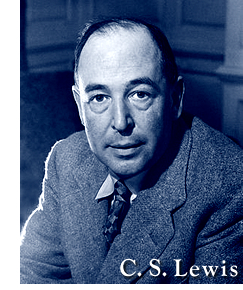
C.S. Lewis Daily – Today’s Reading


On fasting

The problem about avoiding our own pain admits a similar solution. Some ascetics have used self-torture. As a layman, I offer no opinion on the prudence of such a regimen; but I insist that, whatever its merits, self-torture is quite a different thing from tribulation sent by God. Everyone knows that fasting is a different experience from missing your dinner by accident or through poverty. Fasting asserts the will against the appetite—the reward being self-mastery and the danger pride: involuntary hunger subjects appetites and will together to the Divine will, furnishing an occasion for submission and exposing us to the danger of rebellion. But the redemptive effect of suffering lies chiefly in its tendency to reduce the rebel will. Ascetic practices, which in themselves strengthen the will, are only useful in so far as they enable the will to put its own house (the passions) in order, as a preparation for offering the whole man to God. They are necessary as a means; as an end, they would be abominable, for in substituting will for appetite and there stopping, they would merely exchange the animal self for the diabolical self.

From The Problem of Pain

Compiled in Words to Live By

Marriage : A Family Affair – Dr Dobson

I have written you several times in recent months about the tragic assault on the institution of the family, emanating from the ruling by the U.S. Supreme Court that legalized same-sex marriage. The repercussions of that decision and the inevitable fallout from it are staggering.

This month, however, I won’t discuss the collapse of traditional marriage further. Instead, I want to address the marvelous institution itself. Who can comprehend the mysterious bonding that enables a man and woman to withstand the many storms of life and remain best friends “til death do us part?” This phenomenon is so remarkable that the Apostle Paul, writing under the inspiration of the Holy Spirit, described marriage as symbolizing Jesus Christ’s unfathomable love for His bride, the Church. We could spend a month or two just thinking about the implications of that relationship. It also makes us shudder at the audacity of five arrogant Justices daring to undermine and redefine that divine plan for humanity. We read in Matthew 19:6: “Therefore, what God has joined together, let man not separate.”

As wonderful as marriage is, too many of today’s families end on a less inspirational note. I’ve seen a flurry of these wounded, dying relationships in recent months, and I’ve witnessed anew the agony that divorce inflicts on its victims. Everyone loses when a marriage turns sour. In fact, I read recently that the parents of divorcing children typically suffer as much as their grown sons and daughters. In-laws can do nothing but stand and watch as two people they love systematically claw one another to pieces, leaving their broken grandchildren in their wake. Certainly, there are no winners when a marriage begins to unravel.

I came across a secular book a few years ago that expressed the pain associated with divorce more dramatically than anything I’ve read. It is entitled, Death of a Marriage, by Pat Conroy. I’ve obtained permission to quote a short passage from this book in the hope of helping someone who is contemplating a divorce. If you are such a person, and you’ve been asking the Lord for guidance, perhaps this is His answer. If you know someone who is considering that decision, you might give him or her a copy of this letter. Urge that person to beware! There is pain down that well-trodden road, as Mr. Conroy states so eloquently. This is what he wrote:


Each divorce is the death of a small civilization. Two people declare war on each other, and their screams and tears infect their entire world with the bacilli of their pain. The greatest comes from the wound where love once issued forth. I find it hard to believe how many people now get divorced, how many submit to such extraordinary pain. For there are no clean divorces. Divorces should be conducted in surgical wards. In my own case, I think it would have been easier if Barbara had died. I would have been gallant at her funeral and shed real tears – far easier than staring across a table, telling each other it was over. It was a killing thing to look at the mother of my children and know that we would not be together for the rest of our lives. It was terrifying to say goodbye, to reject a part of my own history.

When I went through my divorce I saw it as a country, and it was treeless, airless; there were no furloughs and no holidays. I entered without passport, without directions and absolutely alone. Insanity and hopelessness grew in that land like vast orchards of malignant fruit. I do not know the precise day that I arrived in that country. Nor am I certain that you can ever renounce your citizenship there.

Each divorce has its own metaphors that grow out of the dying marriage. One man was inordinately proud of his aquarium. He left his wife two weeks after the birth of their son. What visitors noticed next was that she was not taking care of the aquarium. The fish began dying. The two endings became linked in my mind.

For a long time I could not discover my own metaphor of loss – until the death of our dog, Beau, became the irrefutable message that Barbara and I were finished.

Beau was a feisty, crotchety dachshund Barbara had owned when we married. It took a year of pained toleration for us to form our alliance. But Beau had one of those illuminating inner lives that only lovers of dogs can understand. He had a genius for companionship. To be licked by Beau when you awoke in the morning was a fine thing.

On one of the first days of our separation, when I went to the house to get some clothes, my youngest daughter, Megan, ran out to tell me that Beau had been hit by a car and taken to the animal clinic. I raced there and found Ruth Tyree, Beau’s veterinarian. She carried Beau in to see me and laid him on the examining table.

I had not cried during the terrible breaking away from Barbara. I had told her I was angry at my inability to cry. Now I came apart completely. It was not weeping; it was screaming; it was despair.

The car had crushed Beau’s spine, the X-ray showing irreparable damage. Beau looked up at me while Dr. Tyree handed me a piece of paper, saying that she needed my signature to put Beau to sleep.

I could not write my name because I could not see the paper. I leaned against the examining table and cried as I had never cried in my life, crying not just for Beau but for Barbara, the children, myself, for the death of a marriage, for inconsolable loss. Dr. Tyree touched me gently, and I heard her crying about me. And Beau, in the last grand gesture of his life, dragged himself the length of the table on his two good legs and began licking the tears as they ran down my face.

I had lost my dog and found my metaphor. In the X-ray of my dog’s crushed spine, I was looking at a portrait of my broken marriage. But there are no metaphors powerful enough to describe the moment when you tell the children about divorce. Divorces without children are minor-league divorces. To look into the eyes of your children and to tell them that you are mutilating their family and changing all their tomorrows is an act of desperate courage that I never want to repeat. It is also their parents’ last act of solidarity and the absolute sign that the marriage is over. It felt as though I had doused my entire family with gasoline and struck a match.

The three girls entered the room and would not look at me or Barbara. Their faces, all dark wings and grief and human hurt, told me that they already knew. My betrayal of these young, sweet girls filled the room.

They wrote me notes of farewell, since it was I who was moving out. When I read them, I did not see how I could ever survive such excruciating pain. The notes said, “I love you, Daddy. I will visit you.” For months I would dream of visiting my three daughters locked in a mental hospital. The fear of damaged children was my most crippling obsession.

For a year, I walked around feeling as if I had undergone a lobotomy. There were records I could not listen to because of their association with Barbara, poems I could not read from books I could not pick up. There is a restaurant I will never return to because it was the scene of an angry argument between us. It was a year when memory was an acid.

I began to develop the odd habits of the very lonely. I turned the stereo on as soon as I entered my apartment. I drank to the point of not caring. I cooked elaborate meals for myself, then could not eat them.

I had entered into the dark country of divorce, and for a year I was one of its ruined citizens. I suffered. I survived. I studied myself on the edge, and introduced myself to the stranger who lived within.

Barbara and I had one success in our divorce, and it is an extraordinarily rare one. As the residue of anger and hurt subsided with time, we remained friends. We saw each other for lunch occasionally, and I met her boyfriend, Tom.

Once, when I was leaving a party, I looked back and saw Barbara and Tom holding hands. They looked very happy together, and it was painful to recognize it. I wanted to go back and say something to Tom, but I mostly wanted to say it to Barbara. I wanted to say that I admired Tom’s taste in women.

************************************************************************

These powerful words bring tears to my eyes every time I read them. They become vivid reminders of the pain expressed by families as they are disintegrating. As Conroy wrote so eloquently, there is no agony like this one, especially for a husband or wife who has been rejected, betrayed, and utterly abandoned. Self-worth is shattered and life loses its meaning. Seeing one’s children cry themselves to sleep night after night is unbearable. Sorrow sweeps over him or her like a tidal wave.

As I wrote in one my books, Love Must Be Tough, a divorce usually involves one partner who is desperately trying to hang on and another who wants out. It often begins with another lover who appears to offer exhilaration and unconditional love. That promise is usually an illusion because the thrill of infidelity is always temporary. But one doesn’t think clearly at such a time. Make no mistake about it: divorce is a tragedy for both parties involved.

Conroy’s description of his divorce helps to explain why Family Talk is so thoroughly committed to the concept of lifelong marriage. That’s the way it was intended by the Creator when He laid out the blueprint for the family. Of course, we must acknowledge that divorces do occur and many of my readers have gone through this experience. In those cases, we must do all we can to care for couples that are going through divorces and to pray for them and help them deal with the fallout.

Marital conflicts are not the only problems that are brought to Family Talk, of course. We hear about almost every kind of difficulty in the period of a single month. I am thankful, however, for the privilege of serving people in distress. Conroy wrote that to be licked by his dog, Beau, in the morning, was a fine thing. I say that to be available for desperate human beings in their hour of greatest need is the finest of experiences.

Thank you for making it possible through your contributions for us to reach out to families in crisis. We will continue to offer our meager fishes and loaves to those who seek our help as long as you stand with us.

Meanwhile, may I urge those of you who are married to cling tightly to each other? I’ll end with one last illustration that may be helpful to those whose marriages are in trouble. I used to enjoy fishing with my elderly father-in-law during the last five years of his life. My own dad had gone on to heaven by that time, and Joe and I had become great friends. On one occasion, we went to a scenic lake in the Sierras early one morning and rented rowboats. He was in one craft and I in another. We began paddling our separate boats side by side while simultaneously trolling our lines. It was a large lake and the wind was blowing briskly, making the waters choppy. Before long, Joe and I realized we were drifting apart. After about an hour, he wound up on the west bank and I had drifted a mile away to the east. We couldn’t even hear each other shouting. I sat there thinking about what had happened to us, and it occurred to me how relevant our situation was to many married couples.

Often, two people who are deeply in love stand side by side at an altar and pledge before God to remain committed to each other for the rest of their lives. But when the honeymoon is over and they return to a daily routine, they get in separate rowboats and begin bouncing along a choppy sea. The pace at which they run, the pressures of living and the lack of money, cause them to drift in opposite directions. Before they know it, they are far apart and can’t even hear each other’s voices. It happens ever so quickly! They had wanted to remain close, and they miss the romantic relationship that was once so precious to them. The wife is especially vulnerable to the changes that have occurred. But the wind and the waves take them in opposite directions.

That is what happened to Shirley and me in our first years together. Early on, we were both teaching school, and I was carrying a heavy load in graduate school. I was studying at night and Shirley was preparing for the next day. I suddenly realized that we were drifting away from each other. There was no danger to the marriage, but we were not as close as we had once been. That night, I asked my wife to take a walk with me. There, under a bright moon, I told Shirley that we were too busy for each other, and I didn’t like it. I announced that I was going to take a semester off from my professional training so that we could spend those months reconnecting. It was one of the wisest decisions I ever made. By putting Shirley first, we bonded in a way that rekindled the romantic fires. On August 27th of this year, we celebrated our 55th wedding anniversary, and yes, our boats are still sailing side by side. I would rather spend an evening with Shirley than any other human being in the world!

As you know, the culture in which we live is more hostile to marriage and the family than ever before. If you don’t nurture and water your relationship, the delicate little flower will die. That is a preventable tragedy if there ever was one. How can you keep your rowboats in proximity? By rowing like crazy. ROW! ROW! ROW!

Let me hear from you when time permits.

Sincerely,

James C. Dobson, Ph.D.

President and Founder

Family Talk

Charles Stanley – Responding to God’s Love


John 3:16-21

God is love. Most likely, we have heard these wonderful words from 1 John 4:8. But do we really understand what they mean? John 3:16 sums up the truth they convey—namely, that because God deeply loved vile, sinful, rebellious humanity, He came to earth in human flesh and died a gruesome death to save us. This is no shallow love.

Some people question Jesus’ sacrifice, though. They think, Certainly the Lord could have come up with a different way to offer salvation. He is God, after all, so shouldn’t He be able to do all things? They fail to consider two of His unchangeable attributes.

First, the Lord is holy by nature. This means that He cannot look upon sin with approval, so He must condemn transgression. Second, God is just. As a result, all wrongdoing—without exception—must be punished (Rom. 6:23). The Lord’s every action must be consistent with His nature.

We all fall short of God’s perfect holiness, and He is unable to fellowship with us in our fallen state (3:23). But our heavenly Father desires an ever- lasting relationship with us. So He provided the solution by sending His Son Jesus to earth—to live as a man and die on the cross. This is the ultimate expression of love. As 1 John 4:10 states, “In this is love, not that we loved God, but that He loved us and sent His Son to be the propitiation for our sins.”

The wise will accept the free gift of salvation. That is, they will receive Jesus as their personal Lord and Savior and commit to follow Him. How do you choose to respond to His amazing love?

Bible in One Year: John 4-5

Our Daily Bread — Water and Life


Read: John 4:1-15

Bible in a Year: Jeremiah 24-26; Titus 2

Jesus answered, “Everyone who drinks this water will be thirsty again, but whoever drinks the water I give them will never thirst.” —John 4:13-14

As Dave Mueller reached down and turned the handle, water rushed from the spigot into a blue bucket. Around him people applauded. They celebrated as they saw fresh, clean water flowing in their community for the first time. Having a clean source of water was about to change the lives of this group of people in Kenya.

Dave and his wife, Joy, work hard to meet people’s needs by bringing them water. But they don’t stop with H2O. As they help bring people clean water, they also tell them about Jesus Christ.

Two thousand years ago, a man named Jesus stood at a Samaritan well and talked with a woman who was there to get clean drinking water for her physical health. But Jesus told her that what she needed even more than that was living water for her spiritual health.

As history has marched on and humanity has become more sophisticated, life still filters down to two truths: Without clean water, we will die. More important, without Jesus Christ, the source of living water, we are already dead in our sins.

Water is essential to our existence—both physically with H2O and spiritually with Jesus. Have you tasted of the water of life that Jesus, the Savior, provides? —Dave Branon

Thank You, Jesus, for being our living water. Thank You for Your willingness to die on the cross and for Your power to rise from the dead in order to provide us that water.

Only Jesus has the living water to quench our spiritual thirst.

INSIGHT: First-century Jews avoided traveling through Samaria. Making the journey from Galilee to Judea meant crossing the Jordan River and following the east side before re-crossing toward Jerusalem to circumvent Samaria. Why? Because Samaritans were seen as ceremonially unclean. Jesus, however, had no such qualms and broke tradition to meet a Samaritan woman in need. Bill Crowder

Alistair Begg – A Question to Consider


The church in your house. Philemon 2

Is there a church in this house? Are parents, children, and friends all members of it, or are some still unconverted? Let us pause here and let the question go round: Am I a member of the church in this house?

The father’s heart would leap for joy, and the mother’s eyes would fill with holy tears if from the eldest to the youngest all were saved! Let us pray for this great mercy until the Lord shall grant it to us.

Probably it had been the dearest object of Philemon’s desires to have all his household saved; but it was not at first fully granted to him. He had a wicked servant, Onesimus, who, having wronged him, ran away from his service.

His master’s prayers followed him, and at last, as God would have it, Onesimus was led to hear Paul preach; his heart was touched, and he returned to Philemon not only to be a faithful servant, but a beloved brother, adding another member to the church in Philemon’s house.

Is there an unconverted family member absent this morning? Make special supplication that they may, upon returning to their home, gladden every heart with good news of what grace has done! Is there an unconverted family member still at home? Ask God to save him also.

If there is such a church in our house, let us order it well, and let everyone conduct themselves as in the sight of God. Let us go about our daily routines with studied holiness, diligence, kindness, and integrity. More is expected of a church than of an ordinary household.

Family worship must, in such a case, be more devout and hearty; internal love must be warmer and unbroken, and external conduct must be more sanctified and Christlike. We need not fear that the smallness of our number will put us out of the list of churches, for the Holy Spirit has enrolled a family-church here in the inspired book of remembrance.

As a church let us now draw near to the great Head of the one Church universal, and let us beseech Him to give us grace to shine before men to the glory of His name.

The Family Bible Reading Plan

  • 2 Kings 14
  • 2 Timothy 4

Devotional material is taken from “Morning and Evening,” written by C.H. Spurgeon, revised and updated by Alistair Begg.

Charles Spurgeon – The security of the Church


“As the mountains are round about Jerusalem, so the Lord is round about his people from henceforth even for ever.” Psalm 125:2

Suggested Further Reading: Jude 17-25

As the Church always has been preserved, the text assures us she always will be, henceforth even for ever. There is a nervous old woman here. Last Saturday night she read the newspaper, and she saw something about five or six clergymen going over to Rome: she laid down her spectacles, and she began crying, “Oh! The Church is in danger, the Church is in danger.” Ah! Put your spectacles on; that is all right; never mind about the loss of those fellows. Better gone; we did not want them; do not cry if fifty more follow them; do not be at all alarmed. Some church may be in danger, but God’s church is not. That is safe enough; that shall stand secure, even to the end. I remember with what alarm some of my friends received the tidings of the geological discoveries of modern times, which did not quite agree with their interpretation of the Mosaic history of the creation. They thought it an awful thing that science should discover something which seemed to contradict the Scriptures. Well, we lived over the geological difficulty, after all. And since then there have been different sets of philosophic infidels, who have risen up and made wonderful discoveries; and poor timid Christians have thought, “What a terrible thing! This surely will be the end of all true religion; when science can bring facts against us, how shall we be able to stand?” They just waited about another week, and suddenly found that science was not their enemy, but their friend, for the Truth, though tried in a furnace, like silver seven times, is ever a gainer by the trial. To those that hate the church, she shall ever be a thorn in your side! Oh! you that would batter her walls to pieces, know this, that she is impregnable.

For meditation: The enemies of the church build on an unsteady foundation of deliberately ignoring facts (2 Peter 3:5). The church is built on the immovable rock Christ Jesus (Matthew 16:18) and she shall not be moved (Psalm 46:5).

Sermon no. 161

1 November (1857)

John MacArthur – The Heroes of Faith


“Faith is the assurance of things hoped for, the conviction of things not seen. For by it the men of old gained approval” (Heb. 11:1-2).

Christian faith produces righteous deeds.

Hebrews 11 has been called “The Heroes of Faith,” “The Faith Chapter,” “The Saints’ Hall of Fame,” “The Honor Roll of the Old Testament Saints,” and “The Westminster Abbey of Scripture.” Those are appropriate titles because this chapter highlights the virtues of faith as demonstrated in the lives of great Old Testament saints. It also reminds us that without faith, it is impossible to please God.

Such a reminder was necessary for the first-century Hebrew people because Judaism had abandoned true faith in God for a legalistic system of works righteousness. Its message is valid today since our devotion to Christ can easily degenerate into a religion of rules and regulations.

While affirming the primacy of faith, the writer of Hebrews doesn’t undermine the importance of righteous works. Quite the contrary. He exhorts us “to stimulate one another to love and good deeds” (10:24) and to pursue holiness so others will see Christ in us and be drawn to Him (12:14).

Yet righteous works are the by-product of true salvation, not its means. As the apostle Paul wrote, “We are His workmanship, created in Christ Jesus for good works, which God prepared beforehand, that we should walk in them” (Eph. 2:10). Apart from faith, all attempts to please God through good works alone are as useless and offensive to Him as filthy rags (Isa. 64:6). That’s why Paul gladly set all his Jewish legalistic practices aside, counting them as rubbish. He wanted only “the righteousness that comes from God on the basis of faith” (Phil. 3:9).

This month we’ll study the heroes of faith listed in Hebrews 11. As we do, remember they weren’t perfect people. But their faith was exemplary and by it they gained God’s approval. I pray that’s true of you as well.

Suggestions for Prayer

  • Thank God for the gift of faith.
  • Undoubtedly you know people who are trying to please God by their own efforts. Pray for them and take every opportunity to tell them of true salvation through faith in Christ

For Further Study

Select one of the individuals mentioned in Hebrews 11 and read the Old Testament account of his or her life.

Joyce Meyer – How to Increase Your Faith


So let us seize and hold fast and retain without wavering the hope we cherish and confess and our acknowledgement of it, for He Who promised is reliable (sure) and faithful to His word. —Hebrews 10:23

Giving voice to your faith can actually increase your faith—because what you say out loud gets rooted in your heart. I have heard that we believe more of what we say than what anyone else says, so why not say things that we truly want to believe? Say frequently, “I trust God,” or “I believe God is working in my life and circumstances right now.” Say, “God loves me and will work through me to do good to other people.”

The Psalms are filled with confessions of faith: I will say of the Lord, He is my Refuge and my Fortress, my God; on Him I lean and rely, and in Him I [confidently] trust! (Psalm 91:2). You can make a similar confession!

The apostle Peter said we should resist the devil at his onset (see 1 Peter 5:9). Developing the habit of confessing your faith as soon as any negative thoughts, words, behaviors, and attitudes appear will increase your faith and your joy. Soon you’ll be living from faith to faith (see Romans 1:17), without wavering.

Power Thought: God is faithful; my hope in Him is unwavering.

From the book the book Power Thoughts Devotional by Joyce Meyer.

Campus Crusade for Christ; Bill Bright – A Place Prepared for You


“And if I go and prepare a place for you, I will come again, and receive you unto Myself, that where I am, there ye may be also” (John 14:3, KJV).

Recently my 93-year-old father went to be with the Lord. Though I was saddened to realize that I would never see him again in this life, and I shed a few tears of sorrow for myself, at the same time I rejoiced in the knowledge that to be absent from the body is to be present with the Lord.

My father is now rejoicing in the presence of our wonderful God and Savior. One day I shall join with him, my mother (who is still living at 93), all my brothers and sisters who have declared their faith in Christ, and multitudes of other loved ones, friends and saints to spend eternity in that place where “eye hath not seen, ear hath not heard…what God hath prepared for those who love Him.”

“I cannot think what we shall find to do in heaven,” mused Martin Luther. “No change, no work, no eating, no drinking, nothing to do.”

“Yes,” responded a friend, “‘Lord, show us the Father, and it sufficeth us.'”

“Why, of course,” said Luther, “that sight will give us quite enough to do!”

Joy of joys, you and I not only have been given purpose and power for living the supernatural, abundant life – by the indwelling Holy Spirit – but we have also been promised a place in His presence when this life is over. And, as Luther realized, we will then worship Him face to face throughout the endless ages of eternity.

We need not know exactly what heaven will be like; we need only know who will be there – our Lord Jesus Christ Himself. That assurance and anticipation should motivate us to live the kind of supernatural life that burdens and concerns us about the needs of others, moment by moment, day by day.

Bible Reading: John 14:27-31

TODAY’S ACTION POINT: Today I will meditate on the glory and beauty of my heavenly Father and my eternal home where I shall worship and have fellowship with my Lord throughout eternity. I will encourage loved ones, friends and strangers alike to prepare to go there also when their work on earth is done

Presidential Prayer Team; C.P. – Thankful Remembrance


Humans are quick to forget the blessings they receive. They thank God when things are good, but grumble, complain and succumb to fear when things are bad – as if God had never showed them any care.

And those twelve stones, which they took out of the Jordan, Joshua set up at Gilgal.

Joshua 4:20

God knew how quickly His people forgot His miraculous provisions. He told Joshua to have a man from each of the twelve tribes take a stone out of the river where the priests stood while the Lord held the water back. After the people crossed over, Joshua said, “When your children ask their fathers in times to come, ‘What do these stones mean?’ then you shall let your children know, ‘Israel passed over this Jordan on dry ground…so that all the peoples of the earth may know that the hand of the Lord is mighty, that you may fear the Lord your God forever.” (Joshua 4:21, 22, 24)

During this month of Thanksgiving, construct a memorial: a list, a poster, a rock pile. Remember what the Lord has done for you and this country, and remind your children and grandchildren. Continue to pray for the leaders and people of this nation to turn to God, the giver of all good things (James 1:17).

Recommended Reading: Matthew 15:32-38

Night Light for Couples – Love in the Mirror


“The Lord does not look at the things man looks at.” 1 Samuel 16:7

The overemphasis on physical attractiveness in our society is frequently damaging to self‐confidence. A case in point is the story of Peter Foster, a Royal Air Force pilot in World War II.

During an air battle, Foster was the victim of a terrible fire. He survived, but his face was burned beyond recognition. He spent many anxious moments in the hospital wondering if his family—and especially his fiancée—would still accept him. They did. His fiancée assured him that nothing had changed except a few millimeters of skin. Two years later they were married.

Foster said of his wife, “She became my mirror. She gave me a new image of myself. When I look at her, she gives me a warm, loving smile that tells me I’m okay.”

That’s the way marriage ought to work, too—it should be a mutual admiration society that overlooks a million flaws and builds the self‐esteem of both partners. Let’s become each other’s mirrors, reflecting back love and affirmation every chance we get.

Just between us…

  • When was the last time I complimented you on your appearance?
  • Is our marriage a “mutual admiration society”?
  • Would you still love me if I became disfigured like Peter Foster?
  • What do you think the Lord sees in me?
  • How can I be a better “mirror” for you?

Lord Jesus, You came to bring Your presence and Your love to all—regardless of looks or ability, of health or condition. Thank You so much! May we reflect that same enthusiastic and unconditional love to each other in our marriage. Amen.

From Night Light For Couples, by Dr. James & Shirley Dobson

Streams in the Desert for Kids – Every Single Thing


Mark 9:23

Everything? Wow! That’s some promise, Jesus! The promise was given when a man brought his son to Jesus. The boy had an evil spirit living inside him. It made the boy do strange and sometimes dangerous things. The father said to Jesus, “If you can do anything, take pity on us and help us.” That’s when Jesus answered with a question, “‘If you can’?” and then said, “Everything is possible for one who believes.”

So what do you want from Jesus? Would it be good to pray for something then add, “If it is your will”? That’s the hard part of knowing how to pray—are we praying the way God wants us to pray?

Understanding that Jesus can do everything is easy because God’s Word says it is true. But that doesn’t mean God will automatically do everything you ask. Even though he can, he may delay an answer—or do something else—to develop your faith. For example, God told Joseph that Joseph would rule in Egypt one day. But many years passed before God put Joseph on a throne. During that time, God tried Joseph’s soul but developed his faith.

The challenge for us is to believe God’s Word that says he can do anything, but then trust that if he doesn’t do what we ask, he is up to something else for our good.

Dear Lord, I believe it. You are the one who can do everything. I trust you and whatever answers you give me. Amen.

C.S. Lewis Daily – Today’s Reading


TO PHOEBE HESKETH: On how sorrow seems to isolate; and on how hard it is to forgive. Lewis reveals that Joy’s physician had failed to diagnose her cancer at a stage when it could have been treated successfully.

14 June 1960

The most mischievous—and painful—by-product of any sorrow is the illusion that it isolates one, that one is kicked out alone for this from an otherwise cheerful, bustling, ‘normal’ world. How much better to realise that one is just doing one’s turn in the line like all the rest of the ragged and tired human regiment! Yours is a very terrible bit of it. But I’d sooner be you…than the doctor (one of the closest friends) who could and should have diagnosed Joy’s trouble when she went to him about the symptoms years ago before we were married. The real trouble about the duty of forgiveness is that you do it with all your might on Monday and then find on Wednesday that it hasn’t stayed put and all has to be done over again.

Yes, we will pray for one another.

From The Collected Letters of C.S. Lewis, Volume III

Compiled in Yours, Jack