Alistair Begg – A Voice of Confidence


You have taken up my cause, O Lord; you have redeemed my life. Lamentations 3:58

Observe how positively the prophet speaks. He does not say, “I hope, I trust, I sometimes think that God has taken up my cause”; rather he speaks of it as a matter of fact not to be disputed. “You have taken up my cause.” Let us, by the aid of the gracious Comforter, shake off those doubts and fears that so easily mar our peace and comfort.

Let this be our prayer-that we may be done with the harsh, croaking voice of conjecture and suspicion and may be able to speak with the clear, melodious voice of full assurance.

Notice how gratefully the prophet speaks, ascribing all the glory to God alone! You will notice that there is not a word concerning himself or his own pleadings. He does not ascribe his deliverance in any measure to any man, much less to his own merit; but it is “you”-“You have taken up my cause, O LORD; you have redeemed my life.”

A grateful spirit should always be cultivated by the Christian; and especially after deliverances we should prepare a song for our God. Earth should be a temple filled with the songs of grateful saints, and every day should be filled with the sweet incense of thanksgiving.

How joyful Jeremiah seems to be while he records the Lord’s mercy. How triumphantly he sounds out melody!

He has been in the low dungeon, and even now he is none other than the weeping prophet; and yet in the very book that is called “Lamentations,” in as clear a song as Miriam’s when she played her tambourine, in as piercing a note as Deborah’s when she met Barak with shouts of victory, we hear the voice of Jeremiah going up to heaven-“You have taken up my cause, O LORD; you have redeemed my life.”

O children of God, seek after a vital experience of the Lord’s loving-kindness, and when you have it, speak positively of it; sing gratefully; shout triumphantly!

The Family Bible Reading Plan

  • 1 Chronicles 15
  • James 2

Devotional material is taken from “Morning and Evening,” written by C.H. Spurgeon, revised and updated by Alistair Begg.


Charles Spurgeon – Man’s ruin and God’s remedy


“And the Lord said unto Moses, Make thee a fiery serpent, and set it upon a pole: and it shall come to pass, that every one that is bitten, when he looketh upon it, shall live.” Numbers 21:8

Suggested Further Reading: Luke 23:1-5

Christ’s redemption was so plenteous, that had God willed it, if all the stars of heaven had been peopled with sinners, Christ need not have suffered another pang to redeem them all—there was a boundless value in his precious blood. And, sinner, if there were so much as this, surely there is enough for thee. And then again, if thou art not satisfied with Christ’s sin-offering, just think a moment; God is satisfied, God the Father is content, and must not thou be? The Judge saith, “I am satisfied; let the sinner go free, for I have punished the Surety in his stead;” and if the Judge is satisfied, surely the criminal may be. Oh! Come, poor sinner, come and see; if there is enough to appease the wrath of God there must be enough to answer all the requirements of man. “Nay, nay,” saith one, “but my sin is such a terrible one that I cannot see in the substitution of Christ that which is like to meet it.” What is thy sin? “Blasphemy.” Why, Christ died for blasphemy: this was the very charge which man imputed to him, and therefore you may be quite sure that God laid it on him if men did. “Nay, nay,” saith one, “but I have been worse than that; I have been a liar.” It is just what men said of him. They declared that he lied when he said, “If this temple be destroyed I will build it in three days.” See in Christ a liar’s Saviour as well as a blasphemer’s Saviour. “But,” says one, “I have been in league with Beelzebub.” Just what they said of Christ. They said that he cast out devils through Beelzebub. So man laid that sin on him, and man did unwittingly what God would have him do. I tell thee, even that sin was laid on Christ.

For meditation: Christ was truly a sign spoken against (Luke 2:34). Men called him many names which God had never given him—Beelzebub (Matthew 10:25), glutton and drunkard (Matthew 11:19), impostor (Matthew 27:63), liar (John 8:13), sinner (John 9:24), demon-possessed and mad (John 10:20), and blasphemer (John 10:33). On the cross God treated his Son as if he was everything that man had accused him of, and every other sin besides.

Sermon no. 285

20 November (1859)

John MacArthur – Passing the Test


“By faith Abraham, when he was tested, offered up Isaac; and he who had received the promises was offering up his only begotten son; it was he to whom it was said, ‘In Isaac your descendants shall be called.’ He considered that God is able to raise men even from the dead” (Heb. 11:17-19).

A willingness to sacrifice something precious to you is proof of genuine faith.

John Bunyan had a little blind daughter, for whom he had a special love. When he was imprisoned for preaching the gospel, he was deeply concerned about his family, especially that little girl. He wrote, “I saw in this condition I was a man who was pulling down his house upon the head of his wife and children. Yet, thought I, I must do it; I must do it. The dearest idol I have known, what ere that idol be, help me to tear it from Thy throne and worship only Thee.”

Despite his personal grief, Bunyan was willing to sacrifice the most precious thing he had, if God so willed. So it was with Abraham. Every promise God had made to him was bound up in his son Isaac.

Abraham believed God’s promises, and his faith was reckoned to him as righteousness (Gen. 15:6). But the moment of truth came when God instructed him to offer his son as a sacrifice. Abraham realized that to kill Isaac was to put to death God’s covenant. So he reasoned that surely God would raise Isaac from the dead. He believed in resurrection before the doctrine was revealed in clear terms.

God tested Abraham, and Abraham passed the test: He was willing to make the sacrifice. And that’s always the final standard of faith. Jesus said, “If anyone wishes to come after Me, let him deny himself, and take up his cross, and follow Me” (Matt. 16:24). Romans 12:1 says, “I urge you therefore, brethren, by the mercies of God, to present your bodies a living and holy sacrifice, acceptable to God, which is your spiritual service of worship.”

I pray that you are willing to sacrifice whatever is necessary to minister most effectively for Christ.

Suggestions for Prayer

  • Thank God for those you know who are passing the test of a sacrificial faith.
  • Pray for the courage and grace to follow their example.

For Further Study

Read the account of Abraham’s test in Genesis 22.

Joyce Meyer – Don’t Delay!


All of you must keep awake (give strict attention, be cautious and active) and watch and pray, that you may not come into temptation. The spirit is indeed willing, but the flesh is weak—Matthew 26:41

The secret of Samson’s strength was his long hair. God told him not to cut his hair and promised that as long as he obeyed, he would be able to do awesome things. Satan wanted to destroy Samson, so he sent temptation in the form of Delilah, who repeatedly pressured him to reveal the secret of his strength. After Samson eventually told her, she cut his hair while he was sleeping.

When Satan comes to tempt us, he is persistent, hoping to eventually wear us out. This is exactly what happened to Samson. Just as Satan knew Samson’s weakness for women and used it against him, he also knows our weaknesses and tries to take advantage of them.

Let me encourage you to be aware of your weaknesses and to pray regularly for God to strengthen you in them. Don’t wait until you are in deep trouble and then begin to pray; pray ahead of time. Let your new motto be: “I won’t delay; I’ll pray right away!”

In today’s scripture Jesus told His disciples to pray not to come into temptation, and He said the spirit is willing, but the flesh is weak. He never said temptation would not come. He said to pray that they would not give in when temptation comes. We will be tempted, but God will give us the ability to resist if we are faithful to pray for His strength to recognize and resist whatever attack Satan sends our way, especially when he tries to hit us in our weak spots.

Love Yourself Today: When you’re tempted, remember: Don’t delay, pray right away!

From the book Love Out Loud by Joyce Meyer

Campus Crusade for Christ; Bill Bright – God Uses Sorrow for Good


“For God sometimes uses sorrow in our lives to help us turn away from sin and seek eternal life. We should never regret his sending it. But the sorrow of the man who is not a Christian is not the sorrow of true repentance and does not prevent eternal death.” (II Corinthians 7:10).

Frank often referred to himself proudly as a self-made man. He bragged that in his youth he had been so poor he didn’t have two nickels to rub together. Now his real estate holdings and various business enterprises were worth tens of millions of dollars. He was a pillar in the community, able to give generously to civic and philanthropic causes.  His philosophy was that there was no God, and every man had to make it on his own. He laughed at the weaklings who needed the crutch of church.

Then his world began to fall apart. His only son was sent to prison for pushing drugs. His daughter had an automobile accident that left her partially paralyzed for life; and his wife, whom he had largely ignored for years, announced she was in love with someone else and demanded a divorce. Meanwhile, because he had become lax in his business dealings, one of his partners embezzled several million dollars from him.

By this time, he was devastated, and, therefore, was open to spiritual counsel. After the Holy Spirit showed him his spirit of pride and selfishness, he opened his heart to Christ and the miracle took place. Now, he frequently quotes this passage: “God sometimes uses sorrow in our lives to help us turn away from sin and seek eternal life.”

Though his son is still in prison, and his daughter still paralyzed, he and his wife are reconciling, and his heart is filled with joy and thanksgiving to God. He is no longer a proud, “successful” businessman, but a humble child of God, a servant who discovered the hard way that everyone needs God.

For every Frank there are hundreds of others experiencing heartache and tragedy who have not repented. Yet, God offers to all men and women the priceless gift of abundant and supernatural life.

Bible Reading: Proverbs 28:12-14

TODAY’S ACTION POINT: I shall seek to live the full, abundant, supernatural life, walking in faith and obedience, so that God will not find it necessary to discipline me in order to bless me.

Presidential Prayer Team; C.H. – Rep Management


Reputation is a big deal. It’s what people believe to be true about you. It’s so important that large companies hire people to manage their reputation, and laws about slander and defamation of character have been put into place for protection. While popular opinion comes and goes, what people think about you is vital.

We always thank God, the Father of our Lord Jesus Christ, when we pray for you.

Colossians 1:3

In today’s passage, Paul addresses the reputation of the church in Colossae. In his letter, he shares his gratitude because “of [their] faith in Christ Jesus and of the love that [they] have for all the saints.” (Colossians 1:4) News of their good deeds and strong faith traveled to Paul. In other words, their reputation preceded them.

Each of your national leaders has a reputation based on the laws for which they lobby and the decisions they make – both professional and personal. Thank God for those leaders who are known for their positive impact on this country – but pray, too, for those whose choices aren’t God-honoring. Finally, may all Christians care what their own reputation says about Jesus – and live in a manner worthy of the Lord.

Recommended Reading: Colossians 1:3-14

Greg Laurie – The Foolish Wise Man


I observed everything going on under the sun, and really, it is all meaningless–like chasing the wind.—Ecclesiastes 1:14

When Solomon set out to research the roots of human behavior, he started by getting the finest education available in his day. Despite that fantastic education, however, there was still an emptiness in his life. He wrote, “So I set out to learn everything from wisdom to madness and folly. But I learned firsthand that pursuing all this is like chasing the wind” (Ecclesiastes 1:17). Why was that? Because Solomon sought wisdom without God, and that left him empty. It always will.

Academic pursuit wasn’t doing it for Solomon, so he decided to check his brains at the door and just party. He concluded, “Laughter is silly. What good does it do to seek pleasure?” (Ecclesiastes 2:2). Then Solomon became a wine connoisseur and got into every kind of alcoholic drink he could think of. But he saw how empty that was too.

Solomon shifted gears again. With unlimited resources at his disposal, he decided to build the coolest palaces and the most lavish homes ever seen. But even that, he concluded, was empty.

Like Solomon, so many people today think God doesn’t know what He’s talking about. They have to go out and learn everything the hard way. How many more people will have to make this mistake? How many more marriages will be destroyed? How many more children will be deprived of both parents? How many more lives will be destroyed by substance abuse? How many more people will choose to simply chase after material things and never think of others?

Don’t waste your life as Solomon did. He self-destructed, but in the end he came around. That is why he had something to say to all of us in Ecclesiastes. It is his account of what he learned the hard way. Solomon was indeed the foolish wise man.

Max Lucado – Run Your Own Race


A little boy named Adam wanted to be like his friend Bobby.  Adam loved the way Bobby walked and talked. Bobby wanted to be like Charlie. Something about Charlie’s stride intrigued him. Charlie on the other hand, was impressed with Danny. Charlie wanted to look and sound like Danny. Danny, of all things, had a hero as well. He wanted to be just like Adam. So Adam was imitating Bobby, who was imitating Charlie, who was imitating Danny, who was imitating Adam. Turns out, all Adam had to do was be himself.

Stay in your own lane. Run your own race. Nothing good happens when you compare and compete. God’s yardstick for measuring faithfulness is how faithful you are with your own gifts. You are not responsible for the nature of your gift. But you are responsible for how you use it!

From Glory Days


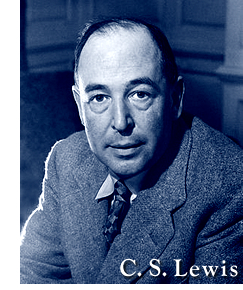
C.S. Lewis Daily – Today’s Reading

TO MARY VAN DEUSEN: On the difference between wordless prayer and the practice of the presence of God (the spirituality of the seventeenth century Carmelite, Brother Lawrence of the Resurrection); on loving others too much; and on what time of day to pray.

25 November 1952

No, by wordless prayer I didn’t mean the practice of the Presence of God. I meant the same mental act as in verbal prayer only without the words. The Practice of the Presence is a much higher activity. I don’t think it matters much whether an absolutely uninterrupted recollection of God’s presence for a whole lifetime is possible or not. A much more frequent and prolonged recollection than we have yet reached certainly is possible. Isn’t that enough to work on? A child learning to walk doesn’t need to know whether it will ever be able to walk 40 miles in a day: the important thing is that it can walk to-morrow a little further and more steadily than it did to-day.

I don’t think we are likely to give too much love and care to those we love. We might put in active care in the form of assistance when it would be better for them to act on their own: i.e., we might be busybodies. Or we might have too much ‘care’ for them in the sense of anxiety. But we never love anyone too much: the trouble is always that we love God, or perhaps some other created being, too little.

As to the ‘state of the world’ if we have time to hope and fear about it, we certainly have time to pray. I agree it is very hard to keep one’s eyes on God amid all the daily claims and problems. I think it wise, if possible, to move one’s main prayers from the last-thing-at-night position to some earlier time: give them a better chance to infiltrate one’s other thoughts.

From The Collected Letters of C.S. Lewis, Volume III

Compiled in Yours, Jack

Charles Stanley – Overcoming Failure


Romans 7:15-20

Victory is God’s will for the life of a believer. But sometimes we can find ourselves repeatedly falling into the same sin. As a result, our prayer life is marked by broken promises to end wrongdoing. We tell the Lord that we yearn to do what is right, but often our desire wanes when virtue is no longer convenient, pleasurable, or profitable. Many believers become angry with God for withholding the victory, but sin is always our choice—not the Lord’s.

If a stinging conscience and misery are the result of our decision to sin, why do we continue to transgress? One reason is incomplete repentance. It is possible for us to experience grief, embarrassment, and shame over sin without being truly repentant. The reason is that penitence isn’t a matter of weeping or feeling guilty; rather, true repentance is a change of mind about sin so that we no longer hold on to our own perspective but instead agree with God’s viewpoint. When we do this, the heart turns in the opposite direction from persistent wrongdoing.

The second reason for failure is an inadequate view of our true identity in the Lord. We, as completed children of God, have Christ living within to empower us. When we grasp this truth, we will recognize that sin does not fit who we are, and we’ll stop rationalizing our offenses. Our genuine repentance is based upon an honest and full understanding of our identity.

When we put these two truths together, we create a powerful tool against Satan and temptation. Our Father wants us to be victorious, and we triumph over failure when we remember that Jesus Christ is the source of our lives.

Bible in One Year: Acts 23-24

Our Daily Bread — As It Is Written


Read: Ezra 3:1-6

Bible in a Year: Ezekiel 11-13; James 1

[They] built the altar . . . to offer burnt offerings on it, as it is written. nkjv —Ezra 3:2

When it comes to putting things together—electronics, furniture, and the like—my son and I have differing approaches. Steve is more mechanically inclined, so he tends to toss the instructions aside and just start in. Meanwhile, I’m poring over the “Read This Before Starting” warning while he has already put the thing halfway together.

Sometimes we can get by without the instructions. But when it comes to putting together a life that reflects the goodness and wisdom of God, we can’t afford to ignore the directions He’s given to us in the Bible.

The Israelites who had returned to their land after the Babylonian captivity are a good example of this. As they began to reestablish worship in their homeland, they prepared to do so “in accordance with what is written in the Law of Moses” (Ezra 3:2). By building a proper altar and in celebrating the Feast of Tabernacles as prescribed by God in Leviticus 23:33-43, they did exactly what God’s directions told them to do.

Christ gave His followers some directions too. He said, “Love the Lord your God with all your heart and with all your soul and with all your mind.” And “love your neighbor as yourself” (Matt. 22:37,39). When we believe in Him and come to Him, He shows us the way to live. The One who made us knows far better than we do how life is supposed to work. —Dave Branon

Remind us, Lord, as we start each day that You have already shown us by Your example how to live. Help us to read Your Word and follow the directions You so graciously provide for us.

Share this prayer from our Facebook page with your friends. facebook.com/ourdailybread

If we want God to lead us, we must be willing to follow Him.

INSIGHT: Twice in today’s passage Ezra records that the people returning from exile did things “in accordance with what is written” (vv. 2,4). However, what makes these statements impressive is what is found in the middle of the paragraph. They did all these things “despite their fear of the peoples around them”—the residents of Judah who were not part of the returning exiles (v. 3).

Ravi Zacharias Ministry –  The Crux of the Story


There is a vacuum at the heart of our culture. As Saul Bellow argued in his 1976 Noble Laureate lecture, “The intelligent public is waiting to hear from art what it does not hear from theology, philosophy, and social theory and what it cannot hear from pure science: a broader, fuller, more coherent, more comprehensive account of what we human beings are, who we are, and what this life is for. If writers do not come into the center, it will not be because the center is pre-empted; it is not.” Very simply stated, there is no center to hold things together. Or to put it differently, there is no over-arching imagination, no over-arching story to life by which all the particulars can be interpreted. The pursuit of knowledge without knowing who we are or why we exist, combined with a war on our imaginations by our entertainment industry, leaves us at the mercy of power with no center. May I illustrate this?

On many different occasions while driving and listening to music, every now and then a piece comes on that I find either unmusical or jarring. I usually shut the radio off. But then one day I was taken to see a play called The Phantom of the Opera. Suddenly I realized that some of the music I had not quite enjoyed was from this play. I was amazed at the difference knowing the story made, whenever I heard the music subsequently. In fact the music in some portions is utterly magnificent. The love songs, the discourses, yes, even the arguments made sense when you know the story. Life needs a story for one to understand the details. Life needs to hold together at the center if we are to reach to distant horizons. But our culture owns neither a story, nor holds at the center.

If such is the reality of our culture, where does that leave us? The challenge, as I see it, is this: Will we connect with a generation that hears with its eyes and thinks with its feelings?

Ironically, postmodernism may be one of the most opportune thought patterns because it has cleared the playing field. All disciplines have lost their “final authority.” The hopes that modernity had brought, the triumph of “Reason” and “Science,” which many thought would bring the utopia, have failed in almost every respect. With all of our material gains, there is still a hunger for the spiritual. In virtually every part of the world, students linger long after every session to talk and plead for answers to their barren lives. All the education one gets does not diminish that search for inner coherence, an imagination and a storyline for one’s own life.

There is a yearning that even the most cavalier attitude does not weaken. Moreover, there is indeed a story and one who stands at the center who answers this yearning. Only in the gospel message that culminates in worship is there coherence—which in turn brings coherence within the community of believers, where both individuality and community are affirmed. The worship of the living God is what ultimately binds the various inclinations of the heart and gives them focus. A worshipping community in spirit and in truth binds the diversity of our culture, the diversity of our education, the diversity of our backgrounds, and brings us together into a corporate imagination and expression of worship.

With all that the cultural terrain presents to us, the injunction that “to find one’s self, one must lose one’s self,” contains a truth any seeker of self-fulfillment needs to grasp. Apart from the cross of Jesus Christ, I know of no other hope. The songwriter said it simply: we have a story to tell to the nations. The last stanza of that great hymn says:

We’ve a Savior to show to the nations

Who the path of sorrow hath trod,

That all of the world’s great peoples

Might come to the truth of God.

For the darkness shall turn to dawning,

And the dawning to noon-day bright,

And Christ’s great kingdom shall come to earth,

The kingdom of love and light.

Ravi Zacharias is founder and chairman of the board of Ravi Zacharias International Ministries.

Alistair Begg – Of Minor Importance


Avoid foolish controversies.

Titus 3:9

Our days are few and are far better spent in doing good than in disputing over matters that are, at best, of minor importance. The old scholars did a world of mischief by their incessant discussion of subjects of no practical importance; and our churches suffer too often from petty wars over obscure points and unimportant questions.

After everything has been said that can be said, neither party is any the wiser, and therefore the discussion promotes neither knowledge nor love, and it is foolish to sow in so barren a field.

Questions about issues on which Scripture is silent, on mysteries that belong to God alone, on prophecies of doubtful interpretation, and on mere modes of observing human ceremonials are all foolish, and wise men avoid them.

Our business is neither to ask nor answer foolish questions, but to avoid them altogether; and if we observe the apostle’s precept (Titus 3:8) to be careful to maintain good works, we will find ourselves occupied with so much profitable business that we will have no time to take much interest in unworthy, contentious, and needless strivings.

There are, however, some questions that are the reverse of foolish, which we must not avoid but fairly and honestly meet, such as these: Do I believe in the Lord Jesus Christ? Am I renewed in the spirit of my mind? Am I walking not after the flesh but after the Spirit? Am I growing in grace? Does my behavior adorn the doctrine of God my Savior? Am I looking for the coming of the Lord and watching as a servant should who expects his master? What more can I do for Jesus?

Such inquiries as these demand our urgent attention; and if we have been given at all to frivolous arguments, let us now turn our critical abilities to a much more profitable service. Let us be peacemakers and endeavor to lead others both by our precept and example to “avoid foolish controversies.”

The Family Bible Reading Plan

  • 1 Chronicles 13, 14
  • James 1

Devotional material is taken from “Morning and Evening,” written by C.H. Spurgeon, revised and updated by Alistair Begg.

Charles Spurgeon – All-sufficiency magnified


“I can do all things through Christ which strengtheneth me.” Philippians 4:13

Suggested Further Reading: Acts 22:6-16

Christians, beware lest that village in which you have found a quiet retreat from the cares of business, should rise up in judgment against you, to condemn you, because, having means and opportunity, you use the village for rest, but never seek to do any good in it. Take care, masters and mistresses, lest your servant’s souls be required of you at the last great day. “I worked for my master;” they say, “he paid me my wages, but had no respect to his greater Master, and never spoke to me, though he heard me swear, and saw me going on in my sins.” If I could I would thrust a thorn into the seat where you are now sitting, and make you spring up for a moment to the dignity of a thought of your responsibilities. Why, sirs, what has God made you for? What has he sent you here for? Did he make stars that should not shine, and suns that should give no light, and moons that should not cheer the darkness? Has he made rivers that shall not be filled with water, and mountains that shall not stay the clouds? Has he made even the forests which shall not give a habitation to the birds; or has he made the prairie which shall not feed the wild flocks? And has he made thee for nothing? Why, man, the nettle in the corner of the churchyard has its uses, and the spider on the wall serves her Maker; and you, a man in the image of God, a blood-bought man, a man who is in the path and track to heaven, a man regenerated, twice created, are you made for nothing at all but to buy and to sell, to eat and to drink, to wake and to sleep, to laugh and to weep, to live to yourself?

For meditation: The Christian—chosen to do (John 15:16), created to do (Ephesians 2:10), commanded to do (1 Corinthians 10:31), continue to do (Galatians 6:9,10). What?

Sermon no. 346

19 November (Preached 18 November 1860)

John MacArthur – Living a Satisfied Life


“All these died in faith, without receiving the promises, but having seen them and having welcomed them from a distance, and having confessed that they were strangers and exiles on the earth. For those who say such things make it clear that they are seeking a country of their own. “And indeed if they had been thinking of that country from which they went out, they would have had opportunity to return. But as it is, they desire a better country, that is a heavenly one. Therefore God is not ashamed to be called their God; for He has prepared a city for them” (Heb. 11:13-16).

Resting in God’s promises brings true satisfaction.

I remember watching in horror and disgust as angry mobs swept through Los Angeles, killing people and setting thousands of buildings on fire. Under the cover of chaos, countless people ransacked and looted every store in sight. I saw entire families—moms, dads, and little children—loading their cars and trucks with anything they could steal.

That was the most graphic demonstration of lawlessness I’ve ever seen. It was as if they were saying, “I’m not satisfied with the way life’s treating me, so I’m entitled to grab everything I can—no matter who gets hurt in the process.”

Perhaps we don’t realize how selfish and restless the human heart can be until the restraints of law and order are lifted and people can do whatever they want without apparent consequences. Then suddenly the results of our godless “me first” society are seen for what they are. Instant gratification at any cost has become the motto of the day.

That’s in stark contrast to people of faith like Abraham, Isaac, and Jacob, who trusted in God even when their circumstances were less than they might have expected. God promised them a magnificent land but they never possessed it. They were, in fact, strangers and refugees in their own land. But that didn’t bother them because they looked forward to a better place—a heavenly city.

Their faith pleased God and He was not ashamed to be called their God. What a wonderful testimonial! I pray that’s true of you. Don’t let earthbound hopes and dreams make you dissatisfied. Trust in God’s promises and set your sights on your heavenly home.

Suggestions for Prayer

Thank God for the blessing of a satisfied heart.

For Further Study

Memorize Psalm 27:4.

Joyce Meyer – Run to Him


For by the death He died, He died to sin [ending His relation to it] once for all; and the life that He lives, He is living to God [in unbroken fellowship with Him]. Even so consider yourselves also dead to sin and your relation to it broken, but alive to God [living in unbroken fellowship with Him] in Christ Jesus.—Romans 6:10-11

The devil delights in reminding us daily of all our mistakes from the past. One morning I was spending my time with the Lord, thinking about all the areas in which I had failed, when the Lord spoke to my heart: Joyce, are you going to fellowship with Me or with your problems? It is our fellowship with God that helps and strengthens us to overcome our problems. Our relationship and fellowship is to be with God, not with our sins.

How much do you fellowship with your sins, failures, and weaknesses? Whatever time it is, it is wasted. When you sin, admit it, ask for forgiveness, and then continue your fellowship with God. We are alive to God, living in unbroken fellowship with Him. Don’t let your sins come between you and the Lord. Even when you sin, God still wants to spend time with you, hear and answer your prayers, and help you with all of your needs. He wants you to run to Him, not away from Him!

Lord, I want to live in unbroken fellowship with You. I consider my relationship with sin to have been broken at the cross and behind me. Amen.

From the book The Confident Woman Devotional: 365 Daily Devotions by Joyce Meyer.


Campus Crusade for Christ; Bill Bright – God Uses Sorrow for Good


“For God sometimes uses sorrow in our lives to help us turn away from sin and seek eternal life. We should never regret his sending it. But the sorrow of the man who is not a Christian is not the sorrow of true repentance and does not prevent eternal death.” (II Corinthians 7:10).

Frank often referred to himself proudly as a self-made man. He bragged that in his youth he had been so poor he didn’t have two nickels to rub together. Now his real estate holdings and various business enterprises were worth tens of millions of dollars. He was a pillar in the community, able to give generously to civic and philanthropic causes.  His philosophy was that there was no God, and every man had to make it on his own. He laughed at the weaklings who needed the crutch of church.

Then his world began to fall apart. His only son was sent to prison for pushing drugs. His daughter had an automobile accident that left her partially paralyzed for life; and his wife, whom he had largely ignored for years, announced she was in love with someone else and demanded a divorce. Meanwhile, because he had become lax in his business dealings, one of his partners embezzled several million dollars from him.

By this time, he was devastated, and, therefore, was open to spiritual counsel. After the Holy Spirit showed him his spirit of pride and selfishness, he opened his heart to Christ and the miracle took place. Now, he frequently quotes this passage: “God sometimes uses sorrow in our lives to help us turn away from sin and seek eternal life.”

Though his son is still in prison, and his daughter still paralyzed, he and his wife are reconciling, and his heart is filled with joy and thanksgiving to God. He is no longer a proud, “successful” businessman, but a humble child of God, a servant who discovered the hard way that everyone needs God.

For every Frank there are hundreds of others experiencing heartache and tragedy who have not repented. Yet, God offers to all men and women the priceless gift of abundant and supernatural life.

Bible Reading: Proverbs 28:12-14

TODAY’S ACTION POINT: I shall seek to live the full, abundant, supernatural life, walking in faith and obedience, so that God will not find it necessary to discipline me in order to bless me.

Presidential Prayer Team; H.L.M. – Fresh Wind


God chose two men, Jonathan Edwards and George Whitefield, to proclaim the gospel during the eighteenth century period known as the First Great Awakening. Edwards and Whitefield were key Americans who preached in New England colonies with an emphasis on the need for a personal relationship with Jesus Christ. As a result, revival spread throughout the colonies and people were committed to a new standard of personal morality. Charles Finney was an American Presbyterian minister and leader in the Second Great Awakening during the early nineteenth century in the United States. During this time, church membership soared and revival was implemented through camp meetings.

Arise, go to Nineveh, that great city, and call out against it the message that I tell you.

Jonah 3:2

Romans 10:15 says, “How beautiful are the feet of those who preach the good news!” As a result of their obedience to God’s call, Edwards, Whitefield and Finney had a profound impact on America’s Godly foundation.

Remember to give thanks for these men and others who have chosen to embrace the Lord’s commission to preach His Word. Pray for strength for your spiritual leaders. Ask your Heavenly Father for a fresh wind of revival to spread throughout this nation as many boldly proclaim the redemptive truth of Jesus Christ.

Recommended Reading: Romans 1:8-17

Greg Laurie – Don’t Waste Your Youth


Don’t let the excitement of youth cause you to forget your Creator. Honor him in your youth before you grow old and say, “Life is not pleasant anymore.”—Ecclesiastes 12:1

I made a commitment to Christ when I was 17 years old. By that time I felt as though I had already lived a very long life because of my mother’s alcoholism and multiple divorces, as well as my own experimentation with drugs and drinking. I was ready for a radical change.

As a result, I gave up quite a few things and pretty much dumped all of my so-called friends. I didn’t want to be in that environment anymore. I needed a new start in life. I committed myself to studying the Bible, being a part of the church, and growing spiritually. Did I give up a few so-called fun times? Yes. But I have had so much more fun as a follower of Jesus. I don’t regret any of those things I gave up.

Every now and then, I will run into an old friend from high school. What is really sad is when someone still thinks they are in high school when they are 60, and they can’t let it go. They’re still living that life (or at least trying to live that life). Some of them are on their second, third, or even fourth marriages. Or maybe their substance abuse has taken a toll on them. I look at them and think, Why did you live that way?

Solomon, at the end of Ecclesiastes, came to a clear conclusion. Among other things, he deeply regretted wasting his youth and didn’t want others to make the same mistake. He wrote, “Don’t let the excitement of youth cause you to forget your Creator. Honor him in your youth before you grow old and say, ‘Life is not pleasant anymore’ ” (Ecclesiastes 12:1).

Youth is such an important time. It’s there that you set the course of your life.

Max Lucado – God’s Definition of Promotion


For twenty years I was the senior minister of our church. Budgets, personnel, buildings, hiring and firing… was happy to fill the role. But I was happiest preaching and writing. My mind was always gravitating toward the next series. Even during committee meetings (well, especially during committee meetings) I was doodling on the next message. More staff and more people to manage meant spending more time doing what I didn’t feel called to do.

I was blessed to have options. And equally blessed to have a church that provided flexibility as I transitioned from senior minister to teaching minister. A few people were puzzled. “Don’t you miss being the senior minister?”  Translation: Weren’t you demoted? Earlier in my life I would have thought so. But God’s definition of promotion isn’t a move up the ladder, it is a move toward your call. Don’t let someone “promote” you out of your call!

From Glory Days