Charles Stanley – A Small Matter of Obedience


Luke 5:1-11

Yesterday we learned that obeying God in small matters is essential to receiving His thrilling rewards. What He asks us to do is never insignificant—though we may not always recognize the importance of saying yes to His requests. Peter couldn’t have imagined the impact a simple boat trip would have in his life. He could have said to Jesus, “I’m too tired, Teacher. Take the other boat.” Instead, his obedience opened the door for God to bless Peter with a revolutionary ministry.

As God’s children, we should ask Him what He wants us to do in daily situations—“What would You have me say?” or “What is the best decision, Lord?” We must learn to listen to our heavenly Father and be sensitive to the quiet voice prompting us throughout the day. When we keep our minds attuned to Him, we begin to understand the significance of some decisions we might otherwise barely notice. Ultimately this awareness leads to a life-style of walking with the Lord and receiving His best for us.

One thing I know for certain is this: Every time I’ve obeyed God, He’s blessed me. When I disobey, it costs me. We’re talking about a God who loves us unconditionally and who has a perfect plan. Obeying Him will never prove disappointing. Looking at 2015, can you see His wisdom in leading you to make right decisions? Hindsight is fantastic for recognizing God’s blessings.

Make 2016 a year of obedience. When we obey God, our hearts open wide to let His power pour in. Won’t you say yes to His next request?

Bible in One Year: Revelation 18-22

Our Daily Bread — On the Wing


Read: Matthew 10:27-31

Bible in a Year: Malachi 1-4; Revelation 22

So don’t be afraid; you are worth more than many sparrows. —Matthew 10:31

In his book On the Wing, Alan Tennant chronicles his efforts to track the migration of the peregrine falcon. Valued for their beauty, swiftness, and power, these amazing birds of prey were favorite hunting companions of emperors and nobility. Sadly, the wide use of the pesticide DDT in the 1950s interfered with their reproductive cycle and placed them on the endangered species list.

Interested in the recovery of this species, Tennant attached transmitters to a select number of falcons to track their migration patterns. But when he and his pilot flew their Cessna behind the birds, they repeatedly lost signal from the transmitters. Despite their advanced technology, they were not always able to track the birds they wanted to help.

It’s good to know that the God who cares for us never loses track of us. In fact, Jesus said that not even one sparrow “will fall to the ground outside your Father’s care. . . . So don’t be afraid; you are worth more than many sparrows” (Matt. 10:29-31).

When we face difficult circumstances, fear may cause us to wonder if God is aware of our situation. Jesus’ teaching assures us that God cares deeply and is in control. His tracking of our lives will never fail. —Dennis Fisher

Father, I’m putting my longings and burdens on You at the end of this year because I know You care for me and can work powerfully. Thank You that I and my loved ones are in Your care.

If God cares for birds, will He not care for His children?

INSIGHT: Jesus’ words in Matthew 10:27-31 must be seen in their context. Matthew 9 closes with Jesus calling His followers to pray for laborers to enter the harvest (v. 38). Then in Matthew 10 the chapter opens with Jesus calling out laborers—His twelve disciples (vv. 1-4). He then sends the disciples out into the harvest fields of their day with a series of instructions (vv. 5-15), followed by words of comfort (vv. 16-31). He concludes by describing the characteristics of a disciple, both in terms of commitment and service (vv. 32-42).


Ravi Zacharias Ministry – Too Good to Be True?


You may have heard it said that religion only survives because people desperately want it to be true, because they can’t come to terms with their own mortality (or that of loved ones). It was Sigmund Freud who helped to popularize this idea, as he suggested that the concept of a loving Creator was simply a psychological projection of a person’s innermost wishes:

“We tell ourselves that it would be very nice if there was a God who created the world and was a benevolent Providence and if there were a moral order in the universe and an after-life; but it is the very striking fact that all this is exactly as we are bound to wish it to be.”(1)

This kind of argument would seem to ring true, at least on a superficial level. You would expect it to be more likely for people to believe in something that they like than something that they don’t, and it is clear that Christianity is powerfully compelling. In fact, the argument itself is an admission of this, as it acknowledges the innate desire in us all that is fulfilled by God. Who wouldn’t want to be in a relationship with a loving deity who not only wants the best for those he has created, but who is offering eternity in a place that is more wonderful than can be imagined? Yet the Bible also contains some very hard-hitting passages, which would seem to contradict the notion that religious belief is simply a projection of our wishes. C. S. Lewis pointed out that scripture also teaches that believers should fear the Lord, but you would not then suggest that this meant faith was some kind of “fear fulfillment”!(2)

Continue reading Ravi Zacharias Ministry – Too Good to Be True?

Alistair Begg – Wonder of Wonders


On the last day of the feast, the great day, Jesus stood up and cried out, “If anyone thirsts, let him come to me and drink.” John 7:37

Patience had her perfect work in the Lord Jesus, and until the last day of the feast He pleaded with the Jews, even as on this last day of the year He pleads with us and waits to be gracious to us. The long-suffering of the Savior is truly admirable as He bears with some of us year after year despite our insults, rebellions, and resistance to His Holy Spirit. Wonder of wonders that we are still in the land of mercy!

Mercy expressed herself most plainly, for Jesus “cried,” which implies not only the loudness of His voice, but the tenderness of His tones. He entreats us to be reconciled. “God making his appeal through us,” says the apostle, “we implore you on behalf of Christ . . .” What earnest, pathetic terms are these! How deep the Father’s love that causes Him to weep over sinners and, like a mother, to tenderly call His children to Himself! Surely at the sound of such a cry our willing hearts will come.

Provision is made most generously: Everything that man needs to quench his soul’s thirst is available. To his conscience the Atonement brings peace; to his understanding the Gospel brings the richest instruction; to his heart the person of Jesus is the noblest object of affection; to the whole man the truth as it is in Jesus supplies the purest nourishment. Thirst is terrible, but Jesus can remove it. Even if the soul were utterly famished, Jesus can restore it.

Proclamation is made most freely, that every thirsty one is welcome. No other distinction is made but that of thirst. Whether it be the thirst of greed, ambition, pleasure, knowledge, or rest, he who suffers from it is invited. The thirst may be bad in itself, and not be a sign of grace, but a mark of inordinate sin that longs to satisfy itself with deeper lust; but it is not goodness in the creature that brings him the invitation-the Lord Jesus sends it freely and without respect of persons.

Personality is declared most fully. The sinner must come to Jesus-not to works, ordinances, or doctrines but to a personal Redeemer who Himself bore our sins in His own body on the tree. The bleeding, dying, rising Savior is the only ray of hope to a sinner. Oh, for grace to come now and drink, before the sun sets upon the year’s last day!

No waiting or preparation is even hinted at. Drinking represents a reception that has no special requirements. A fool, a thief, a harlot can drink; our sinfulness is no barrier to the invitation to believe in Jesus. We need no golden cup, no fine china, in which to convey the water to the thirsty; the mouth of poverty is welcome to stoop down and drink of the life-giving stream. Blistered, leprous, filthy lips may touch the stream of divine love; they cannot pollute it but will themselves be purified. Jesus is the fount of hope. Dear reader, listen to the dear Redeemer’s loving voice as He cries to each of us, “If anyone thirsts, let him come to me and drink.”

Family Bible Reading Plan

  • 2 Chronicles 36
  • Revelation 22

Devotional material is taken from “Morning and Evening,” written by C.H. Spurgeon, revised and updated by Alistair Begg.

John MacArthur – Our Sympathetic High Priest


“Assuredly He does not give help to angels, but He gives help to the descendant of Abraham. Therefore, He had to be made like His brethren in all things, that He might become a merciful and faithful high priest in things pertaining to God, to make propitiation for the sins of the people. For since He Himself was tempted in that which He has suffered, He is able to come to the aid of those who are tempted” (Heb. 2:16-18).

Jesus came to sympathize with us, so He could be our merciful and faithful High Priest.

In his letters to Timothy, Paul counseled and encouraged his young associate about many things—his health, his critics, his moral and spiritual warfare. His counsel is well summed up in these words: “Remember Jesus Christ, risen from the dead, descendant of David” (2 Tim. 2:8).

Like Timothy, we need to be reminded of Christ’s humanity, especially when life becomes particularly tough. Then we can pray, “Lord, You know what You endured while You were here. I’m going through it now.” We can be sure He knows and will encourage us.

Jesus came not only to save us but also to sympathize with us. He experienced what we experience so He could be a “merciful and faithful high priest.” After all, “we do not have a high priest who cannot sympathize with our weaknesses, but one who has been tempted in all things as we are, yet without sin” (Heb. 4:15).

Jesus felt everything we will ever feel—and more. Most of us will never know the full degree of any given temptation because we usually succumb long before we reach it. But since Jesus never sinned, He took the full measure of every temptation.

Ours is not a cosmic God, powerful and holy, but indifferent. He knows when we hurt, where we are weak, and how we are tempted. Jesus is not just our Savior, but our loving Lord who sympathizes with us. Rejoice in the greatness of His love for us.

Suggestion for Prayer

Ask God to remind you of your need of Him at all times, not just when times are tough.

For Future Study

Memorize 1 Corinthians 10:13 for quick recall whenever you are faced with any trial.

Campus Crusade for Christ; Bill Bright – A Solid Foundation


“All who listen to My instructions and follow them are wise, like a man who builds his house on solid rock. Though the rain comes in torrents, and the floods rise and the storm winds beat against his house, it won’t collapse, for it is built on rock. But those who hear My instructions and ignore them are foolish, like a man who builds his house on sand. For when the rains and floods come, and storm winds beat against his house, it will fall with a mighty crash” (Matthew 7:24-27).

What a wonderful promise for supernatural living to know that no matter what happens – the greatest tragedies, adversities or losses – your house will stand. You will not only survive, but mature, grow and become more like Jesus.

As you listen to and follow His instructions, you will observe that He has been speaking to the multitudes in what is frequently referred to as the Sermon on the Mount. Review chapters 5, 6 and 7 of Matthew. List all the things that He commands us to do, and then by faith claim those instructions in your life. For there is nothing that God ever commands that He will not enable us to do if we seek His help.

Remember, too, His promise recorded in Matthew 22:37-40, that all of the commandments in the sermon on the Mount are fulfilled when we love God with all of our heart, soul, mind and strength, and when we love our neighbor as ourselves. So the instructions that He is giving are not difficult, for He who gives the command will enable us to build on a sure foundation of solid rock.

Note, however, the admonishment for those who ignore His instructions. For those foolish people who build their houses on sand, collapse of those houses is the certain consequence. One need only look around to see evidence of the fulfillment of God’s warning in the lives of numerous loved ones, neighbors and friends. God loves us, and He wants to bless us, but He cannot if we ignore Him.

Are you following the instructions of the Lord Jesus Christ? If not, I encourage you to begin today, with the assurance that He will bless you, your family and all who are dear to you.

Bible Reading: 1 John 2:3-9

TODAY’S ACTION POINT: I will meditate upon our Lord’s instructions as contained in the Sermon on the Mount, as well as the Ten Commandments and the Golden Rule. I will meditate upon 1 Corinthians 13 and other commandments of our Lord on love. Through the enabling of the Holy Spirit, I will obey His instructions for supernatural living.

Presidential Prayer Team; J.R.  – Regeneration Over Resolutions


You are one day from a new beginning. It’s probably not the time for pessimism – but according to research published in the Journal of Clinical Psychology, 25 percent of Americans fail to keep their New Year’s resolutions for a full two weeks. The long-term success rate is eight percent. Change is difficult.

Truly, I say to you, unless one is born again he cannot see the kingdom of God.

John 3:3

Jesus was talking about something much more profound in John 3 in His conversation with Nicodemus, a Pharisee. You may or may not maintain your new exercise regimen, diet, reading plan, or other resolution because it’s largely a matter of willpower. But regeneration – being “born again” – is the work of the Holy Spirit. It is immediate, supernatural, permanent and irreversible. Spirit-inspired resolutions can’t fail.

The best resolution for 2016 may be found in Proverbs 3:5-6. “Trust in the Lord with all your heart, and do not lean on your own understanding. In all your ways acknowledge him, and he will make straight your paths.” This is the formula for success – for you and for America.

Recommended Reading: John 1:1-13

Greg Laurie – The 3 Things we can give to God in 2016


“Where your treasure is, there will your heart be also”—Matthew 6:21

As we enter into a new year, here is something to remember: When it’s all said and done, we have three things we can offer God—our treasure, our talent, and our time. Each of these is given to us by God, and each of them should be given back in generous portions.

First, there is our treasure. I urge you to commit yourself to give faithfully and generously to the Lord in this coming year. Jesus said, “Where your treasure is, there will your heart be also” (Matthew 6:21 NKJV). Whenever we put our money into something, we develop a vested interest in it. It makes sense to us that we would place our treasures where our hearts are. If we love reading books, or being entertained, or the latest technology, we spend our treasure on those things. And if our heart’s desires change, that changes where we put our treasure.

But it works the other way too: Where we put our treasures, our heart will follow. Do you want your heart to be in the things of God? Then put your treasures in the things of God! Develop a vested interest in God’s kingdom.

The second thing we can give to God is our talent. God has gifted each believer in different ways. Everyone has something to offer for the work of the kingdom. Romans 12 says, “Just as our bodies have many parts and each part has a special function, so it is with Christ’s body. We are all parts of his one body, and each of us different work to do” (NLT).

Finally, there is our time. Let’s say that one day your phone rang and it was the president of the bank that you use. He told you that an anonymous donor who loved you very much had decided to deposit 86,400 pennies into your bank account each and every morning. At first, maybe that didn’t seem like a lot. But then you figured out that it was $864 a day. At seven days a week and 52 weeks a year, those pennies add up to almost $315,000 each year! But the bank president added one thing: “The anonymous giver said you must spend all of the money on the day you receive it! No balance will be carried over to the next day. Each evening the bank must cancel whatever sum you failed to use! Remember, what you don’t spend is lost.”

That may sound like fantasy, but here’s the reality: Every morning, Someone who loves you very much deposits into your “bank of time” 86,400 seconds, which represent 1,440 minutes, which of course equals 24 hours each and every day. God gives you that much to use each day. Nothing is ever carried over on credit to the next day. There is no such thing as a 27-hour day. It’s called time, and you can’t escape it. Time is ticking away right now. The Bible tells us to “redeem the time”—to make sacred and wise use of every opportunity.

Offer God your treasure, your talent, and your time. Live this next year as if it were your last, because it could be. Make those minutes count!

Max Lucado – It’s a Choice


I often find it easier to weep with those who weep than I do to rejoice with those who rejoice! (Romans 12:15).

The summer before my 8th grade year, I made friends with Larry. He was new, so I encouraged him to go out for our high school football team. It was one of those good news/bad news things. The good news? He made the cut. The bad news? He won my position!

A few weeks into the season Larry broke a finger. I remember the day he stood at my front door holding up his bandaged hand. “Looks like you’re going to have to play,” he said. I tried to feel sorry for him but weep with those who weep was a lot easier for Paul to write than for me to practice!  I hope you’ll have better success!

From Grace for the Moment

Night Light for Couples – Still the One


We’ve talked this week about the brevity of life and the importance of making the most of the time the Lord has given us. Our journey as marital partners will someday come to an end. First one of us, and then the other, will stand before God, give an account of our days, and begin our eternal journey. Jim and I certainly look forward to that heavenly reward, but we are also enjoying our time together on this earth. Jim has recovered fully from a heart attack and a stroke, either of which could have taken his life. Those experiences have made our relationship all the sweeter and more precious. I will always thank God for bringing us together in a marriage that has continued now for more than four decades.

One of the most delightful experiences during that time came in a Marriage Encounter seminar we participated in years ago. I knew that Jim loved and needed me during the early years of our marriage, but I had begun to quietly wonder if I still held the most prominent place in his heart. On the final day of the seminar, without discussing it ahead of time, we wrote each other letters addressing just this issue. I’ll never forget the moment we came together and shared these thoughts.

Jim concluded his letter to me, in part, with these words:

I love you, S. M. D. (Remember the monogrammed shirt?) I love the girl who believed in me before I believed in myself. I love the girl who never complained about huge school bills and books and hot apartments and rented junky furniture and no vacations and humble little Volkswagens. You have been with me—encouraging me, loving me, and supporting me since August 27, 1960. And the status you have given me in our home is beyond what I have deserved.

If we love one another, God lives in us and his love is made complete in us. 1 John 4:12

So why do I want to go on living? It’s because I have you to take the journey with. Otherwise, why make the trip? The half that lies ahead promises to be tougher than the years behind us. Autumn is coming. Even now, I can feel a little nip in the air—and I try not to look at a distant, lone cloud that passes near the horizon. With whom, then, will I spend that final season of my life?

None but you, Shirls. The only joy of the future will be in experiencing it as I have the past twenty‐one years—hand‐in‐hand with the one I love, a young miss named Shirley Deere, who gave me everything she had—including her heart. Thank you, babe, for making this journey with me. Let’s finish it— together!

May the Lord continually sustain and enrich your marriage. God’s blessings to you both… and good night.

– Shirley M Dobson

From Night Light For Couples, by Dr. James & Shirley Dobson


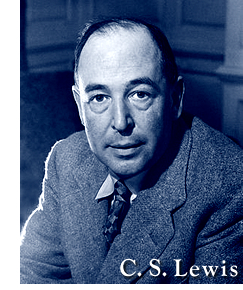
C.S. Lewis Daily – Today’s Reading


The thing you long for summons you away from the self. Even the desire for the thing lives only if you abandon it. This is the ultimate law—the seed dies to live, the bread must be cast upon the waters, he that loses his soul will save it. But the life of the seed, the finding of the bread, the recovery of the soul, are as real as the preliminary sacrifice. Hence it is truly said of heaven ‘in heaven there is no ownership. If any there took upon him to call anything his own, he would straightway be thrust out into hell and become an evil spirit.’ But it is also said ‘To him that overcometh I will give a white stone, and in the stone a new name written, which no man knoweth saving he that receiveth it’ [Revelation 2:17]. What can be more a man’s own than this new name which even in eternity remains a secret between God and him? And what shall we take this secrecy to mean? Surely, that each of the redeemed shall forever know and praise some one aspect of the Divine beauty better than any other creature can. Why else were individuals created, but that God, loving all infinitely, should love each differently? And this difference, so far from impairing, floods with meaning the love of all blessed creatures for one another, the communion of the saints. If all experienced God in the same way and returned Him an identical worship, the song of the Church triumphant would have no symphony, it would be like an orchestra in which all the instruments played the same note.

From The Problem of Pain

Compiled in A Year with C.S. Lewis

Charles Stanley – The Thrill of Obedience


Isaiah 50:4-10

Christians sometimes approach obedience as a way to avoid the negative consequences of disobedience. When this happens, obedience becomes a heavy burden. But God intended our walk of faith to be a thrilling adventure, motivated by our love for Jesus Christ and our desire to please Him. Obedience is about discovering more of God, not avoiding negative consequences.

The reason we equate doing God’s will with burden is that we tend to think of all the weighty decisions we might need to make. Yet the Lord doesn’t give us something He knows we can’t handle. Our obedience in the smaller matters of life prepares us for bigger ones. When we place trust in the omnipotence of the Lord and act on His prompting, life becomes exciting. We need not be fearful because God already knows the outcome of our obedience—and He promises that He does everything for our good (Rom. 8:28).

We know that if we take one step in obedience, we’ll be asked to take another. That’s why walking in faith is so thrilling—each step is leading to a fantastic blessing from almighty God. Though we sometimes think the situations are unrelated, the Lord continuously moves us through a variety of circumstances toward His overriding purpose for our lives.

If we become fearful of consequences and back off from obedience for the sake of safety, we deprive God of the opportunity to demonstrate His awesome power in us. Small choices may seem insignificant, but they lead toward a lifetime of walking with God. As you walk into this new year, ask yourself, What is my next step of obedience?

Bible in One Year: Revelation 13-17

Our Daily Bread — Our Daily Bread — An Invitation to Rest


Read: Revelation 21:1-5

Bible in a Year: Zechariah 13-14; Revelation 21

I will give you rest. —Matthew 11:28

At a friend’s bedside in a hospital emergency ward, I was moved by the sounds of suffering I heard from other patients in pain. As I prayed for my friend and for the ailing patients, I realized anew how fleeting our life on earth is. Then I recalled an old country song by Jim Reeves that talks about how the world is not home for us—we’re “just a-passin’ through.”

Our world is full of weariness, pain, hunger, debt, poverty, disease, and death. Because we must pass through such a world, Jesus’ invitation is welcome and timely: “Come to me, all you who are weary and burdened, and I will give you rest” (Matt. 11:28). We need this rest.

There is hardly a funeral ceremony I’ve attended where John’s vision of “a new heaven and a new earth” (Rev. 21:1-5) is not quoted, and it certainly holds relevance for funerals.

But I believe the passage is more for the living than the dead. The time to heed Jesus’ invitation to come rest in Him is while we are still living. Only then can we be entitled to the promises in Revelation. God will dwell among us (v. 3). He will wipe away our tears (v. 4). There will be “no more death or mourning or crying or pain” (v. 4).

Accept Jesus’ invitation and enter His rest! —Lawrence Darmani

Father in heaven, this life can be wonderful, but it can also be so hard. Thank You for Your Spirit’s presence with us now. And thank You too for the reality of eternal life with You.

When you’re weary in life’s struggles, find your rest in the Lord.

INSIGHT: Today’s passage gives us a glimpse of heaven, describing it as a physical place (vv. 1-2). Jesus said He was going to prepare a place for us (John 14:2-3), and this promise is fulfilled in the New Jerusalem, the holy city (Rev. 21:2). While it is a great comfort that heaven is a perfect place with “no more death or mourning or crying or pain” (v. 4), the most important thing is that it is the dwelling place of God (v. 3). In this final vision of the beginning of eternity (21:1-22:9), John hears Christ declaring, “It is done” (21:6). The New Living Translation renders it, “It is finished!” echoing Christ’s victorious cry from the cross (John 19:30). Sin’s curse will one day be completely removed and reversed (Rev. 21:4-5; Gen. 3:16-19).

Ravi Zacharias Ministry – Imagining Christmas


If the first chapter of Luke is a preface to a great story—the foretelling of a herald, the prophecy of a child, the song of a young mother—the second chapter is the culmination. The Roman world is called to a census. A young couple journeys to Bethlehem to be counted. A child is born. “And there were shepherds living out in the fields nearby, keeping watch over their flocks at night. An angel of the Lord appeared to them, and the glory of the Lord shone around them, and they were terrified. But the angel said to them, ‘Do not be afraid. I bring you good news of great joy that will be for all the people. Today in the town of David a Savior has been born to you; he is Christ the Lord. This will be a sign to you: You will find a baby wrapped in cloths and lying in a manger.’ Suddenly a great company of the heavenly host appeared with the angel, praising God and saying, ‘Glory to God in the highest, and on earth peace to men on whom his favor rests.’”(1)

Often regardless of one’s thoughts about Christianity, the Christmas story is wonderful in its familiarity, calling forth each year a childhood delight in the monotonous, beckoning imaginations to a stable and a story. Christmas hymns full of imagery and story are piped in as background music at post offices and malls. Manger scenes can still be found as part of familiar Christmas décor.

Yet often for those to whom it is all most familiar, it is also a story we can find surprisingly unfamiliar each year. Like children delighting in another reading of a bedtime favorite, the Nativity is somehow still startling in its mysteries, the child still out of place in the manger, the story full of profound paradox.

The first time I walked through the crowded, pungent streets of Bethlehem, I was struck by the disparity between what I was seeing and “the little town of Bethlehem” I had imagined in pageants and songs. The harsh reality of God becoming a child in the midst of the cold and dark world I knew myself suddenly seemed a blaring proclamation: The Word became flesh and made his dwelling among us. A plaque of the same words rests outside the dark and ancient church built upon what was once the place of the nativity. Reading this in Bethlehem, standing in a complicated, sad and beautiful land, I remember thinking I had never really considered it before: God taking on flesh to live here, in the midst of our chaos and fighting and despair.

Upon his conversion, Charles Wesley took to hymn writing as a means of attempting to capture the strange hope of a God among us, which was persistently stirring in his mind. Though a few of the words have long since been changed, one of Charles Wesley’s six thousand hymns is a widely beloved declaration of the Incarnation. Seeking to convey in pen and ink a Christmas story both familiar and startling, Wesley wrote:

Hark, how all the welkin rings,

“Glory to the King of kings;

Peace on earth, and mercy mild,

God and sinners reconciled!”

For Wesley, the Christ child in the manger was forever an indication of the great lengths God will go to reconcile his creation, a savior willing to descend that we might be able to ascend. “Welkin” is an old English term meaning “the vault of heaven.” Wesley was telling the radical story of the Incarnation: All of heaven opening up for the birth of a king and the rebirth of humanity.

The star of Bethlehem, the magi, the shepherds, and the hopeful Mary are all amid the long-imagined and inconceivable markers of a God among us. The birth of Christ is the timeless gesture that God has chosen to remain. Christmas invites us to imagine what it means if the hard cries of a real and unpolished world have really been heard, if a savior was born, the vault of heaven was truly opened.

Mild he lays his glory by,

Born that man no more may die.

Born to raise the sons of earth,

Born to give them second birth

Hark! the herald angels sing,

“Glory to the newborn King!”

Jill Carattini is managing editor of A Slice of Infinity at Ravi Zacharias International Ministries in Atlanta, Georgia.

(1) Luke 2:8-14.

Alistair Begg – Anticipate the End


Better is the end of a thing than its beginning. Ecclesiastes 7:8

Look at David’s Lord and Master; consider His beginning. He was despised and rejected by men, a man of sorrows and acquainted with grief. Then look at the end! He sits at His Father’s right hand, waiting until His enemies are made his footstool. “As he is so we are also in this world.”1 You must bear the cross or you will never wear the crown; you must wade through the water or you will never walk the golden pavement.

Cheer up, then, poor Christian. “Better is the end of a thing than its beginning.” View the creeping worm-how contemptible its appearance! It is the beginning of a thing. Mark that insect with gorgeous wings, playing in the sunbeams, sipping at the flowers, full of happiness and life-that is the worm’s end. You are that caterpillar, wrapped up in the chrysalis of death; but when Christ appears, you will be like Him, for you will see Him as He is.

Be content to be like Him, a worm and no man, so that like Him you may be satisfied when you wake up in His likeness. The rough-looking diamond is put upon the wheel of the gem-smith. He cuts it on all sides. It loses much-much that seemed costly to itself. The king is crowned; the diadem is put upon the monarch’s head accompanied by the trumpet’s joyful sound. A glittering ray flashes from that coronet, and it beams from that same diamond that was so recently fashioned at the wheel.

You may venture to compare yourself to such a diamond, for you are one of God’s people; and this is the time of the cutting process. Let faith and patience have their perfect work, for in the day when the crown is set upon the head of the King, eternal, immortal, invisible, one ray of glory shall stream from you. “They shall be mine, says the LORD of Hosts, in the day when I make up my treasured possession.”2 “Better is the end of a thing than its beginning.”

1) 1 John 4:17

2) Malachi 3:17

Family Bible Reading Plan

  • 2 Chronicles 35
  • Revelation 21

Devotional material is taken from “Morning and Evening,” written by C.H. Spurgeon, revised and updated by Alistair Begg.

Charles Spurgeon – Canaan on earth


“For the land, whither thou goest in to possess it, is not as the land of Egypt, from whence ye came out, where thou sowedst thy seed, and wateredst it with thy foot, as a garden of herbs: But the land, whither ye go to possess it, is a land of hills and valleys, and drinketh water of the rain of heaven: A land which the Lord thy God careth for: the eyes of the Lord thy God are always upon it, from the beginning of the year, even unto the end of the year.” Deuteronomy 11:10-12

Suggested Further Reading: Psalm 139:1-12

We have come now, beloved, to the end of another year—to the threshold of another period of time, and have marched another year’s journey through the wilderness. Come, now! In reading this verse over, can you say Amen to it? “The eyes of the Lord thy God are always upon you, from the beginning of the year even unto the end of the year.” Some of you say, “I have had deep troubles this year.” “I have lost a friend,” says one. “Ah!” says another, “I have been impoverished this year.” “I have been slandered”, cries another. “I have been exceedingly vexed and grieved”, says another. “I have been persecuted,” says another. Well, beloved, take the year altogether—the ups and the downs, the troubles and the joys, the hills and the valleys altogether, and what have you to say about it? You may say, “Surely goodness and mercy have followed me all the days of my life, and I will dwell in the house of the Lord for ever.” Do not pick out one day in the year, and say it was a bad day, but take all the year round, let it revolve in all its grandeur. Judge between things that differ; and then what will you say? “Ah! Bless the Lord! He hath done all things well; my soul, and all that is within me, bless his holy name!” And you know why all things have been well. It is because the eyes of the Lord have been upon you all the year.

For meditation: Are you glad that God sees you through and through every moment of your life? This should bring terror to the unbeliever (Hebrews 4:13) but great comfort to God’s people in the hour of distress (Genesis 16:13; Exodus 2:25).

Sermon no. 58

30 December (1855)

John MacArthur – Satan’s Conqueror


“Since . . . the children share in flesh and blood, He Himself likewise also partook of the same, that through death He might render powerless him who had the power of death, that is, the devil; and might deliver those who through fear of death were subject to slavery all their lives” (Heb. 2:14-15).

Christ came to break the power of Satan which He did by conquering death.

To be free to live with God and share in all His blessings, someone had to shatter Satan’s death grip on us. Sin is what gives Satan his powerful hold on us, but the power itself is death.

Satan knew that God required death for us because of sin. He knew that all died in Adam—that death became a certain fact of life. And he knew that men, if they remained as they were, would die and go out of God’s presence into hell forever. So he wants to hang onto men until they die because once they are dead, the opportunity for salvation is gone forever.

To wrest the power of death from Satan’s hand, God sent Christ into the world. If you have a greater weapon than your enemy, then his weapon is useless. You can’t fight a machine gun with a bow and arrow. Satan’s weapon is death, but eternal life is God’s weapon, and with it Jesus destroyed death.

How was He able to do it? He rose again, proving He had conquered death. That’s why He said, “Because I live, you shall live also” (John 14:19). His resurrection provides the believer with eternal life.

Nothing terrifies people more than the fear of death. But when we receive Christ, death in reality holds no more fear for us since it simply releases us into the presence of our Lord. We can say with Paul, “To me, to live is Christ, and to die is gain” (Phil. 1:21). Rejoice that you have placed your hand into the hand of the conqueror of death, who will lead you through death and out the other side.

Suggestion for Prayer

Ask God to give you a greater realization that He has conquered death to help you live life more fully to His glory.

For Further Study

Read 1 Corinthians 15:50-58. How are we to live our lives based on what we know about death?

Joyce Meyer – Love Out Loud


. . . You shall love the Lord your God with all your heart and with all your soul and with all your mind (intellect). This is the great (most important, principal) and first commandment. And a second is like it: You shall love your neighbor as [you do] yourself. —Matthew 22:37-39

Loving God, yourself, and other people should be our focus in life. We should be “love-focused” individuals. Receive God’s amazing, unconditional love, then you can love yourself and live to give the love away that God has given to you. It is God’s number one priority, and it should be ours also.

This is the time of year in which we often look back and look forward. Take time to survey what your life has been like compared to what you want it to be, and work with God to make whatever changes need to be made. I urge you to end this year with a commitment to abide in love, for when we abide in love we abide in God. Jesus said, “I give you a new commandment that you should love one another, just as I have loved you, so you too should love one another. By this shall all (men) know that you are My disciples, if you love one another.”

Everyone chooses to live for something! What will your choice be? I implore you not to live for yourself, but to choose to live striving to obey the the “new Commandment” that Jesus gave. Now faith, hope, and love abide, but the greatest of these is love (see 1 Corinthians 13:13).

Today and Every Day…Love God, Love Yourself, and Love Others. And don’t forget to love out loud!

From the book Love Out Loud by Joyce Meyer.

Campus Crusade for Christ; Bill Bright – God Is a Loving God


“If a child asks his father for a loaf of bread, will he be given a stone instead? If he asks for fish, will he be given a poisonous snake? Of course not! And if you hardhearted, sinful men know how to give good gifts to your children, won’t your Father in heaven even more certainly give good gifts to those who ask Him for them?” (Matthew 7:9).

Roger interrupted our Bible study on this passage of Scripture to say, “I guess I have trouble believing God is a good God because my earthly father was a tyrant. He hated me, and I hated him. I do not recall a single experience in my life where he encouraged me. I want to believe that God is good, but I have difficulty. Please help me.”

Unfortunately, there are multitudes of men and women who are relatively new Christians and who have come from similar backgrounds where there was no love, no compassion, no concern, and their view of God is therefore distorted. They somehow equate the loving, forgiving God with their own tyrannical fathers. When such is the case, only the Holy Spirit can heal these deep wounds and remove these scars. So, I assigned Roger a special project. I asked him to make a list of all the attributes and qualities of God recorded from Genesis to Revelation. The project lasted several months, but in the process a transformation took place in Roger’s life.

The day came when he exclaimed with great joy, “The Holy Spirit has illumined my mind and taught me that God is truly a loving God, worthy of my trust. Now I can believe Him for anything. I know that even if my father on earth was the best father ever, God’s love, compassion and care for me transcends anything that he could do for me. Therefore, I can ask Him for good gifts, knowing that He will hear and answer me. I want to live only for His glory for the rest of my life.”

Are you having difficulty trusting God because of an unfortunate early relationship with your father or mother? If so, I encourage you to do what Roger did. Saturate your mind with the attributes of God – His love, sovereignty, wisdom, grace, compassion, power and holiness. As you do, the Holy Spirit will use the Word of God to cleanse your mind of all the memories that weigh you down, and you will be able to say with Roger, “I can trust God for anything, because I know He is a loving God who cares for me.”

Bible Reading: 1 John 3:1-3

TODAY’S ACTION POINT: I will continue to meditate upon the attributes of God, knowing that the more I trust Him, the more sure I can be of His faithfulness to enable me to live a supernatural life for His glory.

Presidential Prayer Team;  G.C. – Sustained Passion


A well-known speaker uses the analogy of the jackhammer and hummingbird to describe two different approaches to life. For some, their purpose is always clear and their passion is to just drill a little deeper into that calling, similar to a worker with a jackhammer, rat-a-tat-tat. For others, it’s more like a hummingbird going from one flower to another, delighting in the novel and undiscovered.

And I will put my Spirit within you, and you shall live.

Ezekiel 37:14

Whatever your perspective, to live with sustained passion requires an indispensable ingredient as Ezekiel, the biblical prophet, experienced. He had a vision – old dead bones scattered across the desert landscape. God told him the bones would live again. Then a mighty wind, the symbolic picture of the Spirit of God, moved through them and they got up and lived!

As the clock for 2015 winds down, how are you doing with “living your passion?” The question itself elicits groans from those struggling with burnout and disillusionment. If this is you, don’t worry, you’re not alone. If it’s not you, it is someone you know. Today, pray God will once again move, across America and through your life, with his revitalizing breath. His Spirit will bring passion and productivity to both.

Recommended Reading: Psalm 71:17-23