Charles Stanley – The Ultimate Giver


Romans 11:33-36

Amid all the preparations, decorations, and celebrations of the Christmas season, we need to set aside some quiet time to reflect upon the divine gifts that forever changed the course of human destiny. When that tiny baby entered our world in Bethlehem, the first of never-ending blessings was unleashed from heaven.

We generally focus on the Father’s gift: He gave His Son to be the Savior of the world (1 John 4:14). What we don’t often realize is that all three members of the Trinity have a part in this divine display of generosity, which continues into eternity. Jesus came to offer His life as a ransom for many. After His death and resurrection, He and the Father sent the Holy Spirit to live inside believers forever (Mark 10:45; John 14:16; John 16:7). The Spirit in turn gives spiritual gifts to all believers and produces His marvelous fruit in their lives (1 Cor. 12:7-11; Gal. 5:22-23).

The divine presents don’t end on earth. They continue in heaven when the Lord judges Christians and grants them rewards for good works that they could never have accomplished apart from His strength (1 Cor. 3:13-14; John 15:5). All the credit and glory belong to Him, and yet He graciously showers praise on His followers (1 Cor. 4:5).

We serve a caring, generous God. Think about the nonstop outpouring of blessings from His throne. Consider the many gifts He has freely given you and your loved ones, and ask, How will I respond today? He needs nothing from you, but He wants every part of you—not to control you but to show you the “surpassing riches of His grace in kindness” (Eph. 2:4-7).

Bible in One Year: 1 John 1-5

Our Daily Bread — A Fragile Gift


Read: Luke 2:1-7

Bible in a Year: Zephaniah 1-3; Revelation 16

Thanks be to God for his indescribable gift! —2 Corinthians 9:15

When we give a fragile gift, we make sure it is marked on the box that contains it. The word fragile is written with big letters because we don’t want anyone to damage what is inside.

God’s gift to us came in the most fragile package: a baby. Sometimes we imagine Christmas day as a beautiful scene on a postcard, but any mother can tell you it wasn’t so. Mary was tired, probably insecure. It was her first child, and He was born in the most unsanitary conditions. She “wrapped Him in swaddling cloths, and laid Him in a manger, because there was no room for them in the inn” (Luke 2:7 nkjv).

A baby needs constant care. Babies cry, eat, sleep, and depend on their caregivers. They cannot make decisions. In Mary’s day, infant mortality was high, and mothers often died in childbirth.

Why did God choose such a fragile way to send His Son to earth? Because Jesus had to be like us in order to save us. God’s greatest gift came in the fragile body of a baby, but God took the risk because He loves us. Let us be thankful today for such a gift! —Keila Ochoa

Dear Lord, the Strong and Mighty One, I thank You for becoming small and fragile on that day long ago. It amazes me that You did that for me and the rest of Your world.

May you know the peace of Christmas every day of the year.

INSIGHT: The New Bible Commentary explains the census described in Luke 2: “During the reign of Augustus (31 bc-ad 14) the Romans reorganized their administration in several parts of the Empire and carried out fresh censuses of the population for the purpose of taxation. The execution of such an imperial decree in Syria (of which Judea formed a part) brought Joseph and Mary to Bethlehem, long ago prophesied as the Messiah’s place of birth. The fact that Mary travelled with Joseph means that they were now married, but the description of her as [pledged to be married] (v. 5) to him . . . shows that they had not yet consummated the marriage (cf. Mt. 1:25).”

Ravi Zacharias Ministry – Christmas Has Come


According to a national organization dedicated to the study and aid of mental health, holiday stress is a widespread occurrence that plagues more of the population every year, for more time each year. “Americans are stressed during the holidays, we’ve long known this,” said David Shern, president of Mental Health America. “However, on January 2, when a person may expect the stress let up, they instead find themselves feeling down, physically ill, or anxious. This is because stress takes a serious toll on a person’s overall health—both physical and mental.”(1) And the phenomenon is hardly unique to America.

If we could somehow miraculously transport someone from the time of the Old Testament into this conversation and he or she listened to us describe the stress we feel as we move closer and closer to Christmas, they would concur. We would of course first have to explain what Christmas is—namely, the remembrance of the birth of the Messiah, the day God came among us. But at this explanation, they would immediately understand. In fact, they would find it completely remarkable if anyone should not face with stress, awe, and trembling the thought that God is coming, that God is here.

Of course, you and I are well aware that this is not why we are stressed at Christmastime. According to Shern, we are stressed at the approach of Christmas because of finances, because of family, because of the absence of family, because of over-indulgence, because we have too much to do, or because we have too little to do and feel the pointed edges of loneliness. For so many of us, the thought that Christmas is coming is indeed one that invokes fear, trembling, and attention, though perhaps for unfortunate reasons.

In the times of Moses, David, and the prophets, the nearness of God awakened a sense of awe and consciousness. “Should you not fear me?” declares the LORD. “Should you not tremble in my presence?” (Jeremiah 5:22).  “Woe to me!” Isaiah cried when God appeared before him. “I am ruined! For I am a man of unclean lips, and I live among a people of unclean lips, and my eyes have seen the King, the LORD Almighty” (Isaiah 6:5). The early church, too, spoke of Christ’s coming in terms of power, majesty, and the requiring of a radical response. “We did not follow cleverly invented stories when we told you about the power and coming of our Lord Jesus Christ, but we were eyewitnesses of his majesty….and you will do well to pay attention to it, as to a light shining in a dark place” (2 Peter 1:16-19). The coming of Christ—as a child no less, in a dark and despairing time—bids the world to stop and take notice, to tremble at a powerful story that changed everything.

Maybe we don’t think of Christmas as having anything to do with God at all. Or maybe we have become so accustomed to the thought of God’s coming at Christmas that we no longer feel the amazement of a God who comes near. Or maybe we have lost the will to see a light shining in a dark place and by it our own impoverished reflections? Can we consider the unthinkable love of a God who comes near—not in the form of a politician or in the strength of a military figure but in an infant? Will we see first the confining aspects of a stressful holiday or the despairing glimpses of a darkened world and only second or not at all the coming of light in the unthinkable gift of a child?

The Christian season of Advent, which in spirit is quite different than the seasonal bustle of Christmas, has been compared to living in a prison, though far from the prison-scenario many of us envision this time of year. Advent envisions enslavement, but not in the lists of things that need to be done or the emotional waves of the season. It is a far more real type of confinement: the enslavement of self, the imprisonment of sin, the dependence of creatureliness. Advent envisions us waiting for the one who breaks in and sets us free. Dietrich Bonhoeffer, who knew well the cold walls of a prison cell, writes this of our confinement:

“Christ is breaking open his way to you. He wants to again soften your heart, which has become hard. In these weeks of Advent while we are waiting for Christmas, he calls to us that he is coming and that he will rescue us from the prison of our existence, from fear, guilt, and loneliness. Do you want to be redeemed? This is the one great question Advent puts before us…. But let us make no mistake about it. Redemption is drawing near. Only the question is: Will we let it come to us as well or will we resist it? Will we let ourselves be pulled into this movement coming down from heaven to earth or will we refuse to have anything to do with it? Either with us or without us, Christmas will come. It is up to each individual to decide what it will be.”(2)

Christmas has come! Whether we are finished with all on our lists or are mentally prepared for the guests we now host, Advent reminds us that Christmas comes. Christmas comes because Christ has come, because Christ is here now, because Christ is coming again. God has come into the darkness, into our darkness, as a child—as light himself. Christmas has come.

Jill Carattini is managing editor of A Slice of Infinity at Ravi Zacharias International Ministries in Atlanta, Georgia.

(1) “Survey Identifies Top Holiday Stressors, Who’s Most Stressed,” Mental Health America, December 7, 2006.

(2) Dietrich Bonhoeffer, A Testament to Freedom (New York: Harper Collins, 1995), 224-225.

Alistair Begg – A Miraculous Conception


Behold, the virgin shall conceive and bear a son, and shall call his name Immanuel. Isaiah 7:14

Let us today go down to Bethlehem, and in company with wondering shepherds and adoring Magi let us see Him who was born King of the Jews, for we by faith can claim an interest in Him and can sing, “For to us a child is born, to us a son is given.”1

Jesus is God incarnate, our Lord and our Savior, and yet our brother and friend; let us adore and admire Him. Let us notice at the very first glance His miraculous conception. It was a thing unheard of before, and unparalleled since, that a virgin should conceive and bear a son.

The first promise concerned the seed of the woman, not the offspring of the man. Since venturesome woman led the way in the sin that resulted in paradise lost, she, and she alone, ushers in the Regainer of Paradise.

Our Savior, although truly man, was as to His human nature the Holy One of God. Let us reverently bow before the holy Child whose innocence restores to manhood its ancient glory; and let us pray that He may be formed in us, the hope of glory.

Do not fail to note His humble parentage. His mother has been described simply as “the virgin,” not a princess or prophetess, nor a woman of influence. True, the blood of kings ran in her veins; and her mind was not weak or untaught, for she could sweetly sing a song of praise. Yet how humble her position, how poor the man to whom she was engaged, and how miserable the accommodation provided for the newborn King!

Immanuel-God with us in our nature, in our sorrow, in our daily work, in our punishment, in our death, and now with us, or rather we with Him, in resurrection, ascension, triumph, and Second Advent splendor.

1) Isaiah 9:6

Family Bible Reading Plan

  • 2 Chronicles 30
  • Revelation 16

Devotional material is taken from “Morning and Evening,” written by C.H. Spurgeon, revised and updated by Alistair Begg.

Charles Spurgeon – A Christmas question


“For unto us a child is born, unto us a Son is given.” Isaiah 9:6

Suggested Further Reading: Luke 2:8-20

Why are we sad? I am looking upon faces just now that appear the very reverse of gloomy, but maybe the smile covers an aching heart. Brother and sister, why are we sad this morning, if unto us a child is born, if unto us a Son is given? Listen to the cry! It is “Harvest home! Harvest home!” See the maidens as they dance, and the young men as they make merry. And why is this mirth? Because they are storing the precious fruits of the earth, they are gathering together into their barns wheat which will soon be consumed. And what, brothers and sisters, have we the bread which endureth to eternal life and are we unhappy? Does the worldling rejoice when his corn is increased, and do we not rejoice when, “Unto us a child is born, and unto us a Son is given?” Listen yonder! What means the firing of the Tower guns? Why all this ringing of bells in the church steeples, as if all London were mad with joy? There is a prince born; therefore there is this salute, and therefore are the bells ringing. Ah, Christians, ring the bells of your hearts, fire the salute of your most joyous songs, “For unto us a child is born, unto us a Son is given.” Dance, O my heart, and ring out peals of gladness! Ye drops of blood within my veins, dance every one of you! Oh! All my nerves become harp strings, and let gratitude touch you with angelic fingers! And thou, my tongue, shout—shout to his praise, who hath said to you: “Unto you a child is born, unto you a Son is given.” Wipe that tear away! Come, stop that sighing! Hush your murmuring. What matters your poverty? “Unto you a child is born.” What matters your sickness? “Unto you a Son is given.” What matters your sin? For this child shall take the sin away, and this Son shall wash and make you fit for heaven.

For meditation: God sent his only begotten Son to be born as a child, so that sinners could be born again and become the children of God. The deepest sadness belongs to all who still refuse to trust in the Lord Jesus Christ as their Saviour (John 1:12-13).

Sermon no. 291

25 December (1859)

John MacArthur – The Purpose of Christ’s Exaltation


“God highly exalted Him . . . to the glory of God the Father” (Philippians 2:9, 11).

When the Son is glorified, so is the Father.

The purpose of Christ’s exaltation is to glorify God. Philippians 2:11 says Jesus will be acknowledged as Lord “to the glory of God the Father.” In Isaiah 45:5 God says, “I am the Lord, and there is no other; besides Me there is no God.” None can be compared to God. He does not ask anyone for advice. He knows all and does exactly what He wants to do. All His purposes come to pass.

In light of who God says He is, one might assume that it would be blasphemous for everyone to bow to Jesus Christ and confess Him as Lord. To so honor Christ would seem to put Him in competition with the Father.

But the mystery of the Trinity is that when the Son is glorified, the Father is glorified. Perfect glory given to the Son is perfect glory given to the Father. John 5:23 says the Father has given all judgment to the Son “that all may honor the Son, even as they honor the Father. He who does not honor the Son does not honor the Father who sent Him.” That’s why the Father said of Jesus, “This is My beloved Son, with whom I am well pleased; hear Him!” (Matt. 17:5). When you believe in Jesus Christ and confess Him as Lord, you exalt not only the Son but also the Father. There is no competition within the Trinity. The Father is exalted by what He accomplishes in the Son. They are one.

What a joy to know that our confessing of Jesus as Lord glorifies God. Let’s continue to glorify Him as Lord by bearing spiritual fruit in our lives (see John 15:8).

Suggestions for Prayer

Jesus said, “Whatever you ask in My name, that will I do, that the Father may be glorified in the Son” (John 14:13). Whatever you ask in Christ’s name, do so by acknowledging His sovereignty and desiring that God be glorified.

For Further Study

What do Romans 9:5, 1 Corinthians 15:28, and John 13:31-32 show about the glory of the Father and the Son?

Joyce Meyer – Seek God, Not Gifts


In Gibeon the Lord appeared to Solomon in a dream by night. And God said, Ask what I shall give you. . . . [Solomon said] So give Your servant an understanding mind and a hearing heart to judge Your people, that I may discern between good and bad.-1 Kings 3:5,9a

A friend confessed to me one day, “Instead of seeking God’s face, I’ve been guilty of seeking God’s gifts. Too many times I have been more excited about what He does for me than I’ve been about seeking His face and rejoicing in who He is.” She went on to say that she craved the blessings and wonderful things God did in her life. The Lord had used her in praying for the sick and had opened doors for her to minister to people.

We’ve all known ministers of the gospel who were truly blessed and used by God. We also know some of them who had great downfalls. What happened? I don’t know all the details, but I know enough about Satan’s tactics that I can explain the pattern.

God raises up servants—godly people who truly desire to serve Him and help others. They become successful, and perhaps that’s when Satan first attacks them. He reminds them of who they are and how greatly God has used them. (Satan sometimes tells the truth to lead to a lie.) He encourages them to become even more successful or famous—whatever their weaknesses, he plays on those.

If they don’t rebuke the evil voice, they soon push forward and seek greater spiritual gifts. They want to be the best-known healers in the world or the greatest evangelists. Too often, they don’t hear God’s quiet voice or sense His sadness as they push forward.

Before long, they want what God gives, but they don’t really want God. That’s one of Satan’s oldest tricks. He tried to accuse God of bribing His followers. In the first chapter of Job, God called Job blameless and upright, one who feared God and shunned evil (see Job 1:8b).

“Then Satan answered the Lord, Does Job [reverently] fear God for nothing? Have You not put a hedge about him and his house and all that he has, on every side? You have conferred prosperity and happiness upon him in the work of his hands, and his possessions have increased in the land. But put forth Your hand now and touch all that he has, and he will curse You to Your face” (Job 1:9-11).

Of course, we know that Job didn’t give in to the devil. He had truly sought God and not His gifts. The book of Job tells of one hardship and trial after another, including the devil using his friends to plead with him to give up. Job never did quit because he sought God more than he sought His gifts.

By contrast, think of King Saul—Israel’s first king. He was tall, handsome, and chosen by God. He could have been a great leader, but he allowed Satan to win the battle over his mind. Later, Saul was so possessed by evil spirits that he needed young David to play his lute to calm the troubled spirit. At the end of his life, Saul went to a witch for an answer because he knew God had departed from him. That’s a man who yielded to the devil. He sought gifts and power more than he sought God.

Our heavenly Father delights in giving His children good things—but only if you seek after Him first. In the verses above, when Solomon asked for wisdom, God not only gave him wisdom but he commended him for not asking for long life or riches. And because he didn’t ask for those things, God said, “I’m going to give them to you anyway.” That’s the generous way the Lord works. When you seek Him, He gives generously; when you seek only His gifts, you may receive those gifts, but you will also get an empty life. Or worse, you may allow Satan to advance.

Great and all-wise God, forgive me for looking at the wrong things. Help me to seek You, to yearn only for You and how I may please You. I want You to use me to serve You, but most of all, I want to know that my life pleases You. I ask for Your help, in the name of Jesus. Amen.

From the book Battlefield of the Mind Devotional by Joyce Meyer.

Campus Crusade for Christ; Bill Bright – He Is My Helper


“That is why we can say without any doubt or fear, ‘The Lord is my Helper and I am not afraid of anything that mere man can do to me'” (Hebrews 13:6).

Do you and I really exercise perfect confidence that God will help us in our times of need?

The writer to the Hebrews borrows a clause, an expression, used by the psalmist. “The Lord taketh my part with them that help me: therefore shall I see my desire upon them that hate me” (Psalm 118:7, KJV).

With the Lord as our helper, mere man can do nothing to us or against us except that which God permits (Acts 4:28). Whatever trials we face, the fact remains that God will be our protector and friend in and through them all.

One effective tool of the enemy is to bring up “exception clauses” time and time again. “My God is able to do anything, but…I’m not quite sure of His interest and/or power in this particular situation.” “I know He can help me, but it may not be His will at this particular time or in this particular case.”

In the face of God’s power, mere man begins to look pretty small, and that is just the way God intends it to be. He wants to give us confidence that He is able for every need we have: large, small or medium. None is too large, none too small for Him.

Bible Reading: Psalm 118:5-9

TODAY’S ACTION POINT: “Dear Lord, thank You that You are indeed my Helper. I will depend upon You as never before in living the supernatural life which will bring the greatest possible glory to You.”

Presidential Prayer Team;  C.P. – Merry Christmas !


Celebrate!

Today, Christians all over the world celebrate the birth of Christ the Savior. Others join in with Santa Claus and materialism as the emphasis. Most celebrants take a day off, exchange gifts, and feast with family. However, Christians celebrate so much more than Jesus’ birthday. After all, Jesus didn’t stay as a baby in the manger.

Give thanks in all circumstances; for this is the will of God in Christ Jesus for you.

I Thessalonians 5:18

As a boy, Jesus grew in favor with God and man. In His early thirties He began His ministry. He taught people about the Father. He healed the sick and raised the dead. He suffered and died to pay the debt of everyone’s sin, and rose from the dead. Before He ascended to Heaven He made a promise and a command. He promised to return (Matthew 24:30) and He commissioned the eleven to make new disciples (Matthew 28:16-20).

Celebrate out loud today and every day. Thank Him for all the good things He has given you. Let people know the reason for the hope that is in you. Pray for unbelievers in your life to become Christ’s disciples and that the gospel will be preached and received in this nation and the entire world. Merry Christmas!

Recommended Reading: Acts 1:6-11

Greg Laurie – Don’t Miss Christmas


For unto us a Child is born, Unto us a Son is given; And the government will be upon His shoulder. And His name will be called Wonderful, Counselor, Mighty God, Everlasting Father, Prince of Peace.—Isaiah 9:6

This Christmas, don’t miss the point of celebrating Christmas. Don’t be like the innkeeper who missed Jesus because he was too busy (see Luke 2). Make time for the Lord. Don’t be like King Herod who was too afraid to let Christ rule his life (see Matthew 2). Turn your heart over to Christ. Finally, don’t run your life like the Roman Empire, who missed Christmas because other gods took the place of Christ in their lives. Allow nothing else to take the place of worshipping Jesus Christ.

On Christmas morning we will unwrap our Christmas presents, but eventually the novelty of it all will wear off. The present that was once so precious to you will end up stuffed in the closet or handed off to someone else. A newer version of your latest gadget will arrive that has more megapixels, or is smaller, or faster, or has better battery life. In time, your Christmas gifts will mostly be forgotten. But God has given us the ultimate gift—the gift of His Son Jesus Christ.

Don’t miss Christmas this year. As Watts and Handel once wrote, “Let ev’ry heart prepare Him room.”


Max Lucado – Ordinary No More


It was an ordinary night with ordinary sheep and ordinary shepherds. Then the black sky exploded with brightness. Trees that had been shadows jumped into clarity. Sheep that had been silent became a chorus of curiosity. One minute the shepherd was dead asleep, the next he was rubbing his eyes and staring into the face of an angel!

The night was ordinary no more.  The angel came in the night because it’s when lights are best seen and when they are most needed. It all happened in a most remarkable moment—a moment like no other. God became a man. Divinity arrived. Heaven opened and placed her most precious one in a human womb. God had come near! In the mystery of Christmas, we find its majesty. The mystery of how God became flesh, why he chose to come at all, and how much he must love his people!

From Grace for the Moment

Night Light for Couples – Our Night of Magic


by Charlotte Carpenter

A slow but steady rain came down all that wintry morning and froze where it fell—on the ground, the trees, the buildings. By mid-afternoon the rain had stopped, and we looked on a crystal world. We were accustomed to the white hoarfrost of winter, but this was something else—a hard, clear coating of solid ice. Our five children, ages five to sixteen, returned from school exclaiming about how good the sledding would be on the steep hill in our pasture.

They took out at once, but they never reached their destination, for between home and hill lay a gently rolling, treeless meadow. Here they found that their sleds would speed over the ice from fence to fence with only the weight of their bodies to keep them going. What fun they had. When they came home to chores and supper, they were so excited. “Mom and Dad, you’ve got to come with us down to the pasture tonight,” they said. They had never seen ice so slippery that they didn’t need a hill for coasting on their sleds.

Why should fortyish parents risk life and limb by going out on a dangerously slick night? They begged until we simply could not refuse them.

Gingerly we made our way to the meadow. Even with rubber footgear, we found it hard to walk. The sleds we pulled kept sliding into the backs of our legs. It was very cold, and my husband, the practical one, carried an armload of wood to build a fire.

We will never forget the unbelievably beautiful sight that met our eyes when we reached the meadow. The moon and stars, shining brilliantly as they do only on clear, cold nights, turned the meadow into a lake of glass. We built our fire at the top of a slight incline. The ice reflected us, and the leaping flames danced on the ice.

Again and again the children and sleds flew over the ground. If two rode together, the sled went faster—so fast the riders could barely turn in time to avoid crashing into the fence. The littlest ones rode back to the starting point, easily pulled by older brothers. We parents envied them—the hardest part for us was walking back after the ride. We left most of the sledding to our children and stayed near the fire, absorbed in the dreamlike magic of the night.

We all felt so good when we started back that we hardly noticed our cold feet and tired bodies.

“Will the ice still be here tomorrow?” one of the children asked.

“Probably not if the sun shines,” I answered. And sure enough, by midmorning the ice was gone, leaving only an expanse of brown grass.

To this day, when we’re in the meadow, whether it’s covered with the luxuriant green of summer or the white snow of winter, we remember the wonder of that night. Despite six other witnesses I harbor a slight doubt that it was real, for the experience seems like something we must have imagined.

My husband and I learned several things that night: to enjoy an interlude of joy when it comes; not to put off our children when they find something wonderful and so unusual that it may never happen again; and not to say, “We’re too busy now. It will have to wait.” We go with them to see a new calf, a robin on the lawn, a butterfly or bug. We share their excitement over a ballgame, a school play, or graduation. For now we know this: Refuse to take the time, and you will miss something precious to hold in memory. A magical sledding on glass in the starlight may happen only once in a lifetime.

Looking ahead…

Young children view the world with a unique blend of awe and urgency. Everything, from a rainbow to a chocolate sundae, is new and exciting to them. And everything needs to be experienced right now!

We sometimes get impatient with this perspective—yet we could learn from it. For as we plow through our endless list of chores and responsibilities, postponing time with our loved ones, life hurtles by— like a sled in a meadow of ice. Before we know it, we’re standing before heaven’s gates, wondering how we got there so fast. Don’t miss the precious nights of magic on the way.

– James C Dobson

From Night Light For Couples, by Dr. James & Shirley Dobson

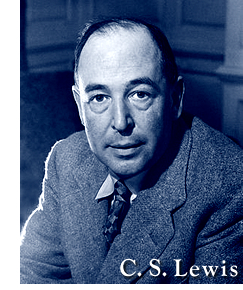
C.S. Lewis Daily – Today’s Reading


TO MR. YOUNG: Lewis’s last letter of direction—on the virgin birth; on the glorified body of the risen Christ; on atonement theories; and on the wrath of God.

31 October 1963

  1. I believe in the Virgin Birth in the fullest and most literal sense: that is, I deny that copulation with a man was the cause of the Virgin’s pregnancy.
  2. It is not easy to define what we mean by an ‘essentially human body’. The records show that Our Lord’s Risen Body could pass through closed doors, which human bodies can’t: but also that it could eat. We shall know what a glorified body is when we have one ourselves: till then, I think we must acquiesce in mystery.
  3. When Scripture says that Christ died ‘for’ us, I think the word is usually υπερ (on behalf of), not αντι (instead of). I think the ideas of sacrifice, ransom, championship (over death), substitution et cetera are all images to suggest the reality (not otherwise comprehensible to us) of the atonement. To fix on any one of them as if it contained and limited the truth like a scientific definition would in my opinion be a mistake.
  4. All associations of human passions to God are analogical. The wrath of God: ‘something in God of which the best image in the created world is righteous indignation’. I think it quite a mistake to try to soften the idea of anger by substituting something like disapproval or regret. Even with men real anger is far more likely than cold disapproval to lead to full reconciliation. Hot love, hot wrath. . . .

Your questions are not in the least offensive.

Yours sincerely

C.S. Lewis

From The Collected Letters of C.S. Lewis, Volume III