Max Lucado – God Sent a Savior


Every Christmas I read this reminder that came in the mail several years ago.

If our greatest need had been information, God would have sent an educator.

If our greatest need had been technology, God would have sent us a scientist.

If our greatest need had been money, God would have sent us an economist.

But since our greatest need was forgiveness, God sent us a Savior!

Christmas cards–these punctuated promises! Phrases filled with the reason we do it all anyway. He became like us, so we could become like him. Angels still sing and the star still beckons. Isaiah 9:6 proclaims, “God has given a son to us. His name will be Wonderful Counselor, Powerful God. Prince of Peace. Ahh…the wonder of it all is that He loves each one of us like there was only one of us to love!

From Grace for the Moment

Night Light for Couples – The Afterlife


“We rejoice in the hope of the glory of God.” Romans 5:2

Our hope for the afterlife was once expressed to me (jcd) by my father. We were walking on a country road, talking about life and its meaning, when he made a comment that I will never forget. He said that when he was a young man, the possibility of a future heavenly existence was not a matter of great value to him. He had enjoyed his youth, and the thought of life beyond the grave was like a pearl that was crusted over with scales and grime. The beauty of the pearl was assumed, but not apparent or realized. But as he grew older and began to experience problems associated with aging, including a serious heart attack and assorted aches and pains, the beauty of the pearl of eternal life began to shine. It shone more and more brilliantly until it became the most prized of any of his possessions.

My father died shortly after that conversation. He has at last grasped the “pearl” of eternal life. Thankfully, that same blessed hope is available to all of God’s children, including you and me. And it is a hope that can bring grace and meaning to every word and activity in our marriage.

Just between us…

  • How do you picture heaven?
  • As the years pass, do you find yourself thinking more about eternity,

or less?

  • What is your greatest hope for the future?
  • Do we understand that the only “thing” we can take with us to heaven is other people and the Word of God? Do we live as though we believed that?

Father, we are so thankful that You have prepared a place for us in Your kingdom. Help us to make the most of our time in this life. May we do everything in our power to spread the good news of this eternal hope to those who don’t know You. Amen.

From Night Light For Couples, by Dr. James & Shirley Dobson

Charles Stanley – Unashamed to Share the Gospel


2 Timothy 1:6-12

The apostle Paul understood the awesome responsibility of being entrusted with the gospel of Jesus Christ. He considered this calling a stewardship for which he would one day give an account to the Lord, and he was willing to suffer for Christ’s sake to complete the task. As believers, we have this same obligation to share the gospel with whomever God places in our lives. But we must ask ourselves if we have a similar level of commitment.

Paul felt compelled to tell people about Christ. In fact, he said, “Woe is me if I do not” (1 Cor. 9:16). No matter how anyone treated him, he wasn’t ashamed of the message of Christ. The prophet Jeremiah had a similar experience. He became a laughingstock and was persecuted for delivering the Lord’s message of the coming judgment. Yet he discovered that not speaking created a far worse feeling in his heart—like fire shut up in his bones (Jer. 20:7-9).

We may not want to warn people about God’s judgment for fear of driving them away from Him. But in reality, the lost are already far from the Lord and need to hear about His offer of forgiveness. Paul was willing to die to get the message out, yet too often we’re not even willing to face a little discomfort to share our faith.

We are surrounded by people who are desperately hungry for something, and they don’t even know what. Yet we have the answer—and the responsibility to share it. Never be ashamed of the best news ever offered to mankind. It can change someone’s eternal destiny.

Bible in One Year: 2 Timothy 1-4

Our Daily Bread — The Importance of How


Read: Numbers 4:17-32

Bible in a Year: Amos 1-3; Revelation 6

Assign to each man his work and what he is to carry. —Numbers 4:19

While attending Bible college, my friend Charlie and I worked for a furniture store. We often made deliveries accompanied by an interior decorator who talked with the people who had purchased the furniture while we brought it from the truck into the house. Sometimes we had to carry the furniture up several flights of stairs in an apartment building. Charlie and I often wished we had the decorator’s job instead of ours!

During Israel’s 40 years of wandering in the wilderness, three clans from the priestly tribe of Levi—the Kohathites, Gershonites, and Merarites—were assigned the job of transporting the Tent of Meeting (tabernacle). They put it up, took it down, and carried it to the next place, then repeated the process again and again. Their job description was simple: “Carry the things assigned to you” (see Num. 4:32).

I wonder if these “custodians” ever envied the “clergymen” who offered sacrifices and incense using the holy articles in the sanctuary (vv. 4-5,15). That job must have looked much easier and more prestigious. But both assignments were important and came from the Lord.

Many times we don’t get to select the work we do. But all of us can choose our attitude toward the tasks we’re given. How we do the job God gives us is the measure of our service to Him. —David McCasland

Father in heaven, our work in life often causes us to wonder if we are accomplishing anything worthwhile. Give us eyes to see the importance of the tasks You have given us so that we may honor You by the way we do them.

Humble work becomes holy work when it’s done for God.


Ravi Zacharias Ministry – Sowing Tears, Reaping Joy


God Rest Ye Merry Gentlemen is one of my favorite carols of the Advent season.

God rest ye merry gentlemen

Let nothing you dismay,

For Jesus Christ our Saviour

Was born upon this day,

To save us all from Satan’s power

When we were gone astray:

O tidings of comfort and joy,

comfort and joy,

O tidings of comfort and joy.

This old English carol reminded Christians that dismay and the darkness of sin were not the final word. Rather, the Advent of Jesus had delivered them from the “domain of darkness” and transferred them “into the kingdom of light” (Colossians 1:13). And yet, the tune is set in a minor key. While no expert in music, I love the juxtaposition of the minor notes and tones with uplifting lyrics, for it reminds me of the reality that joy is mingled with sorrow.

The third Sunday of the Advent Season is called Gaudete Sunday, which in Latin means “rejoice.” The longing and expectation that begins the season, now turns to joy as the arrival of the Christ child approaches. With Gaudete Sunday, Christians rejoice for the tiny baby who will be King; here is joy enfleshed, and God’s reign begins in his life and ministry. And yet, many who are familiar with this carol, even those who sing its verses, may still struggle with the power of evil, or feel that they have yet to find their way to the manger of Jesus. Some find it difficult to enter into the joy that comes on Christmas morning.

For many in our world today, it is difficult to rejoice when the predominant experience is a world in crisis. Many desperately long to enter into the joy promised long ago to humble shepherds: “Behold, I bring you good news of a great joy which shall be for all the people; for today in the city of David there has been born for you a Savior, who is Messiah, the Lord” (Luke 2:10-11). But, for one reason or another, they still feel trapped by adversarial powers.

Those first recipients of the announcement heralding the birth of the Messiah knew it signaled the end of exile and darkness, for the coming of the Messiah meant a new age for the people of Israel. We hear this promise sung in psalms: “When the Lord brought back the captive ones of Zion, we were like those who dream. Then our mouth was filled with laughter, and our tongue with joyful shouting; Then they said among the nations,’The Lord has done great things for them’” (Psalm 126:1-2). The Messiah would gather those who had wandered, and would be light to those in the darkness.

Yet, these great things were not accomplished without tears of sorrow and mourning. For, in this same psalm that heralds God’s deliverance, joy and sorrow are inextricably linked. “Those who sow in tears shall reap with joyful shouting. He who goes to and fro weeping, carrying his bag of seed, shall indeed come again with a shout of joy, bringing his sheaves with him” (Psalm 126:5-6). Indeed, the sowing and the seed are the tears of the exiles, tears that bear a mysterious harvest of joy. Talitha Arnold reflects on the mystery of suffering turned to joy: “The natural power of God to turn seeds into grain would be miracle enough. But Psalm 126 makes an even greater statement. The seeds are not ordinary, but seeds of sorrow. The fruit they bear is not grain or wheat, but shouts of joy.”(1)

In spite of a world easily consumed by sorrow and sadness this season, those who anticipate the arrival of the source of all joy recognize that the harvest of joy is sown in tears—tears that are redeemed by the one who “for the joy set before him endured the cross and suffered its shame” (Hebrews 12:2). Jesus, the joy of the world, was not immune to tears. The “tidings of comfort and joy” would come as that God entered into our suffering and was not removed from it. God enters the exile of this world every Advent Season offering deliverance and salvation.

Joy is often elusive even as it is sought after with great energy. But perhaps we look in the wrong places and in the wrong ways: “This is no jingle-bells joy brought with a swipe of a credit card,” Arnold continues. “The seeds of this joy have been planted in sadness and watered with tears. This is the honest joy that often comes only after weeping has tarried the night.”(2) Tidings of comfort and joy come in a person, according to the Christian gospel, a person who sowed both tears of joy and sadness himself. How poignant that these tidings of comfort and joy are issued from this Man of Sorrows! Yet it is Jesus who can bring joy from tears and fill hearts with gladness at his coming. Weeping may last through the night, but joy indeed comes in the morning.

Margaret Manning is a member of the speaking and writing team at Ravi Zacharias International Ministries in Seattle, Washington.

(1) Talitha Arnold, Feasting on the Word: Preaching the Revised Common Lectionary, Ed. David Lyon Bartlett (Louisville: Westminster John Knox Press, 2008), 60.

(2) Ibid.

Alistair Begg – Hearts Fixed on Jesus


Orpah kissed her mother-in-law, but Ruth clung to her. Ruth 1:14

Both of them had an affection for Naomi and therefore set out with her upon her return to the land of Judah. But the test came: Naomi unselfishly set before both of them the trials that awaited them and encouraged them if they cared for ease and comfort to return to their friends in Moab.

At first both of them declared that they would take their stand with the Lord’s people; but upon further consideration Orpah with much grief and a respectful kiss left her mother-in-law, and her people and her God, and went back to her idolatrous friends, while Ruth with all her heart gave herself up to the God of her mother-in-law.

It is one thing to love the ways of the Lord when all is fair, and quite another to hold to them in the face of discouragements and difficulties. The kiss of outward profession is very cheap and easy, but the practical clinging to the Lord, which must show itself in holy devotion to truth and holiness, is no small matter.

How do things stands with us? Is our heart fixed on Jesus, our body a living sacrifice? Have we counted the cost, and are we solemnly ready to suffer the loss of all things for the Master’s sake? The ultimate gain will be an abundant provision, for the treasures of Egypt do not compare with the glory to be revealed.

Orpah fades from view; in glorious ease and idolatrous pleasure her life melts into the gloom of death. But Ruth lives on in history and in heaven, for grace has placed her in the noble line that produced the King of kings.

Blessed among women will be those who for Christ’s sake renounce all; but forgotten, and worse than forgotten, will be those who in the hour of temptation violate their conscience and turn back to the world. This morning let us not be content with the form of devotion, which may be no better than Orpah’s kiss, but may the Holy Spirit work in us a clinging of our whole heart to the Lord Jesus.

Family Bible Reading Plan

  • 2 Chronicles 17
  • Revelation 6

Devotional material is taken from “Morning and Evening,” written by C.H. Spurgeon, revised and updated by Alistair Begg.

Charles Spurgeon – Perfection in faith


“For by one offering he hath perfected for ever them that are sanctified.” Hebrews 10:14

Suggested Further Reading: 2 Timothy 2:20-26

We could not have access to God unless on the footing of perfection; for God cannot walk and talk with imperfect creatures. But we are perfect; not in character, for we are still sinners; but we are perfected through the blood of Jesus Christ, so that God can allow us to have access to him as perfected creatures. We may come boldly, because being sprinkled with the blood, God does not look on us as unholy and unclean, otherwise he could not allow us to come to his mercy seat; but he looks upon us as being perfected for ever through the one sacrifice of Christ. That is one thing. The other is this. We are the vessels of God’s temple; he has chosen us to be like the golden pots of his sanctuary; but God could not accept a worship which was offered to him in unholy vessels. Those vessels, therefore, were made perfect by being sprinkled with blood. God could not accept the praise which comes from your unholy heart; he could not accept the song which springs from your uncircumcised lips, nor the faith which arises from your doubting soul, unless he had taken the great precaution to sprinkle you with the blood of Christ; and now, whatever he uses you for, he uses you as a perfect instrument, regarding you as being perfect in Christ Jesus. That, again, is the meaning of the text, and the same meaning, only a different phase of it. And, the last meaning is, that the sacrifices of the Jews did not give believing Jews peace of conscience for any length of time; they had to come again, and again, and again, because they felt that those sacrifices did not present to them a perfect justification before God. But behold, beloved, you and I are complete in Jesus. We have no need of any other sacrifice. All others we disclaim. He hath perfected us for ever. We may set our conscience at ease, because we are truly, really, and everlastingly accepted in him.

For meditation: Being accepted in Christ enables us to serve God acceptably.

Sermon no. 232

15 December (Preached 2 January 1859)

John MacArthur – The Lover of Righteousness


“‘Thy throne, O God, is forever and ever, and the righteous scepter is the scepter of His kingdom. Thou hast loved righteousness and hated lawlessness; therefore God, Thy God, hath anointed Thee with the oil of gladness above Thy companions'” (Heb. 1:8-9).

As the eternal God and King, Christ loves righteousness and hates lawlessness.

In these days it’s difficult for us as Christians to be totally supportive of our governmental leaders when we see so much of what God calls righteous compromised or ridiculed. But the King of kings—Christ Himself—is the only leader who has a perfectly right attitude toward righteousness.

Christ rules from an eternal throne, and He rules eternity as God and King. The scepter He holds is symbolic of His rule, particularly as a rule of righteousness.

But there’s more to it than that: He just doesn’t act righteously; He loves righteousness itself. How often have we obeyed without joy, expressing an attitude of willing condescension? But Jesus gives us a different model.

James 1:17 says, “Every good thing bestowed and every perfect gift is from above, coming down from the Father of lights, with whom there is no variation, or shifting shadow.” True righteousness never varies from what is true, just, and good. And 1 John 1:5 says, “God is light, and in Him there is no darkness at all.” God is total light and total righteousness. Everything Jesus did resulted from His love of righteousness.

Because Christ loves righteousness, He hates lawlessness. Since He loves what is right, He must hate what is wrong. The two are inseparable—one cannot exist without the other. You cannot truly love righteousness and also like sin. When there is true love for God, there will also be true love for righteousness and total hatred of sin.

The more you and I become conformed to Jesus Christ, the more we will love righteousness. Our attitudes toward righteousness and sin will ultimately reveal how closely we are conformed to Christ. Check out your attitudes and actions. How are you doing?

Suggestion for Prayer

Like the psalmist, ask God to show you any hurtful way in you (Ps. 139:24).

For Further Study

Read Psalm 119 and note how many times the psalmist makes reference to either his love for God’s law or righteousness.

Joyce Meyer – My Normal Mind


I do not cease to give thanks for you, making mention of you in my prayers. [For I always pray to] the God of our Lord Jesus Christ, the Father of glory, that He may grant you a spirit of wisdom and revelation [of insight into mysteries and secrets] in the [deep and intimate] knowledge of Him, by having the eyes of your heart flooded with light, so that you can know and understand the hope to which He has called you, and how rich is His glorious inheritance in the saints (His set-apart ones). —Ephesians 1:16-18

This section in Ephesians is difficult for many of us to understand. What does Paul mean by “the eyes of your heart flooded with light” (v. 18)? I believe he is referring to the mind, because that’s what needs enlightenment. It is with the mind that we grasp God’s truths and hold to them.

Too many of us have difficulty being “flooded with light” because we are distracted with too many other things. The apostle prays for us to have what I call a normal mind—a mind that’s open to the Holy Spirit’s work—so that we may follow God’s plan and live enriched lives.

One way to think about the idea of a normal mind is to look at two of Jesus’ friends, Mary and Martha. Most people know the story of the sisters and the visit Jesus made to their home in Bethany. Martha scurried around, making certain that everything in their home was exactly right, while Mary sat down to listen to Jesus. Luke says Martha “was distracted with much serving” (see Luke 10:40), and she complained to Jesus that she needed her sister’s help.

Martha, Martha, you are anxious and troubled about many things (v. 41), Jesus told her, and then He commended Mary for having chosen the “good portion.”

As I thought about that incident, I realized it was more than Martha being distracted. I’m sure her mind jumped around, making certain that everything was exactly right. The implication is that even if there had been nothing more to do, Martha wouldn’t have stopped to sit at Jesus’ feet. She was so caught up in busyness that her mind would have searched for something else to do.

The Marthas seem to be in control of our world, don’t they? They are the ones who get things done. When they’re not accomplishing their own goals, they seem to be telling others what they should do. In today’s world of “multi-tasking,” the Marthas seem to get the awards and the accolades. Some people are busy all the time. They wear their busyness like a badge, as if that makes them more important.

Their busyness can easily distract them from developing a solid relationship with God. They’re the ones who often lack depth of peace and rarely know spiritual contentment. That is, they don’t have what God considers a normal mind. It is not in the condition He would like it to be in.

People who are excessively busy cannot even sleep when they lie down at night. They are either mentally going over the day’s activities or making mental lists of the tasks for the next day.

This isn’t the lifestyle Jesus calls us to. As believers, we are spiritual beings, but we’re also natural. The natural doesn’t understand the spiritual and constantly fights that part of our nature. The Bible makes it clear that the mind and the spirit work together. That’s the principle I call “the mind aiding the spirit.”

For the mind to aid the spirit, we must learn to pull back from all the distractions around us. There will always be demands on our time and energy, and we can always find plenty to do. But if we want to live with the mind of Christ, the one that should be normal for Christians, it means we must learn to imitate Mary. Despite all the clamor and activities going on around her, she was able to sit, relax, and listen to the voice of the Master. That’s how the mind is supposed to work. It should be quiet and under the control of the Spirit. However, we often find that our minds are so set in a wrong direction that they actually hinder the Spirit from helping us, as they should be free to do.

If you realize from this devotion that your mind has been behaving abnormally, ask God to forgive you and teach you what a normal mind is in His kingdom.

Dear God in heaven, distractions constantly come at me. When I try to pause and focus on You, my mind seems to be filled with dozens of things I need to do. I realize that I truly need only one thing—to focus on You. Please help me push away every distraction and noise so I can hear only Your voice that says, “Come unto Me, and I will give you rest.” Amen.

From the book Battlefield of the Mind Devotional by Joyce Meyer.

Campus Crusade for Christ; Bill Bright – Learn to Be Patient


“We can rejoice, too, when we run into problems and trials for we know that they are good for us – they help us learn to be patient” (Romans 5:3).

A Christian family was struggling with the trials of being parents (they had four young children – two of them in diapers). One day the wife, who was frustrated to her wits’ end, came to me for spiritual counsel. As she phrased it, she was at the point of losing her sanity.

How could she cope with rearing her children? She told how angry she got with the children when they disobeyed her. In fact, she indicated there were times when she feared she might physically harm her children, though she loved them dearly.

How could she cope with rearing her children? She needed the fruit of the Spirit, patience and love. The only way she could obtain such patience was by faith, confessing her sins and appropriating the fullness of the Holy Spirit. This she began to do, continually. Today, she is a women of godly patience, and being a parent has become a joyful privilege for her.

All of us need Christ’s patience, regardless of who we are or in what circumstances we find ourselves. Patience is granted to us by the grace of God through the Holy Spirit. It is produced by faith as a fruit of the Spirit, and it is granted in times of great crises (Luke 21:15-19); in dealing with church situations (2 Corinthians 12:12); in opposing evil (Revelation 2:2), for soundness of faith (Titus 2:2) and in waiting for the return of Jesus Christ (James 5:7,8).

Bible Reading: Romans 5:1-8

TODAY’S ACTION POINT: I will look on trials and problems as a forerunner of great patience in my life, while claiming the supernatural power of the Holy Spirit to strengthen me.

Presidential Prayer Team; C.H.  – Shaking Not Necessary


Christmas is a time for guessing – shaking packages and surmising what might be inside. Based on the size, weight and “shake” of a package, speculations are made. Did your loved one pick up on the hints you offered?

To him was given…a kingdom, that all peoples, nations, and languages should serve him.

Daniel 7:14

Daniel, in the Old Testament, made predictions about what was to come, too. But Daniel’s foretelling wasn’t speculation – it was prophesy. Even though he lived 500 years before the birth of Christ, Daniel, through visions from God, shared details of the coming Messiah. Today’s passage tells how all nations will serve the King. “At the name of Jesus every knee should bow, in heaven and on earth and under the earth, and every tongue confess that Jesus Christ is Lord, to the glory of God the Father.” (Philippians 2:10-11)

As you open gifts with friends and family this Christmas season and guess what’s inside, stop and give thanks for the ultimate gift that didn’t require a guess – salvation through Jesus. Ask God to open the eyes of the people and leaders of this nation to the greatest gift of all.

Recommended Reading: Daniel 7:13-17

Greg Laurie – True Seekers


“And you will seek Me and find Me, when you search for Me with all your heart.”—Jeremiah 29:13

The arrival of the wise men in Jerusalem would have created quite a stir. These were strange men with a strange question, asking for the King of the Jews. They couldn’t have said a worse thing to King Herod. In effect, they were saying, “We’re looking for the King of the Jews—and clearly you’re not him.”

This is why we’re told in Matthew 2:3, “When Herod the king heard this, he was troubled, and all Jerusalem with him.” The word troubled used here could be translated “to shake violently”—like a washing machine in the spin phase. That was Herod. And when Herod was agitated, everyone was agitated. When he was mad, everyone was afraid of what could happen next.

So Herod called in the scribes, men who had committed themselves to studying the Scriptures. Without missing a beat, they went right to Micah 5:2: “But you, Bethlehem Ephrathah, though you are little among the thousands of Judah, yet out of you shall come forth to Me the One to be Ruler in Israel, whose goings forth are from of old, from everlasting.”

There was no question the Messiah would be born in Bethlehem. Of course, Herod wanted to stop this Child from coming and wanted to destroy Him.

God used these wise men to get Herod’s attention. These were pagan men who were steeped in the occult. Yet God reached them in a way that they understood. He came to them by a star.

The Lord says that those who seek Him will find Him. To educated men and women, He will come to them in a way they can understand. To little children, He will appear in a way they can understand.

I believe that if people are truly seeking God, He will reveal Himself to them.

Max Lucado – A Fire Burning


I wish I could say it’s forgiven and forgotten—but it isn’t. As much as I’ve tried—all I feel is the anger and the bitterness.

Without forgiveness, bitterness is all that’s left! Maybe it’s an old wound. A parent abused you. A mate betrayed you. And you are angry. Perhaps the wound is fresh. The friend who owes you money just drove by in a new car.  The boss who hired you with promises of promotions has forgotten how to pronounce your name. And you are hurt! There is a fire burning in your heart. It’s the fire of anger. And you are left with a decision. Do I get over it or get even? Do I let my hurts heal, or do I let hurt turn into hate? Proverbs 15:9 says, “The Lord hates what evil people do, but He loves those who do what is right.”

From Grace for the Moment

Night Light for Couples – Anchor For the Soul


“In him our hearts rejoice, for we trust in his holy name.” Psalm 33:21

When a sudden storm strikes a ship at anchor, only the links of chain and the anchor wedged in the rocks keep vessel and crew from being set dangerously adrift. Obviously, the more tumultuous the times, the more important the moorings. In our own stressful moments, our hopes need to be anchored securely—not in wishes or feelings, but in God’s promise. As the author of Hebrews said, “We have this hope as an anchor for the soul, firm and secure”(Hebrews 6:19).

Isn’t it comforting to know that we have a secure anchor in our marriages? When storms threaten to overtake us, Jesus Christ will not let us drown. We can count on Him to deliver what He has promised. We may not know what the future holds for our family, career, finances, or dreams—but we can rest in the knowledge that our souls are safe in the hands of almighty God.

Just between us…

  • Can you think of a time when you thought the storms of life would capsize you? What kept you float?
  • Besides God, who or what provides security and stability in your life?
  • Do you ever feel adrift spiritually? If so, how can I help?
  • Have we placed our hopes and dreams firmly in God’s hands? If not,

can we do that together now?

Lord, You know the desires of our hearts; You know our secret fears, too. But we acknowledge Your unfailing promises and steadfast love. Thank You for being our rock. Tonight we cast our hopes and dreams on You for safekeeping, because we trust You. Amen.

From Night Light For Couples, by Dr. James & Shirley Dobson

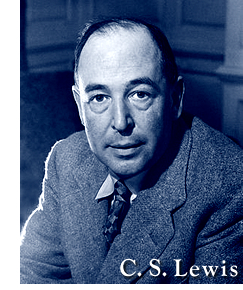
C.S. Lewis Daily – Today’s Reading


TO KEITH MANSHIP: On the slow process of being more in Christ; and on doing one’s duty, especially the duty to enjoy.

13 September 1962

You state the problem very clearly, and the fact that you can do so really shows that you are very much on the right road. Many don’t even get so far.

The whole problem of our life was neatly expressed by John the Baptist when he said (John, chap 3, v. 30) ‘He must increase, but I must decrease.’ This you have realised. But you are expecting it to happen suddenly: and also expecting that you should be clearly aware when it does. But neither of these is usual. We are doing well enough if the slow process of being more in Christ and less in ourselves has made a decent beginning in a long life (it will be completed only in the next world). Nor can we observe it happening. All our reports on ourselves are unbelievable, even in worldly matters (no one really hears his own voice as others do, or sees his own face). Much more in spiritual matters. God sees us, and we don’t see ourselves. And by trying too hard to do so, we only get the fidgets and become either too complacent or too much the other way.

Your question what to do is already answered. Go on (as you apparently are going on) doing all your duties. And, in all lawful ways, go on enjoying all that can be enjoyed—your friends, your music, your books. Remember we are told to ‘rejoice’ [Philippians 4:4]. Sometimes when you are wondering what God wants you to do, He really wants to give you something.

As to your spiritual state, try my plan. I pray ‘Lord, show me just so much (neither more nor less) about myself as I need for doing thy will now.’

From The Collected Letters of C.S. Lewis, Volume III

Compiled in Yours, Jack

Charles Stanley – The Reason For Our Boldness


Philippians 1:19-20

Even though Christians are familiar with the gospel, many are reluctant to share their faith with others because they don’t feel capable of explaining it. When we lack confidence in our knowledge of salvation through Jesus Christ, fear of negative reactions or possible questions can keep us silent. What if we don’t have the answers or end up looking like a fool? It’s just too intimidating.

But remember, God has given us the most important message in the world. Since we’re confronted by so many unscriptural philosophies and religious deceptions, we need to understand the gospel and be able to present it with confidence and boldness. We can’t let fear or ignorance keep us from giving lost people the only message that can change a person’s eternal destiny.

The apostle Paul welcomed every opportunity to tell people about Christ, because he focused on the gospel’s life-changing power rather than the possible negative reactions. Often, the reason we’re ashamed to talk about our faith is that we’re concerned about ourselves. If we look at the hurting people around us, express a genuine interest in them, and ask God to open a door for us to share our faith with them, He will answer that prayer.

We tend to be motivated by temporal activities that eventually fade away. But souls are forever, and people need to know the Savior. Look for opportunities to reach out to those around you—notice their expressions; ask how they’re doing. When their need stirs your heart, you’ll be eager to offer them the gospel.

Bible in One Year: 1 Timothy 4-6

Our Daily Bread — Let’s Celebrate


Read: Psalm 150

Bible in a Year: Joel 1-3; Revelation 5

Praise him with timbrel and dancing, praise him with the strings and pipe. —Psalm 150:4

After Ghana’s Asamoah Gyan scored a goal against Germany in the 2014 World Cup, he and his teammates did a coordinated dance step. When Germany’s Miroslav Klose scored a few minutes later, he did a running front flip. “Soccer celebrations are so appealing because they reveal players’ personalities, values, and passions,” says Clint Mathis, who scored for the US at the 2002 World Cup.

In Psalm 150, the psalmist invites “everything that has breath” to celebrate and praise the Lord in many different ways. He suggests that we use trumpets and harps, stringed instruments and pipes, cymbals and dancing. He encourages us to creatively and passionately celebrate, honor, and adore the Lord. Because the Lord is great and has performed mighty acts on behalf of His people, He is worthy of all praise. These outward expressions of praise will come from an inner wellspring overflowing with gratitude to God. “Let everything that has breath praise the Lord,” the psalmist declares (150:6).

Though we may celebrate the Lord in different ways (I’m not encouraging back flips in our worship services), our praise to God always needs to be expressive and meaningful. When we think about the Lord’s character and His mighty acts toward us, we cannot help but celebrate Him through our praise and worship. —Marvin Williams

How has this psalm challenged you to be more expressive in your praise to God? Spend some time thinking about the greatness of the Lord’s mighty works. Then give Him your praise.

Praise is the song of a soul set free.

INSIGHT: The last five psalms (146-150) are also known as Hallelujah psalms because each of them begins and ends with “Hallelujah” or “Praise the Lord.” The psalmist calls for “everything that has breath”—every living thing on earth and spiritual beings in the heavens—to worship God for what He has done (v. 6). We praise Him for “his acts of power” and for “his surpassing greatness” (v. 2). God deserves the full and joyous expression of our commitment and devotion, and we can praise Him exuberantly with singing and musical instruments (vv. 3-6).

Ravi Zacharias Ministry – Imagination Reborn


Nicodemus was confused. He had come to Jesus under the secrecy of the night professing what he thought he knew: “Rabbi, we know you are a teacher who has come from God. For no one could perform the miraculous signs you are doing if God were not with him.”(1) Nicodemus was a Pharisee in the time of Jesus, a member of the Jewish ruling council. He was highly regarded, which most likely explains the veil of night by which he sought to meet the controversial rabbi. He did not want to draw unnecessary attention to his consideration of Jesus. Even so, it was perhaps an act of faith to seek out the divisive young man from Galilee, an act of humility to grapple with a message that thoroughly confused him, a message that seemed to call the very basis of his faith into question.

In reply to Nicodemus’s admission that night, Jesus offered one of his own: “I tell you the truth, no one can see the kingdom of God unless he is born again.” The ensuing conversation is one of mystery and semantics.

“How can a man be born when he is old?” Nicodemus asked. “Surely he cannot enter a second time into his mother’s womb.”

Again Jesus answered curiously, “I tell you the truth, no one can enter the kingdom of God unless he is born of water and the Spirit. Flesh gives birth to flesh, but the Spirit gives birth to spirit. You should not be surprised at my saying, ‘You must be born again.’ The wind blows wherever it pleases. You hear its sound, but you cannot tell where it comes from or where it is going. So it is with everyone born of the Spirit.”(2)

Nicodemus replied as many of us reply on a journey of faith, belief, doubt, and confusion: as one reaching for light to see dim outlines of a picture before him. “How can this be?” he asked, and the conversation that followed showed a man not asking hypothetically but actually, as one really longing to understand the logistics of rebirth. Nicodemus came to Jesus in the obscurity of darkness and found himself confronted by a conversation about flesh and spirit and light: “[W]hoever lives by the truth comes into the light, so that it may be seen plainly that what he has done has been done through God.”

G.K. Chesterton once said that it is important for the landlady who is considering a lodger to know his income, but it is more important to know his philosophy. Likewise, for the general about to fight an enemy, it is important to know the enemy’s numbers, but still more important to know the enemy’s worldview. “[T]he question” writes Chesterton, “is not whether the theory of the cosmos affects matters, but whether in the long run, anything else affects them.”(3) The big picture is always the most important picture. And when the picture is God, God outgrows every frame through which our eyes begin to see the divine. In a manner reminiscent of the exchange between Aslan and Lucy, God as noun, verb, and all always moves beyond the God we imagine.

“Aslan,” said Lucy, “You’re bigger.”

“I am not,” said the great lion. “But every year you grow; you will find me bigger.”

For Nicodemus, the entire picture was turned on its head. Everything he knew was cast into shadows by the light who stood before him. “How can this be?” are the last words we hear from Nicodemus this night. The darkened exchange of Christ and the Pharisee is one that ends without clarity. Yet true to our own lives, his confusion does not seem to disperse in the expanse of one chapter. There are two more references to Nicodemus in John’s Gospel, and they suggest that that this initial meeting with Jesus was the beginning of something of a journey. In the darkness of faith, Nicodemus seemed to discover the God who is there, the light who draws us further up and further in, until standing before the divine, we ourselves are reborn.

Jill Carattini is managing editor of A Slice of Infinity at Ravi Zacharias International Ministries in Atlanta, Georgia.

(1) John 3:2.

(2) John 3:3-21.

(3) G.K. Chesterton, Heretics (Whitefish, MT: Kessinger Publishing, 2003), 15.

Alistair Begg – From Strength to Strength


They go from strength to strength.

Psalm 84:7

“They go from strength to strength.” There are various renderings of these words, but all of them contain the idea of progress. “They go from strength to strength.” That is, they grow stronger and stronger. Usually, if we are walking we go from strength to weakness; we start fresh and in good order for our journey, but by and by the road is rough, and the sun is hot; so we sit down by the wayside and then resume our weary way.

But the Christian pilgrim, having obtained fresh supplies of grace, is as vigorous after years of weary travel and struggle as when he first set out. He may not be quite so elated and buoyant, nor perhaps quite so hot and hasty in his zeal as he once was, but he is much stronger in all that constitutes real power; and if he travels more slowly, he does so more surely.

Some gray-haired veterans have been as firm in their grasp of truth and as zealous in spreading it as they were in their younger days. But sadly, it must be confessed it is often otherwise, for the love of many grows cold, and iniquity flourishes; but this is their own sin and not the fault of the promise, which still holds good: “Even youths shall faint and be weary, and young men shall fall exhausted; but they who wait for the LORD shall renew their strength; they shall mount up with wings like eagles; they shall run and not be weary; they shall walk and not faint.”1

Fretful spirits sit down and trouble themselves about the future. “Unfortunately,” they say, “we go from affliction to affliction.” Very true, O you of little faith; but you go from strength to strength also. You will never find a bundle of affliction that does not have in it somewhere sufficient grace. God will give the strength of ripe maturity along with the burden allotted to full-grown shoulders.

1) Isaiah 40:30-31

Family Bible Reading Plan

  • 2 Chronicles 16
  • Revelation 5

Devotional material is taken from “Morning and Evening,” written by C.H. Spurgeon, revised and updated by Alistair Begg.

Charles Spurgeon – Faith


“Without faith it is impossible to please God.” Hebrews 11:6

Suggested Further Reading: Hebrews 3:12-4: 2

I may know a thing, and yet not believe it. Therefore assent must go with faith: that is to say, what we know we must also agree with, as being most certainly the will of God. Now, with faith, it is necessary that I should not only read the Scriptures and understand them, but that I should receive them in my soul as being the very truth of the living God, and should devoutly, with my whole heart, receive the whole of Scripture as being inspired of the most High, and the whole of the doctrine which he requires me to believe for my salvation. You are not allowed to divide the Scriptures, and to believe what you please; you are not allowed to believe the Scriptures with a half-heartedness, for if you do this wilfully, you have not the faith which looks alone to Christ. True faith gives its full assent to the Scriptures; it takes a page and says, “No matter what is in the page, I believe it;” it turns over the next chapter and says, “Here are some things hard to be understood, which they that are unlearned and unstable do ignore, as they do also the other Scriptures, to their destruction; but hard though it be, I believe it.” It sees the Trinity; it cannot understand the Trinity in Unity, but it believes it. It sees an atoning sacrifice; there is something difficult in the thought, but it believes it; and whatever it be which it sees in revelation, it devoutly puts its lips to the book, and says, “I love it all; I give my full, free and hearty assent to every word of it, whether it be the threatening or the promise, the proverb, the precept, or the blessing. I believe that since it is all the word of God it is all most assuredly true.”

For meditation: Faith enables us to accept much which we cannot explain—“Through faith we understand” (Hebrews 11:3): “Believing is seeing”. Nothing else can fill the gap left by a lack of faith.

Sermon no. 107

14 December (1856)