Max Lucado – Touch the World

Where will God go to touch the world? What a great thought and an even better question! It’s that time of year when we hear about the virgin birth. And yet it’s much, much more than a Christmas story.  It is a story of how close Christ will come to you!

The first stop on his itinerary was a womb. Where will God go to touch the world? Look deep within Mary for an answer. Better still—look deep within yourself.  Christ in you, the hope of glory! Christ grew in Mary until he had to come out. Christ will grow in you until the same occurs.  He will come out in your speech, in your actions, and in your decisions. Every place you live will be a Bethlehem. And every day you live will be a Christmas. Deliver Christ into the world!

From Grace for the Moment

Night Light for Couples –A Lighthearted Spirit


“May the God of hope fill you with joy and peace as you trust in him, so that you may overflow with hope by the power of the Holy Spirit.” Romans 15:13

As Christians who want to bring joy to our marriages, we might do well to remember the words of baseball great (and occasional comedian) Yogi Berra: “Ninety percent of the game is half mental.” We could say the same about life: It’s how we look at circumstances that makes all the difference. For Christians, it’s not just how we look at things; it’s at Whom we’re looking. “Rejoice in the Lord and be glad,” wrote David (Psalm 32:11). Paul gave the same advice to the Philippians. And the author of Hebrews wrote: “Let us fix our eyes on Jesus, the author and perfecter of our faith, who for the joy set before him endured the cross….” (Hebrews 12:2). Couples who keep Jesus Christ as Lord of their home seem to laugh more often and cultivate hope in their marriages more easily. Why? Because when Jesus carries the weight of your worries, your needs, and your future, lighthearted living is the natural result.

God gave us a sense of humor to help us stay “half mental” in our marriage, and surely He wants us to use and enjoy it!

Just between us…

  • Do you think Jesus often laughed? Do you think we would laugh more if we trusted God more?
  • What steps can we take to bring a lighthearted spirit into our home?
  • How can we worship God by our attitudes about life’s little hassles?

Most amazing God, thank You for making humor possible in our world. Forgive us when selfishness, fear, or faithlessness rob us of laughter. Amen.

From Night Light For Couples, by Dr. James & Shirley Dobson

Charles Stanley – Conquering Jealousy


Psalms 37:4-6

What may begin as a minor comparison between our own lives and the lives of others can quickly escalate into an overwhelming mess. Jealousy is like a snowball that grows larger and larger. Its consequences are often devastating.

Confusion, anxiety, and bitterness can flood an envious heart and skew thoughts, until it’s nearly impossible to keep God’s plan in view. Instead, the focus becomes what we don’t have, taking us down the crippling path of resentment of others who do have the desired object or trait. This can dominate our thinking, leading to irrational behavior and broken relationships.

What’s more, envy dishonors our Lord and Savior Jesus Christ. Though He has a beautiful plan for each and every one of His children, jealousy says, “I deserve more than You’ve provided, and therefore, I don’t trust that You truly give me Your best.”

If you find any evidence of envy in your life, confess the comparison mindset. Recognize that you’re focusing on what God is doing in another person’s life rather than in your own. Thank Him for how He is blessing the other person, and ask Him to place love in your heart for that individual. Then refocus your attention on what the Father is doing. Finally, memorize and meditate on today’s verses.

If you’re burdened with jealousy, then you’re missing out on God’s best. Don’t wait to deal with this sin, which will fester and grow if left unattended. The One who created you and designed a good plan for your life is able to conquer jealousy in your heart.

Bible in One Year: Ephesians 1-3

Our Daily Bread — The Perfect Gift


Read: Romans 12:1-8

Bible in a Year: Daniel 8-10; 3 John

Ascribe to the Lord the glory due his name; bring an offering and come into his courts. —Psalm 96:8

Every year our local botanical garden hosts a celebration of Christmas around the world. My favorite display is a French nativity. Instead of the traditional scene showing shepherds and wise men with gifts of gold, frankincense, and myrrh gathered around the manger, it shows French villagers bringing their gifts to baby Jesus. They bring bread, wine, cheese, flowers, and other items that God has given them the ability to produce. This reminds me of the Old Testament command to bring the firstfruits of our labor to the house of the Lord (Ex. 23:16-19). This depiction of the nativity illustrates that everything we have comes from God, so the only thing we have to give is something that God has given us.

When Paul instructed the Romans to present themselves as a living sacrifice, he was telling them to give back to God what God had given them—their own selves (Rom. 12:1). This includes the gifts He gave them, even their ability to earn a living. We know that God gives people special abilities. Some, like David, were skilled in music (1 Sam. 16:18). Some, like Bezalel and Oholiab, were skilled in artistic works (Ex. 35:30-35). Others have skill in writing, teaching, gardening, and many other things.

When we give back to God what He has first given to us, we give Him the perfect gift—ourselves. —Julie Ackerman Link

What can you offer to Jesus?

Share on our Facebook page: facebook.com/ourdailybread

Give your all to Christ who gave His all for you.

INSIGHT: There are five listings of spiritual gifts in the New Testament: Romans 12:6-8; 1 Corinthians 12:8-10; 12:28-30; Ephesians 4:11; and 1 Peter 4:11. In each of these lists the emphasis is not on the different types of gifts but on their diversity and how they are to be used in a way that promotes love and unity in the church (1 Cor. 12:12-13:13). Gifts are to be used to build up the spiritual maturity of the believers (Eph. 4:12-16) and to bring glory to the Lord (1 Peter 4:9-11). In Romans 12 Paul encourages believers to use their gifts in humility (v. 3), in unity (vv. 4-5), and with sincere love and respect (vv. 9-10).

Ravi Zacharias Ministry – Bleak Midwinter


Impossible to miss in any mall, grocery store, elevator, or voice mail system, Christmas music is as ubiquitous as the snow of the season. I have yet to walk into a store this Christmas season that wasn’t playing, “It’s the most wonderful time of the year.” The song and the tune are familiar to many: “With kids jingle belling, and everyone telling you, ‘Be of good cheer’—it’s the most wonderful time of the year!” With this music all around, who wouldn’t begin to hum along and get caught up in the uplift that can be the holiday season.

And yet, for many this season is anything but wonderful. In fact, the music simply sounds out of tune or reinforces dissonant chords because of the memories, emotions, and experiences now associated with this season. Families in San Bernardino feel the emptiness of loss, the hemorrhage of violence, and the undertow of grief as a result of two shooters. Events like these, and those that have occurred around the world, will mark Christmas seasons with the stains of tears. There are many who also grieve in this season because of the loss of loved ones—not from gun violence—but from the violence of a body turned against itself through cancer or some other debilitating or destructive disease. For them, Christmas reminds them of yet another empty chair. Others experience a numbing loneliness, disappointed expectations, ruptured relationships, and rejections that twist and distort the joy of the season into a garish spectacle. Instead of uplifting them in celebration, the most wonderful time of the year can seem a cruel mockery.

For all of these, and many others, the Christmas season seems more like the opening verse of Christina Rossetti’s haunting Christmas poem, “In the Bleak Midwinter.”

In the bleak midwinter, frost wind made moan,

earth stood hard as iron, water like a stone.

All the excitement, anticipation, and beauty of the season, is frozen by pain, isolation, and grief. Instead of singing songs of joy, a bitter moan emanates like the cold, frost-bitten wind.

Yet, according the Christian gospel into this world—the world of the bleak midwinter—God arrived. Not sheltered from grief or pain, God descended into a world where poverty, violence, and grief were a daily part of God’s human existence. Joseph and Mary, barely teenagers, were poor, and Mary gave birth in a dirty barn. Herod used his power to slaughter all the male children who were in Bethlehem under the age of two. Shepherds still slept on grassy hills, their nomadic home. John the Baptist would be beheaded. And God who Christians believe was the man Jesus would experience rejection and eventually die a criminal’s death with only a few grieving women remaining at his side. The old hymn, “Out of the Ivory Palaces” said it well:

Out of the ivory palaces, into a world of woe,

Only His great, eternal love, made my Savior go.

Into this world—the world of bleak midwinters—God arrives. God arrives in the midst of pain and suffering, doubt and disappointment, longing and loneliness coming alongside of even this kind of human experience because of “great, eternal love.” The Gospel of John explores the mystery of a God did not stay removed from humanity, or from human sufferings, but as the Word made flesh came and dwelt among us. For those who find the Christmas season far from the most wonderful time of the year, may Immanuel, God with us—even in the bleakest midwinter—be sweet consolation.

And for all who celebrate this Season as the most wonderful time of the year demonstrate its wonder, its beauty, its joy and celebration, by reaching out to those in bleak midwinter. As the Rossetti poem offers: doing our part, giving our all, sharing our heart.

Margaret Manning Shull is a member of the speaking and writing team at Ravi Zacharias International Ministries in Bellingham, Washington.

Alistair Begg – Walk With Christ in White


Yet you have still a few names in Sardis, people who have not soiled their garments, and they will walk with me in white, for they are worthy.

Revelation 3:4

We may understand this to refer to justification. “They will walk in white”; that is, they will enjoy a constant sense of their own justification by faith; they will understand that the righteousness of Christ is imputed to them, that they have all been washed and made whiter than the newly-fallen snow.

Again, it refers to joy and gladness, for white robes were holiday dress among the Jews. They who “have not soiled their garments” will have their faces always bright; they will understand what Solomon meant when he said, “Go, eat your bread in joy, and drink your wine with a merry heart, for God has already approved what you do. Let your garments be always white.”1

The one who is accepted by God will wear white garments of joy and gladness while they walk in sweet communion with the Lord Jesus. Why are there so many doubts, so much misery and mourning? It is because so many believers spoil their garments with sin and error, and as a result they lose the joy of their salvation and the comfortable fellowship of the Lord Jesus; they do not walk here below in white.

The promise also refers to walking in white before the throne of God. Those who have not soiled their garments here will most certainly walk in white in heaven, where the white-robed crowd sings perpetual hallelujahs to the Most High. They will possess joys inconceivable, happiness beyond a dream, bliss that imagination knows not, blessedness that even the stretch of desire has not reached.

“Those whose way is blameless”2 shall have all this-not of merit, nor of works, but of grace. They shall walk with Christ in white, for He has made them “worthy.” In His sweet company they will drink from the fountains of living waters.

1) Ecclesiastes 9:7-8

2) Psalm 119:1

Family Bible Reading Plan

  • 2 Chronicles 8
  • 3 John 1

Devotional material is taken from “Morning and Evening,” written by C.H. Spurgeon, revised and updated by Alistair Begg.

Charles Spurgeon – Conquering Jealousy


Psalms 37:4-6

What may begin as a minor comparison between our own lives and the lives of others can quickly escalate into an overwhelming mess. Jealousy is like a snowball that grows larger and larger. Its consequences are often devastating.

Confusion, anxiety, and bitterness can flood an envious heart and skew thoughts, until it’s nearly impossible to keep God’s plan in view. Instead, the focus becomes what we don’t have, taking us down the crippling path of resentment of others who do have the desired object or trait. This can dominate our thinking, leading to irrational behavior and broken relationships.

What’s more, envy dishonors our Lord and Savior Jesus Christ. Though He has a beautiful plan for each and every one of His children, jealousy says, “I deserve more than You’ve provided, and therefore, I don’t trust that You truly give me Your best.”

If you find any evidence of envy in your life, confess the comparison mindset. Recognize that you’re focusing on what God is doing in another person’s life rather than in your own. Thank Him for how He is blessing the other person, and ask Him to place love in your heart for that individual. Then refocus your attention on what the Father is doing. Finally, memorize and meditate on today’s verses.

If you’re burdened with jealousy, then you’re missing out on God’s best. Don’t wait to deal with this sin, which will fester and grow if left unattended. The One who created you and designed a good plan for your life is able to conquer jealousy in your heart.

Bible in One Year: Ephesians 1-3

John MacArthur – Christ’s Radiance and Representation


“He is the radiance of His glory and the exact representation of His nature” (Heb. 1:3).

Jesus is both God manifest and God in substance.

Just as the rays of the sun give light, warmth, life, and growth to the earth, so Jesus Christ is the glorious light of God shining into the hearts of men and women. As “the radiance of God’s glory,” Jesus expresses God to us. No one can see God in HIs full glory; no one ever will. The radiance of that glory that reaches us from God appears in the Person of Jesus Christ.

Just as the sun was never without and can never be separated from its brightness, so God was never without and cannot be separated from the glory of Christ. Never was God without Him or He without God, and never in any way can He be separated from God. Yet the brightness of the sun is not the sun, and neither is Jesus exactly the same as God in that sense. He is fully and absolutely God, yet as a distinct Person within the triune Godhead.

Jesus said, “I am the light of the world; he who follows Me shall not walk in the darkness, but shall have the light of life” (John 8:12). As the radiance of God’s glory, Christ can transmit that light into your life and mine so that we can radiate the glory of God to a dark world.

In using the term “exact representation” to describe Christ’s relationship to God’s nature, the writer employs terminology usually associated with an impression reproduced on a seal by a die or stamp. Jesus Christ is the reproduction of God—the perfect, personal imprint of God in time and space.

How wonderful to realize that Jesus Christ, who is both the full expression of God and exact reproduction of God’s nature in human history, can come into our lives and give us light to see and to know God! His light is the source of our spiritual life. And His light gives us purpose, meaning, happiness, peace, joy, fellowship, everything—for all eternity.

Suggestion for Prayer

Thank God that He determined to become a man so we could know what He is like.

For Further Study

Read 2 Corinthians 4:3-6 and note who allows people to see or not see spiritually.

Joyce Meyer – Honor God’s Voice Above All


[Most] blessed is the man who believes in, trusts in, and relies on the Lord, and whose hope and confidence the Lord is. —Jeremiah 17:7

One attitude that welcomes the presence of God into our lives is the attitude that honors Him above everyone and everything else. Our attitudes need to say, God, no matter what anyone else tells me, no matter what I think myself, no matter what my own plan is, if I clearly hear You say something and I know it’s You, I will honor You—and honor what You say—above everything else.

Sometimes we give more consideration to what people tell us than to what God says. If we pray diligently and hear from God, and then start asking people around us what they think, we honor their human opinions above God’s. Such an attitude will prevent our being able to consistently hear God’s voice. If we are ever going to develop an ability to hear from God and be led by His Spirit as a way of life, we have to stop listening to so many opinions from so many people and begin trusting the wisdom God deposits in our hearts. There is a time to receive good counsel, but needing the approval of people will keep us out of the will of God.

The devil wants us to think we are not capable of hearing from God, but God’s Word says that is not true. The Holy Spirit dwells inside of us because God wants us to be led by the Spirit in a personal way and to hear His voice for ourselves as He leads and guides us.

In the verse for today, God says we will be blessed when we look to Him. According to Jeremiah 17:5-6, severe consequences come to those who trust in the frailty of mere men and women, but blessed are those who trust in and honor the Lord. Good things happen if we listen to God. He wants to be our strength and we must honor His Word above all else.

God’s Word for You Today: Hear what others have to say, but listen to God.

From the book Hearing from God Each Morning: 365 Daily Devotions by Joyce Meyer.

Campus Crusade for Christ; Bill Bright – He Will Preserve Me


“And the Lord shall deliver me from every evil work, and will preserve me unto His heavenly kingdom; to whom be glory for ever and ever. Amen” (2 Timothy 4:18, KJV).

Do you and I have that same kind of confidence in God?

Note that the apostle Paul did not mention the word deathhere, for earlier verses in this chapter reveal that he expected to die – and he was ready. But he was assured that God would keep Paul from apostasy, and from displaying an improper spirit at the time of his death.

In the same way, we can ask the Lord today, in faith believing, for that inner peace we need to face up to all that He allows to happen in our lives. His perfect peace is sufficient for every testing and trial and trouble and temptation.

By keeping us from every evil work, He likewise enables us to reach His heavenly kingdom.

An appropriate time for praise to God is when a person knows he is about to be brought to heaven, and Paul introduces such a doxology here: “to whom be glory for ever and ever.”

The truth is clear: we are protected on every side, and even at death we can sing the doxology, for we are about to meet the altogether lovely One in His heavenly home. To remain in constant fellowship with our heavenly Father will maintain a spirit of joy, love and peace in our lives that nothing can shake.

Bible Reading: Psalm 3:1-6

TODAY’S ACTION POINT: Like the apostle Paul, I will confidently expect God to protect me from every evil work and enable me to live the supernatural life for His glory.

Presidential Prayer Team; C.H. – The Prize Door


Let’s Make a Deal was a popular television game show where audience members were offered something desirable but were also given the opportunity to trade their prize for something hidden – often behind a door. Some doors revealed new cars and vacations while others hid donkeys. Contestants squirmed as they guessed which one was the prize door. If only they had knowledge of that which was hidden.

To give knowledge of salvation to his people in the forgiveness of their sins.

Luke 1:77

Knowledge is a gift. While on game shows, knowledge grants prizes, but the ultimate gift comes from understanding salvation in Christ. In today’s passage, Zechariah shared how John the Baptist would “give knowledge of salvation” as he prepared the way for Jesus. You can share this gift, too.

This Christmas, remember the greatest gift is that of eternal life through Jesus. Ask God to reveal to you those around you who need that knowledge. Pray for your neighbors and your local and national leaders to recognize God as their Creator and Christ as God’s Son. Ask Him to grant them knowledge of His salvation. And remember, you don’t have to “make a deal” with God. His gifts are always wonderful and free!

Recommended Reading: Luke 1:68-79

Greg Laurie – A Riches-to-Rags Story


For you know the grace of our Lord Jesus Christ, that though He was rich, yet for your sakes He became poor, that you through His poverty might become rich.—2 Corinthians 8:9

In reality, the story of Jesus is not a rags-to-riches story; it is a riches-to-rags story. It is a story of leaving the glory of Heaven for this planet. Jesus could have been born in the most elegant mansion on the ritziest boulevard in Rome. He could have had aristocratic parents who boasted of their pedigree. He could have had the finest clothes from the most exclusive shops. He could have had legions of angels as an army of servants to respond to His every whim. But He had none of that. Instead, Jesus humbled Himself.

We read in 2 Corinthians 8:9, “Though He was rich, yet for your sakes He became poor, that you through His poverty might become rich.” God came into our world. He was like any other baby who needed to be cradled, needed to be nurtured, and needed to be protected. The Creator of the universe was born in a stable in Bethlehem.

Like everything else in the Christmas story, we have romanticized this aspect of it. I think, in many ways, we miss its raw, powerful meaning. This stable or barn (or maybe even cave) where Christ was born was cold and damp. It also would have smelled. God incarnate was born on the dirt floor of a filthy stable. Our Savior came not as a monarch draped in gold and silk, but as a baby wrapped in rags.

Jesus went from being a sovereign to a servant. He went from the glory of God to a stable filled with animals. It has been said that history swings on the hinge of the door of a stable in Bethlehem.

Think about what Jesus left to come to us. Jesus took His place in a manger so that we might have a home in Heaven.

Max Lucado – A Crown of Life


Why all the effort to stay fit…to stay alive?  We pop pills, pump pecks, pass on the pie and pursue the polyunsaturates! Why? Because we’re worried about staying alive.

In heaven—that will not be a worry! In fact, you won’t be worrying at all. You won’t worry about your kids getting hurt. In heaven, there will be no pain. You won’t worry about getting old. We will all be ceaselessly strong! Scripture describes heaven as a place where God will wipe away every tear from our eyes. There will be no more death, sadness, crying, or pain.

We are not made of steel, we are made of dust. And this life is not crowned with life, it is crowned with death. The next life, however, is different!  Jesus urges us to “be faithful, even if you have to die, and I will give you the crown of life!” (Revelation 2:10).

From Grace for the Moment


Night Light for Couples – Healthy Humor


“I will watch my ways and keep my tongue from sin.” Psalm 39:1

Laughter is healthy for families. We ought to be able to joke with each other without having to worry about getting an angry overreaction in response. But some humor can be destructive. If your partner is sensitive in a certain area—weight, appearance, intelligence, a specific skill—avoid poking fun at that tender spot. If your child has an embarrassing characteristic, such as bed‐wetting or thumb‐sucking or stuttering, tread softly. Never ridicule.

We should also note that humor can be a classic response to feelings of low self‐esteem. Many of today’s most successful comedians got their training while growing up, when they used humor as a defense against childhood hurts. If you’re married to someone who’ll do anything for a laugh, you may discover that just under the surface he or she is plagued by painful memories or self‐doubt.

It’s great to laugh—but it’s also wise and loving to occasionally check what motivates your humor, where it’s aimed, and how it’s received. If the person you’re having fun with isn’t having fun, then it’s not real fun at all.

Just between us…

  • Have I ever teased you in a way that hurt you?
  • Do we need to apologize for any of our past comments to each other?
  • Does either of us use humor to cover up feelings of inferiority?
  • Do you think the Lord would approve of the way we use humor? If not, how can we be more careful?

Lord Jesus, You were “a man of sorrows,” but You also brought joy to others. We want to always be helpful, never hurtful, in how we express humor in our home. Help us keep our hearts light, our tongues in check, and our motives pure. Amen.

From Night Light For Couples, by Dr. James & Shirley Dobson

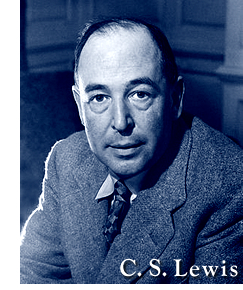
C.S. Lewis Daily – Today’s Reading


TO MARY WILLIS SHELBURNE: On Lewis’s own rule for assisting pan- handlers; and on the suffering and eternal destiny of animals.

26 October 1962

I do most thoroughly agree with your father’s principles about alms. It will not bother me in the hour of death to reflect that I have been ‘had for a sucker’ by any number of impostors: but it would be a torment to know that one had refused even one person in need. After all, the parable of the sheep and goats24 makes our duty perfectly plain, doesn’t it? Another thing that annoys me is when people say ‘Why did you give that man money? He’ll probably go and drink it.’ My reply is ‘But if I’d kept [it] I should probably have drunk it.’ . . .

I am sorry to hear of the little dog’s death. The animal creation is a strange mystery. We can make some attempt to understand human suffering: but the sufferings of animals from the beginning of the world till now (inflicted not only by us but by one another)—what is one to think? And again, how strange that God brings us into such intimate relations with creatures of whose real purpose and destiny we remain forever ignorant. We know to some degree what angels and men are for. But what is a flea for, or a wild dog?

From The Collected Letters of C.S. Lewis, Volume III

Compiled in Yours, Jack

Charles Stanley – The Struggle With Jealousy


1 Samuel 18:5-16

We all have expectations, desires, and hopes for our lives, but our plan isn’t always God’s best. And what we see others experiencing may not be what He has in store for us. When you compare yourself with others, watch out! Jealousy is usually lurking close by.

Consider Saul. Appointed by the Lord to be Israel’s first king, Saul was given power and godly success. But when he heard women praising David for his great victory over Goliath, he became envious and suspicious. Saul began to fear losing the kingdom; eventually, his own jealousy led to loss of relationships, position, and power.

This may seem like an extreme example. And yet, if we honestly examine ourselves, we will likely find that envy is hiding somewhere in our hearts. Try this simple test: Ask yourself, Is there anyone whose material, physical, or relational success causes me to feel displeasure, discomfort, or anxiety?

Most often, insecurity, selfishness, or pride is behind a jealous mindset. In fact, all three are evident in the life of Saul. He was scared that he would be outdone and overtaken, he didn’t want to share the glory with David, and he was insulted that a mere shepherd boy would perform better than a king.

The fallacy of envy is that we can never view the entire picture in someone else’s life. Only God sees beneath the surface of our lives. Our eyes should focus on our own walk with the Lord. He created each of us differently, and His plan for every individual’s life is unique.

Bible in One Year: Ephesians 1-3

Our Daily Bread — A Faithful Servant


Read: Joshua 14:6-15

Bible in a Year: Daniel 5-7; 2 John

If anyone serves, they should do so with the strength God provides, so that in all things God may be praised through Jesus Christ. —1 Peter 4:11

Madaleno is a bricklayer. From Monday to Thursday he builds walls and repairs roofs. He is quiet, reliable, and hardworking. Then from Friday to Sunday he goes up to the mountains to teach the Word of God. Madaleno speaks Nahuatl (a Mexican dialect), so he can easily communicate the good news of Jesus to the people in that region. At age 70, he still works with his hands building houses, but he also works to build the family of God.

His life has been threatened several times. He has slept under the stars and faced death from car accidents and falls. He has been kicked out of towns. But he thinks that God has called him to do what he does, and he serves happily. Believing that people need to know the Lord, he relies on God for the strength he needs.

Madaleno’s faithfulness reminds me of the faithfulness of Caleb and Joshua, two of the men Moses sent to explore the Promised Land and report back to the Israelites (Num. 13; Josh. 14:6-13). Their companions were afraid of the people who lived there, but Caleb and Joshua trusted in God and believed He would help them conquer the land.

The work entrusted to us may be different than Madaleno’s or Caleb’s and Joshua’s. But our confidence can be the same. In reaching out to others, we rely not on ourselves but on the strength of our God. —Keila Ochoa

Where has God placed you to serve? Are you being faithful?

We grow strong when we serve the Lord.

INSIGHT: Discipleship has been called “a long obedience in the same direction.” The point is not how much we have done, but whether or not we have been faithful to our Lord. Caleb was faithful for 45 years in the wilderness. When Christ returns, our faithfulness will be rewarded when we hear Him say, “Well done, good and faithful servant” (Matt. 25:21).

Ravi Zacharias Ministry – Like a Thief


The alarm of discovering your house or car has been broken into stays with you long after the thief has vanished. Though most are not eyewitnesses to the looming figure that wrongfully entered, victims of such crimes often report seeing shadows in every corner and silhouettes peering through their windows. Signs that someone had been there are enough to call them to alertness. Long after all the evidence was collected and my shattered car window repaired, I continued to imagine someone else’s fingerprints on my steering wheel, in my console, lingering reminders of the intrusion.

Whether you have experienced the shock of burglary and its lasting effects or the violating despair of personal loss, the Bible’s portrayal of Christ as one who will come like a thief in the night is a startling image. The description is one that seems uncouth amongst the many, far less taxing images that are now sentimentally upon us—a peaceful mother and father beside a quiet baby in a manger, a bright star that guides wise men in the obscurity of night. It seems odd that the gospel would juxtapose these images of one who comes as a child of hope and yet returns like a looming, unwanted figure. But this is the counsel from Jesus himself: “Therefore keep watch, because you do not know on what day your Lord will come. But understand this: If the owner of the house had known at what time of night the thief was coming, he would have kept watch and would not have let his house be broken into. So you also must be ready, because the Son of Man will come at an hour when you do not expect him.”(1)

The cry of the Christian season of Advent, the sounds of which are just starting to stir, is the cry not of sentiment but of disrupted vigilance. One of the key figures in celebrating the season, John the Baptist brings the probing message that continues to cry in urgency: “Are you ready?” Are you ready to discover this infant who came to dwell in the midst of night and suffering? Are you ready to hear his invasive message? Are you ready to discover God among you, the hunter, the thief, the King, the human? During the season of Advent, the church calls the world to look again at stories that have somehow become comfortably innocuous, to rediscover the many disruptive signs that someone has been here moving about these places we call home, to stay awake to the startling possibility of his nearness in this place even now. “I say to all,” says Christ, “Stay awake.”(2)

The owner of a house who has been disturbed once by a thief lives with the wakefulness that this thief will come again, however persuasively she is urged to see otherwise. She remembers the signs of a presence other than her own—prints left behind, a door left open, the memory of life disturbed—and she vows to keep watch, knowing, even against odds, that the thief will be back. In the same way, yet without fear, the season of Advent cries for our alertness to the vicariously human savior whose breaking into our world has charged every ordinary moment with expectation.

The child who was born in Bethlehem came quietly in the night, unbeknownst to many who dwelled near him. Like a thief, he shattered myths that proposed we were autonomous; he disrupted systems and powers and lives we thought were shielded. Yet Jesus came not to steal and destroy, but to dwell in all that overwhelms us, to live in a world groaning in death, fear, injustice, and suffering. His humanity shows us what it means to be truly human, overturning the categories we make for ourselves. Like a whimper in the night, his presence in the ordinary may go unnoticed. But he is near and knocking. Fear not and keep watch.

Jill Carattini is managing editor of A Slice of Infinity at Ravi Zacharias International Ministries in Atlanta, Georgia.

(1) Matthew 24:42-44.

(2) Mark 13:37.

Alistair Begg – The Worst Made the Best


God chose what is low and despised in the world.

1 Corinthians 1:28

Walk the streets by moonlight, if you dare, and you will see sinners then. Watch when the night is dark, and the wind is howling, and the thief is hiding in the door, and you will see sinners then. Go to the jail, and walk through the wards, and notice the men with heavy overhanging brows, men whom you would not like to meet at night, and there are sinners there. Go to the reformatories, and note those who have betrayed a rampant juvenile depravity, and you will see sinners there.

Go where you will, you need not ransack the earth to find sinners, for they are common enough; you may find them in every lane and street of every city and town and village and hamlet. It is for such that Jesus died.

If you will select for me the grossest specimen of humanity, if he be but born of woman, I will still have hope for him, because Jesus Christ came to seek and to save sinners. Electing love has selected some of the worst to be made the best.

Pebbles from the brook are turned by grace into jewels for the royal crown. Worthless dross He transforms into pure gold. Redeeming love has set apart many of the worst of mankind to be the reward of the Savior’s passion.

Effectual grace calls deep-dyed sinners to sit at the table of mercy, and therefore none of us should despair.

Reader, by that love looking out of Jesus’ tearful eyes, by that love streaming from those bleeding wounds, by that faithful love, that strong love, that pure, disinterested, and abiding love, by the heart and by the tender compassion of the Savior, we urge you not to turn away as though it was nothing to you.

Rather, believe on Him and you will be saved. Trust your soul with Him, and He will bring you to His Father’s right hand in everlasting glory.

Family Bible Reading Plan

  • 2 Chronicles 7
  • 2 John 1

Devotional material is taken from “Morning and Evening,” written by C.H. Spurgeon, revised and updated by Alistair Begg.

Charles Spurgeon – Turn or burn


“If he turn not, he will whet his sword; he hath bent his bow, and made it ready.” Psalm 7:12

Suggested Further Reading: 2 Thessalonians 1:5-12

God has a sword, and he will punish man on account of his iniquity. This evil generation has laboured to take away from God the sword of his justice; they have endeavoured to prove to themselves that God will “clear the guilty,” and will by no means “punish iniquity, transgression and sin.” Two hundred years ago the predominant strain of the pulpit was one of terror: it was like Mount Sinai, it thundered forth the dreadful wrath of God, and from the lips of a Baxter or a Bunyan, you heard most terrible sermons, full to the brim with warnings of judgment to come. Perhaps some of the Puritan fathers may have gone too far, and have given too great a prominence to the terrors of the Lord in their ministry: but the age in which we live has sought to forget those terrors altogether, and if we dare to tell men that God will punish them for their sins, it is charged upon us that we want to bully them into religion, and if we faithfully and honestly tell our hearers that sin must bring after it certain destruction, it is said that we are attempting to frighten them into goodness. Now we care not what men mockingly impute to us; we feel it our duty, when men sin, to tell them they shall be punished, and so long as the world will not give up its sin we feel we must not cease our warnings. But the cry of the age is, that God is merciful, that God is love. Who said he was not? But remember, it is equally true, God is just, severely and inflexibly just. He were not God, if he were not just; he could not be merciful if he were not just.

For meditation: The “meek and lowly” Lord Jesus Christ spoke often of judgment because of his care for the souls of men and his longing for them to repent and find rest (Matthew 11:20-30).

Sermon no. 106

7 December (1856)