Campus Crusade for Christ; Bill Bright – Fishers of Men


“And He saith unto them, Follow Me, and I will make you fishers of men” (Matthew 4:19, KJV).

Each morning I kneel to acknowledge Christ’s lordship of my life and ask Him to have complete, unhindered control of my life for that day, to walk around in my body, to think with my mind, to love with my heart, to speak with my lips and to continue seeking and saving the lost through me.

Sometime ago I was at a conference in a midwestern city, anticipating an early adjournment so that I could catch a plane to Los Angeles and rejoin my waiting family.

When I arrived at the airport, I discovered that flight after flight had been cancelled because of poor weather conditions. Rushing from one airline ticket counter to another, I hoped to find one that was still flying its planes. Finally, to my disappointment, I had discovered that all the airlines had cancelled their flights.

On one hand I was discouraged, but on the other I was encouraged by the promise of the Bible, “And we know that all that happens to us is working for our good if we love God and are fitting into His plans” (Romans 8:28, LB).

Back at the hotel for the night, in the lobby I met a businessman who was hungry for God. As I shared Christ with him, I learned that he and his wife had been visiting a different church every Sunday for the past couple of years. They were looking for God but had not been able to find Him.

I explained to my new friend how to receive Christ. Together, we knelt and prayed, and he received Christ into his life as his personal Lord and Savior.

With great joy and enthusiasm my new brother in Christ announced, “I want to take these things to my wife because she too is eager to receive Christ.” It is our responsibility to follow Christ. It is His responsibility to make us fishers of men.

Bible Reading: Matthew 4:18-22

TODAY’S ACTION POINT: As I follow Christ today, I will recognize that even the delays, hindrances and closed doors may well be opportunities for me to share my faith in Jesus Christ. I shall remember, with God’s help, to share Him with others at every opportunity.

Presidential Prayer Team; C.H. – Just Ask


Christmas is a time for gifts, yet most don’t openly ask for them. But Achsah, Caleb’s daughter, did just that. In today’s passage, Caleb gave his daughter’s hand to Othniel for conquering the land of Kiriath-Sepher. Once married, Achsah told her new husband to ask her father for a gift – land.

She said to him, “Give me a blessing”…and Caleb gave her the upper springs and the lower springs.

Judges 1:15

Caleb granted the newlyweds some desert land, but Achsah went to her father to ask for more. “Since you have set me in the land of the Negeb, give me also springs of water.” (Judges 1:15) Her father responded with a gift of not only one spring, but two! Achsah’s story is a great example of how you should go boldly before your Heavenly Father and ask for good gifts.

“If you then, who are evil, know how to give good gifts to your children, how much more will your Father who is in heaven give good things to those who ask him!” (Matthew 7:11) Don’t hesitate to take your requests before God. Ask Him for healing in this nation as well as worldwide. He can do more than you can imagine. Just ask.

Recommended Reading: Ephesians 3:14-21

Greg Laurie – Some Thoughts on Drinking This Holiday Season


“Don’t be drunk with wine, because that will ruin your life. Instead, be filled with the Holy Spirit.”—Ephesians 5:18

Is it acceptable for a Christian to drink?

The Bible tells us the story of John the Baptist, who was set apart by God from the time he was in his mother’s womb. In Luke 1:15, the angel said of John, “He will be great in the sight of the Lord, and shall drink neither wine nor strong drink. He will also be filled with the Holy Spirit, even from his mother’s womb” (NKJV).

John gives us a good model for life: he drank neither wine nor strong drink. Personally, I don’t drink at all. That is due, to some degree, to coming from an alcoholic home and seeing the devastation that drinking can bring. I can’t think of a single good thing that comes from drinking, but I can think of many bad things that come from it: broken homes, violence, accidents, people killed on the road by drunk drivers, addiction, destroying your health . . . the list goes on.

Drinking will never make anything better, only worse. Every illustration of drunkenness in the Bible is a disaster:

Noah became drunk, and in his nakedness, he acted shamelessly.

Lot became drunk and his daughters committed incest with him.

Belshazzar, in Daniel 5, had a drunken feast and worshipped his false gods. He lost his kingdom that night.

Many a kingdom, family, career, ministry, and life have been lost through drinking.

“But I have the liberty to drink, Greg!” some would say. I would not completely dispute that. I personally drink as much as I want to, but I don’t want to drink! As Paul told the Corinthian believers, “‘I have the right to do anything,’ you say—but not everything is beneficial. ‘I have the right to do anything’—but I will not be mastered by anything” (1 Corinthians 6:12 NIV). I don’t want to be under the power of anyone or anything but Jesus Christ!

Here’s a revolutionary thought: If you don’t drink, you will never get drunk. If you do drink, you may get drunk. Is it worth the risk?

But here’s another question for you: Could your so-called liberty ever cause another believer to stumble in their faith? 1 Corinthians 8:9 says, “Be careful, however, that the exercise of your rights does not become a stumbling block to the weak.”

John never touched alcohol, but was instead “filled with the Spirit.” The Bible says, “Don’t be drunk with wine, because that will ruin your life. Instead, be filled with the Holy Spirit” (Ephesians 5:18 NLT). It’s better to be filled with the Spirit than with the spirits.

Night Light for Couples – Two Hundred Laughs


“A cheerful heart is good medicine, but a crushed spirit dries up the bones.” Proverbs 17:22

It’s been said that the average child laughs two hundred times a day, while the typical adult laughs only four times every twenty‐four hours. So what has happened to us grown‐ups? Maybe it has something to do with those grueling hours at the office, long lines at the grocery store, and piles of bills on the kitchen counter.

Of course, life can be very difficult, and some people face serious obstacles and hardships. But many of us frown or complain over relatively minor inconveniences. I (jcd) knew a woman who made herself and her husband miserable just because she had one more child than she had bedrooms in which to put them. Too many irritations come from a complete inability to appreciate the humor and blessings that exist around us. When your husband forgets to take the kids to their dentist appointment, or your wife accidentally gives away your favorite sweatshirt, or your toddler draws his version of the Mona Lisa on the living room wall—wouldn’t it be easier on everyone if you looked on the funny side of the situation?

Kevin Jones, dealing with increasing paralysis from Lou Gehrig’s disease, was asked to describe the worst thing about his condition. He replied, “My wife’s driving! She has to take me everywhere.”

No matter what you’re facing, a smile can only make it better.

Just between us…

  • How often do you laugh each day?
  • Do we keep our heavenly destination in mind when adversity strikes?
  • How could we add humor to the next difficult situation we face?

Dear God, when problems threaten to affect how we treat each other, help us to see them in the perspective of Your unfailing goodness. Amen.

From Night Light For Couples, by Dr. James & Shirley Dobson

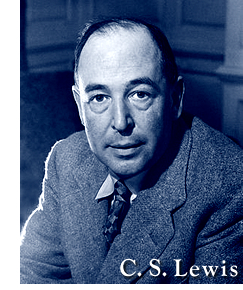
C.S. Lewis Daily – Today’s Reading


When we are praying about the result, say, of a battle or a medical consultation the thought will often cross our minds that (if only we knew it) the event is already decided one way or the other. I believe this to be no good reason for ceasing our prayers. The event certainly has been decided—in a sense it was decided ‘before all worlds’. But one of the things taken into account in deciding it, and therefore one of the things that really cause it to happen, may be this very prayer that we are now offering. Thus, shocking as it may sound, I conclude that we can at noon become part causes of an event occurring at ten a.m. (Some scientists would find this easier than popular thought does.) The imagination will, no doubt, try to play all sorts of tricks on us at this point. It will ask, ‘Then if I stop praying can God go back and alter what has already happened?’ No. The event has already happened and one of its causes has been the fact that you are asking such questions instead of praying. It will ask, ‘Then if I begin to pray can God go back and alter what has already happened?’ No. The event has already happened and one of its causes is your present prayer. Thus something does really depend on my choice. My free act contributes to the cosmic shape. That contribution is made in eternity or ‘before all worlds’; but my consciousness of contributing reaches me at a particular point in the time-series.

From Miracles

Compiled in A Year with C.S. Lewis

Streams in the Desert for Kids – Full to the Top


Matthew 14:17-18

God is not stingy. When he gives, he gives a lot. Think about places where flowers cover a hillside. Are that many flowers really necessary? Think about water spilling over a waterfall. More water than we can use.

There’s a wonderful story of God’s abundant giving in the New Testament. It happened when Jesus was teaching many people out in the countryside away from any town. He and the people had been out there all day, and the people had grown hungry. The disciples wanted to send them away. But Jesus told the disciples to feed the crowd. They had no food to share except a little boy’s lunch of five loaves of bread and two fish. That was enough for God to work with. Jesus took the loaves and fish and broke them up in pieces. Soon they had enough food to feed 5,000 men along with women and children. And here’s God’s abundance part of the story: twelve baskets of leftovers fed the disciples and their families. God gives abundantly. So whatever you need from him, be sure that he will give it to you, sometimes beyond what you need.

Dear Lord, I know you have enough to meet my needs. I want to trust you to give me what I need and more. Amen.

Charles Stanley – Jesus’ Offering of Peace


Romans 5:1-9

If you’re brave enough, stand on a sidewalk and ask passersby the question, “What gives you peace?” The answers you receive will most likely have one thing in common: peace defined as dependent upon circumstances—a solid relationship with a spouse, a well-paying job, or good health. What happens, then, if a couple fights, the company lays off employees, or sickness saps the body? Peace rooted in good situations isn’t really peace at all; it’s a brittle kind of harmony between man and the world. It crumbles very easily.

Jesus Christ is the only One who offers true peace—a lasting contentment that is unbreakable, no matter what missiles Satan may hurl. However, a sinful life makes peace impossible because a person cannot experience assurance of God’s care when he or she acts in defiance of His will. When a believer expresses faith in Jesus, the battle for self-rule is won. Submission to the Lord allows His peace to permeate one’s life.

When the Holy Spirit lives within us, we can approach life confidently and serenely. The only way to get this lasting peace is through a relationship with the Savior. Paul explains in Romans 5:1 that to be justified—that is, declared no longer guilty—we must accept the sacrifice Christ made in our place. Justification makes us right with God and opens our hearts to peace.

If you haven’t yet acknowledged to God that you recognize His Son’s loving sacrifice made on your behalf, then you don’t have real peace. Now is the right time to surrender to Him.

Bible in One Year: 2 Corinthians 9-13

Our Daily Bread — Worry-Free


Read: Psalm 37:1-9

Bible in a Year: Ezekiel 47-48; 1 John 3

Do not fret because of those who are evil. —Psalm 37:1

Trying to stay aware of current events has its downside because bad news sells better than good news. It’s easy to become overly concerned about the criminal acts of individuals, crowds, or governments over whom we have no control.

Psalm 37 gives perspective to the daily news. David begins by saying, “Do not fret because of those who are evil” (v. 1). Then he proceeds to outline for us some alternatives to becoming overly anxious. In essence, David suggests a better way of thinking about negative news in our world.

What would happen if, instead of worrying about events beyond our control, we chose to trust in the Lord? (v. 3). Wouldn’t we be better off to “take delight in the Lord” (v. 4) rather than fret without limits? Imagine the freedom from worry we could have if we would “commit [our] way to the Lord” (v. 5). And how calm we could be by learning to “be still before the Lord and wait patiently for him”! (v. 7).

News of trouble we cannot change offers us an opportunity to set boundaries for our concerns. As we trust God, commit our ways to Him, and rest in Him, our outlook brightens. The struggles and trials may not disappear, but we will discover that He gives us His peace in the midst of them. —Dave Branon

Lord, we see danger and trouble all around us. Help us not to worry but instead to trust and rest in You. Show us the peace that comes from waiting patiently on You.

Obstacles give us the opportunity to trust God.

INSIGHT: The invitation of Psalm 37 is not simply to lay down our anxiety but to replace it with something far better—trust and delight in the Lord (vv. 3-4). Replacing worry with trust is also a concern of the apostle Paul when he tells the Christians in Philippi, “Do not be anxious about anything, but in every situation, by prayer and petition, with thanksgiving, present your requests to God. And the peace of God, which transcends all understanding, will guard your hearts and your minds in Christ Jesus” (Phil. 4:6-7).

Ravi Zacharias Ministry – Waiting for Hope


In the process of moving and reorganizing some bookshelves in the middle of October, I recovered something long out of place. Carved out of olive wood, a small nativity had been left behind from last year’s Christmas. I held it in my hand and cringed at the thought of digging through boxes in the garage long buried by post-Christmas storage. At this point, it seemed better to be two months early in setting it up than ten months late in packing it away.

Strangely enough, my decision then coincided with a friend’s mentioning of a good Christmas quote. Advent was suddenly all around me. In a Christmas sermon given December 2, 1928, Dietrich Bonhoeffer said, “The celebration of Advent is possible only to those who are troubled in soul, who know themselves to be poor and imperfect, who look forward to something greater to come. For these, it is enough to wait in humble fear until the Holy One himself comes down to us, God in the child in the manger. God comes. The Lord Jesus comes. Christmas comes. Christians rejoice!” To be early with my Nativity scene suddenly seemed a wise, but convicting thought. I had kept it around for the sake of convenience, what about for the sake of waiting? If Advent reminds us that we are waiting in December, what reminds us that we are waiting in October or February?

The story of the Nativity, though beautiful and familiar, and admittedly far-reaching, is as easily put out of our minds as Christmas decorations are put in boxes. On certain sides of the calendar, a nativity scene looks amiss. Sitting on my mantle in the fall or the spring, it seems somehow away from home, far from lights and greenery, longing for Christmas fanfare. But looking at it with thoughts of Advent near, I am struck by the irony that longing is often precisely the sentiment I am holding amidst the burgeoning lights, greens, and fanfare of Christmas.

As Bonhoeffer continues, “When once again Christmas comes and we hear the familiar carols and sing the Christmas hymns, something happens to us… The hardest heart is softened. We recall our own childhood. We feel again how we then felt, especially if we were separated from a mother. A kind of homesickness comes over us for past times, distant places, and yes, a blessed longing for a world without violence or hardness of heart. But there is something more—a longing for the safe lodging of the everlasting Father.”(1)

Unlike any other month, December weighs on my soul the gift and the difficulty of waiting. In the cold and dead of winter, tragedies seem to sting further, healing for the broken parts of my life and for the people I love seems harder to reach. When it comes to things that are deep and important, peace and goodness on the earth, freedom from suffering, waiting is hard, even painful. But in these moments, I am remembering that I am troubled in soul and looking for something greater. In the familiar hymns that play wherever I go, I remember that I am poor and imperfect and waiting for the God who comes down to us, and I hear again the gentle promise of a knock at the door. Like the Nativity scene on my mantle in June or October, I embody a strange hope in this sense of waiting. I see a home with tears and sorrow, but I also see in this home the signs of a day when tears will be wiped dry. Advent is about waiting for the one who embraced sorrow and body to show us the fullness of being home, present, and real. It is not December that reminds us we are longing for God to come nearer, but the Nativity of God, the Incarnation of Christ. For each day is touched by the promise that in this very place Jesus has already done so, and that he will again come breaking through, into our world, into our longing, into our sin and deaths.

Every day, despite its location on the calendar, or the headlines on the news, a still, small voice answers our cry persuasively here and now, “Behold. I stand at the door and knock.”

Jill Carattini is managing editor of A Slice of Infinity at Ravi Zacharias International Ministries in Atlanta, Georgia.

(1) Edwin Robertson, Ed., Dietrich Bonhoeffer’s Christmas Sermons (Grand Rapids: Zondervan, 2005).


Alistair Begg – God Has an Elect People


I have many in this city who are my people.

Acts 18:10

This should be a great encouragement in proclaiming the Gospel, since among the people in our communities-the disinterested, the rebellious, the careless-God has an elect people who must be saved. When you take the Word to them, you do so because God has ordained you to be the messenger of life to their souls, and they must receive it, for so the decree of predestination runs.

They are as much redeemed by blood as the saints before the eternal throne. They are Christ’s property, and yet perhaps they are lovers of selfish pleasures and haters of holiness; but if Jesus Christ purchased them, He will have them.

God is not unfaithful to forget the price that His Son has paid. He will not suffer His substitution to be in any case an ineffectual, dead thing. Tens of thousands of redeemed ones are not regenerated yet, but regenerated they must be; and this is our comfort when we go to them with the quickening Word of God.

More than this, the ungodly are prayed for by Christ before the throne. “I do not ask for these only,” says the great Intercessor, “but also for those who will believe in me through their word.”1 Poor, ignorant souls, they know nothing about prayer for themselves, but Jesus prays for them. Their names are on His breastplate, and before long they must bow their stubborn knee, breathing the penitential sigh before the throne of grace.

The predestinated moment has not struck; but when it comes, they will obey, for God will have His own. They must, for the Spirit is not to be resisted when He comes with the fullness of power-they must become the willing servants of the living God. “Your people will offer themselves freely on the day of your power.”2 He will “make many to be accounted righteous.”3 “Out of the anguish of his soul he shall see and be satisfied.”4 “I will divide him a portion with the many, and he shall divide the spoil with the strong.”5

1) John 17:20

2) Psalm 110:3

3) Isaiah 53:11

4) Isaiah 53:11

5) Isaiah 53:12

Family Bible Reading Plan

  • 2 Chronicles 3, 4
  • 1 John 3

Devotional material is taken from “Morning and Evening,” written by C.H. Spurgeon, revised and updated by Alistair Begg

Charles Spurgeon – Dilemma and deliverance


“Thou, Lord, hast not forsaken them that seek thee.” Psalm 9:10

Suggested Further Reading: Psalm 23

If we could but once believe the doctrine that the child of God might fall from grace and perish everlastingly, we might, indeed, shut up our Bible in despair. To what purpose would my preaching be—the preaching of a rickety gospel like that? To what purpose your faith—a faith in a God that cannot and would not carry on to the end? To what use the blood of Christ, if it were shed in vain, and did not bring the blood-bought ones securely home? To what purpose the Spirit, if he were not omnipotent enough to overcome our wandering, to arrest our sins and make us perfect, and present us faultless before the throne of God at last? That doctrine of the final perseverance of the saints is, I believe, as thoroughly bound up with the standing or falling of the gospel, as is the article of justification by faith. Give that up and I see no gospel left; I see no beauty in religion that is worthy of my acceptance, or that deserves my admiration. An unchanging God, an everlasting covenant, a sure mercy, these are the things that my soul delights in, and I know your hearts love to feed upon them. But take these away, and what have we? We have a foundation of wood, hay, straw, and stubble. We have nothing solid. We have a fort of earthworks, a mud hovel through which the thief may break and steal away our treasures. No, this foundation stands sure —“The Lord knoweth them that are his;” and he will certainly bring them all to his right hand at last in glory everlasting.

For meditation: If the truly converted man can be lost, Jesus must have meant “lend” when he said “give”, “temporary” when he said “eternal” and “perhaps” when he said “never” (John 10:28). Uncertainty is the hallmark of man-made religion.

Sermon no. 287

4 December (1859)

John MacArthur – Progressive Revelation


“God, after He spoke long ago to the fathers in the prophets in many portions and in many ways, in these last days has spoken to us in His Son” (Heb. 1:1-2).

The Old Testament is but a sample of what is revealed in the New Testament.

When Jesus said, “Do not think that I came to abolish the Law or the Prophets [the Old Testament]; I did not come to abolish, but to fulfill” (Matt. 5:17), He was affirming that Scripture progressed from promise to fulfillment, from partial to complete. We call that progressive revelation.

For example, the Old Testament anticipated Christ’s coming; the New Testament records His coming. The Old Testament writers didn’t understand everything they wrote because it didn’t always apply to their day. That’s why Peter said, “As to this salvation, the prophets who prophesied of the grace that would come to you made careful search and inquiry, seeking to know what person or time the Spirit of Christ within them was indicating as He predicted the sufferings of Christ and the glories to follow. It was revealed to them that they were not serving themselves, but you, in these things which now have been announced to you through those who preached the gospel to you by the Holy Spirit” (1 Pet. 1:10-12).

Progressive revelation doesn’t at all imply that the Old Testament is inaccurate. The distinction isn’t in the rightness or wrongness of the revelation, but in its completeness. Just as a child progresses from letters to words to sentences, so God’s revelation progressed from types, ceremonies, and prophecies to final completion in Jesus Christ and the New Testament.

Though incomplete by New Testament standards, the Old Testament is nonetheless fully inspired by God. That’s affirmed often in the New Testament. Peter tells us that no human writer of the Old Testament wrote of his own will, but only as he was directed by the Holy Spirit (2 Pet. 1:21). Paul added that “all Scripture is inspired by God and profitable for teaching, for reproof, for correction, [and] for training in righteousness” (2 Tim. 3:16, emphasis added).

The Old Testament isn’t all of God’s truth, but all of it is true. And as you progress from the Old to the New, you see God’s character and redemptive plan unfolding in greater detail.

Suggestion for Prayer

Praise God for the fullness of revelation you enjoy in Scripture.

For Further Study

Memorize 2 Timothy 3:16-17.

Campus Crusade for Christ; Bill Bright – He Cannot Disown Us


“Even when we are too weak to have any faith left, He remains faithful to us and will help us, for He cannot disown us who are part of Himself, and He will always carry out His promises to us” (2 Timothy 2:13).

Have you ever run out of faith? I have – in times of great testing and trial, especially in earlier years as a young Christian. But as I have learned more and more about the many attributes of God, I have come to understand why the apostle Paul was so convinced of the faithfulness of God – that He still remains faithful to us and will help us, even when we are our weakest.

The meaning seems clear, though perhaps controversial to some. If we have truly been born again by the Spirit of God, and thus have become “part of Himself,” Paul asserts that He cannot disown us. We need not argue or discuss the point of eternal security, for God’s Holy Spirit, that great Teacher of spiritual truths, will reveal true meanings to each one of us individually.

We can be more certain of unanimous agreement on the latter part of the verse: “He will always carry out His promises to us.” At least we all believe that theoretically, if not experientially.

Have you, for example, laid hold of one of God’s promises, and not yet having seen the answer, begun to wonder and even doubt if He is indeed carrying out His promise? It might help each one of us to remind ourselves constantly that God has His own time-table. He need not be bound by ours.

Someone has well said, “God’s timing is always perfect.” Let us not try to improve on that perfection.

Bible Reading: Romans 3:3,4; Numbers 23:19

TODAY’S ACTION POINT: “Dear Lord, because You are always faithful despite my faithlessness at times, I will depend on You to fulfill your promises.”

Presidential Prayer Team; C.P. – A Long-term Plan


Today’s verse speaks of Jesus. Jesus was a descendent of Judah. Judah was one of the 12 sons of Jacob, the patriarch of the Jewish people. As these brothers gathered around their dying father, could they imagine that he was predicting the coming of the Savior?

The scepter shall not depart from Judah, nor the ruler‘s staff from between his feet, until tribute comes to him.

Genesis 49:10

When Jacob gave his prophetic blessing, if his sons were expecting to hear about their great futures, some of them were disappointed. Jacob believed in telling it like it is and some of their futures were not good because of past behavior. He predicted Reuben’s failure, Simeon and Levi’s dispersion throughout Israel, and Issachar’s enslavement. Jacob gave the rest of them more promising prophecies. Concerning Judah’s future, Jacob prophesied not only for his son, but for all people through all time.

God knows the span of history from beginning to end. Praise Him for His beautiful plan of salvation in His Son, and the opportunity you have to come before Him in confidence. Knowing that your persistent prayer will be answered, bring this nation before the Father and ask for His mercy and grace to be extended to its leaders and citizens.

Recommended Reading: Matthew 22:31-45


Greg Laurie – Joseph, the Unsung Hero


Joseph, her fiancé, was a good man and did not want to disgrace her publicly, so he decided to break the engagement quietly. —Matthew 1:19

Joseph is the unsung hero of the Christmas story. For the most part, there are no Christmas songs about Joseph. Yet he really is a hero. The Bible tells us that Joseph was a “good man” (Matthew 1:19). Deeply in love with Mary, he was no doubt jolted by the news that she was pregnant.

Joseph and Mary were engaged, which, in their culture, was like being married. Once a couple entered into this engagement, or espousal, period, it was like being married, although they lived in separate houses. It was during this time that Mary became pregnant.

Yet Joseph loved Mary, and the Bible tells us that he “did not want to disgrace her publicly, so he decided to break the engagement quietly” (Matthew 1:19). In other words, Joseph was thinking, I’m going to say that I can’t marry her now, but I’m certainly not going to publicly shame Mary, either.

While he was pondering this, an angel appeared to Joseph and told him, “Do not be afraid to take Mary as your wife. For the child within her was conceived by the Holy Spirit. And she will have a son, and you are to name him Jesus, for he will save his people from their sins” (verses 20–21).

That was all Joseph needed to hear. He could have walked away, even after he knew the truth. But he stood by Mary. And just as surely as God chose Mary to be the mother of the Messiah, he chose Joseph to be a father figure on Earth for Jesus.

When God uses a person, there is a sacrifice to make. It won’t be an easy path, but it will be a fruitful one—and you will look back later in life and be glad that you took it.

Max Lucado – God’s Thoughts


God’s thoughts are not our thoughts—we aren’t even in the same neighborhood!  Psalm 92:5 sets the standard!  “Lord you have done such great things! How deep are your thoughts!”

When we’re thinking preserve the body, God is thinking save the soul. When we dream of a pay raise God dreams of raising the dead. We avoid pain and seek peace while God uses pain to bring peace. I’m going to live before I die, we resolve. But God instructs, Die so you can live. We love what rusts but God loves what endures. We rejoice at our successes but God rejoices at our confessions.

We show our children the Nike star with the million-dollar smile and say, “Be like him!” God points to the crucified carpenter with bloody lips and a torn side and says, “Be like Christ!”

From Grace for the Moment

Night Light for Couples – What About Bob?


by Phil Callaway

Thanksgiving weekend began the way Bob and Audrey Meisner had planned. Piling a full‐size van high with mattresses, sleeping bags, and children, they drove a thousand miles through the flatlands of Manitoba to the in‐laws in Michigan. It was a beautiful trip. Patchwork prairies sprinkled with lakes stretched toward the horizon. Bare poplar branches held up their arms in surrender to winter. The children counted columns of Canadian geese deserting their homeland and heading for Florida. Neither Bob nor Audrey knew that the beauty of the first leg of their trip would stand in sharp contrast to the journey home.

The weekend was filled with relatives, turkey, and laughter. On Sunday night the Meisners said their good‐byes and headed for home. Leaving at 11:00 P.M., they drove through the night, arriving in Minneapolis about 8:30 the next morning. Though Mom and Dad were tired, the Mall of America beckoned, and it was many hours before they watched the skylines of the Twin Cities disappear in the rearview mirror as they drove toward the setting sun.

When Audrey offered to drive, Bob clambered into the back of the van, where he disappeared behind some sleeping bags and drifted off to sleep.

An hour and a half later, Audrey pulled into a rest stop as quietly as she could, hoping the family would sleep on. As she let the engine idle, she noticed how it seemed to be missing a cylinder, which made her think of Bob’s snoring coming from the back of the van.

After using the restroom, Audrey climbed back into the van, stirred some coffee, took a long sip, and pulled back onto the freeway. Two hours passed quickly as she tapped her fingers to a country gospel station and spun the dial, sampling talk shows. When she arrived in Fargo, North Dakota, the kids began to wake up. But not Bob. Wow, he’s tired, thought Audrey. Her seven‐year‐old appeared in the rearview mirror, rubbing his eyes.

“Go back to sleep, honey,” said his mom.

Suddenly, the peacefulness of the morning was shattered. “Where’s Daddy?” one of the kids asked.

“Very funny,” said Audrey, adjusting the mirror. “He’s back there sleeping… isn’t he?”

The children began pushing pillows aside, looking for Daddy. “Nope,” said her seven‐year‐old, “he’s not back here.”

“Do you think maybe he got raptured?” another child said. “You know, Mom, like you’ve been talking about when Jesus comes to get us?”

Audrey wasn’t laughing. Panic overtook her as she looked for the next exit. Should she turn around and go back? She had no idea where the rest area was. Was it two hours ago? Three?

Calm down, Audrey, she told herself. Then she prayed, Dear Lord, help me find Bob. And please keep him safe, wherever he is.

Pulling into a truck stop, she picked up a pay phone and called the police. “Um… I… uh… left my husband in Minnesota,” she told the officer. “At… well… at a rest stop.”

There was a moment of silence. “Sorry, could you repeat that?”

After a few minutes punctuated by desperation, Audrey was able to convince the man on the other end of the line that this was no joke— that she had left her husband, but not intentionally, although he might be thinking so.

“Tell you what,” said the officer. “You hang on. I’ll get all the numbers of the rest stops in that area. You don’t go anywhere now, ya hear?”

Audrey didn’t go anywhere.

After thanking the officer for his help, she started down the list. One number after another. Each phone call was met with surprise, but no success. Almost out of hope, she dialed the last number on the list. “Do you have a guy there who—?”

“Yaw, I shore do,” said a thick Norwegian accent. Moments later, Bob was on the phone.

“Honey, I’m so sorry,” said Audrey. “I didn’t mean to—” Audrey started to cry. And Bob started to laugh.

Two hours earlier he had climbed out of the van to use the restroom. But when he came back, the van was gone.

“Ha,” Bob had said. “Very funny.”

He had walked around the service area three times, expecting to find his family grinning around the next corner. But they were nowhere to be found.

“She wouldn’t leave me like this,” said Bob. “Would she?”

To pass the time, Bob washed people’s windshields and prayed that God would speak loudly to his wife, making his absence apparent. He even climbed in with a trucker who needed some spiritual encouragement. “You know,” the trucker told Bob, “this time with you was a divine appointment. I really needed this.”

“Dear God,” prayed Bob, “please, no more divine appointments tonight.”

Early the next morning, Bob watched the headlights of a familiar van pull into the rest stop. He stopped cleaning windshields and breathed a huge sigh of relief. It was a return trip for Audrey. But this time she honked the horn loudly, not caring whom she woke up.

“It’s the first time I ever left him,” she says, laughing now. “Believe me, it will be the last.”

“At first I wondered if the rapture had taken place,” Bob says. “Then it seemed like something out of a horror movie. But I thought, Well, make the most of it.”

Audrey learned a few things, too. “That night I realized the importance of casting all my cares on God. They are His, and He is completely trustworthy…. And I learned that it’s always a good idea to count bodies before you pull out onto the freeway.”

Looking ahead…

It happens to all of us. Just when life seems to be humming along smoothly, something as simple as a trip to the restroom turns into one little surprise after another.

There’s probably no way to avoid such unwanted twists of fate—but we can control our reaction to them. I’ve found that adversity in married life is easier to handle when I choose to face it with a smile instead of a frown. So the next time your spouse leaves you stranded by mistake, remember Bob Meisner. You can stew for hours sitting on the curb—or get up and wash a few windshields.

– James C Dobson

From Night Light For Couples, by Dr. James & Shirley Dobson

Charles Stanley – Jesus, Our Great High Priest


Hebrews 4:14-16

Why is it that some people face life’s hardships with confidence and boldness, but others find themselves plagued with doubts and fear of failure? One reason is that too many people have a sorely inadequate view of who Jesus is. We may know Him as the Bread of Life and the Living Water, but how many of us know Him as our Great High Priest?

The Scriptures tell us that Jesus “had to be made like His brethren in all things, so that He might become a merciful and faithful high priest” (Heb. 2:17). Hebrews 4:15 adds, “For we do not have a high priest who cannot sympathize with our weaknesses, but One who has been tempted in all things as we are, yet without sin.” Jesus enters into our lives and experiences our pain, hurt, and guilt right along with us.

Have you ever been totally misunderstood when you did your best and gave your all? Consider this: Was anybody more misunderstood than Jesus? He was personally acquainted with that kind of pain. Has somebody you loved ever said no, shut the door, and walked away? You might wonder if Jesus ever felt such pain and rejection as this. Yes, He did. His own people scorned Him. Does Jesus, the sinless One, understand our feelings of guilt? The Bible says that the Father laid all the sins of the world on Him. Jesus Christ bore the guilt of all mankind.

No matter what you are facing, realize that the Savior identifies with your circumstance, and He feels every single thing you’re experiencing.

Bible in One Year: 2 Corinthians 5-8

Our Daily Bread — When Not to Rejoice


Read: Ezekiel 25:1-7; Matthew 5:43-48

Bible in a Year: Ezekiel 45-46; 1 John 2

Do not gloat when your enemy falls. —Proverbs 24:17

The Akan people of Ghana have a proverb: “The lizard is not as mad with the boys who threw stones at it as with the boys who stood by and rejoiced over its fate!” Rejoicing at someone’s downfall is like participating in the cause of that downfall or even wishing more evil on the person.

That was the attitude of the Ammonites who maliciously rejoiced when the temple in Jerusalem “was desecrated and over the land of Israel when it was laid waste and over the people of Judah when they went into exile” (Ezek. 25:3). For spitefully celebrating Israel’s misfortunes, the Ammonites experienced God’s displeasure, which resulted in grim consequences (vv. 4-7).

How do we react when disaster befalls our neighbor or when our neighbor gets into trouble? If she is a nice and friendly neighbor, then, of course, we will sympathize with her and go to her aid. But what if he is an unfriendly, trouble-making neighbor? Our natural tendency may be to ignore him or even secretly rejoice at his downfall.

Proverbs warns us: “Do not gloat when your enemy falls; when they stumble, do not let your heart rejoice” (24:17). Instead, Jesus tells us that we show His love in action when we “love [our] enemies and pray for those who persecute [us]” (Matt. 5:44). By so doing, we imitate the perfect love of our Lord (5:48). —Lawrence Darmani

Lord, open my eyes and my heart to be honest about my attitude toward those who are unkind or unfair to me. Fill my heart with Your love, Lord, and help me pray for them.

Love your neighbor as yourself.


Ravi Zacharias Ministry –  Festivals of Want


In many ways our society is motivated by consumption. Our desire to have stuff charts the course of many of our pursuits and without such desire the economy would no doubt collapse. Yet reflect for a moment on how pervasive this is in our lives.

We have festivals of consumption. Every Easter and Christmas we have special rituals. Sale signs go up all around us, the good news of great deals is announced on television, and all are invited to join in the worship of consumption. So where do we go? To the temples of consumption: the malls and car dealerships and super-sized department stores. These centers provide an opportunity to find whatever we seek at a price we can afford, as we are invited to take the waiting out of wanting.

All the while, the atmosphere is tailored so that we are comfortable. The commercials and displays are attractive and compelling and it is all so much fun. We are soothed by a background of ambient music and stimulated by the smells of freshly ground coffee or freshly baked cookies.

To take it further, we even sing the songs of consumption, as we memorize our favorite commercials and slogans. I can still hear the sounds of the Rice Krispies commercials from my childhood in Scotland. Today it is probably a cosmetics commercial or a car commercial.

We buy and sell and work all day so that we can have these things, which, once we have them, keep us working even harder to maintain the lifestyle we have achieved. We go to school so we can get good jobs. We send our kids through school so they can get out and make money to have nice things. But do we ever stop to ask, “Why?”

Now I’m exaggerating I realize, but there is some substance to what I’m pointing out. There is a story of Jacob and Esau in the Old Testament that might apply. Esau was very much a man of the field, a man of the world. One day, after finding no satisfaction in his search for something to consume, he sold his birthright to his younger brother for nothing more than a bowl of stew. The birthright was supposed to be a cherished thing. It represented the dignity, inheritance, and leadership that would come to its beneficiary in the future. But Esau saw neither sense nor value in waiting for the future. He was hungry and he wanted what he wanted now. And so he gave away what should have been the most important thing to him in order to feed his desire.

“How senseless,” we might say of this story. Yet we do the very same thing when we spend our time in pursuit of what we want right now at the expense of what is lasting. Jesus said it simply: What does it profit you if you gain the whole world and yet lose your soul? The Christian season of Advent is the season of waiting, fittingly arriving during this season of rush and want. Waiting is hard, and yet it can be a hopeful gift for a world consumed. Amidst our festivals of distraction and impatience, Advent is an invitation to turn to the God who did not remain distant from our situation but stepped right into the midst of it to give us what we needed most.

Stuart McAllister is regional director for the Americas at Ravi Zacharias International Ministries in Atlanta, Georgia.