Greg Laurie – Why a Jealous God?


“For I, the Lord your God, am a jealous God, visiting the iniquity of the fathers upon the children to the third and fourth generations of those who hate Me.” —Exodus 20:5

We usually view jealousy as something negative, and certainly it can be. We might think of a jealous person as controlling, demanding, and even prone to fly into a rage without the slightest reason.

But in Exodus 20 God says, “You shall have no other gods before Me. You shall not make for yourself a carved image—any likeness of anything that is in heaven above, or that is in the earth beneath, or that is in the water under the earth; you shall not bow down to them nor serve them. For I, the Lord your God, am a jealous God” (verses 4–5, emphasis added).

God is a loving Father. He loves us and wants an exclusive relationship with us. Is that unreasonable?

If you have children, then I think you are probably a jealous parent. You want the best for your child. You probably think your child is the best at whatever it is that he or she does, whether it’s athletics or music or something else. In the same way, God loves you, and He wants the best for you. So He is jealous in a sense.

I would also think that if you are married, you are probably a jealous husband or wife. How would you feel, wives, if your husband said, “My date is here. I’m going out with her now. Can she borrow that outfit that looks really good on you?” No self-respecting wife would put up with something like that. Nor should she.

God is a jealous God and wants an exclusive relationship with us. He is saying, “You belong to Me, and I have committed myself to you. So that is the way it needs to be.” That is the concept being communicated when God described himself as a “jealous” God.


Max Lucado – Hang in There


Hang in there! Don’t give up! Is anything too hard for the Lord? No!

Easy for you to say! You have no idea how long I’ve been praying and asking—and asking again!

Just when you least suspect it—the God of surprises strikes again! God does that for the faithful. Just when the womb gets too old for babies, Sarah gets pregnant. Just when the failure is too great for grace, David is pardoned.The lesson? Those three words: Don’t give up! Is the road long? Don’t stop. Is the night black? Don’t quit. God is watching. For all you know, right at this moment—the check may be in the mail. The apology may be in the making. The contract may be on the desk. Don’t quit! You may miss the answer to your prayers! God is faithful—He’s always on time!

From Grace for the Moment

Night Light for Couples – Last Call


“The great day of the Lord is near— near and coming quickly.” Zephaniah 1:14

Think about the people you love. Have you thanked them recently for what they mean to you? If the Lord called you home this evening, would you feel satisfied that you had told them everything you needed to say? In the last months of my (jcd) mother’s life, she had end‐stage Parkinson’s disease and was unable to communicate or understand us. One day, however, the Lord granted us a reprieve. When Shirley and I visited the nursing home, my mother instantly recognized us, and I was able to thank her for being a good mother, for staying true to Jesus, and for sacrificing to put me through college.

She smiled; she understood. I told her that my father was waiting for her in heaven and that Jesus would say, “Well done! Thou good and faithful servant.” I prayed for her and thanked the Lord for her love in my life. She returned our love, and we said good‐bye.

That was the last rational conversation I had with my mother, and I will always be thankful for those final moments together. In this temporary existence, we must always seize opportunities to communicate soul to soul. Cherish each moment with your partner, family, and friends. Tell them how important they are to you. Above all, live each day so that when the final call comes, Jesus will say, “Well done! Thou good and faithful servant.”

Just between us…

  • Do we tell our loved ones what they mean to us?
  • What would you like to say to me “soul to soul”?
  • Are we ready for the Lord to call us home? What should we do to prepare?

Dear Lord, thank You for my lifetime partner. May we never miss an opportunity to say the words that really count. Help us to live without regrets, always ready for the homeward call of Jesus. Amen.

From Night Light For Couples, by Dr. James & Shirley Dobson

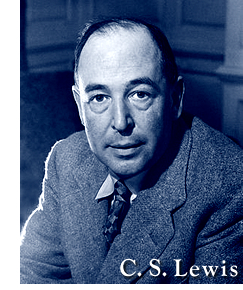
C.S. Lewis Daily – Today’s Reading


On silence

We may find a violence in some of the traditional imagery which tends to obscure the changelessness of God, the peace, which nearly all who approach Him have reported—the “still, small voice.” And it is here, I think, that the pre-Christian imagery is least suggestive. Yet even here, there is a danger lest the half conscious picture of some huge thing at rest—a clear, still ocean, a dome of “white radiance”—should smuggle in ideas of inertia or vacuity. The stillness in which the mystics approach Him is intent and alert—at the opposite pole from sleep or reverie. They are becoming like Him. Silences in the physical world occur in empty places: but the ultimate Peace is silent through very density of life. Saying is swallowed up in being. There is no movement because His action (which is Himself) is timeless.

From Miracles

Compiled in Words to Live By

Charles Stanley – The Key to Financial Blessing


Malachi 3:7-12

All of us struggle when there’s a discrepancy between what our minds know to be true and what we feel in our emotions. One area that believers typically find difficult is finances. Understanding what the Bible says about money, do we choose truth or do we allow our ever-changing feelings to dictate our actions? Believers find it easy to give God one penny out of a dime or one dollar out of 10, but when the numbers grow bigger—100 out of a 1,000 or a 1,000 from 10,000—we often balk. However, we can’t expect the Lord to bless us financially if we’re not supporting His work.

Scripture speaks about giving a whole tithe—one-tenth of our earnings or 10 percent of whatever we produce, according to Deuteronomy 14:22. We should also note that we’re to give God the first portion of our income, not what’s left over at the end of the month.

God’s tithe goes into His storehouse—the church. From there, what’s offered can be channeled into the Lord’s work throughout the world. Imagine how many great ministries and outreaches would close if money dried up. Sharing the gospel is both a spiritual and financial responsibility.

When we refuse to give our portion, we block the flow of God’s blessing in our own lives. Often we decide to offer less than a tithe because we don’t trust His provision. Our Father has promised us protection and plenty if we follow His mandates. Give the Lord His due and see what great blessings He provides.

Bible in One Year: Revelation 9-12


Our Daily Bread — Reject Apathy


Read: Nehemiah 1:1-10

Bible in a Year: Zechariah 9-12; Revelation 20

Whatever you did for one of the least of these brothers and sisters of mine, you did for me. —Matthew 25:40

The room was splashed with an assortment of enchanting colors as women in beautiful saris scurried around, completing the final touches for a fundraising event. Formerly from India, these women now live in the USA. Yet they remain concerned for their native country. Upon hearing about the financial situation of a Christian school for autistic children in India, they not only heard the need, but they also took it to heart and responded.

Nehemiah did not allow his comfortable position in life as cupbearer and confidant to the most powerful man at that time to nullify his concerns for his countrymen. He talked to people who had just come from Jerusalem to find out the condition of the city and its citizens (Neh. 1:2). He learned that “those who survived the exile . . . are in great trouble and disgrace. The wall of Jerusalem is broken down, and its gates have been burned with fire” (v. 3).

Nehemiah’s heart broke. He mourned, fasted, and prayed, asking God to do something about the terrible conditions (v. 4). God enabled Nehemiah to return to Jerusalem to lead the rebuilding effort (2:1-8).

Nehemiah accomplished great things for his people because he asked great things of a great God and relied on Him. May God open our eyes to the needs of those around us, and may He help us to become passionate and creative problem-solvers who bless others. —Poh Fang Chia

Father, there are great needs all around us. We choose not to give in to despair or apathy, but look to You for help in doing the task at hand.

Those who walk with God won’t run from the needs of others.

INSIGHT: Nehemiah is remembered for his part in the rebuilding of the walls of Jerusalem. Today’s passage is the beginning of that project. Notice Nehemiah’s first response to the news about the condition of Jerusalem. He stops everything else and spends time in prayer (1:5). Never a bad first step in any situation.


Ravi Zacharias Ministry – Twelve Days of Christmas


The floor contains the remnants of torn wrappings, boxes, and bows. The stockings hang lifeless from the mantel, empty of all their contents. Leftovers are all that are left of holiday feasting. Wallets are empty and feelings of buyer’s remorse begin to descend and suffocate. On the morning after Christmas, thus begins the season of let down.

It’s not a surprise really. For many in the West, the entire focus of the Christmas season is on gift-giving, holiday parties, and family gatherings, all of which are fine in and of themselves. But these things often become the centerpiece of the season. Marketers and advertisers ensure that this is so and prime the buying-pump with ads and sales for Christmas shopping long before December. Once November ends, the rush for consumers is on, and multitudinous festivities lead to a near fever pitch. And then, very suddenly, it is all over.

In an ironic twist of history, Christmas day became the end point, the full stop of the Christmas season. But in the ancient Christian tradition, Christmas day was only the beginning of the Christmas season. The oft-sung carol The Twelve Days of Christmas was not simply a song sung, but a lived reality of the Christmas celebration.(1) In the traditional celebrations, the somber anticipation of Advent—waiting for God to act—flowed into the celebration of the Incarnation that began on Christmas day and culminated on “twelfth night”—the Feast of Epiphany.

For twelve days following Christmas, Christians celebrated the “Word made flesh” dwelling among them. The ancient feasts that followed Christmas day all focused on the mystery of the Incarnation worked out in the life of the believers. Martyrs, evangelists, and ordinary people living out the call of faith are all celebrated during these twelve days.

Far from being simply an alternative to the way in which Christmas is currently celebrated or an antidote to post-Christmas ‘let down,’ understanding the early history and traditions of Christian celebrations can reunite the world with the true focal point of the Christmas season. “The Word was made flesh, and dwelt among us; and we beheld his glory…and of his fullness have we all received, and grace for grace” (John 1:14-16). Far more than giving gifts or holiday feasts, the joy of Christmas is that God came near to us in Jesus Christ. The Incarnation affirms that matter matters as God descends to us and adopts a dwelling made of human flesh. Far from a let down, we have the opportunity to be lifted up and united to God through Jesus Christ.

A simple poem by Madeline Morse captures the calling of the twelve days of Christmas:

Let Christmas not become a thing

Merely of merchant’s trafficking,

Of tinsel, bell, and holly wreath

And surface pleasure, but beneath

The childish glamour, let us find

Nourishment for heart and mind.

Let us follow kinder ways

Through our teeming human maze,

And help the age of peace to come.(2)

Living out the mystery of the Incarnation is a daily celebration. The celebration began on Christmas Day.


Margaret Manning Shull is a member of the speaking and writing team at Ravi Zacharias International Ministries in Bellingham, Washington.

(1) Edwin and Jennifer Woodruff Tait, “The Real Twelve Days of Christmas,” Christianity Today, August 8, 2008.

(2) Madeline Morse from the compiled readings by Rebecca Currington, Remember the Reason: Focusing on Christ at Christmas (Honor Books: Colorado Springs, CO, 2007), 7.

Alistair Begg – The Lord Has Helped Us


Till now the Lord has helped us. 1 Samuel 7:12

The phrase “till now” is like a hand pointing in the direction of the past. Twenty years or seventy, and still “till now the LORD has helped us.” Through poverty, through wealth, through sickness, through health, at home, abroad, on the land, on the sea, in honor, in dishonor, in perplexity, in joy, in trial, in triumph, in prayer, in temptation, “till now the LORD has helped us.”

We delight to look down a long avenue of trees. It is delightful to gaze from end to end of the long vista, a sort of verdant temple, with its branching pillars and its arches of leaves. In the same way look down the long aisles of your years at the green branches of mercy overhead and the strong pillars of loving-kindness and faithfulness that support your joys.

Are there no birds singing in those branches? Surely there must be many, and they all sing of mercy received “till now.”

But the word also points forward. For when a man reaches a certain point and writes “till now,” he is not yet at the end; he still has a distance to go. More trials, more joys; more temptations, more triumphs; more prayers, more answers; more toils, more strength; more fights, more victories; and then he faces sickness, old age, disease, death. Is it over then? No! Then there is wakening in Jesus’ likeness, thrones, harps, songs, psalms, white raiment, the face of Jesus, the company of saints, the glory of God, the fullness of eternity, the infinity of bliss. Be of good courage, believer, and with grateful confidence raise your banner, for —

He who hath helped thee hitherto

Will help thee all thy journey through.

When read in light of heaven, how glorious and marvelous a prospect will the “till now” provide for your grateful eye!

Family Bible Reading Plan

  • 2 Chronicles 34
  • Revelation 20

Devotional material is taken from “Morning and Evening,” written by C.H. Spurgeon, revised and updated by Alistair Begg.

John MacArthur – He Who Sanctifies


“Both He who sanctifies and those who are sanctified are all from one Father; for which reason He is not ashamed to call them brethren, saying, ‘I will proclaim Thy name to My brethren, in the midst of the congregation I will sing Thy praise.’ And again, ‘I will put My trust in Him.’ And again, ‘Behold, I and the children whom God has given Me'” (Heb. 2:11-13).

Our holy Christ has made us holy; thus He can now call us His brothers.

From our own perspective and experience, it is difficult to think of ourselves as holy. Sin simply is too much a part of us in this fallen world. In thought and practice we are far from holy, but in Christ we are perfectly holy.

We may not always act holy, but because of our faith in Christ we are perfectly holy in God’s sight. Just as a child may not always act like his father, he is nonetheless still his son. We are holy in the sense that before God, the righteousness of Christ has been applied and imputed on our behalf through faith. We were made holy through His sacrifice and have become “those who are sanctified.”

“By one offering He has perfected for all time those who are sanctified” (Heb. 10:14). We are as pure as God is pure, righteous as Christ is righteous, and therefore entitled to be called His brothers because we now share in His righteousness.

The Sanctifier and sanctified now have “one Father,” and the Sanctifier “is not ashamed” to call the sanctified His brothers. What an overwhelming truth!

The practical experience of a Christian’s life in this world includes sin, but the positional reality of his or her new nature is holiness. “In Him [we] have been made complete” (Col. 2:10). Yet practically we have a long way to go. So the overriding purpose of our lives is to become in practice what we are in position. Now that we are Christ’s brothers and God’s children, let that be all the motivation we need to live like it.

Suggestion for Prayer

Thank the Lord for His sanctifying work on the cross, which enables you to be holy.

For Further Study

Read Romans 1:16. Based on what God has done for you through Christ, can you wholeheartedly echo Paul’s statement?

Joyce Meyer – Celebrate the Positive


For we all often stumble and fall and offend in many things. And if anyone does not offend in speech [never says the wrong things], he is a fully developed character and a perfect man, able to control his whole body and to curb his entire nature. —James 3:2

Our thoughts and words about ourselves are tremendously important. In order to overcome the negative thinking and speaking that have been such a natural part of our lifestyle for so long, we must make a conscious effort to meditate on and speak positive things about ourselves. We need to get our mouth in line with what the Word of God says about us.

Positive confession of the Word of God should be an ingrained habit of every believer. If you have not yet begun to develop this important habit, start today. Begin thinking and saying good things about yourself: “I am the righteousness of God in Jesus Christ. I prosper in everything I lay my hand to. I have gifts and talents, and God is using me. I operate in the fruit of the Spirit. I walk in love. Joy flows through me.”

We can appropriate the blessings of God in our lives if we will continually and purposefully speak about ourselves what the Word of God says about us. We will receive positive results.

Lord, I will make the positive confession of Your Word an ingrained habit of my life. Help me to get my mouth in line with the truth of what You have done for me. Amen.

From the book The Confident Woman Devotional: 365 Daily Devotions by Joyce Meyer.


Presidential Prayer Team;  J.R.  – Breath of Life


There was a time when nothing generated more fear than the prospect of contracting polio, a paralyzing virus. If polio attacked a victim’s lungs, the experience was excruciating and death almost inevitable. In 1927, a Harvard researcher named Philip Drinker assembled a contraption using an electric motor, two vacuum cleaners, and a tank respirator. Dubbed the “iron lung,” his invention saved thousands of lives. Polio sufferers were placed in the iron lung, typically for one or two weeks, so that the machine could breathe for them until the virus ran its course.

I am the Lord, and besides me there is no savior.

Isaiah 43:11

It is a blessing to live in an era of incredible medical advances that make life better and longer. Yet, as the prophet Isaiah writes, it is only God who breathes life into every human being. He is the Lord! Every heartbeat and every breath is a gift from God. It is the Creator you must regard, not the created.

Pray today that God will breathe new life into America’s citizens and leaders in the coming year. May they hear His life-giving words from today’s verse and be saved by them.

Recommended Reading: Isaiah 43:1-12

Greg Laurie – Two Ways to Be Happy


Praise the Lord! How joyful are those who fear the Lord and delight in obeying his commands.—Psalm 112:1

There are two ways that we can live our lives: the right way or the wrong way. There are two paths that we can take in life: the right path or the wrong path. The result is that we can live either the happy and holy way or the miserable and unholy way.

Everything you’re looking for is found in a relationship with God. Take the story that Jesus told about the prodigal son. It appears from the story that he wanted nice clothes, great food, and parties. So he left home and spent all of his money. And then he returned home, empty-handed and miserable.

But what was the first thing his father did? He gave him some nice clothes. He ordered his servants to prepare some fine food. And then he said, “‘We must celebrate with a feast, for this son of mine was dead and has now returned to life. He was lost, but now he is found.’ So the party began” (Luke 15:23–24). Everything the son was searching for was in his father’s house all along.

The way to be a happy person will be found in what you do and don’t do. Psalm 1:1 says, “Oh, the joys of those who do not follow the advice of the wicked, or stand around with sinners, or join in with mockers.” So these are things that happy people don’t do.

But then the passage tells us what happy people do: “They delight in the law of the Lord, meditating on it day and night. They are like trees planted along the riverbank, bearing fruit each season. Their leaves never wither, and they prosper in all they do” (verses 2–3).

So happiness comes not only from what you do, but also from what you don’t do.

Max Lucado – Hidden in His Love

Do you ever think… If people only knew–if my secrets were ever made public, I’m not sure what I’d do!  Or maybe I do….!

It is time to let God’s love cover all things in your life. All the secrets. The hurts. The mornings you woke up in the bed of a stranger? His love will cover that. The years you peddled prejudice and pride? His love will cover that. Every promise broken, drug taken, and penny stolen. Every cross word, cuss word, and harsh word. His love covers all things! Let it!

Discover with the psalmist, “He loads me with love and mercy.”  Picture a giant dump truck full of love. There you are behind it; and God lifts the bed until the love starts to slide until you’re hidden, buried, and covered in His love!

“Hey, where are you?” someone asks. You say, “In here—covered in love!”

From Grace for the Moment

Night Light for Couples – Everyday Moments


“I was filled with delight day after day.” Proverbs 8:30

We all cherish the milestones and special events in the course of married life: the wedding and honeymoon, the birth of children, the twenty‐fifth and fiftieth wedding anniversaries, the kids’ high school and college graduations. These are occasions to celebrate with hugs, photographs, and congratulations all around. But don’t forget to savor the everyday moments that make up the rest of our days. Think about what it means to wake up in the morning next to someone you love and to begin the day with a kiss… to exchange knowing glances with your partner as you rake leaves in the yard or share a cup of coffee… to hold hands with your mate in church as you sing praises to our glorious God. When you review the mental scrapbook of images from your marriage, we hope it is filled with happy memories of the “big moments” you’ve shared together. But also be sure to include snapshots of those joyful, everyday events that make each day of marriage something special.

Just between us…

  • What everyday activities bring you joy?
  • Do you think we have lived from one big event to the next—or have we tried to make ordinary days special, too?
  • How can we help each other savor everyday moments?
  • Do our lives demonstrate to others that each moment is a gift from

God?

Father, we find Your love in the simple joys around us—a bird’s song or a smile from our mate, blue skies or the laughter of children. Thank You for health and for Your unfailing abundance. open our eyes to the wealth of each day, o Lord. May we never live like paupers when You have made us so rich. Amen.

From Night Light For Couples, by Dr. James & Shirley Dobson

C.S. Lewis Daily – Today’s Reading


Let us suppose we possess parts of a novel or a symphony. Someone now brings us a newly discovered piece of manuscript and says, ‘This is the missing part of the work. This is the chapter on which the whole plot of the novel really turned. This is the main theme of the symphony’. Our business would be to see whether the new passage, if admitted to the central place which the discoverer claimed for it, did actually illuminate all the parts we had already seen and ‘pull them together’. Nor should we be likely to go very far wrong. The new passage, if spurious, however attractive it looked at the first glance, would become harder and harder to reconcile with the rest of the work the longer we considered the matter. But if it were genuine then at every fresh hearing of the music or every fresh reading of the book, we should find it settling down, making itself more at home and eliciting significance from all sorts of details in the whole work which we had hitherto neglected. Even though the new central chapter or main theme contained great difficulties in itself, we should still think it genuine provided that it continually removed difficulties elsewhere. Something like this we must do with the doctrine of the Incarnation. Here, instead of a symphony or a novel, we have the whole mass of our knowledge. The credibility will depend on the extent to which the doctrine, if accepted, can illuminate and integrate that whole mass. It is much less important that the doctrine itself should be fully comprehensible. We believe that the sun is in the sky at midday in summer not because we can clearly see the sun (in fact, we cannot) but because we can see everything else.

From Miracles

Compiled in A Year with C.S. Lewis

Charles Stanley – Persevering Through Silence


Job 23:16-17

God always has a purpose for being silent. I learned this lesson—and its corollary—in college.

One day during my senior year, I prepared to pray over a situation that would impact my future. But as I got on my knees, I felt as if God was suddenly gone. For three days and nights, His presence seemed miles away. The fourth evening, some friends gathered to intercede on my behalf, but to no avail. Nearly defeated, I was headed back to my room when I saw my buddy Don’s light. I climbed through his open window (the dorms were locked), and we prayed until dawn. Still nothing.

I beseeched the Father all week. Then, at last, He dramatically intervened in my life to clearly dictate my next steps. The corollary is this: When God is silent, keep on praying!

Far too many times, I’ve heard people say they quit praying about a need because there was no answer. Matthew 17:20 says faith the size of a mustard seed can move mountains—imagine how tiny our trust must be when we give up on the Lord! Believers cannot treat prayers like quarters fed into a vending machine giving an instant response. Talking to God is a long-term investment in the intimate friendship we have with Him.

Though God may be silent for a time, He never ceases working on our behalf. When the time is right, He provides an outcome aligning with His perfect plan. Giving up before the Lord responds to your call is a grave mistake. So pray on, friends. Pray on!

Bible in One Year: Revelation 5-8

Our Daily Bread — A Place of Shelter


Read: Psalm 61

Bible in a Year: Zechariah 5-8; Revelation 19

I long to . . . take refuge in the shelter of your wings. —Psalm 61:4

Homeless people in Vancouver, British Columbia, have a new way to find nighttime accommodations. A local charity, RainCity Housing, has created specialized benches that convert into temporary shelters. The back of the bench pulls up to create a roof that can shield a person from wind and rain. At night, these sleeping spaces are easy to find because they feature a glow-in-the-dark message that reads: THIS IS A BEDROOM.

The need for shelter can be physical, and it can be spiritual as well. God is a refuge for our souls when we are troubled. King David wrote, “I call as my heart grows faint; lead me to the rock that is higher than I” (Ps. 61:2). When we’re emotionally overloaded, we are more vulnerable to the Enemy’s tactics—fear, guilt, and lust are a few of his favorites. We need a source of stability and safety.

If we take refuge in God, we can have victory over the Enemy as he tries to influence our hearts and minds. “You have been my refuge, a strong tower against the foe,” David said to the Lord. “I long to . . . take refuge in the shelter of your wings” (vv. 3-4).

When we are overwhelmed, peace and protection are ours through God’s Son, Jesus Christ. “In me you may have peace,” Jesus said. “In this world you will have trouble. But take heart! I have overcome the world” (John 16:33). —Jennifer Benson Schuldt

Dear God, I am frail and defenseless, but You are mighty and powerful. Please help me find peace and rest in You when I am overwhelmed.

God is our refuge.

INSIGHT: Of Psalm 61, Charles Spurgeon wrote: “This Psalm is a pearl. It is little, but precious. To many a mourner it has furnished utterance when the mind could not have devised a speech for itself. It was evidently composed by David after he had come to the throne. . . . The second verse leads us to believe that it was written during the psalmist’s enforced exile from the tabernacle, which was the visible abode of God: if so, the period of [his son] Absalom’s rebellion has been most suitably suggested as the date of its authorship.”

Ravi Zacharias Ministry – Life After Christmas


In the days following of Christmas, my mood is something like that of the brilliant lights we have just unplugged. Guests go home. Decorations come down. Celebrations cease. Life resumes with a little less fanfare perhaps. Poet W.H. Auden describes the letdown of Christmas almost too well—reminding me even of things I hadn’t considered:

Well, so that is that. Now we must dismantle the tree,

Putting the decorations back into their cardboard boxes…

There are enough left-overs to do, warmed-up, for the rest of the week—

Not that we have much appetite, having drunk such a lot,

Stayed up so late, attempted—quite unsuccessfully—

To love all of our relatives, and in general

Grossly overestimated our powers. Once again

As in previous years we have seen the actual Vision and failed

To do more than entertain it as an agreeable

Possibility, once again we have sent Him away…

The Christmas Feast is already a fading memory,

And already the mind begins to be vaguely aware

Of an unpleasant whiff of apprehension…(1)

For Auden, in the days after Christmas, we step down from the heights of the holiday and along with our colored lights return to dimmer realities: daily life and its monotony, despairing headlines, another year of wearisome failures, blind spots, and missteps. Writing in 1942, Auden’s sense of the dismal reality of life after Christmas was likely heightened by the uncertainties of war and the certainty of violence. For many, Christmas indeed serves as a moment of respite in the midst of harsher realities that promise to recommence. Still for others, the season itself is disheartening and the aftermath is more of the same. Regardless, the picture W.H. Auden paints is one in which many can enter.

Yet Auden’s attempt to describe life after Christmas is far more than an offer of depressing poetry. Auden reminds us that we must come down from the heights of Christmas in order to embrace again the world in all of its brokenness and finitude, in order to truly receive the Child whose arrival was not marked by lights and decoration but the slaughter of the innocents at Herod’s orders and a few witnesses in an unknown stable. Auden reminds us that the time after Christmas is the time when Christ can step into the thick of our lives as he intended. Writes Auden:

To those who have seen

The Child, however dimly, however incredulously,

The Time Being is, in a sense, the most trying time of all.

The countercultural Christmas story that sits at the heart of all our holiday efforts begs us to see it as far more than a peak event in December. Christmas is an annual reminder of the church calendar that God is on the move and was on the move long before we knew it. In fact, it was precisely into our dismal, empty, post-festive reality that the Child came near in the first place.

In the bleak moments of late winter, Christmas is not anti-climactic; it confronts us all the more. It is our startling reminder that God has not forgotten, though in the thick of our empty routines, despairing headlines, and blinding self-interest we may have forgotten the Child. Yet here, in the quiet and empty days after celebrations have ceased, the sights and sounds of the Child among us can better be noticed and more authentically received. If Advent brings the world’s attention to the sounds of one who stands at the door and knocks, and Christmas marks the culmination of that knocking in the cry of a newborn king, then the days thereafter usher us further into the presence of a God who not only knocks and draws near, but has opened wide the doors of heaven and calls us further into the kingdom.

Jill Carattini is managing editor of A Slice of Infinity at Ravi Zacharias International Ministries in Atlanta, Georgia.

(1) W.H. Auden, Collected Poems, ed. Edward Mendelson (New York: Random House, 1991), 399.

Alistair Begg – A Firm and Determined Grasp


And the life I now live in the flesh I live by faith in the Son of God. Galatians 2:20

When the Lord in mercy drew near and saw us in our deadness, He first of all said, “Live”; and He did this, first, because life is absolutely essential in spiritual matters, and until it is given we are incapable of seeing or entering the kingdom. Now the life that grace confers upon believers at the moment of their conversion is none other than the life of Christ, which, like the sap from the stem, runs into us, the branches, and establishes a living connection between our souls and Jesus. Faith is the grace that perceives this union, having proceeded from it as its firstfruit. It is the neck that joins the body of the Church to its all-glorious Head.

A faith that shines more bright and clear,

When tempests rage without,

That when in danger knows no fear,

In darkness feels no doubt.

Faith lays hold upon the Lord Jesus with a firm and determined grasp. It knows His excellence and worth, and no temptation can induce faith to place its trust elsewhere. And Christ Jesus is so delighted with this heavenly grace that He never ceases to strengthen and sustain that faith by the loving embrace and all-sufficient support of His eternal arms.

This establishes a living, sensible, and delightful union that produces streams of love, confidence, sympathy, contentment, and joy, from which both the bride and Bridegroom love to drink. When the soul can clearly see this oneness between itself and Christ, the pulse may be felt as beating for both, and the one blood as flowing through the veins of each. Then the heart is as near heaven as it can be on earth and is prepared for the enjoyment of the most sublime and spiritual kind of fellowship.

Lord, give me such a faith as this,

And then, whate’er may come,

I taste e’en now the hallowed bliss,

Of an eternal home.

Family Bible Reading Plan

  • 2 Chronicles 33
  • Revelation 19

Devotional material is taken from “Morning and Evening,” written by C.H. Spurgeon, revised and updated by Alistair Begg.

Charles Spurgeon – Heavenly worship


“And I looked, and, lo, a Lamb stood on the Mount Sion, and with him an hundred forty and four thousand, having his Father’s name written in their foreheads. And I heard a voice from heaven, as the voice of many waters, and as the voice of a great thunder: and I heard the voice of harpers harping with their harps: And they sung as it were a new song before the throne, and before the four beasts, and the elders: and no man could learn that song but the hundred and forty and four thousand, which were redeemed from the earth.” Revelation 14:1-3

Suggested Further Reading: Revelation 5:6-10

Why is the song said to be a new song? It will be a new song, because the saints were never in such a position before as they will be when they sing this new song. They are in heaven now; but the scene of our text is something more than heaven. It refers to the time when all the chosen race shall meet around the throne, when the last battle shall have been fought, and the last warrior shall have gained his crown. It is not now that they are singing, but it is in the glorious time to come, when all the hundred and forty and four thousand—or rather, the number typified by that number—will be all safely housed and all secure. I can conceive the period. Time was—eternity now reigns. The voice of God exclaims, “Are my beloved all safe?” The angel flies through paradise and returns with this message, “Yes, they are.” “Is Fearful safe? Is Feeble-mind safe? Is Ready-to-Halt safe? Is Despondency safe?” “Yes, O King, they are,” says he. “Shut the gates,” says the Almighty, “they have been open night and day; shut them now.” Then, when all of them shall be there, then will be the time when the shout shall be louder than many waters, and the song shall begin which will never end.

For meditation: The old year is about to be replaced by a new year, but that will soon grow old and fade away. Revelation speaks of the former things passing away (21: 4), and the old serpent being cast out and bound (12: 9 and 20: 2). All that remains is new and remains new throughout eternity—a new song, a new heaven, a new earth, new Jerusalem—all things new (21: 1-5).

Sermon no. 110

28 December (1856)