Alistair Begg – He Became Poor


For your sake he became poor. 2 Corinthians 8:9

The Lord Jesus Christ was eternally rich, glorious, and exalted; but “though he was rich, yet for your sake he became poor.” As the wealthy believer cannot be true in his fellowship with his poor brethren unless from his wealth he ministers to their needs, so (the same rule holding with the head as between the members) it is impossible that our Divine Lord could have had fellowship with us unless He had given to us from His own abounding wealth and had become poor so as to make us rich.

If He had remained upon His throne of glory, and we had continued in the ruins of the Fall without receiving His salvation, fellowship would have been impossible on both sides. Our position by the Fall, apart from the covenant of grace, made it as impossible for fallen man to communicate with God as it is for Satan to be in communion with Christ. In order, therefore, that communion might be enjoyed, it was necessary for the rich relative to bestow his estate upon his poor relatives, for the righteous Savior to give to His sinning brethren from His own perfection, and for we, the poor and guilty, to receive of His fullness grace for grace, so that in giving and receiving, the One might descend from the heights, and the other ascend from the depths, and in this way be able to embrace each other in true and hearty fellowship.

Poverty must be enriched by Him in whom are infinite treasures before it can begin to commune; and guilt must lose itself in imputed and imparted righteousness before the soul can walk in fellowship with purity. Jesus must clothe His people in His own garments or He cannot admit them into His palace of glory; and He must wash them in His own blood or else they will be too defiled for the embrace of His fellowship.

Believer, herein is love! For your sake the Lord Jesus “became poor” that He might lift you up into communion with Himself.

Family Bible Reading Plan

  • 2 Chronicles 29
  • Revelation 15

Devotional material is taken from “Morning and Evening,” written by C.H. Spurgeon, revised and updated by Alistair Begg.

Charles Spurgeon – A Merry Christmas


“And his sons went and feasted in their houses, every one his day; and sent and called for their three sisters to eat and to drink with them. And it was so, when the days of their feasting were gone about, that Job sent and sanctified them, and rose up early in the morning, and offered burnt offerings according to the number of them all: for Job said, It may be that my sons have sinned, and cursed God in their hearts. Thus did Job continually.” Job 1:4-5

Suggested Further Reading: Nehemiah 8:9-12

The text gives a licence. Now, ye souls who would deny to your fellow-men all sorts of mirth, come and listen to the merry bell of this text, while it gives a licence to the righteous especially—a licence that they meet together in their houses, and eat and drink, and praise their God. In Cromwell’s days, the Puritans thought it an ungodly thing for men to keep Christmas. They, therefore, tried to put it down, and the common crier went through the street, announcing that Christmas was henceforth no more to be kept, it being a popish, if not a heathenish ceremony. Now, you do not suppose that after the crier had made the proclamation, any living Englishman took any notice of it; at least, I can scarcely imagine that any did, except to laugh at it; for it is idle thus to strain at a gnat and swallow a camel. Although we do not keep the fast as papists, not even as a commemorative festival, yet there is something in old associations that makes us enjoy the day in which a man may shake off the cares of business, and relax with his little ones. God forbid I should be such a Puritan as to proclaim the annihilation of any day of rest which falls to the lot of the labouring man. I wish there were half a dozen holidays in the year. I wish there were more opportunities for the poor to rest; though I would not have as many saint’s days as there are in Romish countries; yet, if we had but one or two more days in which the poor man’s household, and the rich man’s family might meet together, it might perhaps be better for us. However, I am quite certain that all the preaching in the world will not put Christmas down.

For meditation: Perhaps you are completely opposed to the keeping of Christmas! That is your right! But you can still benefit from the holiday and show the joy of the Lord to those who are going to be with you.

Sermon no. 352

24 December (Preached 23 December 1860)


John MacArthur – The Restriction of Man’s Destiny


“But now we do not yet see all things subjected to him” (Heb. 2:8).

God’s original destiny for man was restricted by man’s sin.

God gave man dominion over all the earth, and the earth supplied his every need. All he had to do was accept and enjoy the earth as provided for him. But Adam sinned and Satan usurped the crown. A new chain of command was born: the earth now rules man.

To know how true that is, all you need do is look at the amount of effort expended on restoring the ecological balance of the earth. Environmentalism is a popular watchword of our day. Yet with all our modern technology, we are still unable to gain control over the earth.

Look what happened once Adam sinned: no longer could man easily harvest what the earth provided—now he had to toil by the sweat of his brow (Gen. 3:18). Women would experience pain in childbirth (3:16). Murder soon followed in Adam’s family. God had to destroy virtually all mankind in the Flood because they had become so debauched.

Much of the animal kingdom now lives in fear of man and cannot be tamed. Where once the earth produced good things naturally and abundantly, now it produces thorns, weeds, and other harmful things. Extremes of heat and cold, poisonous plants and reptiles, earthquakes, typhoons, floods, hurricanes, and disease were all products of the Fall. Man was no longer a king but a slave—a dying creature fighting a losing battle with a dying earth.

Amazingly, the earth is aware of its condition: “For the creation was subjected to futility, not of its own will, but because of Him who subjected it” (Rom. 8:20). Now it eagerly awaits for the day when the sons of God, believers, are manifest in the kingdom, for then it will be liberated from the bondage of corruption (vv. 19, 21-22).

There is coming a day, in the wonderful plan of God, when man will receive once again the dominion that he lost. May our Lord hasten its coming!

Suggestion for Prayer

Thank God that He will one day redeem the earth from its subjection to the curse.

For Further Study

Read Isaiah 60:21, 65:25, 2 Peter 3:13, and Revelation 21:27. What will characterize the new earth?

Joyce Meyer – Uncommon and Extraordinary


Now to Him Who, by (in consequence of) the [action of His] power that is at work within us, is able to [carry out His purpose and] do super-abundantly, far over and above all that we [dare] ask or think [infinitely beyond our highest prayers, desires, thoughts, hopes, or dreams].—Ephesians 3:20

God uses common, ordinary people who have uncommon goals and visions. You 11 should not be content to be average. Average is basically okay. It is not bad, but it is also not excellent. It is just good enough to get by, and that isn’t what God wants for you. You don’t serve an average God. Therefore you don’t have to settle for an average life.

Every single person can be mightily used by God. You can do great and mighty things if you believe God can use you and if you will be daring enough to have an uncommon goal and vision. These things won’t make sense to the mind—you have to believe God for them. !

From the book Ending Your Day Right by Joyce Meyer.

Campus Crusade for Christ; Bill Bright – The Way Up Is Down


“But among you it is quite different. Anyone wanting to be a leader among you must be a servant. And if you want to be right at the top, you must serve like a slave. Your attitude must be like My own, for I, the Messiah, did not come to be served, but to serve, and to give My life as a ransom for many” (Matthew 20:26-28).

This is another one of those remarkable paradoxes of the Christian life. If you want to live, you must die. If you want to receive, you must give. If you want to lead, you must serve – contrary to the secular emphasis in the area of business, education, government and media. There the law of the jungle, the survival of the fittest, prevails. Do not worry about the mangled, mutilated bodies on which you tread as you climb the ladder of success. The important thing is to reach the top.

Not so with Jesus or for those who truly follow Him. The way up in the spiritual realm is down. To command is to humble yourself, then God will exalt you. Take the low seat and be invited to a higher place of honor, because there is strength in weakness and power in serving.

Much emphasis is placed on the importance of building leaders even in the Christian world. However, if we are going to follow the example of our Lord and obey the biblical concepts of leadership, by our attitudes and actions we must become servants. One of the byproducts of serving others is the law of sowing and reaping. The more you serve others, the more God blesses you. If you have a problem with feelings of inadequacy, poor self-image, undue introspection, or depression and frustration, one of the best remedies is to begin to serve others. Give someone else your time, your talent and your treasure. Inevitably, your life will be blessed and enriched and you will become more fruitful as a result of such service.

Bible Reading: Philippians 2:3-11

TODAY’S ACTION POINT: I will resolve with God’s help to be more of a servant to those around me, following the example of my Lord as one of the keys to supernatural living.

Presidential Prayer Team; A.W.  – Spirit of the Season


America’s religious climate has changed in recent years. Turn on any news program and another report is being aired about someone being offended over a Christian praying in public. With all the controversy, some Christians may decide it’s not worth it to come under attack. But J. Sidlow Baxter said, “Men may spurn our appeals, reject our message, oppose our arguments, despise our persons, but they are helpless against our prayers.”

I urge that supplications, prayers, intercessions, and thanksgivings be made for all people.

I Timothy 2:1

Knowing this, Christians should continue to pray – and today’s verse reinforces this directive. Matthew Henry’s commentary says of this verse, “The design of the Christian religion is to promote prayer; and the disciples of Christ must be praying people.”

Even though it may not be popular with society, spend some time here on Christmas Eve…and every day…praying for others. In fact, pray for everyone – especially those who don’t have a personal relationship with Jesus. Intercede for the nation’s rulers and its citizens to once again embrace Christianity and prayer. Nothing could be more honoring to the true spirit of this season.

Recommended Reading: II Corinthians 4:1-6


Greg Laurie – What Christmas Is About


Of the increase of His government and peace there will be no end, upon the throne of David and over His kingdom, to order it and establish it with judgment and justice from that time forward, even forever. The zeal of the Lord of hosts will perform this.—Isaiah 9:7

As we look at our world today, we realize that part of the promise of Isaiah 9:6–7 has not yet been fulfilled. The Son has been given. The Child has been born. But He has not yet taken the government upon His shoulders. We do not yet have peace with judgment and justice. But the good news is that there will come a day when Christ will return. He will establish His kingdom on this earth. And it will be the righteous rule of God himself.

Before Jesus could take the government upon His shoulder, He had to take the cross upon His shoulder. Before He could wear the crown of glory as King of Kings, He had to wear the shameful crown of thorns and give His life as a sacrifice for the sins of the world. The first time, a star marked His arrival. But the next time He comes, the heavens will roll back like a scroll, all of the stars will fall from the sky, and He himself will light it.

Christ came to this earth. God came near to you so you can come near to Him—to give your life purpose and meaning, to forgive you of your sins, and to give you the hope of heaven beyond the grave. Christmas is not about tinsel or shopping or presents. Christmas is not about the gifts under the tree. Rather, Christmas is about the gift that was given on the tree when Christ died there for our sins and gave us the gift of eternal life.

Max Lucado – His Kingdom Will Never End


In Bethlehem, the human being who best understood who God was and what he was doing, was a teenage girl in a smelly stable. As Mary looked into the face of the baby, she saw her son, her Lord, His majesty.  She couldn’t take her eyes off him!  Somehow Mary knew she was holding God.  So this is he, she thought. She remembered the words of the angel. “His kingdom will never end!”

He looks like anything but a king. His cry, though strong and healthy, was still the helpless and piercing cry of a baby. Majesty in the midst of mundane. Holiness in the filth of sheep manure and sweat. Divinity entering the world on the floor of a stable, through the womb of a teenager and in the presence of a carpenter. God came near! And Luke 1:33 says, “His kingdom will never end!”

From Grace for the Moment

Night Light for Couples – Beautiful Music


“Lean not on your own understanding.” Proverbs 3:5

I can’t tell you the number of times, especially during our early years together, that the requirements of being a godly wife and mother have seemed to be completely out of reach for me.

Perhaps you face similar feelings tonight. You want to keep growing, trying, getting better, but you’re not sure if you can hope for success. If so, I want to share one of my favorite stories with you. It reminds me how the Lord can turn our small, sincere efforts into a masterpiece….

Wishing to encourage her young son’s progress on the piano, a mother took her small boy to a Paderewski concert. After they were seated, the mother spotted a friend in the audience and walked down the aisle to greet her. The little boy seized the opportunity to explore the wonders of the concert hall. After wandering a while, he eventually made his way through a door marked “No Admittance.”

Then the house lights dimmed. The mother returned to her seat for the beginning of the concert only to discover that her son was missing. Before she could start her search, the curtains parted and the spotlights shone on the impressive Steinway grand piano on stage. There, innocently picking out “Chopsticks,” sat her little boy. The mother froze in horror. The audience began to murmur with irritation. Meanwhile backstage, the great piano master overheard the childish playing and the rumblings from the audience. Quickly he donned his jacket and made his entrance. Moving to the piano, he whispered in the boy’s ear, “Don’t quit. Keep playing!” Then Paderewski leaned over, reached around both sides of the boy, and began to improvise a countermelody to harmonize with the boy’s rendition of “Chopsticks.”

Music—at once childlike and mellow, simple and profound—filled the auditorium. Everyone sat mesmerized, none more so than the boy’s awestruck mother….

Do your efforts to grow and flourish in your marriage feel inadequate, timid, unpromising? You’re not in this alone! Remember that the Lord’s loving arms are around you. Lean on His strength and guidance. You’ll grow in ways you never thought possible and make music together more wonderful than you ever imagined.

Our encouragement to you is simple: “Don’t quit. Keep playing!” With the blessing of the Master, your efforts together will become something beautiful and unforgettable.

– Shirley M Dobson

From Night Light For Couples, by Dr. James & Shirley Dobson

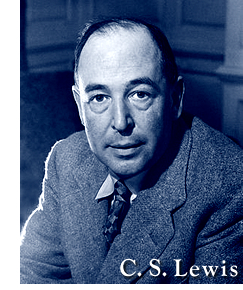
C.S. Lewis Daily – Today’s Reading


When human souls have become as perfect in voluntary obedience as the inanimate creation is in its lifeless obedience, then they will put on its glory, or rather that greater glory of which Nature is only the first sketch. For you must not think that I am putting forward any heathen fancy of being absorbed into Nature. Nature is mortal; we shall outlive her. When all the suns and nebulae have passed away, each one of you will still be alive. Nature is only the image, the symbol; but it is the symbol Scripture invites me to use. We are summoned to pass in through Nature, beyond her, into that splendour which she fitfully reflects.

And in there, in beyond Nature, we shall eat of the tree of life. At present, if we are reborn in Christ, the spirit in us lives directly on God; but the mind and, still more, the body receives life from Him at a thousand removes—through our ancestors, through our food, through the elements. The faint, far-off results of those energies which God’s creative rapture implanted in matter when He made the worlds are what we now call physical pleasures; and even thus filtered, they are too much for our present management. What would it be to taste at the fountainhead that stream of which even these lower reaches prove so intoxicating? Yet that, I believe, is what lies before us. The whole man is to drink joy from the fountain of joy. As St. Augustine said, the rapture of the saved soul will “flow over” into the glorified body.

From The Weight of Glory

Compiled in A Year with C.S. Lewis

Charles Stanley – Who is This Jesus?


Matthew 16:13-16

Throughout history, no one has made a greater impact on this world than Jesus Christ, yet many people simply don’t understand who He is. Some believe His life began in a manger in the ancient town of Bethlehem, but in reality, He existed long before that (John 8:58). As a member of the Trinity, Jesus is the eternal Son of God, which means He has no beginning or end (John 1:1). His birth in Bethlehem was merely His physical entrance into the world He created.

Jesus was the long-awaited Messiah, who came to earth to carry out the mission given to Him by His Father. At one point, He asked His disciples, “Who do you say that I am?” (Matt. 16:15). This is the question each of us must answer. There is no middle ground when it comes to deciding who Jesus is, because He claimed that He was the only way to the Father (John 14:6). Either He is the Son of God, or He’s a fraud.

In Matthew 16:16, when Peter answered, “You are the Christ, the Son of the living God,” Jesus told Him that the Father had revealed this truth to him (Matt. 16:17). We, too, need the Lord’s help to comprehend who Jesus is. The best way to understand Him is to examine His birth, life, and ministry as recorded in Scripture.

Simply learning what the Bible says about Jesus is not enough. Once you’ve heard who He is and what He came to do, you must respond. What will you do with Jesus? To hear the truth and reject it leads to spiritual death, but those who believe and accept Christ receive eternal life.

Bible in One Year: 1 Peter 1-5

Our Daily Bread — One Size Fits All


Read: John 3:10-21

Bible in a Year: Nahum 1-3; Revelation 14

Whoever believes in him shall not perish but have eternal life. —John 3:16

Like most children, I thoroughly enjoyed Christmas. With great anticipation, I would snoop under the tree to see what toys and games awaited my eager grasp. So I felt deflated when I started getting things like shirts and pants. Grownup gifts were no fun! Then last Christmas, my kids gave me some cool socks with bright colors and designs. I almost felt young again! Even grownups could wear these socks, as the label reassured me: “One size fits all.”

That welcome phrase “one size fits all” reminds me of the best gift of Christmas—the good news that Jesus is for everyone. The point was proven when the first invitation sent by angel choirs was to shepherds on the bottom rung of the social ladder. The news was underscored further when the VIPs—the wealthy and powerful Magi—followed the star to come and worship the Christ-child.

After Jesus began His ministry, an influential member of the Jewish ruling council came to Him at night. In the course of their conversation, Jesus invited “whoever believes” to come to Him. The simple act of faith in Christ grants eternal life to those who trust in Him (John 3:16).

If Jesus were just for the poor and marginalized, or only for the famous and fortunate, many of us would not qualify. But Christ is for everyone, regardless of status, financial situation, or social standing. He is the only gift truly fit for all. —Joe Stowell

Thank You, Lord, that no one is unqualified for the gift of Your love. Teach us to rejoice in the fact that Your love was just right for us, and help us to share that love with others.

God’s gift to a dying world is the life-giving Savior.

INSIGHT: As a Pharisee, Nicodemus was a religious conservative who was part of the upper echelons of the nation’s spiritual leadership (v. 1). This visit with Jesus had a profound impact on Nicodemus. When the religious leaders began to discuss Jesus as a threat, Nicodemus came to His defense (John 7:50). When Jesus was crucified, Nicodemus assisted Joseph of Arimathea in the Savior’s burial (19:39). The one who began his spiritual journey by coming to Jesus “by night” (3:2) ended up with a public witness of his connection to Christ.


Ravi Zacharias Ministry – Hallelujah


The John S. and James L. Knight Foundation is a national establishment dedicated to artistic excellence, funding local arts projects that engage communities in collective cultural experiences. With the assistance of the ever- and omni- potent YouTube, they put themselves on the map in recent years with an initiative they called “Random Acts of Culture.” Call it a cultural experiment in the transformational power of the arts, Mozart in the mall, tango in the airport terminal, or Puccini at the farmers’ market—the result was art in unusual places, wide-eyed children and startled shoppers, culture interrupted by culture.

The idea was simple. Gather a group of talented artists in a particular city—a string quartet from the Charlotte Symphony, the Opera Company of Philadelphia, or two very gifted dancers—and set them loose from the concert halls to stage a performance in the street. Or, as it were, in the shoe department. Shoppers at a very crowded shoe sale in Miami were startled as one by one their salespeople suddenly turned into characters from the French opera Carmen—shoe boxes in hand.

Yet one of these intruding bursts of creativity caused the most commotion by far. In October of 2012, the Opera Company of Philadelphia brought together over 650 choristers from 28 participating organizations to perform a Random Act of Culture in the heart of a busy Macy’s store in Philadelphia. Accompanied by the Wanamaker Organ—the largest pipe organ in the world—the Opera Company and throngs of singers from the community infiltrated the store as shoppers, and burst into a pop-up rendition of the Hallelujah Chorus from George Frideric Handel’s “Messiah” at high noon.

The reactions on the faces of singers, shoppers, and salespeople are worth the YouTube visit alone—which has been replayed almost 9 million times: people with shopping bags in tow stop to raise their hands, gadgets and phones are pulled out of pockets and purses to record the moment, the busywork of a crowded mall in action otherwise stopped in its tracks by words that make it all seem so small.

The kingdom of this world

Is become the kingdom of our Lord,

And of his Christ, and of his Christ;

And He shall reign forever and ever,

Hallelujah! Hallelujah!

And then come the tears. The most posted comment after the replaying of this random act of culture is the presence of teary eyes and tingling spines. Some of the comments indeed belong to people who identify themselves as Christian. But many others come from people who claim they are pagan, atheist, or just thoroughly unreligious. But all have similar reactions: “Just beautiful!” said one. “[M]oving beyond words.” “One of the greatest things to happen in Philadelphia in a long time.” “[It] brought tears to my eyes.” “[It] gave me goosebumps.” “I couldn’t stop crying. So beautiful…” Another musician describes a little boy with tears running down his face. After everything was over, she walked up to the mother to ask if he was okay. She said, “‘Oh no, he was just so surprised and moved.’”

With the utmost of respect to Puccini’s La Boheme, there were no reports of any four year olds crying in awe thereafter. Some have attributed the difference in audience reaction to the sheer scope of this particular random act of culture—it was certainly the biggest; combining the world’s largest pipe organ with enough choristers to transform the already striking three-story Italian and Greek marble historic Macy’s Grand Court into a stunning concert hall. Others attribute the heightened reactions simply to the power of the classical arts, the surprise of long forgotten memories, or the beauty and influence of great music. Noticeably absent from all this commentary was reaction from those who seem to find something wrong with anything Christian in the public arena. “I’m an atheist, and I approve of this random act,” writes one responder with a smiley face. “I’m Hindu and I tearfully agree!” another replied. “It’s the beauty that counts.”

Certainly, the story of a God who comes near is exactly that. Beautiful. Remarkable. Show stopping. And our intense reaction to beauty is nothing if not an inherent recognition of a Giver of beauty, a creator of the things that bring chills to our spines and tears to our eyes—the Good, the True, and the Beautiful in Spirit, embodied, in Person.

In contrast, and I think illustrating this point, comedian Steve Martin sang a song last year at the New Orleans Jazz fest that he called “the entire atheist hymnal” (on one page of paper). He called it: “Atheists Don’t Have No Songs.”

Chris¬tians have their hymns and pages,

Hava Nag¬i¬la’s for the Jews,

Bap¬tists have the rock of ages,

Athe¬ists just sing the blues.

Ro¬man¬tics play Claire de Lune,

Born agains sing “He is risen,”

But no one ever wrote a tune,

For god¬less ex¬is¬ten¬tial¬ism.

For Athe¬ists there’s no good news. They’ll never sing a song of faith.

In their songs they have one rule: the “he” is al¬ways lower¬case.

Some folks sing a Bach can¬ta¬ta,

Luther¬ans get Christ¬mas trees,

Athe¬ist songs add up to nada,

But they do have Sun¬days free.

Of course, his humor is meant to entertain us—and does. But what a contrast to a piece of music that moves hearts and masses across the board. Handel’s Messiah is arguably one of the strongest expressions of Christian doctrine ever produced, and yet it’s called a masterpiece of beauty by everyone—without so much as flinching as to whether our philosophies really allow room for it in the first place.

In fact, I think it makes all the sense in the world that both inexplicable tears and profound joy accompany the words and sounds of Handel’s Messiah. For this Messiah brings with him an invitation unlike any other: Come and see the Father, the Creator, the Good, the True, and the Beautiful. Come and see the Light, and the Overcomer of darkness, the One who wept at the grave of a friend, and the one who collects our tears in his bottle even before he will dry every eye. Hallelujah, indeed.

Jill Carattini is managing editor of A Slice of Infinity at Ravi Zacharias International Ministries in Atlanta, Georgia.

Alistair Begg – Seeing Face to Face


Friend, move up higher. Luke 14:10

When the life of grace first begins in the soul, we instinctively draw near to God, but it is with great fear and trembling. The soul, conscious of guilt and humbled by it, is overawed with the solemnity of its position; it is prostrated by a sense of the grandeur of God, in whose presence it appears.

With sincere humility it takes the lowest room. But later on, as the Christian grows in grace, although he will never forget the solemnity of his position and will never lose that holy awe that must encompass a gracious man when he is in the presence of the God who can create or destroy, yet his fear has all its terror taken out of it; it becomes a holy reverence, and no longer an overshadowing dread.

He is called up higher, to greater access to God in Christ Jesus. Then the man of God, walking among the splendors of Deity and veiling his face like the glorious cherubim with those twin wings, the blood and righteousness of Jesus Christ, will, reverent and bowed in spirit, approach the throne; and seeing there a God of love, goodness, and mercy he will realize the covenant character of God rather than His absolute Deity.

He will see in God His goodness rather than His greatness, and more of His love than of His majesty. Then the soul will bow just as humbly as before and enjoy a more sacred liberty of intercession; for while prostrate before the glory of the Infinite God, it will be sustained by the refreshing awareness of being in the presence of unlimited mercy and infinite love and by the realization of acceptance “in the Beloved.”1 In this way the believer is invited to come up higher and is enabled to exercise the privilege of rejoicing in God and drawing near to Him in holy confidence, crying, “Abba, Father.”

So may we go from strength to strength,

And daily grow in grace,

Till in Thy image raised at length,

We see Thee face to face.

1) Ephesians 1:6

Family Bible Reading Plan

  • 2 Chronicles 27, 28
  • Revelation 14

Devotional material is taken from “Morning and Evening,” written by C.H. Spurgeon, revised and updated by Alistair Begg. Copyright © 2003,

Charles Spurgeon – The incarnation and birth of Christ


“But thou, Bethlehem Ephratah, though thou be little among the thousands of Judah, yet out of thee shall he come forth unto me that is to be ruler in Israel; whose goings forth have been from old, from everlasting.” Micah 5:2

Suggested Further Reading: Hebrews 10:5-7

“Go,” saith the Father, “and thy Father’s blessing on thy head!” Then comes the unrobing. How do angels crowd around to see the Son of God take off his robes! He laid aside his crown; he said, “My father, I am Lord over all, blessed for ever, but I will lay my crown aside, and be as mortal men are.” He strips himself of his bright vest of glory; “Father,” he says, “I will wear a robe of clay, just such as men wear.” Then he takes off all those jewels wherewith he was glorified; he lays aside his starry mantles and robes of light, to dress himself in the simple garments of the peasant of Galilee. What a solemn disrobing that must have been! And next, can you picture the dismissal! The angels attend the Saviour through the streets, until they approach the doors; when an angel cries, “Lift up your heads, O ye gates, and be ye lifted up ye everlasting doors, and let the king of glory through!” I think the angels must have wept when they lost the company of Jesus—when the Sun of heaven bereaved them of all its light. But they went after him. They descended with him; and when his spirit entered into flesh, and he became a babe, he was attended by that mighty host of angels, who after they had been with him to Bethlehem’s manger, and seen him safely laid on his mother’s breast, in their journey upwards appeared to the shepherds and told them that he was born king of the Jews. The Father sent him! Contemplate that subject. Let your soul get hold of it, and in every period of his life think that he suffered what the Father willed; that every step of his life was marked with the approval of the great I AM.

For meditation: When we think of the birth of the Son of God, our eyes are rightly focused on earth. But are we in danger of forgetting God the Father in heaven, the one who so loved the world that he gave his only-begotten Son (John 3:16)? May we remember to give “Glory to God in the highest” (Luke 2:14).

Sermon no. 57

23 December (1855)

John MacArthur – The Revelation of Man’s Destiny


“He did not subject to angels the world to come, concerning which we are speaking. But one has testified somewhere, saying, ‘What is man, that Thou rememberest him? Or the son of man, that Thou art concerned about him? Thou hast made him for a little while lower than the angels; Thou hast crowned him with glory and honor, and hast appointed him over the works of Thy hands; Thou hast put all things in subjection under his feet.’ For in subjecting all things to him, He left nothing that is not subject to him” (Heb. 2:5-8).

Man’s original intended destiny was to be king of the earth.

When we look at the vast, seemingly endless universe and then think about the little dot we call earth in the middle of it all, we cannot help but wonder, “What is man? What right do we have to be so much on God’s mind?”

David had an answer: “Thou hast made him for a little while lower than the angels . . . crowned him with glory and honor . . . appointed him over the works of Thy hands . . . put all things in subjection under his feet” (Heb. 2:6-8). The writer of Hebrews was quoting one of the Psalms (Ps. 8:4-6) to show that God made man to be king.

David undoubtedly penned his psalm based on what God said in the beginning: “Let Us make man in Our image, according to Our likeness; and let them rule over the fish of the sea and over the birds of the sky and over the cattle and over all the earth, and over every creeping thing that creeps on the earth” (Gen. 1:26). God’s original design for man in his innocence was to be king over an undefiled earth.

When God made Adam, who was pure and innocent, He gave Him honor and glory. God crowned man king of the earth: “Thou hast put all things in subjection under his feet” (Heb. 2:8). One day we again will be given the right to rule the earth, and all God’s creation will be put under our feet.

Suggestion for Prayer

Read Psalm 8 and offer it as your own praise to God.

For Further Study

Read Daniel 7:18, 27 and note the extent of the saints’ ultimate rule.


Joyce Meyer – Rest and Renew


So then, there is still awaiting a full and complete Sabbath-rest reserved for the [true] people of God; for he who has once entered [God’s] rest also has ceased from [the weariness and pain] of human labors, just as God rested from those labors peculiarly His own.—Hebrews 4:9-10

We all have gifts and talents far beyond what we use, but many of us are so worn out that we don’t feel like doing anything. Even God rested from all of His labors, not because He was tired, but just to enjoy His creation (see Genesis 2:1-3). Stop working all the time, and enjoy yourself.

Even the land needs to rest every several years to produce good crops. If you don’t rest, you are going to cut down your production and stifle your creativity. You don’t have to work at God’s plan for you; He will cause it to come to pass (see Philippians 1:6). Rest in Him.

From the book Starting Your Day Right by Joyce Meyer.

Campus Crusade for Christ; Bill Bright – Power Over Discouragement


“And let us not get tired of doing what is right, for after a while we will reap a harvest of blessing if we don’t get discouraged and give up” (Galatians 6:9).

“Yes, I do get tired inthe work, but I never get tired ofthe work.” I have heard many missionaries, ministers and other Christian leaders make such a statement. I echo their sentiments.

The first half of this wonderful verse is the sower’s imperative; the second half is the sower’s reward. The first half is my responsibility; the second is God’s – which of course means that I should concern myself only with the first half, since our faithful God always keeps His promises.

One of the enemy’s greatest weapons is discouragement. Years ago that great saint and prophet, A.W. Tozer, preached a sermon on this subject in which he recognized discouragement solely as a tool of the devil, hence one he would refuse to accept in his own life.

It is because of Satan’s wiles in this regard – in causing us to be discouraged and give up – that one of God’s greatest gifts to His children is the gift of exhortation and encouragement, with emphasis on the latter. How many believers have been strengthened to carry on because of the helpful, encouraging word of a friend! And how important that you and I become that kind of friend. Yet, God’s promise of encouragement is far more important.

To “keep on keeping on” is easier when we know that God is faithful.

Bible Reading: Galatians 6:1-8

TODAY’S ACTION POINT: With power from the Holy Spirit who lives within me, I will refuse to allow Satan’s trick of discouragement to hinder my work, my walk and my witness for the Lord.


Presidential Prayer Team;  G.C. – Thankful Lament


The book of Lamentations in the Bible is for many a little-known portion of Scripture, but it is a beautiful gift containing deep truth for those willing to unwrap it.

The Lord has done what he purposed; he has carried out his word.

Lamentations 2:17

The prophet Jeremiah likely wrote the words after his beloved city, Jerusalem, was destroyed and the tribes of Israel, then known as Judah, were scattered in ruin. Previously Judah had moved away from God, adopting the sinful lifestyles of those living nearby. After repeated promptings to turn back to serving God as a nation, Judah once again turned away. Babylonian King Nebuchadnezzar noticed the unfocused armies of Judah and moved in, demolishing the city walls and ransacking Jerusalem. The entire royal house was captured and enslaved, leaving only the poorest, most hopeless citizens to starve on the ash heap that was once home. Jeremiah witnessed the annihilation and his book was written as a funeral dirge of sorrow over the devastation.

In light of Jeremiah’s Lamentations, thank God today for his continued gifts of compassion and protection upon America. Take a moment from your Christmas Day countdown to pray for the next generation of believers to acquire God’s strength and power – and turn away from sin and toward His protection and blessing.

Recommended Reading: Psalm 34:11-19

Greg Laurie – Christ the Lord


Then the angel said to them, “Do not be afraid, for behold, I bring you good tidings of great joy which will be to all people. For there is born to you this day in the city of David a Savior, who is Christ the Lord.”—Luke 2:10–11

The angel began that wonderful announcement to the shepherds with, “Do not be afraid, for behold, I bring you good tidings of great joy. . . .” Maybe you are suffering today. You might find yourself wondering, Where is the joy?<?i> But what is the joy about? Is it about an opportunity to go shopping? Is the message of Christmas “Let it snow?” No, it is, “Let us worship.”

The angels’ visit to the shepherds became the first Christmas celebration. It’s as though heaven and earth were celebrating it together, as though a portal to glory had been opened up. These shepherds saw the supernatural world, the heavenly world. On that first Christmas, there was a big celebration in heaven and on earth over the birth of the Lord Jesus Christ.

We have a Savior: “For there is born to you this day in the city of David a Savior, who is Christ the Lord” (Luke 2:11). That is the most important thing. We have a Savior who came to save us from the power and penalty of sin. Whatever you are going through in life, remember this: you have a Savior. He has put your sins as far away from you as the east is from the west.

Christ means “anointed one.” Another word for that is Messiah. Jesus was the fulfillment of God’s promise to send His Son as the Messiah. This is a simple reminder that God keeps His promises. God said that He would send a Messiah, and the Messiah came.

Lord means that we have a sovereign God who is in control of our lives.

So set aside the things you have become preoccupied with and remember that you have a Savior. You have a Lord. You have a Christ. And you have His promises.