Max Lucado – He Called His Name Jesus


And Joseph took to him his wife, and did not know her till she had brought forth her firstborn Son. And he called His name Jesus!

Joseph was literally willing to tank his reputation. And he did. He traded it for a pregnant fiancée and an illegitimate son and made the big decision of discipleship. He placed God’s plan ahead of his own. Rather than make a name for himself, he made a home for Christ. And because he did, a great reward came his way.

“He called His name Jesus!” Of all the saints, sinners, prodigals, and preachers who’ve spoken the name, Joseph—a blue-collar, small-town construction worker said it first. Joseph cradled the wrinkle-faced prince of heaven, and with an audience of angels and pigs, he whispered, Jesus—you will be called Jesus!

From Grace for the Moment

Night Light for Couples – Growing with God


“Like newborn babies, crave pure spiritual milk, so that by it you may grow up in your salvation.” 1 Peter 2:2

Our culture tends to emphasize personal growth at the cost of marriage commitment. Humans are made for a lifelong growth curve, and the best place to experience it is inside a faithful, God‐blessed marriage. When the Lord Jesus is the “third person” in our union, we can flourish with a spiritual intimacy and growth unavailable to others. I (jcd) am reminded of a letter a woman wrote to me:

Dear Dr. Dobson: My husband recently left me after fifteen years of marriage.

We had a great relationship, but something was missing—we had no spiritual bond between us. Please tell young couples that there will always be a void in their lives together without Christ. A good marriage must have its foundation in Him in order to experience lasting love, peace, and joy. I am now growing steadily in my walk with the Lord, but I am alone.

Don’t forget to grow with God together. The “pure spiritual milk” Peter writes about is the Word of God. Along with Christian fellowship and prayer, the Bible will feed the deepest hungers of your heart. And you’ll find the soul‐mate of your dreams—sitting right beside you!

Just between us…

  • Do our church experiences nurture our spiritual life?
  • Do we have friends who encourage our spiritual growth?
  • How can we do a better job of growing together in God’s Word?

Lord, give us a hunger for Your Word. May we claim the spiritual growth You promise and the emotional and physical intimacy that can come with it. Amen.

From Night Light For Couples, by Dr. James & Shirley Dobson

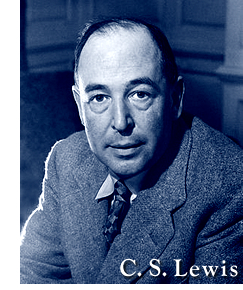
C.S. Lewis Daily – Today’s Reading


On truth

“I suppose there are two views about everything,” said Mark.

“Eh? Two views? There are a dozen views about everything until you know the answer. Then there’s never more than one.”

From That Hideous Strength

Compiled in Words to Live By

Charles Stanley – In the School of Faith


Matthew 16:6-12

Jesus spent time developing His disciples’ faith because He knew it was essential for the tasks ahead of them. For over three years, they attended a school of faith, with Jesus as their instructor and the Scripture as the textbook. Sometimes Christ used verbal instructions, but many of the lessons were taught through demonstrations. He healed the sick, cast out demons, fed thousands, and calmed the sea. Their training even included tests revealing if they truly believed Jesus was the Messiah.

At times, the disciples’ understanding was slow or faltering, but Christ never gave up on them. He reproved them when they exhibited a lack of trust (Mark 4:40) but also commended signs of progress (Matt. 16:15-17). His objective was to firmly establish their faith so He could accomplish His work in and through them. Right before His ascension, He commanded His men to spread the gospel of salvation to the remotest parts of the earth. Without faith, they would have failed.

The Lord has the same goal for us—increase our faith so we can do the work He’s planned for us. If our faith is great, He’ll entrust us with challenges and achieve amazing things through us. But small faith limits God’s activity in a believer’s life. He uses us only to the degree that we trust Him.

Faith building is essential in a believer’s life, and God has two primary means of doing this. Scripture tells us what to believe about Him, and tests place us in difficult situations that stretch us to believe and rely on God instead of our own understanding.

Bible in One Year: James 1-5

Our Daily Bread — Our Daily Bread — The Drummer Boy


Read: Luke 21:1-4

Bible in a Year: Micah 6-7; Revelation 13

She out of her poverty put in all she had to live on. —Luke 21:4

“The Little Drummer Boy” is a popular Christmas song written in 1941. It was originally known as “Carol of the Drum” and is based on a traditional Czech carol. Although there isn’t any reference to a drummer boy in the Christmas story in Matthew 1–2 and Luke 2, the point of the carol goes straight to the heart of the meaning of worship. The carol describes how a boy is summoned by the Magi to the scene of Christ’s birth. Unlike the wise men, however, the drummer has no gift—so he gives what he has. He plays his drum, saying, “I played my best for Him.”

This echoes the worship Jesus described when He told of the widow and her two coins: “ ‘Truly I tell you,’ he said, ‘this poor widow has put in more than all the others. All these people gave their gifts out of their wealth; but she out of her poverty put in all she had to live on’ ” (Luke 21:3-4).

All the drummer boy had was his drum and all the poor widow had were her two coins, but the God they worshiped was worthy of their all. He is worthy of our all as well, having given His all for us. —Bill Crowder

All to Jesus, I surrender, all to Him I freely give; I will ever love and trust Him, in His presence daily live. Judson W. Van De Venter

Your little is a lot when you give your all.

INSIGHT: In both the Old and New Testaments, the Scriptures challenge the people of God to show concern for the marginalized. For example, Deuteronomy 14:29 says: “At the end of every three years, bring all the tithes of that year’s produce and store it in your towns, so that the Levites (who have no allotment or inheritance of their own) and the foreigners, the fatherless and the widows who live in your towns may come and eat and be satisfied.” In the New Testament, the church at Jerusalem established a ministry for the care of widows (Acts 6), and James says the care of widows and orphans is the mark of true religion (James 1:27).

Ravi Zacharias Ministry – Ordinary Details


The sheer strangeness of the Christmas narrative from the Gospel of Luke is easily missed when read with either an over-familiarity or a commercialized sentimentality. But the Lukan account of God’s advent into the world is fairly extraordinary. I am struck by the way Luke juxtaposes the announcement of the King of Israel—”For to you is born this day in the city of David the Savior who is Christ the Lord”—with the sign of his advent; “And this will be a sign for you: you will find a babe wrapped in swaddling cloths and lying in a manger” (Luke 2:11-12). The God of the universe would be born in a lowly, dirty manger, a feed trough for animals, and clothed in woven, cloth strips.

Luke’s narrative highlights what seem to be the most ordinary and the most mundane details of Jesus’s birth for many modern readers. And yet, these seemingly ordinary details highlight how God’s glory is on full display in the birth of Jesus. The gospel writer’s preoccupation with ordinary details revealed the belief that coming of the Messiah and his kingdom would look very different from the kingdom that was expected.

The Bible indicates a long silence of God speaking directly to the people—a silence of four hundred years. But out of the silence of that quiet night, the angel spoke and announced what the people of Israel had all hoped for: He is here, the gospel proclaims, born in the same city as your great king of old, King David! The people now would look upon the new David, their new deliverer, their Messiah. The prophet Micah announced this special context as well: “As for you, Bethlehem too little to be among the clans of Judah, from you one will go forth for me to be ruler in Israel. His going forth is from long ago, from the days of eternity” (5:2). Out of the silent sky came the news that surpassed all news. The Messiah had come and the world would never be the same again, for a king had been born this day in the city of David—Christ the Lord!

And yet, this king would not be born in an expected palace or even into the household of a priest, like John the Baptist, for example. God had other plans. The glorious place of Israel’s new king would be different than expected: “And this will be a sign for you; you will find a baby wrapped in cloths, and lying in a manger.” Born this day, in the city of David is your Christ, your Messiah. ‘And guess what? You’ll find him in a manger, which is the feeding trough for dirty, smelly, ordinary farm animals. Who would believe this report? How could the Messiah come with such vulnerability and poverty?

But the manger would prove to be a palace, and the first subjects of the kingdom would not be the influential or the powerful, not the righteous or the rulers. In fact, only a few people actually hear the news. After the silence of ages, God does not come with a shout, but like a whisper into the ears of a few select individuals. God comes as a crying baby needing the comfort and succor of human parents.

Mary, the young girl and as yet unmarried would be the first recipient of this good news. She was young and insignificant, and this announcement of an illegitimate and unexplained pregnancy wouldn’t help her place in that society. The announcement also comes to shepherds—the least influential folks in that society—young boys, out in the fields, far from their towns and villages, tending to the sheep. The glory of Israel is revealed to those most would deem inglorious. Israel’s new king is born to a young, unmarried girl, in a town not her home, in a dirty, small manger with animals as the initial witnesses to the birth. The heavenly announcement is made only to a group of poor, unnoticed shepherds.

Unveiling the glory of God through humble means and ordinary details is a point Luke’s gospel highlights in portraying a kingdom of upside down expectations. The Almighty God, who created heaven and earth, who created the shepherds and the animals, Mary and Joseph, was the same God who chose to be glorified in human flesh as the baby Jesus. Humility reveals the glory of God! Humility demonstrates God’s greatness and glory, and humility is one of the hallmarks of Jesus’s Kingdom. Dr. James Denison elaborates: “As a young child, [Jesus] was celebrated by foreign Magi, not of his own people. He spent his public ministry touching lepers, welcoming Gentiles and prostitutes, discipling tax collectors and other despised people, and offering the gospel to all who would receive it. His birth proved the words: ‘God so loved the world that God gave his only Son, that whoever believes in him should not perish but receive eternal life.’”(1)

In a world that confuses glory with glitter, glamour, power, and prestige, would we see God’s glory in this seemingly inglorious package—cradled in a feed-trough, presented to peasants, announced to shepherds? Luke’s gospel account offers a poignant picture of an unsentimental Christmas story and one that shocks those who have become numbed by familiarity. And for all who would wonder at this kind of birth, this kind of king, and this kind of God, they are welcomed to draw closer to the manger and the stable.

Margaret Manning Shull is a member of the speaking and writing team at Ravi Zacharias International Ministries in Bellingham, Washington.

(1) James Denison, blog post 2007.

Alistair Begg – How Can He Fail You?


I will strengthen you.

Isaiah 41:10

God has a strong reserve with which to discharge this responsibility, for He is able to do everything. Believer, until you can drain the ocean dry of omnipotence, until you can break into pieces the towering mountains of almighty strength, you never need to fear.

Do not think that the strength of man will ever be able to overcome the power of God. While the earth’s huge pillars stand, you have enough reason to live firm in your faith.

The same God who directs the earth in its orbit, who feeds the burning furnace of the sun, and trims the lamps of heaven has promised to supply you with daily strength. While He is able to uphold the universe, do not dream that He will prove unable to fulfill His own promises.

Remember what He did in the past, in the former generations. Remember how He spoke and it was done, how He commanded and it stood firm. Will He who created the world grow weary? He hangs the world upon nothing; will He who does this be unable to support His children? Will He be unfaithful to His word for lack of power?

Who is it that restrains the tempest? Does He not ride upon the wings of the wind and make the clouds His chariots and hold the ocean in the hollow of His hand? How can He fail you? When He has put such a faithful promise as this on record, will you for a moment indulge the thought that He has outpromised Himself or gone beyond His power to fulfill? No! You can doubt no longer.

My God, You who are my strength, I believe that this promise will be fulfilled, for the boundless reservoir of Your grace can never be exhausted, and the overflowing storehouse of Your strength can never be emptied by Your friends or plundered by Your enemies.

Now let the feeble all be strong,

And make Jehovah’s arm their song.

Family Bible Reading Plan

  • 2 Chronicles 26
  • Revelation 13

Devotional material is taken from “Morning and Evening,” written by C.H. Spurgeon, revised and updated by Alistair Begg.

Charles Spurgeon – Plenteous redemption


“With him is plenteous redemption.” Psalm 130:7

Suggested Further Reading: Galatians 4:1-7

This “plenteous redemption” is plenteous, because it is enough for all the distresses of the saints. Your wants are almost infinite; but this atonement is quite so. Your troubles are almost unutterable; but this atonement is quite unutterable. Your needs you can scarce tell; but this redemption I know you cannot tell. Believe, then, that it is “plenteous redemption.” O believing sinner, what a sweet comfort it is for you, that there is “plenteous redemption,” and that you have a lot in it. You will most certainly be brought safely home, by Jesus’ grace. Are you seeking Christ; or rather, do you know yourselves to be sinners? If you do, I have authority from God to say to every one who will confess his sins, that Christ has redeemed him. “This is a faithful saying, and worthy of all acceptation, that Christ Jesus came into the world to save sinners, of whom I am chief.” Are you a sinner? I do not mean a sham sinner; there are lots of them about, but I have no gospel to preach to them just now. I do not mean one of those hypocritical sinners, who cry, “Yes, I am a sinner,”—who are sinners out of compliment, and do not mean it. I will preach another thing to you: I will preach against your self-righteousness another day; but I shall not preach anything to you just now about Christ, for he “came not to call the righteous, but sinners to repentance.” But are you a sinner, in the bona fide sense of the word? Do you know yourself to be a lost, ruined, undone, sinner? Then in God’s name I urge you to believe this—that Christ has died to save you.

For meditation: We spend money to buy presents for others; Christ came to spend His lifeblood to buy sinners back for God. Christmas means nothing without the Christ; Christmas means nothing without Easter (Mark 10:45).

Sermon no. 351

22 December (Undated Sermon)

John MacArthur – The Confirmation from God


“How shall we escape if we neglect so great a salvation? After it was at the first spoken through the Lord, it was confirmed to us by those who heard, God also bearing witness with them, both by signs and wonders and by various miracles and by gifts of the Holy Spirit according to His own will” (Heb. 2:3-4).

God confirmed the truth of the gospel preached through Christ with many miracles.

When Jesus preached the gospel, He performed miracles that made what He said believable. He said, “Though you do not believe Me, believe the works” (John 10:38). Jesus claimed to be from God, then made it obvious He really was from God.

Nicodemus came to Jesus by night and said to Him, “No one can do these signs that You do unless God is with Him” (John 3:2). Jesus confirmed His ministry by His own miracles. Peter reiterated that fact on the day of Pentecost: “Jesus the Nazarene [was] a man attested to you by God with miracles and wonders and signs” (Acts 2:22).

God also gave these same confirming signs to His second generation of preachers—the apostles—so no one could dispute the validity of their message. What the apostles said was not their own opinion; it was divine truth substantiated by signs, wonders, and miracles.

Signs, wonders, and miracles are synonyms referring to all the supernatural things the apostles did. But the apostles also confirmed the Word with “gifts of the Holy Spirit.” That’s a reference to the temporary sign gifts described in Scripture, such as tongues and healings, not to the permanent edifying gifts given to the church for all time.

Today God attests to the gospel with the miracle of His written Word. Let it not be said that you neglected Jesus Christ. History confirms that hours of neglect cost Napoleon Waterloo. Neglecting Christ’s salvation will cost you eternal blessing and joy and bring you damnation. Don’t allow yourself to drift past God’s grace.

Suggestion for Prayer

Thank God for His Word, and that through it you have all the truth you need to communicate the gospel.

For Further Study

Read Acts 5-19 and list all the miracles performed by the apostles to confirm the gospel.

Joyce Meyer – The Key to Happiness


External religious worship [religion as it is expressed in outward acts] that is pure and unblemished in the sight of God the Father is this: to visit and help and care for the orphans and widows in their affliction and need, and to keep oneself unspotted and uncontaminated from the world.  —James 1:27

I went to church for thirty years without ever hearing one sermon on my biblical responsibility to care for orphans, widows, the poor, and the oppressed. I was shocked when I finally realized how much of the Bible is about helping other people. I spent most of my Christian life thinking the Bible was about how God could help me. It’s no wonder I was unhappy.

The key to happiness isn’t only in being loved; it is also in having someone to love. If you really want to be happy, find somebody to love. If you want to put a smile on God’s face, then find a person who is hurting and help them.

Be determined to help someone. Be creative! Lead a revolt against living in a religious rut where you go to church and go home and go back to church, but you’re not really helping anybody. Don’t just sit in church pews and sing hymns. Get involved in helping people who are hurting.

Remember the words of Jesus:

“I was hungry and you gave Me no food; I was thirsty and you gave Me no drink; I was a stranger and you did not take Me in, naked and you did not clothe Me, sick and in prison and you did not visit Me.’

“Then they also will answer Him, saying, ‘Lord, when did we see You hungry or thirsty or a stranger or naked or sick or in prison, and did not minister to You?’

“Then He will answer them, saying, ‘Assuredly, I say to you, inasmuch as you did not do it to one of the least of these, you did not do it to Me.’” (Matthew 25:42-45 NKJV)

Trust in Him: Are you ministering to Jesus? Jesus said ministering to others ministers to Him. Trust His life on earth to be an example of how you should live your life—going about doing good for others in need.

From the book Trusting God Day by Day by Joyce Meyer.

Campus Crusade for Christ; Bill Bright – Proof of His Love


“For when He punishes you, it proves that He loves you. When He whips you it proves you are really His child” (Hebrews 12:6).

Most of us prefer more pleasant ways of having others prove their love for us. Children, for example, never particularly relish the idea of having the “board of education” applied to the “seat of learning,” but sometimes the disciplinary spanking is necessary.

We do that to our children because we love them. How much more important that our heavenly Father discipline us to keep us in line with His perfect plan and will for our lives. Sometimes that discipline is tough and painful.

This does not mean, of course, that God sends chastisement which is not deserved, or that He sends it for the mere purpose of inflicting pain. But it does mean that He is showing His paternal, loving care for us as His children when He punishes us.

As a child, a practical illustration helped me with this concept, so much so that it still sticks with me. When I allow my life to be flexible, like putty or soft clay, God can take it and mold it as He chooses. When I decide to be stubborn and resistant – hard like concrete – He sometimes has to smooth the rough edges, and that always hurts.

We sing a chorus about the Spirit of God falling afresh on us. “Melt me, mold me, fill me, use me.” When you and I are like putty in His hands, yielded and committed to Him, He can indeed mold us in His image.

Bible Reading: Revelation 3:19-22

TODAY’S ACTION POINT: I will surrender to God’s disciplinary action in my life realizing that as a kind, loving heavenly Father He must take such action for my own good and benefit, when I am in need of correction.

Presidential Prayer Team; H.L.M.  – Courageous Love


Thirty-eight years ago a 14-year-old girl chose to keep her child even though the pregnancy was the result of a gang rape. The birth was difficult, leaving this young, courageous woman in a hospital for days, many miles away from her mother. Four days after the child was born, Jim and Carol adopted the baby girl and named her Janie. She grew up to become a fabulous woman and a wonderful wife and mother of three boys, one of whom Janie and her husband adopted. Janie praises God for her life and for that remarkable 14-year-old girl.

To him who loves us and has freed us from our sins by his blood.

Revelation 1:5

Over two thousand years ago, a young, courageous woman name Mary obeyed God despite challenging circumstances and gave birth to the Savior of the world. As a result, Jesus Christ came to Earth to save you from your sin and its consequences.

Amid all the festivities as you prepare to celebrate Christ’s birth, remember to thank your Heavenly Father for His magnificent gift of salvation. Pray also that your friends, neighbors and leaders in your community and in America will discover the wonder of a relationship with Him.

Recommended Reading: Luke 1:39-56

Greg Laurie – Just Another Night in Bethlehem


Fear not, O land; be glad and rejoice, for the Lord has done marvelous things!—Joel 2:21

On the first Christmas Eve, there were no brightly colored lights on anyone’s homes. There were no stockings that had been hung with care or any visions of sugarplums dancing in children’s heads. It was just another night in Bethlehem. The census had gone out—that command by Caesar that everyone was to be taxed. But history was about to change in Bethlehem.

All of Israel was living in a very frightening time historically. They lived under the tyrant King Herod who would execute people at will. In addition, the Jews were living in occupied territory. The Romans had taken control of their country. They were no longer free to do what they wanted and live as they wanted. They wondered if Rome would ever leave. Would the violent rule ever cease? Would their world ever change?

Then suddenly angels appeared to the shepherds and told them not to be afraid; the Messiah had been born.

There is a lot to be afraid of in our unstable, volatile world today. It seems that at every turn, we hear about another horrific tragedy happening in our world. It can cause us to be terrified.

Then there are the personal fears: What if I lose my health? What if I lose a member of my family? What if this happens? What if that happens? A lot of things run through our minds.

Here is the message of the first Christmas—and the message for us this Christmas: Don’t be afraid. . . . I bring you good tidings of great joy.

Ray Stedman wrote, “The chief mark of the Christian ought to be the absence of fear and the presence of joy.”

Does that describe you? Fear is what Christmas came to remove—and now we can have joy in its place.

Max Lucado – No Room


Some of the saddest words on earth are: “We don’t have room for you.” Jesus knew the sound of those words. He was still in Mary’s womb when the innkeeper said, “We don’t have room for you.” And when he was hung on the cross, wasn’t the message one of utter rejection? “We don’t have room for you in this world.”

Even today Jesus is given the same treatment. He goes from heart to heart, asking if he might enter. Every so often, he is welcomed. Someone throws open the door of his or her heart and invites him to stay. And to that person Jesus gives this great promise, “In my Father’s house are many rooms.” What a delightful promises he makes us! We make room for him in our hearts….and he makes room for us in his house!

From Grace for the Moment

Night Light for Couples – Breaking Out


“God did not give us a spirit of timidity, but a spirit of power, of love and of self-discipline.” 2 Timothy 1:7

Breaking out of comfortable routines can be beneficial for us, but it isn’t always as easy as it sounds. My (jcd’s) father, for example, hated automatic transmissions on automobiles because he had learned to drive with stick shifts. I’ve fallen into similar patterns. Until 1992 I wrote books on yellow pads with pencils. I worked that way for years despite the availability of word processors. The twentieth century was almost over before I decided to join it.

Rigidity and the force of habit can cause us to do things that make no sense. Yet when we stop learning and growing, we fail to reach our potential. To look at it another way, which companies would you say are more successful in today’s fast‐changing marketplace: those whose motto is “We’ve always done it this way,” or those that continually evaluate their methods and seek improvements?

Some of what succeeds in business also makes sense in marriage. You might ask yourself if any outdated routines and pointless—or even costly—habits are holding you back.

Just between us…

  • Am I stuck in any habits that no longer make sense?
  • How are those who are unwilling to change like the Pharisees of

Scripture? (See Luke 11:37–44.)

  • Do you enjoy learning?
  • How can I encourage you to get out of old ruts or discard outdated habits?

Lord, we can become so comfortable in our old ways, but comfort can lead to stagnation and retreat. Inspire us by Your Spirit “of power, of love and of self-discipline” to reach for Your creative best. Thank You for the gift of new life we can enjoy together every day. Amen.

From Night Light For Couples, by Dr. James & Shirley Dobson

Charles Stanley – Walking With Greater Confidence


Hebrews 11:1-31

It’s the Lord’s desire that we walk by faith. Yet if we consider our lives honestly, most of us will find a number of areas where we struggle to trust Him. Some days it’s easy to relinquish control, while at other times we quickly take matters into our own hands.

Thankfully, our heavenly Father is patient and loving. His Word clearly teaches that sanctification is the process of making us holy, not just the end result. Children are a great illustration of how this works. When toddlers learn to walk, they start by pulling up on something, standing, and then taking a step. Inevitably, they fall, at which point we help them back up so that they can keep progressing. In the same way, God shows us how to live according to our faith in Him, but we’ll make mistakes. Falling and getting up again are part of the learning process.

The Lord teaches us, but we also have a role. Our responsibility is to study Scripture, get to know God’s nature, and learn His promises. As we do these things, our confidence in God grows, enabling us to make choices requiring us to believe in and lean on Him. When we step out in faith and experience Christ’s provision and dependability, our trust grows.

Consider the responses, actions, and decisions that you’ve made in the past few days. How many of those were led by the Spirit? How many were human reactions done from self-reliance? Living on the basis of trust in Christ requires belief and action. As you allow Him to lead, faith will grow.

Bible in One Year: Hebrews 12-13

Our Daily Bread — Amazing Love


Read: John 6:32-40

Bible in a Year: Micah 4-5; Revelation 12

I have come down from heaven not to do my will but to do the will of him who sent me. —John 6:38

Approaching the first Christmas after her husband died, our friend Davidene wrote a remarkable letter in which she pictured what it might have been like in heaven when Jesus was born on earth. “It was what God always knew would happen,” she wrote. “The three were one, and He had agreed to allow the fracturing of His precious unity for our sake. Heaven was left empty of God the Son.”

As Jesus taught and healed people on earth, He said, “I have come down from heaven not to do my will but to do the will of him who sent me. . . . For my Father’s will is that everyone who looks to the Son and believes in him shall have eternal life, and I will raise them up at the last day” (John 6:38,40).

When Jesus was born in Bethlehem, it was the beginning of His mission on earth to demonstrate God’s love and give His life on the cross to free us from the penalty and power of sin.

“I cannot imagine actually choosing to let go of the one I loved, with whom I was one, for the sake of anyone else,” Davidene concluded. “But God did. He faced a house much emptier than mine, so that I could live in His house with Him forever.”

“For God so loved the world that he gave his one and only Son” (John 3:16). —David McCasland

Father in heaven, we are in awe of Your amazing love for us. Thank You for giving Your only Son to save us from our sins.

The birth of Christ brought God to man; the cross of Christ brings man to God.

INSIGHT: The 40-year experience of the Israelites in the wilderness where God sustained them by manna (Ex. 16) provides the backdrop for this passage in John 6. The miraculous feeding of 5,000 men (vv. 1-13) caused the Jews to compare Moses with Jesus. Jesus corrected them, saying that it was God, not Moses, who had fed the Israelites (v. 32). Jesus then gave them one of the greatest revelations of Himself: He said He was the new manna—sent down from heaven to sustain them. “I am the bread of life” (v. 35) is the first of seven “I am” sayings in this gospel where Jesus provides a clear picture of who He is (John 8:12; 10:9; 10:11; 11:25; 14:6; 15:1).

Ravi Zacharias Ministry – Masquerading Fallacies


On October 30, 1938 a national radio program playing dance music was interrupted with a special news bulletin. The announcer heralded news of a massive meteor, which had crashed near Princeton, New Jersey. The reporter urged evacuation of the city as he anxiously described the unfolding scene: Strange creatures were emerging from the meteor armed with deadly rays and poisonous gases.

The infamous broadcast, which caused panic throughout the country and mayhem all over New York and New Jersey, was made by Orson Welles, a 23-year old actor giving a dramatic presentation of the H.G. Wells novel The War of the Worlds. His compelling performance created traffic jams and tied up phone lines, interrupted religious services and altered bus routes. Several times in the program a statement was made regarding the broadcast’s fictional nature. Still, many Americans were convinced that Martians had landed. One man insisted he had heard the President Roosevelt’s voice over the radio advising all citizens to leave their cities. Another, on the phone with a patrolman, cried in alarm, “I heard it on the radio. Then I went to the roof and I could see the smoke from the bombs, drifting over toward New York. What shall I do?”(1)

The War of the Worlds broadcast will perhaps forever remain one of the most telling examples of the power of context, and in more ways than one. Whether listeners tuned in after the introduction or happened to miss the declaimers, the convincing portrayal was enough to send waves of fear across the country. In the context of breaking news, fiction appeared alarmingly factual.

But also, I think it is fair to ask whether such a reaction could have even taken place outside of the context in which this “breaking news” was heard. In 1938, the global situation was such that an unfolding crisis, and subsequent radio interruption, was not altogether implausible. Furthermore, radio was at that time the primary source for news and information. Nowadays, if we heard troubling news on the radio, the first thing we would do is check it out further on the Internet or television. We are much too cynical to be taken in by such a tale today.

But herein lies an interesting attitude. When thinking about such an incredible example of hoax and gullibility, I suspect many of us have a similar outlook: We are much less vulnerable to fallacy masquerading itself as truth in today’s day and age. But could this not also be a false and dangerous assumption? The War of the Worlds broadcast might no longer fool us, but are we really so much closer to recognizing fact from fallacy?

Just because we reject stories, suspect history, and are well aware that reality television is not reality hardly means that we are less susceptible to deception. When we live cynically yet choose our beliefs by preference, there is deception in our approach to truth itself, which is just as hazardous as believing in Martians because you heard it over the radio. In the words of the prophet Amos, we have fled from a lion only to meet a bear.

From context to context, the tests of truth do not change and must be employed. For regardless of context, the effects of believing a lie are always injurious to life. As Ravi Zacharias notes, “To be handcuffed by a lie is the worst of all imprisonments.” Whether we are claiming Martians landed in 1938 or making the truth claim that there is no such thing as truth, reason leads us to check the correspondence of a claim with reality, and the coherence of the assertions. Our truth claims must be tested before they are believed—and subsequently, they must be lived out.

Jesus, whom Christians prepare to meet again this Advent as one who came near, made some tremendous claims about himself. The reassuring thing is that he also asked us to test these claims and not simply take his word: “Who do you say that I am?” In claiming an answer, we must not abandon fundamental tests of truth—tests that are inherent in the questions Jesus is asking. In the breaking news of the church this Advent season might we approach the Child willing to respond fairly, knowing there are certain responses that are just not left open to us, and ready to fully live the truth we proclaim.

Jill Carattini is managing editor of A Slice of Infinity at Ravi Zacharias International Ministries in Atlanta, Georgia.

(1) “Radio Listeners in Panic, Taking War Drama as Fact,” The New York Times, Oct. 31, 1938.

Alistair Begg – An Everlasting Covenant


For he has made with me an everlasting covenant.

2 Samuel 23:5

This covenant is divine in its origin. “He has made with me an everlasting covenant.” Oh, that great word “he”! My soul, consider-God, the everlasting Father, has positively made a covenant with you; yes, the God who spoke the world into existence by a word; He, stooping from His majesty, takes hold of your hand and makes a covenant with you. Isn’t this act so stupendous and such an example of condescension that it would overwhelm us forever if we could really understand it? “He has made with me an everlasting covenant.”

A king has not made a covenant with me-that would be something; but the Prince of the kings of the earth, Shaddai, the Lord All-sufficient, the Jehovah of ages, the everlasting Elohim-“He has made with me an everlasting covenant.”

But notice, it is particular in its application. “For he has made with me an everlasting covenant.” Here is the sweetness of it to each believer. It is nothing for me that He made peace for the world; I want to know whether He made peace for me! It is a small matter that He has made a covenant; I want to know whether He has made a covenant with me.

Blessed is the assurance that He has made a covenant with me! If God the Holy Spirit gives me assurance of this, then His salvation is mine, His heart is mine, He Himself is mine-He is my God.

This covenant is everlasting in its duration. An everlasting covenant means a covenant that had no beginning and that will never, ever end. How sweet in all the uncertainties of life to know that “God’s foundation stands firm,”2 and to have God’s own promise, “I will not violate my covenant or alter the word that went forth from my lips.”2 I will sing of this through all my days and at their ending and forever.

1) 2 Timothy 2:19

2) Psalm 89:34

Family Bible Reading Plan

  • 2 Chronicles 25
  • Revelation 12

Devotional material is taken from “Morning and Evening,” written by C.H. Spurgeon, revised and updated by Alistair Begg.

Charles Spurgeon – Going home—a Christmas sermon


“Go home to thy friends, and tell them how great things the Lord hath done for thee, and hath had compassion on thee.” Mark 5:19

Suggested Further Reading: 2 Kings 7:3-9

First, tell it truthfully. Do not tell more than you know; do not tell John Bunyan’s experience, when you ought to tell your own. Do not tell your mother you have felt what only Rutherford felt. Tell her no more than the truth. Tell your experience truthfully; for perhaps one single fly in the pot of ointment will spoil it, and one statement you may make which is not true may ruin it all. Tell the story truthfully.

In the next place, tell it very humbly. I have said that before. Do not intrude yourselves upon those who are older, and know more; but tell your story humbly; not as a preacher, not ex-cathedra, but as a friend and as a son.

Next, tell it very earnestly. Let them see you mean it. Do not talk about religion flippantly; you will do no good if you do. Do not make puns on texts; do not quote Scripture by way of joke: if you do, you may talk till you are dumb, you will do no good, if you in the least degree give them occasion to laugh by laughing at holy things yourself. Tell it very earnestly.

And then, tell it very devoutly. Do not try to tell your tale to man till you have told it first to God. When you are at home on Christmas Day, let no one see your face till God has seen it. Be up in the morning, wrestle with God; and if your friends are not converted, wrestle with God for them; and then you will find it easy work to wrestle with them for God. Seek, if you can, to get them one by one, and tell them the story. Do not be afraid; only think of the good you may possibly do.

For meditation: Many of us will be with unconverted friends or relatives over Christmas. May Spurgeon’s four points help each of us to speak of “the Son of God, who loved me, and gave himself for me” (Galatians 2:20).

Sermon no. 109

21 December (1856)