Max Lucado – Confess and Believe


Can we know we are truly saved? The Bible says, “If you confess with your mouth, ‘Jesus is Lord,’ and believe in your heart that God raised him from the dead, you will be saved” (Romans 10:9). Confess and believe…and you will have salvation.

Catch what the verse does not say: live perfectly, be nice to everyone, don’t mess up, always smile—and you will be saved. Can’t do it. Impossible. Just confess and believe. Salvation will follow. It’s so easy. . .yet so hard.

God wants us to know we are saved, for saved people are dangerous people, willing to face off with the world, unafraid of the consequences since we know that, whatever happens, we will have eternal life. “Therefore, there is now no condemnation for those who are in Christ Jesus” (Romans 8:1 NIV).  Watch out, world!

From Max on Life

For more inspirational messages please visit Max Lucado.

Home

Denison Forum – ‘You May Want to Marry My Husband’

So headlines a New York Times column that has gone viral. Amy Krouse Rosenthal is dying of ovarian cancer. She has been married to “the most extraordinary man for 26 years” and planned on at least another twenty-six with him. Instead, she wrote a deeply moving essay about her husband in hopes that “the right person reads this, finds Jason, and another love story begins.”

Reading her tribute, I wanted to be as caring as Jason. If I were a wife, I would want to be as courageous as Amy.

We need more models of courageous caring today. What does it say about us that Logan, the bloody final installment in the “Wolverine” series, topped the weekend box office? Or that nudity at a Paris fashion show is making headlines? Or that Facebook is testing artificial intelligence tools as it tries to help curb the suicide epidemic?

In days like these, our culture can use the best models we can find. But the answer to our challenges isn’t so simple.

Stanford professor Albert Bandura is widely considered America’s greatest living psychologist. The recipient of sixteen honorary degrees, he is best known for pioneering “social cognitive theory.” In essence, Bandura believes that students learn by observing models and replicating their behavior. If imitation enables students to accomplish their goals, such success encourages them to perform similar behaviors. Over time, the successful student becomes a model for others and the process multiplies.

Prof. Bandura would agree that Amy Krouse Rosenthal’s article has been popular in large part because it inspires us to follow the example she and her husband have set. Imitating success is a popular self-improvement method in our secular culture. But I’m convinced that it’s not enough to take us where we need to go, for three reasons.

First, if we merely imitate our models without truly understanding their behavior, we will struggle to apply their example to different circumstances. What works in starting a church may not work in leading an established congregation. Unique challenges sometimes call for unique approaches. Continue reading Denison Forum – ‘You May Want to Marry My Husband’

Charles Stanley –God Is Sovereign Over Delays


Proverbs 16:9

No one likes to wait, but have you ever wondered why? Perhaps it’s because delays show us that we are not in control. Someone or something else is calling the shots. Although we may be able to identify the immediate cause—like a traffic light or the long checkout line—ultimately the One who controls all our delays is the Lord. Since He is sovereign over everything in heaven and on earth, even our time and schedules are in His hands.

This means that in every delay, we are actually waiting for God in one way or another. You might have thought that the expression “waiting upon the Lord” applies only to seeking guidance from Him or an answer to prayer. But it can mean so much more when you remember that He controls all your day-to-day inconveniences and frustrations.

In the Christian life, learning to wait is vitally important because until you do, you’ll never be able to walk in obedience to God, have an effective prayer life, or experience the peace of resting in His loving sovereignty. We must learn to trust His judgment—not just about the big events in our lives but also about trivial ones, which can cause us to become irritated, impatient, or even angry. If we are sensitive to His instruction, each delay has an important lesson.

The next time you face an unexpected or unwanted wait, remember that it comes as no surprise to God. He wants to teach you patience and increase your faith. He’s more interested in developing godly character than He is in making sure your schedule runs according to your plans.

Bible in One Year: Joshua 1-3


http://www.intouch.org/

Our Daily Bread — The Gift of Welcome

Read: Hebrews 13:1–2

Bible in a Year: Numbers 34–36; Mark 9:30–50

Do not forget to show hospitality to strangers.—Hebrews 13:2

The dinner where we hosted families from five nations remains a wonderful memory. Somehow the conversation didn’t splinter into twos, but we all contributed to a discussion of life in London from the viewpoints of different parts of the world. At the end of the evening, my husband and I reflected that we had received more than we gave, including the warm feelings we experienced in fostering new friendships and learning about different cultures.

The writer of the book of Hebrews concluded his thoughts with some exhortations for community life, including that his readers should continue to welcome strangers. For in doing so, “some people have shown hospitality to angels without knowing it” (13:2). He may have been referring to Abraham and Sarah, who as we see in Genesis 18:1-12 welcomed three strangers, reaching out to them with generosity and treating them to a feast, as was the custom in biblical times. They didn’t know that they were entertaining angels who brought them a message of blessing.

We don’t ask people into our homes in the hope of gaining from them, but often we receive more than we give. May the Lord spread His love through us as we reach out with His welcome. —Amy Boucher Pye

Lord God, You are the source of all that we have. May we share what we receive, that You may be glorified.

When we practice hospitality, we share God’s goodness and gifts.

INSIGHT: In Hebrews 13 we are reminded to show “hospitality to strangers” (v. 2). This is about more than inviting friends over for Sunday lunch. In Bible times, travelers and strangers were often invited to stay in people’s homes. The hosts would provide food and a place to sleep along with safety and protection. We can serve others by opening our lives and homes to the people God places in our path. Can you remember a time when others showed hospitality to you? How did that make you feel? In what ways can you show hospitality? Adapted from Welcoming the Stranger. Go to ourdailybread.org/lookingdeeper.


http://www.odb.org

Joyce Meyer – Tell God How You Feel

…Do not ever let your wrath (your exasperation, your fury or indignation) last until the sun goes down.—Ephesians 4:26

Anger expressed inappropriately is a problem, but so is repressed anger. Anger that is stuffed inside and not dealt with properly will eventually come out one way or another. It may show up in depression, anxiety, or any of a variety of other negative emotions—but it will come out. It can even manifest in sickness and disease. If we don’t deal with our anger quickly, we will eventually either explode or implode.

The right way to express anger is to talk to God. Tell Him all about the way you feel and ask Him to help you manage the feelings properly. Talk to a professional or a mature friend if necessary, but do not pretend you’re not angry when you are. That’s not managing your emotions—that is ignoring them, and it is dangerous.

One thing that helps me deal properly with anger is to realize that sometimes God permits people to irritate me in order to help me grow in patience and unconditional love. None of the fruit of the Spirit develops without something to make us exercise them. Ouch! I wish I could magically have all these wonderful fruits working full force in my life without any effort on my part, but that is just not the way it works.

The offending person’s bad behavior is not right, but God often uses their behavior as sandpaper in our lives, to polish our rough edges. He is more concerned about changing our character than He is about changing our circumstances.

If I get angry when someone does something to me that’s wrong, is my anger any less wrong than the wrong they committed? I think not. Sometimes their wrongdoing merely exposes my weakness and I am able to repent and ask God to help me overcome it. Be determined to get something good out of every trial you face in life, and don’t let the sun go down on your anger.

Trust in Him: Are you angry about anything or at anyone? If your answer is yes, begin controlling that emotion right now, deal with it properly, and trust God to deliver you from your circumstances in His timing.

From the book Trusting God Day by Day by Joyce Meyer.


http://www.joycemeyer.org

Campus Crusade for Christ; Bill Bright – How Dearly God Loves Us

“…we are able to hold our heads high no matter what happens and know that all is well, for we know how dearly God loves us, and we feel this warm love everywhere within us because God has given us the Holy Spirit to fill our hearts with His love” (Romans 5:5).

For years I had often spoken on the subject of love – the greatest privilege and power known to man. But, as in the case of most sermons on love, something was missing.

Then many years ago, in an early hour of the morning, I was awakened from a deep sleep. I knew that God had something to say to me. I felt impressed to get up, open my Bible and kneel to read and pray.

What I discovered during the next two hours has since enriched my life and the lives of tens of thousands of others. I learned how to love. With this discovery, God gave me the command to share this wonderful truth with Christians around the world.

There are five things every person needs to know about love.

First, God loves us with an unconditional love. The love that God has for us is without measure and will continue forever.

Second, we are commanded to love. “‘Love the Lord your God with all your heart, soul, and mind.’ This is the first and greatest commandment,” (Matthew 22:37,38). We are commanded to love our neighbors as ourselves and we are even to love our enemies.

Third, we cannot love in our own strength.

Fourth, we can love with God’s love. It was God’s love that brought us to Christ.

Fifth, we love by faith. Everything about the Christian life is based on faith. We love by faith just as we received Christ by faith, just as we are filled with the Holy Spirit by faith and just as we walk by faith.

In 1 John 5:14,15, we read: “And this is the confidence that we have in Him, that, if we ask anything according to His will, He heareth us: And if we know that He hear us, whatsoever we ask, we know that we have the petitions that we desired of Him” (KJV).

Bible Reading: Romans 8:14-17

TODAY’S ACTION POINT:  I will make a list of everyone I do not like. Then, on the basis of God’s command to love all men, I will claim the promise of 1 John 5:14,15 and begin to love others by faith as a way of life.


http://www.cru.org

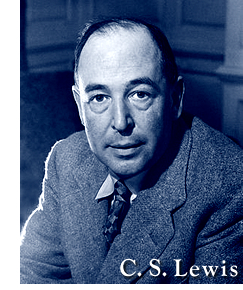
C.S. Lewis Daily – Today’s Reading


If you asked twenty good men today what they thought the highest of the virtues, nineteen of them would reply, Unselfishness. But if you had asked almost any of the great Christians of old, he would have replied, Love. You see what has happened? A negative term has been substituted for a positive, and this is of more than philological importance. The negative idea of Unselfishness carries with it the suggestion not primarily of securing good things for others, but of going without them ourselves, as if our abstinence and not their happiness was the important point. I do not think this is the Christian virtue of Love. The New Testament has lots to say about self-denial, but not about self- denial as an end in itself. We are told to deny ourselves and to take up our crosses in order that we may follow Christ; and nearly every description of what we shall ultimately find if we do so contains an appeal to desire. If there lurks in most modern minds the notion that to desire our own good and earnestly to hope for the enjoyment of it is a bad thing, I submit that this notion has crept in from Kant and the Stoics and is no part of the Christian faith. Indeed, if we consider the unblushing promises of reward and the staggering nature of the rewards promised in the Gospels, it would seem that Our Lord finds our desires not too strong, but too weak. We are half-hearted creatures, fooling about with drink and sex and ambition when infinite joy is offered us, like an ignorant child who wants to go on making mud pies in a slum because he cannot imagine what is meant by the offer of a holiday at the sea. We are far too easily pleased.

From The Weight of Glory

Compiled in A Year with C.S. Lewis

Moody Global Ministries – Today in the Word – DESIGNED IN THE WOMB

Read Psalm 139:13-18

While today ultrasound technology is often associated with viewing a child while still in the womb, bats and porpoises have always used ultrasound to locate their food and predators. In addition to its use in prenatal care, scientists, inventors, and doctors also use sonar and ultrasound to detect icebergs below the surface of the ocean, to determine the height of the ionosphere, and to diagnose brain tumors.

In today’s psalm, David again talks about God’s intimate knowledge of us, but this time, he says that God sees us within the womb. The passage implies that conception is not merely a biological function but the creative working of God Himself (v. 13). David credits God with creating not just our physical features but our “inmost being.” Our identity, our looks, and even our personality have been designed by God.

Here David introduces the concept of God’s omniscience. God has the ability to see further than an ultrasound. He not only saw our physical frame in the womb but was also able to look at the details of our life. Each moment of our lives are “written” in God’s book (v. 16). Some may question whether this means we have no individual choice. But really it suggests that God has foreknowledge of the choices we will make, and He has a special purpose for each of us.

God knows our successes and failures. He knows when we will rejoice and when we will weep. Because of that, this psalm conveys an intimacy with God that surpasses all other relationships. David exclaims over his feelings toward God in verses 17 and 18. God’s thoughts are “precious” to him—yet they also escape his ability to comprehend them. God is both far beyond our scope and intimately acquainted with us, His creation.

APPLY THE WORD

From the very beginning, your life was and is precious to God. As you spend time in prayer today, thank God that He knows you so intimately. Rest in the knowledge that your days are written in His book. Throughout every event in your life, God knows you and will be with you each step of the way.


http://www.todayintheword.org

Kids 4 Truth International – God Loves the World

“For God so loved the world, that he gave his only begotten Son, that whosoever believeth in him should not perish, but have everlasting life.” (John 3:16)

Victoria put her arms around Aunt Grace and hugged her as hard as she could. “It’s so hard to say good-bye, Aunt Grace,” she said. “I wish you could stay with us instead of going back to Africa.”

Aunt Grace set her suitcase on the floor and knelt down to look right into Victoria’s eyes. “It’s hard for me to say good-bye too, Torybell,” she said. Torybell was the special name that only Aunt Grace called her. “I love you, and I’ve had so much fun staying at your house and playing with you. But you know something? I love Jesus even more. And Jesus loves the people in Cameroon that I work with. He wants them to have the Bible in their own language. That’s why I have to go back. Jesus has called me to learn their language and translate His Word so they can read it and know of His love. And when Jesus calls, I have to follow. You understand, don’t you?”

Victoria nodded. She closed her eyes to squeeze back the tears, and Aunt Grace gave her one more quick hug. “I’ll pray for you, Aunt Grace.”

“Thanks, Torybell.”

Victoria stood next to her mom at the window of the airport, and they watched until Aunt Grace’s plane was out of sight. Victoria looked up at her mom. “I’m going to pray every day for those people in Cameroon,” she said.

“Let’s make a point to pray together–every day,” said Mom. “We’ll pray that they’ll read the Bible Aunt Grace is putting into their language and that God will save them.”

Victoria was quiet as they walked to the car. Maybe someday I’ll be like Aunt Grace and live in another part of the world, she thought. It would be hard to say good-bye to Mom and Dad. But it would sure be great to tell the world about God’s love.

God loves the world and wants the whole world to know of His salvation.

My Response:

» Am I praying for God to save people around the world?

» How can I show God that His love for the whole world is important to me?


http://kids4truth.com/home.aspx

Charles Stanley –How to Handle Our Fear


Isaiah 41:10-13

A believer is captive to fear when he or she chooses to be. Some people actually organize their life (or at least portions of it) around avoiding anxiety-producing ideas or situations. But Christians do not have to live in that kind of bondage, because trust in God is the key to our shackles.

At some time or other, apprehension enters the life of every believer, but it need not remain long. To confront our fear and overcome it, we must first acknowledge its presence. If we ignore anxiety or try to work around it, we will likely step out of God’s will.

After we have admitted to being afraid, the next thing we must do is identify the nature of our fear. Sometimes we feel anxious without knowing exactly why, but the Holy Spirit can reveal what is holding us captive.

The third step is to begin the process of defeating fear’s hold on our life. And there’s no better tool for breaking chains than the “sword of the Spirit”—the Bible (Eph. 6:17). God’s Word speaks to our individual fears. Use a concordance to find specific practical help. Or, for more general encouragement, turn to Isaiah 41:10. This is a very important promise and, therefore, a helpful verse to memorize.

When I feel anxious, I take Isaiah 41:10 back to God by praying, “Here’s what You said, and I believe You because You never lie. So I will trust You, Lord, to work in this situation.” Trusting God is the only way to be free from fear. So decide whether you are going to believe Him and His promises or be shackled by your emotions.

Bible in One Year: Deuteronomy 33-34


http://www.intouch.org/

Our Daily Bread — Of Love and Old Shoes

Read: Psalm 139:1–12

Bible in a Year: Numbers 31–33; Mark 9:1–29

Before a word is on my tongue you, Lord, know it completely.—Psalm 139:4

Sometimes my wife and I finish each other’s sentences. In over thirty years of marriage we’ve become increasingly familiar with the way the other thinks and speaks. We may not even have to finish a sentence at all; just a word or a glance is enough to express a thought.

There’s comfort in that—like an old pair of shoes you continue to wear because they fit so well. Sometimes we even refer to each other affectionately as “my old shoe”—a compliment that might be difficult to understand if you didn’t know us well! Through the years our relationship has developed a language of its own, with expressions that are the result of decades of love and trust.

It’s comforting to know that God loves us with a deep familiarity. David wrote, “Before a word is on my tongue you, Lord, know it completely” (Ps. 139:4). Imagine having a quiet conversation with Jesus where you’re telling Him the deepest matters of your heart. Just when you’re struggling to get the words out, He gives you a knowing smile and expresses exactly what you couldn’t quite say. How good it is to know that we don’t have to get our words just right to talk to God! He loves us and knows us well enough to understand. —James Banks

You know all about me, Lord, and You love me. Thank You for understanding me completely! Please help me to love You and follow You today.

God looks past our words to our hearts.

INSIGHT: Psalm 139 contains insight into the nature and character of God. In verses 1-6 we see that God is omniscient, which means He is “all knowing.” This knowledge is “wonderful” and too high to attain to. In verses 7-12 we are challenged to consider the omnipresence of God—that He is always everywhere. This God deserves the worship of a creation bound by the limitations of time and space. In verses 13-18 the song teaches of God’s omnipotence—that He is all-powerful. His power is seen in His ability to create us (v. 13), His sovereign rule over creation (v. 16), and His constant care (vv. 17-18). Since God is fully aware of everything in your life, what about that makes you thankful? What causes concern? Do you feel comforted or threatened by God’s never-leaving presence? What impact does God’s all-powerful character have on how you view life’s challenges? Bill Crowder


http://www.odb.org

Joyce Meyer – Self-Control


And in [exercising] knowledge [develop] self-control, and in [exercising] self-control [develop] steadfastness (patience, endurance), and in [exercising] steadfastness [develop] godliness (piety). —2 Peter 1:6

As believers in Jesus Christ, God has given us a new nature, but at the same time, we also have to deal with the old nature. When we allow the old nature to rule, we will follow our feelings instead of operating in self-control. Self-control is a fruit of our new nature, and all we need to do is develop it. We can develop self-control by using it, just as we can develop muscles by using them.

Exercising self-control is a form of freedom. You don’t have to do what you feel like doing. You’re free to do what you know is wise. Discipline and self-control will help you be the person you want to be. Don’t ever say, “I just don’t have any self-control,” because the truth is that you do have it, but it needs to be exercised in order to be strong.

Power Thought: I exercise self-control.

From the book the book Power Thoughts Devotional by Joyce Meyer


http://www.joycemeyer.org

Campus Crusade for Christ; Bill Bright – Love Means Obedience

“The one who obeys Me is the one who loves Me; and because he loves Me, My Father will love him; and I will too, and I will reveal myself to him” (John 14:21).

A Campus Crusade staff member handed me a copy of Sports Illustrated with a cover picture of the Heisman Trophy winner.

Proudly, he said, “I would like to introduce you to your great-grandson.”

When I asked him what he meant, he explained, “You led Jim to Christ, Jim led me to Christ, and I led Steve [the Heisman Trophy winner] to Christ.”

What a joy to see God’s wonder-working power in this chain reaction of spiritual multiplication.

There is something exciting and wonderfully rewarding about seeing one whom you have discipled grow and mature, and lead others to Christ and disciple them, generation after generation. Such an experience often brings even more fulfillment than you derive from your own personal ministry of introducing others to the Lord Jesus.

For example, I have always taken special delight and pleasure whenever Vonette, our sons Zachary and Bradley, or many others whom I have discipled through the years, do something special for the Lord – much more than as though I were doing it personally.

By investing your life in helping others to receive Christ and grow in the Lord, you will in turn be helping still others to experience the abundant life which only true disciples of the Lord Jesus Christ experience. Today’s verse equates love for Christ with obedience to His commands. Two of the most important commands our Lord has given to His followers, which will result in His revealing Himself to us, are “Follow Me, and I will make you fishers of men” (Matthew 28:19, NAS). He is saying to us, “Teach the things that I have taught you.”

Bible Reading: John 14:22-26

TODAY’S ACTION POINT:  Today I will seek to obey my Lord by telling others about Him and by seeking to disciple others who have already committed their lives to Christ. I have the assurance that my Lord will manifest Himself to me in special ways as I walk in faith and obedience.


http://www.cru.org

Moody Global Ministries – Today in the Word – UNDERSTOOD BY GOD

Read Psalm 139:1-12

German physicist Wilhelm Roentgen discovered the X-ray in 1895, and the first X-ray image he created was of his wife’s hand on a photographic plate. His wife was startled by the image, and is quoted as saying, “I have seen my death.” Roentgen’s discovery captivated the world and transformed diagnosis and treatment in medicine. He was awarded the first Nobel Prize for physics in 1901.

Certainly doctors have the ability to know us in an intimate way, to look beneath our clothing and our skin to see what is happening to our hearts, lungs, and internal organs. But this passage declares that God, who designed us, knows us better than anyone else. He is not only acquainted with our physical being, He knows our actions (v. 3) and even the words we will speak (v. 4). Each step we take is known by God. There is nowhere we can go that will be out of His reach.

The psalmist, King David, declares that God not only knows us as individuals, He lays his hand upon us and “hems” us in from behind and before (v. 5). The word hem means to guard or to border us. So, not only does God go before us as we move through life, He is also behind us, no matter where our path might lead.

For David, realizing God’s omniscience and omnipresence meant knowing the actions He did would be seen by God. There was no hiding from the Almighty who chose David for who He was on the inside and then loved Him despite His failures.

It is impossible for us to hide from God. Just as Adam and Eve discovered in the Garden of Eden when they tried to escape God’s notice, God sees us completely (v. 7). We are exposed, naked before Him. Nothing we think, do, or say is hidden from God.

APPLY THE WORD

Take time to dwell on this amazing idea, and then read this psalm as part of your prayers to God today. The Lord knows what is in your mind and heart: the good, the bad, and the ugly. God knows what we need to confess to Him even before we say it. Therefore we can bring Him our praise, our confession, and our requests.


http://www.todayintheword.org

Kids 4 Truth International – Jesus Has Conquered Death

“As the children are partakers of flesh and blood, [Jesus] also himself likewise took part of the same; that through death he might destroy him that had the power of death, that is, the devil; And deliver them who through fear of death were all their lifetime subject to bondage.” (Hebrews 2:14-15)

Trent jerked up into a sitting position, suddenly wide awake. His heart pounded, and he was breathing hard and fast as if he had been running. “It was just a bad dream,” he told himself, rubbing his eyes. “Just another dream.”

Ever since his grandfather’s funeral last week, Trent had had a bad dream almost every night. He would wake up thinking about Grandpa lying so still and silent in that big box. He would think about the quiet cemetery where they had buried the big box in the ground. And then he would start to get scared. What if his mom or his dad died too? What if he died? What would it be like?

Have you ever felt like Trent? The Bible tells us that the fear of death is something all humans have in common. But the Bible also says that we do not have to be slaves to this fear.

Would you be afraid of something that had no power to hurt you–like a dead leaf or a falling snowflake? Of course not. Did you know that Jesus Christ has made death just as powerless as these things for the Christian? Hebrews 2 tells us that when Jesus died on the cross, He destroyed the power of death. He destroyed Satan’s ability to keep us living in the fear of death all of our lives. He died to deliver us, not only from slavery to sin, but also from slavery to fear.

Continue reading Kids 4 Truth International – Jesus Has Conquered Death

Streams in the Desert for Kids – We Could Make Beautiful Music


2 Corinthians 11:2

A young man carefully held his kora harp in his hands. “If I were marooned on a desert island, the one thing I’d want with me is this harp,” he said.

The kora harp is a West African instrument and has twenty-one strings. Each string is attached to a tuning peg on a long neck of the harp. The young man held the instrument between his knees and, with his hands on two handholds on either side of the neck, plucked the strings to make a beautiful sound. As he plucked the strings, he often stopped to tighten or loosen one of those twenty-one tuning pegs. He knew exactly which string was out of tune. Most who listened had no idea there was anything wrong with the string, but the young man who knows his instrument well, and who is a master at playing this instrument, knew the sound it made could be better than it was. He loved his harp. He understood it and he wanted its music to be perfect.

That’s the way God is with us. He loves us so much, just like the kora harpist loves his instrument. He knows all about us. He knows when we are living a true life and when we are faking it. He knows what our lives can be if we let him correct us and tune us so we make music that is harmonious with his will for our lives. And he will never leave us. He’ll be close by to help us, always.

Dear Lord, Help me to let you change me into who you want me to be. I want to make beautiful music with my life. Let my life be like a love song to you. Tune me up so no ugly or unkind words come from my mouth. Thank you, Father, for loving me so much. Amen.

Charles Stanley –Facing Our Fears


Psalm 91:1-16

Fear creeps into our life and wraps itself around our mind and heart. This can happen so subtly that we don’t recognize how anxiety has affected our decision making, our health, and our spirit. Ultimately, many people miss God’s best because apprehension keeps them from stepping out in faith to do His will.

The fear may seem unimportant at first, but left unchecked, it begins to interfere with our life. Physically, we may experience tension that keeps us from relaxing and enjoying the day’s pleasures. Anxiety can lead to health problems, especially if it is constant. Mentally, our mind may be clouded by fear, which can limit what we are willing to think about and consider. If that should happen, our dreams and creativity will almost certainly be stifled.

But the mental paralysis that often accompanies unchecked fear is most dangerous to our spiritual life. Unless it is entrusted to God, a single fear can easily rule over us, coloring our attitude with a general sense of disquiet. We become indecisive, worried that we will make the wrong choice. So we are trapped, trying to avoid anything that might make us anxious. Consequently, we stop growing as Christians and are usually hindered in our work and family life, too.

If you allow yourself to be paralyzed by worry, you cannot be placing complete trust in God and following Him wholeheartedly. Make an honest assessment of your life, and ask the Lord to reveal places where fear is holding you back.

Bible in One Year: Deuteronomy 31-32


http://www.intouch.org/

Our Daily Bread — Two Portraits

Read: John 16:19–24

Bible in a Year: Numbers 28–30; Mark 8:22–38

Now is your time of grief, but I will see you again and you will rejoice, and no one will take away your joy.—John 16:22

Clutching two framed photographs, the proud grandmother showed them to friends in the church foyer. The first picture was of her daughter back in her homeland of Burundi. The second was of her grandson, born recently to that daughter. But the daughter wasn’t holding her newborn. She had died giving birth to him.

A friend approached and looked at the pictures. Reflexively, she reached up and held that dear grandmother’s face in her hands. All she could say through her own tears was, “I know. I know.”

And she did know. Two months earlier she had buried a son.

There’s something special about the comfort of others who have experienced our pain. They know. Just before Jesus’s arrest, He warned His disciples, “You will weep and mourn while the world rejoices.” But in the next breath He comforted them: “You will grieve, but your grief will turn to joy” (John 16:20). In mere hours, the disciples would be devastated by Jesus’s arrest and crucifixion. But their crushing grief soon turned to a joy they could not have imagined when they saw Him alive again.

Isaiah prophesied of the Messiah, “Surely he took up our pain and bore our suffering” (Isa. 53:4). We have a Savior who doesn’t merely know about our pain; He lived it. He knows. He cares. One day our grief will be turned into joy. —Tim Gustafson

Lord, thank You for going to the cross for us. We certainly know trouble in this world, but You overcame the world and took our sin and pain for us. We look forward to the day when our sorrows will be turned into joy and we see You face to face.

When we put our cares into His hands, He puts His peace into our hearts.

INSIGHT: It was necessary for Jesus, who is fully God, to be made in every respect like us—fully human—so that He could offer a sacrifice that would take away the sins of the people. Only by becoming a human being could He die, and only by dying could He break the power of the devil, who had the power of death. While on earth, the Lord Jesus “walked in our shoes” and, therefore, He fully knows and understands us. We are now to walk in His “shoes” and imitate His example of compassion and care. “In your relationships with one another,” Paul tells us, “have the same mindset as Christ Jesus” (Phil. 2:5). How can you bring comfort to others today by walking in Jesus’s shoes? Sim Kay Tee


http://www.odb.org

Ravi Zacharias Ministry – Questions of Power

A story told in the Hebrew scriptures offers a dramatic interplay of manipulation and honor, kings and kingdoms, power and powerlessness. It is the story more commonly known as “Daniel and the Lion’s Den.” But this title, accurate though it is in terms of the dramatic climax, actually misses the main actors entirely. Ultimately, the story is a depiction of power and weakness at play in two very different kingdoms and communities. On one side stands Darius, the mighty king and ruler of the people and nations, powerful sovereign of the powerful majority. On the other side is the God of Daniel, king of a community in exile, the ruler of a minority people whose city lies in ruins. The question of sovereignty seems as though it has already been answered quite definitively.

Most of us are not familiar with the devastating encounter of the powerlessness of exile and the forcible display of the powers that created it. Nonetheless, every aspect of our lives is touched by issues of power and weakness. The question of control and power is common to our relationships, communities, politics, business, education, and religion. Unfortunately, our common experience of the struggle is not to say we are well or healthily adjusted to it, far from it. Of course, it is easiest for those who actually hold any given power to be the most unaware of the dynamics of powerlessness upon others. For others, the struggle to be in control, to challenge authority, to make a name for ourselves, is largely thought of as a dynamic that is outgrown with adulthood. So in the face of authority issues, we say things like, “Teenagers will be teenagers!” Or we diagnose the battle to be in control as “middle child syndrome” or “terrible twos,” all the while failing to see our own struggle with similar dynamics. Still for others, questions of power involve wondering if they will ever have a voice, if anyone with power is listening, or if they have been forgotten and silenced indefinitely. Admittedly, to be conscious of the struggle is far better than being complacent about the question of power in general.

Continue reading Ravi Zacharias Ministry – Questions of Power

Joyce Meyer – The Foundation of Love


See what [an incredible] quality of love the Father has given (shown, bestowed on) us, that we should [be permitted to] be named and called and counted the children of God! And so we are! The reason that the world does not know (recognize, acknowledge) us is that it does not know (recognize, acknowledge) Him.—1 John 3:1

Many people fail at marriage because they don’t love themselves, and therefore they have nothing to give in the relationship. They spend most of their time trying to get from their spouses what only God can give them, which is a sense of their own worth and value.

In my case, although I didn’t even know what love was, I married a boy of nineteen simply because I was afraid no one would ever want me. He had problems of his own and did not really know how to love me—so the pattern of pain in my life continued. I was repeatedly hurt in that relationship, which ended in divorce after five years.

Receiving the free gift of God’s unconditional love is the beginning of our healing, and the foundation for our new life in Christ. We cannot love ourselves unless we realize how much God loves us, and if we don’t love ourselves, we cannot love other people. We cannot maintain good, healthy relationships without this foundation of love in our lives.

Lord, I am amazed that You love me and desire me to be Your child. I receive Your love today and choose to love myself. Amen.

From the book The Confident Woman Devotional: 365 Daily Devotions by Joyce Meyer.


http://www.joycemeyer.org