Kids 4 Truth International – God’s Strong Arm

“For they got not the land in possession by their own sword, neither did their own arm save them: but thy right hand, and thine arm, and the light of thy countenance, because thou hadst a favour unto them.” (Psalm 44:3)

Do you like to have strong friends? Strong friends can really come in handy. A strong friend can help you lift something heavy. A strong friend can hit the ball really far for your team. A strong friend can stand-up for you if a bully is mean to you.

In Psalm 44, the Hebrew songwriter remembers when the Lord God brought the Hebrews into the Promised Land. The songwriter says in Psalm 44:3 that the Hebrews were not able to win the battles by themselves, but God’s strong right arm won the battles for them.

Does God literally have an arm? No, not really. We know that God is a spirit (John 4:24), and a spirit does not have arms or legs that we can actually see. The songwriter is using a word picture to say that the Lord God of Israel is very strong. Think about it. When you see someone who is very strong, what do notice first? Their arms. Sometimes kids want to show off their muscles. Do you flex your leg to show off your muscles? No! You would probably flex your arms to show how strong you are. When the songwriter says that God’s “arm” saved the Hebrews, he is using a word picture to express that God was stronger than all of Israel’s enemies.

And God is stronger than your enemies, too. The devil is one of our enemies, because he wants us to disobey God. But God is stronger than the devil! Sometimes other people want you to disobey God, and God wants to help you be strong so that you will obey Him. Every person who is trusting in Jesus for salvation is sometimes still tempted to disobey God. God is stronger than any temptation a child of God might face. Just as God defeated the Hebrews’ enemies a long time ago, He wants to defeat our spiritual enemies today. And He can, because God is very strong!

God is stronger than anyone or anything.

My Response:

» Have I been relying on my own strength to help me face a problem?

» What are some “battles” I’m fighting right now that I should give over to God to fight for me?

» How can I show others my faith that my God is stronger than anyone or anything


http://kids4truth.com/home.aspx

Moody Global Ministries – Today in the Word – INTERCEDING FOR FORGIVENESS

Read Ezra 10:1-12

In January 1907, in what is now North Korea, more than one thousand Christians met for a worship service. During the prayer time, many became convicted of sins they had committed against one another. The subsequent outpouring of confession, which spilled over into the surrounding community, was the beginning of a season of growth and revival in the Pyongyang church.

Today’s passage recounts when God’s covenant people fell under conviction of sin. After leaving Babylon, the Israelite exiles began to rebuild their lives in Jerusalem. But almost immediately, they learned that the Israelites who had arrived ahead of them sinned against God by intermarrying with their ungodly neighbors (Ezra 9:1–2).

Ezra, as the priest of God’s people, took the lead in pouring out prayers of confession for this widespread sin in his community. So, too, church leaders have a responsibility to intercede for the members of their churches. When sins like pride, racism, and spiritual apathy invade our congregations, our leaders must publicly confess them and ask God for forgiveness.

Not only did Ezra make intercession, prayers of confession were also in the hearts of “a large crowd of Israelites— men, women and children” (v. 1). In an episode similar to the days of Josiah, when all the people humbled themselves after the long-lost book of the law was read (2 Chron. 34:8–33), Ezra’s entire community gathered to repent. When our churches are troubled by quarreling, our love for outsiders is weak, or our zeal for worship grows dim, we should gather to pray for forgiveness.

Having each voiced our confession, we join together to pray that we might all be restored to fellowship with our holy God and with one another.

APPLY THE WORD

One account of the Pyongyang revival says: “All through the city men were going from house to house, confessing to individuals they had injured, returning stolen property and money, not only to Christian but to heathen as well, till the whole city was stirred.” Ask God to give you and the members of your community a spirit of prayerful repentance.


http://www.todayintheword.org

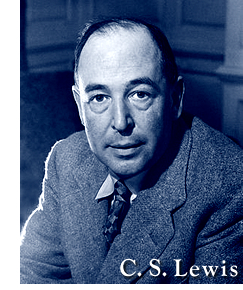
C.S. Lewis Daily – Today’s Reading – On God


It is always shocking to meet life where we thought we were alone. “Look out!” we cry, “it’s alive.” And therefore this is the very point at which so many draw back—I would have done so myself if I could—and proceed no further with Christianity. An “impersonal God”—well and good. A subjective God of beauty, truth and goodness, inside our own heads—better still. A formless life- force surging through us, a vast power which we can tap—best of all. But God Himself, alive, pulling at the other end of the cord, perhaps approaching at an infinite speed, the hunter, king, husband—that is quite another matter. There comes a moment when the children who have been playing at burglars hush suddenly: was that a real footstep in the hall? There comes a moment when people who have been dabbling in religion (“Man’s search for God”!) suddenly draw back. Supposing we really found Him? We never meant it to come to that! Worse still, supposing He had found us!

From Miracles
Compiled in Words to Live By

Charles Stanley –Our Predestined Appointment

Revelation 20:11-15

The moment we were born, a countdown began on our life. Every tick of the clock brings us one step closer to our inescapable appointment with the Lord. Each of us will stand before Him as we approach our eternal destination.

Tragically, there will be shocking disappointment for some. Jesus Himself warned, “Many will say to Me on that day, ‘Lord, Lord, did we not prophesy in Your name … ?’ And then I will declare to them, ‘I never knew you; depart from Me, you who practice lawlessness’” (Matt. 7:22-23).

The only way to eternal life is through faith in the Lord Jesus Christ. Truly, our sin has separated us from the Father. But God’s Son provided the solution to this universal problem: Christ lived a perfect life and then died a sinner’s death on the cross at Calvary to pay the penalty each of us owed (Rom. 6:23). After three days, He rose from the grave, defeating death and evil. By accepting His sacrifice on our behalf, we no longer have to live apart from God.

To receive this amazing gift, we must simply believe in Jesus and what He did. As a result, we become new creations (2 Corinthians 5:17), are adopted as God’s children (Eph. 1:5), and enter into a never-ending personal relationship with our Father.

Do you have confidence about where you will spend eternity? You may assume you have time to figure out this important issue, but let me give you some wise advice: Don’t wait another minute to settle the matter, because later may never come. Repent of your sin today, and follow Jesus.

Bible in One Year: 1 Kings 20-22


http://www.intouch.org/

Our Daily Bread — The Gift of Giving

Read: Luke 3:7–14

Bible in a Year: 2 Samuel 12–13; Luke 16

Each of you should give what you have decided in your heart to give, not reluctantly or under compulsion.—2 Corinthians 9:7

A pastor breathed life into the phrase “He’d give you the shirt off his back” when he gave this unsettling challenge to his church: “What would happen if we took the coats off our backs and gave them to the needy?” Then he took his own coat and laid it at the front of the church. Dozens of others followed his example. This was during the winter, so the trip home was less comfortable that day. But for dozens of people in need, the season warmed up just a bit.

When John the Baptist roamed the Judean wilderness, he had a stern warning for the crowd that came to hear him. “You brood of vipers!” he said. “Produce fruit in keeping with repentance” (Luke 3:7-8). Startled, they asked him, “What should we do then?” He responded with this advice: “Anyone who has two shirts should share with the one who has none, and anyone who has food should do the same” (vv. 10-11). True repentance produces a generous heart.

Because “God loves a person who gives cheerfully” (nlt), giving should never be guilt-based or pressured (2 Cor. 9:7). But when we give freely and generously, we find that it truly is more blessed to give than to receive. —Tim Gustafson

Lord, thank You for the many ways You bless us. Forgive us for so often taking Your goodness for granted. Show us what we have that we might use to bless someone else today.

Whoever refreshes others will be refreshed. Proverbs 11:25

INSIGHT: God reveals His compassion for the poor throughout the Scriptures. In Psalm 72:13, we read, “He will take pity on the weak and the needy and save the needy from death.” The people were to join with God in bringing His compassion to the poor. In the New Testament, Jesus repeatedly expresses the Father’s concern for the poor by portraying them as accepted by the Father (Mark 12:42; Luke 16:20) and stating that His messianic mission, in part, was confirmed by His ministry to the poor (Matt. 11:4-5). Paul picks up the baton of this challenge by commending the churches of Macedonia and Achaia for their financial support of the poor in Jerusalem (Rom. 15:26), while James warns that the poor must not be disregarded because of their socioeconomic status (James 2:2-6).

If our God and His Son are this concerned for the poor, how can we represent that love by caring for those in need? Bill Crowder


http://www.odb.org

Ravi Zacharias Ministry – Friends of the Cause

A popular group on Facebook hosted a collection of people very much opposed to the destruction of an historic fountain in downtown Copenhagen. The name of the group could be translated: “No to the Demolition of the Stork Fountain.” Its members’ outrage filled its Facebook wall. The creator of the group urgently spoke of the need for action, sounding the call to join the cause and get involved. Almost overnight, participation in the cause went viral, members joining and getting the word out to their friends. Click here, forward there, speak out.

Ironically (and more ironic than activism that only requires joining a Facebook group), the cause was completely fictitious. The creator of the page, Anders Colding-Jørgensen, is a professor of Internet psychology who was conducting a social experiment on activism and online behavior. Sadly, had these outraged activists searched just a bit more for information, they would have read on the page itself that it was an experiment and that, in fact, Anders knew of no plans to destroy the fountain. Yet by the end of the experiment, more than 27,000 people had joined the group with a click of outrage and a desire to join the cause.(1)

Anders’ experiment is one example of what cultural commentators call “slacktivism,” online activism that essentially leads to nothing on the part of the participant and no real effect on the cause itself. Slacktivism offers the feeling of doing good without actually having done anything at all. Though not all online causes can be classified as such, they are appealing because they are so easy to join—though we often seem unconcerned with whether they actually accomplish something. It’s simply one more click, one more forwarded email, one more status update; it won’t require writing long letters, standing in lines, or marching the streets. No one will ask you to do anything, and you can feel good about your brief participation. Of course, we may very well be impassioned slacktivists (the social media vitriol over the demolition of the Stork Fountain or the acquittal of Casey Anthony was alarming), but they are really just words. Other social media vitriol, like that after the killing of Cecil the Zimbabwean Lion, escalates to worrisome tirades.

Continue reading Ravi Zacharias Ministry – Friends of the Cause

Joyce Meyer – Decide to Believe

Consider it wholly joyful, my brethren, whenever you are enveloped in or encounter trials of any sort or fall into various temptations. Be assured and understand that the trial and proving of your faith bring out endurance and steadfastness and patience. But let endurance and steadfastness and patience have full play and do a thorough work, so that you may be [people] perfectly and fully developed [with no defects], lacking in nothing.—James 1:2-4

Too often people stare at me with a blank look when I urge them to decide to believe. It’s as if I’m asking them to do something they can’t do. Faith comes from hearing the Word of God (see Romans 10:17), but it also involves a decision.

We enter into a relationship with God through believing in Jesus Christ, but that’s only the beginning.

Believing doesn’t end there. As I understand the realm of the Spirit, if we follow the Lord, we live with a growing faith. That means we learn to believe for bigger things. We learn to trust God for things we would never have thought of in our earliest Christian days.

When we become Christians, the Bible says we are adopted into the family of God: . . . but you have received the Spirit of adoption [the Spirit producing sonship] in . . . which we cry, Abba (Father)! Father! (Romans 8:15b).

That’s the beginning. That’s also where too many Christians stop. The Spirit keeps reaching for your hands so He can pull you forward. That’s when you must decide to believe—or you resist and stay exactly where you are in your Christian experience.

Read the verse at the beginning of this topic. It says your faith will be tested, but you must hold onto it and move forward. The testing may come when the devil attempts to make you doubt the promises God has given you.

Continue reading Joyce Meyer – Decide to Believe

Campus Crusade for Christ; Bill Bright – All Men Know What God Wants Them to Do

“But this is the new agreement I will make with the people of Israel, says the Lord: I will write my laws in their minds so that they will know what I want them to do without My even telling them, and these laws will be in their hearts so that they will want to obey them, and I will be their God and they shall be my people” (Hebrews 8:10).

Harry boasted that he was an atheist, that he could not believe in God – that there was no such thing as right and wrong. But as we counseled together, it became apparent that he lived a very immoral life, and the only way he could justify his conduct was to rationalize away the existence of God.

This he was unable to do. As God’s Word reminds us, His law is written in our minds, so that we will know what He wants us to do without His even telling us.

A very honest, frank, straightforward counseling session helped Harry to see that he was living a lie, a life of deceit and shame. All of this resulted in making him a very miserable person until he surrendered his life to Christ and became an honest, authentic, transparent disciple of the Lord Jesus Christ.

The Bible says that the mind of natural man is essentially disgusting (Ezekiel 23:17-22), despiteful (Ezekiel 36:5), depraved (Romans 1:28), hardened (2 Corinthians 3:14), hostile (Colossians 1:21) and defiled (Titus 1:15).

In contrast, the Scriptures show that the mind of the Christian is willing (1 Chronicles 28:9), is at peace (Romans 8:6), is renewed (Romans 12: 2), can know Christ’s mind (I. Corinthians 2:16) and can be obedient (Hebrews 8:10).

Our minds are susceptible to the influence of our old sin- nature and, as such, can pose some dangers to us. As soon as we get out of step spiritually with the Holy Spirit and get our focus off the Lord, our minds begin to give us trouble.

Bible Reading: Hebrews 8:7-13

TODAY’S ACTION POINT:  Claiming by faith the help of the Holy Spirit, I will discipline my mind to think God’s thoughts as expressed in His holy, inspired Word. In this way, I can be assured of knowing and doing His perfect will.


http://www.cru.org

Max Lucado – Our Best Days are Ahead


Perhaps you can relate to the deflated little fellow I saw in an airport terminal. Everything about the dad’s expression said, “Hurry up! We have to run if we’re going to make the connection.” Can the little fellow keep up? Mom could. The big brothers could. But the little guy? He tried to match his parents’ pace, but he just couldn’t. Can you relate? Sometimes the challenge is just too much. It’s not that you don’t try. You just run out of fight.

The story of Joshua in the Bible dares us to believe our best days are ahead of us. A life in which the Bible says we are anxious for nothing, we are praying always; a life in which Paul says, we are giving thanks to God the Father through Him. (Philippians 4:6). We may stumble but we don’t collapse. God has a promised land for us to take!

From Glory Days

For more inspirational messages please visit Max Lucado.

Home

Denison Forum – Rob Gronkowski for WH Press Secretary?

Rob Gronkowski is many things. Selected four times as a Pro Bowl and All-Pro player, he is the first tight end to lead the NFL in receiving touchdowns. He is also known for his pranks. For instance, after quarterback Tom Brady’s Super Bowl jersey was stolen and then recovered, Gronkowski stole it from him during opening day ceremonies for the Boston Red Sox at Fenway Park.

Now he might be adding White House Press Secretary to his list of achievements. Gronkowski and many of his New England Patriots teammates were in Washington this week to be honored for their latest Super Bowl win. He dropped by a press briefing being conducted by Press Secretary Sean Spicer, a well-known Patriots fan. Gronkowski emerged from a door behind the podium and asked, “Sean, need any help?” Spicer grinned and replied, “I think I got this but thank you.”

Even though you probably didn’t make Time magazine’s list of the “100 Most Influential People” in the world, it’s still a good day for good news in the news. For instance, NASA tells us that an asteroid the length of six football fields came closer to us than at any time in four hundred years but nonetheless missed our planet. Research indicates that happiness is crucial to learning for teenagers, the function of a demonstrated connection between well-being, belonging, and achievement. Even if you’re not happy, you can be happy about your lack of happiness: research shows that women who are “less cheerful and more proud” at work are more likely to be promoted to management positions.

Joy is a frequent theme of Scripture. We are taught to “rejoice in hope” (Romans 12:12) and to “count it all joy, my brothers, when you meet trials of various kinds” (James 1:2). We can do this when we are “filled” with the Spirit (Ephesians 5:18) because joy is one of the “fruit of the Spirit” (Galatians 5:22).

Continue reading Denison Forum – Rob Gronkowski for WH Press Secretary?

Charles Stanley –Seeking Guidance: The Pattern


Matthew 7:7-8

As we’ve seen, there is a pattern to seeking God’s guidance. The first step—cleansing—is actually important throughout the entire process. In fact, all but one of the remaining steps have no particular order and can fit together in many ways.

The exception is surrender. The Lord cannot share His plans for our life until we are committed to following Him no matter what. He certainly knows whether we are seeking direction in order to obey or merely to consider what He suggests. Therefore, surrender must precede even our prayers for guidance. First John 5:14-15 says that the Lord hears and grants our petitions when we ask according to His will. It’s possible to make requests that are not of God, but believers who yield themselves will find their way to the right request and the best possible answer.

Most of the time, God guides believers to an answer through His Word, which is why I encourage people to meditate upon it (Psalm 1:2-3). Our reading can take us to the very passage that deals with our situation or reveals a principle that applies. Sometimes God speaks a crystal-clear message to a person’s heart that nobody else would glean from those particular verses. The key is to believe that the Lord is going to guide you, and to live out that faith (Mark 11:24).

The process of seeking guidance is often slow, so we must wait. Running ahead or manipulating circumstances can be a costly mistake. Our omniscient, sovereign God acts on behalf of those who wait for Him (Isa. 64:4). Those who seek direction will receive—that’s a promise (Matt. 7:7-8).

Bible in One Year: 1 Kings 18-19


http://www.intouch.org/

Our Daily Bread — Letting Go

Read: Genesis 12:1–9

Bible in a Year: 2 Samuel 9–11; Luke 15:11–32

The Lord had said to Abram, “Go . . . to the land I will show you.”—Genesis 12:1

For our wedding anniversary, my husband borrowed a tandem bike so we could enjoy a romantic adventure together. As we began to pedal on our way, I quickly realized that as the rider on the back my vision of the road ahead was eclipsed by my husband’s broad shoulders. Also, my handlebars were fixed; they didn’t affect the steering of our bike. Only the front handlebars determined our direction; mine served merely as support for my upper body. I had the choice to either be frustrated by my lack of control or to embrace the journey and trust Mike would guide us safely on our route.

When God asked Abram to leave his homeland and family, He didn’t offer much information concerning the destination. No geographic coordinates. No description of the new land or its natural resources. Not even an indication of how long it would take to get there. God simply gave the instruction to “go” to the land He would show him. Abram’s obedience to God’s instruction, despite lacking the details most humans crave, is credited to him as faith (Heb. 11:8).

If we find ourselves grappling with uncertainty or a lack of control in our lives, let’s seek to adopt Abram’s example of following and trusting God. The Lord will steer us well. —Kirsten Holmberg

Help me, Lord, to trust You with the uncertainty in my life.

God can be trusted to guide us.

INSIGHT: Are you inclined to be a trusting person? Or does it all depend on how well you know the one who is leading you? It’s hard to know how much Abram knew about the Lord who asked him to follow Him to a new homeland. Many years later, Jesus asked a group of fisherman to follow Him (Matt. 4:19).There’s a sense in which we’re all in the same boat when it comes to trusting the One who said, “Follow me.” Then as now, the challenge is to trust in God’s ability to lead rather than in our ability to follow. Mart DeHaan


http://www.odb.org

Ravi Zacharias Ministry – Embodied Truth

The first and most important step to understanding the nature of truth is exemplified in a conversation between Jesus and Pilate. The conversation began with Pilate asking Jesus if indeed he was a king. The very surprising answer of Jesus was, “Are you asking this of your own, or has someone else set you up for this?”

In effect, Jesus was asking Pilate if this was a genuine question or purely an academic one. He was not merely checking on Pilate’s sincerity. He was opening up Pilate’s heart to himself, to reveal to Pilate his unwillingness to deal with the implications of Jesus’s answer. In the pursuit of truth, intent is prior to content, or to the availability of it. The love of truth and the willingness to submit to its demands is the first step.

But second, Jesus said something even more extraordinary. After claiming his lordship was rooted in a kingdom that was not of this world, he said, “They that are on the side of truth, listen to me.”(1) Jesus was not merely establishing the existence of truth, but his pristine embodiment of it. He was identical with the truth. This meant that everything he said and did, and the life he lived in the flesh, represented that which was in keeping with ultimate reality. And therefore, to reject him is to choose to govern one’s self with a lie.

God’s answers to life’s questions of origin, meaning, morality, and destiny are not just proven by the process of abstract reasoning, but are also sustained by the rigors of experience. And in the reality of history, God has demonstrated empirically the living out of truth in the birth, life, death, and resurrection of his Son, recently celebrated. In short, the intimations of truth come in multisensory fashion. God as guardian of reason leads us to check the correspondence of his word with reality and to ascertain the coherence of the assertions. But our experience in life proves those truths in concrete reality. Our grand privilege is to know God, to bring our lives into conformity with truth, which leads us to that coherence within. Christ has said, “If you hold to my teaching, you are really my disciples. Then you will know the truth, and the truth will set you free.” In a world increasingly enslaved by error and alienation and seduced by ideas and images to believe a lie, how wonderful to be freed by the truth to Christ’s peace. The Scriptures tell us that the enemy of our souls is the father of all lies. He will do anything to keep us from coming to the truth because it is the most valuable thing in the world, and leads us to the source of all truth, to God alone.

Continue reading Ravi Zacharias Ministry – Embodied Truth

Joyce Meyer – Go with the Flow

But the meek [in the end] shall inherit the earth and shall delight themselves in the abundance of peace.—Psalm 37:11

We can learn to get along with people. It is especially important to learn to get along with our immediate family members and coworkers. There are many informative books about personality differences to help us understand why people feel and act the way they do. Understanding helps to smooth over strained relationships.

People make decisions differently. Some give an immediate answer, while others want time to think about things first. Try to understand the people you will see today. Ask God to show you ways to get along with them. He will give you favor as you trust in Him.

From the book Starting Your Day Right by Joyce Meyer.


http://www.joycemeyer.org

Campus Crusade for Christ; Bill Bright – Place of Privilege

“For because of our faith, He has brought us into this place of highest privilege where we now stand, and we confidently and joyfully look forward to actually becoming all that God has had in mind for us to be” (Romans 5:2).

Interesting, is it not, that because of our faith, which is really His faith imparted to us, He has brought us, you and me, to a place of highest privilege.

What are some of the benefits that constitute this highest privilege?

First, we are justified – considered righteous in God’s sight.

Second, we are admitted into His favor and we abide there.

Third, we have the hope and prospect of even higher and richer blessings, in the fullness of His glory, when we are admitted into heaven.

Strange, then, that you and I often chafe at the bit when things become a little rough. At such time as that, I need to remind myself that I do not deserve any better. All the mercies and blessings of God are undeserved – gifts of God’s grace (“God’s Riches at Christ’s Expense,” as the apt acrostic expresses it).

What, really, is the “bottom line” of everything that happens to the believer – to you and me? After confessing that we are receiving our just deserts, we must always go back to the all-inclusive promise: “All things are working together for our good.” They may not feel good, they may not seem good, they may not even be good, but they are accomplishing good in us.

Bible Reading: Ephesians 3:8-12

TODAY’S ACTION POINT:  I will meditate on the rare and high privilege that is mine as a child of God and look forward to becoming all that God wants me to be.


http://www.cru.org

Max Lucado – God’s Vision in God’s Land

Joshua 21:45 says, “Not a word failed of any good thing which the Lord had spoken to the house of Israel. All came to pass.”  Joshua and his men went from dry land to the Promised Land, from manna to feasts, from arid deserts to fertile fields. They inherited their inheritance: the glory days of Israel. This is God’s vision for your life. You, at full throttle. You, as victor over the Jerichos and giants.

Paul describes it as a life in which “Christ’s love has the first and last word in everything we do” (2 Corinthians 5:14).  A life in which Paul says, “we do not lose heart” (2 Corinthians 4:16). A life defined by grace, refined by challenge, and aligned with a heavenly call. In God’s plan, in God’s land…God’s promises outweigh personal problems. Victory becomes a way of life! Your glory days await you!

From Glory Days

For more inspirational messages please visit Max Lucado.

Home

Denison Forum – Murderer’s ex-girlfriend meets victim’s family

On Easter Sunday, Robert Godwin was walking down a street in Cleveland, Ohio. Steve Stephens gunned him down, then posted a video of the killing on Facebook. Before the shooting, he demanded that Godwin say “Joy Lane,” the name of Stephens’s ex-girlfriend. “She’s the reason this is about to happen to you,” he told Godwin.

Two days later, Lane and two of Godwin’s daughters met for the first time. There were no accusations, just hugs and mutual grief. The sisters told her that the killing was not her fault and they hold no ill will toward her. In an interview with CNN, several of Godwin’s children said they held no animosity toward Stephens, either. They explained that their father taught them the value of hard work, how to love God, and how to forgive.

The same day Lane and Godwin’s daughters met, Stephens shot himself.

Another suicide making headlines is the death of former NFL player Aaron Hernandez. Hernandez was an All-American player at the University of Florida, where his team won a national title in 2009. By 2011, he had developed into one of the top five tight ends in the NFL. He became a father and purchased a 7,100-square-foot home in Massachusetts.

In 2013, Hernandez was arrested and charged with murder in the shooting death of a friend, Odin Lloyd. He was convicted and sentenced to life in prison without parole. Yesterday morning, he was found dead in his prison cell. According to authorities, he used bed sheets to hang himself from his window.

Continue reading Denison Forum – Murderer’s ex-girlfriend meets victim’s family

Charles Stanley –Seeking Guidance: The First Step


1 John 1:8-10

By forsaking the worldly way, believers have chosen a narrow path (Matt. 7:13). However, we’re not wandering blindly on it. The Holy Spirit is our guide. He directs our steps toward new opportunities and offers discernment so we can make wise decisions that keep us on course for God’s will.

It is the nature of this journey that we have to stop often and seek guidance. God is pleased to respond to earnest requests for direction, as He wants to keep His followers in the center of His will. But I’ve discovered that many Christians wonder how to pursue divine guidance.

Seeking God’s direction involves a pattern that begins with cleansing—in other words, the first place to look is at ourselves. Ask, “Father, do You see anything in my life that might interfere with my understanding what You are saying?” Sin shuts down the guidance process: It impedes the power flowing from the Holy Spirit and thereby clouds our judgment.

The Bible teaches that God cleanses unrighteousness when we confess our sins (1 John 1:9). It also contains a clear warning for those who refuse to relinquish a rebellious habit or attitude—the Lord doesn’t hear their cries (Psalm 66:18). As He reveals problem areas, we should lay them before the cross.

Cleansing is actually woven into the entire process of gaining divine guidance. The Lord brings sin to our attention as we’re equipped to deal with it. So on the way to receiving His clear direction, we may revisit this first step often and in that way can continually experience a time of rich spiritual growth and renewal.

Bible in One Year: 1 Kings 15-17


http://www.intouch.org/

Our Daily Bread — Sweet Scent

Read: 2 Corinthians 2:14–16 | Bible in a Year: 2 Samuel 6–8; Luke 15:1–10

Thanks be to God, who . . . uses us to spread the aroma of the knowledge of him everywhere. 2 Corinthians 2:14

Author Rita Snowden tells a delightful story about visiting a small village in Dover, England. Sitting outside a café one afternoon enjoying a cup of tea, she became aware of a beautiful scent. Rita asked a waiter where it was coming from, and was told it was the people she could see passing by. Most of the villagers were employed at a nearby perfume factory. As they walked home, they carried the fragrance that permeated their clothes out into the street.

What a beautiful image of the Christian life! As the apostle Paul says, we are the aroma of Christ, spreading His fragrance everywhere (2 Cor. 2:15). Paul uses the image of a king returning from battle, his soldiers and captives in tow, wafting the smell of celebratory incense in the air, declaring the king’s greatness (v. 14).

Lord Jesus, make us carriers and communicators of Your beauty.

We spread the aroma of Christ in two ways. First, through our words: telling others about the One who is beautiful. Second, through our lives: doing deeds of Christlike sacrifice (Eph. 5:1–2). While not everyone will appreciate the divine fragrance we share, it will bring life to many.

Rita Snowden caught a scent and was driven to seek its source. As we follow Jesus we too become permeated with His fragrance, and we carry His aroma into the streets through our words and deeds.

Lord Jesus, make us carriers and communicators of Your beauty to the people in our homes, offices, and neighborhoods.

We are the aroma of Christ to others.

INSIGHT:

When a Roman general won a significant victory, he would be granted the honor of a triumphal parade in the streets of Rome. Citizens of Rome would line the streets and shout words of praise. Pagan temples would offer up fragrant incense that flooded the parade with sweet-smelling aromas in honor of the event. Paul uses this imagery to stunningly illustrate the spiritual victory of Christ in securing our redemption. Having won the victory over sin and death, Jesus is our triumphant leader. The spiritual aroma of Christ is sensed by the spiritual condition of those we encounter. For those who are to be saved, new life in Christ carries spiritual vitality. But for those who reject God’s light, the aroma is objectionable.


What are some ways you can spread the aroma of Christ to others?


http://www.odb.org

Ravi Zacharias Ministry – Buried Hallelujahs

In the 70s and 80s when death squads were operating in countries of South and Central America, a liturgy emerged in the church by which Christians dramatically enacted faith amidst the pervasive fear perpetuated by the imagination of the nation state. Where death squads spread fear by “disappearing” those bodies that stood in their way, the church saw the resurrection of Christ and his own fatally wounded and “disappeared” body as a dramatic counter-narrative of resistance. Thus, at the liturgy, someone would read out the names of those killed or disappeared, and for each name someone would call out from within the congregation, presente, “Here!”

My work brings me face to face with many who would meet this liturgical act with a dismissal of some sort. It might be a hostile dismissal or simply one expressing doubt or dismay. Like words of comfort at a difficult funeral, while the sentiment might be needed, it will not undo what has been done. Here, the objection from a place of cynicism is not unlike the one from sorrow: The death squads were hardly deterred by this communal act of rallying around a consoling word. Bodies were—and are—still disappearing. These names were the names of people actually lost. On this, determined atheists, material humanists, and despairing Christians might agree: In a heartbreakingly real sense, the disappeared were not presente.

We might think similarly when we consider the Holocaust or the Rwandan genocide or the Egyptian church bombings just last week—or any number of stories of the displaced or tragically lost that sadly do not make their way into our attention spans or news feeds. It is not hard to tend to the imagination that tells us that the “disappeared” belong to a group that will never stop growing. It is an imagination that seems sympathetic and human, and in some important ways it is. The nameless lives wasted, violently cut short, are buried and gone. But whether confessed in sorrow or cynicism, the assumption behind this imagination is that the dead can be buried once and for all and forgotten.

Continue reading Ravi Zacharias Ministry – Buried Hallelujahs