Moody Global Ministries – Today in the Word – GOD’S LIGHT GUIDES AND PROTECTS

Read EXODUS 13:17-22

Scripture often represents the glory of God as a brilliant light. When King Solomon dedicated the temple in Jerusalem, for example, the cloud of God’s glory filled the place to such an extent that the priests were unable to serve (1 Kings 8). This cloud of dazzling light signified God’s special presence with His people, and by extension, His covenant love and faithfulness.

This was not only a metaphorical light (as David meant yesterday) but at times a literal, physical light symbolizing God’s presence. During the Exodus from Egypt, He guided and protected the Israelites with a pillar of cloud by day and a pillar of fire by night (vv. 21–22). He spoke from these pillars (Ex. 33:9; Ps. 99:7). They were a verifiable, physical reality that could also be seen by Israel’s enemies (Num. 14:14).

These pillars went in front of the people, showing them the way they should go. They provided a reliable and comforting reminder that the God who had freed them from centuries of slavery and the grip of a powerful king was still there and would not abandon them. Therefore, it symbolized not only God’s presence but also His compassion (see Neh. 9:19).

At a practical level, God’s light allowed the people to travel by night as well as by day. He graciously led them the long way around, so that they wouldn’t immediately be forced to fight the Philistines (vv. 17–18). Not only were they unready militarily, they also possessed weak faith.

The presence of Joseph’s body should have been an encouragement in this regard (v. 19). The day had finally arrived when Joseph’s prophecy would be fulfilled (Gen. 50:24–25) and God would take His people to their “promised land.”

APPLY THE WORD

The story of the Exodus tells of many points at which the Israelites wished to return to Egypt, imagining that their lives had been better there. This seems foolish and irrational—yet too often we seem to wish the same. By our words and actions, it sometimes appears we would rather return to slavery to sin than follow Christ to true freedom.


http://www.todayintheword.org

Words of Hope – Daily Devotional – Discipleship of Others

Read: 1 Thessalonians 2

So, being affectionately desirous of you, we were ready to share with you not only the gospel of God but also our own selves, because you had become very dear to us. (v. 8)

From the moment of your conception, the one thing that sustained you was multiplication. As your cells multiplied at a frenetic pace, you began to take shape until the moment you were born. Even then, essential cell multiplication happened that has led to your body being what it is today. Not only do healthy things grow, but they also multiply.

The apostle Paul had an amazing life. After encountering Jesus, he experienced radical forgiveness and restoration. He traveled all over his world, met incredible people, and saw miracles upon miracles. He preached the gospel with power, overcame persecution, planted churches, and wrote a large part of the New Testament.

But the thing that endured past Paul’s eventual death was the investment he had made in others. When we grow and serve, we are limited by our own lifetime. But when we invest in others, the impact of Christ’s life in us is multiplied and shared for generations beyond us. This brings the impact of our lives from good to great.

Think of the great gift of those who have invested in you and determine that your faith will walk forward as you share the gift with others. Where would you be without those people? Where will others be without your investment? Invest yourself! —Joel Plantinga

Prayer: Lord, please show me the person you want me to invest in. Overcome my fears and lead me in faith. Amen.


https://woh.org/

Charles Stanley –Our God Is Able


Ephesians 3:20-21

Jesus knew firsthand what it meant to have limited financial resources, to have those closest to Him question His actions, and to be rejected by those He sought to serve (Matt. 8:20; Mark 3:21; John 6:66). However, He never allowed such circumstances to control His emotions or dictate His actions. Instead, He chose to trust that the Father was able to carry out His Word.

We are called to follow Christ’s example and believe that God is able to do what He has said. For example, the Bible promises eternal salvation for everyone who requests forgiveness in Jesus’ name (Heb. 7:25). The Son satisfied His Father’s justice by dying on the cross for all of mankind’s sins—from white lies to vile acts. God will pardon everyone who has genuine faith in Jesus, and He makes each believer a new creation in Christ (2 Corinthians 5:17). Regardless of the trouble we have caused or the mistakes we have made, He invites us to draw near in faith and receive the gift of everlasting life.

Having saved us, God says He will establish us in truth (Rom. 16:25); after giving us a firm foundation in Christ, He builds us up in righteousness. Through the ministry of His Spirit and the Word, we start to see things as the Father does and learn what pleases Him (Rom. 12:2).

By believing that God keeps His promises, we will become stronger in our faith and more at peace. Hardships that once would have thrown us off course will lose their power to shake us. Hope will replace discouragement, and trust will overcome doubt. Each time trouble comes, focus your attention on your loving heavenly Father and His ability to care for you.

Bible in One Year: Isaiah 54-57


http://www.intouch.org/

Our Daily Bread — Showing Grace

Read: Colossians 4:2–6

Bible in a Year: Psalms 68–69; Romans 8:1–21

Let your conversation be always full of grace, seasoned with salt, so that you may know how to answer everyone.—Colossians 4:6

The US Masters Golf Tournament began in 1934, and since then only three players have won it two years in a row. On April 10, 2016, it appeared that twenty-two-year-old Jordan Spieth would become the fourth. But he faltered on the last nine holes and finished in a tie for second. Despite his disappointing loss, Spieth was gracious toward tournament champion Danny Willett, congratulating him on his victory and on the birth of his first child, something “more important than golf.”

Writing in The New York Times, Karen Krouse said, “It takes grace to see the big picture so soon after having to sit through a trophy ceremony and watch someone else have his photograph taken.” Krouse continued, “Spieth’s ball-striking was off all week, but his character emerged unscathed.”

Paul urged the followers of Jesus in Colossae to “be wise in the way you act toward outsiders; make the most of every opportunity. Let your conversation be always full of grace, seasoned with salt, so that you may know how to answer everyone” (Col. 4:5–6).

As those who have freely received God’s grace, it is our privilege and calling to demonstrate it in every situation of life—win or lose. —David C. McCasland

Dear Lord, help me by Your Spirit to be gracious and kind to others and to represent You well.

Gracious words are always the right words.

INSIGHT: The grace we have received in Jesus is part of His mission. John’s gospel declares, “The Word became flesh and made his dwelling among us. We have seen his glory, the glory of the one and only Son, who came from the Father, full of grace and truth. . . . We have all received grace in place of grace already given. For the law was given through Moses; grace and truth came through Jesus Christ” (John 1:14, 16-17). He came “full of grace and truth” to bring us “grace in place of grace already given.” This emphasis on grace in the coming of Jesus was in direct contrast to the law of Moses that had become a heavy burden to the people of Israel. By fulfilling that law, Jesus provided us not only with the grace of salvation, but He also gave us what we need to live every day in Him.

How does knowing we have freely received God’s grace challenge us to show grace to others?

http://www.odb.org


Streams in the Desert for Kids – Shout for Joy

Isaiah 24:15, The Message

When your favorite team wins a huge victory, you just can’t help shouting for joy. When you are given an important award, you jump up and down in happiness. When you get a gift you have been wanting for a long time, you want to tell all your friends about it. You want to broadcast the good news.

When we take the time to think about all God has done for us, there is so much good stuff that we could certainly shout for joy about it. What has God done for you that could make you jump for joy? Has he healed a grandparent from a scary illness? Has he given your mom or dad a job or a better job? Has he helped you improve your grades or your basketball game when you prayed and asked him?

Even if he hasn’t done any of those things for you, he has made a way for you to go to heaven with him. Also remember that in tough situations, God is doing good things. He loves you even when you act ugly. When you are sick, he may use it to help you rest or to encourage someone else who is ill. Maybe you don’t feel like yelling out loud to God in all situations, but look for reasons to praise him. Something about giving thanks and praise to God out loud makes us feel better.

Dear Lord, As the writer of Isaiah said, “All praise to the Righteous One!” You are my God, and you are mighty. Thank you for loving me. Amen.

Joyce Meyer – Be an Example

But now I write to you not to associate with anyone who bears the name of [Christian] brother if he is known to be guilty of immorality or greed, or is an idolater [whose soul is devoted to any object that usurps the place of God], or is a person with a foul tongue [railing, abusing, reviling, slandering], or is a drunkard or a swindler or a robber. [No] you must not so much as eat with such a person.- 1 Corinthians 5:11

The apostle Paul told the Corinthians not to associate with a believer who had a foul tongue, which included gossiping and criticizing. In order to be a good example to people who are sinning, you must be careful not to do the negative things they do or to say the hurtful things they say. You don’t want to give the impression that you think you are better than they are, but you must lovingly, humbly, and gently decline to be involved in conversation and in other behaviors you know are displeasing to God.

Don’t be passive and let other people infect you with their bad attitudes and evil conversation, but instead make a decision to be a good influence on them.

Power Thought: I will not gossip, criticize, or spread rumors about others.

From the book the book Power Thoughts Devotional by Joyce Meyer


http://www.joycemeyer.org

Campus Crusade for Christ; Bill Bright – To Seek and To Save

“For the Son of man is come to seek and to save that which was lost” (Luke 19:10, KJV).

The Word of God clearly teaches that He wants His children to live supernaturally, especially in the area of living holy lives and bearing much fruit since that is the reason our Lord Jesus Christ came to this world.

Through the years I have prayed that my life and the ministry of Campus Crusade for Christ would be characterized by the supernatural. I have prayed that God would work in and through us in such a mighty way that all who see the results of our efforts would know that God alone was responsible, and give Him all the glory.

Now as I look back – marveling at God’s miraculous working in our behalf – I remember earlier days which were also characterized by praise and glory to God, even though I was not privileged then to speak to millions or even thousands. At one point in our ministry, about the only understanding supportive listener I could find was my wife.

Vonette and I used to live mostly for material pleasures. But soon after our marriage we made a full commitment of our lives to the Lord. Now it is our desire (1) to live holy lives, controlled and empowered by the Holy Spirit (2) to be effective witnesses for Christ, and (3) to help fulfill the Great Commission in our generation to the end that we may continue the ministry which our Lord began as He came to “seek and to save the lost.”

Bible Reading: Luke 19:1-9

TODAY’S ACTION POINT: I determine to bring my priorities in line with those of my Lord and Savior, who came to seek and to save the lost and to encourage others to do the same.


http://www.cru.org

Moody Global Ministries – Today in the Word – GOD TURNS DARKNESS INTO LIGHT

Read 2 SAMUEL 22:26-37

Writing in The Pursuit of God, A. W. Tozer said: “On our part there must be surrender to the Spirit of God, for His work it is to show us the Father and the Son. If we co-operate with Him in loving obedience God will manifest Himself to us, and that manifestation will be the difference between a nominal Christian life and a life radiant with the light of His face.”

The “light of God’s face” is one way of speaking about His favor or blessing. Today’s passage is a powerful reminder that the Lord is on the side of His people! This psalm of praise dates from late in King David’s life and is also recorded in Psalm 18. Reflecting on his life, the king rejoiced in God’s loving faithfulness to him.

Specifically, David exulted that God was his “lamp” (vv. 29–30), meaning that God was his ongoing source of knowledge, wisdom, hope, and blessing. Against all odds, the Lord can turn “darkness into light” or make it possible for a single warrior to “advance against a troop.” As David wrote elsewhere, “The Lord is my light and my salvation—whom shall I fear? The Lord is the stronghold of my life— of whom shall I be afraid?” (Ps. 27:1).

The rest of this passage also focuses on God’s character. He is faithful, blameless, pure, and perfect. He loves to save the humble and humble the proud. When the wicked think they are devious enough to outsmart Him, He proves no one can. His Word is flawless. He is our shield, protector, and Rock. As needed, He provides strength, stability, confidence, security, and success. He paves “a broad path for my feet” (v. 37), the righteous, obedient path where we find His guidance and protection.

APPLY THE WORD

Hannah’s prayer in 1 Samuel 2 and David’s here form narrative “bookends” for the historical books of 1 and 2 Samuel. Read both passages and notice the similar theological points and key themes. In what ways do these prayers help us understand and interpret all the history in between? How can they shape your own prayers?


http://www.todayintheword.org

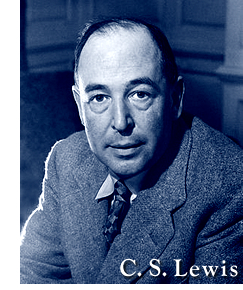
C.S. Lewis Daily – Today’s Reading

On love

I will never laugh at anyone for grieving over a loved beast. I think God wants us to love Him more, not to love creatures (even animals) less. We love everything in one way too much (i.e., at the expense of our love for Him), but in another way we love every- thing too little.

No person, animal, flower, or even pebble has ever been loved too much—i.e., more than every one of God’s works deserves.

From The Collected Letters of C.S. Lewis, Volume III

Compiled in Words to Live By, The Collected Letters of C. S. Lewis

Charles Stanley –Made for Praise

Psalm 100:1-5

Think about the husband who doesn’t communicate with his wife unless he wants her to do something for him. If the only time he interacts with her is when he has a need, then the wife is not being loved; she’s being used.

But don’t we often treat God the same way? We lift prayer request after prayer request and yet fail to give Him admiration and praise. How frequently do we attempt to use the Lord to fulfill our selfish desires?

1 Peter 2:9 says God’s people should “proclaim [His] excellencies.” Our concerns are of great importance to Him, but He also wants us to come to Him with a worshipful heart, not an attitude of self-centeredness.

You may ask, “What’s the point of praise?” When you begin to extol the Lord, your focus shifts to Him. Then you’ll begin to recall the ways in which He has impacted your life. As Psalm 105:5 says, “Remember His wonders which He has done.”
Praising the heavenly Father is one of the principal themes found throughout Scripture. We’re told to do so joyfully (Psalm 100:1), all thoughout the day (Psalm 113:3), and in the presence of others (Psalm 108:3; Psalm 111:1). The Lord truly created us to praise Him.

Take some time today to reflect on the Lord’s mighty work of salvation in your life. Instead of coming with a list of requests, simply praise the Father for His faithfulness and righteousness. When your heart is full of praise, worries will dissipate, and you’ll trust God to provide for your needs in His own timing.

Bible in One Year: Isaiah 50-53


http://www.intouch.org/

Our Daily Bread — Training for Life

Read: Psalm 66:8–12

Bible in a Year: Psalms 66–67; Romans 7

For you, God, tested us; you refined us like silver.—Psalm 66:10

My training for the long-distance race was going badly, and the latest run was particularly disappointing. I walked half the time and even had to sit down at one point. It felt like I had failed a mini-test.

Then I remembered that this was the whole point of training. It was not a test to pass, nor was there a grade I had to achieve. Rather, it was something I simply had to go through, again and again, to improve my endurance.

Perhaps you feel bad about a trial you are facing. God allows us to undergo these times of testing to toughen our spiritual muscles and endurance. He teaches us to rely on Him, and purifies us to be holy, so that we become more like Christ.

No wonder the psalmist could praise God for refining the Israelites through fire and water (Ps. 66:10–12) as they suffered in slavery and exile. God not only preserved them and brought them to a place of great abundance, but also purified them in the process.

As we go through testing, we can rely on God for strength and perseverance. He is refining us through our toughest moments. —Leslie Koh

Lord, I know that You allow me to go through trials so that I will be strengthened and purified. Teach me to keep relying on You for Your strength to endure.

Faith-testing times can be faith-strengthening times.

INSIGHT: Echoing the confident sentiment of Psalm 66:10, an Old Testament man named Job said, “When [God] has tested me, I will come forth as gold” (Job 23:10). Job was in financial ruin, his ten children had died, and he was afflicted with a painful disease (1:13-19; 2:7). In the midst of these trials, he sought to understand why he had to suffer so much. His three friends believed his suffering was God’s punishment for his sins (4:7-9; 8:4-7). But Job rejected their accusations and sought an answer from God (23:1-5). God seemed absent (vv. 8-9), yet in a moment of raw faith, Job expressed his intuitive conviction that God was testing him to prove the purity of his character. Job entrusted himself to God’s ways and drew strength from His Word (vv. 10-12).

In a similar way, God tests us to show the quality of our faith (Prov. 17:3; Isa. 48:10; James 1:12; 1 Peter 1:6-7; 4:1-13).

How has testing helped to refine your faith? What encouragement from Psalm 66 helps you remain faithful in the midst of testing? Sim Kay Tee

http://www.odb.org

Ravi Zacharias Ministry – The Scene of Miracle

Middlemarch is the epic novel by Mary Anne Evans, better known by her male penname George Eliot. The work is considered one of the most significant novels of the Victorian period and a masterpiece of English fiction. Rather than following a grand hero, Eliot explores a number of themes in a series of interlocking narratives, telling the stories of ordinary characters intertwined in the intricate details of life and community. Eliot’s focus is the ordinary, and in fact her lament—in the form of 700 pages of detail—is that we not only so often fail to see it, but fail to see that there is really no such thing. There is neither ordinary human pain nor ordinary human living. “If we had a keen vision and feeling of all ordinary human life,” she writes, “it would be like hearing the grass grow and the squirrel’s heartbeat, and we should die of that roar which lies on the other side of silence. As it is, the quickest of us walk about well wadded with stupidity.”(1)

The world Eliot saw around her is not unlike our own in its capacity to silence the dissonance of details, the frequency of pain, the roar of life in its most minute and yet extraordinary forms. We silence the wild roar of the ordinary and divert our attention to magnitudes more willing to fit into our control. The largest tasks and decisions are given more credence, the biggest lives and events of history most studied and admired, and the greatest powers and influences feared or revered most. And on the contrary, the ordinary acts we undermine, the most common and chronic angst we manage to mask, and the most simple and monotonous events we silence or stop seeing altogether. But have we judged correctly?

Artists often work at pulling back the curtain on these places we have wadded out of sight and sound, showing glimpses of life easily missed, pulling off the disguises that hide sad or mortal wounds, drawing our attention to all that is deemed mundane and obscure. Their subject is often the ordinary, but it is for the sake of the extraordinary, even the holy. Nowhere does Eliot articulate this more clearly than in her defense of the ordinary scenes depicted in early Dutch painting. “Do not impose on us any aesthetic rules which shall banish those old women scrapping carrots with their work-worn hands….It is so needful we should remember their existence, else we may happen to leave them quite out of our religion and philosophy, and flame lofty theories which only fit a world of extremes.”(2) For the artist, ordinary life, ordinary hardship, ordinary sorrow is precisely the scene of our need for God, and remarkably, the scene of God and miracle.

Continue reading Ravi Zacharias Ministry – The Scene of Miracle

Joyce Meyer – Joy Stealers

For my sighing comes before my food, and my groanings are poured out like water. For the thing which I greatly fear comes upon me, and that of which I am afraid befalls me. I was not or am not at ease, nor had I or have I rest, nor was I or am I quiet, yet trouble came and still comes [upon me]. – Job 3:24-26

People dread many things, and most don’t even realize what dread does to them. It sucks the joy right out of the present moment. The life God has provided for us through Jesus Christ is a precious gift, and we should enjoy every moment of it.

Dread is insidious and can insert itself into even the most innocuous of circumstances. For example, once I was getting a facial and enjoying it extremely. I glanced at the door and saw my clothes hanging on the hook and thought, Oh, I dread getting up and putting on my clothes and driving all the way home. Then I realized I was letting dread do its dirty work again. It was stealing the joy of the present moment.

Pray and ask God to show you every time you begin to dread any task or something lurking in your future that you’re not quite sure of. Merely eliminating dread from your life will release more of your God-given confidence and help you experience more joy.

Lord, make me aware of what I dread. It’s such a part of my life that it’s easy to not even notice. Help me to retain my joy and walk in all the confidence You’ve given me. Amen.

From the book The Confident Woman Devotional: 365 Daily Devotions by Joyce Meyer.


http://www.joycemeyer.org

Campus Crusade for Christ; Bill Bright – Never Too Busy

“He will listen to the prayers of the destitute for He is never too busy to heed their requests” (Psalm 102:17).

As a relatively young Christian businessman, I was deacon of the First Presbyterian Church of Hollywood. I was asked to be the chairman of all of our deputation ministry involving more than 100 college- and post college-age men and women who dedicated their lives to serving Christ in the hospitals, jails and skid row missions.

On many occasions it was my responsibility and privilege to speak at various mission meetings attended by hundreds of destitute winos, alcoholics, drug addicts and others who had lost their way and were now in desperate need of help, physically and spiritually. God always ministered to me as well as to them for I seldom spoke to such a group without my heart being deeply stirred. Inevitably I found myself reaching out to these men, poor, dejected, discouraged, many of whom had not bathed for months, and yet I found myself embracing them in the name of Jesus, pleading with them to allow Him to turn the tragedy of their lives into His eternal triumph. Many did and with life-changing results.

But unfortunately, there were far more who refused Christ. I am reminded of one with whom I pleaded to surrender his life to Christ and receive the gift of God’s grace. He had, through the ravages of drink, lost his wife, his children, his business and even his health. He had absolutely nothing left, but his response to my insistence that he receive Christ was, “I cannot, I have too much to give up.” I could hardly believe my ears! God was waiting with arms outstretched, eager to embrace him with His love and forgiveness, to transform his life. Let us never forget that this is God’s desire for every person for He is not willing that any should perish, but that all should come to repentance.

Bible Reading: Psalm 102:18-28

TODAY’S ACTION POINT: Today I will encourage others, rich and poor, old and young, all who are spiritually destitute, to turn to God, who loves and forgives, that they, too may experience eternal and supernatural life.


http://www.cru.org

Max Lucado – Your Name on God’s Hand

When I see a flock of sheep I see exactly that—a flock. A rabble of wool…all alike. But not so with the shepherd. To him every sheep is different. Every face is special. Every sheep has a name, and that includes you! The Shepherd you! He knows your name and he will never forget it.

He says in Isaiah 49:16, “I have written your name on my hand.” Your name is on God’s hand. Your name is on God’s lips. Perhaps you’ve never seen your name honored, or heard it spoken with kindness. If so, it may be more difficult for you to believe that God knows your name. But he does! Written on his hand. Spoken by his mouth. Your name! Keep listening…be sure to hear when God whispers your name.

From When God Whispers Your Name

For more inspirational messages please visit Max Lucado.

Home

Denison Forum – Kicker loses scholarship because of YouTube

The NCAA is fond of saying that most of its nearly four hundred thousand athletes “will go pro in something other than sports.” Given that a recent study found the slogan was true for more than 99 percent of student-athletes, it’s a helpful perspective for those young adults to keep in mind.

Apparently, though, it only applies once your playing career is at an end. Try to start going pro in something else while on scholarship and you’ve crossed an unforgivable line.

Donald De La Haye recently learned that lesson the hard way. As the backup kicker for a relatively unheralded program, it’s long been clear that De La Haye’s post-college career was unlikely to include football. To his credit, he made the most of his time on campus by becoming something of a YouTube star.

His channel had just over sixty thousand subscribers in June of this year—not enough to register far outside of Florida, but enough to warrant a relatively small paycheck from the video service. Unfortunately for De La Haye, the NCAA deemed his success a violation of their rules since part of the draw was that he played scholarship football at a Division 1 program.

Consequently, they told the backup kicker that if he wanted to continue doing both, he’d have to demonetize and remove any reference to his status as a student-athlete in both future videos and those he’s already made. Essentially, he can’t use his own name or status as a student-athlete to make money while under scholarship (even though the NCAA makes billions each year by doing just that). De La Haye chose YouTube and has since been kicked off the UCF football team for doing so.

Continue reading Denison Forum – Kicker loses scholarship because of YouTube

Charles Stanley –Rely on the Source

1 Kings 17:8-16

From God’s perspective, being in need can have spiritual benefits. For example, people often look to economies and markets as their basis for financial security. But if the bottom drops out, they’re in a position to discover the reality that all provision comes from God’s hand. The Lord uses various instruments to meet needs, but He alone is the source of all we have.

God can use ordinary means or remarkable methods to supply our needs. Through God’s unusual ways, Elijah had learned to live by faith—such as the time he’d been fed by ravens. Now God sent him to Zarephath, to a starving widow with no ability to feed him.

Every financial need is an opportunity to learn to walk by faith, recognizing the Lord as our source. Prosperity can lead to a sense of independence that blinds us to how inadequate we actually are to provide for ourselves. We’re totally dependent upon the Father whether we know it or not.

Believing God would provide, Elijah witnessed His miraculous intervention. We may not see the Lord perform a supernatural work in our financial situation. However, we can be sure that just as God fulfilled His promise to Elijah, He’ll likewise be faithful to His Word in our situation, supplying “all [our] needs according to His riches in glory in Christ Jesus” (Phil. 4:19).

Are you focusing on the instrument or the source of your provision? The means God uses may change, but His faithfulness endures forever. He’s infinitely more reliable than any employer or 401(k). The Lord is inviting you to trust Him and live in both the adventure and security of a life of faith.

Bible in One Year: Isaiah 46-49


http://www.intouch.org/

Our Daily Bread — Peace and Trust

Read: Isaiah 26:1– 9

Bible in a Year: Psalms 63–65; Romans 6

Peace I leave with you; my peace I give you. I do not give to you as the world gives. Do not let your hearts be troubled and do not be afraid.—John 14:27

When I was six years old I rode a roller coaster for the first time with my older brothers. As soon as we hit a turn at a high speed I started to yell: “Stop this thing right now! I want to get off!” Of course the roller coaster didn’t stop, and I had to “white knuckle” it, hanging on tight for the rest of the ride.

Sometimes life can feel like an unwanted roller coaster ride, with “downhill” drops and hairpin curves we never see coming. When unexpected difficulties occur, the Bible reminds us that our best recourse is to place our trust in God. It was in a tumultuous time when invasion threatened his country that the prophet Isaiah, inspired by the Spirit, discerned this powerful promise from the Lord: “You will keep in perfect peace those whose minds are steadfast, because they trust in you” (Isa. 26:3).

The peace our Savior gives us as we turn to Him “transcends all understanding” (Phil. 4:7). I will never forget the words of a woman who was struggling with breast cancer. After a group from our church prayed for her one evening, she said, “I don’t know what will happen, but I know that I’ll be okay, because the Lord was here with us tonight.”

Life will have its difficulties, but our Savior, who loves us more than life, is greater than them all. —James Banks

Lord, help me to trust in You so that I may live in peace.

Jesus is our peace.

INSIGHT: The peace Paul referenced in Philippians 4:7 closely parallels the rest that Jesus offers us in Matthew 11:28-29. Jesus said, “Come to me, all you who are weary and burdened, and I will give you rest. Take my yoke upon you and learn from me, for I am gentle and humble in heart, and you will find rest for your souls.” This gift of “soul rest” is the peace that every heart craves—a peace that comes from wholeness and rightness (Isa. 26:3). This peace is much more than the absence of conflict; it is the blessing that comes from resting in Christ and His strength. As we learn to rest in Him, we will experience the resulting peace of His presence and power.

Are there specific struggles that are wearing you down? How might you become more intentional about drawing on Christ’s strength? Bill Crowder


http://www.odb.org

Ravi Zacharias Ministry – Starting With a Question

Starting with a question seems like a good idea to most people: it helps to bring a sharper focus, it’s conversational, it reveals gaps in knowledge, and it’s quite natural.(1) Kids seem to use questions instinctively to find out about the world. Of course, there are lazy questions and there are thoughtful questions. The difference is hard to explain, but anyone who has ever heard or asked a great question, asked at the right time, will immediately know why good, careful, thoughtful questions are always worth asking.

When it comes to questions about faith, Christians have often pointed to the example of God asking Adam and Eve, “Where are you?” and the way in which Jesus interacts with people in the New Testament.(2) Here are just a few of the questions of Jesus:

What are you looking for? What do you want me to do for you? Have I been with you for so long a time and you still do not know me? If you love only those who love you, what credit is that to you? Do you want to be well? Do you see this woman? What good is it to gain the whole world but forfeit your soul? Is not life more than food and the body more than clothing? Who is greater, the one seated at the table, or the one who serves? Do you think that I have come to establish peace on the earth? Which of you would hand his son a stone when he asks for a loaf of bread, or a snake when he asks for a fish? How can you believe, when you accept praise from one another and do not seek the praise that comes from the only God? Did I not tell you that if you believe you will see the glory of God? Why do you call me ‘Lord, Lord,’ but do not do what I command? Why do you break the commandment of God for the sake of your tradition? For which of these good works are you trying to stone me? Do you think that I cannot call upon my Father and he will not provide me at this moment with more than twelve legions of angels? Would you like some breakfast? Have you come to believe because you have seen me? I am the resurrection and the life; whoever believes in me, even if he dies, will live, and everyone who lives and believes in me will never die. Do you believe this? Do you love me?

Continue reading Ravi Zacharias Ministry – Starting With a Question

Joyce Meyer – God’s Construction Crew

We know that we have passed over out of death into Life by the fact that we love the brethren (our fellow Christians). He who does not love abides (remains, is held and kept continually) in [spiritual death]… – 1 John 3:14

Life in this verse is the life of God, or “life as God has it.” I don’t want to be one of what I call “the walking dead”—someone who lives and breathes, but never truly lives as God desires. Loving others is the only way to keep the God kind of life flowing through you. It has been given to us as a gift; it’s in us, but we need to release it to others through words and actions. Left dormant, it will stagnate like a pool of water with no outlet.

Are you a part of God’s construction crew, or part of Satan’s destruc¬tion crew? Do you build people up with your words and action, or tear them down? Do you strengthen or weaken them? If you ask these ques¬tions and get the wrong answers, it is easy to fix. Just simply begin today by making a plan to be a blessing to others. Use your words, facial expressions, and voice tones to lift up others. Smile at people; it will be a sign of approval to them. Live to put smiles on others’ faces, and you will always have a smile on yours.

Love Others Today: Look for the needs around you and let God use you to meet those needs. Make sure you’re part of God’s construction crew!


From the book Love Out Loud by Joyce Meyer.


http://www.joycemeyer.org