Charles Stanley – The Consequences of Drifting


Hebrews 3:12-13

Spiritual drifting­—the gradual wandering away from God and His will—takes place when a believer ceases to steer toward the Lord. Like a boat without oars that is set loose upon the waters, he or she makes a slow and lazy glide away from good practices like obedience, regular Bible study, prayer, and assembling with fellow Christians. And there are consequences for slipping into uncharted, dangerous waters.

A life adrift is outside of God’s will and therefore in sin. The Holy Spirit pricks the conscience to send a message when a believer is off course, but a drifter is prone to ignore such warnings. If a Christian continually excuses his wandering ways and denies sin, his conscience gradually gets numbed. A person who becomes desensitized to wrongdoing has paved the way for more sinful behavior with less guilt. Can you imagine a more dangerous situation?

As the drifting believer’s conscience becomes anesthetized, his spiritual ears are also deadened—truth cannot gain entrance, because he has invited wrong attitudes and philosophies into his thinking process. What’s more, his heart hardens to the things of God. Shrinking away from testimonies about divine power, grace, and mercy, he avoids situations that might reawaken the conscience and stir his spirit to repentance.

People drift from God in search of more—more freedom, choices, and pleasure. But since the consequences are a hard heart, a numb conscience, and dead ears, what they end up with is less. The drifting believer sacrifices the victorious life in Christ for an existence devoid of permanent satisfaction.

Bible in One Year: Psalm 145-150

 

http://www.intouch.org/

Our Daily Bread — Declaring Dependence


Read: John 5:16–23 | Bible in a Year: Job 34–35; Acts 15:1–21

Apart from me you can do nothing. John 15:5

Laura’s mom was battling cancer. One morning Laura prayed for her with a friend. Her friend, who had been disabled for years by cerebral palsy, prayed: “Lord, you do everything for me. Please do everything for Laura’s mother.”

Laura was deeply moved by her friend’s “declaration of dependence” on God. Reflecting on the moment, she said, “How often do I acknowledge my need for God in everything? It’s something I should do every day!”

During His days on earth Jesus demonstrated continual dependence on His heavenly Father. One might think that because Jesus is God in a human body, He would have the best of all reasons to be self-sufficient. But when the religious authorities asked Him to give a reason for “working” on a legally ordained day of rest because He healed someone on the Sabbath, He responded, “Very truly I tell you, the Son can do nothing by himself; he can do only what he sees his Father doing” (John 5:19). Jesus declared His dependence as well!

Jesus’s reliance on the Father sets the ultimate example of what it means to live in relationship with God. Every moment we draw breath is a gift from God, and He wants our lives to be filled with His strength. When we live to love and serve Him through our moment-by-moment prayer and reliance on His Word, we are declaring our dependence on Him.

I need You for everything, Lord! Help me to live to serve You. I praise You for being my Savior and my strength!

Prayerlessness is our declaration of independence from God. Daniel Henderson

By James Banks

INSIGHT

In John 5, Jesus had just performed a remarkable miracle by healing a man disabled for thirty-eight years. This feat indisputably established Jesus’s unprecedented power, yet He encountered controversy despite the miracle. When challenged by religious critics, the Lord didn’t grow defensive, as we might have. Nor did He flaunt His great power, though we are often tempted to boast of “our” abilities. Instead, the One who created everything directed attention away from His own remarkable works and toward His heavenly Father (v. 19).

Am I tempted to take credit for my abilities and deeds? Do I feel a need to vindicate myself? When we understand our inherent dependence on God, we are far less likely to boast in our accomplishments or to retaliate in the face of opposition.

Tim Gustafson


http://www.odb.org

Words of Hope – Daily Devotional – Unclean?


Read: Mark 7:14-23

There is nothing outside a person that by going into him can defile him, but the things that come out of a person are what defile him. (v. 15)

To the Jew, it was a serious thing to be “unclean.” A person who was considered “unclean” was “defiled” and therefore in a dangerous predicament. You did not want to be “unclean.” It could lead to retribution or death. So under the Old Testament system, people avoided lepers or touching the body of a dead person. They also avoided certain “unclean foods” such as pork.

When Jesus came, he ushered in a whole new perspective on what it means to be clean, or righteous, in God’s sight. For him, “unclean” is a thing of the heart. That teaching is certainly in the Old Testament. Passages like Proverbs 4:23 and Psalm 51:10 speak about the importance of guarding our hearts (the wellspring of life) and asking God to create a clean heart within us. Unfortunately, these deep spiritual truths relating to the heart were overwhelmed by an outward legalistic system.

What Jesus says in today’s Scripture lesson should ring true to us. The Old Testament prophet Jeremiah even said so: “the heart is deceitful above all things, and desperately sick” (17:9). That is the root problem that we all have. But God has a solution: “the blood of Jesus his Son cleanses us from all sin” (1 John 1:7).

—John Koedyker

Prayer: Thank you, Lord Jesus, that when we confess our sins, you are faithful and just and will forgive us our sins and cleanse us from all unrighteous. Amen


https://woh.org/

Joyce Meyer – Good Things to Come


Then I said to you, ‘Do not be in dread or afraid of them. 30The Lord your God who goes before you will himself fight for you, just as he did for you in Egypt before your eyes. — Deuteronomy 1:29-30

Adapted from the resource Closer to God Each Day Devotional

Do you look forward to every day with a spirit of joy and expectation of good things to come, or do you awake each morning in a state of dread? One might dread going to work, driving in traffic, cleaning the house, or dealing with difficult people. Dread is a subtle form of fear that the devil uses to steal our joy and prevent us from enjoying life. It prevents us from walking in the will of God and moving forward in the plans of God to receive His blessings.

Dread comes after us aggressively and cannot be defeated passively. Allowing negative feelings and thoughts into your mind will steal your joy and peace. But you can trust God to help you with anything you need to do. And as He gives you grace, the thing you were dreading turns out not to be so bad after all.

We can choose to believe that Jesus goes before us and makes a way for us. When a project seems difficult or unpleasant, don’t start dreading it. If you are going to do it anyway, you might as well enjoy it!

As Christians, we can find joy even in unpleasant circumstances because the presence of God is with us. We can enjoy our life with Him in the midst of adverse and difficult conditions. Our joy comes from Who is inside us, not in what is around us.

Prayer Starter: Father, help me to set my mind to enjoying everything I do today. Please help me to form a habit of expecting good things each and every day. In Jesus’ Name, Amen.


http://www.joycemeyer.org

Campus Crusade for Christ; Bill Bright – Riches in Glory


“And it is He who will supply all your needs from His riches in glory because of what Christ Jesus has done for us” (Philippians 4:19).

God has faithfully met the needs of this great worldwide ministry since its inception. He met our needs when there were only two of us – Vonette and I – on the staff. He meets our needs today (1983) with more than 16,000 full-time and associate staff members serving in most communities of America and in 151 other countries.

He met our needs when our budget was a few thousand dollars a year. He continues to meet our needs when our budget is approximately $100 million a year. During this exciting, incredibly rich and rewarding adventure with our gracious Lord, we have never had an extra dollar at the end of any day. We get only what we need – and no more.

During these years, there have been many dramatic demonstrations of His faithfulness, when He has led us to undertake major and frequently expensive projects. He has always supplied the funds to pay for what He orders. We have learned many lessons concerning God’s faithfulness.

First, whatever He leads us to do He will enable us to do by supplying the manpower, the finances and the know-how – oftentimes dramatically – if we continue to trust and obey Him.

Second, “we have not because we ask not” (James 4:2 KJV).

Third, we do not receive when our motives are impure.

But of this we can be sure: if our hearts are pure, our motives are pure and we do what we do for the glory of God – to help fulfill the Great Commission through the winning and discipling of men for Christ throughout the world -we can always be assured that God will supply our needs. Not to do so would be a contradiction of His attributes, for the idea of the Great Commission began with our Lord.

Bible Reading:II Corinthians 9:6-11

TODAY’S ACTION POINT: I will examine my heart to determine my motives and relate my needs to the scriptural commands with the confidence that God will supply all of my needs from His riches in glory, because of what Christ Jesus has done for me. I will thank Him in advance for meeting my needs, and encourage others to trust Him also. This is a part of my commitment to supernatural living.


http://www.cru.org

Moody Global Ministries – Today in the Word – The Book of Isaiah: Seeing the Glory of God


WELLS OF SALVATION

Isaiah 11–12

In recent decades a number of groups have focused efforts on digging and maintaining wells for access to fresh water throughout the developing world. One group in Burkina Faso, in West Africa, says that a single well that is 50 meters deep can provide clean water for 2,000 people. The ability to drink, wash, and cook with clean water is a life-saving and life-changing opportunity for many.

In a similar way, God’s people had a life-changing experience with the Lord’s wells—the “wells of salvation.” Isaiah uses the metaphor to speak of the depths or greatness of the Lord’s salvation toward His people. The prophet considers the outpouring of God’s Spirit and the subsequent peace on the earth and restoration of the remnant. He sees salvation as deep wells of water, representing many aspects of salvation. Christ will gather Israel from the distant lands to which they have fled and plant them back in Jerusalem, the holy mountain of the Lord. The Lord will destroy the enemies of God’s people.

In the day of the Lord, the celebrations of Israel will exalt the depths of the Lord’s salvation. Isaiah foretells a day when the Lord’s people will rejoice in Him with thanksgiving, remember His mercy, ascribe strength to Him, sing songs of gladness, declare His deeds to the earth, and exalt the Holy One. In that day, the Lord will fulfill His covenant promises to make the nations of the earth know His glory, and to dwell forever in the midst of His people. As Paul writes, “And in him you too are being built together to become a dwelling in which God lives by his Spirit” (Eph. 2:22).

APPLY THE WORD

Look at your life prior to salvation, and sing to the Lord a song of praise or thanksgiving for turning away His anger from you by pouring out His wrath on Christ. Think of the many things the Lord has changed for you since you became a Christian. Rejoice in these wells of God’s salvation!


http://www.todayintheword.org

Streams in the Desert for Kids – A Good Lesson


Acts 7:30, 32, 34

Does time seem to pass slower when you’re at school? You’re watching the clock, waiting for recess or the end of the school day, and the hands don’t seem to be moving at all. It can be hard to pay attention in school when you’re focused on getting out of class as quickly as possible. But remember: this is your learning time. Fill it up with everything you can possibly learn. Then you will be ready for whatever God calls you to do.

Jesus was thirty years old before he started his ministry. Before that, he was learning. Before Moses led God’s people out of Egypt, he spent forty years in the desert herding sheep—and learning. Your days may seem hard. Or maybe school seems long and boring. But don’t be fooled—these are important times of learning. God has a plan for you, and you want to be ready. Learn everything you can in school so that you will be prepared to work in God’s kingdom.

Dear Lord, Help me to use well this time while I’m growing up. Help me to get ready for whatever you ask me to do. Amen.

Charles Stanley – The Signs of Drifting


Hebrews 2:1-3

Regularly gathering in the house of the Lord with brothers and sisters in Christ provides an anchor of support and accountability. But skipping church in order to pursue other interests usually indicates a believer has begun to drift away from God. Less apparent are the men and women who mentally skip the worship service. The act of attending means nothing unless we make a deliberate decision to receive God’s Word and apply it to our life. As the writer of Hebrews warned, if we do not pay attention to what we have heard, we will drift away from it (Heb. 2:1).

However, Sunday morning is not the only time for nourishing our heart and mind with principles and encouragement from the Bible. We should be in its pages every day, reading and meditating for ourselves. When our interest in what God has to say decreases, we are already slipping out into troublesome waters. The only way to keep our way pure is by following His Word (Psalm 119:9).

A fading prayer life often accompanies neglected Bible reading. Prayer is the way believers communicate with the Navigator. If we stop talking with Him, the God who once seemed so close will soon feel far away. That chasm in our spirit is one more sign that we’re far from shore and safety.

I’ve watched many a captain guide his cruise ship through a narrow channel. The crew members are intensely focused on their tasks because drifting means disaster. Life is full of narrow channels to navigate. We cannot afford to drift away from God and His Word. Only He can bring us safely through.

Bible in One Year: Psalm 139-144


http://www.intouch.org/

Our Daily Bread — Hidden Beauty


Read: 1 Samuel 16:1–7 | Bible in a Year: Job 32–33; Acts 14

People look at the outward appearance, but the Lord looks at the heart. 1 Samuel 16:7

Our children needed a little coaxing to believe that it was worth putting on snorkeling gear to peer beneath the surface of the Caribbean Sea off the shore of the island of Tobago. But after they dove in, they resurfaced ecstatic, “There are thousands of fish of all different kinds! It’s so beautiful! I’ve never seen such colorful fish!”

Because the surface of the water looked similar to freshwater lakes near our home, our children could have missed the beauty hidden just below the surface.

When the prophet Samuel went to Bethlehem to anoint one of Jesse’s sons to be the next king, Samuel saw the oldest son, Eliab, and was impressed by his appearance. The prophet thought he had found the right man, but the Lord rejected Eliab. God reminded Samuel that He “does not look at the things people look at. People look at the outward appearance, but the Lord looks at the heart” (1 Samuel 16:7).

So Samuel asked if there were more sons. The youngest boy wasn’t present but caring for the family’s sheep. This son, David, was summoned and the Lord directed Samuel to anoint him.

Often we look at people only on a surface level and don’t always take the time to see their inner, sometimes hidden, beauty. We don’t always value what God values. But if we take the time to peer beneath the surface, we may find great treasure.

Heavenly Father, thank You for not valuing people based on outward appearances but instead by looking at our hearts. Help me to take the time to see beyond simply what my eyes can see in order to discover true and lasting beauty. 

God can help me to see the inner beauty in others.

By Lisa Samra

INSIGHT

Who taught you how to think about yourself and others?

Long before Samuel looked for a king among the sons of Jesse, God was teaching His children to see below the surface of our skin. From the days of Eden, He has been showing people like us that what happens in our hearts is more important than our outward appearance.

How has God’s interaction with the men and women of the Bible helped you to think about yourself and Him?

Mart DeHaan


http://www.odb.org

Ravi Zacharias Ministry – Beautiful Foolishness

“I don’t believe in God,” begins Julian Barnes in his book Nothing to Be Frightened Of, “but I miss him.” Though he admits he never had any faith to lose (a “happy atheist” as an Oxford student, Barnes now considers himself an agnostic), he still finds himself dreading the gradual ebbing of Christianity. He misses the sense of purpose that the Christian narrative affords, the sense of wonder and belief that haunts Christian art and architecture.

“I miss the God that inspired Italian painting and French stained glass, German music and English chapter houses, and those tumbledown heaps of stone on Celtic headlands which were once symbolic beacons in the darkness and the storm.” Such are the thoughts that surface as Barnes attempts to confront his fears of death and dying in this memoir. He believes Christianity to be a foolish lie, but insists, “[I]t was a beautiful lie.”(1)

There is certainly room for beauty in the description the apostle Paul gave of the gospel. Like Julian, Paul saw its foolishness clearly as well: “For since, in the wisdom of God, the world did not know God through wisdom, God decided, through the foolishness of our proclamation, to save those who believe” (1 Corinthians 1:21). He also noted the weakness inherent in the Christian proclamation. At the heart of the Christian religion is one who “emptied himself, taking the form of a slave, being born in human likeness, and being found in human form” (Philippians 2:7). On this much Paul and Julian agree: however beautiful, foolishness and weakness imbibe the Christian story.

Continue reading Ravi Zacharias Ministry – Beautiful Foolishness

Joyce Meyer – Pleasant Words, Healing Words

The mind of the wise instructs his mouth, and adds learning and persuasiveness to his lips. Pleasant words are as a honeycomb, sweet to the mind and healing to the body. — Proverbs 16:23-24 (AMPC)

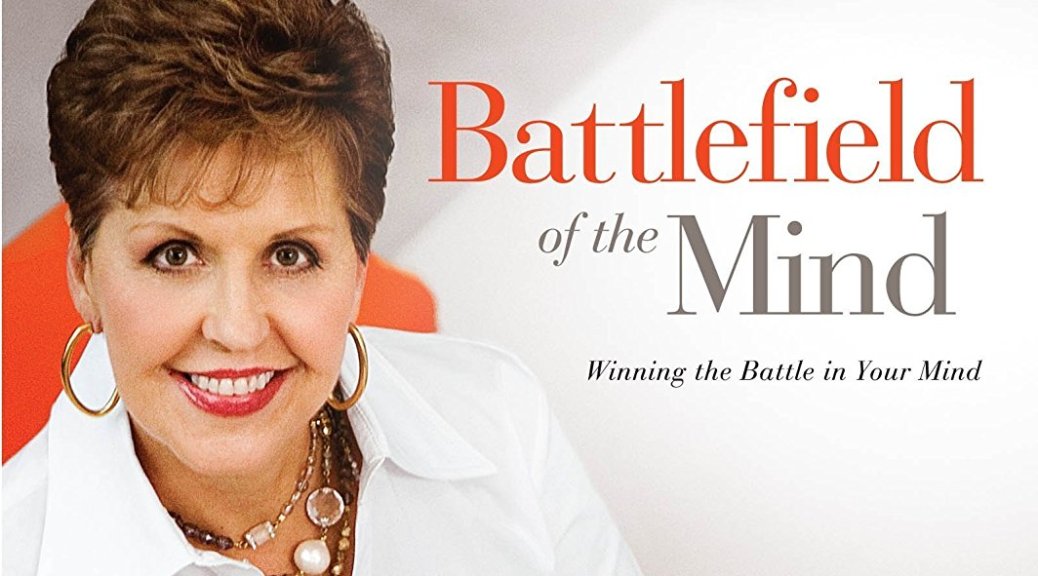
Adapted from the resource Battlefield of the Mind Devotional

Our thoughts can either get us into trouble or elevate us above our problems. Too often, however, we allow our minds to linger over and ponder the wrong kind of thoughts. In the verse above, it says the mind (or the heart) of the wise teaches his mouth. This proverb means that the thoughts on which we dwell will eventually come out in our words. If our words are good and uplifting, they encourage others and us.

Those thoughts aren’t just about others—they are also about how we reflect on ourselves, as well. One of the smartest friends I had in school confessed one day that she felt intellectually inferior. Her words shocked me, and I told her so. I learned that her father used to call her stupid when she didn’t grasp something the first time he explained it to her. Eventually, her own thoughts said to her, You aren’t intelligent enough to understand this.

That’s a good example of how our words can tear down others. But we can also uplift others with our words. When we focus on the good, we see in people and tell them, we may well be God’s messenger to them.

For example, I’ve stood in front of a crowd and spoken many times. Because I have victory, they assume I’m always in victory, and that I never have to struggle the way they do. Sometimes a person will come to me and say, “Joyce, God really used you tonight. I came here discouraged and kept asking God what I should do. Right in the middle of your teaching, I heard God speak through you.”

Continue reading Joyce Meyer – Pleasant Words, Healing Words

Campus Crusade for Christ; Bill Bright – He Keeps His Promises


“Understand, therefore, that the Lord your God is the faithful God who for a thousand generations keeps His promises and constantly loves those who love Him and who obey His commands” (Deuteronomy 7:9).

Torn between the desire to surrender his life to the Lord and the desire to be his own person, Tom gave vent to his frustration.

“I want to be a good Christian,” he said, “but I’m afraid of God and what He might do to change my plans. You see, I have great plans for my life and I don’t want to end up wasting it.

“For example, I don’t want to marry someone with whom I would be miserable or risk my opportunities for a successful business career.”

I asked Tom, as I have often asked others, “Do you really believe that God loves you?”

“Yes,” he replied – and that is the general response. Then I reminded him that Jesus Christ so loved him that He was willing to die on the cross for his sins.

“Do you believe that He died for you?”

“Yes,” Tom agreed, and that also is the general reply.

Then, my final question, “Don’t you think that you can trust the omnipotent Creator God, who so loved you that He sent His only begotten Son, who Himself loved you so much that He was willing to die on the cross for your sins, that you may have a full and abundant life here on earth and for all eternity?”

Tom’s response was, “I’d never thought of it that way before. Of course I can trust Him, and I will.”

Together we knelt in prayer, and God touched his life in such a dramatic way that he has since been used to introduce many thousands to our Savior.

Bible Reading:Deuteronomy 7:6-8, 10-13

TODAY’S ACTION POINT: Today I will surrender my will to do the will of God in all things, because I know that He is a God of love, wisdom, compassion and concern who wants the very best for me. I will share this good news with other Christians who are reluctant to surrender their wills to Him and with nonbelievers who have not yet entered into the joy and excitement of the supernatural life.


http://www.cru.org

Max Lucado – Preparing God’s Holy People


Listen to Today’s Devotion

All the billions of Christ followers over the last two-thousand years have this in common:  “A spiritual gift is given to each of us” (1 Corinthians 12:7). God’s body has no nobodies. No exceptions…no exclusions. Our gifts make an eternal difference only in concert with the church. Apart from the body of Christ, we are like clipped fingernails or shaved whiskers and cut hair. Who needs them? He grants gifts so we can “prepare God’s holy people” (Ephesians 4:11-12).

Paul reached into a medical dictionary for this term. Doctors used it to describe the setting of a broken bone. Broken people come to churches. Not with broken bones, but broken hearts, broken homes, broken dreams, and broken lives. And if the church operates as the church, they find healing.  All members help to heal brokenness, “to make the body of Christ stronger!”

Read more Cure for the Common Life

For more inspirational messages please visit Max Lucado.


Home

Denison Forum – “Trump Baby” balloon to be flown near UK parliament when president visits

Donald Trump will become the twelfth US president to meet Queen Elizabeth when the two convene next week. However, Reuters reports that “no other US presidential encounter has generated the same level of opposition and controversy in Britain as Trump’s trip.”

After the president was invited last year, more than 1.86 million people signed a petition saying he should not be accorded a state visit because it could embarrass the queen. Yesterday, protesters were given permission by London’s mayor to fly a giant balloon dubbed the “Trump Baby” near Parliament during the president’s visit on July 13.

In other political news, the New York Daily News carried a July 4 cover depicting President Trump as “the clown who plays king.” On the other side of the aisle, PJ Media‘s July 4th cartoon depicts a donkey representing the Democratic Party blowing out the Statue of Liberty’s torch.

The political rancor of our day is the most divisive and demeaning I have ever seen. And it seems to be getting worse.

What is the key to humility?

Continue reading Denison Forum – “Trump Baby” balloon to be flown near UK parliament when president visits

Charles Stanley – The Danger of Drifting


Proverbs 14:15-16

One fine afternoon, my best friend and I came upon an abandoned boat floating in the river. The paddles were broken, but that wasn’t a deterrent for a pair of teenage boys. We shoved off and drifted downstream talking, joking, and carrying on. I’m not sure how much time passed as we floated aimlessly along, but we knew we were in trouble when a loud roar reached our ears. Up ahead, water was rushing over the dam. Panicked, we grabbed the broken paddles and pulled hard against the current. We managed to get close enough to the shore to safely jump out into shallow water, but the boat went over the edge. What started out as pure fun nearly ended in disaster.

That’s happens to many people today. What begins as fun and pleasure ends in shipwreck because people drift along, neglecting to think ahead or notice how fast they’re moving away from the safety of the Lord’s plan. According to the prevailing attitude of modern society, God isn’t needed as long as the stream runs smoothly. In other words, when income is good, the family is safe, and health is stable, going with the flow seems fine. But in reality, a drifting man is being swept along by the world’s currents, which are dangerous without Christ.

Today’s passage reveals that the wise look to the future to avoid ruin. Let me put it another way: Drifting is foolish. In countless arenas of life—including marriage, family, vocation, and finances—we need to have a goal and navigation plan if we expect to be successful. Thankfully, God provides both in His Word. (See Prov. 3:6.)

Bible in One Year: Psalm 132-138


http://www.intouch.org/

Our Daily Bread — God’s Great Creation


Read: Psalm 104:1–6, 10–23 | Bible in a Year: Job 30–31; Acts 13:26–52

The birds of the sky nest by the waters; they sing among the branches. Psalm 104:12

On a recent visit with some of our grandchildren, we enjoyed watching a web cam that focused on an eagle family in Florida. Every day we would check in on the mom, the dad, and the baby as they went about their daily routine in their nest high off the ground. Each day the parent birds would keep a constant, protective vigil over the eaglet, bringing it fish from a nearby river for nourishment.

This little eagle family depicts for us one image the psalmist gave us of God’s magnificent creation in Psalm 104—an array of creation images, of scenes from the work of God’s creative hand.

We see the majesty of God’s creation as it relates to the universe (vv. 2–4).

We experience the creation of the earth itself—waters, mountains, valleys (vv. 5–9).

We enjoy the glory of God’s gift of animals, birds, and crops (vv. 10–18).

We marvel at the cycles God created in our world—morning/night, darkness/light, work/rest (vv. 19–23).

What a glorious world God has fashioned with His hands for our enjoyment—and for His glory! “Praise the Lord, my soul!” (v. 1). Each one of us can say thank You to God for all He has given us to appreciate and enjoy.

Praise God! Praise You, Lord, for the wonder of the earth You created.

Share a photo of your favorite place at Facebook.com/ourdailybread.

The beauty of creation reflects the beauty of our Creator. 

By Dave Branon


http://www.odb.org

Ravi Zacharias Ministry – Questioning Christ

I have often referenced the quote by the talk-show host Larry King, in his response to a particular question:  “If you could select any one person across all of history to interview, who would it be?”  Mr. King’s answer was that he would like to interview Jesus Christ. When the questioner followed with, “And what would you like to ask him?” King replied, “I would like to ask him if he was indeed virgin-born. The answer to that question would define history for me.” The first time I requested permission through a common friend to use this quote of his, he sent word saying, “And tell him I was not being facetious.” I believe him. Who would not like to interview Jesus Christ?

It is not possible to live without asking questions—and what better source for the answers than the one who claimed to be the way, the truth, and the life? If one could only be face to face with him from whom life comes, how delightful would be those moments when the most confounding questions of life are raised. Though unaware that they were walking with the risen Christ, the men who walked on the Emmaus Road said that their hearts burned within them as he opened up the past, the present, and the future. When Jesus broke the bread at the table with them, they realized who he was and a light for all of history had been turned on.

In the same way, it may be that when the time comes to sit across the table from the Lord of history, the answer to the skeptic and the believer will be more visible than it will be in need of utterance.  Ironically, this clue came to me in the form of a question inscribed on a painting I saw in a pastor’s office in Puerto Rico. Just before we went into the sanctuary, my eyes caught a glimpse of it directly in front of his desk. It was the picture of a little girl holding the hand of Jesus, even as he tenderly gazed at her.  She was clasping his hand as she asked him, “Que paso con tus manos?”—”What happened to your hands?”  That question, I suspect, contains the answer to both the doubt of the skeptic and the duplicity of the believer.

Continue reading Ravi Zacharias Ministry – Questioning Christ

Joyce Meyer – Adventurous


“I am a Jew… being zealous for God as all of you are this day.” — Acts 22:3

Adapted from the resource Wake Up to the Word Devotional – by Joyce Meyer

Adventurous means to be “inclined or willing to incur hazard; bold to encounter danger; daring; courageous; enterprising.”

Every human being wants to be free. We want to try new things, to be bold and fearless, to live an exciting, adventurous life.

We were created by God to have goals and to press toward them, and to dream of bigger and better things than what we have ever known. But fear and doubt can leave us frozen in place, unable to do much of anything except be idle and alone with our torment. As long as we become inactive every time we feel a doubt or have a sense of worry, we won’t live in confidence and we’ll miss out on the exciting, adventurous life God has for us.

Please be assured that Jesus died not only for the forgiveness of your sins, but also so that you might enjoy a passionate, fruitful, and powerful life in Him. Be determined to experience all that He died to give you.

Prayer Starter: Father, I ask for Your help to live the adventurous life You have for me. Help me to not hold back out of fear or doubt, but confidently walk forward into all You put in my heart to do. In Jesus’ Name, Amen.


http://www.joycemeyer.org

Campus Crusade for Christ; Bill Bright – Rescue from Temptation


“So also the Lord can rescue you and me from the temptations that surround us, and continue to punish the ungodly until the day of final judgement comes” (2 Peter 2:9).

Charles G. Finney was one of America’s most outstanding evangelists. One day while he was still a young lawyer, he sat in his village law office in the state of New York. It was early in the day, and the Lord began to deal with him.

“Finney,” an inner voice asked, “what are you going to do when you finish your course?”
“Put out a shingle and practice law.”
“Then what?” the voice persisted.
“Get rich.”
“Then what?”
“Retire.”
“Then what?”
“Die.”
“Then what?”
This time the words came tremblingly, “The judgement.”

Young Finney ran for the woods half a mile away. As he prayed, he vowed that he would not leave until he had made his peace with God. After a long struggle, he discovered that he could not resist God’s call, and he came out of the woods that evening with the high purpose of living the remainder of his life to the glory of God, enjoying Him forever.

Like that great preacher and evangelist you and I can be rescued from the temptations of the world so that we will not resist any clear call from God.

Bible Reading:II Peter 2:10-17

TODAY’S ACTION POINT: When the world tries to squeeze me into its mold, I’ll not resist the clear call from our Lord Jesus Christ to follow Him.


http://www.cru.org

Max Lucado – We Are His Workmanship


Listen to Today’s Devotion

For some people it’s God, yes; but Church, no. They like the benefits but resist commitment. The music, the message, the clean conscience—they accept the church perks.  So they visit her; they use the church. But commit to the church? Can’t do that. We’ve got to keep options open. Don’t want to miss out on any opportunities.

To miss the church is to miss God’s sanctioned tool for God promotion. The church is a key place to do what you do the best to the glory of God. Scripture says, “We are His workmanship” (Ephesians 2:10). The word used here means poetry. We are his poetry… his creative best. Alone we are meaningless symbols on a page. But collectively, we inspire! “All of us together are Christ’s body, and each one of you is a separate and necessary part of it” (1 Corinthians 12:27). And “each of us finds our meaning and function as a part of his body” (Romans 12:5).

Read more Cure for the Common Life

For more inspirational messages please visit Max Lucado.

Home