Billy Graham – We Cannot Out-Give God


A tenth of the produce of the land … is the Lord’s.

—Leviticus 27:30 (TLB)

We are to be stewards of our money. When it is invested and shared for the glory of God, it can be a boon and a blessing. I know a businessman in Detroit, Michigan, who made a promise to God that he would tithe his entire income to the work of the Lord. He said his business had tripled, and that God had more than fulfilled His end of the bargain.

Some time ago I heard from a laborer in the San Joaquin Valley of California who said that he and his wife agreed to give one tenth of their income to the Lord. At the time they made their decision, he was able to get work only about seven months of the year. Now he says he has steady work, and is earning nearly twice what he was before. You cannot get around it; the Scripture promises material and spiritual benefits to the man who gives to God.

You cannot out-give God. I challenge you to try it and see.

Prayer for the day

Forgive me, Lord, for the times I have wanted to keep that which is rightfully Yours.


https://billygraham.org/

Guideposts – Devotions for Women – Harboring Hope


May the God of hope fill you with all joy and peace as you trust in him, so that you may overflow with hope by the power of the Holy Spirit.—Romans 15:13 (NIV)

Hope is a powerful force that propels us forward, even in the face of adversity. As the year draws to a close, hold onto the hope that is fixed in God’s promises. Trust in Him to fill your heart with peace and joy, and let that hope overflow to those around you.

Heavenly Father, fill me with Your unshakable hope. Help me to trust in Your plans and spread Your joy and peace.


https://guideposts.org/daily-devotions/devotions-for-women/devotions-for-faith-prayer-devotions-for-women/

The meaning of Christmas is simple — yet so hard for modern minds to grasp

Perhaps some of the worst people to explain the real meaning of Christmas are those who claim to believe in its central message, but have trouble communicating it.

Like the secularists, they try to define it on their own terms rather than let God speak for Himself.

The reason for Christmas is easy to explain, but difficult for many to understand.

Why would a Holy God offer up His only Son to sinful people who would reject and ultimately crucify Him?

Part of the reason I think is that too many of us define love as what we feel for another person, a pet, a favorite restaurant or a sports team.

Feelings come and go (consider divorce, a bad meal, a dead pet and several losing seasons).

Human love is conditional and often based on emotion, physical appearance and sexual gratification.

God’s love is different.

It is He who defines the word by His nature and actions.

If His love was conditional on how we feel toward Him, or our behavior, He would have stopped loving us and wiped out the human race as He nearly did in the age of Noah (look it up if you think that was only about saving animals and plants).

The Gospel of John says it best: “God is love. In this the love of God was made manifest among us, that God sent his only Son into the world, so that we might live through him.”

“In this is love, not that we have loved God but that he loved us and sent his Son to be the propitiation for our sins.”

That last part is what’s difficult to grasp for many of us sinners.

That’s because the very word “sin” offends and seems from another age.

Today, if we consider we have faults it is because we are “dysfunctional,” or we blame others, such as our parents.

But the Scriptures tell us we are born with a sinful inclination, which it also says is why we must be born a second time through a spiritual rebirth.

Think of sin as a birth defect, though a medical condition can often be repaired.

Sin can’t be repaired by human effort.

A Holy God must judge sin in Jesus’ sacrificial death, or He must judge it in those who refuse to repent.

Otherwise, He would not be holy.

See what I mean by easy to explain, but difficult to understand?

When Donald Trump first ran for president, I asked him, because of his strong support from evangelical Christians, if he had ever felt the need to repent.

He said no, but perhaps someday he would.

Repentance is a necessary act for salvation, say the Scriptures.

It’s difficult for many to do that because of pride which “goes before the fall” (Proverbs 16:18).

So go ahead, as the song from the musical “Mame” says, and “Haul out the holly . . . For we need a little Christmas right this very minute. Candles at the window, carols at the spinet. . .”

But let’s not reduce the real meaning of Christmas to decorations and manger scenes on the lawn.

It is far more than that.

It is God becoming a man, living a perfect life, dying in our place and rising from the dead, which was witnessed by hundreds, so that God’s justice would be satisfied and we could spend eternity in a sinless and forgiven place called Heaven.

Focus on that and your Christmas Day — and every day — will be merry and bright.

Cal Thomas’ latest book is “A Watchman in the Night: What I’ve Seen Over 50 Years Reporting on America.”

Source: The meaning of Christmas is simple — yet so hard for modern minds to grasp

Our Daily Bread – Eyes Opened by God


Blessed are the eyes that see what you see. Luke 10:23

Today’s Scripture

Luke 10:21-24

Listen to Today’s Devotional

Apple LinkSpotify Link

Today’s Devotional

In a café one afternoon, I noticed a toddler with her parents at an adjacent table. As the parents talked with their friends, a pigeon flew in and started pecking crumbs from the floor. Filled with awe at this sight, the little girl tried getting the adults’ attention by squealing with delight. But they never got to see what she saw. They just smiled at her and returned to their conversation.

Jesus once sent His disciples on a preaching mission, which turned out to be tremendously successful (Luke 10:17). “I praise you, Father,” Jesus prayed in response, “because you have hidden these things from the wise and learned, and revealed them to little children” (v. 21). In this case, “little children” didn’t refer to age but status. It was humble, everyday “sinners” who responded to the gospel, while “wise and learned” religious leaders ignored it (7:29-34). While God decides who He reveals Himself to, Jesus always explained more about the kingdom to those who asked (see Matthew 13:36). The leaders had missed seeing who Jesus was because they didn’t really want to know.

The little girl in the café saw something wonderful while her parents missed out. May we never be so distracted by the world’s chatter, or lacking in humility to seek more understanding, that we miss what God wants to show us about Himself.

Reflect & Pray

What first opened your eyes and heart to the gospel? How hungry are you to know more of God right now?


Father God, please open my eyes to see everything You want me to see about You and the gospel.


Learn more about God by watching Asking Who Is God.

Today’s Insights

Although the word trinity is never used in Scripture, we see clear evidence in Luke 10 of God’s triune nature. “Jesus, full of joy through the Holy Spirit” praises His Father, the “Lord of heaven and earth” (v. 21). The Son accomplishes the Father’s will by the power of the Spirit. Then Christ speaks of Himself when He says, “All things have been committed to me by my Father. No one knows who the Son is except the Father” (v. 22). But didn’t the disciples know Him? Jesus is using the word knows in the sense of knowing someone completely and perfectly. Christ knew they were in danger of being distracted by the miracles they’d just performed (v. 17). So He turned their focus back to what mattered: “your names are written in heaven” (v. 20). Step by step, He revealed Himself to them. May we also keep our eyes open to see what God wants to reveal to us about Himself.


http://www.odb.org

Joyce Meyer – Truly Receiving the Word of God


And those [in the last group] are the ones on whom seed was sown on the good soil; and they hear the word [of God, the good news regarding the way of salvation] and accept it and bear fruit—thirty, sixty, and a hundred times as much [as was sown].”

Mark 4:20 (AMP)

It is important that we receive the Word of God. Some hear the Word but don’t actually receive it, and it does them no good. In Mark Chapter 4, Jesus told a parable of a sower who sowed seed (the Word of God) into different kinds of ground, but only one type of soil bore fruit. The different kinds of ground represent the different types of hearers of the Word of God.

We are taught in this parable that even those who are willing to hear don’t always hear fully or in the right way. They don’t hear with the serious intent of truly receiving the Word they hear. They are emotional hearers who initially get excited, but when their faith is tested, they give up.

When the Word of God is genuinely and sincerely received, it has the power to do an amazing work in our souls. It renews our mind and changes us into the image of Jesus Christ. If you haven’t had a genuine change of character, ask yourself if you are truly receiving the Word of God.

Prayer of the Day: Lord, help me receive Your Word deeply in my heart. Let it take root, renew my mind, and produce lasting fruit that reflects Your character and glory, amen.


http://www.joycemeyer.org

Denison Forum – Strikes on ISIS, “nightmare” flooding, and transcendent hope


One of the many reasons I love the Christmas season is the buoyant spirit of kindness and cheer it always seems to inspire. Strangers wish each other “Merry Christmas” (or at least “Happy Holidays”). Children count the days and then the hours until Santa visits them. Families gather to exchange gifts and make memories. I’m always a little sad on the day after Christmas when the world seems to return to “normal” so quickly.

But return it does.

  • We woke up this morning to news that the US carried out a strike against Islamic State militants in Nigeria yesterday. President Trump said the military action was in response to the terrorist group’s attacks on Christians in the region, a reminder that Christianity remains the most persecuted religion in the world.
  • Heavy rains led to a “nightmare before Christmas” in Southern California with flooding and mudslides that threaten the region still today. A powerful post-Christmas storm will impact at least fifteen million people in the Northeast beginning today as well.
  • A new form of flu is sweeping across the US as the highly contagious variant produces more severe symptoms than other strains, disrupting Christmas plans for many.

By now, you’re hoping I’ll pivot to reasons for hope on this day after the holiday. Let’s do just that, though not in a way most people would expect.

From Plainview to university president

Former Sen. Ben Sasse announced this week that he has been “diagnosed with metastasized, stage-four pancreatic cancer, and am gonna die.” His statement hit me hard. Not just because he is only fifty-three years old and otherwise in the prime of his life, but also because I have followed his career for years with deep gratitude.

His story is the American story writ large.

He was born in Plainview, Nebraska (population 1,275), the son of a high school teacher and football coach. He went on to graduate from Harvard, attend Oxford, then earn a master of arts at St. John’s College and at Yale a master of Arts, master of philosophy, and doctor of philosophy.

He worked for the Justice Department while teaching history at the University of Texas at Austin. In the years following, he worked for Homeland Security and HHS before he became a college president at the age of thirty-seven, won election to the US Senate four years later, and won reelection in 2020.

In 2023, he assumed the presidency of the University of Florida, stepping down last year due to his wife’s health.

“Such is the calling of the pilgrim”

I first heard Dr. Sasse speak at a healthcare event a number of years ago and was deeply impressed by the sincerity of his personal commitment to Christ and the rigor of his intellectual passion. I have read much of what he has written in the years since and consider him one of the most significant public intellectuals in America today.

News of his terminal cancer is a shocking reminder that none of us is promised another Christmas. But as Dr. Sasse wrote, Christians have a hope that transcends all else:

Not an abstract hope in fanciful human goodness; not hope in vague hallmark-sappy spirituality; not a bootstrapped hope in our own strength (what foolishness is the evaporating muscle I once prided myself in). Nope—often we lazily say “hope” when what we mean is “optimism.”

To be clear, optimism is great, and it’s absolutely necessary, but it’s insufficient. It’s not the kinda thing that holds up when you tell your daughters you’re not going to walk them down the aisle. Nor telling your mom and pops they’re gonna bury their son.

A well-lived life demands more reality—stiffer stuff. That’s why, during Advent, even while still walking in darkness, we shout our hope—often properly with a gravelly voice soldiering through tears.

Such is the calling of the pilgrim.

The first pilgrims of Christmas

There are three ways we know all that we know: practically, rationally, and intuitively. We start a car practically, do math rationally, and like people intuitively.

God reveals his wisdom and will to us in all three ways, as we’ll see today.

This week we have been discussing Christmas in the order it was revealed: to Mary, then Joseph, then the shepherds, then the Magi. We’re connecting their experiences with the promised Son who is “Prince of Peace, Everlasting Father, Mighty God, and Wonderful Counselor” (Isaiah 9:6 in reverse).

The first pilgrims to meet the Christ of Christmas were the “wise men” who came “from the east” to Jerusalem to worship him (Matthew 2:1–2). They experienced the wisdom of the Wonderful Counselor practically when a star alerted them to his birth (v. 2) and later guided them to “the place where the child was” (v. 9). They experienced his wisdom rationally in the biblical guidance shared by the chief priests and scribes (vv. 3–6). And they experienced his wisdom intuitively in a dream that warned them not to return to Herod, leading them to depart to their home country “by another way” (v. 12).

All of this culminated some two years after Jesus’ birth (cf. Matthew 2:16), showing that the Wonderful Counselor transcends Christmas. For us to experience his counsel, we need to do what the wise men did: seek and follow his guidance in all the ways he gives it, placing our hope not in our wisdom but in his.

And then, when we kneel before the Christ of Christmas one day, our pilgrimage will be over.

“We’ve no less days to sing God’s praise”

Dr. Sasse noted: “Advanced pancreatic cancer is nasty stuff; it’s a death sentence. But I already had a death sentence before last week too—we all do.”

This year’s Christmas memories will soon fade as the culture shifts to post-Christmas sales, New Year’s celebrations, and all that will follow. But our choice each day to make Christ our Wonderful Counselor, to seek and follow his will above all else, will outlive every memory of this fallen world and God’s “well done” will echo in paradise forever (Matthew 25:23).

As I often say, we cannot measure the eternal significance of present faithfulness.

In his post, Dr. Sasse quoted part of the last stanza of Amazing Grace. Here it is in full:

When we’ve been there ten thousand years,
Bright shining as the sun,
We’ve no less days to sing God’s praise
Than when we first begun.

And every day will be Christmas.

Quote for the day:

“If I obey Jesus Christ in the seemingly random circumstances of life, they become pinholes through which I see the face of God.” —Oswald Chambers

Our latest website resources:


Denison Forum

Days of Praise – The Trinity in Ephesians


by Henry M. Morris, Ph.D.

“There is one body, and one Spirit, even as ye are called in one hope of your calling; one Lord, one faith, one baptism, one God and Father of all, who is above all, and through all, and in you all.” (Ephesians 4:4–6)

Paul’s letter to the church at Ephesus is surely one of the most profoundly doctrinal—yet intensely practical—books of the Bible, and it is not surprising that the doctrine of the triune God breaks into his message so frequently. For example, note Ephesians 2:18: “For through [Christ] we both have access by one Spirit unto the Father.”

More often, however, it appears not in a succinct formula like this but rather in interconnected references to the Father, the Son, and the Holy Spirit, always implying that each is deity but never that they are three different gods. Paul prayed that “the God of our Lord Jesus Christ, the Father of glory, may give unto you the spirit of wisdom and revelation in the knowledge of him” (1:17).

He also prayed “unto the Father of our Lord Jesus Christ, . . . that he would grant you . . . to be strengthened with might by his Spirit in the inner man; that Christ may dwell in your hearts by faith” (3:14, 16–17). Thus, the believer is “filled with all the fulness of God” (v. 19).

We are exhorted to “grieve not the holy Spirit of God . . . even as God for Christ’s sake hath forgiven you” (4:30, 32). And “be filled with the Spirit; . . . giving thanks always for all things unto God and the Father in the name of our Lord Jesus Christ” (5:18, 20).

There are others, but note especially our text, speaking of our unity in Him and His triunity in us. “There is . . . one Spirit, . . . one Lord, . . . one God and Father of all, who is above all [i.e., the Father], and through all [the Son], and in you all [the Spirit].” All this is a magnificent mystery but a wonderful reality! HMM


https://www.icr.org/articles/type/6

My Utmost for His Highest by Oswald Chambers – Placed in the Light


If we walk in the light, as he is in the light, . . . the blood of Jesus, his Son, purifies us from all sin. — 1 John 1:7

To mistake conscious freedom from sin for deliverance from sin by the atonement is a great error. Sin is what Jesus Christ faced on the cross; it is only through his sacrifice that we have deliverance. Conscious freedom from sin is how I experience this deliverance in my own life; the evidence that I am delivered is that I know the real nature of sin in me. No one can know the real nature of sin until they are born again. It takes the power of Jesus Christ’s atonement inside me—that is, the impartation to me of his absolute perfection by the Holy Spirit—to make me know what sin is.

The Holy Spirit applies the atonement to our entire being—to the realm we are conscious of and to the realm we’re unconscious of. Only when we grasp the full scope of the power of the Spirit inside us do we understand the meaning of 1 John 1:7: “The blood of Jesus . . . purifies us from all sin.” This verse doesn’t refer only to sin I’m aware of; it speaks to the tremendously profound understanding of sin which only the Holy Spirit inside me has.

If I walk in the light as God is in the light—not in the light of my conscience but in the light of God—and walk with nothing hidden, nothing folded up, then I am let in on the amazing revelation that the blood of Jesus purifies me from all sin, so thoroughly that God Almighty can see nothing to censure in me. In my consciousness, this freedom from sin works through a clear knowledge of what sin is. The love of God at work in me makes me hate with the hatred of the Holy Spirit all that is not in keeping with God’s holiness. To walk in the light means that everything that’s of the darkness drives me closer to the center of the light.

Haggai 1-2; Revelation 17

Wisdom from Oswald

The truth is we have nothing to fear and nothing to overcome because He is all in all and we are more than conquerors through Him. The recognition of this truth is not flattering to the worker’s sense of heroics, but it is amazingly glorifying to the work of Christ.Approved Unto God, 4 R


https://utmost.org/

Billy Graham – Where Does Your Hope Lie?


Blessed is the man who trusteth in the Lord, and whose hope the Lord is.

—Jeremiah 17:7

The Scriptures predict that a new day is coming. There will be a golden age of prosperity when all perplexing problems-religious, social, or political-will find their complete solution. It will be a marvelous time for this mixed-up world. However, the Bible teaches that man will not bring about this coming golden age. Man alone cannot. The flaw in human nature is too great. Man has no ability to repair this damaged planet. God is our only hope! His plans are already formed, and they are perfectly stated in the Scriptures.

Prayer for the day

All my hope and plans are laid at Your feet, Lord Jesus.


https://billygraham.org/

Guideposts – Devotions for Women – The Gift of Beginnings


Because of the Lord’s great love we are not consumed, for his compassions never fail. They are new every morning; great is your faithfulness.—Lamentations 3:22–23 (NIV)

The day after Christmas signals the coming of a new year—a time for reflection and new beginnings. God’s mercies are new every morning. Reflect on the areas of your life where you seek a fresh start and approach them with hope and faith in God’s steadfast love.

Lord, thank You for the promise of new beginnings. Guide me as I reflect on the past and look forward with hope to the future.


https://guideposts.org/daily-devotions/devotions-for-women/devotions-for-faith-prayer-devotions-for-women/

Our Daily Bread – Jesus, the Greatest Gift


They opened their treasures and presented [Jesus] with gifts. Matthew 2:11

Today’s Scripture

Matthew 2:1-2, 7-12

Listen to Today’s Devotional

Apple LinkSpotify Link

Today’s Devotional

“What sweeter music can we bring/ Than a carol for to sing/ The birth of this our heavenly King?” The lines of this seventeenth-century poem “What Sweeter Music” by Robert Herrick were reimagined by modern-day choral composer John Rutter to become an Advent season favorite. Its gentle melody describes a long, cold season of waiting that’s thawed by the springtime feeling of Jesus’ arrival. The singers bring Him a Christmas carol; the listeners are invited to bring their hearts.

Rutter’s arrangement was commissioned to correspond with a church reading on the wise men who brought Jesus gold, frankincense, and myrrh. These mysterious magi traveled a great distance to meet baby Jesus with the express purpose of worshiping Him (Matthew 2:1-2). When they finally found Him, they “were overjoyed,” bowed down in reverence, and “opened their treasures” at His feet (vv. 10-11). Warned in a dream, they left without informing wicked King Herod (v. 12).

The Christmas season shouldn’t focus on material gifts—but it’s certainly about giving and receiving gifts. God gave His Son to heal a broken world. If we’ve never given Him our hearts, today’s a wonderful day to do so. If He already reigns there, let’s offer a carol of peace and joy as we think about His arrival all those years ago in Bethlehem—and wait for His return.

Reflect & Pray

What are some of the greatest gifts of Christmastime? What might you be reluctant to give over to God?


Dear Jesus, You’re the greatest gift of all. Everything I am, and everything I have, I give back to You.


Discover more about the Christmas story.


Today’s Insights

Matthew’s gospel is bookended by the worship of Jesus (2:1; 28:17). In both accounts, readers see what the proper response to Christ should be. Based on what had been revealed to them, “Magi from the east came to Jerusalem” (2:1), bearing gifts to honor Jesus. They asked, “Where is the one who has been born king of the Jews? We saw his star when it rose and have come to worship him” (v. 2). “Worship[ed]” (vv. 2, 8, 11) translates the word proskyneō—meaning “to fawn,” “to “crouch down” (literally or figuratively), “to prostrate oneself in homage” (reverence, adore). Matthew’s account of Christ shows that worship is the proper response to Him (see 8:2-3; 9:18-22; 14:33; 15:25-28; 28:9). The final use of the word worship[ed] in this gospel occurs in the last scene of the book, after the resurrection: “When they saw him, they worshiped him” (28:17). Today, as we celebrate Jesus—the greatest gift ever given—may we also respond with worship.


http://www.odb.org

Joyce Meyer – Believing the Best


…For out of the fullness (the overflow, the superabundance) of the heart the mouth speaks.

Matthew 12:34 (AMPC)

The person who is close to God thinks positive, uplifting, edifying thoughts about other people as well as about himself and his own circumstances.

You exhort others with your words only after you have first had kind thoughts about that individual. Remember that whatever is in your heart will come out of your mouth (Matthew 12:34). Thoughts and words are containers or weapons for carrying creative or destructive power (Proverbs 18:21). This is why it is so important to do some “love thinking” on purpose.

I encourage you to send thoughts of love toward other people. Speak words of encouragement. Come alongside others and urge them to press forward in their spiritual life. Speak words that make others feel better and that encourage and strengthen them.

Everyone has enough problems already. We don’t need to add to their troubles by tearing them down. We can build up one another in love (1 Thessalonians 5:11). Love always believes the best of everyone (1 Corinthians 13:7).

Prayer of the Day: Lord, help me think loving, encouraging thoughts about others. Let my words reflect Your kindness and build people up, bringing light, peace, and joy into every situation I face, amen.


http://www.joycemeyer.org

Denison Forum – Santa visited 1,944 homes per second last night


For many reasons, Christmas is a holiday unlike any other. There are holiday sales, expected to top $1 trillion for the first time. There’s travel, as more than 122 million people are expected to hit the roads and skies between December 20 and January 1. And there’s Santa Claus: to reach an estimated 238 million homes worldwide last night, he had to visit seven million per hour—116,667 per minute or 1,944 per second.

But sales, travel, and Santa are part of Christmas every year. This is not: For the first time since 1925, today’s date is the same as the last two digits of the year. Today is also unusual for those who use the day/month/year format in that it is nearly palindromic: 25/12/25.

I could not have written the first paragraph without help from researchers who knew facts I did not. However, nothing in the second paragraph required specialized skill or scholarship. I could have figured out the rarity of today’s date without the USA Today article explaining it, but I didn’t. This knowledge was available to everyone, but it took someone who knew what I didn’t to help me know what I now know.

The same holds true with the “reason for the season.” According to Gallup, 96 percent of those who celebrate today will do so by exchanging gifts. However, only 54 percent will display decorations with a religious meaning, such as a Nativity scene. And as I noted yesterday, only 47 percent attend religious services on Christmas Eve or today.

Imagine going to a birthday party where the guests gave each other presents while ignoring the person whose birthday prompted the gathering. So it is for Jesus with millions of Americans. Once I point out the fact that today’s celebration is supposed to be about the Christ of Christmas, the truth becomes obvious.

But knowing this and experiencing it are not the same thing.

The most surprising Christmas guests

This week we’re taking Christmas in the order it was revealed: to Mary, then Joseph, then the shepherds, then the Magi. We’re aligning their experiences with the promised Son as “Prince of Peace, Everlasting Father, Mighty God, and Wonderful Counselor” (Isaiah 9:6 in reverse).

So today we come to the shepherds and the promised “Mighty God.” Of Isaiah’s four descriptions of the coming Messiah, this would have been the most troubling and even fearful for them.

Shepherds in first-century Israel lived on the lowest rung of the social ladder. Because they had to tend their flocks for months in the Judean wilderness, they were unable to keep kosher dietary laws and other religious rituals and thus were barred from synagogues and the temple. Because they worked without supervision, they were thought to be thieves as well.

Of all the people Jesus could have arranged to attend his first birthday, they would be the most surprising—to polite society and to themselves as well.

“The Truth that can never be told”

Here’s the good news: The Mighty God—literally the “God who is a champion in might”—is so omnipotent that he can use anyone who is willing to be used. And the shepherds were willing to be used, becoming the first evangelists in Christian history:

They went with haste and found Mary and Joseph and the baby lying in a manger. And when they saw it, they made known the saying that had been told them concerning this child (Luke 2:16–17).

Note the order:

  1. They heard the message (vv. 8–14)
  2. They came to worship Jesus (vv. 15–16)
  3. They told the world (vv. 17–20).

Here’s my ministerial problem: I too often jump from the first to the third. I hear the Christmas story and work to share it with others without stopping at the manger to bow before the Child waiting for my worship.

So I am resolved to make today about Jesus; to take time for silence before his Spirit and reverence before his throne; to focus my mind and heart on my Savior; and to speak my unspeakable gratitude for his wondrous grace. I invite you to join me.

Frederick Buechner spoke of “the Truth that can never be told but only come upon, that can never be proved but only lived for and loved.”

How will you “come upon” this untellable Truth today?

Quote for the day:

“Isn’t it a comfort to worship a God we cannot exaggerate?” —Francis Chan

Our latest website resources:


Denison Forum

Days of Praise – God Gave Himself


by Henry M. Morris, Ph.D.

“For God so loved the world, that he gave his only begotten Son, that whosoever believeth in him should not perish, but have everlasting life.” (John 3:16)

It is singularly appropriate that we look at this great verse on Christmas Day, for it records the greatest of all gifts. The theme of giving is very prominent in the Bible, with such words as “give,” “gift,” “gave,” etc. occurring more than 2,100 times. The first is Genesis 1:16–17 when God created the sun, moon, and stars “to give light upon the earth.” The last is Revelation 22:12 when Christ will return with His rewards to “give every man according as his work shall be.” He “gave us rain from heaven, and fruitful seasons” as well as “life, and breath, and all things” (Acts 14:17; 17:25).

But the greatest gift, clearly, was when God gave Himself for a lost and undeserving world. It was the greatest gift because it met the greatest need, revealed the greatest love, and had the greatest scope and purpose of any gift that could ever be conceived in the heart of an omniscient Creator.

That was not the end of His giving, of course. “He that spared not his own Son, but delivered him up for us all, how shall he not with him also freely give us all things?” (Romans 8:32). “Trust . . . in the living God, who giveth us richly all things to enjoy” (1 Timothy 6:17).

This great gift of God is abundantly sufficient to provide salvation and everlasting life for the whole world. But a gift only becomes a gift when it is accepted, and the greatest of all tragedies is that this greatest of all gifts has been spurned, even ridiculed, or—worst of all—simply ignored by multitudes who need it so much. When they brazenly refuse God’s free gift of everlasting life, they can only perish in everlasting death. God did all He could do when He gave His Son, for when He gave His Son, He gave Himself. HMM


https://www.icr.org/articles/type/6

My Utmost for His Highest by Oswald Chambers – His Birth and Our New Birth


 “The virgin will conceive and give birth to a son, and they will call him Immanuel” (which means “God with us”).— Matthew 1:23

His birth in history. “The holy one to be born will be called the Son of God” (Luke 1:35). Jesus Christ was born into this world, not from it. He didn’t evolve out of history; he came into history from the outside. Jesus Christ isn’t the best human being; he is a Being who can’t be accounted for by humanity at all. He isn’t man becoming God; he is God incarnate, God coming into human flesh from the outside. His life is the highest and the holiest, entering through the lowliest door. Our Lord’s birth was an advent, an arrival with no precedent.

His birth in me. “My dear children, for whom I am again in the pains of childbirth until Christ is formed in you . . .” (Galatians 4:19). Just as our Lord came into human history from the outside, so he must come into me from the outside. Have I allowed my personal life to become a Bethlehem for the Son of God? I can’t enter into the realm of the kingdom of God unless I’m born again from above in a birth totally unlike natural birth.

Jesus said, “You must be born again” (John 3:7). This isn’t a command; it’s a statement of fact, the fact upon which our entrance into the kingdom depends. The characteristic of the new birth is that I yield myself so completely to God that Christ is formed in me. The instant he is formed in me, his nature begins to work through me. God manifest in my flesh: this is what is made possible for you and for me by the redemption.

Zephaniah 1-3; Revelation 16

Wisdom from Oswald

The vital relationship which the Christian has to the Bible is not that he worships the letter, but that the Holy Spirit makes the words of the Bible spirit and life to him. The Psychology of Redemption, 1066 L


https://utmost.org/

Billy Graham – What Does ‘Merry’ Mean?


And suddenly there was with the angel a multitude of the heavenly host, praising God …

—Luke 2:13

When at this season of the year we wish our friends a “Merry Christmas,” it is essential to realize that true merriment of heart is contingent upon the recognition of the truth that Christ was born in Bethlehem for our salvation. The word “merry” is from an old Anglo-Saxon word which sometimes meant “famous,” “illustrious,” “great,” or “mighty.” Originally, to be merry did not imply to be merely mirthful, but strong and gallant. It was in this sense that gallant soldiers were called “merry men.” Favorable weather was called “merry weather.” Brisk winds were called a “merry gale.” Spenser speaks of London as “merry London.” The word “merry” carries with it the double thought of “might” and “mirth,” and is used both ways in Scripture. One of the early Christmas carols was “God Rest You Merry, Gentlemen.” The Christian is to engage in spiritual merriment as he thinks upon the fact that, through the redemption, he becomes a child of God’s family. The Bible teaches that the angels made merry at Christ’s birth.

Prayer for the day

This Christmas my heart is indeed merry when I think of Your birth, dear Lord. I rejoice with the angels and praise Your holy name!


https://billygraham.org/

Guideposts – Devotions for Women – Joy to the World


Glory to God in the highest heaven, and on earth peace to those on whom his favor rests.—Luke 2:14 (NIV)

Dr. Norman Vincent Peale rejoiced, “Light has come! Wonderful Counselor, the Mighty God, the Everlasting Father, the Prince of Peace—Jesus Christ, the Light of Christmas, has come! The day God blessed us with His Son, the only Source of eternal life.” On the advent of our Savior, the arrival of the One who came to save us, thank God for the greatest gift of all time. Extend this love and joy—and bask in His blessings.

Dear Lord, thank You for the birth of our Lord Jesus Christ. Today, as I celebrate with family and friends, I will savor every moment of the peace, love, and joy of Your presence.


https://guideposts.org/daily-devotions/devotions-for-women/devotions-for-faith-prayer-devotions-for-women/

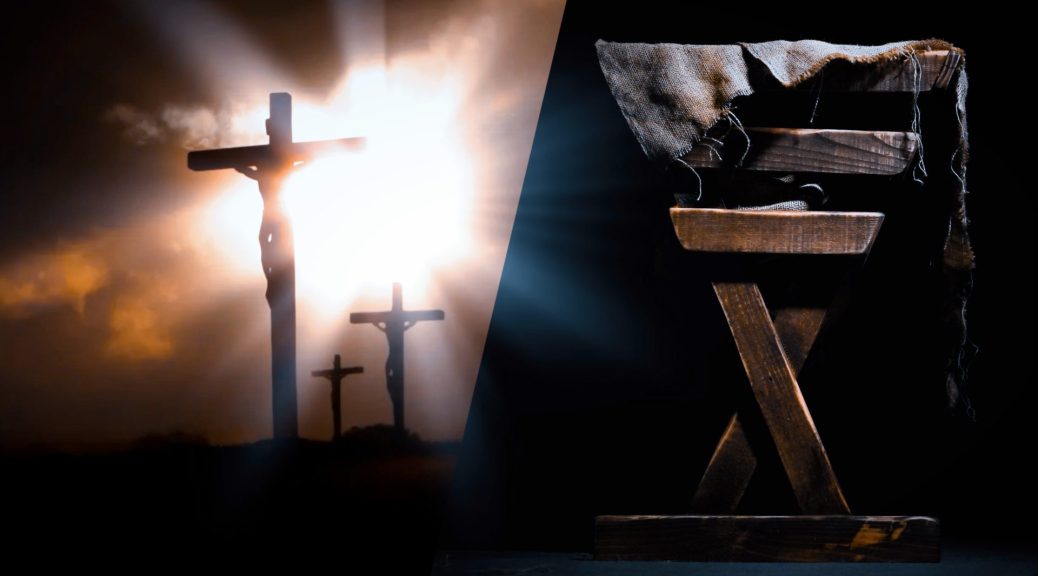
The Jesus Of Bible Prophecy: Christ Is No Longer A Little Baby Or Suffering Servant

Should you be one of the increasingly few who still remember what the real “reason for the season” is this Christmas, then you can’t help but think about Jesus. How, though, in your mind’s eye, do you actually picture Him?

The Christmas Jesus

Because the Christmas holiday celebrates the Savior’s birth, when picturing Jesus, one naturally sees a baby. Popular nativity scenes portray Luke’s description of Jesus as a tiny babe swaddled in strips of cloth and lying in an animal trough. His parents, Mary and Joseph, gaze down adoringly. Shepherds and wise men gape in amazement from their perches along stone walls. The heavenly host flies above majestically singing, “Glory to God in the highest, and on earth peace, goodwill toward men!”

While the angels add a sense of the divine to the Nativity Story, and Hollywood adds the touch of a beam of Bethlehem starlight spotlighting the little family, for the most part, the scene is rather pastoral. We see a peasant family sitting in the hay among the barnyard animals in some sort of cave. It is meant to be a very humble scene.

The Easter Jesus

Because Christmastime is also celebrated by cultural Christians and even non-Christians, the humble imagery of the baby Jesus remains in the mind’s eye. That is, until Easter. Then Jesus is portrayed altogether differently. Now He’s all grown up, fully bearded, yet frail and emaciated. His lithe body suffers from beatings and is covered in lash marks. He is nailed naked to a tree where he hangs limply, bleeding. And there Jesus remains on that cross in the mind’s eye, at least until Christmas returns to reset the mental image of Jesus back into a tiny baby again. And the circle continues.

The Popular Jesus

One of the most popular scenes from the movie Talladega Nights is when the lead character, race car driver Ricky Bobby (played by Will Ferrell), says grace with his family over a feast of fast food. He begins each praise and prayer request with “Dear Lord Baby Jesus” until his wife, Carley, impatiently interrupts with a, “Hey, you know, Sweetie, Jesus did grow up. You don’t always have to call him ‘baby.’” Incensed, Ricky responds with, “Well, I like the Christmas Jesus best, and I’m saying grace. When you say grace, you can say it to grown-up Jesus, or teenage Jesus, or bearded Jesus, or whoever you want.” Even Ricky’s father-in-law, Chip, chimes in with, “He was a man! He had a beard!” From there, the conversation degenerates as each family member describes the “Jesus” they prefer: a ninja fighting off evil samurai, a guy sporting giant eagle’s wings, or a cool fellow singing lead vocals in a band, and so on.

Christians watching this movie tend to squirm, dumbfounded over whether this scene balances closer to blasphemy or comedy. And yet, one cannot help but come away with a profound revelation: most people have created their own “Jesus.”

People see Jesus in the only way they’ve ever encountered Him, and often that’s only during Christmas and Easter. Therefore, Jesus remains to most people as either a helpless baby or a dying man.

The Prophetic Jesus

The beauty and majesty of God’s Prophetic Word introduce us to a third image of Jesus that few, if any, encounter because they never study Bible prophecy. In the prophecies concerning Jesus’ Second Coming, human frailty is stripped away, revealing Christ’s true glory—a divinity that the Apostles could only glimpse at the Transfiguration. Christ’s true form stunned James and John into silence and Peter into babbling. The Apostles had witnessed Jesus in His eternal, glorified state!

In Revelation 1:8, Jesus introduces Himself with the self-identification, “I am the Alpha and the Omega, the Beginning and the End… the Almighty,” breaking out of the box of babyhood with His claim to agelessness and ultimate power. Revelation 1 continues to describe Jesus as “One like the Son of Man,” so only resembling frail humanity in appearance. Clothed with a garment and girded with a golden band, His hair gleams bright white as wool, and His eyes blaze like flames. Jesus’ feet glow like brass refined in a furnace, and His voice thunders with the sound of many waters. Jesus’ holiness blinds with the strength of the sun. The Jesus whom the elderly apostle John encountered caused him to fall at Jesus’ feet, as if he were a dead man.

Jump ahead to Revelation 19, and you’ll stand in awe of the description of Jesus as He triumphantly returns to earth as a warrior king, dispensing righteousness, judgment, and waging total war against Satan’s forces. Jesus bursts out of the heavens riding His white war charger as the armies of Heaven trail endlessly behind Him. Jesus’ eyes blaze like fire, atop His head sit many crowns, His robe is dipped in blood, and He strikes the enemy nations dead with the sword of the Word protruding out of His mouth. Emblazoned on Jesus’ thigh is the title: “King of kings and Lord of lords.”

Often, it is more palatable to paint Jesus inside the box of one’s mind as a little baby or suffering servant, but is that the genuine Jesus? In part, yes, for they were as much a part of Jesus as our own baby, childhood, and teenage selves once were to us then, but are no longer.

Jesus eternal is the Jesus of Bible prophecy. So stand in awe of your Savior this Christmas season, and all year long!


Source: The Jesus Of Bible Prophecy: Christ Is No Longer A Little Baby Or Suffering Servant – Harbinger’s Daily

Our Daily Bread – From Fright to Delight


Do not be afraid. I bring you good news that will cause great joy for all the people. Luke 2:10

Today’s Scripture

Luke 2:8-14

Listen to Today’s Devotional

Apple LinkSpotify Link

Today’s Devotional

Many historians believe the first-ever radio broadcast of music and speech was heard by radio operators on US Navy and other ships in the Atlantic on Christmas Eve, 1906. Instead of the usual beeps and pulses to transmit codes, they listened to Reginald Fessenden play a violin solo of the Christmas carol “O, Holy Night.” Fessenden closed his broadcast by echoing the angels’ praise: “Glory to God in the highest heaven!” (Luke 2:14). The listeners must have been startled by the evocative music and statement of praise over the birth of Jesus.

The first people surprised by Jesus’ birth were the shepherds who’d been keeping to their usual business of watching their sheep at night (Luke 2:8). Then an angel appeared, shining with the glory of God and giving the shepherds a fright (v. 9). The angel urged them not to be afraid and declared: “I bring you good news that will cause great joy for all the people. Today in the town of David a Savior has been born to you; he is the Messiah, the Lord” (vv. 10-11). The shepherds left their sheep to investigate the angel’s words and found the baby lying in a manger, just as they had been told (vv. 16, 20).

The shepherds accepted this good news of great joy. May we too rejoice and share the wonders of Jesus’ birth and life.

Reflect & Pray

How do you think you would have reacted to the news the angel proclaimed? Why do you think God chose to reveal His Son’s birth to them?


Dear Jesus, Your birth was revealed to the shepherds, for You don’t despise anyone, and You came to earth to love and save me.


Discover more about the Christmas story.


Today’s Insights

In Luke 1, we read Mary’s song in which she “glorifies . . . God my Savior” (vv. 46-47). She includes herself by referring to “the humble state of [God’s] servant” (v. 48) and notes how God “has brought down rulers from their thrones but has lifted up the humble” (v. 52). In Luke 2, God lifts up the humble when the angel appears first to shepherds with the good news of Jesus’ birth (vv. 9-12). Shepherds lived “on the margins,” rendered ceremonially unclean by a job whose requirements kept them outside the city limits and outside civic norms. Shepherds found it difficult even to participate in the religious festivals and sacrifices. Yet they were the chosen eyewitnesses for the angelic celebration on a Bethlehem hillside (vv. 13-14). The angel spoke of “great joy for all the people” (v. 10)—shepherds included. We’re included too. May we celebrate the wonder of Christ’s birth.


http://www.odb.org

Joyce Meyer – Persevere in Right Thinking


For the rest, my brethren, delight yourselves in the Lord and continue to rejoice that you are in Him. To keep writing to you [over and over] of the same things is not irksome to me, and it is [a precaution] for your safety.

Philippians 3:1 (AMPC)

We must consistently choose right thinking, right words, and right action. It’s not what you choose to do right one time that’s going to change your life. It’s doing it over and over and over. I frequently tell people, “When you get so tired of doing it you think you can’t stand it, you do it again and again and again and again.” Persistence always pays off, and the Bible says that the diligent person will be successful. Don’t ever give up!

If you’re the kind of person who refuses to give up, I can assure you that you will get your breakthrough and enjoy a lot of victory in your life.

Prayer of the Day: Lord, give me strength to stay persistent in doing what’s right, even when I feel tired. Help me trust that my diligence will bring Your blessing and victory, amen.


http://www.joycemeyer.org