Category Archives: Uncategorized

JRR TOLKIEN DAY

Whether you know the characters of The Hobbit and The Lord of the Rings from the books or movies, you will enjoy celebrating JRR Tolkien Day on Jan. 3


J.R.R. Tolkien Day on January 3 is “The Lord of the Rings” author’s birthday and you’re encouraged to toast him in celebration. You may remember from the story that Frodo toasts his Uncle Bilbo on Bilbo’s birthday every year. Now, over sixty years after the trilogy’s original publication, The Tolkien Society asks fans to honor Tolkien’s birth, which itself was January 3, 1892. Come up with a few words of adulation on your own, or use the official Society phrase: “The Professor!” If you want to celebrate J.R.R. Tolkien Day with a few extra meals in addition to the toast, in true hobbit fashion, Frodo would certainly approve!


History of JRR Tolkien Day

Aside from the fact that “The Hobbit” and “The Lord of the Rings” directly influenced the entire fantasy genre and opened the door for the creativity of writers like David Eddings, Robert Jordan, and Ursula K. LeGuin, among many more, many critics describe Tolkien’s magnum opus as an allegory combining the horrors of World War I with the sweeping societal change of pastoral life’s gradual crumbling under the weight of industrialism. Respectively, think of the sweeping battle scenes in LOTR, and then the hazy summer of the Shire compared with the blighted, tree-bare landscape of Saruman’s domain.

The clash of these opposing worldviews and the way Tolkien masterfully depicted it, amplified by the series of Peter Jackson films and their visual splendor, make it no surprise that the Tolkien Society, founded in 1969, is still around today.

The author interacted with the Society in its early days, his assistant phoning their leadership in 1972 after they sent him a container of top-shelf tobacco in honor of his becoming a Commander of the Order of the British Empire; she said that he’d considered the gift to be the highest honor of the whole to-do.

Of course, it was the Tolkien Society that declared their commitment to publicly celebrate Tolkien’s birthday with a toast each year on January 3. So after breakfast is out of the way, along with “second breakfast” and “elevensies,” lunch, and a puff of Longbottom Leaf, have a friend over and drink to the juggernaut of fantasy fiction. The professor!


HOW TO CELEBRATE J.R.R. TOLKIEN DAY

  1. Read the books, or watch the movies or both

    The best way to celebrate J.R.R. Tolkien Day is to read one of the classic books. If you’ve never read “The Lord of the Rings” trilogy, that’s a good place to start. Granted, you probably won’t be able to read all three books in one day. So cheat a little and watch one of the movies instead, or if you have the entire day to celebrate, maybe tackle all three!

  2. Eat a few extra meals or snacks

    Hobbits certainly enjoy a good meal … or half a dozen meals. As the book says, hobbits would “enjoy six meals a day, if they could get them.” And the great thing about these pint-sized powerhouses is that they will eat just about anything that tastes good, so your extra meals can involve just about anything you like: cakes, bread, and ale, it’s all fair game. It’s a good thing hobbits aren’t worried about counting carbs!

  3. Work the words “my precious” into every conversation

    Gollum may be one of the creepiest characters in all of Middle Earth — heck, maybe in all of literature — but his referring to “the ring” as “my precious” is classic. So spend the day calling everything in sight “my precious”: your wedding ring, your spouse, your vehicle, the stapler on your desk, it doesn’t matter. Just be careful around the edges of any volcanic chasms…


FIVE AMAZING FACTS ABOUT THE FILMING OF THE “RINGS” MOVIES (GG):

  1. Taking a hike

    Sean Bean, “Boromir” in the films, is deathly afraid of flying, so he took to walking to locations in the early morning, which he had to do in full makeup and costume since there were no tents nor personnel for those things on-site at his destinations.

  2. Second fiddle?

    Irish actor Stuart Townsend (“Queen of the Damned,” “The League of Extraordinary Gentlemen”) was originally cast as “Aragorn,” and when he was cut loose at the last minute, Viggo Mortensen was chosen, the seasoned actor accepting the role only because of his LOTR-fan son’s pleading.

  3. Don’t take your eyes off the screen

    Like the late Stan Lee in Marvel Comics movies, writer-director Peter Jackson has cameos in each of the three “Rings” films, and so do each of his children.

  4. Moth-man prophecy?

    The species of moth used in the shots of Gandalf summoning his insect ally whilst prisoner at the top of Orthanc only lives one day; it was born that morning and died right after the first successful take.

  5. “Don’t call me short”

    Ironically, John Rhys-Davies, who played the dwarf “Gimli” in the trilogy, was the tallest actor on the set, at six-foot-one.


WHY WE LOVE J.R.R. TOLKIEN DAY

  1. It’s a reminder that no obstacle is too tough

    The journeys and challenges described in Tolkien’s books are unforgettable for many reasons, but the idea of a group of people working together to complete a goal is just plain inspirational. Perhaps you aren’t doing anything quite as important as saving the world from evil, but that doesn’t mean you can’t benefit from some inspiration in your everyday life.

  2. You can discover a new book

    Although Tolkien is best known for “The Lord of the Rings,” he wrote several other books (some of them novel-length background stories of “Rings” characters), as well as scholarly papers. Tolkien’s son contributed to and published a few more of Tolkien’s writings after his death. So no matter what, there’s plenty more to unearth.

  3. The “little guy” wins

    The little guy winning is a common theme in literature. But there aren’t many “littler” guys in books than hobbits. And even though the hobbits in Tolkien’s books don’t really have any uncommon strength or special powers like the wizards and elves do, they still manage to be heroic, making tough choices and saving the day. Observe J.R.R. Tolkien Day by celebrating the victory of the underdog.


Source: JRR TOLKIEN DAY – January 3, 2026 – National Today


My Favorite Book About JRR Tolkien – Info from – wikipedia


Letters from Father Christmas, formerly known as The Father Christmas Letters, are a collection of letters written and illustrated by J. R. R. Tolkien between 1920 and 1943 for his children, from Father Christmas. They were released posthumously by the Tolkien estate on 2 September 1976, the 3rd anniversary of Tolkien’s death. They were edited by Baillie Tolkien, second wife of his youngest son, Christopher. The book was warmly received by critics, and it has been suggested that elements of the stories inspired parts of Tolkien’s The Lord of the Rings.

Plot

The stories are told in the format of a series of letters, told either from the point of view of Father Christmas or his elvish secretary. They document the adventures and misadventures of Father Christmas and his helpers, including the North Polar Bear and his two sidekick cubs, Paksu and Valkotukka. The stories include descriptions of the massive fireworks that create the northern lights and how Polar Bear manages to get into trouble on more than one occasion.

The 1939 letter has Father Christmas making reference to the Second World War,[1] while some of the later letters feature Father Christmas’ battles against goblins, which were subsequently interpreted as being a reflection of Tolkien’s views on the German menace.[2]

Publication

The letters themselves were written over a period of over 20 years to entertain Tolkien’s children each Christmas. Starting in 1920 when Tolkien’s oldest son was aged three,[1] each Christmas Tolkien would write a letter from Father Christmas about his travels and adventures.[3] Each letter was delivered in an envelope, including North Pole stamps and postage marks as designed by Tolkien.[4]

Prior to publication, an exhibition of Tolkien’s drawings was held at the Ashmolean Museum. These included works from The HobbitThe Lord of the Rings, and the Letters from Father Christmas.[5][6] The first edition was published by Allen and Unwin on 2 September 1976 under the name The Father Christmas Letters, three years after Tolkien’s death. The Houghton Mifflin edition was released later that year on 19 October.[7] It was the third work by Tolkien to be released posthumously, after a collection of poems and the “Guide to the Names in The Lord of the Rings“.[8] Edited by Baillie Tolkien,[9] the second wife of Christopher Tolkien,[1] it includes illustrations by Tolkien for nearly all the letters; however, it omitted several letters and drawings.[10]

When the book was republished in 1999, it was retitled Letters from Father Christmas and several letters and drawings not contained in the original edition were added.[10][11] One edition in 1995 featured the letters and drawings contained in individual envelopes to be read in the manner they were originally conceived to be.[12]

Reception

The reception to the first two works published posthumously had been warm, which was subsequently thought to be due to Tolkien’s recent death. The response to the Letters from Father Christmas was much more measured and balanced.[8] Jessica Kemball-Cook suggested in her book Twentieth Century Children’s Writers that it would become known as a classic of children’s literature,[13] while Nancy Willard for The New York Times Book Review also received the book positively, saying “Father Christmas lives. And never more merrily than in these pages.”[1] In 2002, an article in The Independent on Sunday described the work as rivalling “The Lord of the Rings for sheer imaginative joy”.[3] In 2023, an extract from one of the Letters from Father Christmas was read out by actor Jim Broadbent at the televised ‘Together at Christmas’ carol service in Westminster Abbey on Friday 8 December, broadcast to the nation on Christmas Eve that year.[14]

Influence

Paul H. Kocher, whilst writing for the journal Mythprint, suggested that the creatures in the Letters from Father Christmas may have been a precursor to those which appeared in Tolkien’s later works such as The Lord of the Rings,[15] a view which was shared by Laurence and Martha Krieg in a review in the journal Mythlore (issue #14).[16] For example, the 1933 letter features an attack on Polar Bear by a band of goblins. The Kriegs suggested that the wizard Gandalf may have been developed from Father Christmas.[16]


References

  1.  Willard, Nancy (5 December 1976). “Christmas Letters”The New York Times. Retrieved 22 November 2012.
  2.  Walsh (2001): p. 63
  3.  “Grand Tours: Who Travels the World in a Single Night?”The Independent on Sunday. 22 December 2002. Archived from the original on 21 September 2013. Retrieved 22 November 2012.
  4.  “Tolkien’s “Father Christmas Letters””The New York Times. 7 December 2002. Archived from the original on 16 December 2012. Retrieved 22 November 2012.
  5.  Johnson (1986): p. 136
  6.  Lowe, Ian (13 January 1994). “Gazette: Diana Caithness”The Independent. Retrieved 22 November 2012.[dead link](subscription required)
  7.  “The Father Christmas Letters”. The Tolkien Library. Archived from the original on 12 January 2013. Retrieved 22 November 2012.
  8.  Johnson (1986): p. 133
  9.  Drew (1997): p. 421
  10.  “Letters from Father Christmas paperback (16.08.09)”. The Tolkien Library. Archived from the original on 26 January 2013. Retrieved 22 November 2012.
  11.  Thompson (2007): p. 11
  12.  “Stocking Fillers”The Independent. 19 November 1995. Archived from the original on 16 December 2012. Retrieved 22 November 2012.(subscription required)
  13.  Johnson (1986): p. 188
  14.  “Families celebrate Christmas at royal carol service”. Westminster Abbey. 24 December 2023. Retrieved 25 December 2023.
  15.  Johnson (1986): p. 158
  16.  Johnson (1986): p. 159

Sources


Our Daily Bread – God’s Great Power


You will receive power when the Holy Spirit comes on you; and you will be my witnesses . . . to the ends of the earth. Acts 1:8

Today’s Scripture

Acts 1:1-9

Listen to Today’s Devotional

Apple LinkSpotify Link

Today’s Devotional

Our city fell almost dark after a massive ice storm took down miles of power lines, leaving many of our friends without electricity to heat their homes in the dead of a frigid winter. Families longed to see repair trucks in their neighborhoods working to restore power. Later, I learned that a church parking lot served as a temporary command center for the vehicles being sent out to assist those in need.

Hearing about the repair trucks brought to mind Jesus’ command to His disciples in the book of Acts. For forty days after His resurrection, Christ appeared to His disciples to encourage and teach them about the kingdom of God (Acts 1:3). Before Jesus’ return to heaven, He gave them one last promise: “You will receive power when the Holy Spirit comes on you” (v. 8).

Christ promised that God’s incomparably great power would be available to the disciples through His Spirit. But the purpose of having power wasn’t to keep it to themselves. Instead, the disciples let God empower them in the mission of telling others how to experience once more the connection to God’s power and love that was broken by sin.

As we go out into our communities, we have the same power and calling. Empowered by God’s Spirit, we can care for those who are suffering and share how they too can have access to God’s power.


Reflect & Pray

How have you experienced the power of God’s Spirit to help you? How might you share that message with others?


Dear God, thank You for the gift of Your power and love.

Check out this simple prayer you can use to connect with the Holy Spirit.

Today’s Insights

The book of Luke ends with Jesus’ ascension into heaven (Luke 24:50-53). The book of Acts, also written by Luke, begins with him reminding his reader, Theophilus, of that earlier account by referring to “my former book” (Acts 1:1). Luke then affirms the truth of Christ’s resurrection: “After his suffering, [Jesus] presented himself to them and gave many convincing proofs that he was alive” (v. 3). Luke concludes his introduction by assuring us of Christ’s return: “This same Jesus . . . will come back in the same way you have seen him go into heaven” (v. 11). The reality of Jesus’ triumph over death and His promised return are foundational to our faith—faith that allows us to live out His power in our lives.


http://www.odb.org

Guideposts – Devotions for Women – Righteousness by Faith


Abram believed the Lord, and he credited it to him as righteousness.—Genesis 15:6 (NIV)

Salvation is not earned through our efforts or good works, but through faith. Belief and trust in God’s promises are central to a righteous life. Ask God to help you believe when you are plagued by doubt. Have the courage to step out in faith, knowing God is with you.

Heavenly Father, thank You for the example of Abram, who believed in You despite his doubts and fears and trusted in Your promises even when they seemed impossible.


https://guideposts.org/daily-devotions/devotions-for-women/devotions-for-faith-prayer-devotions-for-women/

Billy Graham – The Truth Sets Us Free


Come unto me, all ye that labor . . .
—Matthew 11:28

The mark of a true Christian is found in his personal relationship to the Person of Jesus Christ. Christianity is Christ. Christ is Christianity. I speak reverently when I say that Jesus is more than His ideas. All that He said was true, but without Him even the truth would have been powerless. Men know the power of truth, and truth is that which sets men free. Jesus said, “I am the truth.”

What is truth? Listen to this message from Billy Graham.

Lea este devocional en español en es.billygraham.org.

Prayer for the day

Thank You, Jesus, for the shackles that have been broken in my life!


Home

WISDOM FROM OSWALD

. . . until we all reach unity in the faith. . . , attaining to the whole measure of the fullness of Christ. —Ephesians 4:13

In the redemption, Jesus Christ rehabilitated the whole of humanity, putting it back into a right relationship with God. Our Lord’s sacrifice means that now each and every one of us is able to enjoy an intimate, personal relationship with the Father. But developing a spiritual life of our own isn’t the only reason we are here. We are also here to “reach unity in the faith”—to realize Jesus Christ in our shared life in the church.

“Now you are the body of Christ, and each one of you is a part of it. And God has placed in the church first of all apostles, second prophets, third teachers . . .” (1 Corinthians 12:27–28). The first great obedience of the church is to Jesus Christ. When the church stops putting Christ first and starts focusing on its own development as an organization, it ceases to be a spiritual society. The reason Jesus Christ places apostles and teachers in the church isn’t to build up a worldly institution; it’s to build up the body of Christ—the unified community of believers.

Am I building up the shared body of Christ? Or am I seeking personal development only? If I am keeping my focus on the essential thing—my relationship to Jesus Christ—then I am doing what is right for the entire body. If instead I am wanting and seeking things for myself, my relationship to Christ and to his community is distorted. It will be a big humiliation to recognize that I haven’t been concerned about realizing Jesus Christ, but only about realizing what he has done for me.

My goal is God himself, not joy nor peace,
Nor even blessing, but himself, my God.

—Frances Brook

Am I measuring my life by this standard, or by something less?

Psalms 4-6; Acts 17:16-34

It is impossible to read too much, but always keep before you why you read. Remember that “the need to receive, recognize, and rely on the Holy Spirit” is before all else.Approved Unto God, 11 L


https://utmost.org/

Joyce Meyer – Guided by Peace

And let the peace (soul harmony which comes) from Christ rule (act as umpire continually) in your hearts [deciding and settling with finality all questions that arise in your minds]….

— Colossians 3:15 (AMPC)

We often ask, “How can I know what God’s will is?” There are several ways that God speaks to His people, and peace—or the lack thereof—is one of the primary ways. Peace in your soul confirms that your actions or intended actions are within God’s will for you; it acts as an umpire, calling the “plays” or choices you’re making as right or wrong for you.

We make huge mistakes and put our futures in jeopardy when we move forward with things without having peace in our hearts about them. It is always best to wait to do anything until we are assured that it is pleasing to God.

There is also the principle of what I call “stepping out to find out.” We may never know what we are to do unless we begin to move in a certain direction. When we do, we will quickly discover whether peace and grace are with us to continue in that direction or perhaps to go another way. Always let the peace of God rule in your heart, and your life will be fulfilling rather than disappointing.

Prayer of the Day: Father, thank You for peace. Guide me by peace into Your perfect will for me. Teach me to wait on You until Your peace fills my heart as I make decisions. Thank You. In Jesus’ name, amen.

http://www.joycemeyer.org

Hagee Ministries; John Hagee –  Daily Devotion

For those who live according to the flesh set their minds on the things of the flesh, but those who live according to the Spirit, the things of the Spirit.

Romans 8:5

A great conflict exists in each one of us when our cravings run up against what we actually need. We wrestle with that pain daily.

Spiritually, emotionally, physically, and financially – we long to pursue our own paths. Yet, at the same time, we long to do what God asks. Paul said that things he longed to do, he ended up neglecting; the things he did not want to do, he carried through to completion (Romans 7:19-25).

When someone offends us, we can “live according to the flesh” and plot our revenge or we can “live according to the Spirit” and pray for those who harass us. We might be tempted to splurge on ourselves, but God prompts us to help someone in need.

If we are carnally minded and pursue fleshly things, it brings death. We have no hope of pleasing the Lord. However, if we set our minds on Godly things, we enjoy life and peace.

When we crave Him and the things of the Spirit, we get Him. When we long for His will, we receive His joy. When we crave His purpose and plan, we are rewarded with His peace and provision. Let’s set our minds on things above!

Blessing

May the Lord bless you and keep you. May the Lord make His face to shine upon you and be gracious unto you and give you His peace. Set your mind on the things of the Spirit. Hide your life in Christ so that you may share in His glorious appearing. All praise to Him!

Today’s Bible Reading: 

Old Testament

Exodus 2:11-3:22

New Testament 

Matthew 17:10-27

Psalms & Proverbs

Psalm 22:1-18

Proverbs 5:7-14

https://www.jhm.org

Kids4Truth Clubs Daily Devotional – God Is Sovereign

“But our God is in the heavens: he hath done whatsoever He hath pleased.” (Psalm 115:3)

Imagine being surrounded by a large invisible net. Imagine that everywhere you go – school, your house, your friend’s house – you are surrounded by this net. The net is there to stop everything from touching you. If someone throws a volleyball at you during P.E. class, it would just bounce off of nothing. If someone throws their carrots at you in the lunch room, the carrots won’t touch you. Nothing can get past the net!

One of God’s gifts to us is His sovereignty. God’s sovereignty is much like an invisible net. Situations in life – both good and bad – cannot touch you without getting God’s permission.

The word sovereignty is a big word with a simple meaning. Sovereign means “chief” or “highest in power.” To say that God is sovereign means that God is the One in charge of everything – it means nothing can get past God’s control. A car accident can’t harm you without God’s permission. Surprises and blessings can’t touch you without God’s permission. God is in control of everything!

God’s sovereignty is like a net that surrounds and protects you.

My Response:
» How does knowing that God is sovereign change my life?

Kids4Truth Clubs Daily Devotional – God Made You

“I will praise thee; for I am fearfully and wonderfully made: marvellous are thy works; and that my soul knoweth right well. My substance was not hid from thee, when I was made in secret, and curiously wrought in the lowest parts of the earth.” (Psalm 139:14-15)

God made you. Before you were born – even long before your parents were even born – God had plans for you. The Bible says that in God’s book He had a record that told all that would happen to you. No matter what you look like or what talents or disabilities you might have been born with, God planned it all. He made you just the way you are for His own glory.

Sometimes you might be tempted to complain about how God made you. You may wish you looked like someone else, or maybe you wish you had a natural talent like one of your classmates. The Bible says that you were fearfully and wonderfully made and that God’s thoughts toward you are precious.

Although you should never think boastfully about yourself, you should recognize that God made you special and unique, and He has a special plan for your life that includes what you look like and what natural talents you have. Thank God today for making you just the way you are, and look for ways that you can bring glory to Him with your appearance and your talents.

God made me, and His thoughts toward me are precious.

My Response:
» Am I tempted to complain about the way I look or the disabilities I have?
» Do I thank God for everyone He’s made?

Grace to You; John MacArthur – The Importance of Brotherly Love

 “Let love of the brethren continue” (Hebrews 13:1).

Genuine love among Christians is a testimony to the world, to ourselves, and to God.

The importance of brotherly love extends well beyond the walls of your local church or fellowship hall. In John 13:35 Jesus says, “By this all men will know that you are My disciples, if you have love for one another.” In effect, God has made love for one another the measuring stick by which the world can determine if our Christian profession is genuine. That’s why it’s so important that we have a selfless attitude and sincerely place the interests of our brothers and sisters in Christ ahead of our own.

If you are a parent, you know what a delight it is when your children love and care for one another. Such harmonious relations make for a close-knit family and fulfill the words of the psalmist: “Behold, how good and how pleasant it is for brothers to dwell together in unity!” (Ps. 133:1). God is both pleased and glorified when Christian brothers and sisters love each other and minister together in harmony.

Neither the author of Hebrews nor the apostle John is equating love with a sentimental, superficial affection. As already suggested, practical commitment marks true brotherly love. If you do not have such commitment, it is fair to question your relationship to God (1 John 3:17). Refusing to help a fellow believer when you can, John reasons, reveals that you don’t really love him. And if you don’t love him, God’s love can’t be in your heart, which proves that you don’t belong to Him. This logic is sobering and persuasive. It should motivate us all the more to see the importance of practicing brotherly love: “Let us not love with word or with tongue, but in deed and truth. We shall know by this that we are of the truth, and shall assure our heart before Him” (1 John 3:18-19).

Suggestions for Prayer

Ask the Lord’s forgiveness for times when you did not show brotherly love or when you were reluctant to help another Christian in need.

For Further Study

Read Luke 6:31-35 and notice how our duty to love extends even beyond the sphere of fellow believers. What kind of reward results?

From Strength for Today by John MacArthur

http://www.gty.org/

Truth for Life; Alistair Begg – Responses to the King

He inquired of them where the Christ was to be born. They told him, “In Bethlehem of Judea, for so it is written by the prophet.”

Matthew 2:4–5

When Jesus was born, seven centuries after the prophet Micah had prophesied where He would appear, His arrival was met with a variety of different reactions—and those responses are the same today as they were then: hostility, indifference, or faith.

King Herod was the epitome of hostility toward Jesus. He stands for everyone who says to themselves, “I don’t mind some religious person sitting quietly in the back seat, but I don’t want anybody driving the car of my life.” A religious leader who keeps quiet is acceptable; one who makes claims on a person’s life and who does not agree with what they already think is not. Herod did all he could to ensure there would be no king to rival him (Matthew 2:16-18). And many do so still today.

Jerusalem’s religious professionals responded to the arrival of Jesus with indifference. When Herod asked them about the coming of the Christ, they were able to answer his questions with great specificity. They were aware that Micah had prophesied that He would be born in Bethlehem; but they simply didn’t care. They wouldn’t even take the time to make a six-mile journey to meet and worship the newly born, long-awaited King of the Jews. They completely disregarded Him. They were too busy with their religion to make time for their rescuing King.

Then there were the wise men, this group of foreign astrologers who saw a star in the heavens, worked out what it was announcing, packed their bags, and responded to Jesus in faith. What moved men who were authorities in their field to bow down at the cradle of a child? How does that happen? Only by the power of God. And it was they, and not Herod or the priests, who were the ones who “rejoiced exceedingly with great joy” (Matthew 2:10).

There is only one true dividing line between people. It has nothing to do with skin color, intellect, or social status. It is the dividing line between unbelief—whether that unbelief manifests itself as hostility or indifference—and unbelief. We may note that the Western world grows in hostility to a God who insists on ruling His world, but we should also note that “religious” people are also at risk of unbelief: the unbelief of indifference. Those of us who have heard the Christmas story countless times, who know our Old Testaments, and who are in church Sunday by Sunday are not immune to the indifference that is seen in a lack of joy over the Lord and a lack of response to His word when it calls us to change our plans. And whoever we are, if we won’t have Jesus as our King in this life, we won’t live in His kingdom on the other side of death. If you choose to ask Jesus to leave you alone, either in your hostility or in your religiosity, He will leave you alone—forever. Your response to Jesus has eternal significance. Look on Him who came to die for hostile and indifferent sinners, then, and allow His great love to soften your heart so that you respond to Him in real, joyful, obedient faith, today and every day.

Questions for Thought

How is God calling me to think differently?

How is God reordering my heart’s affections — what I love?

What is God calling me to do as I go about my day today?

Further Reading

Matthew 2:1–11

Topics: Free Will Jesus Christ Pride

Devotional material is taken from the Truth For Life daily devotionals by Alistair Begg

http://www.truthforlife.org

Our Daily Bread — The Skill of Compassion

Bible in a Year:

Be devoted to one another in love . . . joyful in hope, patient in affliction, faithful in prayer.

Romans 12:10–12

Today’s Scripture & Insight:

Romans 12:9–21

“A thorn has entered your foot—that is why you weep at times at night,” wrote Catherine of Sienna in the fourteenth century. She continued, “There are some in this world who can pull it out. The skill that takes they have learned from [God].” Catherine devoted her life to cultivating that “skill,” and is still remembered today for her remarkable capacity for empathy and compassion for others in their pain. 

That image of pain as a deeply embedded thorn that requires tenderness and skill to remove lingers with me. It’s a vivid reminder of how complex and wounded we are, and of our need to dig deeper to develop true compassion for others and ourselves.

Or, as the apostle Paul describes it, it’s an image that reminds us that loving others like Jesus does requires more than good intentions and well-wishes—it requires being “devoted to one another” (Romans 12:10), “joyful in hope, patient in affliction, faithful in prayer” (v. 12). It requires being willing to not only “rejoice with those who rejoice” but to “mourn with those who mourn” (v. 15). It requires all of us.

In a broken world, none of us escape unwounded—hurt and scars are deeply embedded in each of us. But deeper still is the love we find in Christ; love tender enough to draw out those thorns with the balm of compassion, willing to embrace both friend and enemy (v. 14) to find healing together.

By:  Monica La Rose

Reflect & Pray

When have you experienced the healing power of compassion? How can you cultivate a community of healing?

Loving God, thank You for Your compassion. Help me to love others like that.

http://www.odb.org

Our Daily Bread — One Thing Needed

Bible in a Year:

You are worried and upset about many things, but few things are needed—or indeed only one.

Luke 10:41–42

Today’s Scripture & Insight:

Luke 10:38–42

One weekend in March, I led a retreat on the theme of Mary and Martha, the sisters in Bethany whom Jesus loved along with their brother Lazarus (John 11:5). We were in a remote spot along the English coastline. When we were snowed in unexpectedly, many of the participants remarked how the extra day together meant they could practice sitting at Christ’s feet as Mary did. They wanted to pursue the “one thing . . . needed” (Luke 10:42 nkjv) that Jesus lovingly told Martha she should embrace, which was choosing to draw close and learn from Him.

When Jesus visited the home of Martha, Mary, and Lazarus, Martha wouldn’t have known He was coming in advance, so we can understand how she could have been upset with Mary for not helping with the preparations to feed Him and His friends. But she lost sight of what really mattered—receiving from Jesus as she learned from Him. Christ wasn’t scolding her for wanting to serve Him but rather reminding her that she was missing the most important thing.

When interruptions make us irritable or we feel overwhelmed about the many things we want to accomplish, we can stop and remind ourselves what really matters in life. As we slow ourselves down, picturing ourselves sitting at the feet of Jesus, we can ask Him to fill us with His love and life. We can revel in being His beloved disciple.

By:  Amy Boucher Pye

Reflect & Pray

What distractions keep you from receiving from Jesus? How can you sit at His feet today?

Dear Jesus, thank You for loving to instruct me in Your ways. Help me not to get distracted by my activities, but to focus on You.

http://www.odb.org

Grace to You; John MacArthur – The Qualities of True Wisdom

 “The wisdom from above is first pure, then peaceable, gentle, reasonable, full of mercy and good fruits, unwavering, without hypocrisy” (James 3:17).

True wisdom is evident in a person’s behavior.

What is true wisdom? James answers that question in verse 17 by pointing out the characteristics or qualities of true wisdom. After purity, the next quality is “peaceable,” which means “peace loving” or “peace promoting.” It refers to someone who doesn’t create confusion or disorder. He doesn’t promote himself or compromise truth but makes peace.

True wisdom is also “gentle.” A gentle person will submit to dishonor, disgrace, mistreatment, and persecution with an attitude of humility, courteousness, kindness, patience, and consideration. He will not display hatred, malice, or revenge.

True wisdom is also characterized as “reasonable.” It refers to someone who is willing to yield, who is easily persuaded, teachable, and compliant. It was used of a person who willingly submitted to military discipline or who observed legal and moral standards in life and willingly submitted to them. A wise person manifests such “reasonable” traits concerning God’s standards for life.

“Full of mercy” refers to someone who shows concern for people who suffer and is quick to forgive. He demonstrates kindness and compassion toward others.

“Good fruits“ refer to all good works in general or a wide variety of spiritual deeds. The Christian demonstrates the genuineness of his salvation through his good deeds—works that are produced by faith (James 2:14-20) and are called “the fruit of the Spirit” (Gal. 5:22-23) or “the fruit of righteousness” (Phil. 1:11).

“Unwavering” refers to someone who is consistent and doesn’t vacillate. He is undivided in his commitment, doesn’t make unfair distinctions, and is sincere in his faithfulness to God.

“Without hypocrisy” is the climax of true wisdom and speaks of someone who is utterly genuine. He isn’t a phony or fake. A truly wise person manifests sincere behavior.

If true wisdom is part of your life, it will be evident in your behavior. Make it your aim to reflect the qualities of true wisdom so that others may see Christ in you.

Suggestions for Prayer

Ask God to help you develop the qualities of true wisdom in your life. But before you do, make sure you’re being motivated by a pure heart.

For Further Study

Read Matthew 5:1-16, noting how the words of Christ parallel James 3:17.

From Strength for Today by John MacArthur 

http://www.gty.org/

Joyce Meyer – God Even Cares About Remotes and Car Keys

But the Advocate, the Holy Spirit, whom the Father will send in my name, will teach you all things and will remind you of everything I have said to you.

— John 14:26 (NIV)

Countless times over the years, the Holy Spirit has reminded me where things are that I have misplaced and to do things I have forgotten to do. He has also kept me on the right track by reminding me of what God’s Word says about certain issues at key times of decision in my life.

I learned I could trust God to help with big decisions by taking small needs to Him, too. One time we had some family members over and wanted to watch a movie, but we couldn’t find the remote control. We searched everywhere for it, but nothing was producing the remote control. I decided to pray. So silently in my heart I said, “Holy Spirit, show me where the remote control is, please.” Immediately in my spirit I thought of the bathroom and, sure enough, that’s where it was.

The same thing happened to me concerning my car keys one day when I needed to leave. I was in a time crunch and couldn’t find my keys. I searched frantically to no avail and then decided to pray. In my spirit I saw the keys on the front seat of my car, and that is exactly where they were.

One of the gifts of the Holy Spirit discussed in 1 Corinthians 12 is the word of knowledge. God gave me a word of knowledge about the remote control as well as the misplaced keys. We can count on the Holy Spirit to remind us of things we need to be reminded of. If we needed no help, we would always perfectly remember everything and never need to be reminded; but if we are honest, we all know that is not the case.

If the Lord cares enough to speak to us about remote controls and lost keys, think how eager He must be to talk to us about more intimate things.

If you need help learning to trust God with the big decisions in your life, as I did, start by taking your small needs to Him. He cares about all your needs, no matter how insignificant they may seem!

Prayer of the Day: Father God, thank You for Your guidance where both big and small things in my life are concerned. Help me to trust You in everything I do, every decision I make, and to always follow peace, amen.

http://www.joycemeyer.org

Generating A False god: ChatGPT Goes Viral With ‘Fake Bible Passage’ Portraying Jesus ‘Accepting’ Transgenderism 

With the advent of AI (artificial intelligence) such as ChatGPT, more and more people are turning to these bots to answer their questions, complete tasks, and in the case of the story I’m about to share with you, even to offer (false) encouragement. According to a Reddit post that went viral, a trans-identifying individual posted, “I was feeling sad today,” and so this person turned to AI for encouragement by asking ChatGPT to write a “fake Bible passage about Jesus accepting trans people.”

Here’s the text that ChatGPT came up with:

And a woman, whose heart was divided between spirit and body, came before him. In quiet despair, she asked, ‘Lord, I come to you estranged, for my spirit and body are not one. How shall I hope to enter the kingdom of God?’

Jesus looked upon her with kindness, replying, ‘my child, blessed are those who strive for unity within themselves, for they shall know the deepest truths of my Father’s creation. Be not afraid, for in the kingdom of God, there is no man nor woman, as all are one in spirit. The gates of my Father’s kingdom will open for those who love and are loved, for God looks not upon the body, but the heart.

Now there’s so much I could say about this fake “Bible” passage written by a bot that clearly pulled from the culture, not God’s Word, to construct a supposed answer from Jesus. But I want to start by saying this: this individual didn’t need a fake Bible passage to find verses about Jesus “accepting” (note the quote marks: I’ll explain more below) individuals who identify as trans—he or she could have just gone straight to the actual Word of God!

John 10:9 KJV – “I am the door: by me if any man enter in, he shall be saved, and shall go in and out, and find pasture.”

Romans 10:9 KJV – “That if thou shalt confess with thy mouth the Lord Jesus, and shalt believe in thine heart that God hath raised him from the dead, thou shalt be saved.”

John 3:16 KJV – “For God so loved the world, that he gave his only begotten Son, that whosoever believeth in him should not perish, but have everlasting life.”

Actually, we know who ultimately wrote those ChatGPT “verses”: the father of lies.

John 8:44 KJV – “Ye are of your father the devil, and the lusts of your father ye will do. He was a murderer from the beginning, and abode not in the truth, because there is no truth in him. When he speaketh a lie, he speaketh of his own: for he is a liar, and the father of it.”

Yes, God accepts anyone who comes to him in repentance and faith—not because of their own goodness, but because of what Jesus has done for us on the cross! No matter a person’s background or the sins they struggle with, any person is welcome to come to Jesus and find full forgiveness, acceptance (adoption) into the family of God, eternal life, the seal of the Holy Spirit, and so much more! The gift of becoming right with God (accepted by him) isn’t limited to any particular demographic—it’s an open, free invitation to all who will “believe in the Lord Jesus” (Acts 16:31).

But this doesn’t mean that God accepts us in the way that our culture (and the way this individual) accepts trans-identifying individuals. When someone today says “accept,” they mean celebrate an identity that runs contrary to God’s design. When God says you are “accepted in the beloved” (Ephesians 1:6), it means that Christ has paid the penalty for your sin so you now have right standing before the Creator of the universe.

And salvation means that God will not leave you in your sin and your false identity. If you are his child, he will sanctify you and call you to leave your life of sin (John 8:11), deny yourself, take up your cross, and follow him (Luke 9:23). Part of that will mean leaving behind a sinful identity and embracing how he made you to be—either as a man (male) or woman (female) (Genesis 1:27Matthew 19:4–5), fearfully and wonderfully made by him (Psalm 139:14) in his image (Genesis 1:27). There are only two genders of humans, biblically and scientifically, male or female.

The person who asked ChatGPT for this fake statement from Jesus said, “I know it’s not real, but it gave me some comfort.” But a lie shouldn’t (and really can’t) provide any comfort! But the God of the Bible—the “God of all comfort” (2 Corinthians 1:3)—offers true and lasting comfort, hope, and peace through his Son. In Christ, you don’t need to strive to find your identity—you have a new identity grounded in who Christ is and what he has done for you on the cross. In Christ, you don’t need to strive “for unity within [yourself]” because Jesus has restored the broken relationship—your biggest problem—between you (a sinner) and a holy God.

False comfort comes from creating a god in your own image who likes and accepts what you like and accept as well as hates and rejects what you also hate and reject. But that god is a false god who may provide some temporary comfort while leading you straight into an eternity separated from the one true God. The only true comfort and rest comes through Jesus—the true Jesus!

Matthew 11:28–30 KJV – “Come unto me, all ye that labour and are heavy laden, and I will give you rest. Take my yoke upon you, and learn of me; for I am meek and lowly in heart: and ye shall find rest unto your souls. For my yoke is easy, and my burden is light.”

Don’t look to a false Bible and false god for hope—look to Jesus, who died on the cross to take the penalty of sin for us, rose from the dead, and now offers salvation to all who will turn from their sin and trust in Christ alone for salvation.

Oh, and a warning:

1 Corinthians 6:9 KJV – “Know ye not that the unrighteous shall not inherit the kingdom of God? Be not deceived: neither fornicators, nor idolaters, nor adulterers, nor effeminate, nor abusers of themselves with mankind,”


Ken Ham is an author, speaker, and the founder and CEO of Answers in Genesis and its two popular attractions: the acclaimed Creation Museum and the internationally known Ark Encounter.

Source: Generating A False god: ChatGPT Goes Viral With ‘Fake Bible Passage’ Portraying Jesus ‘Accepting’ Transgenderism | Harbingers Daily


Kids4Truth Clubs Daily Devotional – The LORD Disciplines His Loved Ones

“My son, despise not thou the chastening of the Lord, nor faint when thou art rebuked of him: For whom the Lord loveth he chasteneth, and scourgeth every son whom he receiveth. If ye endure chastening, God dealeth with you as with sons; for what son is he whom the father chasteneth not?” (Hebrews 12:5b-7)

Melody was playing an old vinyl record, listening to the story of the Three Little Pigs. She laughed at the part where the older, smarter brother-pig (the one who built his house out of bricks) was punishing his younger, silly brothers for their foolishness. They had made their houses out of straw and sticks, mostly so they would have more time left in the day to goof around. They mocked their brother for working all day.

The voice of the older-brother-pig was a gruff, matter-of-fact voice. Melody decided it was a great voice for that character. If she had not heard the beginning of the story, she would have thought he was being awfully mean to his little brothers. But now that she knew how silly they were, she began to wonder if he might be going too easy on them! He was always having to help them get out of trouble with the Big Bad Wolf!

How foolish the little pigs were! They thought their brother was boring and old-fashioned. They just wanted him to relax and play all day with them. They laughed at their brother for always worrying about danger and the Big Bad Wolf. All they could see was how he worked all day building a house that was safe, and he never wanted them to have any fun. They did not understand that he loved them and did not want the Big Bad Wolf to get them.

Do you take it seriously when God disciplines you? Do you understand what it means when He allows you to get in trouble for sins you wanted to hide? We should all be careful to respond rightly to our heavenly Father’s correction. He corrects us because He loves us.

No father who really loves his son will let him get away with doing foolish or dangerous things. Even when parents seem to worry too much, it is because they care. If they did not care, they would not spend the time to help us understand why other choices are better. If they did not care, they would not waste their energy talking to us or punishing us.

God is the best “Father” ever, because He is perfect. He knows what He is doing when He corrects us.

We need to respond rightly to God’s discipline, knowing that He corrects the ones He loves.

My Response:
» How do I react when God lets me get caught in a sin I wanted to hide?

Harvest Ministries; Greg Laurie – On His Mind

How precious are your thoughts about me, O God. They cannot be numbered! 

—Psalm 139:17

Scripture:

Psalm 139:17 

Little children always seem to want their parents’ attention. They’ll throw a ball or get on a bicycle and call out, “Mom, watch me!” or “Hey, Dad, watch this!” It warms their hearts to know their parents are paying attention to them.

In a sense, that is how we should feel about our Father in Heaven. We should be encouraged by the fact that God is paying attention to us. David wrote, “How precious are your thoughts about me, O God. They cannot be numbered! I can’t even count them; they outnumber the grains of sand!” (Psalm 139:17–18 NLT).

If you were to go to the beach and try to count all the grains of sand, it would be a tedious process. David compared counting grains of sand to counting the number of times God thinks about us—it’s more than we can imagine!

God said, “See, I have written your name on the palms of my hands” (Isaiah 49:16 NLT). Even if your family lets you down, even if your friends let you down, know this: God is thinking of you. He is aware of you. He is pulling for you.

Jesus said, “Your Father knows exactly what you need even before you ask him!” (Matthew 6:8 NLT). God is aware of everything you’re facing in life. He knows about your fears and your dreams. He knows everything about you.

If the thought that God is watching you and thinking about you brings joy to your heart, then that would tell me your life is probably right with God.

But if the thought that God is watching you, listening to you, and thinking about you terrifies you or gives you cause for great concern, then it might indicate your life is not where it ought to be spiritually.

Is the knowledge that God is thinking about you and aware of everything you do a source of dread and fear? Or, is it a source of comfort and delight?

‘Our Culture’s Going to Be Changed’: Massive Revival at Asbury Captivates World, No Signs of Slowing Down

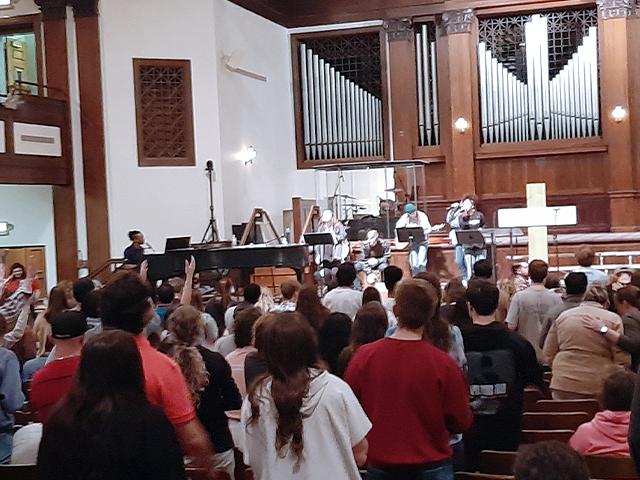
The nation is captivated by the stunning revival breaking out at Asbury University in Wilmore, Kentucky, as students, faculty, and people from outside the Christian campus flock to the school’s chapel to participate in a multi-day revival.


leeuniversity01

Asbury Awakening Spreads to Lee University: ‘A Mighty Move of God Started This Morning’

A revival has begun at Asbury University (Photo: Asbury University)

Revival Underway at Asbury University in Kentucky: ‘The Holy Spirit Was Tangible in the Room’


From singing to sermons and overt praise for Jesus, the worship service, which started Feb. 8, hasn’t stopped. Day and night, students and professors are passionately worshipping Christ.

“Right now, I think we’ve reached over 120 hours of nonstop worship, praise, confession, testimony, Scripture, reading — you name it,” Alexandra Presta, a senior at Asbury University, told CBN’s Faithwire on Monday.

It’s a scene that has left Presta, who also serves as editor of the student-run website The Asbury Collegian, in awe. She has been writing about what she experienced after attending what she thought was a typical chapel service last Wednesday.

But that service was like none other, resulting in a situation she called absolutely “incredible.”

Watch Presta tell this extraordinary story of revival:

“I was in chapel on Wednesday, and it was an ordinary chapel service … we have them three times a week,” Presta said. “But then…people just kept worshiping afterwards. It was a small group of students.”

She recalled being initially surprised by those hanging back in the chapel and decided she, too, would stay, citing a prompting from the Lord.

“I did feel like the Holy Spirit … nudged me to go back,” Presta said. “And then I did, and then I ended up staying like the rest of the evening and then came back every day afterwards.”

Presta isn’t alone, as the Kentucky revival shows no signs of slowing down. She believes the nonstop prayer service — which she said wasn’t planned — is all the work of the Holy Spirit.

“The Holy Spirit chose to just fall down and touch our hearts,” she said. “This is purely God moving and keeping people here and bringing more [who are] continuing to cross state lines and even across the country now; it’s absolutely insane.”

She shared how the Christian revival at Asbury is transforming the campus community as a whole and individual hearts and minds, including her own.

“For me, to see us worshiping … no matter what grade we’re in, no matter if we’re an athlete or not, or whatever major we are,” Presta said. “The fact that we are all coming together and serving God first and foremost, but then also allowing ourselves to take it in and just be there for each other has been really impactful for me.”

She said the campus will continue the revival so long as the Holy Spirit urges them to do so. Presta also said she believes the Kentucky revival will make a massive impact for the Lord.

“We know that our culture’s going to be changed by this,” Presta said. “As long as the Holy Spirit tells us to keep going … then we’re gonna keep going.”

The Asbury senior said she has heard from people from as far away as Brazil and Italy, calling the sweeping attention the revival has received “mind-blowing.”

This isn’t the first time the campus has experienced a revival. A separate event in February 1970 saw more than 144 hours of praise and worship and made a massive splash in the headlines.

“On Feb. 3, 1970, Dean Custer B. Reynolds, scheduled to speak in chapel, felt led to invite persons to give personal testimony instead,” a description reads. “Many on campus had been praying for spiritual renewal and were now in an expectant mood. Soon there was a large group waiting in line to speak.”

Some of the same people are attending this revival.

“There’s actually like a lot of people who were in attendance in the 1970s [who] have been here,” Presta said.

Be sure to pray for the students and faculty experiencing this revival — and for the people worldwide who are positively impacted.

Billy Hallowell

https://www1.cbn.com/cbnnews/us/2023/february/our-cultures-going-to-be-changed-massive-revival-at-asbury-captivates-world-no-signs-of-slowing-down

Hagee Ministries; John Hagee –  Daily Devotion

Mark 9:23

Jesus said to him, “If you can believe, all things are possible to him who believes.

What would you do today if you knew you couldn’t fail? What would you attempt to achieve if you knew you were going to succeed at it? The Bible says very clearly, “All things are possible to him who believes.” If you’ll go to work and trust in God, whatever you pursue for His purpose and plan for your life will come to pass.

What would be different in your life, in your marriage, in your family, with your children, in your finances, in your career, and in your physical body if you took the responsibility and made the commitment to work toward what you know God wants for you? That’s how God designed us—to believe what He has said and work for it. You have to consistently pursue your goals so you can accomplish what you set out to do. You cannot talk about what you want and not be willing to go to work for it. The difference between a wish and reality is work. The world is filled with those who talk about it. Don’t say, “Maybe tomorrow.” Make up your mind that right now is the moment that you’re going to begin walking toward the greatness that God designed for you in this life.

Today’s Blessing: 

Now may the Lord bless you and keep you. May the Lord make His face to shine upon you and be gracious unto you and give you peace. May God’s Holy Spirit fall on you now and give you the power to live a disciplined life, not in your strength, but in His; that you become totally dependent upon Jesus to be your shepherd as He leads you in paths of righteousness in all that you say and all that you do; that your life may prosper and that you may have the favor of God above and beyond anything you have ever dreamed possible. May this blessing be yours as you practice the disciplined Christian life. In Jesus’ name, we pray and ask it, Amen!

Today’s Bible Reading: 

Old Testament

Exodus 7:25-9:35

New Testament 

Matthew 19:13-30

Psalms & Proverbs

Psalm 24:1-10

Proverbs 6:1-5

https://www.jhm.org