Tag Archives: Bible

Charles Spurgeon – All-sufficiency magnified


“I can do all things through Christ which strengtheneth me.” Philippians 4:13

Suggested Further Reading: Acts 22:6-16

Christians, beware lest that village in which you have found a quiet retreat from the cares of business, should rise up in judgment against you, to condemn you, because, having means and opportunity, you use the village for rest, but never seek to do any good in it. Take care, masters and mistresses, lest your servant’s souls be required of you at the last great day. “I worked for my master;” they say, “he paid me my wages, but had no respect to his greater Master, and never spoke to me, though he heard me swear, and saw me going on in my sins.” If I could I would thrust a thorn into the seat where you are now sitting, and make you spring up for a moment to the dignity of a thought of your responsibilities. Why, sirs, what has God made you for? What has he sent you here for? Did he make stars that should not shine, and suns that should give no light, and moons that should not cheer the darkness? Has he made rivers that shall not be filled with water, and mountains that shall not stay the clouds? Has he made even the forests which shall not give a habitation to the birds; or has he made the prairie which shall not feed the wild flocks? And has he made thee for nothing? Why, man, the nettle in the corner of the churchyard has its uses, and the spider on the wall serves her Maker; and you, a man in the image of God, a blood-bought man, a man who is in the path and track to heaven, a man regenerated, twice created, are you made for nothing at all but to buy and to sell, to eat and to drink, to wake and to sleep, to laugh and to weep, to live to yourself?

For meditation: The Christian—chosen to do (John 15:16), created to do (Ephesians 2:10), commanded to do (1 Corinthians 10:31), continue to do (Galatians 6:9,10). What?

Sermon no. 346

19 November (Preached 18 November 1860)

Joyce Meyer – Run to Him


For by the death He died, He died to sin [ending His relation to it] once for all; and the life that He lives, He is living to God [in unbroken fellowship with Him]. Even so consider yourselves also dead to sin and your relation to it broken, but alive to God [living in unbroken fellowship with Him] in Christ Jesus.—Romans 6:10-11

The devil delights in reminding us daily of all our mistakes from the past. One morning I was spending my time with the Lord, thinking about all the areas in which I had failed, when the Lord spoke to my heart: Joyce, are you going to fellowship with Me or with your problems? It is our fellowship with God that helps and strengthens us to overcome our problems. Our relationship and fellowship is to be with God, not with our sins.

How much do you fellowship with your sins, failures, and weaknesses? Whatever time it is, it is wasted. When you sin, admit it, ask for forgiveness, and then continue your fellowship with God. We are alive to God, living in unbroken fellowship with Him. Don’t let your sins come between you and the Lord. Even when you sin, God still wants to spend time with you, hear and answer your prayers, and help you with all of your needs. He wants you to run to Him, not away from Him!

Lord, I want to live in unbroken fellowship with You. I consider my relationship with sin to have been broken at the cross and behind me. Amen.

From the book The Confident Woman Devotional: 365 Daily Devotions by Joyce Meyer.


Campus Crusade for Christ; Bill Bright – God Uses Sorrow for Good


“For God sometimes uses sorrow in our lives to help us turn away from sin and seek eternal life. We should never regret his sending it. But the sorrow of the man who is not a Christian is not the sorrow of true repentance and does not prevent eternal death.” (II Corinthians 7:10).

Frank often referred to himself proudly as a self-made man. He bragged that in his youth he had been so poor he didn’t have two nickels to rub together. Now his real estate holdings and various business enterprises were worth tens of millions of dollars. He was a pillar in the community, able to give generously to civic and philanthropic causes.  His philosophy was that there was no God, and every man had to make it on his own. He laughed at the weaklings who needed the crutch of church.

Then his world began to fall apart. His only son was sent to prison for pushing drugs. His daughter had an automobile accident that left her partially paralyzed for life; and his wife, whom he had largely ignored for years, announced she was in love with someone else and demanded a divorce. Meanwhile, because he had become lax in his business dealings, one of his partners embezzled several million dollars from him.

By this time, he was devastated, and, therefore, was open to spiritual counsel. After the Holy Spirit showed him his spirit of pride and selfishness, he opened his heart to Christ and the miracle took place. Now, he frequently quotes this passage: “God sometimes uses sorrow in our lives to help us turn away from sin and seek eternal life.”

Though his son is still in prison, and his daughter still paralyzed, he and his wife are reconciling, and his heart is filled with joy and thanksgiving to God. He is no longer a proud, “successful” businessman, but a humble child of God, a servant who discovered the hard way that everyone needs God.

For every Frank there are hundreds of others experiencing heartache and tragedy who have not repented. Yet, God offers to all men and women the priceless gift of abundant and supernatural life.

Bible Reading: Proverbs 28:12-14

TODAY’S ACTION POINT: I shall seek to live the full, abundant, supernatural life, walking in faith and obedience, so that God will not find it necessary to discipline me in order to bless me.

Presidential Prayer Team; H.L.M. – Fresh Wind


God chose two men, Jonathan Edwards and George Whitefield, to proclaim the gospel during the eighteenth century period known as the First Great Awakening. Edwards and Whitefield were key Americans who preached in New England colonies with an emphasis on the need for a personal relationship with Jesus Christ. As a result, revival spread throughout the colonies and people were committed to a new standard of personal morality. Charles Finney was an American Presbyterian minister and leader in the Second Great Awakening during the early nineteenth century in the United States. During this time, church membership soared and revival was implemented through camp meetings.

Arise, go to Nineveh, that great city, and call out against it the message that I tell you.

Jonah 3:2

Romans 10:15 says, “How beautiful are the feet of those who preach the good news!” As a result of their obedience to God’s call, Edwards, Whitefield and Finney had a profound impact on America’s Godly foundation.

Remember to give thanks for these men and others who have chosen to embrace the Lord’s commission to preach His Word. Pray for strength for your spiritual leaders. Ask your Heavenly Father for a fresh wind of revival to spread throughout this nation as many boldly proclaim the redemptive truth of Jesus Christ.

Recommended Reading: Romans 1:8-17

Greg Laurie – Don’t Waste Your Youth


Don’t let the excitement of youth cause you to forget your Creator. Honor him in your youth before you grow old and say, “Life is not pleasant anymore.”—Ecclesiastes 12:1

I made a commitment to Christ when I was 17 years old. By that time I felt as though I had already lived a very long life because of my mother’s alcoholism and multiple divorces, as well as my own experimentation with drugs and drinking. I was ready for a radical change.

As a result, I gave up quite a few things and pretty much dumped all of my so-called friends. I didn’t want to be in that environment anymore. I needed a new start in life. I committed myself to studying the Bible, being a part of the church, and growing spiritually. Did I give up a few so-called fun times? Yes. But I have had so much more fun as a follower of Jesus. I don’t regret any of those things I gave up.

Every now and then, I will run into an old friend from high school. What is really sad is when someone still thinks they are in high school when they are 60, and they can’t let it go. They’re still living that life (or at least trying to live that life). Some of them are on their second, third, or even fourth marriages. Or maybe their substance abuse has taken a toll on them. I look at them and think, Why did you live that way?

Solomon, at the end of Ecclesiastes, came to a clear conclusion. Among other things, he deeply regretted wasting his youth and didn’t want others to make the same mistake. He wrote, “Don’t let the excitement of youth cause you to forget your Creator. Honor him in your youth before you grow old and say, ‘Life is not pleasant anymore’ ” (Ecclesiastes 12:1).

Youth is such an important time. It’s there that you set the course of your life.

Max Lucado – God’s Definition of Promotion


For twenty years I was the senior minister of our church. Budgets, personnel, buildings, hiring and firing… was happy to fill the role. But I was happiest preaching and writing. My mind was always gravitating toward the next series. Even during committee meetings (well, especially during committee meetings) I was doodling on the next message. More staff and more people to manage meant spending more time doing what I didn’t feel called to do.

I was blessed to have options. And equally blessed to have a church that provided flexibility as I transitioned from senior minister to teaching minister. A few people were puzzled. “Don’t you miss being the senior minister?”  Translation: Weren’t you demoted? Earlier in my life I would have thought so. But God’s definition of promotion isn’t a move up the ladder, it is a move toward your call. Don’t let someone “promote” you out of your call!

From Glory Days


Night Light for Couples –Looking Out For the Single Mom


“Look after orphans and widows in their distress.” James 1:27

Many years ago I was working around the house when a knock came at the door. When I opened it, there stood Sally, a young woman in her late teens. “I’m selling brushes,” she said, “and I wonder if you’d like to buy any.” I told her politely that I wasn’t interested in buying anything that day, and Sally said, “I know. No one else is, either.” With that, she began to cry. I invited Sally to come in for a cup of coffee and asked her to share her story. It turned out that she was an unmarried mother who was struggling mightily to support her two‐year‐old son.

That night, we went to her shabby little apartment above a garage to see how we could help her and her toddler. When we opened the cupboards, there was nothing there for them to eat—I mean nothing. That night they both dined on a can of Spaghetti‐Os. We took Sally to the market and did what we could to help her get on her feet. There are millions of single mothers out there who are desperately trying to survive in a hostile world.

All of them could use a little kindness—from babysitting to providing a meal to repairing the washing machine to just showing a little thoughtfulness. Have you opened your eyes to them lately?

Raising kids all alone is the toughest job in the universe. Look around your neighborhood through “God’s eyes.” Is a single mom going down for the third time? How about giving a helping hand? Not only will she be encouraged, but her children will bless you as well.

– Shirley M Dobson

From Night Light For Couples, by Dr. James & Shirley Dobson

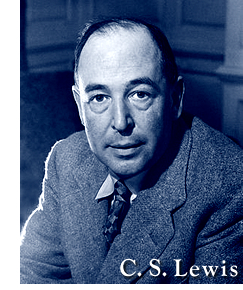
C.S. Lewis Daily – Today’s Reading


The letter and spirit of scripture, and of all Christianity, forbid us to suppose that life in the New Creation will be a sexual life; and this reduces our imagination to the withering alternative either of bodies which are hardly recognisable as human bodies at all or else of a perpetual fast. As regards the fast, I think our present outlook might be like that of a small boy who, on being told that the sexual act was the highest bodily pleasure should immediately ask whether you ate chocolates at the same time. On receiving the answer ‘No,’ he might regard absence of chocolates as the chief characteristic of sexuality. In vain would you tell him that the reason why lovers in their carnal raptures don’t bother about chocolates is that they have something better to think of. The boy knows chocolate: he does not know the positive thing that excludes it. We are in the same position. We know the sexual life; we do not know, except in glimpses, the other thing which, in Heaven, will leave no room for it. Hence where fullness awaits us we anticipate fasting. In denying that sexual life, as we now under- stand it, makes any part of the final beatitude, it is not of course necessary to suppose that the distinction of sexes will disappear. What is no longer needed for biological purposes may be expected to survive for splendour. Sexuality is the instrument both of virginity and of conjugal virtue; neither men nor women will be asked to throw away weapons they have used victoriously. It is the beaten and the fugitives who throw away their swords. The conquerors sheathe theirs and retain them. ‘Trans-sexual’ would be a better word than ‘sexless’ for the heavenly life.

From Miracles

Compiled in A Year with C.S. Lewis

Charles Stanley – Our Incomparable Companion


John 14:16-18

Loneliness will creep into every life at some point. But believers are never truly alone because God has given us a permanent companion—the Holy Spirit. He is the Helper who is with us forever.

No one can truthfully promise to always be available to another person; the realities of time, distance, and even death can separate two people who would rather face difficulties together. Thankfully, by sending the Holy Spirit to live inside of us, Jesus Christ keeps His promise to never leave or forsake us (Heb. 13:5). This means that the relationship with our Companion is greater than any human relationship we have. Since God’s Spirit is a person of the Trinity, He is able to meet our every need. His foreknowledge allows Him to prepare our hearts and minds for any situation.

Human beings weren’t meant to live alone. God designed us to be complete only when we are indwelt by His Spirit, which occurs upon our salvation. We can choose to ignore the Holy Spirit however. For example, some people stubbornly attempt to live the Christian life in their own strength or skip Bible reading when they find meditating on the Word inconvenient. That kind of life is marked by discontent: Peace will be fleeting, and loneliness will feel like the heart’s permanent resident.

The Holy Spirit is our parakletos, or companion who “walks beside.” If we hold Him at arm’s length, we distance ourselves from the Father as well. But if we ask the Spirit to guide our steps and open our minds to God’s ways, He is available.

Bible in One Year: Acts 21-22

John MacArthur – Looking to the Future


“By faith even Sarah herself received ability to conceive, even beyond the proper time of life, since she considered Him faithful who had promised; therefore, also, there was born of one man, and him as good as dead at that, as many descendants as the stars of heaven in number, and innumerable as the sand which is by the seashore” (Heb. 11:11-12).

Your faith in Christ will influence future generations.

I’ve been blessed with a wonderful Christian heritage. In fact, I’m the fifth generation of preachers in our family. The faith of my predecessors has had an enormous impact on my life—either directly or indirectly. I have the same responsibility they did to influence others for good—as do you.

Hebrews 11:11-12 gives a very personal example of how one man’s faith influenced an entire nation. Verse 11 is better rendered: “By faith Abraham, even though he was past age—and Sarah herself was barren—was enabled to become a father because he considered him faithful who had made the promise” (NIV).

God had promised Abraham that he would become the father of a great nation (Gen. 12:2). But Sarah, Abraham’s wife, had always been barren, and both of them were advanced in years. At one point Sarah became impatient and decided to take things into her own hands. She persuaded Abraham to have a son by her maid, Hagar (16:1-4). That act of disobedience proved to be costly because Ishmael, the child of that union, became the progenitor of the Arab people, who have been constant antagonists of the Jewish nation.

Despite his times of disobedience, Abraham believed that God would keep His promise. God honored Abraham’s faith by giving him not only Isaac, the child of promise, but descendants too numerous to count. One man’s faith literally changed the world.

Similarly, the faith you exercise today will influence others tomorrow. So be faithful and remember: despite your failures, God “is able to do exceeding abundantly beyond all that we ask or think, according to the power that works within us” (Eph. 3:20).

Suggestions for Prayer

  • Thank God for those who have had a righteous influence on you.
  • Pray for greater opportunities to influence others for Christ.

For Further Study

Read the account of Abraham and Sarah in Genesis 18-21 and 23.

Joyce Meyer – Discerning of Spirits


To another the ability to discern and distinguish between [the utterances true] spirits [and false ones] . . . . —1 Corinthians 12:10

I believe the discerning of spirits is an extremely valuable gift, and encourage you to desire and develop it. I actually believe it is one of the most needful gifts for today and the times we are living in.

Some people say that the discerning of spirits gives people supernatural insight into the spiritual realm when God allows it. Many also believe that discerning of spirits is a gift given so we can know the true nature of a person or a situation. Our world today is full of deception and many people in it are not who they appear to be. The gift of discerning of spirits helps us see through deception and behind the masks people often wear so we can know what is really going on. The gift also helps us discern good things. It enables us to sense when something is a good thing or a person has a good heart.

Discernment helps us recognize when something is of God and when it isn’t. Dave and I have seen this gift work many times when dealing with people who wanted to work in our ministry. Many times, people have seemed qualified, capable, dedicated, and “perfect” for the jobs for which they applied. I remember one specific occasion when we met with someone and everyone involved thought we should hire him, but I had a nagging feeling in my heart that we should not. We hired him anyway and he did nothing but cause trouble. I allowed my reasoning—thinking he would work out because his resume was exactly what we wanted—to overtake my discernment, and I wish I had not.

The Spirit of God lives in our hearts and speaks to our hearts, not our heads. His gifts are not intellectual or operative in our minds; they are spiritual and they operate in our spirits. We must follow what we sense in our spirits, not what we think in our minds should be right. This is why God gives us discernment.

From the book Hearing from God Each Morning: 365 Daily Devotions by Joyce Meyer.

Campus Crusade for Christ; Bill Bright – He Wonderfully Comforts


“What a wonderful God we have – He is the Father of our Lord Jesus Christ, the source of every mercy, and the one who so wonderfully comforts and strengthens us in our hardships and trials. And why does He do this? So that when others are troubled, needing our sympathy and encouragement, we can pass on to them this same help and comfort God has given us” (2 Corinthians 1:3,4).

Whatever God does for you and me is without merit on our part and by pure grace on His part, and it is done for a purpose. Here the apostle Paul tells the Corinthian believers why God so wonderfully comforts and strengthens them, and us, in our hardships and trials.

This scriptural principle is a good one to remember: God never gives to or benefits His children solely for their own selfish ends. We are not comforted and strengthened in our hardships and trials just so that we will feel better.

Eleven out of the 13 Pauline epistles begin with the exclamations of joy, praise and thanksgiving. Second Corinthians, obviously, is one of those. Though Paul had been afflicted and persecuted, he had also been favored with God’s comfort and consolation.

Paul delighted in tracing all his comforts back to God. He found no other real source of happiness. The apostle does not say that God’s comfort and strength is given solely for the benefit of others, but he does say that this is an important purpose. We are not to hoard God’s blessings.

Bible Reading: Hebrews 13:15-19

TODAY’S ACTION POINT: As I live in the supernatural strength of the Lord God, I will make an effort, with His help, to share that strength (and other blessings) with others

Presidential Prayer Team; J.R. – Too Late?


Pilots know it as the “Radius of Action” formula. When Charles Lindbergh became the first man to fly solo across the Atlantic Ocean, somewhere between New York and Paris he crossed it…what laymen better know as the “point of no return.” In the case of an airplane, it means you don’t have enough fuel to return from whence you came, and therefore continuing on is the only, inevitable direction. There’s no going back.

The hand of our God is for good on all who seek him.

Ezra 8:22

Many Americans have applied the same formula to America and determined it is doomed. It is journeying, irreversibly they believe, toward God’s wrath. But is it really too late to turn around? The nation of Israel abandoned God time and again, but when they turned from their ways and cried out to Him, they found His favor once again.

As you pray today, do so confidently and boldly, asking for His hand to be placed for good on this land and its leaders. It is not too late for America – or for any nation or people who seek Him.

Recommended Reading: II Peter 3:1-9

Greg Laurie – Drawn Away


The Lord had clearly instructed the people of Israel, “You must not marry them, because they will turn your hearts to their gods.’ Yet Solomon insisted on loving them anyway. He had 700 wives of royal birth and 300 concubines. And in fact, they did turn his heart away from the Lord.—1 Kings 11:2–3

When Solomon dedicated the first temple in Jerusalem, he prayed, “May the Lord our God be with us as he was with our ancestors; may he never leave us or abandon us. May he give us the desire to do his will in everything and to obey all the commands, decrees, and regulations that he gave our ancestors” (1 Kings 8:57-58).

That sounded great. But there was just one problem. Solomon was not doing that himself. Before the temple was built, the people would offer their sacrifices to God on pagan altars. Solomon did this, too, all the while saying that he loved the Lord. Solomon was married to an Egyptian who worshipped false gods, so he worshipped false gods as well.

Did Solomon cause her to worship the true and living God? No. But she persuaded him to worship at pagan altars. That is why the Bible warns us, “Don’t team up with those who are unbelievers. How can righteousness be a partner with wickedness? How can light live with darkness?” (2 Corinthians 6:14).

That is what happened to Solomon. One thing led to another, and things went from bad to worse. Solomon started a collection: he had 700 wives and 300 concubines. Not only was this wrong morally, but it caused him to turn to other gods these women worshipped.

Maybe as a Christian you are attracted to some of the things the Bible has told you to steer clear of. You are like a moth drawn to the light. Learn the lesson of Solomon, who did it all and reaped the consequences. Don’t go that way.


Max Lucado – A Lot in Life


Do you know what makes you, you? Have you identified the features that distinguish you from every other human who has inhaled oxygen? You have an acreage to develop, a lot in life. Paul said in Galatians 6:4 to make a careful exploration of who you are and the work you’ve been given, and then sink yourself into that.

No one else is like you! What do you do well? What do people ask you to do again? What task comes easily? Your skill set is your road map. It leads you to your territory. Take note of your strengths. They are bread crumbs that will lead you out of the wilderness. God loves you too much to give you a job and not the skills. Identify yours! 1 Peter 4:11 says, “If anyone ministers, let him do it as with the ability which God supplies.”

From Glory Days

Night Light for Couples – If Only


“We were under great pressure, far beyond our ability to endure…. But this happened that we might not rely on ourselves but on God.” 2 Corinthians 1:8–9

In my (jcd’s) book When God Doesn’t Make Sense, I wrote about the burdensome situations in life that we can’t understand. Some are painful or life‐threatening, others are simply inconvenient or uncomfortable. We know that God could eliminate these problems with a whisper, but, instead, He allows us to struggle.

Why? One of His greater purposes is to reveal His power to us. This understanding comes straight from the apostle Paul who wrote, “But we have this treasure in earthen vessels [clay pots], that the excellency of the power may be of God, and not of us” (2 Corinthians 4:7, kjv).

Instead of accepting the irritations of life, many people struggle with what I call the “if onlys.” “If only I didn’t have diabetes (or deafness or sinus infections).” “If only I were not infertile.” “If only I hadn’t gotten into that bad business relationship (or lawsuit or loveless marriage).” “If only we didn’t have a sick child.” “If only we weren’t so strapped financially.”

Are you struggling with “if onlys” today? If so, we encourage you to release them to God. He has a perfect, loving plan for all of your life— even when life seems less than ideal. We may not see why God allows hardship in our lives, but we can be assured it is part of His eternal plan for our good. He asks us to accept His love and reach in humble dependence for His sufficiency.

Just between us…

  • Have we become discouraged by “if onlys” in our lives?
  • Can we learn to depend on the Lord at this point of need? Has God been able to use our “if onlys” for His purposes?

Lord, help us rely on Your great love for us even when we feel weighed down by disappointments. Comfort and strengthen us in our need. Amen.

From Night Light For Couples, by Dr. James & Shirley Dobson

Charles Stanley – How to Apply Biblical Principles


Psalm 119:17-24

The idea of applying biblical principles is often misunderstood. It’s not simply a process of hear, believe, apply—as if one were putting on a new doctrine like a borrowed overcoat. Two steps are missing between believe and apply: explore and discover. To explore a biblical principle means studying Scripture to understand what the surrounding context is, what the principle means for us, and what it reveals about God. Furthermore, we must consider how this lone principle relates to the rest of the Bible. Digging into the Word softens hearts and minds so that the new doctrine can be planted deeply.

As we plow further into Scripture to explore, the new concept rises off the page and becomes real to us. We discover how the principle works and the proper way to apply it to our lives. As we do so, the rich truth becomes our own. It isn’t simply tacked onto our actions as an external influence; rather, we take the truth into our hearts and minds, enabling it to impact us from the inside out.

Making God’s principles an integral part of our lives is a delightful experience. Instead of feeling a passing fancy for a new concept, people who make an idea their own rejoice in it. And they dig back into the Word to learn more of the Lord’s statutes.

A believer who has little to say about God’s work in his life is probably not applying Scripture. Simply hearing and believing doesn’t make a concept yours. A principle is yours when you explore the truth, discover its place in your life, and apply the concept so that God can make it work.

Bible in One Year: Acts 18-20

Our Daily Bread — Safe in His Arms


Read: Isaiah 66:5-13

Bible in a Year: Ezekiel 5-7; Hebrews 12

As a mother comforts her child, so will I comfort you. —Isaiah 66:13

I sat next to my daughter’s bed in a recovery room after she had undergone surgery. When her eyes fluttered open, she realized she was uncomfortable and started to cry. I tried to reassure her by stroking her arm, but she only became more upset. With help from a nurse, I moved her from the bed and onto my lap. I brushed tears from her cheeks and reminded her that she would eventually feel better.

Through Isaiah, God told the Israelites, “As a mother comforts her child, so will I comfort you” (Isa. 66:13). God promised to give His children peace and to carry them the way a mother totes a child around on her side. This tender message was for the people who had a reverence for God—those who “tremble at his word” (v. 5).

God’s ability and desire to comfort His people appears again in Paul’s letter to the Corinthian believers. Paul said the Lord is the one “who comforts us in all our troubles” (2 Cor. 1:3-4). God is gentle and sympathetic with us when we are in trouble.

One day all suffering will end. Our tears will dry up permanently, and we will be safe in God’s arms forever (Rev. 21:4). Until then, we can depend on God’s love to support us when we suffer. —Jennifer Benson Schuldt

Dear God, help me to remember that nothing can separate me from Your love. Please assure me of Your care through the power of the Holy Spirit.

God comforts His people.

INSIGHT: Having warned of exile in Babylon (Isa. 39:6-7), Isaiah now comforts the Israelites with the promise that God will bring them back to Judea and bless them (chs. 40-66). This restoration is so certain and swift that it is likened to a woman giving birth to a child before she even experiences labor pains (39:7-8). What God promises, He fulfills (v. 9). God will love His people like a mother loves her child (v. 13). Sim Kay Tee

Ravi Zacharias Ministry – Numbering Our Days


I lost my glasses and my keys all in one afternoon. Having stacked back to back appointments, I suppose it was bound to happen. Racing around as I was that day increased the likelihood of error. Other than my keys, I had left everything else in my car—including, I thought—my glasses. After a three hour search of the areas most likely to have my keys, I returned to my car and couldn’t find my glasses either. Desperate calls to the places I had been yielded no results. My glasses and my keys were lost.

The older I get, the more these episodes of forgetfulness seem to increase. Many of my friends who are ever-so-slightly older than me tell me this is the way it is and that I’d better get used to it (or figure out a way to padlock my keys and glasses to me)! The subtle slipping of memory and recall, the fading energy, and the inability to find culturally relevant connections with those younger than me all serve to show me—as the mirror reveals the increasing lines on my face and the graying of my hair—that I am no longer a young woman.

In times like these, I am tempted towards despair. How quickly my youth has gone! Or I can be tempted towards envy of those whose youth and vitality are in their prime. Their exuberance runs circles around my increasingly feeble efforts. In my efforts to keep up, I am drawn to fads and notions for reclaiming youthful energy. Lotions and potions, diets and exercise regimes which promise the fountain of youth lead only to an empty checking account and a bankrupt soul. None of these strategies can erase mid-life regrets or restlessness. Rather than animating creative ideas about living in my life now, I allow it to be tethered to worldly dreams of more, or better, or younger or simply other.

Moses was not a young man when he penned Psalm 90. Yet this psalm was his prayer to the everlasting God as he contemplated his own transient days on earth.

“Lord, you have been our dwelling place in all generations. Before the mountains were born, or you gave birth to the earth and the world. Even from everlasting to everlasting you are God. You turn human beings back into dust, and you say, ‘Return, O children of the earth.’ For a thousand years in your sight are like yesterday when it passes by.”

We are not told what prompted this song of Moses. Perhaps it was written after an endless day of complaint from wilderness-weary Israelites. Perhaps it was written with regret after his violent outburst against the rock would bar him from entry into the Promised Land. Perhaps, it was simply his own lament as he saw his body age and his youth as a distant memory. Whatever event prompted its writing, it is a song sung in a minor key, with great regret. Our days have declined in your fury; we have finished our years with a sigh.

Whether prompted by deep regret, disillusionment, or a simple admitting of reality, Moses reflects on the brevity of life. He compares it to the grass “which sprouts anew. In the morning, it flourishes; toward evening it fades, and withers away.” Before we know it, our lives are past; we finish our years with sighing. In light of human transience, Moses makes a request: “So, teach us to number our days, that we may present to you a heart of wisdom….that we may sing for joy and be glad all of our days….and confirm the work of our hands.”(1) He doesn’t ask for a longer life, or a youthful potion. Instead, he asks the eternal God to remind finite human beings of their limited lifespans in order that wisdom might reign and gratitude would mark even the briefest of stays on this earth.

It was the inevitability of death that motivated this prayer for wisdom. This was a wisdom that didn’t try to hide from aging but rather sought to keep finitude ever before it. Indeed the cry for God to “confirm the work of our hands” demonstrates that numbering life’s days can lead to meaningful engagement in the world and in human work—and this was the mark of wisdom. Perhaps it is a wisdom that can only come from age.

Sadly, the reminders of our own mortality can tempt many towards distraction. Yet it can also lead to wise engagement. In his own brief life, Jesus faced his own death with intention and purpose. “I am the Good Shepherd…and I lay down my life for the sheep… No one has taken it away from me, but I lay it down on my own initiative.”(2) The way of wisdom demonstrated in the life of Jesus gives flesh to the ancient psalmist’s exhortation. As he numbered his days, he calls those who would follow to engage mortality as a catalyst for purposeful living.

While following Jesus insists on the laying down of life in his service, it can be done in the hope that abundant life is truly possible even as one ages and death becomes a more poignant reality. For the one who laid his life down is the one who was raised. He is the everlasting God and a dwelling place for all generations. “I am the resurrection and the life; the one who believes in me will live even though he dies.”

Margaret Manning Shull is a member of the speaking and writing team at Ravi Zacharias International Ministries in Bellingham, Washington.

(1) Psalm 90:12, 14b, 15a, 17.

(2) John 10:14a-18.

Alistair Begg – A Desire for God’s Glory


To him be glory forever. Amen.

Romans 11:36

To him be glory forever.” This should be the single desire of the Christian. All other wishes must be subservient and serve as tributaries to this.

The Christian may wish for prosperity in his business, but only inasmuch as it may help him to promote this-“To him be glory forever.”

He may desire to attain more gifts and more graces, but it should only be that he may declare, “To him be glory forever.”

You are not acting as you ought to do when you are moved by any other motive than a single focus on the Lord’s glory. As a Christian, you are “from him and through him,” and so you must live “to him.” Do not let anything set your heart beating so fast as love for Him. Let this ambition fire your soul; may this be the foundation of every enterprise upon which you enter, and your sustaining motive whenever your zeal would grow cold.Make God your only object. Depend upon it-where self begins, sorrow begins; but if God is my supreme delight and only object,

To me ’tis equal whether love ordain

My life or death-appoint me ease or pain.

Let your desire for God’s glory be a growing desire. You blessed Him in your youth; do not be content with such praises as you gave Him then.

Has God prospered you in business? Give Him more as He has given you more.

Has God given you experience? Praise Him by stronger faith than you exercised at the beginning. Does your knowledge grow? Then sing more sweetly.

Do you enjoy happier times than you once had? Have you been restored from sickness, and has your sorrow been turned into peace and joy? Then give Him more music; put more coals and more sweet spices into the censer of your praise.

Practically in your life give Him honor, offering the “Amen” of this doxology to your great and gracious Lord by your own individual service and increasing holiness.

The Family Bible Reading Plan

  • 1 Chronicles 9, 10
  • Hebrews 12

Devotional material is taken from “Morning and Evening,” written by C.H. Spurgeon, revised and updated by Alistair Begg.