Tag Archives: Bible

Presidential Prayer Team; J.R. – Stunning Expanse


Can you put a price tag on the value of a life? In legal cases involving wrongful deaths, courts rely on the testimony of “forensic economists.” These professionals are charged with making grim calculations to determine how much a life was worth – monetarily. It is not a pleasant job. Estimating loss of wages and income of the person who died is required, as well as determining compensation for pain and suffering. In general, the value of a life is higher for people who earned more money, were deemed to hold greater potential, or left more loved ones behind.

But grace was given to each of us according to the measure of Christ’s gift.

Ephesians 4:7

Now imagine if a “forensic economist” placed a value on the life of Jesus Christ. What would the price tag be? He owned it all. He gave others eternal life and offered salvation for the entire world. And yet Scripture says that the grace He gives to you is equal to the “measure of Christ’s gift.” Does that give you an idea of the stunning expanse of His grace?

As you pray today, may that measure of His grace spur you to cast away doubt and live in Christ-given confidence. Because of that vast grace, there is hope – for you, your loved ones, and for America.

Recommended Reading: Ephesians 2:1-10

Greg Laurie – The Battle Is the Lord’s


“Then all this assembly shall know that the Lord does not save with sword and spear; for the battle is the Lord’s, and He will give you into our hands.”—1 Samuel 17:47

The giants of life defeat us again and again because we face them in our own strength. The battle belongs to the Lord. That is why David said to Goliath, “Then all this assembly shall know that the Lord does not save with sword and spear; for the battle is the Lord’s, and He will give you into our hands” (1 Samuel 17:47).

Ephesians 6 tells about the various pieces of armor that believers are to wear. But before a single piece of armor is applied, Paul gives us these words: “Finally, my brethren, be strong in the Lord and in the power of His might” (Ephesians 6:10).

I recognize I am weak, but at the same time, I acknowledge that God is great and powerful. I need to know that I cannot win the spiritual battle in my own strength. Jesus said, “I am the vine, you are the branches. He who abides in Me, and I in him, bears much fruit; for without Me you can do nothing” (John 15:5).

We need to know about the incredible resources God has made available to us as Christians. Paul prayed that the believers at Ephesus would discover what God had done for them. He said, “Therefore I . . . do not cease to give thanks for you, making mention of you in my prayers: that the God of our Lord Jesus Christ, the Father of glory, may give to you the spirit of wisdom and revelation in the knowledge of Him, the eyes of your understanding being enlightened; that you may know what is the hope of His calling, what are the riches of the glory of His inheritance in the saints” (Ephesians 1:15–18).

You don’t fight for victory. You fight from it. Start living in that power.


Max Lucado – Look to Jesus to Comfort You


Joshua 5:14 says “Joshua fell on his face to the earth and worshiped.” He was a five-star general. Forty-thousand soldiers saluted as he passed. Two-million people looked up to him. Yet in the presence of God, he fell on his face, and worshiped.

We’re never so strong or mighty that we don’t need to worship. Worship-less people have no power greater than themselves to call on. The worship-less heart faces Jericho all alone. Don’t go to your Jericho without first going to your Commander. Let him remind you of his all-encompassing power.

In Hebrews 13:5 he has given you this promise. “I will never fail you. I will never abandon you.” Look to Jesus for comfort. Turn your gaze away from Jericho. You’ve looked at it long enough. Your Jericho may be strong but your Jesus is stronger. Let him be your strength.

From Glory Days

Night Light for Couples – The Argument


by Gigi Graham Tchividjian

He walked out, closing the door firmly behind him. I heard the car drive away, and with a heavy, aching heart, I leaned against the closed door. Hot, angry tears filled my eyes,

spilled over, and ran down my cheeks. How had it happened? How had things built to this point? Neither of us had intended our little discussion to develop into a heated disagreement. But it was late, and we had both experienced a hard day.

Stephan had risen early to drive for the car pool. Then he had seen several patients with difficult, heartbreaking problems. An emergency had taken up his lunch break, and he had been behind schedule for the rest of the afternoon. When he finally left the office, he hit a traffic jam on the freeway and arrived home tense and tired to a wife with seven children, all demanding his attention.

I, too, had endured a difficult day after a sleepless night with the baby. Besides the normal responsibilities involved with running a home, rain had kept us confined indoors all day. It was humid, and the children were more quarrelsome than usual, amusing themselves by picking on each other. Between settling arguments and soothing hurt feelings, I managed to get dinner on the table. But I hadn’t had time to comb my hair or freshen my makeup, and Stephan could sense my frustration when he came in.

Finally, when the kitchen was clean, the small children bathed and tucked into bed, and the teenagers talked out, Stephan and I found ourselves alone in our bedroom, trying to discuss a minor problem. It soon blew out of proportion. Angry feelings were vented, words spoken that we did not mean, and then—a slammed door and retreating car.

I slumped into a chair, dissolving into tears of discouragement and disappointment in myself. How long was it going to take to learn my lesson? Late at night, especially after a wearisome day, is not the time for arguing, but for comfort, encouragement, and loving.

As I sat there, I remembered that I had been so busy trying to handle the home front, keeping everything and everyone under control, that I had not spent time with the Lord that day. I had even failed to pray for Stephan. No wonder things had not gone well.

I glanced in the mirror and saw red, puffy eyes, no makeup, and hair in disarray. I saw lines of fatigue and tension where there should have been tenderness and love, and I understood Stephan’s desire to get away and cool off.

I fell on my knees beside the chair, asking the Lord to forgive me and to fill me with His Holy Spirit so I could be to Stephan all he had ever dreamed. I asked for the Lord’s strength, His sensitivity, His wisdom, so I could juggle my own schedule, the demands of my home and children, and still have time to meet my husband’s needs when he came home from the day’s work. Then I added a timid P. S. asking Him to give Stephan a change of heart, too.

I felt peace and a sudden refreshing. I got up, washed my face, added a little color to my cheeks and lips, combed my hair, lavished perfume on myself, and climbed into bed to wait.

Before long, I heard the front door open and familiar footsteps in the brick hallway. Our bedroom door opened quietly and Stephan stood there, his tired face and kind, loving eyes drawing me like a magnet. I flew into his arms. Later, our loving erased the last traces of frustration and anger. Clinging to each other as we fell into a much‐needed sleep, I couldn’t help wondering why we hadn’t thought of this in the first place.

LOOKING FORWARD…

Conflict in marriage is inevitable: You can’t live with someone every day of your life without occasional friction. In too many of today’s marriages, however, fights are the rule rather than the exception.

A sixth‐grade teacher shared with me the results of a writing project assigned to her class. She asked the kids to complete a series of sentences that began with the phrase “I wish….” She was shocked and saddened by the response. Instead of writing about toys, animals, and trips to theme parks, twenty of the thirty kids made reference to the breakup of their families or conflict at home.

Let’s talk this next week about what we can do to reduce conflict in marriage and to make sure that when we do disagree, it’s something worth arguing about.

– James C Dobson

From Night Light For Couples, by Dr. James & Shirley Dobson

 

Charles Stanley – Praying With Impact


1 John 5:14-15

Since praying is such a common practice for believers, over time it’s easy to fall into habits that result in a lifeless and empty prayer life. Instead of a dynamic conversation with thoughtful requests and active listening for God’s response, our prayers can seem more like grocery lists. Because communication with the Lord is such a vital part of the Christian life, we occasionally need to examine how we’re doing. Begin by asking yourself these questions:

  • How effective are my prayers? Is the Lord answering your petitions, or does it seem as if they never go past the ceiling?
  • Who am I praying for? Are most of your requests for yourself or are they for others?
  • What am I asking God to do? Have you looked in the Word to see what He wants, or are you praying according to your plans and desires?
  • When do I pray? Is it only when you need something?

If you discovered any selfishness in your answers, you’re not alone. Most of us struggle to enter God’s presence with our eyes focused on Him instead of our needs. But the only way we’ll be able to pray with impact is to fill our minds with Scripture so we can find out what the Lord wants to do.

Your prayer life can become effective and dynamic if you’ll approach the Lord with a clean heart (Ps. 66:18), align your requests with His will, and believe He will do what He says (Num. 23:19; John 14:13). Then you’ll be able to pray with absolute confidence, knowing that He will hear and answer your petitions.

Bible in One Year: Mark 6-7


Alistair Begg – Who Can Endure?


But who can edure the day of his coming…? Malachi 3:2

Christ’s first coming was without external pomp or display of power, and yet in truth there were few who could endure its test. Herod and all Jerusalem with him were stirred at the news of the wondrous birth. Those who supposed themselves to be waiting for Him showed the fallacy of their professions by rejecting Him when He came. His life on earth was like a winnowing fan that sifted the great heap of religious profession, and only a few could survive the process.

But what will His second coming be? What sinner can endure to think of it? “He shall strike the earth with the rod of his mouth, and with the breath of his lips he shall kill the wicked.”1 In Gethsemane when He said to the soldiers, “I am he,” they fell backward. What will happen to His enemies when He will reveal Himself more fully as the “I Am”?

His death shook earth and darkened heaven. What will be the dreadful splendor of that day when as the living Savior He will summon the living and the dead before Him? O that the terrors of the Lord would persuade men to forsake their sins and kiss the Son in case He is angry!

Though a lamb, He is still the lion of the tribe of Judah, tearing the prey in pieces; and though He does not break the bruised reed, yet He will break His enemies with a rod of iron and dash them to pieces like a potter’s vessel. None of His foes shall stand before the tempest of His wrath or hide themselves from the sweeping hail of His indignation.

But His beloved blood-washed people look for His appearing with joy; in this living hope they live without fear. To them He sits as a refiner even now, and when He has tested them they shall come forth as gold. Let us examine ourselves this morning and make our calling and election sure, so that the coming of the Lord may not be the cause of fearful expectations. O for grace to discard all hypocrisy, and to be found of Him sincere and without rebuke on the day of His appearing.

1) Isaiah 11:4

The Family Bible Reading Plan

  • 1 Kings 18
  • 1 Thessalonians 1

Devotional material is taken from “Morning and Evening,” written by C.H. Spurgeon, revised and updated by Alistair Begg.


Charles Spurgeon – Magnificat


“Awake, awake, Deborah; awake, awake, utter a song; arise, Barak, and lead thy captivity captive, thou son of Abinoam.” Judges 5:12

Suggested Further Reading: Psalm 108:1-5

Wake up, my love, for thou must strike the key-note and lead the strain. Awake and sing unto thy beloved a song touching thy well-beloved. Give unto him choice canticles, for he is the fairest among ten thousand, and the altogether lovely. Come forth then with thy richest music, and praise the name which is as ointment poured forth. Wake up, my hope, and join hands with thy sister—love; and sing of blessings yet to come. Sing of my dying hour, when he shall be with me on my couch. Sing of the rising morning, when my body shall leap from its tomb into its Saviour’s arms! Sing of the expected advent, for which thou lookest with delight! And, O my soul, sing of that heaven which he has gone before to prepare for thee, “that where he is, there may his people be.” Awake my love—awake my hope—and thou my faith, awake also! Love has the sweetest voice, hope can thrill forth the higher notes of the sacred scale; but thou, O faith—with thy deep resounding bass melody—thou must complete the song. Sing of the promise sure and certain. Rehearse the glories of the covenant ordered in all things, and sure. Rejoice in the sure mercies of David! Sing of the goodness which shall be known to thee in all thy trials yet to come. Sing of that blood which has sealed and ratified every word of God. Glory in that eternal faithfulness which cannot lie, and of that truth which cannot fail. And thou, my patience, utter thy gentle but most gladsome hymn. Sing today of how he helped thee to endure in sorrows’ bitterest hour. Sing of the weary way along which he has borne thy feet, and brought thee at last to lie down in green pastures, beside the still waters.

For meditation: The songs of the Christian should arise from a thankful heart (Colossians 3:16) stirred up by the word of Christ.

Sermon no. 340

15 October (Preached 14 October 1860)

John MacArthur – Trusting God’s Word


“The law of the Lord is perfect. . . . The commandment of the Lord is pure. . . . The judgments of the Lord are true; they are righteous altogether” (Ps. 19:7-9).

God’s Word is infallible.

Infallibility refers to the truth of Scripture as a whole, whereas inerrancy focuses on the accuracy of every single word. Like inerrancy, infallibility is grounded in the character of God. God cannot lie and does not change (1 Sam. 15:29). He is thoroughly consistent in everything He does, and His Word reflects those characteristics. The psalmist wrote, “The sum of Thy word is truth, and every one of Thy righteous ordinances is everlasting” (Ps. 119:160). Paul said, “The Law is holy, and the commandment is holy and righteous and good” (Rom. 7:12).

Jesus said He didn’t come to abolish the law or the prophets (sections of the Old Testament) but to fulfill them. He promised that everything in Scripture will be fulfilled (Matt. 5:17-18). John 10:35 declares that the authority of Scripture “cannot be broken.” It is binding and cannot be destroyed, abolished, or done away with. God’s Word is indestructible, authoritative, and infallible.

On a practical level, infallibility means that you can trust the Bible. It will never deceive you or give you counsel that will later prove to be erroneous. That was the confidence of the psalmist when he wrote, “Establish Thy word to Thy servant, as that which produces reverence for Thee. Turn away my reproach which I dread, for Thine ordinances are good. Behold, I long for Thy precepts; revive me through Thy righteousness. May Thy lovingkindnesses also come to me, O Lord, Thy salvation according to Thy word; so I shall have an answer for him who reproaches me, for I trust in Thy word. And do not take the word of truth utterly out of my mouth, for I wait for Thine ordinances. So I will keep Thy law continually, forever and ever. And I will walk at liberty, for I seek Thy precepts. I will also speak of Thy testimonies before kings, and shall not be ashamed. And I shall delight in Thy commandments, which I love” (Ps. 119:38-47).

Suggestions for Prayer

Praise God that His Word is utterly trustworthy.

For Further Study

Memorize Psalm 119:165 as a reminder of the infallibility of God’s Word.

Joyce Meyer – Holy Ground


And Moses said, I will now turn aside and see this great sight, why the bush is not burned. And when the Lord saw that he turned aside to see, God called to him out of the midst of the bush and said, Moses, Moses! And he said, Here am I. God said, Do not come near; put your shoes off your feet, for the place on which you stand is holy ground.—Exodus 3:3-5

Moses removed his sandals because he was standing on holy ground. Just moments before, it was ordinary ground—now it was holy. God’s presence made it holy!

You are God’s tabernacle. Your body is the temple of the Holy Spirit. He lives in you! Wherever you go, He goes. If you go to the grocery store; if you go play golf; if you go to work—He goes. Ordinary things and places are not holy in themselves, but when we go and do them God has promised to be with us. And any place God is becomes holy.

From the book Ending Your Day Right by Joyce Meyer.


Campus Crusade for Christ; Bill Bright – Still Present With You


“In just a little while I will be gone from the world, but I will still be present with you. For I will live again – and you will too” (John 14:19).

In this one verse the whole gospel story is expressed, for Jesus is speaking on the day before His death, foretelling just what will happen then and thereafter.

And what He has to say should bring renewed joy and comfort and peace to our hearts in the midst of a chaotic world that perhaps includes an element of chaos even in the home or at the office or in the classroom.

Yes, He was gone from the world to assume His rightful position at the right hand of His heavenly Father – after His death and resurrection. Now He is present with us in the person of His indwelling Holy Spirit, who lives within every believer. And to the extent we give Him control of our hearts and lives, He empowers and enables us to live a supernatural, abundant life.

He prophesies His resurrection – “I will live again” – the joyous truth of which makes possible His final promise to His disciples, “You will live too.”

Jesus is saying, in effect that the life of the Christian depends on that of Christ. They are united, and if they were separated, the Christian could not enjoy spiritual life here nor eternal joy hereafter. But He lives! And because He lives, we too shall live – forever, with Him throughout the endless ages of eternity!

Bible Reading: Romans 5:6-11

TODAY’S ACTION POINT: Because Jesus died, arose and now lives at God’s right hand while at the same time living in me, I can live the abundant, supernatural life today, and forever!

Presidential Prayer Team; C.H. – Sagging Foundation


In older homes, a common problem is an uneven floor. The sag results from carrying more weight over time than the supports can hold. The solution is simple – add more support beams to help distribute the weight.

The mystery was revealed to Daniel in a vision of the night. Then Daniel blessed the God of heaven.

Daniel 2:19

In today’s passage, when King Nebuchadnezzar threatened to kill all of the wise men of Babylon if they couldn’t interpret his dream, Daniel knew he needed more support. He told the king’s advisor he would interpret the dream. “Then Daniel went to his house and made the matter known to Hananiah, Mishael, and Azariah, his companions, and told them to seek mercy from the God of heaven concerning this mystery.” (Daniel 2:17-18) Daniel gathered with friends to pray, and God answered his specific prayer.

When your circumstances cause you to doubt and fear, seek more support. Gather together with friends and take your concerns about this country to the God of the Universe. Email prayers for the nation to your leaders in Washington D.C. and band together to provide more support for this country’s sagging spiritual foundation.

Recommended Reading: Ecclesiastes 4:7-12


Greg Laurie – Becoming New


Therefore, if anyone is in Christ, he is a new creation; old things have passed away; behold, all things have become new.—2 Corinthians 5:17

Have you ever looked at your life and felt that you always would be a victim of your circumstances? Maybe your parents neglected or abandoned you. Maybe there is a family history of alcohol and drug abuse.

You may feel as though your course is fixed, that you don’t have a say-so, and that it’s just the way it goes. But that isn’t true. God can intervene. I know from experience.

I didn’t have a father growing up. It wasn’t that he mistreated me; he just wasn’t there. I was left to myself a lot. My mother was an alcoholic, and I could have gone that direction. I could have followed that course. But God took hold of me, and the cycle was broken. He can do that for anyone. I am just an ordinary person who took God at His word.

Maybe you are trapped in some lifestyle, some pattern of sin, or some addiction. God can break that cycle. The question is whether you want Him to break it.

The Bible tells the story of a man who had been paralyzed for a long time. Jesus said to him, “Do you want to be made well?” (John 5:6). We may wonder what kind of question that is to ask someone who can’t even move. It’s a very good question, actually.

Not everyone who is addicted wants to be delivered. Not everyone who is living a certain lifestyle wants to get out of that lifestyle. The question is do you really want to change? Do you really want to be free? Jesus can do that for you.

We read in 2 Corinthians 5:17, “Therefore, if anyone is in Christ, he is a new creation; old things have passed away; behold, all things have become new.” God can change you.

Max Lucado – He is in Charge · October 15


We need to know that God is near. We are never alone. In our darkest hour, in our deepest questions, the Lord never leaves us!

When my daughters were small, they would occasionally cry out in the middle of the night. They would hear a noise on the street. They would shout, “Daddy!” I would do what all daddies do—tell their mother. (Just kidding). I would get up, walk down the hall, and step into their room. When I did the atmosphere changed. Strange noises didn’t matter. Daddy was here.

You need to know this– your Father is here. Do you face a diagnosis, difficulty or defeat that keeps you from entering your Promised Land? Paul says in Romans 8:31, “If God is for us, who can be against us?” All authority has been given to him. He is in charge of it all. He has the final word on everything!

From Glory Days

Night Light for Couples – Behind Every Success…


“Let us encourage one another.” Hebrews 10:25

It’s been said that behind every successful man is a great woman. The wife of one of the most famous names in literature, Nathaniel Hawthorne, was probably one such woman. Sophia Hawthorne secretly set aside a few dollars each week, a savings that eventually grew large enough to support them both for a year. You see, Sophia believed that her husband would one day be a great writer. When Hawthorne came home and announced in disgrace that he’d been fired from his job in a customhouse, Sophia presented him with the money, saying, “Now you can write your book!” Her confidence and encouragement led to one of America’s classic novels, The Scarlet Letter.

Then there was the corporate chief who, while traveling with his wife, pulled their car into a rundown gas station. They discovered that his wife had dated the gas station attendant in high school. “Boy, are you lucky I came along,” bragged the husband after they left. “If you had married him, you would be the wife of a gas station attendant.”

“My dear,” replied the wife, “if I had married him, he would be the chief executive officer, and you would be the gas station attendant.”

It’s certainly true that one spouse has tremendous influence on the success of the other. Jim has supported me in my spiritual life, in the raising of our children, and in so many other areas. Likewise, I have attempted to bolster him however I could and have seen God’s blessing on his work and ministry. And Jim lets me know he appreciates my encouragement. He has said more than once that I believed in him before he believed in himself. Of course, we’ve fallen short of this supportive ideal on more than one occasion—and you probably will, too. But if you consistently strive to bring strong and steady encouragement to your mate, you’ll both reap lasting rewards.

– Shirley M Dobson

From Night Light For Couples, by Dr. James & Shirley Dobson

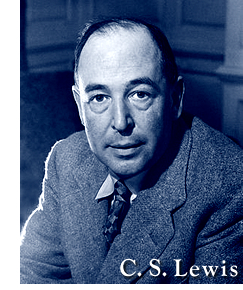
C.S. Lewis Daily – Today’s Reading


TO Mrs. JESSUP, who seems to have written Lewis about the difficulties of being in a marriage in which one of the spouses is a Christian and one is not: On the slow process of being remade and how difficult we must be to live with after conversion as before; and on not concealing but not flaunting our conversion.

15 October 1951

I agree with everything you say (except that I should publish anything on the subject: a bachelor is not the man to do it—there is such an obvious answer to anything he says!).

Our regeneration is a slow process. As Charles Williams says there are three stages: (1.) The Old Self on the Old Way. (2.) The Old Self on the New Way. (3.) The New Self on the New Way.

After conversion the Old Self can of course be just as arrogant, importunate, and imperialistic about the Faith as it previously was about any other interest. I had almost said ‘Any other Fad’—for just as the loveliest complexion turns green in a green light, so the Faith itself may have at first all the characteristics of a Fad and we may be as ill to live with as if we had taken up Nudism or Psychoanalysis or Pure Wool Clothing. You and I, clearly, both know all about that: one makes blunders.

About obedience, the principle is clear. Obedience to man is limited by obedience to God and, when they really conflict, must go. But of course that gives one very little guidance about particulars. The converted party must pray: I suppose it is not often necessary to pray in the presence of the other! Especially if the converted party is the woman, who usually has the house to herself all day. Of course there must be no concealment, in the sense that if the question comes up one must say frankly that one does pray. But there is a difference between not concealing and flaunting. For the rest (did I quote this before?) MacDonald says ‘the time for speaking seldom arrives, the time for being never departs.’ Let you and me pray for each other.

From The Collected Letters of C.S. Lewis, Volume III

Compiled in Yours, Jack

Charles Stanley – Prayer: Our Time Saver


Psalm 143:5-12

What’s the first thing you think about when you wake up? Are your thoughts instantly focused on the day ahead, or are they centered on the Lord? Although most of us have busy lives and are involved in activities that consume much of our time and attention, the most important and timesaving part of each day is that which is spent in quiet solitude with God.

Yet many of us feel so rushed that we don’t think there’s enough time for the Lord. We immediately jump onto the treadmill of life and then wonder why we’re so frustrated, confused, and dissatisfied. Even if our desire is to follow God, we don’t know where He’s going since we haven’t stopped to get directions for the day. Without daily communication, no one can have intimacy with Christ.

Perhaps the problem is our own human logic. We think spending time reading the Bible and praying each morning will result in having less time and lower productivity. However, when we seek Christ’s direction and wisdom for the day and invite Him to control our lives, He’ll accomplish more through us than we can do by ourselves. He will give us wisdom for good decisions, increase our strength and energy, and free us from time-wasting anxiety.

Ask yourself, Am I too busy for the Lord? If the answer is yes, then you’re denying yourself the blessing of an intimate relationship with Christ. When you make time for Him, He’ll fill you with peace and joy, guide your decisions, grant you wisdom, empower you to obey, make you more productive, and comfort you with His love.

Bible in One Year: Mark 3-5

Ravi Zacharias Ministry – What Do You See?


They told me to give it three weeks. “Your eyes and your brain are getting reacquainted again,” he said. “Your eyesight will fluctuate for the next few days.” Less than a week after eye surgery, I was tired of fluctuating. At times my vision was so crisp that it was almost too much for me—like I was somehow seeing more than I should. But this clarity came and went; I was sometimes far-sighted, sometimes near-sighted, sometimes neither very well. Perfect sight was not as immediate as I anticipated.

My inhabiting of faith and belief is not so far from this. Fittingly, I was given the charge of writing about my meandering path toward Christian belief the same week of my eye surgery. The reflective task of peering into my life, looking at patterns and history with the hope of illumination seemed ironic as I squinted to see my computer screen. But it served as a helpful metaphor. My vision of Jesus has been far from immediate. It has been much closer to a fluctuating timeline of beholding and squinting, seeing, not-seeing, and straining to see. My experience has been something more like the blind man’s from Bethsaida:

“Do you see anything?” Jesus asks after placing his hands on the man’s eyes.

The man looks up and says, “I see people; they look like trees walking around.”

Jesus puts his hands once more on the man’s eyes, and then “his eyes were opened; his sight was restored, and he saw everything clearly.”(1)

For those of us who want to relate to Jesus as the God of immediacy, two-staged miracles are cumbersome. I don’t want fluctuating vision. I am leery of winding roads and long journeys. I want to live knowing that he is the one who makes all things new—now. And I believe he is. But Christ also makes us ready to handle it. God is working that we might be able to stand in the very midst of the one who makes all things new—and seemingly we are not always ready.

Seeing apparently takes time and patience. Though undoubtedly, we are slow learners, all too often satisfied with walking trees. “Do you have eyes but fail to see?” It is another vision question Jesus placed before many he encountered. But this blind man knew enough not to settle with people looking like evergreens. What he saw with his own eyes was something he fortunately knew was less than eyes could see. Though partial sight was itself a miracle, the one who touched him—and he himself—had in mind something more.

How interesting, then, that Jesus’s two-staged miracle takes place immediately following an exchange with the Pharisees who were looking for a miraculous sign that Jesus was not offering, as well as an exchange with the disciples who were in the very presence of light itself and yet somehow kept failing to see. Mark seems to be telling us that seeing takes time, that learning to see is a process, but also, that Christ is ever-patient with those who do not see. In our best attempts to consider God, wrote Augustine, we are essentially asking the everlasting Light to “lighten our darkness.” Perhaps the miracle of sight is less like a light switch and more like a series of lights God strings together until we can finally see.

Vision, not unlike redemption, wholeness, or revelation, is at times a process by which Christ must dazzle gradually, as Emily Dickinson said. Other times we may find ourselves moved nearly to blindness as we encounter more than we have eyes yet to see. But God is always at work in the process, even when all we might be seeing are walking tress. Yet, “do you see anything?” Jesus asks as often we need him, while holding near the well-lit miracle that one day we shall see him face to face.

Jill Carattini is managing editor of A Slice of Infinity at Ravi Zacharias International Ministries in Atlanta, Georgia.

(1) Mark 8:23-25.

Alistair Begg – What is Spiritual Knowledge?


I count everything a loss because of the surpassing worth of knowing Christ Jesus my Lord. Philippians 3:8

Spiritual knowledge of Christ will be a personal knowledge. I cannot know Jesus through another person’s acquaintance with Him. I must know Him myself; I must know Him on my own account.

It will be an intelligent knowledge-I must know Him not as in the visionary dreams of Him, but as the Word reveals Him. I must know His natures, divine and human. I must know His offices (Prophet, Priest and King)-His attributes-His works-His shame-His glory. I must meditate upon Him until I “comprehend with all the saints what is the breadth and length and height and depth, and to know the love of Christ that surpasses knowledge.”1

It will be an affectionate knowledge of Him; indeed, if I know Him at all, I must love Him. An ounce of heart knowledge is worth a ton of head learning. Our knowledge of Him will be a satisfying knowledge. When I know my Savior, my mind will be full to the brim-I will feel that I have that which my spirit longs for. This is the bread that satisfies all hunger.

At the same time it will be an exciting knowledge; the more I know of my Beloved, the more I will want to know. The higher I climb, the loftier will be the summits that invite my eager footsteps. I shall want more as I get more. Like the miser’s treasure, my gold will make me covet more.

To conclude, this knowledge of Christ Jesus will be a most happy one; in fact, so elevating that sometimes it will completely lift me above all trials and doubts and sorrows; and it will, while I enjoy it, make me something more than “Man . . . born of a woman . . . few of days and full of trouble,” for it will throw about me the immortality of the ever-living Savior and cover me with the golden cloak of His eternal joy. Come, my soul, sit at Jesus’ feet, and learn of Him all this day.

1) Ephesians 3:18-19

The Family Bible Reading Plan

  • 1 Kings 17
  • Colossians 4

Devotional material is taken from “Morning and Evening,” written by C.H. Spurgeon, revised and updated by Alistair Begg.

Charles Spurgeon – The glorious habitation


“Lord, thou hast been our dwelling place in all generations.” Psalm 90:1

Suggested Further Reading: 1 John 4:13-16

Will you take my master’s house on a lease for all eternity, with nothing to pay for it, nothing but the ground rent of loving and serving him for ever? Will you take Jesus, and dwell in him throughout eternity, or will you be content to be a houseless soul? Come inside, sir; see, it is furnished from top to bottom with all you want. It has cellars filled with gold, more than you will spend as long as you live; it has a parlour where you can entertain yourself with Christ, and feast on his love; it has tables well stored with food for you to live on for ever; it has a drawing-room of brotherly love where you can receive your friends. You will find a resting room up there where you can rest with Jesus; and on the top there is a look-out, whence you can see heaven itself. Will you have the house, or will you not? Ah, if you are houseless, you will say, “I should like to have the house; but may I have it?” Yes; there is the key. The key is, “Come to Jesus.” But you say “I am too shabby for such a house.” Never mind; there are garments inside. As Rowland Hill once said:

“Come naked, come filthy, come ragged, come poor,

Come wretched, come dirty, come just as you are.”

If you feel guilty and condemned, come, and though the house is too good for you, Christ will make you good enough for the house. He will wash you, and cleanse you, and you will yet be able to sing with Moses, with the same unfaltering voice, “Lord, thou hast been my dwelling place throughout all generations.”

For meditation: The Christian has two addresses—a temporary earthly address and an eternal heavenly address, “in Christ” (Philippians 1:1; Colossians 1:2).

Sermon no. 46

14 October (1855)

John MacArthur – Rallying Around the Word


“Every word of God is tested [pure, flawless]” (Prov. 30:5).

God’s Word is without error.

Inerrancy is a term that conveys the belief that the original writings of Scripture are wholly true in everything they teach— whether doctrine, history, science, geography, geology, or any other discipline or knowledge. It also applies to accurate copies of those original writings.

Inerrancy is an unpopular concept with some people because they believe it isn’t really important. But consider the implications. No Christian would deny that our relationship to Jesus Christ is of utmost importance. How can we know Him except as He is presented in the Bible? He is our Lord and we must obey His commandments (Heb. 5:9). How can we know what He commands if we doubt His Word?

Others reject inerrancy because they think it’s divisive. But inerrancy should be a rallying point for evangelicals, not a dividing point. What unifying factor do we have if we can’t agree on the truth of divine revelation?

Still others withhold judgment on the issue, thinking it’s a technical matter that is best decided by biblical scholars. On the contrary, it is the most basic of all matters. It’s nothing less than asking, “Is there a sure Word from God?”

Inerrancy isn’t simply a matter of theological debate. It’s a matter of God’s character. God cannot lie (Titus 1:2; Heb. 6:18); therefore His Word is true. Jeremiah 10:10 says that the Lord is the true God or the God of truth. The apostle John said, “God is true” (John 3:33). And Jesus defined eternal life as knowing the only true God (John 17:3). Christ came so we might “know him that is true . . . the true God and eternal life” (1 John 5:20).

Don’t be shaken by those who attack the integrity of Scripture. As you have opportunity, study any problem passages so you’ll know first-hand what the issues and proposed solutions are. And remember, Scripture was given by inspiration of the Holy Spirit, who is the Spirit of Truth (John 16:13). He cannot err.

Suggestions for Prayer

If Psalm 119:12-16 reflects the intent of your heart, read it to the Lord as a prayer of praise and commitment.

For Further Study

According to Matthew 22:29 and John 17:17, what was Jesus’ view of Scripture?