Tag Archives: Bible

Campus Crusade for Christ; Bill Bright – He Honors the Humble


“For everyone who tries to honor himself shall be humbled: and he who humbles himself shall be honored” (Luke 14:11).

At times I am respectfully amused at the repetition of certain themes in the Word of God – repeated over and over again so that you and I will not forget the importance of the message. This is one of those principles.

Many missionaries have given up honor, acclaim, and success at home in obedience to God’s call upon their lives. Perhaps to their surprise, God has honored them in many ways despite the fact that they purposely gave up all rights to such honor.

In every field of endeavor, the principle is true. Most men who seek genuine acclaim are thoroughly humbled along the way. Conversely, most people who humble themselves as a part of their commitment to Jesus Christ and His service are eventually honored.

I have seen this truth fulfilled on numerous occasions in the work of Campus Crusade for Christ to which the Lord has called me. Many young people have stepped into unsung roles of service for their Master. God has honored them not only with fruit for their hire, but also with a measure of acclaim they never would have achieved otherwise.

It is part of God’s plan to abase the proud and raise up the humble. Our goal should be committed service for the Savior. We should let Him take care of the honoring and the humbling.

Bible Reading: Matthew 23:5-12

TODAY’S ACTION POINT: I’ll recognize anew today that the only good thing about me – and about any believer – is the reality of my relationship with the Lord Jesus Christ through the indwelling person of the Holy Spirit.

Presidential Prayer Team; G.C. – Prayer Pose


According to Harvard researcher Amy Cuddy, assuming a dominant posture can actually increase levels of testosterone and decrease cortisol. She says something as simple as standing hands-on-hips for a few moments will incline you towards greater confidence. Her research correlates a measurable relationship between physical stances and biochemical reactions.

When you pray, go into your room and shut the door and pray to your Father who is in secret.

Matthew 6:6

Jesus taught His disciples how to pray with confidence. He told them to avoid religious showmanship. Grabbing attention and praying long loud prayers apparently doesn’t impress God – at all. He knows it’s a performance. Instead, Jesus encouraged His followers to pull away from others in order to be alone and open their hearts in honesty and intimacy before the Lord. It’s in solitude where you best experience God’s presence.

Steal away for a few moments today to be alone and focus your thoughts upon God and His goodness. Pray for America and for God’s people across the land. Strike a pose in your heart, humbly bowing your will in worship and adoration. Be assured, whatever your outward posture, God will see a soul on its knees.

Recommended Reading: Psalm 95:3-7


Greg Laurie – The People God Uses


So as David stood there among his brothers, Samuel took the flask of olive oil he had brought and anointed David with the oil. And the Spirit of the Lord came powerfully upon David from that day on. Then Samuel returned to Ramah. —1 Samuel 16:13

Imagine David for just a moment, out watching his family’s sheep just like any other day. Then he gets a message: “David, they want you back at the house.”

“Why?”

“I don’t know. There is some prophet in town, and you have to come right away.”

David wasn’t dressed for the occasion. His brothers probably had taken a shower and put on their finest robes and were looking good. But David came bounding in from the field with youthful energy, probably smelling like a pasture.

When Samuel looked at him, God said, “This is the one; anoint him” (1 Samuel 16:12).

The next thing David knew, the old prophet was pouring oil on his head and saying, “This is the next king of Israel.” People were probably standing around watching, thinking Samuel had finally gone senile. Are you kidding me? That is the next king of Israel?

But David was God’s choice, reminding us that God sees things differently than we do. God raises up His own men and women to blow the world’s mind and to confound everyone and say, “This is Me at work. This is Me changing lives.”

It gives hope to people who are ordinary and are often overlooked. God looks on the heart.

One of the greatest evangelists who ever lived was Dwight Lyman Moody. Moody was a shoe salesman when God called him. A man named Edward Kimball had a leading of the Holy Spirit to go and talk to Moody about the Lord. He came to faith and then became a powerful evangelist who impacted the world. Moody went from selling soles to saving souls. He was just an ordinary guy—they didn’t come any more ordinary than him. But he was used by God in a powerful way.

God uses ordinary people.

Max Lucado – From Glory to Glory


Do you sense a disconnect between the promises of the Bible and the reality of your life? Jesus offers abundant joy, yet you live with oppressive grief. Romans 8:37 promises we are more than conquerors—yet you are commonly conquered by temptations or weaknesses.  Paul says in 2 Corinthians 3:18 you can live from glory to glory. The deed to your new life is already signed. From dry land to the Promised Land; from manna to feasts.

Joshua 21:43-45 says, “So the Lord gave to Israel all the land of which he had sworn to give to their fathers, and they took possession of it and dwelt in it.”  You can personalize that promise! You can realize your Glory Days! I invite you to join me in a Glory Days Scripture Memory Challenge and take to heart Joshua 21: 43-45. Let’s memorize these verses together at GloryDaysToday.com!

Night Light for Couples – You Can’t Outgive God


“See if I will not throw open the floodgates of heaven and pour out so much blessing that you will not have room enough for it.” Malachi 3:10

My (jcd’s) dad, an evangelist, was the original soft touch. I remember him once going off to speak in a tiny church and coming home ten days later. Eventually my mother asked about the offering. I can still see my father’s face as he smiled and looked at the floor. “You gave the money away again, didn’t you?” she asked. “Myrt,” he said, “the pastor there is going through a hard time. His kids are so needy. I felt I should give the entire fifty dollars to them.” My good mother looked at my father for a few moments and then smiled. “You know, if God told you to do it, it’s okay with me.” A few days later, we ran completely out of money, so my father gathered us for a time of prayer. He said, “Lord, you told us that if we would honor you in our good times, that you would take care of us when things are difficult. We need a little help at this time.” The next day we received an unexpected check for $1,200. That’s the way it happened— not once, but many times. No matter what you give, you’ll find you can never outgive God.

Just between us…

Are we trusting God with our giving? What blessings, material and nonmaterial, have we seen from our gifts? Do we know someone now who needs a helping hand? Should we share what we have with them? Do we really believe “God owns it all”?

Heavenly Father, You promised to pour out blessings on those who tithe in Your name. Help us to take You at Your word and to trust in Your provision as we give back to You and share our abundance with others. Amen.

From Night Light For Couples, by Dr. James & Shirley Dobson


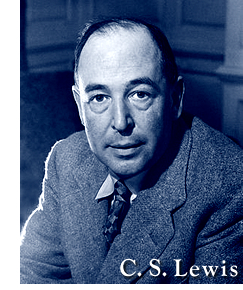
C.S. Lewis Daily – Today’s Reading


Screwtape advises Wormwood on using time to wear down a soul:

The Enemy has guarded him from you through the first great wave of temptations. But, if only he can be kept alive, you have time itself for your ally. The long, dull, monotonous years of middle-aged prosperity or middle-aged adversity are excellent campaigning weather. You see, it is so hard for these creatures to persevere. The routine of adversity, the gradual decay of youthful loves and youthful hopes, the quiet despair (hardly felt as pain) of ever overcoming the chronic temptations with which we have again and again defeated them, the drabness which we create in their lives and the inarticulate resentment with which we teach them to respond to it—all this provides admirable opportunities of wearing out a soul by attrition. If, on the other hand, the middle years prove prosperous, our position is even stronger. Prosperity knits a man to the World. He feels that he is ‘finding his place in it’, while really it is finding its place in him. His increasing reputation, his widening circle of acquaintances, his sense of importance, the growing pressure of absorbing and agreeable work, build up in him a sense of being really at home in earth, which is just what we want. You will notice that the young are generally less unwilling to die than the middle- aged and the old.

From The Screwtape Letters

Compiled in A Year with C.S. Lewis

Charles Stanley – What is the Church?


Colossians 1:18

When most people hear the word “church,” the first thing they think of is a certain type of building. But let’s see what Christ said about the church so we can more fully understand its biblical meaning.

In Matthew 16:18, Jesus proclaimed, “I will build my church; and the gates of hell shall not prevail against it” (KJV). He obviously had in mind something much greater than a mere architectural structure. In fact, He was referring to the whole body of Christ, which is comprised of all believers worldwide—everyone who has trusted Jesus as personal Savior and is a child of the heavenly Father. The church began on the day of Pentecost, when the Holy Spirit came and anointed a group of Jesus’ followers (Acts 2). It will continue until an event referred to as the rapture of the church, when every believer in Christ will be caught up to meet Him in the sky (1 Thess. 4:17).

The church is not merely a place for social action or fellowship, though these are important aspects of its ministry. Rather, the church is the entire body of Christ, both corporately and individually filled and enabled by the Holy Spirit to carry out the task designated by Jesus Himself. In other words, the purpose of the church is to bring people to a saving knowledge of the Lord Jesus Christ and to make disciples, instructing them and growing them up in the things of God (Matt. 28:19-20).

Our responsibility is to obey. Have you asked yourself what role you should be playing in the ministry of the church?

Bible in One Year: Matthew 8-10

Our Daily Bread — Seconds Count


Read: Psalm 39:4-13

Bible in a Year: Isaiah 23-25; Philippians 1

Show me, Lord, my life’s end. —Psalm 39:4

At the age of 59 my friend Bob Boardman wrote, “If the 70 years of a normal life span were squeezed into a single 24-hour day, it would now be 8:30 in the evening in my life. . . . Time is slipping by so rapidly.”

The difficulty in admitting that our time on earth is limited inspired the creation of “Tikker”—a wristwatch that tells you what time it is, calculates your estimated normal life span, and displays a running countdown of your remaining time. It is advertised as the watch “that counts down your life, just so you can make every second count.”

In Psalm 39, David grappled with the brevity of his life, saying, “Show me, Lord, my life’s end and the number of my days; let me know how fleeting my life is” (v. 4). He described his life span as no longer than the width of his hand, as only a moment to God, and merely a breath (v. 5). David concluded, “But now, Lord, what do I look for? My hope is in you” (v. 7).

The clock is ticking. Now is the time to seek God’s power to help us become the people He wants us to be. Finding hope in our eternal God gives meaning for our lives today. —David McCasland

In what ways am I wasting time? In what ways am I making my days count? In what areas do I need to make changes?

The time to live for Jesus is now.

INSIGHT: One reason the Psalms are loved by so many is that they often capture the real emotion of people facing real situations. It gives many of us comfort to know that we are not alone in our struggles and reactions to life. In today’s psalm, David comments on the brevity of life and has an understandable reaction. When we look back on our lives, many of us lament our mistakes and wasted efforts. But David reminds us that in the face of all our sins, it is God who remains our hope. No matter how much of a mess we have made of our lives, it is never too much of a mess for God to redeem. J.R. Hudberg


Ravi Zacharias Ministry – Playing Favorites


A friend of mine describes coming to terms as a little girl with the sad thought that she would never be God’s favorite. Knowing that God had so many children, knowing that good fathers love equally, she knew her hope of being the favorite was never going to pan out.

When I first heard her say this, I smiled at the idea of a little girl worrying so seriously about God’s fairness and how it affected her. God is much more often accused of being un-fair. But the more I thought about my friend’s disappointment, the more I think this is exactly the difficulty most of us have with God—although most of us will never admit it. The unguarded sincerity of a child voices what we do not: If we are being honest, no one really wants to be seen as equal to all others.

The desire to be someone’s favorite, to the best at something, to exceed the expectations of those around us, or to be known for being better than most—at anything—has been fostered within us since birth. New mothers happily report when their toddlers are in the highest percentile in motor, social, or language skills. A child delights in winning the spelling bee; employees strive to get ahead, to be noticed, to be superior. At every turn, we are as horrified by equality as we are at mediocrity. Even if the desires remain unvoiced, we want to be the best at something. We long to be someone’s—anyone’s—favorite.

For souls in tune with this quality, there is one story Jesus tells that probably disturbs us more than others. In this parable, Jesus describes a landowner who went out in the morning and hired workers for his vineyard. All agreed upon a wage of a denarius, they were sent to the vineyard, and the work began. A few hours later, the master went out and hired more laborers for his vineyard. A few hours after this, again a few hours later, and yet again after this, he hired some more. When evening came, the owner of the vineyard called the workers forward to collect their wages, beginning with the last ones hired and going on to the first. Jesus explains, “The workers who were hired about the eleventh hour came and each received a denarius. So when those came who were hired first, they expected to receive more. But each one of them also received a denarius. When they received it, they began to grumble against the landowner. ‘These men who were hired last worked only one hour,’ they said, ‘and you have made them equal to us who have borne the burden of the work and the heat of the day’” (Matthew 20:9-12).

Equality in this story is nothing short of offensive. Those who have worked harder and longer want only to be recognized, favored for their work, commended for their superiority over the others. But the landowner only responds with words that further offend: “‘Friend, I am not being unfair to you. Didn’t you agree to work for a denarius? Take your pay and go. I want to give the man who was hired last the same as I gave you. Don’t I have the right to do what I want with my own money? Or are you envious because I am generous?’” (vv. 13-15).

In this difficult parable, Jesus gives us a clear look at our definitions of injustice, our sense of superiority, and our hatred of God’s fairness when it fails to favor us. When generosity is showered on someone else, when equality shatters our sense of being on top, God’s goodness often elicits not goodness, but envy, hostility, disappointment, and anger. But the master reminds his disgruntled workers that he did exactly what was promised. It was only when they compared themselves to the others that they began to feel slighted.

Jesus proclaims the coming of a kingdom that turns this world as we know it on its head and requires a complete reframing of perspective. God’s grace is not meant to be a source of disappointment nor is God’s kingdom meant to be a hierarchy of skill and favoritism. On the contrary, God reminds us that greatness comes in ways that shock and disorient our many rules and systems. For God’s grace bestowed at any hour is generous and confrontational, the power of the Cross is scandalous and underserved, the love of the Father always boldly given and lavished. Receiving the generosity of the master, we are united with the Son in whom God is well-pleased. In his economy, we are made heirs of God and co-heirs with Christ himself. And there is no greater favoritism.

Jill Carattini is managing editor of A Slice of Infinity at Ravi Zacharias International Ministries in Atlanta, Georgia.

Alistair Begg – Meant for Service


And he arose and ate and drank, and went in the strength of that food forty days and forty nights. 1 Kings 19:8

All the strength supplied to us by our gracious God is meant for service, not for indulgence or pride. When the prophet Elijah found the cake baked on the coals and the jar of water placed at his head as he lay under the juniper tree, he was not being given a special treat that he could lie back and enjoy–he was being sustained so that he could fulfill his responsibilities for the next forty days and forty nights. When the Master invited the disciples to come and eat with Him, after the meal was over He said to Peter, “Feed my sheep,” then added, “Follow me.”

It is the same for us; we eat the bread of heaven so that we can expend our strength in the Master’s service. We come to the table and eat of the paschal lamb in a spirit of readiness, so that we may leave as soon as we have satisfied our hunger.

Some Christians are for living on Christ but are not so anxious to live for Christ. Earth should be a preparation for heaven; and heaven is the place where saints feast most and work most. They sit down at the table of our Lord, and they serve Him day and night in His temple. They eat of heavenly food and offer perfect service.

Believer, in the strength you daily gain from Christ, work for Him. Some of us have a lot to learn concerning the design of our Lord in giving us His grace. We are not to hide the precious grains of truth without giving that truth an opportunity to grow: We must sow it and water it. Why does the Lord send the rain upon the thirsty earth and give the sunshine? Is it not in order that sun and rain may help the fruits of the earth to yield food for us? Even so the Lord feeds and refreshes our souls so that we may use our renewed strength in the promotion of His glory.

The Family Bible Reading Plan

  • 1 Kings 8
  • Ephesians 5

Devotional material is taken from “Morning and Evening,” written by C.H. Spurgeon, revised and updated by Alistair Begg.

Charles Spurgeon – Thy Redeemer


“And thy redeemer, the Holy One of Israel.” Isaiah 41:14

Suggested Further Reading: Psalm 118:5-14

Hear Jehovah, the everlasting Father, saying, “I will help thee.” “Mine are the ages: before the ages began, when there were no worlds, when nothing had been created, from everlasting I am thy God. I am the God of election, the God of the decree, the God of the covenant; by my strength I did set fast the mountains; by my skill I laid the pillars of the earth, and the beams of the firmament of heaven; I spread out the skies as a curtain, and as a tent for man to dwell in; I the Lord made all these things. I will help thee.” Then comes Jehovah the Son. “And I also, am thy Redeemer, I am eternal; my name is wisdom. I was with God, when there were no depths, before he had digged the rivers, I was there as one brought up with him. I am Jesus, the God of ages; I am Jesus, the man of sorrows: ‘I am he that liveth and was dead, I am alive for evermore.’ I am the High Priest of thy profession, the Intercessor before the throne, the Representative of my people. I have power with God. I will help thee.” Poor worm, thy Redeemer vows to help thee; by his bleeding hands he covenants to give thee aid. And then in comes the Holy Spirit. “And I,” saith the Spirit, “am also God—not an influence, but a person—I, eternal and everlasting co-existent with the Father and the Son—I, who did brood over chaos, when as yet the world was not brought into form and fashion, and did sow the earth with the seeds of life when I did brood over it,—I, that brought again from the dead your Lord Jesus Christ, the Shepherd of the sheep, I who am the Eternal Spirit, by whose power the Lord Jesus did arise from the bondage of his tomb—I, by whom souls are quickened, by whom the elect are called out of darkness into light—I, who have power to maintain my children and preserve them to the end—I will help thee.”

For meditation: 2 Corinthians 13:14: what a mighty benediction!

Sermon no. 157

5 October (Preached 4 October 1857)

John MacArthur – Longing for the Word


“Like newborn babes, long for the pure milk of the word, that by it you may grow in respect to salvation” (1 Pet. 2:2).

Scripture is our source of spiritual growth.

A newborn baby was abandoned in a pile of trash in a city alley. The mother had obviously left it there to die. The infant was near death when someone heard its faint cry and summoned medical help. The child survived, but not until it had received the attention and nourishment it needed.

That situation has a spiritual parallel, which Peter used to illustrate the believer’s dependence on God’s Word. If a baby is deprived of nourishment, it will soon die. Similarly, if a Christian doesn’t feed on the Word, he or she will languish spiritually and become ineffective for the Lord. On the positive side, a believer should long for God’s Word as intently as a newborn baby longs for its mother’s milk.

Scripture draws on the parent/child metaphor in other ways, referring to Christians as being born again (John 3:7; 1 Pet. 1:3), children of God (Rom. 8:16; 1 John 3:1), and adopted sons (Rom. 8:14; Eph. 1:5). Just as it is natural for biological children to grow and mature, Christians also have the capacity for spiritual growth. In fact, we’re commanded to “grow in the grace and knowledge of our Lord and Savior Jesus Christ” (2 Pet. 3:18).

The Word of God is the mainstay of your spiritual diet. It’s your primary source of nourishment. Paul said, “As you . . . have received Christ Jesus the Lord, so walk in Him, having been firmly rooted and now being built up in Him and established in your faith, just as you were instructed” (Col. 2:6-7). “Your faith” in that context refers to the content of Christianity—the doctrines of Scripture. As your knowledge and application of biblical principles increases, you will become more and more grounded in truth and steadfast in Christ.

Suggestions for Prayer

If you’ve lost your appetite for God’s Word, it may be because of sin (1 Pet. 2:1). If so, ask God to cleanse your heart and give you a renewed longing for His truth. Then commit yourself to daily time in the Word.

For Further Study

Read Acts 20:32 and 1 Thessalonians 2:13, noting the effect Scripture has on believers.


Joyce Meyer – A Willing Heart


And the Lord said to Moses, Speak to the Israelites, that they take for Me an offering. From every man who gives it willingly and ungrudgingly with his heart you shall take My offering. —Exodus 25:1-2

When we talk about a willing heart, we are basically talking about “want to.” Without it we will never do anything.

“Want to” is a powerful thing. With it you can lose weight, keep your house clean, save money, get out of debt, or reach any other goal in life you may have set for yourself. You don’t really like to face the fact that your victory or defeat has a lot to do with your “want to.”

We like to blame everything on someone or something else. But you need to sit down and take a good old-fashioned inventory of your “want to.” You need to be honest enough to say, “Lord, I didn’t win the victory because I really didn’t want to.” Tonight, ask the Lord to give you plenty of “want to.”

From the book Ending Your Day Right by Joyce Meyer


Campus Crusade for Christ; Bill Bright – Yours Is the Kingdom


“So don’t be afraid, little flock. For it gives your Father great happiness to give you the Kingdom” (Luke 12:32).

Do you like the picture, as I do, of being a part of God’s little flock? That makes Him our shepherd, of course, and it makes us His sheep. How apt a picture!

Often, I am sure, most of us must seem to wander like lost sheep – not knowing which way to turn. It is at such times, in particular, that I need to see the Lord Jesus Christ as my great Shepherd, tenderly watching over me in the midst of every kind of heartache and burden.

In Judea, it was common to see men tending sheep, looking over the flocks by day and night. The shepherd watched over them, defended them, provided for them, led them to green pastures and beside still water.

Jesus was – and is – the Good Shepherd. His flock was relatively small. Few really followed Him, compared to the multitude who ignored Him. Though small in number, they were not to fear because God was their Friend. He would provide for them. He purposed to give them the kingdom and they had nothing to fear.

Today, we are part of a large and growing flock with a great and loving Shepherd. Just to know that He watches over us – cares for us – is joy supreme.

Bible Reading: Luke 12:28-34

TODAY’S ACTION POINT: During the day I will deliberately look up into God’s heaven several times to see that great Shepherd of the sheep, the Lord Jesus Christ.

Presidential Prayer Team; C.H. – Small But Great


Christian Thomas, a five-year-old also known as Buddy Backpacker, is officially the youngest person to ever hike the 180-mile Appalachian Trail. With his parents, Christian hiked and learned math, science and languages along the way. The trail is daunting for a hiker of any age, which makes Buddy’s trek all the more incredible. Sometimes small people can do great things.

And it was so…he wrung enough dew from the fleece to fill a bowl with water.

Judges 6:38

In today’s passage, Gideon, “the least” in his family (Judges 6:15), felt really small, too. But God had big plans. When Gideon doubted the Lord’s instructions, he asked for specific confirmation. “If there is dew on the fleece alone, and it is dry on all the ground, then I shall know that you will save Israel by my hand, as you have said.” (Judges 6:37) God did just as Gideon asked.

Do you question what small acts of faith God can use in your life? Size doesn’t matter when it comes to the Almighty. Pray for God to confirm His plans for you. Then intercede for America and its leaders to move mountains with their faith – no matter the size.

Recommended Reading: Judges 6:33-40

Greg Laurie – One Step at a Time


Now the Lord said to Samuel, “You have mourned long enough for Saul. I have rejected him as king of Israel, so fill your flask with olive oil and go to Bethlehem. Find a man named Jesse who lives there, for I have selected one of his sons to be my king.”—1 Samuel 16:1

I wish I could say that throughout my life, I have always had a detailed blueprint of everything I should do. But it hasn’t been like that at all. I have never started a day with the theme from Mission Impossible playing in the background and a voice saying, “Good morning, Greg. This is God. Here is your mission for today.”

For the most part, it has been a matter of taking steps of faith based on what I’ve read in the Scriptures. God has led me one step at a time.

Interestingly, when God told Samuel that He had chosen a new king to reign over Israel, the Lord had not revealed to Samuel exactly whom it was. God basically said to him, “Go to Bethlehem. I will tell you what to do after that.” And that is exactly what Samuel did.

When the Lord told Philip to go to the desert, he had been preaching the gospel in Samaria. People were coming to faith. Revival was breaking out. Yet God told him to go to the desert, and He didn’t tell him anything else. How easily Philip could have asked why: And preach to whom? Camels? Lizards? But Philip did exactly what the Lord told him to do. Philip shared the gospel with the man he found there, and he came to the Lord.

God led Samuel and Philip one step at a time, and that is typical of how God leads us. God’s way becomes plain when we start walking in it. If God already has shown you to do something and you haven’t done it, then don’t ask Him to show you something new to do. Go back and do what you were already supposed to do.

Obedience to revealed truth guarantees guidance in matters unrevealed.

Max Lucado – The Life God Has Given You


In the schoolroom of ancient societies Israel was the kid with the black eye, bullied and beat up. Except for the Glory Days of Israel—seven years between the difficult days of Exodus and the dark days of the judges. Seven years in which the Jordan River opened up and the Jericho walls fell down. Joshua 21:43-45 are verses I invite you to memorize in our Glory Days Scripture Memory Challenge this week.

“So the Lord gave Israel all the land He had sworn to give their ancestors, and they took possession of it and settled there. The Lord gave them rest on every side just as He had sworn to their ancestors. Not one of their enemies withstood them; the Lord handed all their enemies over to them. Not one of the Lord’s good promises to Israel failed. Every one was fulfilled.”

From Glory Days

Night Light for Couples – Hitting the Jackpot


“It is easier for a camel to go through the eye of a needle than for a rich man to enter the kingdom of God.” Matthew 19:24

Do you ever dream of winning the lottery? It may interest you to know that about a third of all lottery winners go bankrupt within five years and that another quarter of these instant millionaires wind up selling their remaining payments at a discounted rate to pay off debts. People who are reckless with ordinary paychecks are just as reckless with bigger ones.

Rather than fantasize about hitting the jackpot, we should strive to be better stewards of what we have. Handle credit cards—if you must use them at all—with great care, and do everything you can to stay out of debt, one of the foremost marriage destroyers. Make purchases with cash when possible. Establish a family budget and stick to it.

Remember to give at least 10 percent of your earnings to the Lord—after all, everything is His, anyway.

Above all, make sure you spend less than you earn each month. It takes discipline, but this simple formula will go a long way toward establishing a worry‐free atmosphere in your home.

Just between us…

  • Most people around the world would consider the average American income a jackpot. Do you?
  • Are we saving money instead of falling into debt?
  • Would we benefit from establishing a family budget or revising the one we have?
  • Are we tithing?

Heavenly Father, You bless us with so much. Even when money is tight, we know You care for us. But we often fail to be responsible and to honor You with how we manage money. Help us to know and live by Your wisdom. Amen.

From Night Light For Couples, by Dr. James & Shirley Dobson

C.S. Lewis Daily – Today’s Reading


TO RHONA BODLE, who had written Lewis of her upcoming confirmation: On not expecting remarkable sensations connected to holy activities.

9 November 1949

Congratulations. You are daily in my prayers.

Caveat [let her beware!]—don’t count on any remarkable sensations, either at this or your first (or fifty first) Communion. God gives these or not as He pleases. Their presence does not prove that things are especially well, nor their absence that things are wrong. The intention, the obedience, is what matters.

From The Collected Letters of C.S. Lewis, Volume II

Compiled in Yours, Jack

Charles Stanley – Understood by Jesus


Hebrews 4:14-15

Whenever disaster happens in your friends’ lives, it is natural to try to comfort them in any way you can. But how many times do you feel as if you’ve said the wrong thing? Sometimes expressions of consolation create even more pain. For example, the well-intentioned words “I understand” feel empty if the speaker has never actually experienced the situation.

Yet we all long to feel understood. And it helps to know individuals who have endured circumstances similar to ours. Today’s passage reassures us that Jesus truly understands because He experienced struggles like ours.

The writer of Hebrews refers to Jesus as our High Priest. Each year the man who was chosen to serve in this capacity would enter the Holy of Holies and there, in God’s presence, offer a sacrifice for sin (Lev. 16). The priest was the Jewish people’s bridge to God. Christ not only took on this role, but He Himself also became the sacrifice when He died on the cross. By doing so and dying in our place, Jesus endured every possible sin. Now He sits at the right hand of the Father in heaven and intercedes on our behalf.

That in itself is encouraging. But even more than that, we know Jesus truly understands our pain and our weakness. For example, a single parent who has suffered greatly can be assured that Christ also knew betrayal (when Judas turned against Him), loneliness (when Peter denied knowing Him), and depression (when facing separation from His heavenly Father).

If you feel alone in the hardships you’re facing, recall Jesus’ trials, hurts, and temptations. You’ll find comfort in His understanding.

Bible in One Year: Matthew 5-7