Tag Archives: Bible

Our Daily Bread — We Have Fruit!


Read: Joshua 24:2,8-14

Bible in a Year: Isaiah 14-16; Ephesians 5:1-16

I gave you a land on which you did not toil and cities you did not build. —Joshua 24:13

The young mother sighed as she scraped together lunch for her 3-year-old daughter. Spying the empty fruit basket on the table in their tiny kitchen, she sighed and said aloud, “If we just had a basket of fruit, I would feel rich!” Her little girl overheard her.

Weeks passed. God sustained the small family. Still, the struggling mom worried. Then one day her little girl bounded into the kitchen. “Look, Mommy, we’re rich!” she exclaimed, pointing at the full fruit basket on the table. Nothing had changed except that the family had purchased a bag of apples.

When Joshua, the leader of the Israelites, was about to die, he shared a message from the Lord that recounted all God had done for them. And he noted, “You lived in the wilderness for a long time” (Josh. 24:7). Then he said, “[God] gave you a land on which you did not toil and cities you did not build; and you live in them and eat from vineyards and olive groves that you did not plant” (v. 13). Joshua set up a large stone to remind Israel of God’s provision (v. 26).

Like the Israelites, after a time of challenge and scarcity, that family now lives in a different place and enjoys fruit trees in a spacious yard, planted years earlier by a previous owner. If you visit them, you’ll find a bowl of fruit in their kitchen. It reminds them of God’s goodness and how a 3-year-old infused her family with faith, joy, and perspective. —Tim Gustafson

Thank God for how He has provided in the past. Thank Him for what He will do. Ask Him what He wants you to do. Then trust Him.

Remembering God’s provision for yesterday gives hope and strength for today.

INSIGHT: In Genesis 15, God promised Abraham that He would give his descendants possession of a great stretch of land that was occupied by other people. Several hundred years later, under the leadership of Joshua, God fulfilled His promise, and the people of Israel took possession of the Promised Land. In today’s passage, Joshua reminds the Israelites that it was not by their own military might that they did this, but it was God who gave them the land. As a result of God’s provision (defeating the armies of the other people), Joshua reminded them to fear and serve the Lord. J.R. Hudberg


Ravi Zacharias Ministry – New Robes


Hans Christian Andersen tells of the emperor who loved new clothes. This emperor so admired modeling his new robes that he spent all of his time in his dressing room. In fact, he had little concern for anything else in his kingdom.

One day two swindlers came to town announcing they were weavers of the finest clothes imaginable. Their royal colors and fabrics, they claimed, were exceptionally stunning. In fact, they were of such quality that they were only visible to the finest few! Those who were unfit for their office or were hopelessly stupid would not be able to see them at all.

The emperor was immediately taken by this description and provided the weavers with large amounts of money. He wanted to know those who were unfit for their posts; he also wanted to see the foolish and the clever within his empire. Yet when the emperor went to try on the garments, he was most distraught to realize that it was he who saw nothing at all. But the king would not admit his stupidity or incompetence; he would not let anyone think him a fool. He announced that the cloth was very beautiful, and all the courtiers rapidly agreed. In a great procession the next day, everyone spoke in admiration of the emperor’s new clothes. They loved the detail! The colors were beautiful! The garments were like no other, they said. But then from the back of the crowd a child spoke up, observing what the rest would not: The emperor was wearing nothing.

Imagine finding out that the one thing you have desperately attempted to keep veiled in secrecy was not actually veiled at all. The thought bears the unsettling sense of finding yourself unclothed before a crowded room. Would you feel foolish? Would you run and hide? Or would you insist the veil was still there? Andersen ends with a glimpse into the mind of the king: “[The words of the child] made a deep impression upon the emperor, for it seemed to him that they were right. But he thought to himself regardless, ‘Now I must bear up to the end.’” Idols are not easy to own up to; how much more so, when what we idolize is not really there in the first place.

I believe, however, that there might be another response—besides denial or shame—to the startling realization that we stand unveiled before family, friends, or maybe even God. We can find ourselves enveloped in gratitude, clothed by meekness. The masks we were so certain were necessary, the act we put on to appease the crowd, the lies we told to protect ourselves were maybe not quite as necessary as we thought. Could you take off the costume you thought you were wearing if you realized you were only wearing it for yourself?

Perhaps Paul’s instruction to “put off falsehood” is sometimes a call to “put off” what is not even there. The call of Christ is no different. He calls us unto himself and requires that we give him everything, but asks that we come without costume or pretense. We must come as much ready to be honest with ourselves as with him. In the journey of the Christian pilgrim, we walk with Christ toward the cross through crowds of sheep following blindly, and like the disciples on the road to Emmaus our eyes are opened to our own blind and deceived ways. It is as if Jesus himself is a mirror and we are inspecting our new clothes. But he will take from our shoulders our robes of self-importance and false security. He will tear from our grasp our garments of self-pity and shame. Then he will clothe us with garments of salvation and array us in robes of righteousness, and he will show us that we have been made new.

Jill Carattini is managing editor of A Slice of Infinity at Ravi Zacharias International Ministries in Atlanta, Georgia.

Alistair Begg – Hope for the Future and Joy for Today


The hope laid up for you in heaven. Colossians 1:5

Our hope in Christ for the future is the mainspring and the mainstay of our joy down here today. Our hearts will be stirred by thinking often of heaven, for all that we can desire is promised there.

Here we are tired and weary, but over there is the land of rest where the sweat of toil will no longer soak our shirts, and fatigue will be banished forever. To those who are weary and worn, the word rest is full of heaven. We are always in the field of battle; we are so tempted and so molested by foes that we have little or no peace; but in heaven we will enjoy the victory, when the banner shall be unfurled in triumph, and the sword will be sheathed, and we will hear our Captain say, “Well done, good and faithful servant.”1

We have suffered bereavement after bereavement, but we are going to the land of the immortal where graves do not exist. Here sin is a constant grief to us, but there we will be perfectly holy, for there will be nothing in heaven to defile it. There are no needs in the furrows of celestial fields. It is a source of deep joy to realize that the wilderness journey of our earthly pilgrimage will end and we will inherit heaven.

But let us make sure that we are not just dreaming about the future and thus forgetting the present. Let all thoughts of the future serve to make us useful in the present. Through the Spirit of God the hope of heaven is the most powerful force for producing virtue; it is a fountain of joyful endeavor; it is the cornerstone of cheerful holiness. Those who have this hope in them go about their work with vigor, for the joy of the Lord is their strength. They fight hard against temptation, for the hope of the next world repels the fiery darts of the adversary. They can work without immediate reward, for they anticipate a reward in the world to come.

1) Matthew 25:23

The Family Bible Reading Plan

  • 1 Kings 4, 5
  • Ephesians 2

Devotional material is taken from “Morning and Evening,” written by C.H. Spurgeon, revised and updated by Alistair Begg.


Charles Spurgeon – The blood of the everlasting covenant


“The blood of the everlasting covenant.” Hebrews 13:20

Suggested Further Reading: Hebrews 9:15-26

With regard to Christ, his precious blood shed in Gethsemane, in Gabbatha and Golgotha, is the fulfilment of the covenant. By this blood sin is cancelled; by Jesus’ agonies justice is satisfied; by his death the law is honoured; and by that precious blood in all its mediatorial efficacy, and in all its cleansing power, Christ fulfils all that he stipulated to do on behalf of his people towards God. Oh, believer, look to the blood of Christ, and remember that there is Christ’s part of the covenant carried out. And now, there remains nothing to be fulfilled but God’s part, there is nothing for thee to do; Jesus has done it all; there is nothing for free will to supply; Christ has done everything that God can demand. The blood is the fulfilment of the debtor’s side of the covenant, and now God becomes bound by his own solemn oath to show grace and mercy to all whom Christ has redeemed by his blood. With regard to the blood in another respect, it is to God the Father the bond of the covenant. When I see Christ dying on the cross, I see the everlasting God from that time, if I may use the term of him who ever must be free, bound by his own oath and covenant to carry out every stipulation. Does the covenant say, “A new heart will I give you, and a right spirit will I put within you?” It must be done, for Jesus died, and Jesus’ death is the seal of the covenant. Does it say, “I will sprinkle pure water upon you and you shall be clean; from all your iniquities will I cleanse you?” Then it must be done, for Christ has fulfilled his part.

For meditation: The very character of God doubles the reliability of his purposes and promises (Hebrews 6:13-18).

Sermon no. 277

2 October (1859)

John MacArthur – Programming Your Spiritual Computer


“Be filled with the knowledge of [God’s] will in all spiritual wisdom and understanding, so that you may walk in a manner worthy of the Lord” (Col. 1:9-10).

Godly behavior is the result of godly thinking.

Perhaps you’ve heard computer buffs use the term G.I.G.O.: “Garbage In, Garbage Out.” Input determines output. What you feed into a computer is what you’ll get out.

Similarly, what you program into your mind will eventually influence your behavior. That’s why you must expose your mind to things that are true, honorable, right, pure, lovely, of good repute, excellent, and worthy of praise (Phil. 4:8). As one preacher put it, “You should be so saturated with God’s Word that your blood is ‘bibline.’ If you cut yourself, you should bleed Bible verses!” His exaggeration reveals his passion for God’s truth—a passion every believer should share.

Paul prayed that we would “walk in a manner worthy of the Lord, to please Him in all respects, bearing fruit in every good work and increasing in the knowledge of God; [and be] strengthened with all power . . . for the attaining of all steadfastness and patience; joyously giving thanks to the Father” (Col. 1:10-12).

Those are marvelous Christian characteristics, but how are they achieved? Verse 9 gives us the answer: “Be filled with the knowledge of [God’s] will in all spiritual wisdom and understanding.” The Greek word translated “filled” speaks of influence or control. It’s the same word Paul uses in Ephesians 5:18: “Be filled [controlled by] the Holy Spirit.” When you’re filled with the Spirit, He governs our choices. Similarly, when you’re filled with the knowledge of God’s will, your choices reflect godly wisdom and understanding.

The phrase “spiritual wisdom and understanding” indicates more than merely knowing God’s Word. It speaks of applying it to your life under the Spirit’s power and direction.

As you prayerfully saturate your mind with God’s Word, it begins more and more to control your thinking and behavior. And the Spirit uses the Word to renew your mind and protect you from conformity to worldly attitudes and actions (Rom. 12:2).

Suggestions for Prayer

  • Ask the Holy Spirit to control every aspect of your life today.
  • Be diligent to apply the appropriate biblical principles to every circumstance you face.

For Further Study

Memorize Philippians 4:8 as a reminder to feed your mind with the things that produce godliness.


Joyce Meyer – Focus


Therefore, holy brothers and sisters, who share in the heavenly calling, fix your thoughts on Jesus, whom we acknowledge as our apostle and high priest. —Hebrews 3:1 NIV

Focusing on good things makes us feel good, excited, energized, and enthusiastic. When we focus our time and attention on things we find to be bad, we feel sad, angry, or anxious. That’s why it’s so important for us to “fix our thoughts on Jesus” and keep our focus on Him. God has given us the ability to choose happiness no matter what is going on around us. I am not suggesting we ignore our problems, but there is a big difference between focusing on them—worrying about them—and working to solve or resolve them.

A negative person cannot be happy, and a persistently positive person cannot be unhappy, at least not for any lengthy period of time. Choose to have a happy life by focusing on Jesus. Do what you can do to take care of any responsibility you have with your problem, and while you are waiting for God to do what you cannot do, you are free to go ahead and enjoy your life.

Power Thought: My mind is focused only on Jesus and good things.

From the book the book Power Thoughts Devotional by Joyce Meyer.

Campus Crusade for Christ; Bill Bright – The Key to Blessing


“He replied, ‘Yes, but even more blessed are all who hear the Word of God and put it into practice'” (Luke 11:28).

If you and I could know only one rule that would guarantee us real happiness, no doubt this should be it. Because the meaning of this promise is the same in or out of context, we shall share briefly the out-of-context guarantee contained therein.

Man’s chief happiness – his, or her, highest honor – is to obey the Word of God. No earthly honor or achievement can compare with the blessing, meaning in and fulfillment that come from obeying the Word and Will of God.

Implicit in putting into practice – or obeying – the Word of God is the matter of knowing the Word of God. This, of course, implies reading, studying, meditating upon and even memorizing the Scriptures. If we are neglecting this phase of the Christian life, we are omitting a vitally important part of spiritual nurture, without which it is impossible to live a supernatural life.

Something about the Word refreshes, cleanses, uplifts the heart and soul of each one of us when we spend time in its pages. God made it – and us – that way. No matter how many times we may have read the Word of God, even the entire Bible, there is something remarkably fresh and new about it every time we read it.

If somehow we lack the discipline to do what we should about the Word, we may pray ceaselessly for the Holy Spirit to illumine its truths to our minds and apply them to our lives.

Bible Reading: James 1:22-25

TODAY’S ACTION POINT: I will not neglect God’s Word but will consider it a necessary ingredient to the life of the Spirit -supernatural living.

Presidential Prayer Team; J.K. – Feeling Alone?


Sometimes you can ask the wrong question. In a difficult situation, “How can I get out of this mess?” may not be appropriate. “Many are the afflictions of the righteous, but the Lord delivers him out of them all.” (Psalm 34:19) The proper perspective is, “How can God be glorified in this situation?”

Fear not, stand firm, and see the salvation of the Lord.

Exodus 14:13

Think of the Israelites as they fled from Egypt: directed by the Lord into the desert, right to the edge of the Red Sea. Pharaoh and his army pursued them and they imagined nothing but their imminent death. God’s plan, however, was to be victorious – and He was. Later, as Israel entered the Promised Land, their enemies feared them because the Lord had fought for them with great power. His name was glorified (Exodus 15:13-18).

Do you doubt God’s presence in your life or feel alone as you go through a valley? The words “fear not” appear often throughout Scripture. The Lord will be your guide, your comfort and your refuge. Pray that you will stand firm. Then intercede for the people and leaders of this nation that they would praise God and turn to Him for guidance in every circumstance…that His name might be glorified!

Recommended Reading: Psalm 34:3-9, 17-19

Greg Laurie – Slip Forward


Will You not revive us again, that Your people may rejoice in You?—Psalm 85:6

At the 2006 Chicago Marathon, Robert Cheruiyot of Kenya barely won. He ran a good race at two hours, seven minutes, and 35 seconds. But the last few feet, Cheruiyot slipped and fell across the finish line. A race official said, “Luckily for him, he slipped completely forward.”

In the race of life, we want to slip forward. We all are going to mess up in this Christian life. We are going to have our missteps. We are going to say the wrong things and do the wrong things. But there is a difference between that and living in a pattern of sin. When we sin, stumble, and fall short, if we will ask God to forgive us and then learn from our mistakes, we can slip forward.

Slipping forward means learning from the wrongs we have done and hopefully not doing them again. But if we go out and make the same mistakes again and again, then we are fools.

Maybe you feel that you’ve messed up in life. Maybe you’ve done things you regret. Now what? Now is the time for a new beginning. It is never too late to say, “I am sorry, God, and I want to get back into the race of life. I am sorry for that bad decision. Now I want to change it. I am sorry for those wrong things I have done. I want to make up for them. Lord, forgive me. Give me another chance.”

We serve a God of second chances . . . and third chances . . . and on it goes. But you have to admit your sin. Don’t make excuses for it. Don’t blame other people for it. Learn from your past and make a fresh start as you recommit your life to the Lord.

Max Lucado – Facing God


The Hebrews did what God commanded—and God protected them. Joshua 5:1 says, “So it was, when all the kings of the Amorites. . .and all the kings of the Canaanites. . . heard that the Lord had dried up the waters of the Jordan. . .their heart melted, and there was no longer any spirit in them because of the children of Israel.”

Devotion prompted divine protection. Don’t face Satan by facing Satan. Face Satan by facing God. Don’t give Old Scratch the time of day. Colossians 2:15 says, “God stripped the spiritual rulers and powers of their authority. With the cross he won the victory and showed the world that they were powerless.”

Satan is a fallen angel whose time is short. Don’t let him mess with your glory days. Neutralize him. Join me at GloryDaysToday.com to remember what God has done!

Night Light for Couples – The Peanut Vendor


by Sam Kameleson

Once upon a time, there lived a peanut vendor in South India. Every day he walked up and down the beach calling out, “Peanuts! Peanuts for sale! Peanuts!” The man was miserably poor. He barely earned half a living, hardly enough to feed his family. But at night he bragged to his wife and children, “I am the president and the vice president and the secretary and the treasurer of my own company!”

Eventually, the grinding poverty wore his nerves paper thin. One day he snapped. He sold all his peanuts and most of his meager belongings. He decided to go on a big fling.

“For one day, I am going to live like a rich man!” he vowed.

So he stopped by the barbershop for a clean shave and a hairstyle trim. He visited a fine clothing store and purchased an expensive suit, white shirt and tie, and all the accessories needed to look rich. Then he checked himself into the finest luxury hotel for the night. He had just enough money left to pay for the gourmet breakfast buffet the next morning.

He enjoyed the night’s accommodations in his luxury suite. When morning came he located the private, beachfront patio for the breakfast buffet. Although it was crowded with tourists, he found a table by himself. He had just filled his plate when in walked an elegantly dressed man. By this time no more tables were available, so the man approached and asked, “May I join you?”

The peanut vendor replied, “Why, yes! Please sit down.” He thought,

This is my lucky day! Not only am I living like a rich man, but I am going to eat with a rich man, too.

As the two began to talk, the stranger asked, “Sir, what do you do?” “I am the president and the vice president and the secretary and the treasurer of my own company,” he replied. “And what do you do?” The richly dressed man looked a bit sheepish. “I’m sorry. I should have introduced myself. I just supposed that with the coverage in the newspapers you might have recognized me. My name is John D. Rockefeller.” Although he had not recognized the face, the peanut vendor did know the name. He thought, This is wonderful! I am eating with one of the richest men in the whole world.

After talking for a while, Mr. Rockefeller said, “I like your style. We are starting a new company here in South India. Why don’t you come to work for me? I will make you vice president of sales in my new firm.”

The peanut vendor replied, “Why, thank you. What a generous offer! I would like a few minutes to think it over.”

“Of course,” said Mr. Rockefeller, “but I would like some indication of your interest before we part company.”

The two leisurely enjoyed the rest of their meals. When they were finished, the peanut vendor stood up. He wanted to announce his decision with style. He took a step away from the table and then turned and spoke in a voice loud enough so many could overhear.

“Thank you, Mr. Rockefeller, for offering me the position of vice president in your new company. But I must decline. I prefer to be the president and the vice president and the secretary and the treasurer of my own company.” He turned on his heel and walked out.

Years later, an old peanut vendor walked up and down the same resort beaches croaking in a broken voice, “Peanuts! Peanuts for sale! Peanuts!” But at night he boasted to his grandchildren that long ago one of the richest men in the world had offered to make him vice president of a huge firm.

“I turned it down,” he bragged, “so I could be the president and the vice president and the secretary and the treasurer of my own company.”

Looking ahead…

The peanut vendor had a chance for financial security but was too proud and self‐sufficient to accept it. Yet don’t we, as Christians, often make the same mistake? Our “rich” friend—our heavenly Father—owns the possessions and resources of the entire world. He has offered us love, meaning, purpose, and, ultimately, eternal life. These are His gifts to us (“And my God will meet all your needs according to his glorious riches in Jesus Christ”—Philippians 4:19). All we must do is repent of our sins and accept His lordship in our lives. But many husbands and wives are too proud—too self‐sufficient—to surrender their lives and belongings to Him. The unfortunate result is that they continue in misery and poverty.

Do you struggle with wanting “more”—be it money, possessions, status, or something else? We’ll spend the next few days discussing the impact of material desires and money management on marriage. As we do, keep in mind that everything we own and everything we are really belongs to the Lord of all.

– James C Dobson

From Night Light For Couples, by Dr. James & Shirley Dobson

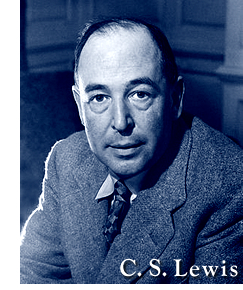
C.S. Lewis Daily – Today’s Reading


Lewis, grieving the death of his wife, Joy:

‘It was too perfect to last,’ so I am tempted to say of our marriage. But it can be meant in two ways. It may be grimly pessimistic — as if God no sooner saw two of His creatures happy than He stopped it (‘None of that here!’). As if He were like the Hostess at the sherry-party who separates two guests the moment they show signs of having got into a real conversation. But it could also mean ‘This had reached its proper perfection. This had become what it had in it to be. Therefore of course it would not be prolonged.’ As if God said, ‘Good; you have mastered that exercise. I am very pleased with it. And now you are ready to go on to the next.’ When you have learned to do quadratics and enjoy doing them you will not be set them much longer. The teacher moves you on.

For we did learn and achieve something. There is, hidden or flaunted, a sword between the sexes till an entire marriage reconciles them. It is arrogance in us to call frankness, fairness, and chivalry ‘masculine’ when we see them in a woman; it is arrogance in them to describe a man’s sensitiveness or tact or tenderness as ‘feminine.’ But also what poor, warped fragments of humanity most mere men and mere women must be to make the implications of that arrogance plausible. Marriage heals this. Jointly the two become fully human. ‘In the image of God created He them.’ Thus, by a paradox, this carnival of sexuality leads us out beyond our sexes.

From A Grief Observed

Compiled in A Year with C.S. Lewis

Charles Stanley – Remembering God’s Goodness


Joshua 3:14-4:7

Some people are exceptionally good at remembering images or information. Yet forgetting God’s goodness is all too common, even for those with the sharpest of minds.

In light of the human tendency to forget, today’s verses offer a good example for us to follow. God had brought the Israelites out of Egypt and safely through the divided Red Sea. Now, He miraculously provided another dry path by piling up the Jordan’s waters in an enormous heap upstream.

The Lord knew that the people were about to enter Jericho, and by His power, they would overcome the city. How compassionate to encourage them with a tangible illustration of His strength and presence prior to such a battle.

But God also knew how easily they would forget Him. We do the same today—when the Lord works in big and obvious ways, it’s easy to trust Him. But as time goes on, we drift toward self-reliance until we are reminded of our need for Him and repent. So the Father had a plan to help His loved ones recall the miracle at the river. He asked them to create an altar of 12 stones, each stone representing a tribe of Israel that had passed safely through the waters. This way, they would have a physical reminder of divine rescue.

When it comes to blessings, do you tend to be forgetful? If so, try to create reminders of God’s faithfulness. Some people journal; others make a gratitude jar, keep it in a prominent place in their home, and fill it all year long. There are many ways to make expressing thankfulness a part of your daily schedule. Whatever you do, make sure you have a way to remember the Lord’s involvement in your life.

Bible in One Year: Zechariah 11-14

Our Daily Bread — We Can Know


Read: 1 John 5:10-15

Bible in a Year: Isaiah 11-13; Ephesians 4

I write these things to you . . . that you may know that you have eternal life. —1 John 5:13

As I sat on a train headed for an important appointment, I began to wonder if I was on the right train. I had never traveled that route before and had failed to ask for help. Finally, overcome by uncertainty and doubt, I exited at the next station—only to be told I had indeed been on the right train!

That incident reminded me how doubt can rob us of peace and confidence. At one time I had struggled with the assurance of my salvation, but God helped me deal with my doubt. Later, after sharing the story of my conversion and my assurance that I was going to heaven, someone asked, “How can you be sure you are saved and going to heaven?” I confidently but humbly pointed to the verse that God had used to help me: “I write these things to you who believe in the name of the Son of God so that you may know that you have eternal life” (1 John 5:13).

God promises that through faith in His Son, Jesus, we already have eternal life: “God has given us eternal life, and this life is in his Son” (v. 11). This assurance sharpens our faith, lifts us up when we are downhearted, and gives us courage in times of doubt. —Lawrence Darmani

Dear Lord, during my times of doubt help me remember the promise of Your Word. Since I have invited Jesus into my life and placed my faith in His payment for my sins, You have promised me eternal life with You.

Recalling God’s promises destroys doubt.

INSIGHT: The Bible Knowledge Commentary says of John’s first epistle: “The letter contains no hint about the identity or location of the readers [to whom the letter was sent] beyond the fact that they are Christians. Since early church tradition associates John with the Roman province of Asia (in western Turkey), it has often been thought that the readers lived there. . . . [They] had been confronted with false teachers, whom John called antichrists (1 John 2:18-26). The exact character of these false teachers has been much discussed. Many have thought they were Gnostics who held to a strict dualism in which spiritual and material things were sharply distinguished.” Bill Crowder


Ravi Zacharias Ministry – The New Atheism


Though the chorus of voices decrying belief in God has been humming in the ideological background for centuries, it seems to have reached a crescendo with the emergence of a movement that has been dubbed the new atheism. The trademark of this new and continuing brand of atheism is its vitriolic attack on religion. To its advocates, religious beliefs are not only false; they are also dangerous and must be expunged from all corners of society. The pundits of the new atheism are not content to nail discussion theses on the door of religion; they are also busy delivering eviction notices to the allegedly atavistic elements of an otherwise seamlessly progressive atheistic evolution of Homo Sapiens.

Given the rhetoric, one might be forgiven for thinking that some new discoveries have rendered belief in God untenable. Curiously, this drama is unfolding in the same era in which perhaps the world’s leading defender of atheism, Antony Flew, has declared that recent scientific discoveries point to the fact that this world cannot be understood apart from the work of God as its Creator. This is no small matter, for Flew has been preaching atheism for as long as Billy Graham has been preaching the Gospel. Unlike Flew and others, the new atheists seem to forget that the success of their mission hinges solely on the strength and veracity of the reasons they give for repudiating religion. Venom and ridicule may carry the day in an age of sensationalistic sound bites, but false beliefs will eventually bounce off the hard, cold, unyielding wall of reality.

A good example of a claim against religion that does not sit well with the facts of reality is issued in the form of a challenge to the believer to “name one ethical statement made, or one ethical action performed, by a believer that could not have been uttered or done by a nonbeliever.”(1) We are expected to agree that no such action or statement exists, and then conclude that morality does not depend on God. The problem is that the conclusion does not follow from the premise. The fact that a non-believer can utter moral statements and even act morally does not logically lead to the conclusion that morality does not depend on God, much less that God does not exist. This challenge misunderstands the believer’s position on the relationship between morality and God.

The believer’s claim is that the world owes its existence to a moral God. All human beings are moral agents created in God’s image and are expected to recognize right from wrong because they all reflect God’s moral character. The fact that human beings are the kinds of creatures that can recognize the moral imperatives that are part of the very fabric of the universe argues strongly against naturalism. Unlike the laws of nature, which even inanimate objects obey, moral imperatives appeal to our will and invite us to make real decisions on real moral issues. The only other parallel experience we have of dos and don’ts comes from minds. Thus when the atheist rejects God while insisting on the validity of morality, he is merely rejecting the cause while clinging to the effect.

Without God, morality is reduced to whatever mode of behavior human beings agree on. There is no action that is objectively right or wrong. Rape, hate, murder and other such acts are only wrong because they have been deemed to be so in the course of human evolution. Had human evolution taken a different course, these acts might well have been the valued elements of our moral code. Even Nazi morality would be right had the Nazis succeeded in their quest for world dominance. Unless the world contains behavioral guidelines that transcend human decisions, there is no reason why anyone should object to such conclusions. Though some religious people do not live up to the moral principles they prescribe, it is not true that genuine religious devotion makes no difference to one’s moral commitments. It is missionaries, and not atheists, who regularly give up their own comforts and accept unbelievable amounts of pain and suffering to better the lives of societal outcasts, not just through preaching but also through education, technology, and humanitarian relief. Our failure to live up to what we know to be right provides empirical evidence for the need for God’s intervention in our lives.

Those who insist that objective morality makes no difference to human autonomy still expect morality to guide the behavior of others. That our society is saturated with transcendent moral sentiments accounts for the popularity of some television programs that arrest our attention night after night. Perhaps ninety percent of the shows they contain depend exclusively on our ability to apply objective moral standards to the actions of the characters. Should the Judeo-Christian moral bank close its doors to our cultural psyche, the bankruptcy of human-centered morality would eventually send our spiritual tentacles scouring for an alternative transcendent anchor. Thus were the new atheists to succeed in their quest, the result would not be the elimination of religion but the entrenchment of a different religion. As Ravi Zacharias has warned, eventually, the real choice for the West will not be between Christianity and atheism but between Christianity and some other religion. Beware of ethical naturalists bearing moral gifts.

J.M. Njoroge is a member of the speaking team at Ravi Zacharias International Ministries in Atlanta, Georgia.

(1) Christopher Hitchens, “An Atheist Responds,” The Washington Times (Saturday, July 14, 2007).

Charles Spurgeon – The remembrance of Christ


“This do in remembrance of me.” 1 Corinthians 11:24

Suggested Further Reading: Luke 22:14-20

Our Saviour was wiser than all our teachers, and his remembrancers are true and real aids to memory. His love tokens have an unmistakable language, and they sweetly win our attention. Behold the whole mystery of the Lord’s table. It is bread and wine which are lively emblems of the body and blood of Jesus. The power to excite remembrance consists in the appeal thus made to the senses. Here the eye, the hand, the mouth find joyful work. The bread is tasted, and entering within, works upon the sense of taste, which is one of the most powerful. The wine is sipped—the act is palpable; we know that we are drinking, and thus the senses, which are usually clogs to the soul, become wings to lift the mind in contemplation. Again, much of the influence of this ordinance is found in its simplicity. How beautifully simple the ceremony is—bread broken and wine poured out. There is no calling that thing a chalice, that thing a paten, and that a host. Here is nothing to burden the memory—here is the simple bread and wine. He must have no memory at all who cannot remember that he has eaten bread, and that he has been drinking wine. Note again, the deep relevance of these signs—how full they are of meaning. Bread broken—so was your Saviour broken. Bread to be eaten—so his flesh is meat indeed. Wine poured out, the pressed juice of the grape—so was your Saviour crushed under the foot of divine justice: his blood is your sweetest wine. Wine to cheer your heart—so does the blood of Jesus. Wine to strengthen and invigorate you—so does the blood of the mighty sacrifice.

For meditation: We forget him when we absent ourselves from his table without good cause; we forget him when we attend the Communion Service as an optional add-on. “Remember Jesus Christ” (2 Timothy 2:8).

Sermon no. 2

1 October (Preached 7 January 1855)

John MacArthur – How to Be Noble Minded


“[The Bereans] were more noble-minded than those in Thessalonica, for they received the word with great eagerness, examining the Scriptures daily, to see whether these things were so” (Acts 17:11).

God honors spiritual discernment.

On his second missionary journey, Paul, accompanied by Silas, preached the gospel of Jesus Christ in the city of Thessalonica. They weren’t there long before the gospel took root and many turned from their idolatry to serve the true and living God (1 Thess. 1:9). In 1 Thessalonians 2:13 Paul says, “We also constantly thank God that when you received from us the word of God’s message, you accepted it not as the word of men, but for what it really is, the word of God.” Their open response to God’s Word made them an example to all the believers in that area (1 Thess. 1:7).

But as exemplary as the Thessalonians were, their fellow believers in Berea were even more so. God called them “noble- minded” (Acts 17:11). They were eager to hear what Paul and Silas had to say, but tested it against God’s prior revelation in the Old Testament before receiving it as a message from God. They had learned to examine everything carefully and hold fast to the truth (1 Thess. 5:21).

The church today, however, has an appalling lack of that kind of discernment. Many believers are duped by novel teachings and outright heresies. They’re “tossed here and there by waves, and carried about by every wind of doctrine” (Eph. 4:14). We desperately need a new breed of Bereans who will raise high the banner of sound doctrine and never compromise it.

With that goal in mind, our studies this month will focus on the character and benefits of God’s Word. You’ll learn that it’s the source of spiritual growth, spiritual service, blessing, victory, truth, and knowledge. You’ll see its infallibility, inerrancy, authority, inspiration, and sufficiency.

I pray that by this month’s end, your commitment to learning and applying biblical truth will be stronger than ever, and you will indeed be a modern-day, noble-minded Berean.

Suggestions for Prayer

Ask God to give you a greater love for His wonderful Word.

For Further Study

Read Acts 17:1-15.

  • Why did Paul and his companions leave Thessalonica and Berea?
  • What do Paul’s experiences tell you about what you might expect as you share Christ with others?

Joyce Meyer – Just “Be” with Him


And Moses said to the Lord, If Your Presence does not go with me, do not carry us up from here. – Exodus 33:12, 14, 15

When God called Moses to go to Pharaoh and tell him, “Let My peo¬ple go,” he asked the Lord, “Who am I going to say sent me? Pharaoh is not going to listen to me and set the children of Israel free.” Moses was afraid; he was upset. But God said to him, “My presence will go with you.” I love Moses’ reply: “Okay, but if Your presence is not going to go with us, then don’t send me!”

We need to really understand the awesomeness of God’s presence. Why in the world would we not want to spend time with God? We spend time staring in store windows at the mall; we spend time on the Internet. But most people admit it is hard for them to spend regular time with God. The devil fights us when it comes to spending time with God.

Why not begin dedicating a portion of time for that purpose? Try to be as regular about it as you can. Read the Bible and any other Chris¬tian books that minister to you. Talk freely to God about anything you would talk to a good friend about. Listen to Christian music and wor¬ship; or just sit there and enjoy the silence. If you will do that, you will begin to feel and sense the Presence of the Lord and you will begin to see wonderful changes in yourself and your life.

I guarantee you, there is nothing in life you need more and nothing He would enjoy more than spending time with you.

Love God Today: Take time today to do nothing but sit in God’s presence.

From the book Love Out Loud by Joyce Meyer

Campus Crusade for Christ; Bill Bright – Greater Works Than He Does


“In solemn truth I tell you, anyone believing in Me shall do the same miracles I have done, and even greater ones, because I am going to be with the Father. You can ask Him for anything, using My name, and I will do it, for this will bring praise to the Father because of what I, the Son, will do for you” (John 14:12,13).

For many years, during and after seminary, I asked leading theologians, pastors and students, “What does this passage mean? How can I and other believers do the same miracles that our Lord did when He was here in the flesh – and even greater ones?”

Surely there had to be some mistakes in the translation of this passage, for I saw little evidence of this supernatural power in the lives of the Christians around me or in my own life.

But I had wrongly interpreted what Jesus said. I was thinking only of the miracles of physical healing. God still heals the sick, and almost daily I pray that He will touch the ailing bodies of ill ones. God sometimes heals them miraculously, though mostly He works through the skill of surgeons and the miracle of modern medicine.

Yet, while physical healing is certainly valid and very desirable, I realize more and more that a greater miracle is the miracle of new birth. For the body that is healed will one day die, but the person who is introduced to Christ and experiences salvation will live forever. The main reason our Lord came to this earth was to “seek and save the lost,” not primarily to perform miracles of physical healing. Frequently, we are privileged to experience the reality of our Lord’s promise as He enables us to “seek and save the lost” in greater numbers than He did while He was here in the flesh.

For example, in 1980, during the Korean Here’s Life World Evangelization Crusade we saw more than one million people indicate salvation decisions during the week.

Bible Reading: Matthew 21:21-22

TODAY’S ACTION POINT: Beginning today, I will claim, in the name of Jesus, that He who dwells within me, who came to seek and to save the lost and is not willing that any should perish, will do even greater miracles in and through my life than He did while here in the flesh. By faith, I will experience and share the Supernatural life of Christ with others.

Presidential Prayer Team; H.L.M. – Courageous Faith


When Joshua planned the conquest of Jericho, he sent spies to investigate the city. God prepared an unlikely ally for the Israelite spies, a prostitute and a Gentile named Rahab. With great faith in God, she risked her life by hiding the spies. As a result, Rahab contributed to the success of Israel when Jericho was destroyed – and her family was spared. In fact, Rahab eventually married an Israelite named Salmon and became an ancestor of Jesus!

Please swear…as I have dealt kindly with you, you also will deal kindly with my father’s house.

Joshua 2:12

Though you cannot earn your salvation by serving God and others, true faith in the Lord transforms your actions as well as your thoughts. And such actions, like those of Rahab, show that your commitment to Him is real.

When you have doubts about your relationship with God or your ability to believe in Him for your need, ask your Heavenly Father to give you renewed courage to step out and trust Him according to His Word. Then look for opportunities to bless others. Pray that America’s Christian leaders also have the boldness to demonstrate their faith personally and publically to others.

Recommended Reading: James 2:17-26