Tag Archives: Bible

Our Daily Bread — God’s Compass


Read: Psalm 119:105-112

Bible in a Year: Proverbs 22-24; 2 Corinthians 8

Your word is a lamp for my feet, a light on my path. —Psalm 119:105

During World War II, small compasses saved the lives of 27 sailors 300 miles off the coast of North Carolina. Waldemar Semenov, a retired merchant seaman, was serving as a junior engineer aboard the SS Alcoa Guide when a German submarine surfaced and opened fire on the ship. The ship was hit, caught fire, and began to sink. Semenov and his crew lowered compass-equipped lifeboats into the water and used the compasses to guide them toward the shipping lanes closer to shore. After three days, the men were rescued.

The psalmist reminded God’s people that His Word was a trustworthy “compass.” He likened it to a lamp. In that day, the flickering light cast by an olive oil lamp was only bright enough to show a traveler his next step. To the psalmist, God’s Word was such a lamp, providing enough light to illuminate the path for those pursuing God (Ps. 119:105). When the psalmist was wandering in the dark on a chaotic path of life, he believed that God, through the guidance of His Word, would provide direction.

When we lose our bearings in life, we can trust our God who gives His trustworthy Word as our compass, using it to lead us into deeper fellowship with Him. —Marvin Williams

Heavenly Father, it is difficult to navigate life. I drift sometimes, but I will trust in You. Lead me and guide me by the faithfulness and reliability of Your Word.

God has given us His Word to help us know and follow Him.

INSIGHT: Many times we view rules and laws as restrictions on what we can and cannot do. It is tempting to see laws as impinging on our freedom. However, the psalmist clearly has a positive view of God’s law. Instead of seeing it as limiting, the psalmist celebrates the law as something that gives him life (119:107,111). Since we live in a broken world, we need the guidance of God’s Word to show us how to truly live. J.R. Hudberg

Ravi Zacharias Ministry – Days of Awe


Fall comes quickly in the Pacific Northwest where I live. Even though it is the prelude to winter’s sleep-like death, one cannot help but marvel in the final vibrancy of nature’s yellows, oranges, and reds. The wind has a colder sheen that sends a chilly reminder of summer’s demise, and the rains that fall more regularly wash away the colors of late summer. I cannot help but marvel in the signs of the seasons and to pause in awe of autumn’s glory.

While colorful leaves and a colder wind signal for many the beginning of the new school year, the buying of school clothes and supplies, and the beginning of fall, for Jews, September is a very important month. It doesn’t simply signal the beginning of autumn; it is the signal to worship and to reflect on one’s life in the coming year. September holds two of the Jewish high, holy days: Rosh Hashanah and Yom Kippur. In the original language, Rosh Hashanah means “new year” and Yom Kippur means “day of atonement.” What do these days entail for Jews? These are days filled with serious introspection, and a chance to repent of sins before Yom Kippur. The ten days starting with Rosh Hashanah and ending with Yom Kippur are commonly known as the Days of Awe (Yamim Noraim) or the Days of Repentance.

These “Days of Awe” are filled with wonder and worship, days of reflection, fasting, and prayer, days of solemnity and solace. These are days meant to set the tone for the beginning of the Jewish New Year even as they remind the faithful to reflect on what has gone before. Among the customs of this time, it is common to seek reconciliation with people wronged during the course of the past year.

Reflecting upon these holidays practiced by a tradition outside my own, I realized that September may not seem a particularly holy month for Christians, but is rather ordinary. Yet examining the practices of my Jewish neighbors reminds me to consider each day as a day of awe and devotion. Jesus gave strong instruction to his listeners during the Sermon on the Mount recorded in Matthew’s Gospel. He expected that his followers would engage in on-going acts of devotion like fasting, prayer, and almsgiving. In giving instruction about how his disciples would fast he says, “and whenever you fast, do not put on a gloomy face as the hypocrites do, for they neglect their appearance in order to be seen fasting by men.”(1) In this same series of instructions, Jesus also assumes his followers will pray and give offerings for the poor. The issue is not if Christians will do these devotional acts, but when.

While Christians may have very different reasons, beliefs, and expectations from their Jewish neighbors, there is something to learn from others’ special seasons of devotion, which can enrich and even challenge our own. So often we neglect or altogether forget that our own acts of devotion should arise out of a loving response to what God has done on our behalves in Jesus. It is not insignificant that Jesus warned those listening to him: “Unless your righteousness surpasses that of the scribes and Pharisees (the religious leaders of his day), you shall not enter the kingdom of heaven.”(2) Jesus warns that the very intention of one’s hearts should be drawn to worship and awe, and not simply by performing ritualistic acts of devotion. These acts must flow out of devotion to God and lead to gracious acts of love and mercy each and every day of the year.

While September is not filled with Christian holy days, perhaps it is possible to view every month as an opportunity for days of devotion and awe? The recent crisis of refugees in Europe presents a sobering reminder that days of awe and worship might come through serving others. Refugees—whether they are arriving from the Middle East, Africa, or other parts of the world—are all around us. Lives disrupted or displaced through addiction, broken relationships, or lack of opportunity invite followers of Jesus to live out righteousness. His was a righteousness that offered healing, hope, and an open hand to all he encountered.

The turning of the leaves and the chilly fall air can point us to worship just as they signal the beginning of days of awe for the Jews. For followers of Jesus, there is always opportunity for perpetual “days of awe” rather than settling for unremarkable time.

Margaret Manning Shull is a member of the speaking and writing team at Ravi Zacharias International Ministries in Bellingham, Washington.

(1) Matthew 6:16; Matthew 6:2-5.

(2) Matthew 5:20.

Alistair Begg – Bad News?


He is not afraid of bad news. Psalm 112:7

Christian, you ought not to be afraid of the arrival of bad news; because if you are distressed by such, you are no different from other men. They do not have your God to run to; they have never proved His faithfulness as you have done, and it is no wonder if they are bowed down with alarm and cowed with fear. But you profess to be of another spirit; you have been born again to a living hope, and your heart lives in heaven and not on earthly things. If you are seen to be distracted as other men, what is the value of that grace that you profess to have received? Where is the dignity of that new nature that you claim to possess?

Again, if you should be filled with alarm like others, you would no doubt be led into the sins so common to them under trying circumstances. The ungodly, when they are overtaken by bad news, rebel against God; they murmur and maintain that God has dealt harshly with them. Will you fall into that same sin? Will you provoke the Lord as they do?

Moreover, unconverted men often run to wrong means in order to escape from difficulties, and you will be sure to do the same if your mind yields to the present pressure. Trust in the Lord, and wait patiently for Him. Your wisest course is to do what Moses did at the Red Sea: “Stand firm, and see the salvation of the LORD.”1 For if you give way to fear when you hear bad news, you will be unable to meet the trouble with that calm composure that prepares for duty and sustains in adversity.

How can you glorify God if you play the coward? Saints have often sung God’s high praises in the fires, but when you act as if there were no one to help, will your doubting and despondency magnify the Most High? Then take courage and, relying in sure confidence upon the faithfulness of your covenant God, “Let not your hearts be troubled, neither let them be afraid.”2

1) Exodus 14:13

2) John 14:27

The Family Bible Reading Plan

  • 2 Samuel 11
  • 2 Corinthians 4

Devotional material is taken from “Morning and Evening,” written by C.H. Spurgeon, revised and updated by Alistair Begg.

Charles Spurgeon – Adoption


“Having predestinated us unto the adoption of children by Jesus Christ to himself, according to the good pleasure of his will.” Ephesians 1:5

Suggested Further Reading: Romans 9:10-24

It is at once a doctrine of Scripture and of common sense, that whatever God does in time he predestined to do in eternity. Some men find fault with divine predestination, and challenge the justice of eternal decrees. Now, if they will please remember that predestination is the counterpart of history, as an architectural plan, the carrying out of which we read in the facts that happen, they may perhaps obtain a slight clue to the unreasonableness of their hostility. I never heard any one among professors wantonly and wilfully find fault with God’s dealings, yet I have heard some who would even dare to call in question the equity of his counsels. If the thing itself be right, it must be right that God intended to do the thing; if you find no fault with facts, as you see them in providence, you have no grounds to complain of decrees, as you find them in predestination, for the decrees and the facts are just the counterpart one of the other. Have you any reason to find fault with God, that he has been pleased to save you, and save me? Then why should you find fault because Scripture says he pre-determined that he would save us? I cannot see, if the fact itself is agreeable, why the decree should be objectionable. I can see no reason why you should find fault with God’s foreordination, if you do not find fault with what does actually happen as the effect of it. Let a man but agree to acknowledge an act of providence, and I want to know how he can, except he runs in the very teeth of providence, find any fault with the predestination or intention that God made concerning that providence.

For meditation: Some talk as if the doctrine of predestination is the enemy of the Christian. Scripture lists it as one of the “all things” that work together for good to them that love God and which prove that God is for us (Romans 8:28-31).

Sermon no. 360

15 September (Undated Sermon)

John MacArthur – Developing Practical Righteousness


“Stand firm therefore . . . having put on the breastplate of righteousness” (Eph. 6:14).

Practical righteousness is moment-by-moment obedience to God.

We’ve seen the importance of putting on the breastplate of righteousness as protection against Satan’s attempts to pervert your thinking and emotions. But Scripture speaks of three kinds of righteousness: self-righteousness, imputed righteousness, and practical righteousness. Which did Paul have in mind in Ephesians 6:14?

Paul wasn’t speaking of self-righteousness because that is what the breastplate of righteousness is designed to protect you from. Self-righteousness deceives a person into thinking, I can please God and reach heaven on my own merit. But Isaiah said, “All our righteous deeds are like a filthy garment” (Isa. 64:6). Far from getting you to heaven, self- righteousness will condemn you to eternal hell because it rejects the merits of Christ’s atonement.

Similarly, Paul wasn’t speaking of imputed righteousness—the righteousness of Christ granted to every believer at the moment of salvation. It’s also called “positional righteousness” because it results from your position or standing in Christ. Second Corinthians 5:21 says that God made Christ, “who knew no sin to be sin on our behalf, that we might become the righteousness of God in Him.” Every believer is clothed in the garment of Christ’s righteousness. You don’t put that on. It’s already yours in Christ.

Only practical righteousness remains—that which flows from obedience to God’s Word. Although in God’s eyes you are righteous in Christ, you must also pursue righteous behavior. In other words, your practice should match your position. That’s what Paul meant when he said, “Work out your salvation with fear and trembling” (Phil. 2:13). John added that “the one who says he abides in [Christ] ought himself to walk in the same manner as He walked” (1 John 2:6).

As you learn to live in obedience to God’s Word, you’ll be protected by the breastplate of righteousness.

Suggestions for Prayer

Ask the Spirit to help you search your heart and reveal any self-righteous attitudes that might be making you vulnerable to Satan’s attacks. Confess them, then praise Christ for the true righteousness that is yours in Him.

For Further Study

Read Romans 3:10-23. What kind of righteousness did Paul pursue?

Campus Crusade for Christ; Bill Bright – The Bond of Love


“Let me assure you that no one has ever given up anything – home, brothers, sisters, mother, father, children, or property – for love of Me and to tell others the Good News, who won’t be given back, a hundred times over, homes, brothers, sisters, mothers, children, and land – with persecution! All these will be his here on earth, and in the world to come he shall have eternal life” (Mark 10:29,30).

Having admonished His disciples to follow Him even at the cost of leaving everything – including mothers and families – behind, Christ is now affirming His consistency with the disciples. Obviously He loved His own mother dearly – one of His last acts before He died on the cross was to be sure that the apostle John would take care of her. Yet the bond of love which Jesus felt toward His disciples, a bond which continues today toward those who truly seek Him with all their hearts, transcends even the bond of love which one experiences in flesh-and-blood relationships, unless those relationships are also rooted in the love of Christ.

Romans 5:8 explains the basis for this bond. The love of God is shed abroad in our hearts through the Holy Spirit, and the Holy Spirit ignites the hearts of true disciples with supernatural love, (agape)in action. That bond of love builds a spiritual family relationship that transcends all others, a relationship that is truly supernatural. In this way our Lord fulfills His promise that everything that is given up to follow Him will be given back a hundred times over in this life.

Bible Reading: Matthew 12:46-50

TODAY’S ACTION POINT: In every way I will seek to obey the commands of my Father in heaven with the certainty that greater bonds of love will unite my heart with many brothers and sisters. This will demonstrate to the world the validity of the revolutionary, supernatural power of the love of God ignited in our hearts through the Holy Spirit.

Presidential Prayer Team; C.P. – Scepter Extended


Imagine approaching your boss to request a raise. It may cross your mind that you could be fired instead. Now picture Queen Esther going before the king knowing she could die – but that if she didn’t approach him, her people would surely die. What a grand illustration it is when the king favors Esther by extending his royal scepter, inviting her to come to him without fear.

(The king) held out to Esther the golden scepter that was in his hand.

Esther 5:2

Jesus has won His people favor before God. In Christ, God’s scepter is extended, allowing you to approach Him in prayer, bold and unafraid. As Esther put on the royal robes to go before the king, believers wear the royal robes of Christ’s righteousness to go before the Lord Almighty. It’s why Hebrews 4:16 declares that Christians can “with confidence draw near to the throne of grace, that we may receive mercy and find grace to help in time of need.”

Don’t refuse this precious invitation to pray for your family, your loved ones, and for the citizens and leaders of this country. Fearlessly and humbly ask for help, spiritual revival, wise politicians, and protection for your fellow believers in America. Intercede as though their very lives are at stake.

Recommended Reading: I Corinthians 1:26-31


Greg Laurie – Live the Sermon


So be careful how you live. Don’t live like fools, but like those who are wise. Make the most of every opportunity in these evil days.—Ephesians 5:15–16

I spent my whole life (or so it seemed) praying for my mom. She was an alcoholic and had been married and divorced seven times. After my conversion, I preached complete sermons to her. I gave her both barrels of my gospel gun. Yet she didn’t believe. It wasn’t until twenty-five years later that she finally made a commitment to Christ—a month before she died. It took a long time to reach her.

The most difficult people to reach for Christ are in your own family—and you will never reach them through compromise. We need to live the message we are preaching. It is tempting to give everyone a sermon. We want to preach to that unsaved husband or wife or those nonbelieving parents. But there comes a point when we have preached enough sermons. There comes a point when we need to live the sermon. We need to be good examples.

If you are a husband with a nonbelieving wife, then be a good husband. If you are a believing wife with a nonbelieving husband, then be a godly woman. If you are a child with nonbelieving parents, then do the things your parents ask you to do. Be responsible. Apply yourself. That will speak volumes to them.

Even Jesus had a hard time reaching His siblings, and who was a better example than Jesus? He was God. He was perfect. Yet the Bible tells us that prior to His crucifixion and resurrection, His own family did not believe in Him. So if Jesus had a challenge reaching His family, then you will have a challenge as well.

But know this: no one is reached through compromise. God is looking for men and women today that He can use—men and women who will make a stand.

Max Lucado – Scripture Memory – Week 1


Welcome to the first week of a special Glory Days Scripture Memory Challenge.

In Joshua Chapter 1 God said to Joshua, “This book of the law shall not depart from your mouth. . .meditate on it. . .observe to do all that’s written in it. . .”

We all have battles to fight and strongholds to face. How do we fight these? By hiding the Word of God deep in our hearts. Start by memorizing Joshua 1:9: “Have I not commanded you to be strong and courageous. Do not be afraid. Do not be discouraged for the Lord your God will be with you wherever you go.”

Go to GloryDaysToday.com—and I’ll show you a simple way to memorize this week’s verse. And as you commit this verse to memory, remember God has given you power and he is with you wherever you go!

Night Light for Couples – Healing Words


“The tongue that brings healing is a tree of life.” Proverbs 15:4

Do you enjoy teasing your wife? When you’re with friends, do you occasionally reveal an embarrassing secret about your husband?

One key to building trust is to take great care not to hurt or embarrass those we love. Some information is private and should remain so. For one partner to reveal family secrets indiscriminately breaks the couple’s bond of loyalty and violates trust.

Just as important as the words we don’t say, however, are those we do. Men, especially, are often reluctant to share feelings and fears with their wives, yet openness fosters trust and intimacy. Sharing thoughts is vital to a healthy, secure marriage. How can a wife feel safe or valued if she’s left guessing about what her husband is really thinking and feeling?

Along the same lines, if you’re in charge of the family finances, and you’ve accidentally or foolishly depleted the bank account, don’t hide it—let your spouse know. If someone makes a pass at you at work, tell your partner, even if it’s uncomfortable to do so. As you work together to find the best solution for problems like these, you’ll grow closer.

Just between us…

  • Are you comfortable with the amount and nature of teasing in our relationship?
  • Do I share my thoughts with you as much as you’d like?
  • Do our words “bring healing” to each other?
  • How can I help you share your feelings?

Dear God, let the words of our mouths always be true and full of grace. May our words bring healing and encouragement and draw us closer together. Amen.

From Night Light For Couples, by Dr. James & Shirley Dobson

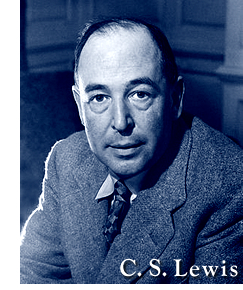
C.S. Lewis Daily – Today’s Reading


On feeling

And of course the presence of God is not the same as the sense of the presence of God. The latter may be due to imagination; the former may be attended with no “sensible consolation.” The Father was not really absent from the Son when He said “Why hast thou forsaken me?” You see God Himself, as man, submitted to man’s sense of being abandoned. The real parallel on the natural level is one which seems odd for a bachelor to write to a lady, but too illuminating not to be used. The act which engenders a child ought to be, and usually is attended by pleasure. But it is not the pleasure that produces the child. Where there is pleasure there may be sterility: where there is no pleasure the act may be fertile. And in the spiritual marriage of God and the soul it is the same. It is the actual presence, not the sensation of the presence, of the Holy Ghost which begets Christ in us. The sense of the presence is a super-added gift for which we give thanks when it comes, and that’s all about it.

From The Collected Letters of C.S. Lewis, Volume III

Compiled in Words to Live By

Charles Stanley – Confronting Conflict


Galatians 2:11-16

The Scriptures record many instances of conflict between nations, among friends, and in families. Today we see the same types of problems. While fighting, people can say harsh and even unfair words. Their accusations create turmoil and emotional pain. What we believe will determine the way we respond to such difficulties.

God’s Word proclaims His sovereignty over nature (Ps. 135:6), government (Job 12:23), and mankind (Acts 17:25). Nothing in heaven or on earth is hidden from Him or outside of His control. So, how does this help us in a conflict? First, our Father knows when people verbally attack us, and He has promised to protect us. Nothing can touch His children apart from His permissive will. Second, He has the power to work the painful times we endure into something beneficial (Rom. 8:28). We can have hope because His will cannot be thwarted, even in bad circumstances. Finally, we are His beloved children. He is a loving Father who understands what we are going through and always remains by our side. As His sons and daughters, we are not on our own.

When we believe in the Lord’s sovereign rule, our perspective on hard times changes. Instead of responding with fear, anger, or resentment, we will turn to Him in prayer and ask for guidance.

Conflict is inevitable. When we, or something we have done, is the source of the turmoil, we are to apologize. If others are at fault, we may have to confront them the way Paul did with Peter. But we are also called to forgive without exception. As Christ’s ambassadors, the way we respond really matters.

Bible in One Year: Daniel 5-6

Ravi Zacharias Ministry – Misplaced


I ran away once as a kid. I was mad about something ten year-olds get mad about—mad enough that I had to step up my normal fit or else risk being interpreted as only typically mad. The most untypical thing I could think to do was to pack a backpack of snacks and books and run away. So I ran to the backyard, climbed into my tree fort, and sat fuming in the snow.

After an hour or so, I decided it was time to go home. I was sure my mom was worried, troubled at the thought of me being lost and alone. I was also out of snacks, freezing, and beginning to see that my brilliant plan was riddled with inconveniences. So I made the long trek back to the house, expecting a reunion of apologies and hot cocoa. After all, to them, I was lost and now found, and this seemed a necessary occasion to celebrate. I converged, however, on a much less climactic scene. Nobody had noticed I was missing. When no one is looking for you, it loans a hopeless dimension to being lost.

Centuries before this scene, a man named Zacchaeus entered a big crowd only to be largely ignored. He was trying to join the group that had gathered to see Jesus as he passed through Jericho. Zacchaeus was a small man, but he was also the chief tax collector, and so he was chiefly despised. The walls of men and women who blocked his view were excluding more than a man of diminutive size; they were shutting out a man of depravity, wealth, and corruption. So Zacchaeus climbed a tree.

The rest of the story is all the more unusual for a man of his position. Zacchaeus was sitting inconspicuously in a tree when Jesus walked by, looked up, and called him down. At his invitation, the morally bankrupt, socially shunned tax collector came down from the tree and his life took a dramatic turn. At the conclusion of their time together, Jesus proclaimed of himself: “The Son of Man came to seek and to save what was lost.”(1) Zacchaeus had been found.

A friend of mine taught me that the Greek word for “lost” in this passage is best understood, not as doomed or damned as is sometimes interpreted, but “not in the right place.” The effect is that the finality of “lostness” is somewhat assuaged, conveying first that there is indeed a right place, but also the notion that the very quality of lostness is known. Inherent in Jesus’s description of the misplaced coin or the sheep that has gone astray is that someone is looking. Someone is looking in a way he would not be looking if it was found or if he thought it was gone forever. That is to say, what is lost and in the wrong place is being sought by the one who knows the right place. Likewise, what is lost is missed. And as I discovered as a ten year-old, it is this quality that makes all the difference.

It is this quality that makes the journey of faith and belief one that is well worth taking. Like those of us displaced by a sense of failure, banished by the judgment of others, or lost in anger or fear, Zacchaeus, prior to meeting Jesus, was simply in the wrong place. But he was not beyond the saving reach of the vicariously human Son of God who came to find him. He was lost, but there was someone looking. Jesus came to Jericho and to Jerusalem neither confirming customary exclusions nor endorsing social and spiritual hierarchies. In fact, immediately following his encounter with Zacchaeus—a man lost in his own wealth and the corruption that surrounded it—Jesus came beside a man lost in blindness and poverty. For the Son of Man came to seek and to save the lost wherever they might be lost. Thus, despite his way of life up to this point, Zacchaeus was not to be cut off from the people of God or God himself: “For this man, too, is a son of Abraham,” said Jesus. And his words seemed to be spoken as much to the crowd who shunned the sinner as to the sinner himself.

Jill Carattini is managing editor of A Slice of Infinity at Ravi Zacharias International Ministries in Atlanta, Georgia.

(1) Luke 19:10.

Alistair Begg – Face what He Faced


And other boats were with him. Mark 4:36

Jesus was the Lord High Admiral of the sea that night, and His presence preserved the whole convoy. It is good to sail with Jesus, even though we may be in a little boat. When we sail in Christ’s company, we cannot be sure of fine weather, for great storms may toss the vessel that carries the Lord Himself, and we should not expect to find the sea less boisterous around our little boat. If we go with Jesus we must be content to face what He faces; and when the waves are rough for Him, they will be rough for us. It is through tempest and storm that we will reach land, just as He did before us. When the storm swept over Galilee’s dark lake, the faces wore anxious frowns, and all hearts dreaded shipwreck.

When every attempt to ride it out proved useless, the resting Savior rose and with a word transformed the billowing tempest into the deep quiet of a calm. Then all the other boats were at rest as well as the one that carried the Lord. Jesus is the star of the sea; and though there is sorrow on the sea, when Jesus is on it, there is also joy.

May our hearts make Jesus their anchor, their rudder, their lighthouse, their lifeboat, and their harbor. His Church is the Admiral’s flagship; let us attend her exercises and cheer her officers with our presence. He Himself is the great attraction; let us always follow in His wake, observe His signals, steer by His chart, and never fear while He is within reach. Not one ship in the convoy shall be wrecked; the great Captain will steer every craft in safety to the desired haven. By faith we will raise our anchor for another day’s cruise and sail with Jesus into a sea of tribulation. Winds and waves will not spare us, but they all obey Him; and therefore whatever squalls may occur on the outside, faith will enjoy a blessed calm within. He is always in the center of the weather-beaten company:Let us rejoice in Him. His boat has reached the harbor, and so will ours.

The Family Bible Reading Plan

  • 2 Samuel 10
  • 2 Corinthians 3

Devotional material is taken from “Morning and Evening,” written by C.H. Spurgeon, revised and updated by Alistair Begg.

Charles Spurgeon – An appeal to sinners


“This man receiveth sinners.” Luke 15:2

Suggested Further Reading: Ephesians 1:3-8

Allow us just to amplify that word: “this man receiveth sinners.” Now, by that we understand that he receives sinners to all the benefits which he has purchased for them. If there be a fountain, he receives sinners to wash them in it; if there be medicine for the soul, he receives sinners to heal their diseases; if there be a house for the sick, an hospital, a home for the dying, he receives such into that retreat of mercy. All that he has of love, all that he has of mercy, all that he has of atonement, all that he has of sanctification, all that he has of righteousness—to all these he receives the sinner. Yea, more; not content with taking him to his house, he receives him to his heart. He takes the black and filthy sinner, and having washed him—“There,” he says, “thou art my beloved; my desire is towards thee.” And to consummate the whole, at last he receives the saints to heaven. Saints, I said, but I meant those who were sinners, for none can be saints truly, but those who once were sinners, and have been washed in the blood of Christ, and made white through the sacrifice of the lamb. Observe it then, beloved, that in receiving sinners we mean the whole of salvation; and this word in my text, “Christ receiveth sinners,” grasps in the whole of the covenant. He receives them to the joys of paradise, to the bliss of the beatified, to the songs of the glorified, to an eternity of happiness for ever. “This man receiveth sinners;” and I dwell with special emphasis on this point,—he receives none else. He will have none else to be saved but those who know themselves to be sinners.

For meditation: Contrast whom Christ receives with all that they receive in him in return (Luke 15:20-24). Are you one of them?

Sermon no. 219

14 September (1856)

John MacArthur – Guarding Your Mind and Emotions


“Stand firm therefore . . . having put on the breastplate of righteousness” (Eph. 6:14).

True righteousness begins with a right relationship with God.

A Roman soldier would often engage his enemy in hand- to-hand combat. At such times, the weapon of choice was the short sword, with which he sought to penetrate his opponent’s vital organs. For his own protection he wore a molded metal breastplate that extended from the base of his neck to the top of his thighs. It helped deflect any attacks aimed at his heart and abdomen.

The Roman breastplate has great symbolism in Paul’s analogy because to the Jewish people, the heart represented man’s mind and thinking processes; the intestinal area or bowels represented the seat of feelings and emotions. Proverbs 23:7 says, “As [a man] thinketh in his heart, so is he” (KJV). Jeremiah 17:9 says, “The heart is more deceitful than all else and is desperately sick; who can understand it?” Jesus added, “From within, out of the heart of men, proceed the evil thoughts” (Mark 7:21).

During spiritual warfare, Satan’s primary attacks target your thinking and emotions. If he can condition you to think and feel contrary to God’s Word, he has won a significant victory. That’s why he attempts to fill your mind with lies, immorality, false doctrine, and half-truths. He tries to blur the line between righteousness and sin by surrounding you with evil influences that increase your tolerance for sin. He clothes offensive sin in the blinding garment of entertainment. He puts it to music and masks it in humor to confuse you and deaden your spiritual senses. Satan wants to corrupt your emotions and draw you into sinful desires.

Putting on the breastplate of righteousness begins with a right relationship with God, who is the source of true righteousness. From that relationship flows the commitment to cultivate righteousness in your own life by learning and applying His Word. Therein lies the protection you need to safeguard your mind and emotions from satanic deceptions.

Suggestions for Prayer

Focus on strengthening your relationship with God today. Commune with Him in prayer. Meditate on His Word. Seek His grace in responding thoughtfully and righteously to the temptations you face.

For Further Study

Read Proverbs 10, noting Solomon’s description of righteous people.

Campus Crusade for Christ; Bill Bright – Blessed Peacemakers


“Is there any such thing as Christians cheering each other up? Do you love me enough to want to help me? Does it mean anything to you that we are brothers in the Lord, sharing the same Spirit? Are your hearts tender and sympathetic at all? Then make me truly happy by loving each other and agreeing wholeheartedly with each other, working together with one heart and mind and purpose” (Philippians 2:1,2). “Happy are those who strive for peace – they shall be called the sons of God” (Matthew 5:9).

Few individuals are more pleasing to our Lord than those who seek to promote peace. He is our great example since He is the author of peace. He is called the Prince of Peace, and He promises, “Peace I leave with you, My peace I give unto you: not as the world giveth, give I unto you. Let not your heart be troubled, neither let it be afraid” (John 14:27, KJV).

When you and I think of peacemakers today, we think perhaps of national leaders who have made great efforts toward international peace, or of negotiators who have served as intermediaries, attempting to eliminate strife between management and labor.

But more is involved in this beatitude – certainly more of a spiritual nature. You may know, or have known, as I have, members of churches whom the Lord has been able to use as peacemakers – those who calm fears and help to unruffle feathers when the inevitable quarrels arise.

Peacemaking is something that requires work. It does not come easily. Basically, man is hostile toward himself, toward his neighbor and toward God. The peacemaker is one who can build bridges of love and understanding and trust.

Friends, neighbors, men of influence, lawyers, physicians, may do much to promote peace, and certainly homemakers within families can make a great difference in the harmony of a home. Long and deadly arguments can be resolved by a simple expression of love and a kind word at the right moment.

Our strife-worn world, from the individual home to the international centers of influence, is in need of children of God who are peacemakers – committed to being ambassadors of the Prince of Peace.

Bible Reading: II Corinthians 13:11-14

TODAY’S ACTION POINT: Through the enabling of God’s Holy Spirit, I will seek ways to become a peacemaker in building bridges of love, trust and understanding where there is now conflict, discord and even hate.

Presidential Prayer Team; A.W. – Warrior Benefits


Recently, doctors have sought to discover if there’s really a link between prayer and physical and mental well-being. Dr. Harold Koenig, director at Duke University’s Center for Spirituality and Health, believes it’s been proven. “The benefits of devout religious practice, particularly involvement in a faith community and religious commitment, are that people cope better,” he said. “In general, they cope with stress better, they experience greater well-being because they have more hope, they’re more optimistic, they experience less depression, less anxiety, and they commit suicide less often. They have stronger immune systems, lower blood pressure, and better cardiovascular functioning.”

Do not be anxious about anything, but in everything by prayer…let your requests be made known.

Philippians 4:6

This isn’t news to those who practice today’s verse. Paul instructed Christians not to worry, but to instead pray with determination and gratitude. The outcome? Your heart and mind is guarded by Christ’s peace – a peace that non-believers simply can’t understand.

Take time to be thankful, knowing that as a prayer warrior you enjoy the benefits of His strength and comfort even in the most difficult of circumstances. Then pray that the nation’s leaders will discover the Lord and His peace for themselves.

Recommended Reading: Philippians 4:4-9

Greg Laurie – Getting the Job Done


“If you are faithful in little things, you will be faithful in large ones. But if you are dishonest in little things, you won’t be honest with greater responsibilities.” —Luke 16:10

When God told Gideon to tear down the altar his father had built to a false God, Gideon would have to risk his life to obey. In Gideon’s day, the patriarchal figure of a family in Israel was the law. So to oppose your father was to take a significant risk.

Gideon did it anyway. He “took ten men from among his servants and did as the Lord had said to him. But because he feared his father’s household and the men of the city too much to do it by day, he did it by night” (Judges 6:27).

Gideon took a big risk here. He took a stand, and he tore the altar down. Yes, he did it at night, but at least he obeyed God.

A lot of people will criticize those who go out and do things. We don’t like the way you do that. . . . We don’t agree with this. . . .We don’t agree with that.

My question for them would be, “What are you doing besides critiquing? What is your plan?”

There are a lot of people who are armchair quarterbacks and professional critics, yet they do little to nothing themselves. Then there are others who go out and get the job done. Some people are setting the world on fire while others are still looking for a match. I like people who go out and take risks. Even if they don’t always do things perfectly, even if they make a mistake here and there, I would rather try and fail than never do anything.

Some people start off weak, but they end up strong. Yet it is better to start weak and end strong than to start strong and end weak. It is better yet to start strong and end strong.

Max Lucado – An Invitation


In Joshua Chapter 1 God said, “This book of the law shall not depart from your mouth; but you shall meditate on it day and night that you may observe to do all that is written in it, for then you will make your way prosperous, and you will have good success.”

God’s word to Joshua is God’s word to us! I invite you to join me at GloryDaysToday.com for a 4-week journey in a Glory Days Scripture Memorization Challenge to memorize a verse a week.

Start with Joshua 1:9— the reminder that God has given you power. Then 2 Timothy 3:16-17— Scripture is a weapon useful in all situations. John 1:12— a reminder to inherit your inheritance. And then Joshua 21:43-45— the reminder that God fights for you, in the power of God’s Word, to face down every stronghold that stands against us!

From Glory Days