Tag Archives: Bible

Night Light for Couples – Believe in Him


“The wife must respect her husband.” Ephesians 5:33

The male ego is surprisingly fragile, especially during times of failure and embarrassment. It’s one of the reasons why a husband desperately needs his wife’s support and respect.

Jane Hill clearly understood this aspect of a wife’s role. Over Jane’s objections, E. V. once invested his family’s scarce resources in the purchase of a service station. Jane opposed the decision because she knew that her husband lacked the time and expertise to oversee his investment. She was right; the station went broke. When E. V. called to say he’d lost the station, Jane could have said, “I told you so” and crushed his spirit. He could have been humiliated in that moment of vulnerability. Instead, she said, “If you smoked and drank, you would have lost as much as you lost in the service station. So it’s six in one hand and a half‐dozen in the other. Let’s forget it.”

A wife can “make” or “break” a man. If she believes in her husband and has confidence in his leadership, he typically gains the confidence he needs to take risks and use his assets wisely. But if she is competitive, critical, and disrespectful of her husband, she becomes a liability to the entire family. Read Ephesians 5:33 again. One of the most important keys to a successful marriage is found in a single word: respect!

Just between us…

  • (wife) Do you feel that I believe in you?
  • (wife) What do you think is the biggest setback or failure you’ve experienced? Did I show support at that time?
  • (wife) How can I better show respect to you?

(wife) Heavenly Father, forgive me for the times I have not shown my husband respect. I want to increase his self-confidence, not diminish it. Please show me how to become that kind of godly wife. Amen.

From Night Light For Couples, by Dr. James & Shirley Dobson

Charles Stanley – Grace Upon Grace


Colossians 1:6-12

Have you ever stumbled onto an opportunity that far exceeded your original expectations? Or maybe you’ve encountered a source of treasure that no one else even knew existed? The theme of unanticipated riches appearing in unlikely places occurs in all kinds of literature. Jesus tapped into that theme with His story of the man who found a treasure hidden in a field. Apparently no one else knew of its existence, so he quickly covered it and ran in haste to secure the new property (Matthew 13:44).

Believers have inherited a vast treasure called the grace of God. For years, its great wealth may remain somewhat hidden from our view, but as we seek out its true dimensions, we are astonished to find how wealthy we are. This is what John was getting at when he exclaimed, “For of His fullness we have all received, and grace upon grace” (John 1:16). Another version puts it like this: “From his abundance we have all received one gracious blessing after another” (NLT).

Paul describes these successive blessings in Colossians 1: We can be filled with the knowledge of God’s will “in all spiritual wisdom and understanding” and then we’ll be able to please the Lord in “all respects” and bear fruit in “every good work.” What’s more, we will be strengthened with “all power” and thereby be able to attain “all steadfastness and patience” (Colossians 1:9-11, emphasis added). Indeed, the Lord has an abundance of goodness and blessings for His children, and that is why we are richly endowed with “grace upon grace.”

Bible in One Year: Jeremiah 18-21


Our Daily Bread — The Waving Girl


Read: Romans 15:1-7

Bible in a Year: Psalms 91-93; Romans 15:1-13

Accept one another, then, just as Christ accepted you, in order to bring praise to God. —Romans 15:7

In the late 1800s and early 1900s, a familiar sight greeted ships as they pulled into the port of Savannah, Georgia. That sight was Florence Martus, “The Waving Girl.” For 44 years, Florence greeted the great ships from around the world, waving a handkerchief by day or a lantern by night. Today, a statue of Florence and her faithful dog stands in Savannah’s Morrell Park, permanently welcoming incoming vessels.

There is something in a warm welcome that speaks of acceptance. In Romans 15:7, Paul urged his readers: “Accept one another, then, just as Christ accepted you” (niv). Paul had in view our treatment of each other as followers of Christ, for in verses 5-6 he challenged us to live in harmony with one another. The key is to have “the same attitude of mind toward each other that Christ Jesus had, so that with one mind and one voice you may glorify the God and Father of our Lord Jesus Christ” (niv).

Our acceptance of our fellow believers in Christ demonstrates more than just our love for each other—it reflects the great love of the One who has permanently welcomed us into His family. —Bill Crowder

Father, give me a heart for my brothers and sisters in Christ. Please give us, together, a heart for one another, so that we will love and honor You in all we do.Share this prayer from our Facebook page with your friends. facebook.com/ourdailybread

The closer Christians get to Christ, the closer they get to one another.

INSIGHT: In Romans 14:1-15:7 Paul addressed a conflict between “strong” believers and “weak” believers that threatened the unity of the Roman church. The dispute was not over any core doctrines, but over some Old Testament laws (Rom. 14:1-6). The “strong”—or mature in faith—were those who believed that Christians no longer needed to observe these laws (vv. 2,15). Paul asked the mature believers not to despise the less mature, and the weak not to condemn the strong (v. 3). He called for tolerance and acceptance of each other’s convictions and practices. In today’s passage he lays the responsibility on the mature to be sensitive to the convictions of those weaker in faith and to help build them up (15:1-2). Sim Kay Tee-+-+-+


Ravi Zacharias Ministry – The Rabbit, the Relay, and the Refreshment


BY RAVI ZACHARIAS

August 2015 marks 31 years for RZIM. We are in a long distance run for the gospel. And so I look back for a fleeting moment. I am a great lover of track and field. In fact, races of different sorts have a powerful appeal to me. Watching runners, cyclists, swimmers and other competitive sports is quite inspiring. I often think of that arena as I look at our team in RZIM. This is truly a unique team and all forms of athletics teach us how we are to run the race in our time. How do we keep pace and finish well? We have the veterans; we have those in the middle, and we have the young starters. Each brings a strength; each contributes so well.

As an example, I look at the skill Os Guinness brings to this team. When I was in my thirties, his writings had a huge influence on me with his keen understanding of where a thoroughly secularized and pluralized culture was taking us, how we were to respond to the popularization of New Age thinking, and how we were to deal with the growing commercialization of the gospel and the privatization of faith. All his works were seminal in their time. Working alongside him now is an inspiration. I think of John Lennox, brilliant in his academic credentials but even more in his scriptural expositions. The younger ones: McNeil with the RZIM Academy; Ramsden, Orr-Ewing, Qureshi, Hofreiter, Vitale, Njoroge, McAllister, Carattini, Dirckx; the work that Naomi has done with Wellspring that has impacted so many lives … the list goes on and on, about 45 front liners spread across a dozen countries. I wish I could mention all their names here but you can go on our website and meet them all. Why am I thinking of this in terms of athletic prowess?

I have three analogies. The first is that of the rabbit. No, I’m not thinking of the race against the tortoise. I’m thinking of the role of the pace-setter (often called “the rabbit”) in the marathon. The pace-setter takes off with significant speed, and for us amateurs on the track, I don’t think we could run the quarter mile at that pace—leave alone the 26 miles plus. The rabbit’s role is to set the pace for the one who will eventually finish first. It is really a team effort where one can’t do it all the way but can separate the best from the rest at that speed. After setting the pace, the rabbit pulls over and lets the one who can capitalize on the lead forge ahead. Our team has those rabbits. We take the head winds; we set the pace. But someone else will finish the course for us all.

The second analogy is the relay. In the relay, each plays a part and knows when to hand the baton to the next in line so that fresher legs can take over. This is not just a time-laden transfer. This has to do with expertise. Who does what’s best? Apologetics is a diverse specialty. One cannot specialize in all of the disciplines. Here coordination and strategy come into play. We each must run well if the team is to win.

But third comes the refreshment part of it. This is easy to forget. I remember seeing it happen years ago in the grueling long distance bicycle races. The cyclists had a light bag draped over their shoulders carrying bottles of water to keep hydrated along the race. But then there came a moment. At a certain marker, each cyclist arched back, unstrapped the bag, and threw it away. They would then go full throttle to give it all they had, without any encumbrance. What was once a refreshment suddenly became an impediment close to the finishing line. Quite an amazing lesson!

I reflect on these great expressions. The rabbit: Somebody has to take the full brunt of the challenges and yet keep pace. The relay: Someone else has to be ready to pick up the pace and speed on. The refreshment: Recognizing when it is time to relinquish what was once necessary but has become an encumbrance, such as the weight of administration and all that the term entails. Sarah Davis is doing such a fantastic job of giving oversight to the ministry, sparing me all those administrative burdens that once weighed me down. For all of us there is a time to find the lightening of the load so that we might stay focused on the primary call.

The Scriptures teach us all these lessons. RZIM is a unique team with enormously gifted individuals. But we are a team and we run with purpose. There is a hidden inspiration … or not so hidden, really: those that line the path, cheering us on, giving us support, helping us run and finish well toward the ultimate prize of the divine accolade, “Well done!”

There is one more group: our families. Theirs is the biggest sacrifice and I have no doubt that heaven will accord them a special blessing for their role.

We have just completed 31 years and so I pay tribute to this team. A few months ago we bid farewell to our first India National Director who passed away, Prakash Yesudian. A few days ago we bid farewell to our longest serving Chairman, Ron Eastman. They served with sacrifice and inspiration. Ron was also one of the vice presidents of the Marriott corporation, a man of honor. We miss them. It’s been an amazing run around the world. We are not done yet, and we need to run with greater discipline and greater commitment. The baton passes. The race goes on. We face unprecedented opportunities all over the world. Actually in terms of speaking, I am busier now than I have ever been. We press towards the mark while it is day. As long as God gives me strength, I plan to keep running.

Thank you for making this race inspiring and enabling us to keep focused. I think of a beautiful painting I saw years ago in a church, of a little child looking at the hands of Jesus. I asked the pastor what the Spanish words written under the painting meant. He said that the little girl is asking Jesus, “What happened to your hands?” I stared at the picture for several moments and pondered our run. When each of us is finished his or her run, can a child look at our worn feet and ask, “What happened? Why the fatigue, why the callouses?” How wonderful if we could point to those hands of our Lord and say, “It was because of those hands.” Our feet ran for his hands.

This is a beautiful team with whom God has given me the privilege of learning and working. Another year has gone by since we began. The race continues. God is with us.

Alistair Begg – Isaac’s Example


Isaac went out to meditate in the field toward evening. Genesis 24:63

Isaac’s evening occupation was very admirable. If those who spend so many hours in idle company, light reading, and useless pastimes could learn wisdom, they would find more profitable society and more interesting engagements in meditation than in the vanities that now hold such appeal for them. We would all know more, live closer to God, and grow in grace if we were alone more often. Meditation chews the cud and extracts the real nutriment from the mental food gathered elsewhere. When Jesus is the theme, meditation is sweet indeed. Isaac found Rebecca while engaged in private musings; many others have found their best beloved there.

Isaac’s choice of place was very admirable. The field provides a study full of texts for thought. From the cedar to the hyssop, from the soaring eagle down to the chirping grasshopper, from the blue expanse of heaven to a drop of dew, all these things are full of teaching, and when the eye is divinely opened, that teaching flashes upon the mind far more vividly than from books. Our little rooms are neither so healthy, so suggestive, so agreeable, or so inspiring as the fields. Let us count nothing common or unclean but feel that all created things point to their Maker, and the field will at once be holy ground.

The season was very admirable. The season of sunset as it draws a veil over the day is a fitting time for the soul’s repose when earthborn cares yield to the joys of heavenly communion. The glory of the setting sun excites our wonder, and the solemnity of approaching night awakens our awe. If the business of this day will permit it, it will be well, dear reader, if you can spare an hour to walk in the field at evening; but if not, the Lord is in the town too and will meet with you in your chamber or in the crowded street. Let your heart go out to meet Him.

The Family Bible Reading Plan

  • 1 Samuel 5, 6
  • Romans 5

Devotional material is taken from “Morning and Evening,” written by C.H. Spurgeon, revised and updated by Alistair Begg.

Charles Spurgeon – The way of salvation


“Neither is there salvation in any other: for there is none other name under heaven given among men, whereby we must be saved.” Acts 4:12

Suggested Further Reading: Isaiah 12

What a great word that word ‘salvation’ is! It includes the cleansing of our conscience from all past guilt, the delivery of our soul from all those propensities to evil which now so strongly predominate in us; it takes in, in fact, the undoing of all that Adam did. Salvation is the total restoration of man from his fallen estate; and yet it is something more than that, for God’s salvation fixes our standing more secure than it was before we fell. It finds us broken in pieces by the sin of our first parent, defiled, stained, accursed: it first heals our wounds, it removes our diseases, it takes away our curse, it puts our feet upon the rock Christ Jesus, and having thus done, at last it lifts our heads far above all principalities and powers, to be crowned for ever with Jesus Christ, the King of heaven. Some people, when they use the word ‘salvation,’ understand nothing more by it than deliverance from hell and admittance into heaven. Now, that is not salvation: those two things are the effects of salvation. We are redeemed from hell because we are saved, and we enter heaven because we have been saved beforehand. Our everlasting state is the effect of salvation in this life. Salvation, it is true, includes all that, because salvation is the mother of it, and carries it within its bowels; but still it would be wrong for us to imagine that is the whole meaning of the word. Salvation begins with us as wandering sheep, it follows us through all our confused wanderings; it puts us on the shoulders of the shepherd; it carries us into the fold; it calls together the friends and the neighbours; it rejoices over us; it preserves us in that fold through life; and then at last it brings us to the green pastures of heaven, beside the still waters of bliss, where we lie down for ever, in the presence of the Chief Shepherd, never more to be disturbed.

For meditation: Past salvation from sin’s penalty (justification): present salvation from sin’s power (sanctification): prospective salvation from sin’s presence (glorification)—what a great salvation (Hebrews 2:3). Don’t miss it.

Sermon no. 209

15 August (1858)

John MacArthur – Isaac’s Example


Isaac went out to meditate in the field toward evening. Genesis 24:63

Isaac’s evening occupation was very admirable. If those who spend so many hours in idle company, light reading, and useless pastimes could learn wisdom, they would find more profitable society and more interesting engagements in meditation than in the vanities that now hold such appeal for them. We would all know more, live closer to God, and grow in grace if we were alone more often. Meditation chews the cud and extracts the real nutriment from the mental food gathered elsewhere. When Jesus is the theme, meditation is sweet indeed. Isaac found Rebecca while engaged in private musings; many others have found their best beloved there.

Isaac’s choice of place was very admirable. The field provides a study full of texts for thought. From the cedar to the hyssop, from the soaring eagle down to the chirping grasshopper, from the blue expanse of heaven to a drop of dew, all these things are full of teaching, and when the eye is divinely opened, that teaching flashes upon the mind far more vividly than from books. Our little rooms are neither so healthy, so suggestive, so agreeable, or so inspiring as the fields. Let us count nothing common or unclean but feel that all created things point to their Maker, and the field will at once be holy ground.

The season was very admirable. The season of sunset as it draws a veil over the day is a fitting time for the soul’s repose when earthborn cares yield to the joys of heavenly communion. The glory of the setting sun excites our wonder, and the solemnity of approaching night awakens our awe. If the business of this day will permit it, it will be well, dear reader, if you can spare an hour to walk in the field at evening; but if not, the Lord is in the town too and will meet with you in your chamber or in the crowded street. Let your heart go out to meet Him.

The Family Bible Reading Plan

  • 1 Samuel 5, 6
  • Romans 5

Devotional material is taken from “Morning and Evening,” written by C.H. Spurgeon, revised and updated by Alistair Begg.

Campus Crusade for Christ; Bill Bright – Shine Like the Sun 


“And those who are wise – the people of God – shall shine as brightly as the sun’s brilliance, and those who turn many to righteousness will glitter like stars forever” (Daniel 12:3).

Did it ever occur to you that as a child of God you are to radiate in your countenance the beauty and glory of God? Have you ever considered the inconsistency of having a glum expression while professing that the Son of God, the light of the world, dwells within you?

Proverbs 15:13 reminds us that a happy face means a glad heart; a sad face means a breaking heart.

When missionary Adoniram Judson was home on furlough many years ago, he passed through the city of Stonington, Connecticut. A young boy, playing about the wharves at the time of Judson’s arrival, was struck by the missionary’s appearance. He had never before seen such a light on a man’s face.

Curious, he ran up the street to a ministers’s home to ask if he knew who the stranger was. Following the boy back, the minister became so engaged in conversation with Judson that he forgot all about the lad standing nearby.

Many years later that boy – unable to get away from the influence of what he had seen on the man’s face – became the famous preacher, Henry Clay Trumbull. One chapter in his book of memoirs is entitled, “What a Boy Saw in the Face of Adoniram Judson.”

A shining face – radiant with the love and joy of Jesus Christ – had changed a life. Just as flowers thrive when they bend toward the light of the sun, so shining, radiant faces are the result of those who concentrate their gaze upon the Lord Jesus Christ.

May we never underestimate the power of a glowing face that stems from time spent with God. Even as Moses’ countenance shone, may your face and mine reveal time spent alone with God and in His Word.

Bible Reading: Matthew 5:13-16

TODAY’S ACTION POINT: I will spend sufficient time with the Lord each day to insure a radiant countenance for the glory of God and as a witness to those with whom I have contact each day.

Streams in the Desert for Kids – It’s All Good


Romans 8:28

If ever there was a story of how God can take the worst stuff that happens to us and turn it to good, it is the biblical story of Joseph. Joseph was the second youngest son of Jacob. Jacob had twelve sons and when Joseph, the little guy, said that one day he would rule over his brothers, they got angry. They threw him in a pit then sold him to the first caravan of traders that came along.

Those rotten brothers told their father that Joseph had been eaten by wild animals. It broke Jacob’s heart. But Joseph was not dead. He was beginning a new life in Egypt. First, he was a lead servant in the household of Potiphar. Potiphar’s wife told lies about him, and he wound up in prison. Then through an amazing series of divine events, Joseph was taken from prison and made the ruler of the land. And it all happened just in time to save Egypt from a seven-year famine.

Oh, and those brothers who threw him in a pit? They came begging for food in Egypt. Joseph gave it to them twice before he told them that he was their little brother. They were really scared that he was going to have them all killed for what they had done to him. Instead, Joseph said, “You intended to harm me, but God intended it for good to accomplish what is now being done, the saving of many lives” (Genesis 50:20). Everything worked out for the best because God was watching over them.

Dear Lord, Help me to trust you. Everything bad that happened to Joseph turned out to be for the best. I know I belong to you and that everything that happens is part of your plan for me. Amen.

Our Daily Bread — Einstein and Jesus


Read: John 9:1-7

Bible in a Year: Psalms 89-90; Romans 14

Jesus spoke to them again, saying, “I am the light of the world.” —John 8:12

We remember Albert Einstein for more than his disheveled hair, big eyes, and witty charm. We know him as the genius and physicist who changed the way we see the world. His famous formula of E=mc2 revolutionized scientific thought and brought us into the nuclear age. Through his “Special Theory of Relativity” he reasoned that since everything in the universe is in motion, all knowledge is a matter of perspective. He believed that the speed of light is the only constant by which we can measure space, time, or physical mass.

Long before Einstein, Jesus talked about the role of light in understanding our world, but from a different perspective. To support His claim to be the Light of the World (John 8:12), Jesus healed a man who had been blind from birth (9:6). When the Pharisees accused Christ of being a sinner, this grateful man said, “Whether He is a sinner or not I do not know. One thing I know: that though I was blind, now I see” (v. 25).

While Einstein’s ideas would later be proven difficult to test, Jesus’ claims can be tested. We can spend time with Jesus in the Gospels. We can invite Him into our daily routine. We can see for ourselves that He can change our perspective on everything. —Mart DeHaan

Lord Jesus, You are the one constant in this chaotic world. Thank You for being the one true Light that the darkness can never extinguish.

Only as we walk in Christ’s light can we live in His love.

INSIGHT: In comparison to the other gospels, the gospel of John is sparse in recording Jesus’ miracles. John records only seven miracles, but he does so for a specific purpose. In John 20:30-31 he writes: “Jesus did many other signs in the presence of His disciples, which are not recorded in this book; but these are written that you may believe that Jesus is the Christ, the Son of God, and that believing you may have life in His name.” Several of the miracles that John recorded pair with a significant statement about Jesus’ identity. After He fed the multitude with five loaves and two fish (6:1-13), He claimed to be “the bread of life” (v. 35). He said He was the “light of the world” (8:12) and then healed the man born blind (ch. 9). People believed in Jesus as the Messiah in response to His miracles (6:14; 9:38). J.R. Hudberg

Ravi Zacharias Ministry – You Shall Eat


A powerful story emerged from the bombing raids of World War II where thousands of children were orphaned and left to starve. After experiencing the fright of abandonment, many of these children were rescued and sent to refugee camps where they received food and shelter. Yet even in the presence of good care, they had experienced so much loss that many of them could not sleep at night. They were terrified they would awake to find themselves once again homeless and hungry. Nothing the adults did seemed to reassure them, until someone thought to send a child to bed with a loaf of bread. Holding onto bread, the children were able to sleep. If they woke up frightened in the night, the bread seemed to remind them, “I ate today, and I will eat again tomorrow.”(1)

I love this story and the image it sets boldly in my mind. But I first heard it as a young woman in the throes of an eating disorder, and I just could not relate. For a growing number of lives around the world, the thought of bread is far from a source of comfort. Eating disorders are a rapidly escalating epidemic no longer seen primarily as an American phenomenon as once thought. According to one psychologist, “[R]eports have emerged of an increased incidence of eating disorders in the Middle East, Africa, India, and various countries in southern Asia, including Hong Kong, China, Singapore, and South Korea.”(2) For many individuals, the thought in the night that they will face food again in the morning is terrifying.

There was a time long after recovery in a clinical sense of the word when fear of food was still what centered me. I realized this in my aggrieved reaction to a seminary professor’s pronouncement. “Heaven is a feast,” he said in class, “and God is the one preparing it.” Later he added a similarly troubling thought for me, “The image of the banquet is central to our communing with God.” His words were devastating, largely because I suspected he was right. The table is intricately connected with the faith Christians profess in remembrance of the one they follow. The ministry of Christ and the call of God is resounding and specific: “Go to the street corners and invite to the banquet anyone you find” (Matthew 22:9). I had for so long wanted to understand these ideas figuratively: the kingdom as a vast table at which Christ wants us to sit for the sake of words and talk, nothing more than decorative bowls of plastic fruit in front of us. No need for real food.

However we approach the rich imagery of biblical language, these images of banquet, feast, and table are clearly intended to bring something powerful to mind and body, and the great lengths I went to put these images away should have been something of an indicator for me. The psalmist writes, “The poor will eat and be satisfied… All the rich of the earth will feast and worship!”(3) But in my malnourished imagination of God’s house and kingdom, food was exactly what I had been trying to avoid. To commune over food with people, much less at the table of God, was something that expended everything within me. The table was a symbol of stress and discipline, a daily battle from which I wanted to be released—not invited. Yet how often God invites us to face the one thing we cannot, the very thing that brings us to surrender and live. God prepares a table in the presence of our enemies, and at times the enemy is us.

Though I had convinced myself that food would one day be a problem fully behind me—even if this meant waiting for eternity—God seemed to be shouting an invitation to the table today. My presence was requested at the banquet; I was invited to the feast. It was an invitation that both startled and confused me: “If you listen willing, the good of the land you shall eat” (Isaiah 1:19). It drove away the hope to which I cleaved on bad days and woke up with each morning: God doesn’t care about food; God doesn’t care about my battle with it. But one day it will be no more. Yet this lie Christ graciously purged from my altar. Slowly, cautiously, my eyes were opened to life and land, to bodies and to bread, to healing and to his assurance of real food from a generous creator.

On the night Jesus was betrayed unto death, he took bread and broke it and gave it to those he loved. Holding onto him, like children with bread, we are given peace in uncertainty, mercy in brokenness, something solid when all is lost. In his unsparing hospitality, we are all invited to the table: Come, take and eat.

Jill Carattini is managing editor of A Slice of Infinity at Ravi Zacharias International Ministries in Atlanta, Georgia.

(1) Dennis Linn, Sleeping with Bread (New York: Paulist, 1995), 1.

(2) Richard Gordon, Eating Disorders: Anatomy of a Social Epidemic (Malden, MA: Blackwell Publishers, 2000), 80.

(3) Psalm 22:26, 29.

Alistair Begg – Is Your Attitude Accurate?


You, O Lord, have made me glad by your work. Psalm 92:4

Do you believe that your sins are forgiven and that Christ has made a full atonement for them? Then what a joyful Christian you ought to be! How you should live above the common trials and troubles of the world! Since sin is forgiven, can it matter what happens to you now? Luther said, “Smite, Lord, smite, for my sin is forgiven; if You have forgiven me, smite as hard as You will.” And in a similar spirit you may say, “Send sickness, poverty, losses, crosses, persecution, what You will. You have forgiven me, and my soul is glad.”

Christian, if you are thus saved, while you are glad, be grateful and loving. Cling to that cross that took your sin away; serve Him who served you. “I appeal to you therefore, brothers, by the mercies of God, to present your bodies as a living sacrifice, holy and acceptable to God, which is your spiritual worship.”1 Do not let your zeal evaporate in some little exuberant song. Show your love in meaningful ways. Love the brethren of Him who loved you. If there is a Mephibosheth anywhere who is disabled, help him for Jonathan’s sake. If there is a poor tried believer, weep with him, and bear his cross for the sake of Him who wept for you and carried your sins.

Since you are forgiven freely for Christ’s sake, go and tell others the joyful news of pardoning mercy. Do not be contented with this unspeakable blessing for yourself alone, but publish widely the story of the cross. Holy gladness and holy boldness will make you a good preacher, and all the world will be a pulpit for you to preach in. Cheerful holiness is the most forcible of sermons, but the Lord must give it to you. Seek it this morning before you go into the world. When it is the Lord’s work in which we rejoice, we need not be afraid of being too glad.

1) Romans 12:1

The Family Bible Reading Plan

  • 1 Samuel 4
  • Romans 4

Devotional material is taken from “Morning and Evening,” written by C.H. Spurgeon, revised and updated by Alistair Begg


Charles Spurgeon – The tabernacle of the Most High


“In whom ye also are builded together for an habitation of God through the Spirit.” Ephesians 2:22

Suggested Further Reading: Colossians 1:15-27

At last they come to these stones. But how rough, how hard, how unhewn. Yes, but these are the stones ordained of old in the decree, and these must be the stones, and none other. There must be a change effected. These must be brought in and shaped and cut and polished, and put into their places. I see the workmen at their labour. The great saw of the law cuts through the stone, and then comes the polishing chisel of the gospel. I see the stones lying in their places, and the church is rising. The ministers, like wise master-builders, are there running along the wall, putting each spiritual stone in its place; each stone is leaning on that massive corner stone, and every stone depending on the blood, and finding its security and its strength in Jesus Christ, the corner stone, elect, and precious. Do you see the building rise as each one of God’s chosen is brought in, called by grace and quickened? Do you mark the living stones as in sacred love and holy brotherhood they are knit together? Have you ever entered the building, and seen how these stones lean upon one another bearing each other’s burden, so fulfilling the law of Christ? Do you mark how the church loves Christ, and how the members love each other? How first the church is joined to the corner stone, and then each stone bound to the next, and the next to the next, till the whole building becomes one? Lo! The structure rises, and it is complete, and at last it is built. And now open wide your eyes, and see what a glorious building this is—the church of God. Men talk of the splendour of their architecture—this is architecture indeed.

For meditation: Here, two days before the laying of the first stone of the Metropolitan Tabernacle, Spurgeon gave a timely reminder that the word “church” is a description of Christian people, not of any building in which they gather. Are you a living stone, built into the spiritual household of God (Ephesians 2:19-22; 1 Peter 2:4,5)?

Sermon no. 267

14 August (1859)

John MacArthur – Showing Kindness


“Love is kind” (1 Cor. 13:4).

Kindness repays evil with good.

Two men going opposite directions on a narrow mountain trail met each other head on. With a steep cliff on one side and sheer rock on the other, they were unable to pass. The harder they tried to squeeze past one another the more frustrated they became. The situation seemed hopeless until one of them, without saying a word, simply laid down on the trail, allowing the other man to walk over him. That illustrates kindness, which doesn’t mind getting walked on if it benefits someone else.

The Greek word translated “kind” in 1 Corinthians 13:4 literally means “useful,” “serving,” or “gracious.” It isn’t simply the sweet attitude we usually associate with kindness; it’s the idea of being useful to others. It’s the flip side of patience. Patience endures abuses from others; kindness repays them with good deeds.

God committed the supreme act of kindness when He provided salvation for lost sinners. Titus 3:3-5 says, “We also once were foolish ourselves, disobedient, deceived, enslaved to various lusts and pleasures, spending our life in malice and envy, hateful, hating one another. But when the kindness of God our Savior and His love for mankind appeared, He saved us.”

Jesus said, “Take My yoke upon you, and learn from Me, for I am gentle and humble in heart; and you shall find rest for your souls. For My yoke is easy, and My load is light” (Matt. 11:29-30). The word translated “easy” is translated “kind” in 1 Corinthians 13:4. Jesus was saying, “Trust in Me and I’ll redeem you and show you My kindness.”

Since “you have tasted the kindness of the Lord” (1 Pet. 2:3), you should be anxious to show kindness to others. That’s what Paul wanted the Corinthian believers to do. He knew they had the capacity, but they needed to repent of their selfish ways and allow love to dominate their lives.

Suggestions for Prayer

The evil world in which we live gives abundant opportunity for you to express kindness to others. Ask the Lord to help you take full advantage of every opportunity to do so today.

For Further Study

Read Matthew 5:38-48, noting the practical expressions of kindness Jesus instructed His followers to pursue.

Campus Crusade for Christ; Bill Bright – Whatsoever You Desire 


“For verily I say unto you, That whosoever shall say unto this mountain, Be thou removed, and be thou cast into the sea; and shall not doubt in his heart, but shall believe that those things which he saith shall come to pass; he shall have whatsoever he saith. Therefore I say unto you, What things soever ye desire, when ye pray, believe that ye receive them, and ye shall have them” (Mark 11:23,24, KJV).

How big is your God? If the Holy Spirit were to withdraw from your life and from the fellowship of your local church, would he be missed? In other words, is there anything supernatural about your life or the local church where you have fellowship with other believers?

A skeptic, contrasting the actor and Christian worker, gave this evaluation: The actor presents fiction as though it were true. The Christian worker all too often presents truth as though it were fiction.

A militant atheist attacked Christians with this accusation: “You say that your God is omnipotent, that He created the heavens and the earth. You say that He is a loving God who sent His only Son to die on the cross for the sins of man and on the third day was raised from the dead. You say that through faith in Him one could have a whole new quality of life, of peace, love and joy; a purpose and meaning plus the assurance of eternal life. I say to you that is a lie and you know it, because if you really believe what you say you believe, you would pay whatever price it took to tell everyone who would listen. What you claim is without question the greatest news the world has ever heard, but it couldn’t be true or you would be more enthusiastic about it. If I believed what you believe, I would sell everything I have and use every resource at my command to reach the largest possible number of people with this good news.”

Unfortunately, the critics and the skeptics have good reason to find fault with us. It is true that, if we really believed what we say we believe, we would be constrained, as the apostle Paul, to tell everyone who would listen about Christ, mindful that there is nothing more important in all the world that we could do. At the same time we would claim our rights as children of God, drawing upon the supernatural resources of God.

Bible Reading: Mark 11:20-26

TODAY’S ACTION POINT: I will seek to know God better by studying His Word and meditating upon his attributes so that His supernatural qualities will become more and more a part of my life for the glory and praise of His name.

Presidential Prayer Team; A.W. – Just Keep Asking


Oswald Chambers is quoted as saying “Men ought to always pray and not lose heart” but he was repeating Jesus in Luke 18:1 when teaching His disciples with the parable of the persistent widow to always keep praying.

So it went on year by year. As often as she went up to the house of the Lord, she used to provoke her.

I Samuel 1:7

Hannah is another example of a woman who prayed persistently. She desperately wanted a child, but couldn’t have one. Every year, she went with her husband Elkanah to sacrifice at the temple and pray for a son. In today’s verse, you find that Elkanah’s other wife Peninnah, who had several children, taunted Hannah because she was barren. Despite her sorrow and hurt, Hannah kept praying. Eventually, she was given Samuel, who became a prophet, along with two more sons and two more daughters.

Hannah kept asking because she believed God would answer. Is there something you’ve prayed for in the past but have stopped because you lost hope or others ridiculed you? Don’t give up. Just keep asking – starting today. Pray, too, for Christians to stay persistent in their intercessions for the nation and its leaders.

Recommended Reading: Luke 11:1-12

Greg Laurie – What’s Your Jericho?


“You shall march around the city, all you men of war; you shall go all around the city once. This you shall do six days.” . . . But it came to pass on the seventh day that they rose early, about the dawning of the day, and marched around the city seven times in the same manner.”—Joshua 6:3, 15

When God commanded the Israelites to march around the city of Jericho, they did it. Meanwhile, the inhabitants of Jericho were probably laughing. What a bunch of fools! Look at these guys! Maybe they were throwing things at the Israelites or dumping garbage on them. Who knows? But every day, they would march around the city.

Why did God let them do that? I think one reason is that He was giving the inhabitants of Jericho an opportunity to repent. These people were wicked. They were into every kind of idolatry, perversion, and sin. God had patiently endured the evil of the Canaanites from the time of Abraham to Moses, a period of 400 years. They had plenty of opportunities to repent before Jericho fell. The Canaanites knew the Israelites were coming. Their reputation preceded them.

Another reason I think God told the Israelites to march around the city was so they would see what a formidable obstacle it was and that they couldn’t handle it on their own.

As believers, we have our Jerichos in life, so to speak, problems that loom large and things that we can’t handle on our own. And sometimes the Lord will have us march around them so we will see that we cannot rely on ourselves.

The greatest difficulty for many is to get to the place where they are willing to admit that the whole thing is simply too big for them, where they are willing to say, “I can’t do this on my own.”

Do you have a Jericho right now? Maybe it’s an incurable illness. Maybe it’s an unsolvable problem. Maybe it’s a hopeless marriage. Maybe it’s a prodigal child. As you think about it, you don’t know how you will resolve this conflict. That, in effect, is your Jericho.

Max Lucado – God Has Done It


The rich young ruler. He’s rich, powerful. Just ask him. He knows where he’s going. But today he has a question. Calling on this carpenter’s son for help must be awkward. “Teacher,” he asks, “what good thing must I do to get eternal life” (Matthew 19:16)?  How much do I need to invest to be certain of my return?

Jesus’ answer is intended to make the young man wince. “Obey the commandments.”

“Hey,” he grins, I’ve obeyed all of these.”

Jesus gets to the point. “If you want to be perfect, go sell your possessions, give to the poor and you’ll have treasures in heaven” (Matthew 19:21). The statement leaves the young man distraught. It wasn’t the money that hindered the rich man—it was the self-sufficiency. God does for his children what they can’t do for themselves. This was the message of Paul: “For what the law was powerless to do—God did” (Romans 8:3).

From The Applause of Heaven

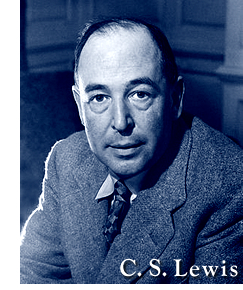
C.S. Lewis Daily – Today’s Reading


TO MARY WILLIS SHELBURNE: On why we are not to know what is coming next.

3 August 1959

I have your letter of 30 July. It has puzzled me. I understood that you were going to the doctors for heart trouble. How and why do the psychiatrists come into the picture? But since they have come, I am glad to hear they are nice.

I sympathise most deeply with you on the loss of Fr. Louis. But for good as well as for ill one never knows what is coming next. You remember the Imitation says ‘Bear your cross, for if you try to get rid of it you will probably find another and worse one.’ But there is a brighter side to the same principle. When we lose one blessing, another is often most unexpectedly given in its place.

We are all well here though I am frantically busy: and though I get no more tired now than I did when I was younger, I take much longer to get un-tired afterwards. All blessings and sympathy.

From The Collected Letters of C.S. Lewis, Volume III

Compiled in Yours, Jack

Charles Stanley – An Invitation to Intimacy


Genesis 12:1-8

God, the Creator of the universe, chooses us. And when He does, His purpose is not simply to save us from eternity in hell. His love goes beyond that. He wants an intimate relationship with each one of us. Building this intimacy requires . . .

Commitment. God pledged that He would make Abraham into a great nation. He asked the future patriarch to demonstrate his allegiance by obeying the command to leave home for an unknown land. The Lord’s commitment to us is clear. He rescued us from sin through His Son Jesus, sent the Holy Spirit to live within us, and promised us eternal life. Our pledge is obedience in both inner attitude and outward action.

Clear Communication. To develop an intimate bond, two people will express deep thoughts and feelings, and they’ll also listen carefully to one another’s words. God speaks to us through Scripture about Himself and His plans, and He also stands ready to listen (Psalms 10:17). The time we spend praying and meditating on His Word reveals our commitment to communication, which includes listening, speaking, and understanding.

Openness. God speaks honestly about who we are, the condition of the world, and the only solution: Jesus Christ. He willingly tells us the difficult truths about ourselves but also encourages and affirms us in our efforts to follow Him. Our part consists of being honest with Him about our thinking, actions, and emotions.

Salvation is only the first step of life in Christ (John 3:16). Have you accepted the invitation to intimacy with God?

Bible in One Year: Jeremiah 15-17