Tag Archives: christianity

Ravi Zacharias Ministry – Alienation and Embrace


Vincenzo Ricardo. If that name does not mean much to you, you are not alone. It does not seem to have meant much to anyone else except, perhaps, him who bore it. In fact it was not even his name. His real name was Vincenzo Riccardi, and nobody seemed to get it right after the sensational discovery of his mummified body in Southampton, New York. He had been dead for 13 months, but his television was still on, and his body was propped up in a chair in front of it.(1) The television was his only companion, and though it had much to tell him, it did not care whether he lived or died.

Riccardi’s story raises many unsettling questions. How can a human being vanish for over a year and not be missed by anyone? Where was his family? What about his relatives? Why was the power still on in his house? Whatever the answers are to these and other questions, one thing is clear: Riccardi was a lonely individual whose life can be summed up in one word, alienation. You see, Riccardi was blind, so he never really watched television; he needed this virtual reality to feed his need for real companionship. Moreover, his frequent “outbursts and paranoid behavior” may have played a role in driving people away from him.(2)

This is indeed a tragic and extreme tale, but it makes a powerful statement about how cold and lonely life can be for millions across the globe. Even those who seem to have all of their ducks in a row are not immune to the pangs of loneliness and alienation. The Christian story attests that alienation affects us at three different levels. We are alienated from ourselves, from others, and most significantly, we are alienated from God. That is the reality in which we exist. The restoration process involves all three dimensions, but it begins with a proper relationship with God. We cannot get along with ourselves or with others until we are properly related to God. The good news of the Christian gospel is that abundant restoration is available to all who want it.

This process is well illustrated in an encounter Jesus had with another deeply wounded man who lived in a cemetery. Relatives, and perhaps friends, had tried unsuccessfully to bind him with iron chains to keep him home. He preferred to live among the tombs (alienation from others), cutting himself with stones, his identity concealed in his new name—”Legion” (alienation from self). His mind and body were hopelessly enslaved by Satan’s agents, and his life was no longer his own (alienation from God). It took an encounter with Jesus for the man to be fully restored, “dressed and in his right mind” (Mark 5:15). Only then could he follow Jesus’s command to go back to his family and tell them what God had done for him.

The restoration process remains the same today. Until we are properly related to God, our true identity and potential will always elude us. No virtual reality or gadget can even begin to address the problem, for they only give back to us what we have put into them. They are like the message in a bottle which a castaway on a remote island excitedly received, only to realize that it was a cry for help that he himself had sent out months before. As Augustine prayed, “You have made us for Yourself, and our hearts are restless until they find their rest in You.” We are finite creatures, created for a relationship with an Infinite Being, and no finite substitute can ever meet our deepest needs. Trying to meet our real needs without Christ is like trying to satisfy our thirst with salty water: the more we drink, the thirstier we become. This is a sure path to various sorts of addictions.

But when we turn toward the Bread of Life who offers himself up, calling each one of us to the table by name, loneliness is countered with the hope of embrace. We become members of God’s extended family. With Abraham, we look “forward to the city with foundations whose architect and builder is God” (Hebrews 11:10). Day by day, we learn to trust God as we travel with others along a heavily trodden path that never disappoints. Friends and relatives may desert us, but we are never alone. We may grieve and lament, but never like those without hope. We have peace and joy within, and even in our own hour of need, others can still find their way to God through us. The alternative is a crippling sense of isolation and alienation within a worldly system whose offerings, however sophisticated and well-intentioned, can never arouse us from spiritual death.

J.M. Njoroge is a member of the speaking team at Ravi Zacharias International Ministries in Atlanta, Georgia.

(1) Erika Hayasaki, “He Died in Vast Isolation,” LA Times, March 31, 2007.

(2) Ibid.


Alistair Begg – David, The Psalmist


The sweet psalmist of Israel. 2 Samuel 23:1

Among all the saints whose lives are recorded in Holy Scripture, David possesses an experience of the most striking, varied, and instructive character. In his history we meet with trials and temptations that are not found, as a whole, in other saints of ancient times, and as a result he provides us with a shadowy picture of our Lord. David knew the trials of all ranks and conditions of men. Kings have their troubles, and David wore a crown. The peasant has his cares, and David handled a shepherd’s crook. The wanderer has many hardships, and David hid in the caves of Engedi. The captain has his difficulties, and David found the sons of Zeruiah too hard for him.

The psalmist also faced trials from his friends; his counselor Ahithophel forsook him: “[He] who ate my bread, has lifted his heel against me.”1 His worst foes came from his own household: His children were his greatest affliction. The temptations of poverty and wealth, of honor and reproach, of health and weakness all tried their power upon him. He had temptations from without to disturb his peace and from within to mar his joy. David no sooner escaped from one trial than he fell into another, no sooner emerged from one season of despondency and alarm than he was again brought into the lowest depths and all God’s waves and billows rolled over him. This is probably the reason that David’s psalms are so universally the delight of experienced Christians. Whatever our frame of mind, whether ecstasy or depression, David has exactly described our emotions. He was an able master of the human heart because he had been tutored in the best of all schools-the school of heartfelt, personal experience.

As we are instructed in the same school, as we grow mature in grace and in years, we increasingly appreciate David’s psalms and find them to be “green pastures.”2 My soul, let David’s experience cheer and counsel you today.

1) Psalm 41:9

2) Psalm 23:2

The Family Bible Reading Plan

  • 1 Samuel 12
  • Romans 10

Devotional material is taken from “Morning and Evening,” written by C.H. Spurgeon, revised and updated by Alistair Begg.

Charles Spurgeon – Christ’s first and last subject


“From that time Jesus began to preach, and to say, Repent: for the kingdom of heaven is at hand.” Matthew 4:17. “And that repentance and remission of sins should be preached in his name among all nations, beginning at Jerusalem.” Luke 24:47

Suggested Further Reading: Philippians 3:1-14

If you are renewed by grace, and were to meet your old self, I am sure you would be very anxious to get out of his company. “No,” say you, “No, sir, I cannot accompany you.” “Why, you used to swear!” “I cannot now.” “Well, but,” says he, “You and I are very near companions.” “Yes, I know we are, and I wish we were not. You are a deal of trouble to me every day. I wish I could be rid of you for ever.” “But,” says Old Self, “you used to drink very well.” “Yes, I know it. I know you did, indeed, Old Self. You could sing a song as merrily as any one. You were ringleader in all sorts of vice, but I am no relation of yours now. You are of the old Adam, and I of the new Adam. You are of your old father, the devil; but I have another—my Father, who is in heaven.” I tell you, brethren, there is no man in the world you will hate so much as your old self, and there will be nothing you will so much long to get rid of as that old man who once was dragging you down to hell, and who will try his hand at it over and over again every day you live, and who will accomplish it yet, unless that divine grace which has made you a new man shall keep you a new man even to the end. Good Rowland Hill, in his “Village Dialogues,” gives the Christian, whom he describes in the first part of the book, the name of Thomas Newman. Every man who goes to heaven must have the name of new-man. We must not expect to enter there unless we are created anew in Christ Jesus.

For meditation: In our testimonies we should own up to what we used to be, but in such a way that we also disown the people we used to be. Don’t be like the biography of a Christian which seems to glory in the sin of the past—reserve all the glory for your Saviour (1 Corinthians 15:9,10; 1 Timothy 1:13-17).

Sermon no. 329

20 August (Preached 19 August 1860)

John MacArthur – Godly Anger Versus Selfish Anger


“[Love] is not provoked” (1 Cor. 13:5).

Self-centered anger cannot coexist with love.

The great eighteenth-century preacher and theologian Jonathan Edwards had a daughter with an uncontrollable temper. When a young man asked Dr. Edwards for his daughter’s hand in marriage, he said no. The young man was crushed. “But I love her and she loves me,” he pleaded. “That makes no difference,” Edwards replied, “she isn’t worthy of you.” “But she is a Christian, isn’t she,” the young man argued. “Yes,” said Edwards, “but the grace of God can live with some people with whom no one else could ever live.”

That may seem harsh, but Jonathan Edwards knew what his would-be son-in-law hadn’t yet learned: the presence of selfish anger indicates the absence of genuine love. “Love,” said Paul, “is not provoked.” It isn’t given to sudden outbursts of emotion or action. It doesn’t respond in anger to offenses committed against it.

Paul wasn’t talking about anger over sin and its terrible consequences. That’s righteous indignation, which Christians are expected to have. When Jesus drove the merchants and moneychangers out of the temple (John 2:14-15), He was genuinely angry because His Father’s house was being desecrated. But He never reacted that way when He was personally attacked or maligned. In the same way, it’s right for you to be angry when others are mistreated, when God is offended, or when His Word is misrepresented. But love always bears up under personal attacks.

Such graciousness is foreign to our society, which teaches us to fight for our personal rights and retaliate when we don’t get what we think we deserve. That has produced greedy and loveless people who want little more than personal success and comfort. Anyone who dares to stand in their way is in danger of incurring their wrath.

As a Christian, you must resist such influences by focusing on your spiritual duty rather than your rights. If you expect nothing from the world, you won’t be angered or disappointed when nothing comes. Remember, God is the giver of every good and perfect gift (James 1:17). So humble yourself before Him and He will exalt you at the proper time (James 4:10).

Suggestions for Prayer

Ask God for the grace to forgive those who wrong you.

For Further Study

According to Ephesians 4:26-27, how should you deal with anger?


Campus Crusade for Christ; Bill Bright – A New Creature 


“As it is written, there is none righteous, no, not one: There is none that understandeth, there is none that seeketh after God. They are all gone out of the way, they are together become unprofitable; there is none that doeth good, no, not one” (Romans 3:10-12, KJV).

At the conclusion of one of my messages at a pastor’s conference, a pastor stood to take issue with me concerning a statement that I had made. I had said that there is a great hunger for God throughout the world, and that more people are now hearing the gospel and receiving Christ than at any time since the Great Commission was given almost 2,000 years ago.

“How can you say that,” he objected, “when the Scripture clearly teaches that no man seeketh after God?”

“That is exactly what the Bible teaches,” I responded, “and I agree with the Word of God 100 percent, but do not forget that – though in his natural inclination man does not have a hunger for God – the Holy Spirit sends conviction and creates within the human heart a desire for the Savior.”

As Jesus put it, “No one can come to Me unless the Father who sent Me, draws him” (John 6:44, NAS). There are three things that we can learn about the human race from this passage. First, no one is righteous. Second, no one understands the things of God; and third, no one seeks God. What a contrast between what man is like in his natural state and what man becomes at spiritual birth when he is liberated from the darkness and gloom of Satan’s kingdom and ushered into the light of God’s glorious kingdom through Jesus Christ. That man becomes a new creature. Old things are passed away and behold all things become new.

What a contrast between the natural and the supernatural. The natural man must depend upon his own resources, his own wisdom, to find meaning and purpose in his life, inevitably resulting in a life of conflict, discord and frustration. But the one who trusts in God has the privilege of drawing upon the supernatural resources of God daily; resources of joy, peace, love; resources that provide meaning and purpose, assurance of eternal life.

Most people live lives of quiet desperation in self- imposed poverty because those of us who know the truth of the supernatural are strangely silent. God forgive us.

Bible Reading: Romans 3:13-20

TODAY’S ACTION POINT: With God’s help I refuse to remain silent any longer, but will seek to proclaim “the most joyful news ever announced” (Luke 2:10-11), to all who will listen in order that others may join me in living the supernatural life.

Presidential Prayer Team; C.H. – Purpose Precedence


The United States military is known for teaching young and often stubborn men and women to obey orders without question. The Army, Navy, Air Force and Marines are renowned for their development of strong individuals who will follow commands in the heat of battle to defend their country.

Mary said, “Behold, I am the servant of the Lord; let it be to me according to your word.”

Luke 1:38

Mary, the mother of Jesus, was not an Army soldier in training, but her adherence to follow God’s will in doing the impossible could rival the spirit of even the toughest of the Special Forces. When the angel told Mary a virgin birth was possible with God, Mary didn’t question or say, “I can’t do this.” She simply told the Lord she was His vessel and to “let it be.”

When God reveals His will to you, how often do you follow without question? May all Christians in this nation be as obedient and willing as the mother of Jesus. When you allow His purposes precedence over your own, great things are accomplished. Ask God to develop a willing spirit within you. Pray, too, for America’s leaders to recognize the will of God and develop a desire to follow Him.

Recommended Reading: Luke 1:46-55

Greg Laurie – It’s All His


Don’t you realize that your body is the temple of the Holy Spirit, who lives in you and was given to you by God? You do not belong to yourself, for God bought you with a high price. So you must honor God with your body.—1 Corinthians 6:19–20

You belong to God. I belong to God. We belong to God. The Bible says, “You do not belong to yourself, for God bought you with a high price. So you must honor God with your body” (1 Corinthians 6:19–20). Your career belongs to God. Your family belongs to God. Your home belongs to God. So does your car, your health, the beat of your heart, and the breath you draw in your lungs. It is all a gift from God to you.

Often we will forget and neglect God, but is it too much to dedicate some time every day to pray and read the Word of God? God gave you everything that you have. You can give thanks. Is it that big of a deal to say, before you start eating, “Lord, thank You for this food”? It doesn’t have to be a long prayer. You don’t have to pray for every missionary around the world. But it is important to give thanks to the Lord for all that you have, acknowledging that you have received it from Him.

Is it asking too much to take a percentage of your income and give it to God’s work? That is called tithing. The Bible talks about tithes and offerings. Tithe means “a tenth.” In fact, Jesus commended the Pharisees for their tithing, while at the same time saying they were simply missing the point (see Matthew 23:23). Every Christian should tithe and bring offerings (see Malachi 3:10).

What if all the church was just like you? No individual Christian can sin without affecting the whole body of Christ. No child of God can grow cold in the spiritual life without lowering the spiritual temperature of everyone else around him or her. You affect others, and others affect you.

Max Lucado – A Clear Message


As long as Jesus is one of many options, He is no option. As long as you can carry your burdens alone, you don’t need a burden bearer. As long as your situation brings you no grief, you will receive no comfort. As long as you can take him or leave him, you might as well leave him because Jesus won’t be taken half-heartedly.

Jesus said, “Blessed are those who mourn. . .” (Matthew 5:4).  When you get to the point of sorrow for your sins, when you admit that you have no other option but to cast all your cares on him, and when there is truly no other name that you can call, then do as Jesus said to do. “Cast all your cares on him because he cares for you” (1 Peter 5:7). And he’s waiting for you in the midst of the storm!

From The Applause of Heaven


Night Light for Couples – That Proverbs 31 Woman…


“A woman who fears the Lord is to be praised.” Proverbs 31:30

Are you ever intimidated by the “Proverbs 31 woman”? Sometimes I am. How can we compete? Here’s a woman who brings her husband “good, not harm, all the days of her life”; gets up before the morning light; feeds her family; shows good judgment in her purchases; works “vigorously”; helps the poor; has time to make bed coverings for her household and garments for sale; has enough faith to “laugh at the days to come”; “speaks with wisdom”; has no use for idleness; and earns blessing and praise from her husband and children!

Let’s be honest, we can’t compete… but maybe we don’t have to. I’m not convinced, for example, that the woman described in Proverbs 31 is one literal person. Or, if she is, that she achieved all her accomplishments during the same period of life. Rather, I think that through the writings of Solomon, the Lord has provided us women with specific examples of the behavior to which we should continually aspire—just as all Christians aspire to be like Jesus, even though we’ll never actually reach His level of perfection.

I believe that the key to understanding Proverbs 31 is found in verse 30, the next to last passage in Proverbs: “Charm is deceptive, and beauty is fleeting, but a woman who fears the Lord is to be praised.” According to this verse, a “woman who fears the Lord,”—who seeks His will for her as wife, mother, and follower of Jesus—is the Proverbs 31 woman, no matter how a particular day or season of her life is going.

My encouragement to you as a wife is to seek God and submit to His direction—and add a dash of love in the process. I promise you that you’ll please your Maker, bring honor to your husband and family, and find a personal contentedness that will never be matched.

– Shirley M Dobson

From Night Light For Couples, by Dr. James & Shirley Dobson

Charles Stanley – Our Helper in Prayer

John 14:16-17
One of the most painful emotions is loneliness. Of course, there are times in life when being alone is unavoidable. But since God has sent His Spirit to live within us, we are never truly on our own. The Holy Spirit—whom Jesus referred to as our “Helper”—is with us and available every second of every day.
Let’s think about ways that the Spirit of God helps us in our prayer life. First, He burdens us to pray. Have you ever felt a strong sense that you needed to spend time with the Lord? Perhaps you weren’t even sure why. That is the Spirit convicting you. He has many reasons for doing this. For instance, He may know that you need strength because of an imminent difficulty. Or He sometimes encourages us to confess sin so that our fellowship with the Father is not hindered.
Second, the Holy Spirit intercedes for us. There are times when we do not know how to pray—when sorrow or helplessness overwhelms us to the point that words are impossible to speak, even to the Lord. Thankfully, when all we can do is cry to Jesus, the Spirit will lead on our behalf. He understands the depth of our thoughts, feelings, and needs, and He translates them into effective supplication according to God’s will.
The Savior loves you intimately—enough to die in your place and send a Helper to reside within you. What a privilege to have God’s Spirit dwelling in your heart. Do you recognize His power and love throughout your day? He longs to comfort, enable, and guide you each and every moment.
Bible in One Year: Jeremiah 33-36

Our Daily Bread – Reflecting God’s Glory

Read: Exodus 31:1-11
Bible in a Year: Psalms 103-104; 1 Corinthians 2
The heavens declare the glory of God; and the firmament shows His handiwork. —Psalm 19:1
The 12th-century Chinese artist Li Tang painted landscapes animated with people, birds, and water buffalo. Because of his genius with fine line sketches on silk, Li Tang is considered a master of Chinese landscape art. For centuries, artists from around the world have depicted what they see in God’s art gallery of creation: “The heavens declare the glory of God; and the firmament shows His handiwork” (Ps. 19:1). The Bible tells us that our creativity as human beings comes from being made in the image of the Master Creator (Gen. 1:27).
God chose artists who worked with wood, gold, silver, bronze, and gems to create the furnishings, utensils, altars, and garments that were to be used when the ancient Israelites worshiped Him in the tabernacle (Ex. 31:1-11). These artistic renderings of spiritual realities prompted and guided the priests and the people in their worship of the Lord who had called them to be His people.
Through many types of artistic expression, we reflect the beauty of creation and honor the Creator and Redeemer of this marvelous world. —Dennis Fisher
Lord of the universe, You are the Creator and have given us creative abilities. May we honor You through them.
We were created to bring God the glory.
INSIGHT: Not only did God give Moses the exact blueprint for the tabernacle (Ex. 25-30), He also provided all the craftsmen needed to build it (31:1-11). Bezalal (v. 2) and Aholiab (v. 6) were probably the leaders of these craftsmen (vv. 3-6) and are mentioned again in Exodus 35:31-35. Bezalal is said to be filled with “the Spirit of God” (31:3; 35:31). God divinely empowered these men to do things that were clearly beyond normal human ability. God said, “I have put wisdom in the hearts of all the gifted artisans, that they may make all that I have commanded you” (31:6). Likewise, God has given every believer special abilities and skills to build up the church for His glory (Rom. 12:3-8; 1 Cor. 12:4-11; Eph. 4:11-15; 1 Peter 4:10-11). Sim Kay Tee

Charles Spurgeon – What are the clouds?

“The clouds are the dust of his feet.” Nahum 1:3
Suggested Further Reading: Isaiah 40:12-26
Great things with us are little things with God. What great things clouds are to us! There we see them sweeping along the skies! Then they rapidly increase till the entire sky becomes black and a dark shadow is cast upon the world; we foresee the coming storm, and we tremble at the mountains of cloud, for they are great. Great things are they? No, they are only the dust of God’s feet. The greatest cloud that ever swept the face of the skies, was but one single particle of dust starting from the feet of the Almighty Jehovah. When clouds roll over clouds, and the storm is very terrible, it is only the chariot of God, as it speeds along the heavens, raising a little dust around him! “The clouds are the dust of his feet.” Oh! Could you grasp this idea my friends, or had I words in which to put it into your souls, I am sure you would sit down in solemn awe of that great God who is our Father, or who will be our Judge. Consider, that the greatest things with man are little things with God. We call the mountains great, but what are they? They are but “the small dust of the balance.” We call the nations great, and we speak of mighty empires; but the nations before him are but as “a drop of a bucket.” We call the islands great and talk of ours boastingly—”He taketh up the isles as a very little thing.” We speak of great men and of mighty—”The inhabitants [of the earth] in his sight are as grasshoppers.” We talk of ponderous orbs moving millions of miles from us—in God’s sight they are but little atoms dancing up and down in the sunbeam of existence. Compared with God there is nothing great.
For meditation: Are you experiencing great distress or great success? Try to look at both kinds of circumstances from the viewpoint of God (Zechariah 4:6-7).
Sermon no. 36
19 August (1855)

Joyce Meyers – Choosing the Right Church

But [as for] you, teach what is fitting and becoming to sound (wholesome) doctrine [the character and right living that identify true Christians]. – Titus 2:1
I went to church for years and years and never heard a message about the power my words had on my life. I may have heard something about my thoughts; but if so, it wasn’t enough to make any impact on my life because it did not change my thinking.
I heard about grace and salvation and other good things. But it wasn’t everything I needed to know in order to live in the righteousness, peace, and joy God offers to all who believe (see Romans 14:17).
There are many wonderful churches that teach God’s Word in its entirety; and I encourage you to make sure that wherever you choose to go to church, it is a place where you are learning and growing spiritually. We should not go to church just to fulfill an obligation we may think we have to God. We should go to church to fellowship with other believers in Jesus Christ, to worship God, and to learn how to live the life Jesus died for us to have and enjoy.

Campus Crusade – Guardian Angels

“For the angel of the Lord guards and rescues all who reverence Him” (Psalm 34:7).
For many years my travels have taken me from continent to continent, to scores of countries each year. I have traveled under all kinds of circumstances, not a few times faced with danger. But always there was peace in my heart that the Lord was with me and I was surrounded by His guardian angels to protect me.
In Pakistan, during a time of great political upheaval, I had finished a series of meetings in Lahore and was taken to the train station. Though I was unaware of what was happening, an angry crowd of thousands was marching on the station to destroy it with cocktail bombs.
The director of the railway line rushed us onto the train, put us in our compartments and told us not to open our doors under any circumstances – unless we knew that the one knocking was a friend. The train ride to Karachi would require more than 24 hours, which was just the time I needed to finish rewriting my book Come Help Change the World.
So I put on my pajamas, got in my berth and began to read and write. It was not until we arrived in Karachi some 28 hours later that I discovered how guardian angels had watched over us and protected us. The train in front of us had been burned when rioting students had lain on the track and refused to move. So the train ran over them and killed them. In retaliation, the mob burned the train and killed the officials.
Now we were the next train and they were prepared to do the same for us. But God miraculously went before us and there were no mishaps. We arrived in Karachi to discover that martial law had been declared and all was peaceful. A Red Cross van took us to the hotel and there God continued to protect us. When the violence subsided we were able to catch a plane out of Karachi for Europe.
Bible Reading: Isaiah 63:7-9
TODAY’S ACTION POINT: Today I will make a special point of expressing my gratitude to God for assigning guardian angels to watch over me, protect and help me in my time of trouble. I will not take for granted the protection that many times in the past I have overlooked, not recognizing God’s miraculous, divine intervention, enabling me to live a supernatural life.

Presidential Prayer Team; H.L.M. – Godly Choices

The movie Jurassic World recently brought in over $511 million in its opening weekend, becoming the highest grossing global film of all time. Yet it is the film’s lead actor, Chris Pratt, who goes against Hollywood’s standards and demonstrates eternal qualities. Pratt values his faith in God and his family more than his fame and wealth. Chris and his wife Anna have been married for six years. When their son Jack was born premature, they spent weeks praying at the baby’s side. “We were scared for a long time. We prayed a lot,” said Pratt. “It restored my faith in God; not that it needed to be restored, but it really defined it.”
When Joseph woke from sleep, he did as the angel of the Lord commanded him: he took his wife.
Matthew 1:24
Another man, Joseph of Nazareth, also lived out his faith through his actions. God’s choice for Jesus’ earthly father was a man of integrity and courage. When God sent an angel to verify Mary‘s story, Joseph willingly obeyed in spite of the public humiliation he would face.
As you seek the Lord for daily decisions, pray and listen carefully to the Holy Spirit. Make choices that honor God. Pray also that America’s leaders will do the same.
Recommended Reading: Proverbs 3:1-10

Greg Laurie – How Sin Spreads

Your glorying is not good. Do you not know that a little leaven leavens the whole lump? —1 Corinthians 5:6
As believers, we are interconnected. The sin of one will affect many. That is why the apostle Paul said the church should never tolerate evil. He said, “And if one member suffers, all the members suffer with it; or if one member is honored, all the members rejoice with it” (1 Corinthians 12:26).
Apparently in the Corinthian church, there was a man who was sleeping his father’s wife (not his biological mother but a woman his father had married). The church was actually boasting about how liberal and tolerant they were. So Paul confronted them, saying, “And you are puffed up, and have not rather mourned, that he who has done this deed might be taken away from among you” (1 Corinthians 5:2).
If an unbeliever who is living an immoral lifestyle comes to our church, we’ll welcome that person. We’ll say, “We love you.” We’ll also say, “Jesus Christ wants to change your life.” We will call him or her to the Lord and to faith.
But if a Christian comes to our church and is living openly in sin, if we find out about it, we will call him or her to repentance. But if that Christian refuses to repent, then he or she will be asked to leave.
Some might think that isn’t very loving. But actually it is very loving, and I’ll tell you why. If believers are living openly in sin, and the church doesn’t do anything about it, it’s sending a message that everything is okay and that we can thumb our noses at God.
Paul said, “Do you not know that a little leaven leavens the whole lump?” (1 Corinthians 5:6). In modern vernacular, a little yeast permeates the whole batch of dough. If sin is tolerated, it will spread and corrupt others.

Max Lucado – The Two-Letter Word “IF”

The prison of pride is filled with self-made people, determined to pull themselves up by their own bootstraps even if they land on their rear ends! To the prideful it doesn’t matter what they did or to whom they did it or where they’ll end up– it only matters that I did it my way. You’ve seen the prisoners. The alcoholic who won’t admit his drinking problem. The woman who refuses to talk to anyone about her fears. Perhaps to see such a person all you have to do is look in the mirror.
The Bible says, “If we confess our sins, He is faithful and just. . .” (1 John 1:9). The biggest word in Scripture just might be that two-letter one, IF. Justification…rationalization…comparison…these are tools of the jailbird. But Jesus says, “Blessed are those who mourn. . .” (Matthew 5:4). You see, true blessedness begins with deep sadness.
From The Applause of Heaven

Night Light for Couples – Camping Companions

“Just as you share in our sufferings, so also you share in our comfort.” 2 Corinthians 1:7
After learning that camping was a common pastime among happy families, Gary Smalley and his wife, Norma, decided to take their own brood into the wild. On a beautiful Kentucky night, the Smalleys gathered around a campfire, sang songs, and roasted hot dogs. By nine o’clock all were pleasantly tired and tucked into their camper beds. Gary thought, I can really see why this draws families together.
Then it struck. Thunder rolled and lightning flashed all around. Rain and wind assaulted the outside, then the inside, of the Smalley camper. The sudden storm turned what had been a relaxing evening into a night of fright.
Did this harrowing turn of events cause Gary and Norma to abandon the outdoors forever? Not at all—they became avid campers. The Smalleys discovered that sharing experiences, both fun and frightful, bonded them in ways they couldn’t have imagined.
Our encouragement to couples is to share each others’ interests and activities. Common endeavors will deepen your relationship and provide priceless family memories—even when storms strike.
Just between us…
How does sharing recreation and other interests build companionship?
(husband) Which of my favorite activities do you enjoy?
(wife) Do you appreciate having me join you in your activities? Which ones, and why?
What new shared activities could bring us closer together?
Lord, thank You for tonight’s encouragement to be friends and companions in many ways. Show us new ways to get the most out of life—together! Amen.
From Night Light For Couples, by Dr. James & Shirley Dobson

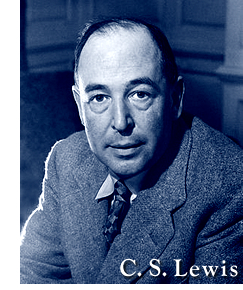
C.S. Lewis Daily – Today’s Reading

The rule for all of us is perfectly simple. Do not waste time bothering whether you ‘love’ your neighbour; act as if you did. As soon as we do this we find one of the great secrets. When you are behaving as if you loved someone, you will presently come to love him. If you injure someone you dislike, you will find yourself disliking him more. If you do him a good turn, you will find yourself disliking him less. There is, indeed, one exception. If you do him a good turn, not to please God and obey the law of charity, but to show him what a fine forgiving chap you are, and to put him in your debt, and then sit down to wait for his ‘gratitude’, you will probably be disappointed. (People are not fools: they have a very quick eye for anything like showing off, or patronage.) But whenever we do good to another self, just because it is a self, made (like us) by God, and desiring its own happiness as we desire ours, we shall have learned to love it a little more or, at least, to dislike it less.
From Mere Christianity
Compiled in A Year with C.S. Lewis

Charles Stanley – Sovereign Over Sin

Isaiah 14:24-27
God is sovereign. This means that He is the supreme authority over everything, including sin and its consequences. Yet He doesn’t cause anyone to sin—to do so would violate His righteous and holy nature. The Lord does, however, allow temptation to enter our lives. And since we have free will and the Holy Spirit, we can decide how to respond and are fully equipped to resist. Thankfully, He retains ultimate control and weaves the consequences of our actions in accordance with His purposes.
Sometimes God permits our sin to run its full course. For instance, when the Israelites refused to turn away from their disobedience, He “gave them over to the stubbornness of their heart, to walk in their own devices” (Psalms 81:12). Without divine protection, the nation succumbed to corrupt influences and ultimately was overrun. The Lord could have sheltered them, but the consequences drove the Israelites into repentance, which was His original plan.
Conversely, God will sometimes put an immediate halt to sin. Such was the case when King Abimelech took Abraham’s wife to himself. The king had been misled by the couple and was not aware that he was about to commit a sin. But the Lord knew of the deception, and He intervened (Genesis 20:1-6).
Of course, the wisest plan is to obey fully so God never has to use either of these tactics. Temptation is inevitable, but sin is not. The Lord’s sovereignty over our life means that any temptation must first pass through His permissive will. In this way, He makes sure His children are never tempted beyond what they can resist (1 Corinthians 10:13).
Bible in One Year: Jeremiah 31-32