Tag Archives: christianity

Alistair Begg – The Broad Field of Promise


Let me go to the field and glean among the ears of grain. Ruth 2:2

Downcast and troubled Christian, come and glean today in the broad field of promise. Here is an abundance of precious promises, which meet your needs exactly. Take this one: “A bruised reed he will not break, and a faintly burning wick he will not quench.”1 Is that not helpful to you? A reed, helpless, insignificant, and weak, a bruised reed, out of which no music can come, weaker than weakness itself-yet He will not break you, but on the contrary, will restore and strengthen you.

You are like the smoking wick: No light, no warmth, can come from you, but He will not extinguish you; He will blow with His sweet breath of mercy until He fans you into a flame. Would you glean another ear? “Come to me, all who labor and are heavy laden, and I will give you rest.”2 What gentle words! Your heart is tender, and the Master knows it, and therefore He speaks so softly to you. Will you not obey Him and come to Him even now? Take another ear of corn: “Fear not, you worm Jacob, you men of Israel! I am the one who helps you, declares the LORD; your Redeemer is the Holy One of Israel.”3 How can you fear with such a wonderful assurance as this?

You may gather ten thousand golden ears such as this: “I have blotted out your transgressions like a cloud and your sins like mist.”4 Or this: “Though your sins are like scarlet, they shall be as white as snow; though they are red like crimson, they shall become like wool.”5 Or this: “The Spirit and the Bride say, Come. And let the one who is thirsty come; let the one who desires take the water of life without price.”6 Our Master’s field is very rich, as you can see. Plenty of promises lie before you, believer! Gather them up, make them your own, for Jesus wants you to have them. Do not be afraid; only believe! Grasp these sweet promises, thresh them out by meditation, and feed on them with joy.

1) Isaiah 42:3

2) Matthew 11:28

3) Isaiah 41:14

4) Isaiah 44:22

5) Isaiah 1:18

6) Revelation 22:17

The Family Bible Reading Plan

  • Judges 15
  • Acts 19

Devotional material is taken from “Morning and Evening,” written by C.H. Spurgeon, revised and updated by Alistair Begg.

Charles Spurgeon – Sovereign grace and man’s responsibility


“But Esaias is very bold, and saith, I was found of them that sought me not; I was made manifest unto them that asked not after me. But to Israel he saith, All day long I have stretched forth my hands unto a disobedient and gainsaying people.” Romans 10:20,21

Suggested Further Reading: Matthew 26:20-25

I see in one place, God presiding over all in providence; and yet I see, and I cannot help seeing, that man acts as he pleases, and that God has left his actions to his own will, in a great measure. Now, if I were to declare that man was so free to act, that there was no control of God over his actions, I should be driven very near to atheism; and if, on the other hand, I declare that God so overrules all things, as that man is not free enough to be responsible, I am driven at once into Antinomianism or fatalism. That God predestines, and that man is responsible, are two things that few can see. They are believed to be inconsistent and contradictory; but they are not. It is just the fault of our weak judgment. Two truths cannot be contradictory to each other. If, then, I find taught in one place that everything is fore-ordained, that is true; and if I find in another place that man is responsible for all his actions, that is true; and it is my folly that leads me to imagine that two truths can ever contradict each other. These two truths, I do not believe, can ever be welded into one upon any human anvil, but one they shall be in eternity: they are two lines that are so nearly parallel, that the mind that shall pursue them farthest, will never discover that they converge; but they do converge, and they will meet somewhere in eternity, close to the throne of God, whence all truth springs.

For meditation: The Bible does not tell us everything; nor does it give a full explanation of what it does tell us. But it tells us more than enough to give us a sound foundation for our faith and obedience (Deuteronomy 29:29; John 20:30,31).

Sermon no. 207

1 August (1858)

Joyce Meyer – Transformation


So that they [even] kept carrying out the sick into the streets and placing them on couches and sleeping pads, [in the hope] that as Peter passed by, at least his shadow might fall on some of them. And the people gathered also from the towns and hamlets around Jerusalem, bringing the sick and those troubled with foul spirits, and they were all cured. – Acts 5:15–16

Peter was a man with a past. He was bold and not afraid of change, but he also had many faults. In Matthew 16:22–23, we see Peter trying to correct Jesus. In Matthew 26:31–35, we see that Peter thought more highly of himself than he should have. In Matthew 26:69–75, it is recorded that Peter denied even knowing Jesus.

Once Peter realized the depth of his sin, he wept bitterly, which showed that he had a repentant heart (v. 75). God is merciful and understands our weaknesses. In John 21, we see Jesus lovingly restore Peter. Peter had been included in God’s plans for the future even though he had a past record of foolishness and failure. Peter had denied Christ, and yet he became one of the best-known apostles. Peter could have spent his entire life feeling bad about his denial of Jesus, but he pressed past that failure and became valuable to God’s kingdom.

Lord, You are a God of transformation. Help me to press past my failures and become a valuable servant of Yours today. Thank You for including me in Your plans for the future. Amen.

Campus Crusade for Christ; Bill Bright – He Does Such Wonders


“I will cry to the God of heaven who does such wonders for me” (Psalm 57:2).

I cannot begin to count the times, even during just one 24-hour day, that I lift my heart in praise, worship and adoration and thanksgiving to God in heaven. I begin the day by acknowledging His lordship of my life and inviting Him to have complete control of my thoughts, my attitudes, my actions, my motives, my desires, my words; to walk around in my body, think with my mind, love with my heart, speak with my lips and continue through me to seek and save the lost and minister to those in need. Throughout the day I bring before Him the personal needs of my family. I pray for the extended family of Campus Crusade for Christ and staff and their families and for all those who support this ministry through their prayers and finances. I pray for business and professional people, that God will bless their finances as well as their lives so that they can continue to help support this and other ministries for His kingdom.

As I look through the mail, I breathe a prayer to God for some staff member, friend, associate, or supporter who is hurting, needing encouragement, strength and peace. At all of my many daily conferences, I will begin and close with a brief word of prayer claiming the promise of God-given wisdom for the matters we shall be discussing, for supernatural discernment that will enable me to see through all the intricacies of the problems presented. When the phone rings, I breathe a silent prayer and often a vocal one at the appropriate time with that person on the other end of the line who is in distress, whether from family problems or work-related difficulties.

In between, I pray alone and with others for the hundreds of different people, events and circumstances that involve the worldwide ministry of Campus Crusade for Christ and the ministry of His Body throughout the world.

Bible Reading: Psalm 57:1-11

TODAY’S ACTION POINT: Recognizing that prayer is as vital to my spiritual life as air is to my physical being, I will pray without ceasing and in all things give thanks to our God in heaven who does such wonders for me.


Presidential Prayer Team; C.H. – The God Who Sees


When crimes occur in today’s technological society, one of the first things the police search for is camera footage – whether traffic cameras, security cameras or cell phone video from passersby. There’s not much you can do that isn’t caught on camera.

The man and his wife hid themselves from the presence of the Lord God among the trees of the garden.

Genesis 3:8

Adam didn’t live in an age of cell phones and digital cameras, but he still got caught eating of the tree of knowledge of good and evil. The Creator of the Universe didn’t need security footage from the Garden of Eden to show Adam tasting the fruit from the forbidden tree. Through Adam’s experience, you comprehend the omnipresence of God. In today’s passage, Adam tried to disappear among the garden – but God was undeniably there.

The same is true where you are right now. El Roi, the God Who Sees, is there when no one is watching. He sees when you try to cover sin, but He also sees the hard work you think no one notices. Ask Him to help you recognize and revere His presence in your life and in the lives of your national leaders. Pray for Americans to live a life that doesn’t need to be hidden.

Recommended Reading: Genesis 3:1-12

Greg Laurie – What Happens to Believers When They Die?


“We are confident, yes, well pleased rather to be absent from the body and to be present with the Lord.” —2 Corinthians 5:8

Death is no respecter of persons.

Believers and nonbelievers both die. Believers as well as nonbelievers get cancer, have auto accidents, have heart attacks. But, as believers, we have the promise that we will go straight into the presence of God at death. Paul writes, “To be absent from the body is to be present with the Lord” (2 Corinthians 5:8).

In Luke 16:22, we are told that when the believer Lazarus died, he was “carried by the angels to Abraham’s bosom.”

My son Christopher left this world some years ago. It comforts me to think he was carried by angels into God’s presence. If only we could have the veil peeled back and see this glorious world we will go to.

When young Stephen was being martyred, he was given a glimpse of glory. “Stephen, full of the Holy Spirit, gazed steadily upward into heaven and saw the glory of God, and he saw Jesus standing in the place of honor at God’s right hand” (Acts 7:55–56).

Stephen told them, “Look, I see the heavens opened and the Son of Man standing in the place of honor at God’s right hand!” At this point Stephen’s face “became as bright as an angel’s” (Acts 6:15). Stephen was given a “glimpse of glory,” which awaits all Christians on the other side.

When the great evangelist D. L. Moody was on his deathbed, he said, “Is this dying? Why, this is bliss. There is no valley. I have been within the gates. Earth is receding; heaven is opening; God is calling; I must go.”

Night Light for Couples –Words, Words


“We have spoken freely to you, Corinthians, and opened wide our hearts to you.” 2 Corinthians 6:11

Every knowledgeable marriage counselor knows that the inability or unwillingness of husbands to reveal their feelings to their wives is one of the most common complaints of women.

Research shows that little girls are blessed with greater linguistic ability than little boys; it remains a lifelong talent. As an adult, she is typically far better at expressing her thoughts and feelings. God may have given her 50,000 words per day and her husband only 25,000. He comes home with 24,994 used up and disappears into Monday Night Football; she is dying to expend her remaining 25,000 words and find out what he’s thinking, what happened at the office, and, especially, how he feels about her. This difference between him and her—a function of their inherited temperaments—is one of countless ways they are unique.

When communication is a problem, compromise is in order. The clammed‐up husband must press himself to open his heart and share his deeper feelings. The frustrated wife must recognize that her man may not be capable of the emotional intimacy she seeks. They must seek to fix what can be improved—and to accept the rest.

Just between us…

  • Is it true in our case that the wife has twice as many words to use up each day as the husband?
  • Have our communicative differences created problems between us? • In terms of sharing feelings, how would you like our marriage to change?
  • What hinders good communication between us? How can we change?

Lord, help us to celebrate our differences as man and woman while tenderly and joyfully helping each other make the most of our union with every word. Amen.

From Night Light For Couples, by Dr. James & Shirley Dobson

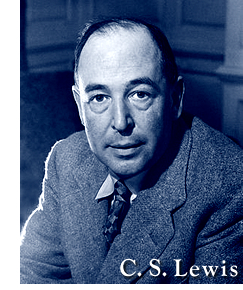
C.S. Lewis Daily – Today’s Reading

The idea that ‘being in love’ is the only reason for remaining married really leaves no room for marriage as a contract or promise at all. If love is the whole thing, then the promise can add nothing; and if it adds nothing, then it should not be made. The curious thing is that lovers themselves, while they remain really in love, know this better than those who talk about love. As Chesterton pointed out, those who are in love have a natural inclination to bind themselves by promises. Love songs all over the world are full of vows of eternal constancy. The Christian law is not forcing upon the passion of love something which is foreign to that passion’s own nature: it is demanding that lovers should take seriously something which their passion of itself impels them to do.

And, of course, the promise, made when I am in love and because I am in love, to be true to the beloved as long as I live, commits me to being true even if I cease to be in love. A promise must be about things that I can do, about actions: no one can promise to go on feeling in a certain way. He might as well promise never to have a headache or always to feel hungry.

From Mere Christianity

Compiled in A Year with C.S. Lewis

Charles Stanley – Communion With God


Philippians 3:7-10

God created men and women to be in relationship with Him. The type of communion Adam and Eve first enjoyed with Him was meant for us as well. But when sin entered the world, everything changed. God’s intended intimate relationship with mankind was broken, and it has been passed down through the generations in that damaged condition.

But as we know, that’s not the end of the story. Jesus came to die in our place, bringing forgiveness for our sins and restoring our relationship with the Father. Through faith in Christ, we are adopted into God’s family and belong to Him forever—just as He originally planned. He has provided us with everything we need to experience intimacy with Him.

So what happens if, following salvation, new believers never go deeper? Some may drift away from their initial zeal for the Lord, failing to make Bible reading or church attendance a regular occurrence. Perhaps others try to focus on the Lord but allow earthly matters to distract them. Over time, some Christians settle for what’s comfortable and familiar. Sadly, they will miss out on the deep contentment God wanted to provide. Yet those who make Jesus the priority of their life will have a deepening relationship with Him, which transcends any earthly one.

Communion with God made King David “fully satisfied as with the richest of foods” (Ps. 63:5 NIV). And Paul viewed his own accomplishments as nothing in comparison with “the surpassing value of knowing Christ Jesus” (Phil. 3:8). Draw near to God, and experience the blessings of knowing Him.

Bible in One Year: Isaiah 36-39


Our Daily Bread — He Found Me


Read: Luke 19:1-10

Bible in a Year: Psalms 54-56; Romans 3

The Son of Man has come to seek and to save that which was lost. —Luke 19:10

The film Amazing Grace was set in the late 1700s. It tells the story of William Wilberforce, a politician who was driven by his faith in Christ to commit his money and energy to abolishing the slave trade in England. In one scene, Wilberforce’s butler finds him praying. The butler asks, “You found God, Sir?” Wilberforce responds, “I think He found me.”

The Bible pictures humanity as wayward and wandering sheep. It says, “All we like sheep have gone astray; we have turned, every one, to his own way” (Isa. 53:6). In fact, this wayward condition is so deeply rooted in us that the apostle Paul said: “There is none righteous, no, not one; there is none who understands; there is none who seeks after God. They have all turned aside” (Rom. 3:10-12). That is why Jesus came. We would never seek Him, so He came seeking us. Jesus declared His mission with the words, “For the Son of Man has come to seek and to save that which was lost” (Luke 19:10).

Wilberforce was exactly right. Jesus came to find us, for we could never have found Him if left to ourselves. It is a clear expression of the Creator’s love for His lost creation that He pursues us and desires to make us His own. —Bill Crowder

Amazing grace—how sweet the sound—that saved a wretch like me!
I once was lost but now am found,
was blind, but now I see. John Newton

Once lost, now found. Eternally thankful!

INSIGHT: Jesus’ description of His mission to seek and to save the lost (Luke 19:10) is pictured beautifully in His trilogy of parables in Luke 15. He begins in verses 3-7, describing a shepherd who pursues the one lost sheep. The theme continues in verses 8-10 with a woman searching diligently for a lost coin. The trilogy finds its apex in the parable of the prodigal son in verses 11-32. Two common threads run through these three parables. The first is the passion and determination of the seeker—a picture of God’s great love for us. The second is the absolute joy and celebration every time the lost is found. What a marvelous expression of God’s loving pursuit of us.

Ravi Zacharias Ministry – The Prophet and the Newspaper


Eighty-five years ago Karl Barth told his theology students to take their bibles and their newspapers, and read both; adding, “But interpret newspapers from your Bible.”(1) There are so many times when, reading or watching the news, I am grateful for the sighing and crying of the prophets. Isaiah’s ancient plea is among the most-repeated, as I sigh between heart-breaking headlines and breaking news. “O that you would tear open the heavens and come down, that the mountains would quake at your presence!” (Isaiah 64:1).

In the thick of stories that recount violence and injustice near and far, Isaiah’s prayer is a response for the speechless, the weary, and the frustrated. How long, O Lord? Where are you in the midst of this? Why is slavery still happening right under our noses in Atlanta? Why is sex-trafficking thriving in Moscow? How is it that poverty and addiction, racism and genocide are ignored, even as we obsess over trending gossip or social media witch hunts? For the church, the words of the prophets become a gift. How long, O Lord, are we going to be reading and seeing and tolerating such disparaging news? O that you would tear open the heavens and come down, that the mountains would quake at your presence.

Isaiah words articulate the cries for relief and justice within his world and within ours. But Isaiah does not merely cry out at God’s seeming absence and a longing for God to fix all he sees; Isaiah is not merely pointing a finger and waiting for God to act. And holding the prophet’s words in one hand with our newspaper in the other, we, too, hopefully see the significance for both hands. Isaiah cries both for God and the generation of people who have turned from God. The entire chapter is a fervent prayer for a change in the direction that Jerusalem is currently moving—for God’s intervention and forgiveness, for Jerusalem’s repentance and reversal.

“We have all become like one who is unclean,

and all our righteous deeds are like a filthy cloth.

We all fade like a leaf,

and our iniquities, like the wind, take us away.

There is no one who calls on your name,

or attempts to take hold of you;

for you have hidden your face from us,

and have delivered us into the hand of our iniquity” (64:6-7).

It is unavoidable when looking at injustice—even weeping over injustice—to cry foul at the other team, the other group, the other side. There are also times when looking at injustice that we would put God Himself in the dock, interrogating the one we deem distant and responsible as injustice carries on unhindered. Yet in this incessant finger-pointing, however justifiable it might seem, we fail to see the unjust things we do ourselves, our own inconsistencies, our own ironic ways of persecuting—indeed, our own ways of contributing to the very things we lament. The ancient cry of Isaiah is one that is rightfully weighted with both an awareness of the injustice around him and admittance of his and his people’s own depravity, of their own guilt. Reading the prophet’s words with our daily newspaper in hand, we might well see the importance of adding to our cries for injustice across the world, the lament over our own involvement—and the will to turn this, too, around.

For Isaiah puts before us the hopeful image of a God who would tear open the heavens to come down regardless of a people who continue to run from Him. Here in the midst of seeming impasse he utters an empowering word for God and for humanity:

“Do not be exceedingly angry, O LORD,

and do not remember our iniquity forever.

But consider now: we are all your people” (64:8).

If the entirety of chapter 64 is a fervent prayer for a change in direction, the climax of the prayer comes in this verse. The word of utmost importance, which comes as a transition to both the cry for God’s nearness and the admission of living far off, is a Hebrew word that is translated “And now.” The word is meant to be a reminder to all, a commentary on time itself. Now we can continue to fear the future, continue to live in the sin of our past, or we can stand before God today and live as clay in the Potter’s good hand. Now we can consider and reclaim that we are all God’s people. Isaiah wants us to see the God who exists in this very present space, the God who has been present and active throughout all of time, and is here even now—the God who hates injustice so much that he would come down and endure it himself.

It is no coincidence that Martin Luther King Jr. spoke often of “the fierce urgency of now.” “Now is the time to rise from the dark and desolate valley of segregation to the sunlit path of racial justice,” he said. “Now is the time to lift our nation from the quicksand of racial injustice to the solid rock of brother and sisterhood. Now is the time to make justice a reality for all of God’s children.”(2) King’s cries in the midst of his own newspaper headlines were indelibly shaped by the Bible in his other hand.

For indeed, Isaiah’s vision of a world that revolves around the kingship of God at the center of all things is a vision that pivots on the urgency of the present moment, shaped not by nostalgia for what once was, but remembrance for who God was, and is, and ever will be. Again and again, God stirs us back to the urgency of the space and time before us. Again and again, the cross reminds us of the fierce urgency of now within a world in need not of more pointing fingers and dividing speeches, but of people willing to rise and work as if now we are all God’s people.

Jill Carattini is managing editor of A Slice of Infinity at Ravi Zacharias International Ministries in Atlanta, Georgia.

(1) “Barth in Retirement,” Time Magazine, May 31, 1963.

(2) James Washington, Ed., A Testament of Hope: The Essential Writings and Speeches of Martin Luther King Jr.(New York: HarperCollins, 1986), 218.

Alistair Begg – Are You Taking Advantage of Him?


I in them. John 17:23

If this is the union between our souls and the person of our Lord, how deep and broad is the channel of our communion! This is no narrow channel through which a threadlike stream may wind its way; it is a river of amazing depth and breadth, along whose glorious length a ponderous volume of living water may roll its floods. Consider how He has set before us an open door; let us not be slow to enter.

This city of communion has many pearly gates, every gate is made of one pearl, and each gate is thrown open wide so that we may enter, assured of welcome. If there were but one small loophole through which to talk with Jesus, it would be a high privilege to thrust a word of fellowship through the narrow door; how much we are blessed in having so large an entrance! If the Lord Jesus were far away from us, with many a stormy sea between, we would long to send a messenger to Him to carry Him our love and bring us tidings from His Father’s house; but consider His kindness-He has built His house next-door to ours. More than that, He lives with us and makes His home in our poor humble hearts, so He may have continual fellowship with us.

O how foolish must we be if we do not live in constant communion with Him. When the road is long and dangerous and difficult, it is no surprise that friends seldom meet each other; but when they live together, shall Jonathan forget his David? A wife may, when her husband is on a journey, spend many days without conversing with him, but she could never endure to be separated from him if she knew him to be in one of the rooms of her own house. Why, believer, do you not sit at His banquet of wine? Seek your Lord, for He is near; embrace Him, for He is your Brother. Hold Him fast, for He is your Husband; and press Him to your heart, for He is your kith and kin.

The Family Bible Reading Plan

  • Judges 14
  • Acts 18

Devotional material is taken from “Morning and Evening,” written by C.H. Spurgeon, revised and updated by Alistair Begg.

Charles Spurgeon – The meek and lowly One


“Come unto me, all ye that labour and are heavy laden, and I will give you rest. Take my yoke upon you, and learn of me; for I am meek, and lowly in heart; and ye shall find rest unto your souls. For my yoke is easy, and my burden is light.” Matthew 11:28-30

Suggested Further Reading: Matthew 21:1-17

Christ on earth was a king; but there was nothing about him of the exclusive pomp of kings, which excludes the common people from their society. Look at the eastern king Ahasuerus, sitting on his throne. He is considered by his people as a superior being. None may come in unto the king, unless he is called for. Should he venture to pass the circle, the guards will slay him, unless the king stretches out the golden sceptre. Even Esther, his beloved wife, is afraid to draw near, and must put her life in her hand, if she comes into the presence of the king uncalled. Christ is a king; but where is his pomp? Where the janitor that keeps his door, and thrusts away the poor? Where the soldiers that ride on either side of his chariot to screen the monarch from the sight of poverty? See thy King, O Sion! He comes, he comes in royal pomp! Behold, Judah, behold thy King cometh! But how cometh he? “Meek and lowly, riding upon an ass, and upon a colt, the foal of an ass.” And who are his attendants? See, the young children, boys and girls! They cry, “Hosannah! Hosannah! Hosannah!” And who are they that wait upon him? His poor disciples. They pull the branches from the trees; they cast their garments in the street, and there he rides on—Judah’s royal king. His courtiers are the poor; his pomp is that tribute which grateful hearts delight to offer. O sinners, will you not come to Christ? There is nothing in him to keep you back. You need not say, like Esther did of old, “I will go in unto the king, and if I perish, I perish.” Come and welcome! Come and welcome! Christ is more ready to receive you than you are to come to him. Come to the King!

For meditation: The character of the King should be reflected in the character of his subjects (Matthew 5:3,5,10). 3 John 9,10 describes exactly what is not called for!

Sermon no. 265

31 July (1859)

John MacArthur – Your Present Deliverance


“Obtaining as the outcome of your faith the salvation of your souls” (1 Pet. 1:9).

Your present deliverance sets you free from the penalty and power of sin.

In 1 Corinthians 1:18 Paul says that “the word of the cross is to those who are perishing foolishness, but to us who are being saved it is the power of God” (emphasis added). That emphasizes the marvelous reality of the believer’s present deliverance from sin. Peter stressed the same truth in 1 Peter 1:8, where he says that believers obtain as the outcome of their faith the salvation of their souls.

The Greek word translated “obtaining” in 1 Peter 1:18 literally means “presently receiving for yourselves.” It speaks of obtaining something that is due you as a result of your faith in Christ. “Outcome of your faith” refers to the logical result or end of faith. “Souls” speaks of the whole person. The entire verse could be translated, “You rejoice because you have and continue to hold onto the logical result of your proven faith—your ongoing deliverance from sin.”

You need ongoing deliverance because sin is an ongoing problem. You have new life in Christ, are a new creature in Him, and are no longer a slave to the penalty and power of sin, but you’re not yet fully glorified. Consequently you’re still subject to sin’s influence. Paul personalized that struggle in Romans 7, where he says, “The good that I wish, I do not do; but I practice the very evil that I do not wish. . . . I find then the principle that evil is present in me, the one who wishes to do good. . . . Wretched man that I am! Who will set me free from the body of this death?” (vv. 19, 21, 24). The victory comes in verse 25, which says, “Thanks be to God through Jesus Christ our Lord!”

Jesus is the Great Deliverer, through whom you have victory over sin, death, and hell. That’s the last spiritual privilege in Peter’s brief list, but it’s by no means the least. As you love and trust Him, you’ll know the joy of present deliverance.

Suggestions for Prayer

Praise the Lord for your deliverance from sin’s bondage.

For Further Study

Review all the spiritual privileges and sources of Christian joy we’ve discussed this month. Keep them fresh in your mind as you face the challenges of each new day.

Campus Crusade for Christ; Bill Bright – It All Belongs to Him


“For every beast of the forest is mine, and the cattle upon a thousand hills” (Psalm 50:10, KJV).

Gently chiding a Christian worker for praying that God might give him a second-hand car to use in his service for the Lord, Dr. A.W. Tozer reminded the man:

“God owns the cattle on a thousand hills, and the Cadillacs, too. Why not ask Him for the best?”

That same principle might apply to many areas of our lives today. If we truly believe that “according to your faith be it unto you,” then it is imperative that we trust God for greater things than normally we might.

Motive, of course, is supremely important in our asking from God. If the thing asked is clearly for God’s glory, to be used in His service, the motivation is good. If pride or any other motive plays a part in the decision, then we do well to think twice before asking great things from God.

What man owns, we do well to remember, we own under God. And God has never given to man the absolute proprietorship in any thing. Nor does He invade our rights when He comes and claims what we possess, or when He in any way removes what is most valuable to us.

God owns all things – let’s leave to Him the right to do whatever He wishes with the things He owns.

Bible Reading: Psalm 50:7-15

TODAY’S ACTION POINT: Since my receiving is “according to my faith,” I will with proper motive for His glory believe God in a large manner this day – for whatever needs may arise.

Presidential Prayer Team; C.H. – Light Show


Stargazers headed outdoors recently to watch a spectacular occurrence. The planets Jupiter and Venus were so close in the sky they almost appeared to be a “double star.” The bright light given off by the two planets was a dazzling demonstration of God’s glory. Some scholars believe a planet alignment like this created the “Star of Bethlehem” that guided the wise men to the Christ child.

Praise him, sun and moon, praise him, all you shining stars!

Psalm 148:3

Whether God created one bright star or aligned the planets to herald the birth of His Son, no one really knows. But what is known is how all of creation freely displays God’s glory – even the planets and stars. You were created to exhibit His glory, too. All people have “gifts that differ according to the grace given to us” (Romans 12:6).

Are you fully using the gifts you were given? When you freely work in the area the Lord has blessed you, the resulting display is astounding. Pray for fellow Christians to use their gifts according to God’s purpose. Also ask the Lord to help America and its national leaders recognize the Creator in both the stars…and in their lives.

Recommended Reading: Romans 12:3-13

Greg Laurie – A Portrait of God


“So he returned home to his father. And while he was still a long way off, his father saw him coming. Filled with love and compassion, he ran to his son, embraced him, and kissed him.” —Luke 15:20

I heard about a little girl who brought out a piece of paper and some crayons and was getting ready to draw something.

Her mom said, “Honey, what are you going to draw?”

“I am going to draw a picture of God.”

“Sweetheart, no one knows what God looks like.”

The little girl replied, “They will when I’m done.”

The only place we can get a proper portrait of God is in the pages of Scripture. Jesus effectively gave us a snapshot of God, telling us what God is like in the story of the prodigal son. In this story, God is like a father who loves his children. When we are sinning against Him or running from Him, He misses us and longs for our return. It is clearly a picture of a loving father.

But sometimes we may think of God in the same way we think of our earthly fathers. That can be problematic, because if you have a father who is aloof and distant, or worse, harsh and even abusive, you might apply that to God. Then again, if you have a father who is kind, approachable, and fun loving, you might transfer that to God also.

Here is the problem. God isn’t like your earthly father. God is God. He stands apart from everyone else. Regardless of how good or poor of a job your father on Earth may have done, you need to know that your heavenly Father is different.

He is a God of love. He is a God of mercy. He is a God of grace. But He is also a God of justice. He is a God of holiness. He is a God of righteousness. And the God of the Old Testament is the same as the God of the New Testament.

Max Lucado – Open Bible, Open Heart, Open Ears


Do you have a Bible?  Read it! When anxiety termites away at your peace, read Philippians 4:6: “Do not be anxious about anything, but in everything, by prayer and petition, with thanksgiving, present your requests to God.”

Or perhaps laziness is knocking on your door. Read Colossians 3:23: “Whatever you do, work at it with all your heart.”

Don’t make a decision, large or small, without sitting before God with an open Bible, an open heart, and open ears. Philippians 2:13 says, “God is working in you to help you want to do and be able to do what pleases Him.”

You have all you need to face the giant-size questions of your life. Most of all you have a God who loves you too much to let you wander. You have a heart for God? Heed it! Have a Bible? Read it.

From Facing Your Giants

Night Light for Couples – Men Have a Six-word Limit


by Erma Bombeck

I have publicly stated that men speak approximately six words a day in their homes. A few readers have challenged me and want to know what the six words are.

I should have qualified my statement. The six words are not necessarily spoken in sequence, nor are they necessarily spoken to wives.

A friend of mine, for example, has a husband who saves his six words until the Carson show has signed off and she is fast asleep. Then he snaps on all the lights in the bedroom, punches his pillow, shakes her out of a sound slumber and says, “Did you turn off the hose?”(6)

Some men will blow their quota at one time.

They’ll garage the car, make tracks to the kitchen, take the lid off the fry pan and announce loudly, “I had it for lunch.”(5) Then, realizing he has used only five words, he will add, “Yuck!”

Others will spend a half dozen words in obscenities directed toward Bobby’s bicycle in the driveway.

My week gets off to a slow start but builds to a feverish climax. Monday, Me: “Say something.” Him: “What ya want me to say?”(6) Tuesday, Me: “What kind of day did you have?”

Him: “Don’t aggravate me. You wouldn’t believe.”(6) Wednesday, Me: “Try me.” Him: “Where’s the rest of the paper?”(6) Thursday, Me: “We had a crisis here today.”

Him: “The dog isn’t lost, is he?”(6)

Friday, Me: “Guess what? Know who called today? And is coming to dinner? And is bringing her new husband with her? And can’t wait to talk your arm off? Are you ready?”

Him: “No. No. No. No. No. No.”(6)

Saturday, Me: “I’ll be out for a while. I’ve got some errands to do at the shopping center.”

Him: “Admit it. My chattering gets on your nerves.”(8)

Sunday, Me: “Do you know you spoke eight words to me yesterday? I wouldn’t be surprised if you were starting a new trend.”

Him: “Don’t count on it.”(4)

Part of man’s silence is woman’s doing. We created the strong, silent, masculine image. The silence represented deep thought, a repression of emotions. A quiet man was an island of mystery, a challenge to probe and discover as years went on. I always thought a quiet man was subtle and romantic.

But that was before I started arguing with the tropical fish over which channel we were going to watch.

LOOKING AHEAD

The art of communication doesn’t come naturally to all of us. Some folks just don’t like to talk much. Others talk incessantly without ever really saying anything. But when it comes to marriage, communication is one of the keys to success. Those who master this skill are likely to enjoy a meaningful, fulfilling, productive relationship. Those who continually fail to understand each other, however, often feel isolated and alone. It is a major contributor to divorce.

We’ll offer some tips this week that can improve your communication skills. I hope that by next Sunday your daily word count will be at least in the double digits—and even more, that your partner will understand what you say.

– James C Dobson

From Night Light For Couples, by Dr. James & Shirley Dobson


C.S. Lewis Daily – Today’s Reading


TO MARY WILLIS SHELBURNE: On the attractiveness of real holiness (Lewis mentions his spiritual director, Father Adams); and on the follies, miseries, and temptations of being a young, single adult.

1 August 1953

I am so glad you gave me an account of the lovely priest. How little people know who think that holiness is dull. When one meets the real thing (and perhaps, like you, I have met it only once), it is irresistible. If even 10% of the world’s population had it, would not the whole world be converted and happy before a year’s end?

Yes, I too think there is lots to be said for being no longer young: and I do most heartily agree that it is just as well to be past the age when one expects or desires to attract the other sex. It’s natural enough in our species, as in others, that the young birds should show off their plumage—in the mating season. But the trouble in the modern world is that there’s a tendency to rush all the birds on to that age as soon as possible and then keep them there as late as possible, thus losing all the real value of the other parts of life in a senseless, pitiful attempt to prolong what, after all, is neither its wisest, its happiest, or most innocent period. I suspect merely commercial motives are behind it all: for it is at the showing-off age that birds of both sexes have least sales resistance!

From The Collected Letters of C.S. Lewis, Volume III

Compiled in Yours, Jack


