Tag Archives: christianity

Greg Laurie – The Green-Eyed Monster


Abel also brought of the firstborn of his flock and of their fat. And the Lord respected Abel and his offering, but He did not respect Cain and his offering. And Cain was very angry, and his countenance fell.

—Genesis 4:4–5

If you want to be a miserable person, then be an envious person. It is not necessarily a bad thing to admire something that someone else has. When we say, “I envy you. You are going on vacation,” we aren’t necessarily using envy in the worst sense of the word.

To envy is to be angry when someone else has something that you don’t have. A literal definition of the word envy is “a malignant or hostile feeling.” So it is not a matter of saying, “You have a lot. Wow, that is really great! I wish I had that!”

Rather, it’s an attitude that says, I am actually angry with you that you have those things and I don’t have them.

Envy has been described as a small-town sin; it breeds on proximity. We don’t tend to envy someone who is famous and successful. Instead, we envy our neighbors, a relative, or a coworker. We are fine as long as we are all equal, as long as we are all on the same playing field. But if one begins to succeed, if one gets an opportunity we think we should have had, if one has something wonderful happen, we become envious.

We don’t know exactly what caused Cain to murder his brother Abel, but I think it is safe to say that envy and jealousy played a part. Abel’s sacrifice was accepted, and Cain’s was not. Envy unchecked can become a major problem, and Cain’s envy led to murder. Cain was not mastered by God, so he became enslaved by the Devil.

Shakespeare called envy the green-eyed monster, and it’s a green-eyed monster that can strangle you. Be a jealous person, and you will give the Devil a foothold just as Cain did—and you will face the repercussions.

Max Lucado – Evil. God. Good


Life turns every person upside down. No one escapes unscathed. Not the woman who discovers her husband is having an affair. Not the businessman whose investments are embezzled by a crooked colleague. Not the pastor who feels his faith shaken by questions of suffering and fear. We would be foolish to think we’re invulnerable.

But we would be just as foolish to think that evil wins the day. The Bible vibrates with the steady drumbeat of faith. God recycles evil into righteousness. Joseph, saddled with family rejection, slavery, and imprisonment emerged triumphant— a hero of his generation. Among his final words to his brothers are these: “You meant evil against me; but God meant it for good” (Genesis 50:20). It is the repeated pattern in Scripture. Evil–God–Good. Trust God. No…really trust Him! God will make good out of this mess.

From You’ll Get Through This

Night Light for Couples – What a Man Needs


“It is not good for the man to be alone. I will make a helper suitable for him.” Genesis 2:18

Wife, do you understand the needs of your husband? Let’s face it, a man’s career is usually extremely important to his self‐esteem. He is made that way. Many women complain about their husbands’ “workaholism,” which may be valid, and yet husbands deserve thanks for the effort they invest. Compared to the man who sits around the house doing little or nothing, the hard worker is an honorable man. God has assigned two key tasks to men: to provide for and to protect their families. If your husband meets those two requirements, you need to let him know that you appreciate how hard he works.

Several years ago a survey was taken to determine what men wanted in their homes. The result was surprising: It was tranquility. Is your home a peaceful haven for your husband and your family—a place where he can “recharge his batteries” and enjoy the company of his family?

Whatever his specific needs and wants, your husband—and your marriage—will benefit immeasurably when you make him a priority in your life. Scripture says that a woman was designed to be a “helper” for her husband (who, in turn, is commanded to love his wife as Christ loved the church). And after all, there’s no one better for the job than you.

Just between us…

  • (wife) Do you feel that I appreciate how hard you work?
  • (wife) What do I do for you that you most appreciate?
  • (wife) What things could I do to show my love for you this week?

(wife) Heavenly Father, thank You for my husband. I want to understand and serve him in ways that refresh and encourage him. Show me how to bless him with beautiful gifts like appreciation, support, and tranquility. Amen.

From Night Light For Couples, by Dr. James & Shirley Dobson

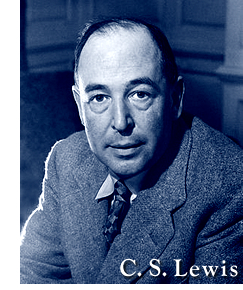
C.S. Lewis Daily – Today’s Reading


The Christian idea of marriage is based on Christ’s words that a man and wife are to be regarded as a single organism—for that is what the words ‘one flesh’ would be in modern English. And the Christians believe that when He said this He was not expressing a sentiment but stating a fact—just as one is stating a fact when one says that a lock and its key are one mechanism, or that a violin and a bow are one musical instrument. The inventor of the human machine was telling us that its two halves, the male and the female, were made to be combined together in pairs, not simply on the sexual level, but totally combined. The monstrosity of sexual intercourse outside marriage is that those who indulge in it are trying to isolate one kind of union (the sexual) from all the other kinds of union which were intended to go along with it and make up the total union. The Christian attitude does not mean that there is anything wrong about sexual pleasure, any more than about the pleasure of eating. It means that you must not isolate that pleasure and try to get it by itself, any more than you ought to try to get the pleasures of taste without swallowing and digesting, by chewing things and spitting them out again.

From Mere Christianity

Compiled in A Year with C.S. Lewis

Charles Stanley – The Foundation of Unwavering Faith


Hebrews 13:8

In our ever-changing world, families move, friendships drift, allegiances shift, and technology advances by quantum leaps. If we seek security in people, possessions, or positions, we’re doomed to be disappointed.

Yet we all need somewhere to turn during the storms of life. The one true anchor for our soul is Jesus Christ, who Scripture assures us will not change. To find comfort in Him, we must learn who He is, what He does, and how He works. Today we will explore a few details about His life and character.

John 1:1 reveals that Jesus was Deity from the beginning. Fully God and fully man, He was born of a virgin, lived 33 years on Earth, was crucified despite His innocence, and rose after three days. He is the Way, the Truth, and the Life—the Christ, the Son of the Living God (John 14:6; Matt. 16:16-17). Our Lord fulfilled countless prophesies in the Old Testament, such as Isaiah 53. Like us, Jesus has feelings—He wept for hurting people and felt angry when people misused the temple. Most importantly, His resurrection defeated death, and He still lives today.

God’s character never varies. Of course, as situations change, He acts accordingly. But the merciful, loving, compassionate, and holy Jesus we know in Scripture is the same Messiah we can cling to today.

Where do you turn in trying times? Difficult circumstances are inevitable. Prepare yourself for them by learning who Jesus is—He’s the only true shelter and rock that will not change. What a wonderful Savior!

Bible in One Year: Proverbs 19-21

Our Daily Bread — Not Saying Goodbye


Read: Philippians 4:1-9

Bible in a Year: Psalms 7-9; Acts 18

The things which you learned and received and heard and saw in me, these do, and the God of peace will be with you. —Philippians 4:9

Francis Allen led me to Jesus, and now it was nearly time for Francis to meet Jesus face to face. I was at his home as it grew time for him to say goodbye. I wanted to say something memorable and meaningful.

For nearly an hour I stood by his bed. He laughed hard at the stories I told on myself. Then he got tired, we got serious, and he spent his energy rounding off some rough edges he still saw in my life. I listened, even as I tried to sort out how to say goodbye.

He stopped me before I got the chance. “You remember, Randy, what I’ve always told you. We have nothing to fear from the story of life because we know how it ends. I’m not afraid. You go do what I’ve taught you.” Those challenging words reminded me of what the apostle Paul said to the believers in Philippi: “The things which you learned and received and heard and saw in me, these do” (Phil. 4:9).

Francis had the same twinkle in his eye this last day I saw him as he had the first day I met him. He had no fear in his heart.

So many of the words I write, stories I tell, and people I serve are touched by Francis. As we journey through life, may we remember those who have encouraged us spiritually. —Randy Kilgore

Who has been your mentor? Are you mentoring others?

Live so that when people get to know you, they will want to know Christ.

INSIGHT: Paul often showed his appreciation for people who had worked with him, and he often singled out individuals for special mention in his letters (see Rom. 16; Col. 4; 2 Tim. 1:16-18; Titus 3:12-13). It is estimated that he designates some 80-90 people as his “fellow workers” in the book of Acts and in his letters. Included are fellow missionaries and interns, independent ministry associates, traveling companions, fellow prisoners, and supporters. In today’s passage, he urges two women to reconcile and lovingly acknowledges that these women, together with Clement (not mentioned anywhere else in the New Testament) and an unnamed list of fellow workers, have labored with him in spreading the gospel (vv. 2-3).

Ravi Zacharias Ministry – Commending Christ


Author John Stackhouse describes the discipline of “apologetics” as the Christian work of commending the faith as much as it is about defending the faith.(1) Commending the faith, he argues, is something the Christian community does wherever it is—with one another, with neighbors, with the world. Consequently, it is also something the Christian community does whether they are aware of it or not.

In his sermon before the Areopagus, the apostle Paul commended the gospel with reason and rhetoric that would not have gone unrecognized. This is the “good news,” he professed, and the “good life” depends on it. To the Athenian philosophers, he commended the gospel in terms that mattered deeply to them. “Since we are God’s offspring,” he said quoting an Athenian poet, “we ought not to think that the deity is like gold, or silver, or stone, an image formed by the art and imagination of mortals.”(2) For on the contrary, he told them, the real and present Deity is now calling people everywhere to turn around and come near.

The apostle then followed this bold notion with a proof that would have caused as much, if not more, commotion in first century Athens as in hyper-rational modernity and cynical post-modernity. We know that God is the true creator, sustainer, and friend, he reasoned, because God “has given this proof… by raising [Christ] from the dead.”(3) Paul is telling the story of God in the world here, but he is also telling his own story. This Deity he commends to the Athenian philosophers is the risen Christ who appeared to him on Damascus road, who became ‘friend’ instead of ‘foe,’ and turned his own philosophy and consequently his life around.

Paul’s use of the resurrection as proof of all he has proclaimed to the Athenians is interesting on several levels. To begin with, while the apostle clearly sought to ground his Mars Hill message on a common foundation, he ended with a proof that must have seemed to some like a foreign tidal wave. For the Athenians, resurrection of the body was absurd and unreasonable, as much of an obstacle to them as the scandalizing cross to men and women of Jerusalem. While the philosophers of the Areopagus may have believed in the immortality of the soul, the body was what confined and imprisoned this soul. In their minds, there was a radical distinction between matter and spirit. Bodily resurrection did not make any more sense than a god with a body! For the Athenians, and indeed for all of us, this very proof required a radical turn of heart, mind, soul, and body. For some, this babbler’s new teaching was immediately labeled absurd. When they heard of this resurrection of the dead, reports Luke, there were scoffs and sneers.

Yet Paul’s apologetic, which was carefully researched, powerfully worded, and respectfully delivered, was not here ending on a careless note. On the contrary, he was ending with the chorus itself. For Paul, all of the words uttered up until this point would merely be noise had they not come from this very refrain. For if Christ has not been raised, both preaching and faith itself is useless, as he said elsewhere. Though it would have been a foreign language to the crowd at the Areopagus, Paul commended the resurrection as the very proof of his apologetic—for the entirety of his message was authoritative only and specifically because the resurrection had indeed occurred. Authors Stanley Hauerwas and William Willimon note the central task of commending the Gospel: “Our claim is not that this tradition will make sense to anyone or will enable the world to run more smoothly. Our claim is that it just happens to be true. This really is the way God is. This really is the way God’s world is.”(4) For Paul, and for the apologist, the important Christian act of finding common ground must never involve burying what is real and living: Christ is risen from the dead.

This single event is the theological core of Paul’s identity and his highest apologetic. It is also the very pillar which makes abundantly clear that the true work of apologetics does not belong to Christians. Writes Stackhouse, “Spiritual adepts throughout the ages warn us that mere argument accomplishes little even within our own hearts.”(5) No one knew this better than the apostle Paul, who would never have otherwise considered Jesus anymore than one to despise: the work of conversion belongs to the Holy Spirit.

Thus, there were many at the Areopagus that day who sneered at Paul’s philosophical conclusions. There were also many who responded in the same manner they responded to any teaching considered at the Areopagus—namely, with fascination, with discussion, and with barren hearts and minds. But likewise, there were a number who believed. Among them was Dionysius, a member of the Areopagus, also a woman named Damaris, and a number of others.(6) By the grace of God, the risen Christ was commended and the obstacles that kept him from sight were overcome.

Jill Carattini is managing editor of A Slice of Infinity at Ravi Zacharias International Ministries in Atlanta, Georgia.

(1) The discipline of apologetics derives its name from the Greek word apologia, meaning defense. “Always be ready to give an answer (apologia) to anyone who asks you to give a reason for the hope that is in you” (1 Peter 3:15).

(2) Acts 17:29.

(3) Acts 17:31.

(4) Stanley Hauerwas and William Willimon, Resident Aliens (Nashville: Abingdon Press, 1989), 101.

(5) John Stackhouse, Jr. Humble Apologetics: Defending the Faith Today (New York: Oxford University Press, 2002), 82.

(6) cf. Acts 17:34.

Alistair Begg – Evaluate Your Anger


God said to Jonah, “Do you do well to be angry…?”

Jonah 4:9

Anger is not always or necessarily sinful, but it has such a tendency to run wild that whenever it displays itself, we should be quick to question its character, with this inquiry, “Do you do well to be angry?” It may be that we can answer, “Yes.” Very frequently anger is the madman’s firebrand, but sometimes it is Elijah’s fire from heaven. We do well when we are angry with sin, because of the wrong that it commits against our good and gracious God; or with ourselves because we remain so foolish after so much divine instruction; or with others when the sole cause of anger is the evil that they do. He who is not angry at transgression becomes a partaker in it. Sin is a loathsome and hateful thing, and no renewed heart can patiently endure it. God himself is angry with the wicked every day, and it is written in His Word, “O you who love the LORD, hate evil.”1

Far more frequently it is to be feared that our anger is not commendable or even justifiable, and then we must answer, “No.” Why should we be fretful with children, passionate with servants, and wrathful with companions? Is such anger honorable to our Christian profession or glorifying to God? Is it not the old evil heart seeking to gain dominion, and should we not resist it with all the might of our newborn nature?

Many professors give way to temper as though it were useless to attempt resistance; but let the believer remember that he must be a conqueror in every point, or else he cannot be crowned. If we cannot control our tempers, what has grace done for us? Someone told Mr. Jay that grace was often grafted on a crab-stump. “Yes,” he said, “but the fruit will not be crabs.”

We must not make natural infirmity an excuse for sin, but we must fly to the cross and pray the Lord to crucify our tempers, and renew us in gentleness and meekness after His own image.

1) Psalm 97:10

Devotional material is taken from “Morning and Evening,” written by C.H. Spurgeon, revised and updated by Alistair Begg.

Charles Spurgeon – An exposition of 1 John 3: 1-10


“Whosoever abideth in him sinneth not: whosoever sinneth hath not seen him, neither known him.” 1 John 3:6

Suggested Further Reading: Romans 7:15-25

This plain, simple verse has been twisted by some who believe in the doctrine of perfection, and they have made it declare that it is possible for some to abide in Christ, and therefore not to sin. But you will remark that it does not say, that some that abide in Christ do not sin; but it says that none who abide in Christ sin. “Whosoever abideth in him sinneth not.” Therefore this passage is not to be applied to a few who attain to what is called by our Arminian friends the fourth degree—perfection; but it appertains to all believers; and of every soul in Christ it may be said, that he sinneth not. In reading the Bible, we read it simply as we would read another book. We ought not to read it as a preacher his text, with the intention of making something out of every word; but we should read it as we find it written: “Whosoever abideth in Christ sinneth not.” Now we are sure that cannot mean that he does not sin at all, but it means that he sins not habitually, he sins not designedly, he sins not finally, so as to perish. The Bible often calls a man righteous; but that does not mean that he is perfectly righteous. It calls a man a sinner, but it does not imply that he may not have done some good deeds in his life; it means that that is the man’s general character. So with the man who abides in Christ: his general character is not that he is a sinner, but that he is a saint—he sinneth not openly, wilfully, before men. In his own heart, he has much to confess, but his life before his fellow creatures is such a one that it can be said of him “Whosoever abideth in him sinneth not.”

For meditation: If Christians enjoy sinless perfection in this life, why do the epistles of the New Testament contain so much about practical Christian living? John does not deny the existence of sin in the believer (1 John 1:8-10), but writes to discourage the believer from sinning (1 John 2:1).

Part of nos. 61-62

13 July (Given on 20 January 1856)

John MacArthur – Rejecting Christ


“For those who disbelieve, ‘the stone which the builders rejected, this became the very corner stone,’ and, ‘a stone of stumbling and a rock of offense’; for they stumble because they are disobedient to the word, and to this doom they were also appointed” (1 Pet. 2:7-8).

Rejecting Christ leads to spiritual damnation.

Israel was a unique nation, chosen by God to be the guardian of His Word and proclaimer of His kingdom. The Old Testament records His miraculous and providential care for her throughout the centuries, and the prophets told of One who would come as her great Deliverer. Israel eagerly awaited the promised Messiah.

But the story has a surprise ending. In the Person of Jesus Christ, the Messiah finally came and presented Himself to Israel. The religious leaders examined Him carefully, measuring Him in every way they could. But He didn’t fit their blueprint. They expected a reigning political Messiah who would instantly deliver them from Roman oppression. They felt no need for a spiritual deliverer, so they rejected Him and tossed Him aside like a worthless rock.

That rejected cornerstone is precious to believers but remains a stone of stumbling and a rock of offense to unbelievers. A “stone of stumbling” was a stone on which someone tripped while walking along the road. A “rock of offense” was a rock large enough to crush a person. The point: rejecting Christ brings spiritual devastation of enormous proportions.

All who reject Christ do so because they are disobedient to the Word. Rebellion against the written Word inevitably leads to rejection of the living Word. Of such people Peter said, “To this doom they were also appointed” (v. 8). They weren’t appointed to reject Christ, but to receive the judgment that their rejection demands. That’s a frightening reality that should motivate you to take every opportunity to evangelize the lost.

Suggestions for Prayer

If you have family or friends who are rejecting Christ, pray for them often, asking God to grant them saving faith.

For Further Study

Read Romans 9:30-10:17, noting Israel’s false standard of righteousness and Paul’s prayer for her salvation.

Joyce Meyer – Strategically Placed


For behold, darkness shall cover the earth, and dense darkness [all] peoples, but the Lord shall arise upon you [O Jerusalem], and His glory shall be seen on you. – Isaiah 60:2

I believe the lives of God’s people are going to get better and better, but the lives of those who are still in bondage to the world will get worse and worse as they sink deeper and deeper into despair and depression. The light of God will intensify in us as we allow Him to work in us and make us the kind of vessels through which His glory can shine.

God is willing to purge us and cleanse us of the things in our lives that are not like Christ, if we will welcome His fire into our lives. Ask Him to work in you and cleanse you of anything that is hindering Him from flowing through you. Like a gardener, God wants to prune off all the dead things in our life so we can bear good fruit for Him.

I believe God has strategically placed His people all over the world, in every company, every marketplace, every hospital, school, and so on. As the darkness in the world becomes darker in these last days, His glory will shine brighter on those who belong to Him. Then we will be able to help the lost find their way.

This is the day for believers to shine and be used by God as never before. The world will not be won through a handful of preachers. We desperately need an army of people available for one-on-one ministry in their neighborhoods, at their work, and in the marketplace. This is why I implore you today to make a deeper commitment to God than ever before. Not only do you need God; He also needs you!

Don’t discount yourself by believing that God could not possibly use you. He can; He wants to; and He will!

Love Others Today: God has strategically placed you where you are right now. Be a light that shines in the darkness.

Campus Crusade for Christ; Bill Bright – Spirit of His Son


“And because we are His sons, God has sent the Spirit of His Son into our hearts, so now we can rightly speak of God as our dear Father.” (Galatians 4:6).

What would you say is the most sacred privilege and indescribable honor of your entire lifetime? If you are a Christian and you rightly understand the meaning of our verse for today, you will agree that nothing compares with presenting your body to the Holy Spirit to be His dwelling place here on earth.

Wherever I am in the world, whether speaking in meetings, reading the Bible, praying, counseling, attending various conferences, alone in my hotel room, or enjoying the company of my dearly beloved wife and family, I am always keenly aware that my body is a temple of God and there is no higher privilege.

I am reminded of the Virgin Mary’s response to the angel’s announcement that she would conceive a child by the Holy Spirit. “Oh, how I praise the Lord! How I rejoice in God my Savior, for He has taken notice of this lowly servant girl and now, generation after generation, forever shall be called blessed of God, for He, the mighty one, has done great things to me.”

“His mercy goes on from generation to generation to all who reverence Him,” she continues in triumphant, joyful expression of her grateful heart.

We, too, should praise and give thanks to God constantly for the privilege of being chosen to be a temple in which he dwells here on earth. As one meditates upon this fact, one becomes intoxicated with the realization that the infinite, omnipotent, holy, loving, righteous God and Father, Son and Holy Spirit, now dwell within us who have received Him.

There are many believers who are not fully aware of the significance of this fact, because though they as believers in Christ possess the Holy Spirit, the Holy Spirit does not possess all of them. Ours is the indescribable privilege of presenting our bodies to Him as a living sacrifice, as temples in which He will dwell. Only then, will we have the power to live the abundant, supernatural life promised to those who yield their hearts and lives to the control of the Holy Spirit.

Bible Reading: Galatians 4:7-14

TODAY’S ACTION POINT: As often as the thought comes to mind today, I will acknowledge the fullness and control of God’s Holy Spirit in my life. I will also encourage other Christians to claim by faith the fullness and power of the Holy Spirit for their lives.

Presidential Prayer Team; H.L.M. – Changing Lives


Clay Lein, a successful electrical engineer, proclaimed he was an atheist. However, Clay started attending church at his wife’s request. Then he volunteered at a youth camp and was asked to pray aloud. Clay nervously decided to fake it as he tried to draw upon childhood memories from Sunday school and Vacation Bible School. But as he began to pray, the Holy Spirit took over. Words flowed from Clay’s lips as he prayed for each child. One girl was so deeply moved that she began to cry. She shared she was being abused and hadn’t been able to tell anybody until that moment.

Because your steadfast love is better than life, my lips will praise you.

Psalm 63:3

Clay said, “That’s when I think something clicked for me. God was relevant and He really wanted to do amazing things in my life.” Clay attended seminary and now serves as a minister at a church in Houston. The display sign outside the church reads: “Changing lives for God in Christ.”

God, the Creator of over 100 billion galaxies, has set you free from a life of mediocrity and insignificance. Thank Him for His amazing plans for you. Pray that America’s leaders also seek to fulfill His plan for their lives.

Recommended Reading: John 14:12-21

Greg Laurie – Ready to Pounce


Stay alert! Watch out for your great enemy, the devil. He prowls around like a roaring lion, looking for someone to devour. —1 Peter 5:8

A number of years ago I read an interesting book called Death in the Long Grass. Its author, a big-game hunter, recounts stories of not only hunting lions, but also of lions hunting people.

There was a certain group of lions that had a taste for human blood and would come into camps at night, step over people without even waking them, and find their intended prey. It was never determined why the lions chose whom they chose. But they would pick up their victims, kill them immediately, and drag them away without waking a single person. The author wrote about one large cat in particular that killed over one hundred people. The book also mentions that a charging lion can cover one hundred yards in just three seconds.

Lions are powerful and very frightening creatures. And they have the capability to take you out rapidly if they want to.

The Bible likens the Devil to a lion. First Peter 5:8 tells us, “Stay alert! Watch out for your great enemy, the devil. He prowls around like a roaring lion, looking for someone to devour.”

And in Genesis, God gave this warning to Cain: “But if you refuse to do what is right, then watch out! Sin is crouching at the door, eager to control you. But you must subdue it and be its master” (4:7). God was saying, “Listen, you are flirting with disaster. You had better throw on the brakes, because sin is like a wild beast, and it is ready to pounce.” The Devil is always looking for trouble, pacing back and forth like a lion in his cage.

Sin was crouching at Cain’s door, and it is crouching at our door too. And for some, it is already across the threshold. So we must be careful.

Max Lucado – Map Out a Strategy

You cannot control the weather. You are not in charge of the economy. You can’t un-wreck the car. But you can map out a strategy. Remember, God is in this crisis. Ask God to give you two or three steps you can take today. Seek counsel from someone who has faced a similar challenge. Ask friends to pray. Reach out to a support group. Most importantly, make a plan.

You’d prefer a miracle for your crisis? You’d rather see the bread multiplied or the stormy sea turned glassy calm in a finger snap? God may do this. Then again, He may say, “I am with you. I can use this for good. Now let’s make a plan.” God’s sovereignty does not negate our responsibility. It empowers it. Don’t let the crisis paralyze you. Trust God to do what you cannot. Obey God, and do what you can.

From You’ll Get Through This

Night Light for Couples – Love By Serving


“Now that I, your Lord and Teacher, have washed your feet, you also should wash one another’s feet.” John 13:14

Husband, we’re speaking especially to you tonight. Just as selfishness is a sure marriage killer, an attitude of service and sacrifice—the “I’m Third” philosophy—is an indisputable marriage builder. We urge you to study your wife. What is it that speaks to her heart?

Are you providing that for her? Would she appreciate help with the dishes, vacuuming, or changing the baby’s diaper? Should you be more romantic? Could you put off that weekend auto show so she can visit her sister? Maybe you’d rather go fishing on Saturday, but should you watch the kids instead so your wife can have a needed day out?

Jesus gave us a classic example of service when He washed His disciples’ feet and told them to do the same for one another. Is it time for some symbolic “foot washing” in your marriage? Women are romantic creatures. God made them that way. Have you tried to understand that tender nature and sought to meet the needs it expresses?

Here’s the personal payoff: If you as a husband will address this romantic longing, your wife, being a responder, will be drawn closer to you. You’ll get the kind of attention and admiration you hope for. Try it!

Just between us…

  • (husband) When have I done a good job of “foot washing” in our marriage?
  • (husband) Do you feel I understand your romantic nature? Why or why not?
  • (husband) Have I met your needs during the past week?
  • (husband) Dear Lord, I want to become an expert at meeting my wife’s needs.

Teach me to “wash her feet” and serve my way to a great marriage. Amen.

From Night Light For Couples, by Dr. James & Shirley Dobson

Charles Stanley – The Living Word


Hebrews 4:12-13

The Bible is the most amazing book ever written. God used human beings to record His thoughts and words in writing so that others could know Him (2 Peter 1:20-21). The One who spoke the universe into existence still speaks just as powerfully through the pages of the Bible that you hold in your hands.

At the moment of salvation, believers receive the Holy Spirit, and the lines of communication with the Lord are established. Then, whenever the Scriptures are read, children of God can hear His voice, and the Spirit enables them to understand and put into practice what they have heard.

The Bible is not just a good book with comforting verses but is effective, always accomplishing the purpose for which God sends it (Isa. 55:10-11). Scripture is active and alive and “performs its work in [those] who believe” (1 Thess. 2:13). The Word of God has the power to change our lives if we will believe Him and do what He says.

God uses Scripture to transform us from the inside out. His Word has the quality of a sword that cuts through our hearts and judges thoughts and intentions, delivering light to the darkness hiding in our souls. This Book tells us not only who God is, but also who we are.

Sometimes life’s concerns can deafen our “spiritual ears.” Before reading Scripture, ask God to help you hear and understand what He’s saying. As you believe and obey, your spiritual hearing will become more acute, and your time in the Word will be an intimate conversation with the Lord.

Bible in One Year: Proverbs 16-18

Our Daily Bread — Seeing Beyond Loss


Read: Psalm 77:1-15

Bible in a Year: Psalms 4-6; Acts 17:16-34

I will remember the years of the right hand of the Most High. I will remember the works of the Lord. —Psalm 77:10-11

Author William Zinsser described his last visit to see the house where he grew up, a place he greatly loved as a boy. When he and his wife arrived at the hill overlooking Manhasset Bay and Long Island Sound, they found that the house had been demolished. All that remained was a huge hole. Disheartened, they walked to the nearby seawall. Zinsser looked across the bay, absorbing the sights and sounds. Later, he wrote of this experience, “I was at ease and only slightly sad. The view was intact: the unique configuration of land and sea I remember so well that I still dream about it.”

The psalmist wrote of a difficult time when his soul refused to be comforted and his spirit was overwhelmed (Ps. 77:2-3). But in the midst of his trouble, he shifted his focus from his sadness to his Savior, saying, “I will remember the years of the right hand of the Most High. I will remember the works of the Lord . . . Your wonders of old” (vv. 10-11).

In dealing with disappointment, we can either focus on our loss or on God Himself. The Lord invites us to look to Him and see the scope of His goodness, His presence with us, and His eternal love. —David C. McCasland

Heavenly Father, this life can be both wonderful and disappointing. We know that things are not the way they ought to be. Our disappointments cause us to turn to You, the only true hope for the world.Share this prayer from our Facebook page with your friends. facebook.com/ourdailybread

Faith in God’s goodness keeps hope alive.

INSIGHT: The Psalms are moving reflections on life and God. In today’s psalm Asaph shares the disappointment of feeling as though God has abandoned him. But Asaph also shows us how to change our perspective. We do this by focusing on the character and deeds of the Lord. Our circumstances may not change, but we will see them in a different way—against the backdrop of God.

Alistair Begg – The Persons of the Trinity


Beloved in God the Father… sanctified in Christ Jesus…in the sanctification of the Spirit.

Jude 1; 1 Corinthians 1:2; 1 Peter 1:2

Consider the union of the three Divine Persons in all their gracious acts. How unwisely do those believers talk who make preferences in the Persons of the Trinity, who think of Jesus as if He were the embodiment of everything lovely and gracious, while the Father they regard as severely just but destitute of kindness. Equally wrong are those who magnify the decree of the Father and the atonement of the Son so as to depreciate the work of the Spirit.

In works of grace none of the Persons of the Trinity act separately from the rest. They are as united in their works as in Their essence. In Their love toward the chosen They are one, and in the actions that flow from that great central source They are still undivided.

Notice this especially in the matter of sanctification. While it is right to speak of sanctification as the work of the Spirit, yet we must make sure that we do not view it as if the Father and the Son were not involved. It is correct to speak of sanctification as the work of the Father, of the Son, and of the Spirit. Still God says, “Let us make man in our image, after our likeness,”1 and so we are “his workmanship, created in Christ Jesus for good works, which God prepared beforehand, that we should walk in them.”2

See the value that God sets upon real holiness, since the three Persons in the Trinity are represented as co-working to produce a Church without “spot or wrinkle or any such thing.”3 And you, believer, as the follower of Christ, must also set a high value on holiness-upon purity of life and godliness of conversation. Value the blood of Christ as the foundation of your hope, and never speak disparagingly of the work of the Spirit. This day let us live in such a way as to manifest the work of the Triune God in us.

1) Genesis 1:26

2) Ephesians 2:10

3) Ephesians 5:27

Devotional material is taken from “Morning and Evening,” written by C.H. Spurgeon, revised and updated by Alistair Begg.

Charles Spurgeon – A simple sermon for seeking souls


“Whosoever shall call upon the name of the Lord shall be saved.” Romans 10:13

Suggested Further Reading: Ecclesiastes 5:1-7

“I thought,” said somebody addressing me one day, “I thought when I was in the garden, surely Christ could take my sins away, just as easily as he could move the clouds. Do you know, sir, in a moment or two the cloud was all gone, and the sun was shining. Thought I to myself, the Lord is blotting out my sin.” Such a ridiculous thought as that, you say, cannot occur often. I tell you, it does, very frequently indeed. People suppose that the greatest nonsense in all the earth is a manifestation of divine grace in their hearts. Now, the only feeling I ever want to have is just this,—I want to feel that I am a sinner and that Christ is my Saviour. You may keep your visions, and ecstasies, and raptures, and dances to yourselves; the only feeling that I desire to have is deep repentance and humble faith; and if, poor sinner, you have got that, you are saved. Why, some of you believe that before you can be saved there must be a kind of electric shock, some very wonderful thing that is to go all through you from head to foot. Now hear this, “The word is nigh thee, even in thy mouth, and in thy heart: …That if thou shalt confess with thy mouth the Lord Jesus, and shalt believe in thine heart…. Thou shalt be saved.” What do you want with all this nonsense of dreams and supernatural thoughts? All that is wanted is, that as a guilty sinner, I should come and cast myself on Christ. That done, the soul is safe, and all the visions in the universe could not make it safer.

For meditation: “God be merciful to me a sinner” was Christ’s description of a man calling upon God and being justified (Luke 18:13,14). Any insistence on special experiences and strange happenings is an evidence of having departed from Christ, the head of the church (Colossians 2:18,19).

Sermon no. 140

12 July (1857)