Tag Archives: christianity

Greg Laurie – Why Jesus Had to Die, Part 1

greglaurie

The crucifixion and resurrection of Jesus Christ—next to His arrival in Bethlehem, these are, without question, the most important events in history.

It was here that God and man were reconciled once again. Here at the cross, God’s righteous demands were satisfied. Here, what was lost in the garden was regained again. Here, a crippling and decisive blow was dealt against Satan and his minions. It was here at the cross that our salvation was purchased.

We can never talk about it too much or contemplate it too often. Because of these historical events, we know there is truly life beyond the grave. This is what sets our faith apart from all others—Buddhism, Hinduism, Islam, and all the rest. You can go to the tombs of their prophets and gurus and pay your respects, but if you go to the tomb of Jesus, you will find it empty! He is alive!

But the question begs to be answered: Why did Jesus have to die? Why did He have to be beaten, and suffer, and die such a cruel death? Because there was no other way to satisfy the righteous demands of God. God plays by His own rules, and He said, “The soul that sins shall surely die,” and “Without the shedding of blood there is no forgiveness of sins.” In the Old Testament, all those animal sacrifices only foreshadowed something to come—someone to come. That someone was Jesus.

Calvary shows how far men will go in sin and how far God will go for man’s salvation. Jesus knew He was going to die from the very beginning and spoke of it often. In fact, technically, no one took His life from Him. He laid it down of His own accord. He lived in the shadow of the cross from the moment He entered our world.

For some, the cross seems like an aberration, a mistake, a tragic turn of events. That is how it must have seemed for the disciples as Jesus was arrested and murdered. How could this be a part of any plan? How could something so senseless, so cruel, have any purpose?

Answer: It was to have the ultimate purpose and meaning. God was the Master of Ceremonies at the cross: “It was the will of the Lord to crush Him; He has put Him to grief” (Isaiah 53:10 ESV). God “did not spare His own Son, but gave Him up for us all” (Romans 8:32 NKJV). God put Christ forward “by His blood, to be received by faith” (Romans 3:25 ESV).

In the New King James Version, Isaiah 53:10 says, “Yet it pleased the LORD to bruise Him.” In what sense was God the Father “pleased” by the death of God the Son? He was pleased by the redemption that was accomplished. He was pleased by the plan of salvation that was fulfilled. He was pleased by the sacrifice of His Son, who died so others might have eternal life.

For all the evil in the crucifixion, it brought about an infinite good. In fact, here was the most evil act ever perpetrated by sinful hearts—the sinless Son of God, tortured, slaughtered, heartlessly murdered in cold blood—and yet, from it came the greatest good of all time: the salvation of countless souls. Your salvation and mine.

Charles Stanley – What Keeps Grace from Flowing?

Charles Stanley

James 4:1-6

We know from the Bible that God continually showers His children with blessings. However, most believers don’t always feel as though He’s pouring His favor upon them. What could be blocking the free flow of divine grace?

Proverbs 6:16-19 provides a list of seven things that God hates. Certain attitudes and behaviors are categorized as detestable to Him, and the first thing mentioned is pride.

Nothing will interfere with spiritual growth as much as a proud spirit. That is why God considers it an abomination. Pride misaligns priorities in such a way that we—and not the Lord—become our own priority.

We can find many examples of pride throughout Scripture. For instance, the serpent convinced the first woman that if she ate of the forbidden fruit, she would “be like God” (Gen. 3:5). That sounded good to Eve, who apparently thought she deserved this high honor. So she and Adam ate the fruit, thereby bringing all manner of destruction and pain into the world.

If you have been struggling to feel God’s hand of blessing in your life, a wise first step is to humbly pray and ask the Lord to reveal any hidden areas of pride in your life. His arms are full of blessings that He desires to give you. As the preacher D. L. Moody once observed, “God sends no one away empty except those who are full of themselves.” Will you choose instead to be full of God? You can start by laying your pride at the foot of the cross. Then your life can overflow with blessings.

Our Daily Bread — Loved To Love

Our Daily Bread

Deuteronomy 10:12-22

What does the LORD your God require of you, but . . . to walk in all His ways and to love Him. —Deuteronomy 10:12

“A heart is not judged by how much you love, but by how much you are loved by others.” I saw this quotation, attributed to the Wizard of Oz, on a wall plaque in a gift shop.

The Wizard of Oz may be a good story, but it’s not a reliable source of spiritual information. God said something quite different. According to Him, the greatest commandment is to love—to love Him first and then others (Mark 12:29-31). Scripture says nothing about expecting to be loved in return. In fact, Jesus stated the opposite in His most famous sermon: “Blessed are you when they revile and persecute you, and say all kinds of evil against you falsely for My sake. Rejoice and be exceedingly glad, for great is your reward in heaven” (Matt. 5:11-12).

When it comes to love, the important thing we need to know is this: All love starts with God (1 John 4:19). As Moses told the Israelites, God delighted in them to love them (Deut. 10:15), and because of that they were to love others, even strangers (v.19). God’s intent is that the people who receive His love will become the conduit of His love to others.

Apart from God—who Himself is love—none of us could truly love or be loved (1 John 4:7-8). —Julie Ackerman Link

“Love seeketh not her own,” and so

He did not stay as God above,

But chose a manger and a cross

To show that He was Love. —Wilmshurst

He who does not love does not know God, for God is love. —1 John 4:8

Bible in a year: Jeremiah 24-26; Titus 2

Charles Spurgeon – The security of the Church

CharlesSpurgeon

“As the mountains are round about Jerusalem, so the Lord is round about his people from henceforth even for ever.” Psalm 125:2

Suggested Further Reading: Jude 17-25

As the Church always has been preserved, the text assures us she always will be, henceforth even for ever. There is a nervous old woman here. Last Saturday night she read the newspaper, and she saw something about five or six clergymen going over to Rome: she laid down her spectacles, and she began crying, “Oh! The Church is in danger, the Church is in danger.” Ah! Put your spectacles on; that is all right; never mind about the loss of those fellows. Better gone; we did not want them; do not cry if fifty more follow them; do not be at all alarmed. Some church may be in danger, but God’s church is not. That is safe enough; that shall stand secure, even to the end. I remember with what alarm some of my friends received the tidings of the geological discoveries of modern times, which did not quite agree with their interpretation of the Mosaic history of the creation. They thought it an awful thing that science should discover something which seemed to contradict the Scriptures. Well, we lived over the geological difficulty, after all. And since then there have been different sets of philosophic infidels, who have risen up and made wonderful discoveries; and poor timid Christians have thought, “What a terrible thing! This surely will be the end of all true religion; when science can bring facts against us, how shall we be able to stand?” They just waited about another week, and suddenly found that science was not their enemy, but their friend, for the Truth, though tried in a furnace, like silver seven times, is ever a gainer by the trial. To those that hate the church, she shall ever be a thorn in your side! Oh! you that would batter her walls to pieces, know this, that she is impregnable.

For meditation: The enemies of the church build on an unsteady foundation of deliberately ignoring facts (2 Peter 3:5). The church is built on the immovable rock Christ Jesus (Matthew 16:18) and she shall not be moved (Psalm 46:5).

Sermon no. 161

1 November (1857)

John MacArthur – Christian faith produces righteous deeds.

John MacArthur

“Faith is the assurance of things hoped for, the conviction of things not seen. For by it the men of old gained approval” (Heb. 11:1-2).

Hebrews 11 has been called “The Heroes of Faith,” “The Faith Chapter,” “The Saints’ Hall of Fame,” “The Honor Roll of the Old Testament Saints,” and “The Westminster Abbey of Scripture.” Those are appropriate titles because this chapter highlights the virtues of faith as demonstrated in the lives of great Old Testament saints. It also reminds us that without faith, it is impossible to please God.

Such a reminder was necessary for the first-century Hebrew people because Judaism had abandoned true faith in God for a legalistic system of works righteousness. Its message is valid today since our devotion to Christ can easily degenerate into a religion of rules and regulations.

While affirming the primacy of faith, the writer of Hebrews doesn’t undermine the importance of righteous works. Quite the contrary. He exhorts us “to stimulate one another to love and good deeds” (10:24) and to pursue holiness so others will see Christ in us and be drawn to Him (12:14).

Yet righteous works are the by-product of true salvation, not its means. As the apostle Paul wrote, “We are His workmanship, created in Christ Jesus for good works, which God prepared beforehand, that we should walk in them” (Eph. 2:10). Apart from faith, all attempts to please God through good works alone are as useless and offensive to Him as filthy rags (Isa. 64:6). That’s why Paul gladly set all his Jewish legalistic practices aside, counting them as rubbish. He wanted only “the righteousness that comes from God on the basis of faith” (Phil. 3:9).

This month we’ll study the heroes of faith listed in Hebrews 11. As we do, remember they weren’t perfect people. But their faith was exemplary and by it they gained God’s approval. I pray that’s true of you as well.

Suggestions for Prayer:

Thank God for the gift of faith.

Undoubtedly you know people who are trying to please God by their own efforts. Pray for them and take every opportunity to tell them of true salvation through faith in Christ

For Further Study:

Select one of the individuals mentioned in Hebrews 11 and read the Old Testament account of his or her life.


Joyce Meyer – Open the Door to Christ

Joyce meyer

Behold, I stand at the door and knock; if anyone hears and listens to and heeds My voice and opens the door, I will come in to him and will eat with him, and he [will eat] with Me.—Revelation 3:20

Jesus is knocking at the door of many hearts right now, but we must remember that the doorknob is on our side. The Holy Spirit is a Gentleman; He will not force His way into our lives. We must welcome Him.

Open the door of your heart to Him by stretching your faith a little. Be like Peter—the one person in the group who got out of the boat and walked on the water. Peter probably had butterflies in his stomach when he got out of that boat, but as long as he kept his eyes on Jesus, he did all right (see Matt.14:23–30).

God has a great, big, wonderful life planned for you and me, but if we are stiff-necked, as God called the Israelites (see Exod. 33:3), or hardheaded (as we say today), then we will miss what God has for us. Stubbornness sets us in our ways, and we never stop to ask ourselves if our ways are really God’s ways or not.

In the Old Testament book of Haggai, the people were living in lack and experiencing many problems, so God told them to consider their ways (see Hag. 1:5). Many times when people are not fulfilled in life, they look for the reason in everything and everyone except themselves. If you are not satisfied with your life, do as God told the people of Judah: “Consider your ways.” Like me, you may find that you need to make some changes.

I was stubborn, opinionated, hardheaded, proud, and everything else that kept me from making progress. But, thank God, He has changed me! I pray that He continues to change me until I am just like Him—and that will be a lifelong journey.

Answer that knock at your heart’s door and allow the Holy Spirit to come into your life in all His fullness.

Trust in Him: God will not force His way into your life—you must open the door for Him. Step out in faith and put your trust in Him, so that He can do great things through you and for you.


Presidential Prayer Team; P.G. – Group Dynamics

ppt_seal01

Affinity groups are frequently small clusters of people who engage in a common activity. Working alone can be a daunting task in which you could feel somewhat powerless. But when you put your activities together with those of others who are like-minded, strength is consolidated and multiplied exponentially.

We always thank God, the Father of our Lord Jesus Christ, when we pray for you.

Colossians 1:3

Paul knew this. On his missionary journeys, he watched people band together in the cause of Christ and His Kingdom, amplifying their purpose and expanding his efforts. It’s no wonder, then, that when he wrote to them, he gave thanks for them. And he always prayed for them.

Perhaps you are part of a small prayer cell at church or are in a community Bible study. You have experienced exponential results in working and serving together, and have seen an increase in the power of prayer by being united as you call upon the Lord. In this month of Thanksgiving, give your gratitude to God for them, and for America where you can still gather. Then today as you pray, whether by yourself or in the company of others, intercede for the nation’s leaders to grasp both the significance and importance of public and private prayer.

Recommended Reading: Colossians 1:3-14


Max Lucado – He Gives Us What We Need

Max Lucado

One morning Denalyn was with me in the car.  “I’m about to remind you why you married me,” I told her as we drew near to the intersection.  “See that long line of cars?  See that humdrum of humanity?  It’s not for me…hang on!”  I swerved from the six-lane onto the one-lane and shared with my sweetheart my secret expressway to freedom.

“What do you think?” I asked, awaiting her worship.

“I think you broke the law,”  she responded.

“What?” I asked incredulously.

“You just went the wrong way on a one-way street!” she answered.

I did.  She was right.  I had missed the “do not enter” sign.

Before coming to Christ, we all had our share of shortcuts. What we consider shortcuts God sees as disasters. He doesn’t give laws for our pleasure.  He gives them for our protection. He knows what we need!

from Lucado Inspirational Reader

Charles Stanley – Seeking the Lord

Charles Stanley

Colossians 3:1-2

Most people have the idea that Christianity is defined by praying, giving, sharing their faith, and being good. But genuine faith is also a daily yearning for more knowledge of and intimacy with the Lord. A believer’s spirit can be wholly satisfied with the presence of Jesus Christ living within, and yet still remain thirsty for deeper communion with Him. One of Christianity’s basic principles is that the more we know of the Lord, the more we want to learn of Him. If we’re to seek God rather than worldly riches, then our desire for Him must be stronger than any other longing we have.

Yesterday, we learned that we gain life’s “good things”—what God wills for us— by seeking Him. A mind set on finding material success will miss the spiritually fulfilling path. However, pursuing the Lord doesn’t imply abandoning plans and dreams; it simply means we prayerfully subject our hopes to His will. As we strive to know God, our desires change to reflect His. Our Father in turn takes responsibility for His children and puts our goals within reach. He gives us all the good things our God-shaped heart wants.

How does a Christian go about seeking the God who will supply his or her needs? By studying His Word and asking for His revelation. Every believer who genuinely wants to be trained in the Father’s ways can expect His instruction. When we receive new knowledge of Him, our desire for God will be kindled like dry twigs touched by a flame. And the more we seek to learn about Him, the more we will want to know.


Our Daily Bread — Eyes Of Love

Our Daily Bread

Mark 10:17-27

Then Jesus, looking at him, loved him. —Mark 10:21

Many people who come to Marc Salem’s stage shows think he can read minds. But he makes no such claim, saying he is not a psychic or magician, but a close observer of people. He told writer Jennifer Mulson, “We live in a world that’s mostly invisible to us because we’re not paying attention to things . . . . I’m very sensitive to what people give off” (The Gazette, Colorado Springs).

It’s interesting to note what Jesus saw as He met people. His encounter with a wealthy young man seeking eternal life is recorded in the gospels of Matthew, Mark, and Luke. Mark includes this telling detail, “Then Jesus, looking at him, loved him” (Mark 10:21). Some people may have seen this young man as an arrogant person (vv.19-20) while others might have envied his wealth, but Jesus looked at him with love.

We often focus on the man’s sad departure and apparent unwillingness to give up his riches and follow Jesus (v.22). When the disciples wondered aloud about the difficulty of a rich man entering the kingdom of God (v.26), “Jesus looked at them and said, ‘With men it is impossible, but not with God; for with God all things are possible’” (v.27).

Today, Jesus sees us through eyes of love and invites us to follow Him. —David McCasland

Down from His splendor in glory He came,

Into a world of woe;

Took on Himself all my guilt and my shame,

Why should He love me so? —Roth

God has both an all-seeing eye and all-forgiving heart.

Bible in a year: eremiah 22-23; Titus 1

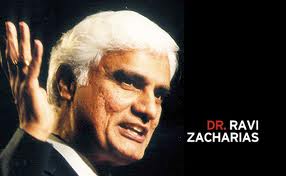
Ravi Zacharias Ministry – Starting With a Question


Ravi Z

Starting with a question seems like a good idea to most people: it helps to bring a sharper focus, it’s conversational, it reveals gaps in knowledge, and it’s quite natural.(1) Kids seem to use questions instinctively to find out about the world. Of course, there are lazy questions and there are thoughtful questions. The difference is hard to explain, but anyone who has ever heard or asked a great question, asked at the right time, will immediately know why good, careful, thoughtful questions are always worth asking.

 When it comes to questions about faith, Christians have often pointed to the example of God asking Adam and Eve, ‘Where are you?’ (Genesis 3:9), and the way in which Jesus interacts with people in the New Testament. Here are just a few of the questions of Jesus:

 What are you looking for? What do you want me to do for you? Have I been with you for so long a time and you still do not know me? If you love only those who love you, what credit is that to you? Do you want to be well? Do you see this woman? What good is it to gain the whole world but forfeit your soul? Is not life more than food and the body more than clothing? Who is greater, the one seated at the table, or the one who serves? Do you think that I have come to establish peace on the earth? Which of you would hand his son a stone when he asks for a loaf of bread, or a snake when he asks for a fish? How can you believe, when you accept praise from one another and do not seek the praise that comes from the only God? Did I not tell you that if you believe you will see the glory of God? Why do you call me ‘Lord, Lord,’ but do not do what I command? Why do you break the commandment of God for the sake of your tradition? For which of these good works are you trying to stone me? Do you think that I cannot call upon my Father and he will not provide me at this moment with more than twelve legions of angels? Would you like some breakfast? Have you come to believe because you have seen me? I am the resurrection and the life; whoever believes in me, even if he dies, will live, and everyone who lives and believes in me will never die. Do you believe this? Do you love me?

 Perhaps starting with questions isn’t such a bad idea after all, is it? Even so, some may be suspicious of starting with questions. Some may find them leading or loaded. Others may be worried about being unfaithful to God if they use and engage properly with questions. But, as you can see, Jesus used questions, which, for me, is the strongest reason to use them. And when Jesus asked a question it suddenly brought everything into focus, not just for the one he was asking, but for everyone listening as well. Jesus’s often subversive questions summarize and lift up the prevailing authority structures, symbols, and assumptions. His questions lift them high up into the air for inspection, so that everyone can see more clearly the motives, traditions, assumptions, and all the wildness that often rages under the surface.

 Questions can help us to concentrate, pay attention, and think together. A good question can transform a meandering discussion into a life-changing moment, when reality breaks through illusion. In these moments, when we gently ask the right questions of ourselves or others, we can sometimes get under a question, and meet the one behind it. In the words of T.S. Eliot, “Oh my soul, be prepared for the coming of the Stranger. Be prepared for him who knows how to ask questions.” The message of Christ comes in power, reality, and compassion and is able to answer the deeper questions that come bursting out when the door is opened.

 Tom Price is Academic Tutor at the Oxford Centre for Christian Apologetics and a member of the speaking team at Ravi Zacharias International Ministries in Europe.

 (1) Article adapted from “Starting With Questions” Pulse, Issue 8 (Summer 2011), pp. 12-13.

Charles Spurgeon – The Shulamite’s choice prayer

CharlesSpurgeon

“Set me as a seal upon thine heart, as a seal upon thine arm; for love is strong as death; jealousy is cruel as the grave; the coals thereof are coals of fire, which hath a most vehement flame. Many waters cannot quench love, neither can the floods drown it.” Solomon’s Song 8:6-7

Suggested Further Reading: Ephesians 3:14-21

“Set me as a seal upon thine heart, as a seal upon thine arm. Love me, Lord. Help me, Lord. Let thy heart move towards me; let thine arm move for me too. Think of me, Lord; set me on thy heart. Work for me, Lord, set me on thine arm. Lord, I long to have thy love, for I hear it is as strong as death, and thou knowest I am chained by Satan, and am his bond-slave. Come and deliver me: thou art more than a match for my cruel tyrant. Come with thy strong love and set me free. I hear that thy love is as firm as hell itself. Lord, that is such a love as I want. Though I know I shall vex thee and wander from thee, come and love me with a love that is firm and everlasting. O Lord, I feel there is nothing in me that can make thee love me. Come and love me, then, with that love which finds its own fuel. Love me with those coals of fire which have a ‘vehement flame.’ And since many waters cannot quench thy love, prove that in me; for there are many waters of sin in me, but Lord, help me to believe that thy love is not quenched by them; there are many corruptions in me, but Lord, love me with that love which my corruptions cannot quench. Here, Lord, I give myself away; take me; make me what thou wouldst have me to be, and keep and preserve me even to the end.” May the Lord help you to pray that prayer, and then may he answer it for his mercy’s sake.

For meditation: Omnipotent God loves his people with an omnipotent, all-conquering love (Romans 8:35-39) which surpasses all knowledge and imagination. Can you say with assurance that he “so” loves you (John 3:16; 1 John 4:11)?

Sermon no. 364

31 October (Preached 24 February 1861)

John MacArthur – Training in Righteousness

John MacArthur

“All Scripture is . . . profitable for . . . training in righteousness” (2 Tim. 3:16).

We conclude our study of the character and benefits of God’s Word by focusing on the benefit that ties all the others together: training in righteousness. Everything the Word accomplishes in you through teaching, reproof, and correction is aimed at increasing your righteousness so you’ll “be thoroughly equipped for every good work” (2 Tim. 3:17, NIV).

“Training” refers to training or educating a child. The New Testament also uses the term to speak of chastening, which is another important element in both child rearing and spiritual growth (Heb. 12:5-11). The idea is that from spiritual infancy to maturity, Scripture trains and educates believers in godly living.

Scripture is your spiritual nourishment. Jesus said, “Man shall not live on bread alone, but on every word that proceeds out of the mouth of God” (Matt. 4:4). Peter exhorted us to be like newborn babes, longing “for the pure milk of the word, that by it [we] may grow in respect to salvation” (1 Pet. 2:2).

You should crave the Word just like a baby craves milk. But Peter prefaced that statement with an exhortation to put “aside all malice and all guile and hypocrisy and envy and all slander” (v. 1). That’s the prerequisite. James taught the same principle: “Putting aside all filthiness and all that remains of wickedness, in humility receive the word” (James 1:21). Attempting to feast on Scripture without confessing your sin is like attempting to eat a meal while wearing a muzzle.

Either the Word will keep you from sin or sin will keep you from the Word. Deal with sin immediately so it doesn’t spoil your appetite for God’s Word. And even if you know the Bible well, be regularly refreshed by its power and reminded of its truths. That’s the key to enjoying spiritual health and victory.

Suggestions for Prayer:

Thank God for the nourishment His Word provides.

Seek His wisdom and grace in dealing with personal sin. Don’t ignore it, for it will diminish your desire for biblical truth.

For Further Study:

Read Philippians 3:1 and 2 Peter 1:12-15.

What did Paul and Peter say about the importance of being reminded of biblical truths you’ve already learned?

Do you follow that advice?

Joyce Meyer – The Importance of Accepting Yourself

Joyce meyer

And this [salvation] is not of yourselves [of your own doing, it came not through your own striving], but it is the gift of God.—Ephesians 2:8

In 1718, a young child named David Brainerd was born in Connecticut. David lost his father to death when the boy was only eight years old, and his mother died six years later, when he was fourteen. David inherited a large estate, but that could not compensate for the absence of parental love and affection that are so important to any child’s sense of security and happiness.

Brainerd became a well-known American missionary and a powerful preacher, but he felt an unusual burden of guilt, as though he could have been in some way responsible for his parents’ deaths. As a result, he worked very hard to try to earn God’s love and approval. Biographies note that the Holy Spirit tried to convince Brainerd his sufficiency was in Christ, but that truth was never firmly established in his heart. He would gain some insight into this truth, but then fall back into a performance mentality.

People who have written about Brainerd agree that he exhausted himself trying to please God because he always thought he had to earn God’s love. He tried to please God so much that he wore out his body and became too ill to carry out his ministry or even to pray. The young man with so much ability and potential to do great things for God died of tuberculosis at the age of 29.

Brainerd’s story holds a sobering lesson for all of us. We can love God and serve Him with all our might, but we must also receive His love for us. We must believe that He loves us and accepts us completely—and that we cannot do anything to earn His love or merit His grace. As our verse for today reminds us, our position in God is all because of what He does for us, not what we can do for Him.

Love Yourself Today: Nothing you can do will ever cause God to love or accept you more than He already does, so follow His example: love and accept yourself.


Presidential Prayer Team; – J.K. – His Hand of Comfort

ppt_seal01

Halloween is a time when scary things are prevalent – skeletons come to life, ghostly sounds emanate from unlikely places, and people dress in frightening costumes. Much time is spent making light of death.

He laid his right hand on me, saying, “Fear not, I am the first and the last.”

Revelation 1:17

However, there is no comfort in death if you have not the certainty of life eternal with Jesus Christ. He loved beyond any other when He died to take away the sin of the world. He rose again, and it was this glorified Jesus that John saw in his vision. John fell at His feet “as though dead” in awe of His glory (Revelation 1:17). But Christ extended His hand of comfort and gave John the assurance that no one else could give. Jesus was the divine Son of God, “the first and the last.” He is before all things and will be in control at the end of all things, having authority over all. You need not fear.

Apply this glorious truth to every situation in your life, including the effects of the chaotic conditions in government. Intercede for the nation’s leaders…that they may discover the certainty of life with Christ and be guided by Him. Then rest in His presence.

Recommended Reading: Revelation 1:9-18

Greg Laurie – His Power Gives Courage

greglaurie

And He said to her, “Daughter, be of good cheer; your faith has made you well. Go in peace.” —Luke 8:48

Everyone wanted a piece of Jesus. But a determined father named Jairus had a daughter who was on the brink of death, and he begged Jesus to come to his house. As they made their way to Jairus’ home, the crowd pushed and pulled and screamed and yelled.

In that crowd was a woman with some type of physical ailment, and she thought Jesus could heal her if she could only reach him. She bled constantly, and because of that, she had been decreed unclean under the ceremonial law. She spent all of her money trying to find a cure. Ostracized and isolated, she lived in loneliness. She thought, But if I could just touch the hem of His garment, I will be healed. So as Jesus walked through the crowd, she managed to get her hand through and touch the hem of His garment.

Suddenly Jesus stopped and said, “Who touched Me?”

Everyone denied it, and the Bible tells us that Peter and the others said, “Master, the multitudes throng and press You, and You say, ‘Who touched Me?’ ” In other words, Who didn’t touch You? Everyone touched You!

But Jesus said, “Somebody touched Me, for I perceived power going out from Me.”

So the crowd parted, and there stood the woman. She probably thought Jesus would rebuke her or humiliate her or embarrass her. But instead He told her, “Daughter, be of good cheer; your faith has made you well.”

“Be of good cheer” also could be translated, “Be of good courage.” Jesus was saying, “I want to commend you for your faith and put it on display for everyone else to see.”

In this case, His power gave courage. And His power will be there to help you in your time of need.


Max Lucado – God and Your Destiny

Max Lucado

Every event of your day is designed to draw you toward God and your destiny. To the degree we believe and accept God’s vision for our lives, we’ll get through life.  When people junk us, we’ll stand up. God can use this for good. When family members sell us out, we’ll climb to our feet. God will recycle this pain. We may stumble, but we do not fall.  Why?

Ephesians 1:11 tells us that God works out everything in conformity with the purpose of His will.  Everything means everything.  No exceptions. Everything in your life is leading to a climactic moment in which Colossians 1:20 says, “Jesus will reconcile to Himself all things, whether things on earth or things in heaven, by making peace through His blood shed on the cross.”

You will get through this. God will give you a hope and a future! God will use this for good.

From You’ll Get Through This

Charles Stanley – Receiving the Good Things in Life

Charles Stanley

Psalm 34:8-10

Two conflicting opinions about material wealth exist among believers. One says that to be truly spiritual, a Christian must keep few worldly goods. Proponents of the opposite idea think that prosperity is a sign of God’s favor and, therefore, a desired possession can be claimed by faith. Bewildered, many followers of Jesus wonder, Which of the two is the correct approach? But neither answer gives the full picture.

A hindrance to answering the question is our common view of what constitutes “good things”; usually these are defined as items and experiences that make us feel happy. From God’s perspective, however, the good things in life are those that fit into His individualized purpose and plan for us. His will could include prosperity, robust health, talents, and opportunities. But more than likely, the Lord’s plan involves some periods of trouble and need, and He considers those times valuable too.

When our vision of what is truly good clears, we are ready to understand how to receive God’s blessings. The key to receiv- ing life’s good things is to seek the Lord Himself rather than just the treasures He has to give. We often approach God with an empty basket rather than an open heart; we tell Him what we need and wait for the bin to be filled. But an open heart says, “God, I just want more of You.”

According to Psalm 34:8, God is good, and James 1:17 says that He is the source of “every good and perfect gift.” Giving blessings from His storehouse is in God’s nature, but He wants His children to seek Him above all else.


Ravi Zacharias Ministry – Truly Human

Ravi Z

“What does it mean to be human?” has been the inquiring theme of more than a few journals, conferences, and special reports. It is a question that is considered from anthropological, theological, and biological perspectives, from within medical, ethical, and spiritual circles. Yet regardless of the examiner, any plumbing of the depths of the nature of humanity is a discovery that the implications are as far-reaching as the subject itself.

Generation after generation, voices that have spoken to the question of human nature often reflect something of the paradoxical character of humanity. Plato described human life in terms of the dualistic qualities he observed. While the mind is representative of the intellectual soul, the stomach is an appetitive beast that must be tamed. Aleksandr Solzhenitsyn wrote of the human propensity for both compassion and cruelty at once. “The line dividing good and evil cuts through the heart of every human being.”(1) Speaking in the 17th century, Blaise Pascal made note of further dueling extremes present within humanity. “For after all, what is man in nature? A nothing in relation to infinity, all in relation to nothing, a central point between nothing and all—and infinitely far from understanding either… He is equally incapable of seeing the nothingness out of which he was drawn and the infinite in which he is engulfed.”(2)

What does it mean to be human? The seeming paradoxes in and around us make the question difficult to answer. Don’t we sense at times within us contradiction and inconsistency—a desire to be a good friend beside the wherewithal to manipulate or exploit, the intention to be a good neighbor beside the tendency to walk away without helping? It is reminiscent of Aslan’s response to the children in Prince Caspian: “‘You come of the Lord Adam and the Lady Eve,’ said Aslan. ‘And that is both honour enough to erect the head of the poorest beggar, and shame enough to bow the shoulders of the greatest emperor in earth.’”

As a Christian, I understand my own inconsistencies by the explanation given in the Christian story. Humans are bearers of God’s image, made with the intention and care of a good Creator. But it is a reflection that has become blurred. The image of God in humanity is an image tarnished. We have been made in God’s image, but it is an image that needs restoration, reviving, resuscitation.

In the company of Pascal and Solzhenitsyn, I find Christian doctrine to provide the only framework that makes sense of the contradictions within us. But far more than this, it is also the only framework that redeems the tension within us, the tension between my identity as a child of God and a daughter of humanity. New Testament writers have assured the promise is ours: “Just as we have borne the image of the man of dust, we will also bear the image of the man of heaven.” For Christ is not only at work redeeming a fallen humanity, cleansing us from the sin that corrupts our nature. Christ came to unite humanity with God so that we can be truly human.

This is far more hopeful news than other worldviews or self-help plans impart. For if true humanity is a humanity fully united to its creator, then the possibility is ours. Acting on our own power and authority, independent of God, we merely expose our alienation from God and from our true selves. We fail to know what it means to be fully human. But united to Christ through faith we are united to another nature entirely. Writes one disciple, “[God] has given us his very great and precious promises, so that through them you may participate in the divine nature and escape the corruption in the world caused by evil desires” (2 Peter 1:4).

While Christ is the one who makes our resuscitation possible, the one who restores in us the image of God, the process of reviving is also something we actively take hold of as human beings united to the Son. In other words, to live as children made in God’s image and united to Christ is not a static hope, but an active calling. “So then,” in the words of Paul, “just as you received Christ Jesus as Lord, continue to live in him, rooted and built up in him, strengthened in the faith as you were taught, and overflowing with thankfulness” (Colossians 2:6-7).

What does it mean to be human? Perhaps we only begin to answer this immense inquiry when we turn to the one who shows us the very meaning of the word.

Jill Carattini is managing editor of A Slice of Infinity at Ravi Zacharias International Ministries in Atlanta, Georgia.

(1) Aleksandr Solzhenitsyn, The Gulag Archipelago: 1918-1956 (New York: Harper Collins, 2002), 75.

(2) Blaise Pascal, Pensess (New York: Penguin, 1995), 61.

Alistair Begg – The Importance of Thanksgiving

Alistair Begg

I will give thanks to the Lord.

Psalms 9:1

Thanksgiving should always follow answered prayer, just as the mist of earth’s gratitude rises when the sun of heaven’s love warms the ground.

Has the Lord been gracious to you and inclined His ear to the voice of your prayer? Then thank Him as long as you live. Let the ripe fruit fall upon the fertile soil from which it drew its life. Do not fail to sing in praise of Him who has answered your prayer and has given you the desire of your heart. To be silent about God’s mercies is to incur the guilt of ingratitude; it is to act as poorly as the nine lepers who after they had been cured of their leprosy did not return to give thanks to the healing Lord. To forget to praise God is to refuse to benefit ourselves; for praise, like prayer, is one great means of promoting the growth of our spiritual lives. It helps to remove our burdens, to excite our hope, to increase our faith. It is a healthy and invigorating exercise that quickens the pulse of the believer and prepares him for new enterprises in his Master’s service.

To bless God for mercies received is also the way to benefit our fellowmen; “let the humble hear and be glad.”1 Others who have been in similar circumstances will take comfort if we can say, “Magnify the LORD with me, and let us exalt his name together. . . . This poor man cried, and the LORD heard him.”2 Weak hearts will be strengthened, and sagging spirits will be revived as the saints listen to our “shouts of deliverance.”3 Their doubts and fears will be rebuked as we teach and admonish one another in psalms and hymns and spiritual songs. They will also “sing of the ways of the LORD”4 when they hear us magnify His holy name.

Praise is the most heavenly of Christian duties. The angels do not pray, but they do not cease to praise both day and night; and the redeemed, clothed in white robes, with palm branches in their hands, are never tired of singing the new song, “Worthy is the Lamb.”5

1 Psalm 34:2

sup>2 Psalm 34:3,6

sup>3 Psalm 32:7

sup>4 Psalm 138:5

sup>5 Revelation 5:12