Tag Archives: christianity

Ravi Zacharias Ministry – The Work of Your Hands


There are days when I wonder what it would be like to be a physician or a photojournalist or a museum curator. These are almost always days that coincide with the feeling that I’m not quite cutting it as a writer. There are probably men and women who always feel they are capable of the task before them. There are probably those who never feel as though the demands of vocation and their supply of talent are at odds. There are perhaps those among us who work and never grow weary—despite result or outcome. But I suspect many of us feel otherwise. No one ever tells you on career day that the glove may fit, but the work of your hands will still cause callouses.

Not long ago, I was reading about the making of the tabernacle; in Hebrew the word is mishkan, which means ‘dwelling place’ or ‘residence.’ The instructions given to Moses for the dwelling place they were to make for God were quite explicit, and excellence was clearly expected. The work of “a skilled craftsperson” was demanded for everything from the curtains and the woodwork to the oil and the incense. Much of the book of Exodus, in fact, reads like an employee manual or a progress report in which “every skilled person to whom the LORD has given skill and ability” labors to do the work and completes each task just as the LORD commanded.

In a moment of defeat, such a vision might make us feel all the more inadequate. The work of these skilled craftspeople appears everywhere, with no mention of deficiency, doubt, or difficulty: “For the entrance to the tent, they made a curtain of blue, purple, and scarlet yarn and finely twisted linen—the work of a fine embroiderer.”(1) “They also made the sacred anointing oil and the pure, fragrant incense—the work of a fine perfumer.“(2) “They hammered out thin sheets of gold and cut strands to be worked into the blue, purple and scarlet yarn and fine linen—the work of a skilled craftsman.“(3) In the end, the various craftspeople of Israel walk away from their work knowing they had done well. Everything they set out to accomplish was completed exactly as the LORD had commanded.

Hopefully there are days when this can be said of the work of our hands—that we are skilled and at work in ways that seem right and meaningful and accomplished. Whether one thinks of themselves as religious or not, vocation can hold a sense of purpose and design, a sense that we are doing what we were created to do. For the Christian, vocation often includes a sense of call, a desire to work as God would have them work, to be men and women using the skills and abilities God has given. Yet, despite the language we use, chances are this sense of purposeful skill and accomplishment isn’t the case with every thing we do. We may very well labor with the skills we were born to use, and yet be without the affirmation that it was completed exactly as it could have been—or as God wanted. We may even walk away with a sense of defeat, the fatigue of calloused hands, or the complaint of unclear instruction. Yet perhaps for good reason, it is not always God’s way to make clear the weight of our labor.

In his letter to the Corinthians, Paul explains: “For we are God’s servants, working together; you are God’s field, God’s building. According to the grace of God given to me, like a skilled master builder I laid a foundation, and someone else is building on it. Each builder must choose with care how to build on it” (1 Corinthians 3:9-10). Paul describes the labor of Christ followers as work that is undergirded by a builder whose plans we don’t yet see. Nonetheless, we are called to build carefully and creatively and to labor well. It is reminiscent of the line in C.S. Lewis’s Perelandra: “One never can see, or not till long afterwards, why any one was selected for any job. And when one does, it is usually some reason that leaves no room for vanity. Certainly, it is never for what the man himself would have regarded as his chief qualifications.”(4)

Standing before the completed tabernacle, Moses inspected the work and saw that they had done it just as the LORD had commanded. So he blessed them and then set to work himself. When Moses finished everything God had instructed of him and all the labor was finished on the tabernacle, the completed work of the skilled craftspeople was transfigured by the arrival of God’s glory: “Then the cloud covered the Tent of Meeting, and the glory of the LORD filled the tabernacle.”(5) The work of our hands has no better end.

Jill Carattini is managing editor of A Slice of Infinity at Ravi Zacharias International Ministries in Atlanta, Georgia.

(1) Exodus 36:37.

(2) Exodus 37:29.

(3) Exodus 39:3.

(4) C.S. Lewis, Perelandra (New York: Scribner, 1972), 22.

(5) Exodus 40:34.

Alistair Begg – God’s Delight


I will rejoice in doing them good. Jeremiah 32:41

How heartwarming to the believer is the delight that God takes in His saints! We cannot see any reason in ourselves why the Lord should take pleasure in us; we do not even take delight in ourselves, for we often have to groan, being burdened, conscious of our sinfulness and deploring our unfaithfulness. We are fearful that God’s people cannot take much encouragement from us, for they surely can see our many imperfections and our follies, and so be caused to lament our infirmities rather than admire our graces. But we love to dwell upon this transcendent truth, this glorious mystery: As the bridegroom rejoices over the bride, so the Lord rejoices over us.

We do not read anywhere that God delights in the cloud-capped mountains or the sparkling stars, but we do read that He delights in the habitable parts of the earth, and that His delights are with the sons of men. We do not even find it written that angels give His soul delight; nor does He say, concerning cherubim and seraphim, “Thou shalt be called Hephzibah . . . for the LORD delighted in thee.”1 But He does say all that to poor fallen creatures like ourselves-debased and depraved by sin, but saved, exalted, and glorified by His grace.

In what strong language He expresses His delight in His people! Who could have conceived of the Eternal One bursting into a song? Yet it is written, “He will rejoice over you with gladness; he will quiet you by his love; he will exult over you with loud singing.”2 As He looked upon the world He had made, He said, “It is very good”; but when He looked on those who are the purchase of Jesus’ blood, His own chosen ones, it seemed as if the great heart of the Infinite could restrain itself no longer but overflowed in divine exclamations of joy.

Should we not utter our grateful response to such a marvelous declaration of His love and sing, “I will rejoice in the LORD; I will take joy in the God of my salvation?”3

1) Isaiah 62:4 KJV

2) Zephaniah 3:17

3) Habakkuk 3:18

The Family Bible Reading Plan

  • 2 Samuel 17
  • 2 Corinthians 10

Devotional material is taken from “Morning and Evening,” written by C.H. Spurgeon, revised and updated by Alistair Begg.

Charles Spurgeon – Accepted in the Beloved


‘He hath made us accepted in the beloved.’ Ephesians 1:6

Suggested Further Reading: Romans 3:21–4:8

The Arminians say our being accepted before God, if I understand it aright, is also an acceptance in our graces. This is the English of their doctrine of falling away. When a man walks worthily, God accepts him; if he walks sinfully, then God accepts him no more. Those of you who like this way of being accepted, may choose it; for my part, I feel there is nothing can ever satisfy the craving of my spirit but an acceptance which lies utterly and wholly out of me, and only and entirely in Christ Jesus. Why, brethren, we should be accepted one day and non-accepted the next; no, more, we might be accepted one minute and non-accepted the next. If it lay in anything whatever in our walk, or in our work, we should be in the covenant and out of the covenant fifty times a day. But I suppose the Arminians have a difference between sin and sin. Surely, they must have the old Romish distinction between venial and mortal sin; for if sin puts a man out of Christ, I wonder when he is in, since we are sinning day by day. Perhaps there is a certain quantity of sin required to do it; then that is only the old Romish dogma revived; some sins, mortal on the Arminian theory, so as to put a man out of grace, and other sins venial, so that they can keep in grace and sin too. I glory in my God that I know-

‘Once in Christ in Christ for ever,

Nothing from his love can sever.’

If my good works had put me into Christ, then my bad works might turn me out of him; but since he put me in when I was a sinner, vile and worthless, he will never take me out, though I am a sinner vile and worthless still.

For meditation: There is no condemnation for those who are in Christ Jesus (Romans 8:1), because no one can draw them out of his hand (John 10:28–29; Romans 8:35,38–39) and he has promised never to drive them out (John 6:37).

Sermon no. 471

21 September (1862)

John MacArthur – Conquering Doubt


“Take the helmet of salvation” (Eph. 6:17).

The key to conquering doubt is to focus on the preserving power of God.

Doubt comes to Christians in many ways. After you’ve sinned, your conscience might hiss at you, saying, “Surely you’re not a Christian. Why would God save you anyway? You don’t deserve His mercy. You’re not good enough. How presumptuous to think God could ever use you!” Such doubts are common among Christians who focus on their performance rather than God’s power.

All too often we’re quick to acknowledge God’s power to save us but slow to understand His power to keep us. To complicate matters, many Christians believe they can lose their salvation, so they live in constant fear of falling away from the faith. Still others have never learned what Scripture teaches about their security in Christ. They’re so intent on pleasing God through their own efforts that they lose sight of grace and drift into a subtle works- righteousness mentality.

Your performance doesn’t determine your standing in Christ; your standing in Christ determines your performance. Good works are the necessary result of salvation (Eph. 2:10) but they don’t save you or keep you saved. That’s God’s work.

Jude said, “Now to Him who is able to keep you from stumbling, and to make you stand in the presence of His glory blameless with great joy” (v. 24). “Able” in that verse translates a Greek word that speaks of power. “Keep” literally means “to secure in the midst of an attack.” “Stumbling” refers to falling into sin. Together they say that God is powerful enough to prevent you from stumbling into sin and falling away from Him—no matter how intense Satan’s attacks might be. He will continue to protect and cleanse you until the day you enter His glorious heaven perfected.

Sin is a serious issue and you should never take it lightly. But when you do sin, remember that as a believer you’re immediately cleansed by the blood of Jesus Christ (1 John 1:7). So always confess your sins and turn from them, but never doubt God’s power or willingness to keep you saved. Trust in His grace, not in your ability to perform.

Suggestions for Prayer

Praise the Lord for continually cleansing your sin.

For Further Study

Memorize Jude 24-25 and recite it often as a reminder of God’s power and majesty.


Campus Crusade for Christ; Bill Bright – Power to Witness


“But ye shall receive power, after the Holy Ghost is come upon you: and ye shall be witnesses unto Me both in Jerusalem, and in all Judea, and in Samaria, and unto the uttermost part of the earth” (Acts 1:8, KJV).

While I was speaking to a group of theological students in Australia, one young man became very angry and argumentative when I emphasized the importance of witnessing for Christ daily as a way of life and explained that disobedient Christians cannot be Spirit-filled. Not to witness for Christ is to disobey our Lord’s specific command. Therefore, any Christian who does not regularly share his faith in Christ cannot walk in the fullness of the Holy Spirit.

“I work day and night to maintain good grades,” he declared, “I don’t have time to witness while in seminary. I can witness after I become a pastor.”

Many Christians make similar excuses for their lack of witness, but none are valid. Some say they do not have the gift of evangelism. Others say they are still preparing for the day when they will be witnesses. Some pastors believe it is the responsibility of their members to witness, and they are to preach and teach the Word. Yet the Bible clearly teaches that all believers are to be witnesses with their lives and with their lips. It is a command of God.

On thousands of occasions we have found that pastors, students and laymen who have never introduced anyone to our Lord become fruitful witnesses when they learn how to live a Spirit-filled life and are taught how to share their faith in Christ with others. The apostle Paul, who was a Spirit-filled witness, shares in Colossians 1:28 how everywhere we go we are to tell everyone who will listen about Christ.

Bible Reading: Luke 24:45-49

TODAY’S ACTION POINT: Today – and every day – I will ask the Holy Spirit to direct me to those whose hearts He has prepared, and to anoint and empower me to speak convincingly, lovingly and effectively of our Savior.

Presidential Prayer Team; C.P. – Descendant Remembrance


Social activists often plea, “Remember the children! What kind of planet are we going to leave them?”

Oh restore me to health and make me live!

Isaiah 38:16

When King Hezekiah was on his deathbed, today’s verse shows how he prayed for healing. The Lord heard his pleas and added fifteen years to his life (Isaiah 38:5). However, Isaiah prophesied that in the future all that Hezekiah had inherited would be taken away, and his descendants would be carried off to Babylon as servants. Interestingly, Hezekiah responded, “‘The word of the Lord that you have spoken is good.’ For he thought, ‘There will be peace and security in my days.’” (Isaiah 39:5-8) It seems odd that the man who prayed so desperately for his own health didn’t pray as desperately for his descendants.

Don’t make that same misjudgment. Pray today for the nation’s children in the midst of a culture that champions ungodly lifestyles, families that are often broken instead of unified, and leaders who turn against God. Intercede with determined persistence that they will know God, walk with Him and someday raise their own children to love and serve Christ. Remember the children – for they are precious in His sight.

Recommended Reading: Luke 18:1-8, 15-17

Greg Laurie – Away and Down


Now Samson went down to Timnah, and saw a woman in Timnah of the daughters of the Philistines.—Judges 14:1

When I was a brand-new Christian, I had a great burden to share the gospel exclusively with really cute girls. I thought, Why would I want to talk to just anyone? I’ll talk to cute girls. They need the Lord, too. But God got my attention, and I changed my way of thinking.

The problem with being involved with a nonbeliever is that most often, a nonbeliever will pull a Christian down spiritually—not the other way around. There are exceptions. But generally that is the case. It is miserable, and it is not God’s plan for a believer.

We see this played out in the life of Samson, whom God raised up to be a leader over Israel. Apparently Samson didn’t care much about what God’s plan was, because he got involved with an unbelieving woman. One thing led to another, and things escalated. The Devil caught the mighty Samson hook, line, and sinker.

Samson’s problem was that he had power without purity and strength without self-control. For twenty years, Samson experienced the thrill of victory. Not once had he been defeated. He should have been so thankful to God. We could say that God gave Samson a lot of rope, and Samson ended up hanging himself.

Any step away from God is always a step down. After God told Jonah to go to Nineveh, the Bible says that “Jonah arose to flee to Tarshish from the presence of the LORD. He went down to Joppa, and found a ship going to Tarshish; so he paid the fare, and went down into it, to go with them to Tarshish from the presence of the Lord” (Jonah 1:3).

When you are going away from God, you are always going down—never up.

Max Lucado – Thoroughly Equipped


This is the second week of our Glory Days Scripture Memory Challenge to memorize a verse a week.

This week’s verse is 2 Timothy 3:16-17. “All Scripture is God-breathed and is useful for teaching, rebuking, correcting and training in righteousness, so that the servant of God may be thoroughly equipped for every good work.”

It reminds us that Scripture is a weapon useful in all situations. I encourage you to make 2 Timothy 3:16-17 a verse to memorize this week—your reminder that you’re being equipped for an eternal assignment that will empower you to live a life set apart for a holy calling. This is no guarantee of an easy life, but it is the assurance of God’s help. You are God’s child! You are indwelled by the Spirit of the living God!

Join me at GloryDaysToday.com for more information.

Night Light for Couples – Games People Play


“If anything is excellent or praiseworthy— think about such things.” Philippians 4:8

Have you ever been to a party and watched someone play “Assassinate the Spouse?” The objective is simple: A contestant attempts to punish his mate by ridiculing her in front of their friends. If he wants to be especially vicious, he lets the guests know he thinks she is dumb and ugly. It’s a brutal game with no winners. The contest ends when his wife is totally divested of self‐respect and dignity; he gets bonus points if he can reduce her to tears.

Sound cruel? It is, even when it’s carried out under the guise of joking or teasing. It’s never enjoyable to watch someone take out anger against his (or her) mate in this way. In contrast, what a pleasure it is to spend time with couples who continually build each other up in front of others. When a husband tells his guests about his wife’s incredible cooking, patience with the kids, or promotion at work—or the wife boasts about her husband’s talent on the job or his ability to speak in public or fix broken pipes—you’ll see the other spouse smile a bit more brightly and stand a little taller. We’re always most sensitive to the comments of our mate in the presence of our peers.

The next time you’re out with friends, remember to look for opportunities to honor your mate. Leave the game playing to others.

Just between us…

  • Have I embarrassed or hurt you in public? If so, can we talk about it?
  • How do you feel when I praise you in front of our friends?
  • In what ways could we build each other up in public?

Father, we want to show each other love, honor, and consideration always— but especially in front of others. Forgive us for our failures. Give us grace to learn and change, we pray. Amen.

From Night Light For Couples, by Dr. James & Shirley Dobson

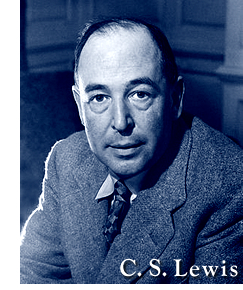
C.S. Lewis Daily – Today’s Reading


On God

As a great Christian writer (George MacDonald) pointed out, every father is pleased at the baby’s first attempt to walk: no father would be satisfied with anything less than a firm, free, manly walk in a grown-up son. In the same way, he said, “God is easy to please, but hard to satisfy.”

I think every one who has some vague belief in God, until he becomes a Christian, has the idea of an exam or of a bargain in his mind. The first result of real Christianity is to blow that idea into bits. When they find it blown into bits, some people think this means that Christianity is a failure and give up. They seem to imagine that God is very simple-minded! In fact, of course, He knows all about this. One of the very things Christianity was designed to do was to blow this idea to bits. God has been waiting for the moment at which you discover that there is no question of earning a pass mark in this exam or putting Him in your debt.

Then comes another discovery. Every faculty you have, your power of thinking or of moving your limbs from moment to moment, is given you by God. If you devoted every moment of your whole life exclusively to His service you could not give Him anything that was not in a sense His own already. So that when we talk of a man doing anything for God or giving anything to God, I will tell you what it is really like. It is like a small child going to his father and saying, “Daddy, give me sixpence to buy you a birthday present.” Of course, the father does, and he is pleased with the child’s present. It is all very nice and proper, but only an idiot would think that the father is sixpence to the good on the transaction. When a man has made these two discoveries God can really get to work. It is after this that real life begins.

From Mere Christianity

Compiled in Words to Live By

Charles Stanley – The Patience of God


1 Timothy 1:12-16

If God were impatient, we would all experience immediate wrath for sin. Imagine living in constant fear of doing something wrong! But fortunately for all of us, God possesses great patience.

One reason that the Lord shows mercy is because He knows?we have a fallen nature. Just as a toddler has to learn obedience, God’s children also must learn to walk in His ways. He takes pleasure in watching us do what is right and wants to help us when we go wrong.

Paul appreciated God’s patience. His life demonstrated that because the Father is slow to anger, unbelievers have a much greater opportunity for salvation (1 Tim. 1:16).

In Romans 2:4, the apostle affirms that our heavenly Father’s kindness and mercy lead to repentance. But in the following verse, he warns those with stubborn hearts that they will experience judgment. In other words, the warning is that God’s patience will at some point run out if someone continuously sins against Him, submitting to unrighteousness instead of to the Father.

In the Old Testament, Israel repeatedly experienced this painful truth. The people turned away from the Lord and did evil in His sight by worshipping idols. God patiently tolerated their waywardness, giving them ample opportunity to choose obedience. Eventually He’d withdraw His protection until they would cry out and return to Him. Ultimately, even when the Lord allows calamity to reach His children, it is still drenched with His love and purpose.

Is there unconfessed sin in your life? Be thankful that the Lord is slow to anger. And be wise: Do not test the limits of His tolerance.

Bible in One Year: Joel 1-3

Our Daily Bread — Tissue Boxes


Read: Psalm 31:9-18

Bible in a Year: Ecclesiastes 4-6; 2 Corinthians 12

I trust in you, Lord; I say, “You are my God.” My times are in your hands. —Psalm 31:14-15

As I sat in the surgical waiting room, I had time to think. I had been here recently, when we received the jarring news that my only brother, much too young, was “brain dead.”

And so on this day, waiting for news about my wife who was undergoing a serious surgical procedure, I penned a lengthy note to her. Then, surrounded by nervous chatter and oblivious children, I listened for the quiet voice of God.

Suddenly, news! The surgeon wanted to see me. I went to a secluded room to wait. There, on the table, sat two tissue boxes, conspicuously available. They weren’t for the sniffles. They were for cold, hard phrases like I heard when my brother died—“brain dead” and “nothing we can do.”

In such times of grief or uncertainty, the honesty of the psalms makes them a natural place to turn. Psalm 31 was the heart-cry of David, who endured so much that he wrote, “My life is consumed by anguish” (v. 10). Compounding that grief was the pain of abandonment by his friends and neighbors (v. 11).

But David had the bedrock of faith in the one true God. “I trust in you, LORD; I say, ‘You are my God.’ My times are in your hands” (vv. 14-15). His lament concludes with resounding encouragement and hope. “Be strong and take heart, all you who hope in the LORD” (v. 24).

This time in the waiting room, the surgeon gave us good news: My wife could expect a full and complete recovery. Of course we’re relieved and grateful! But even if she hadn’t been “okay,” our times still remain in God’s capable hands. —Tim Gustafson

Lord, we give You our deepest grief and pain as well as our joy. Thank You for Your constant love and presence no matter what today holds for us. You alone are faithful!

When we put our problems in God’s hands, He puts His peace in our hearts.

INSIGHT: David was in great distress (v. 9) and in grave danger (v. 13) when he wrote Psalm 31. Because he was persecuted and threatened by powerful enemies, his close friends abandoned him (v. 11), considered him a lost cause, and left him alone to fend for himself (v. 12). Twice David affirmed his unwavering faith in God. He says in verse 6, “As for me, I trust in the Lord” and in verse 14, “But I trust in you, Lord.” Acknowledging that God has been faithful to him, David confidently committed his spirit to God and trusted Him to deliver him (v. 5). While on the cross, Jesus prayed the same prayer of trust to His Father, “Into your hands I commit my spirit” (Luke 23:46). Sim Kay Tee

Alistair Begg – What We Must Do


“A sword for the Lord and for Gideon!” Judges 7:20

Gideon ordered his men to do two things: Covering up a torch in an earthen pitcher, he had them, at an appointed signal, break the pitcher and let the light shine. Then he had them blow the trumpet, crying, “A sword for the LORD and for Gideon!”

This is precisely what all Christians must do. First, you must shine: Break the pitcher that conceals your light, throw aside the container that has been hiding your candle, and shine. Let your light shine before men; let your good works be such that when men look at you, they will know that you have been with Jesus.

Then there must be the sound, the blowing of the trumpet. There must be active exertions for the gathering of sinners by proclaiming Christ crucified. Take the Gospel to them. Carry it to their door; put it in their path; do not allow them to escape it; blow the trumpet right against their ears. Remember that the true battle-cry of the church is Gideon’s watchword, “A sword for the LORD and for Gideon!” God must do it; it is His own work.

But we are not to be idle; He uses instruments–“A sword for the LORD and for Gideon!” If we only cry, “A sword for the LORD!” we will be guilty of idle presumption; and if we shout, “A sword for Gideon!” alone, we shall display an idolatrous reliance on man: We must blend the two in practical harmony: “A sword for the LORD and for Gideon!” We can do nothing in ourselves, but we can do everything by the help of our God; let us, therefore, in His name determine to go out personally and serve Him with our flaming torch of holy example and with our trumpet blasts of sincere declaration and testimony, and God will be with us, and the enemy will be put to confusion, and the Lord of hosts will reign forever and ever.

The Family Bible Reading Plan

  • 2 Samuel 16
  • 2 Corinthians 9

Devotional material is taken from “Morning and Evening,” written by C.H. Spurgeon, revised and updated by Alistair Begg.

Charles Spurgeon – Things that accompany salvation


“Things that accompany salvation.” Hebrews 6:9

Suggested Further Reading: 1 Thessalonians 5:8-11

The “things that accompany salvation” make a glorious march in the forefront of it— from election down to these precious opening buds of virtue in the sinner’s heart. What a godly array! Sure the angels do sometimes fly along in admiration, and see this long array that heralds salvation to the heart. And now comes the precious casket set with gems and jewels. It is of God-like workmanship; no hammer was ever lifted on it; it was smitten out and fashioned upon the anvil of eternal might, and cast in the mould of everlasting wisdom; but no human hand hath ever defiled it, and it is set with jewels so unutterably precious, that if heaven and earth were sold they could never buy another salvation! And who are those that are close around it? There are three sweet sisters that always have the custody of the treasure—you know them; their names are common in Scripture—Faith, Hope, and Love, the three divine sisters; these have salvation in their hearts and do carry it about with them in their loins. Faith, who lays hold on Christ, and trusts all in him; that ventures everything upon his blood and sacrifice, and has no other trust. Hope, that with beaming eye looks up to Jesus Christ in glory, and expects him soon to come: looks downward, and when she sees grim death in her way, expects that she shall pass through with victory. And thou sweet Love, the sweetest of the three; she, whose words are music and whose eyes are stars; Love, also looks to Christ and is enamoured by him; loves him in all his offices, adores his presence, reverences his words; and is prepared to bind her body to the stake and die for him, who bound his body to the cross to die for her.

For meditation: Faith, Hope and Love are close companions of one another and of salvation (1 Corinthians 13:13; 1 Thessalonians 1:3;Hebrews 6:9-12). How well are you acquainted with them?

Sermon no. 152

20 September (1857)

John MacArthur – Repelling Discouragement and Doubt


“Take the helmet of salvation” (Eph. 6:17).

Discouragement and doubt are deflected when you know you’re secure in Christ.

The Roman soldier’s helmet was a crucial piece of armor designed to deflect blows to the head—especially the potentially lethal blow of a broadsword. Soldiers of that day carried a swift and precise dagger designed for close- quarter hand-to-hand combat. But they also carried a giant broadsword, which was a two-edged, three to four-foot long sword. It had a massive handle that, similar to a baseball bat, was held with both hands. With it they could take broad swipes from side to side or deliver a crushing blow to an opponent’s skull.

To protect us from Satan’s crushing blows, Paul tells us to “take the helmet of salvation.” Now considering all he’s been telling us so far, he was not saying, “Oh, by the way, go get saved.” Paul was addressing believers. Unbelievers don’t have to put on spiritual armor. They aren’t even in the battle. Satan doesn’t attack his own forces.

In 1 Thessalonians 5:8 Paul describes the helmet of salvation as “the hope of salvation.” That implies Satan’s most fierce and powerful blows are directed at the believer’s assurance and security. Therefore Paul was encouraging believers to have confidence in the salvation they already possess. He knew that doubting their security in Christ would render them ineffective in spiritual warfare—just as a blow to the head renders one’s physical body incapable of defending itself.

As a believer, you should have the assurance that you are secure in Christ. If you don’t, you haven’t put your helmet on, and that makes you vulnerable to discouragement and doubt. Romans 8:29-30 assures us that all whom God justifies, He sanctifies and glorifies. No one is lost in the process.

Jesus said, “My sheep hear My voice, and I know them, and they follow Me; and I give eternal life to them, and they shall never perish; and no one shall snatch them out of My hand” (John 10:27-28). That’s a wonderful promise. So don’t let your enemy rob you of the joy and assurance of knowing you belong to Christ, for the Lord will never let you go (Heb. 13:5).

Suggestions for Prayer

Praise God for your eternal security in Christ!

For Further Study

Read John 6:37-40.

  • Who receives eternal life?
  • How does Christ respond to those who come to Him?

Joyce Meyer – Whatever You Face


And the Lord turned and looked at Peter. And Peter recalled the Lord’s words, how He had told him, Before the cock crows today, you will deny Me thrice. And he went out and wept bitterly [that is, with painfully moving grief].- Luke 22:61–62

The apostle Peter was a man who began with phony boldness. He thought he was bold, but in reality he was forward, presumptuous, rude, and foolish on many occasions. Peter was usually the first one to speak, but what he said was often prideful and completely out of place. Peter thought more highly of himself than he should have. He needed to trade his self-confidence for confidence in God.

Jesus tried to warn Peter that he would deny Him three times in a very short period of time, but Peter thought that was absolutely impossible. After Jesus allowed Himself to be captured, Peter was recognized as one of His disciples. He immediately denied that he even knew Him. Peter continued on with the same fearful response until he quickly denied Christ three times. Peter, who appeared to be so bold, fell apart in fear during a real crisis (Luke 22).

What are you facing right now? Are there threatening circumstances looming in front of you? If so, remember that God is with you and He will never leave you or forsake you.

Lord, it’s always humbling to read about Peter’s denial. I need the strength that comes from You more than I can possibly realize. Help me to draw so close to You today that I can face any challenge. Amen.


Campus Crusade for Christ; Bill Bright – Maturity – In His Timing 


“But when the Holy Spirit controls our lives He will produce this kind of fruit in us: love, joy, peace, patience, kindness, goodness, faithfulness, gentleness and self- control” (Galatians 5:22,23).

One of my dear friends had a 25-year old son who had never grown past the baby stage mentally or physically. He had greeted the birth of his beautiful baby boy with great joy, but his joy turned to heartache and sorrow with the passing years as his son never matured.

Unfortunately and tragically, many Christians never pass the baby or childhood stages. Think of the heartache and sorrow that God experiences when He looks upon those of His children who have never matured, though they have been Christians for many years.

Martha, a new Christian, approached me with this question, “With all my heart I want to be a woman of God, but I do not experience the consistency of Galatians 5:22,23 in my life. What is wrong?”

Maybe you are asking the same question, if so, it will be helpful for you to understand that the Christian life is a life of growth. Just as in our physical lives we begin as babies and progress through childhood into adolescence, young adulthood and mature adulthood, so it is in our spiritual lives.

The Holy Spirit takes up residence within every believer at the moment of new birth. The growth process is greatly accelerated when a believer consciously yields himself to the lordship of Christ and the filling and control of the Holy Spirit. A believer who is empowered by the Holy Spirit and is a faithful student of God’s Word, who has learned to trust and obey God, can pass through the various stages of spiritual growth and become a mature Christian within a brief period of time. Some Spirit-filled Christians demonstrate more of the fruit of the Spirit within one year than others who have been untaught, uncommitted believers for 50 years.

Bible Reading: Romans 5:1-5

TODAY’S ACTION POINT: I am determined that I will become a spiritually mature Christian, in whose life the fruit of the Spirit will be demonstrated. Through the enabling of the Holy Spirit I will dedicate myself to prayer, reading the Word and witnessing, and living a life of obedience.

Presidential Prayer Team; G.C. – Out of the Haze


Fire engineers read smoke. Its behavior and its color provide clues about the emanating blaze. In today’s verse, Zechariah the priest is going about his duties burning incense before the altar of God. Out of the smoke he’s startled to see someone standing with him – the angel Gabriel, who speaks to Zechariah the comforting words of today’s verse.

Do not be afraid, Zechariah: for your prayer has been heard.

Luke 1:13

That particular day, Zechariah’s duty was to bring an offering covering the sins of an entire nation, yet the prayer God promised to answer was personal. Zechariah wanted a son. He and his wife were old and well past a reasonable expectation for bearing children. One would imagine that improbable prayer might have been tucked away years earlier. Then, literally out of the haze, God gives an answer…the desired answer. “Yes, you may have a son.”

Are you struggling to understand what God is doing in your life or for America’s future? Remember Zechariah. The smoke clouding his vision was coming from his faithful service, but be assured God can read that smoke! He understands the silent cry of your heart as well as the needs of the nation. In His timing, He will attend to both.

Recommended Reading: Psalm 20:2-7

John Piper – DesiringGod.org


Is Kim Davis Right to Refuse Marriage Licenses?

Welcome to this special weekend edition of the Ask Pastor John podcast. In the last week or so we have gotten about 50 emails from listeners about Kim Davis, a county clerk in the state of Kentucky. Here’s one such email from Sherry, one of our faithful podcast listeners, who simply asks, “Pastor John, is Kim Davis wrong for not signing same sex marriage licenses?”

I don’t know Kim Davis’s heart, so I can’t assess her motives. And I don’t know her theology. It is possible to do right actions for wrong reasons, and so be wrong in doing right. So I will just try to say something about her actions and what appear to be some of her convictions and perhaps touch on some wider implications.

First, I think she is right in rejecting so-called same sex marriage as contrary to God’s design for what marriage is. And she is right in assessing this departure from God’s will as massive, not marginal, and as personally and culturally deadly, not trivial. And therefore it’s not something that you can just go along with as if that were a loving thing to do.

The Bible says in 1 Corinthians 6:9–10 that the endorsement of same sex practice — which is what the approval of so-called same sex marriage does — endorses the destruction of persons (along with idolatry, greed, theft, drunkenness). Those who impenitently practice such things will not inherit the kingdom of God. Calling such behaviors “legal” in no way removes the capital punishment that will follow in eternity. Therefore this judgment of the Supreme Court is massively evil and deadly for persons. Kim Davis is right if she believes that. It seems she does.

Second, I think she is morally right and probably legally right to refuse to put her name on the marriage license of two men or two women. She is morally right because God has given civil authorities to the world to reward the right and punish the evil. So when those authorities promote evil and punish good, those authorities may rightly be disobeyed for the sake of obeying God. Here are the two key texts.

1 Peter 2:13–14, “Be subject for the Lord’s sake to every human institution, whether it be to the emperor as supreme, or to governors as sent by him to punish those who do evil and to praise those who do good.” So be subject to governors as they are sent to punish evil and do good.

Romans 13:13–4, “Let every person be subject to the governing authorities. For there is no authority except from God. . . . For [here is the ground] rulers are not a terror to good conduct, but to bad. . . . He is God’s servant for your good.”

Now I don’t think Peter and Paul are naïve in writing this way. This is what governments do. They reward the good. They punish the evil. What they mean is that this is what governments ought to do. This is the way it ought to be. For example, when Paul says, “Rulers are not a terror to good conduct” (Romans 13:3), we are liable to scratch our heads and think of a hundred cases where governments have slaughtered people in great wickedness. What in the world, Paul?

Well, Paul says rulers are not a terror to good conduct, like when a dad says to his children, “We tell the truth in this family.” That is the indicative statement ofwhat ought to be. “We treat other with kindness in this family. That is what we do.” He doesn’t mean sin never happens in this family. The kids are not always good. He means this is what we ought to do. And when we don’t act this way, we are acting out of character. It ought not to be. Something should change. So it is with governments. They exist to support the good and resist the bad.

And here is an interesting thing: A few verses later in 1 Peter 2:1820, Peter gives an illustration of how slaves are to be subject to masters. So he is carrying this submission theme through for governments and slaves and wives and husbands and children and so on. And then he says, “Servants, be subject to your masters, even to the unjust. . . . For what credit is it if, when you sin and are beaten for it, you endure? But if when you do good and suffer for it you endure, this is a gracious thing in the sight of God.” Peter envisions someone under authoritydoing something good that gets him a beating. Authorities don’t ordinarily punish people for being completely compliant.

Now of course, it may be the slave was slandered and then punished for something he did not do. That is possible. But that is not what the text says. It seems to me he has done something good. Maybe he stood up for a fellow Christian slave or maybe he shared the gospel. Or maybe he refused to have sex with the master. When you do good, suffer, and endure, this is a gracious thing with God. So it may well be that this slave or citizen or wife knew he would pay a price. And that was a gracious thing with God to suffer for doing good.

Now I think Kim Davis was right not to sign the marriage licenses and thus to not treat evil as marriage. It is not marriage! If she blesses with her authority and her signature a union which leads to destruction, she endorses and participates in that destruction. Encouraging homosexual behavior is the participation in someone’s destruction. I think she is right not to do that. Now I said she may be also legally right and not just morally right. This thinking is complicated, but here are just a few observations:

Was she legally bound to resign instead of obstructing the licensing process? Now there are two angles on this question — two ways to come at it. One is to observe that perhaps she is not the one breaking the law, but that that Supreme Court broke the law by their ludicrous claim that they found in the Constitution a right to the non-existent illusion called “same sex marriage.” That is absolutely ludicrous that they could find such a thing in the Constitution. They came up with that out of thin air, because they want it to be. There comes a point when people with eyes look at the Supreme Court and say: This strutting court has no clothes on. They may wear a tiny little one-inch-across tyrannical crown on their heads, but they are not robed with the royal power to make the Constitution condone the killing of children nor to condone so-called ‘same sex marriage. It cannot be done. Out of nothing they create mirages.

The other angle that suggests Kim Davis was not only morally right, but, perhaps, legally right, is that she was drawing the line — the hill to die on — not at whether so-called “gay marriage” could be authorized by anyone in Kentucky, but by whether it would have to be authorized by her. The specific issue was whether her name or her official authority as clerk was put on the licenses.

So the legal question is, “Does an employee, even an elected employee, have to comply with every aspect of the job description if it compromises the conscience? Or are there legal — that is the key word here — legal provisions that mandate an employer adjust the employee’s job requirements to avoid a conflict with conscience?” And the answer is yes. Both the federal Civil Rights Act and Kentucky’s Religious Freedom Restoration Act have such provisions in them. And so the question for the court, if she pursues it this way, is whether the adjustment in her job description can be made without an undue burden on that office — on the employer.

Kim Davis’s case is not unique. People need to really be aware of this issue. Can she keep her job and not do part of her job because of her conscience? All of these are real litigations:

  • Can nurses, who have religious objections to participating in abortions, keep their jobs and not participate in abortions, even though the hospital says they must?
  • Can Muslim truck drivers not transport alcohol?
  • Can a pacifist postal worker not process draft registration forms?
  • Can a Jehovah’s Witness employee not be required to raise the flag at the school?
  • Can a vegetarian bus driver not be required to hand out hamburger coupons?

Those are all real cases I read about — whether or not legally one can have his job description adjusted without resigning so as to avoid the conflict with conscience.

So for Kim Davis the legal question is, Can she be given an exemption so that she can carry out her clerk’s duties while not giving any of her official authority to the licensing of so-called “same sex marriage”? And the answer is, We will see. I don’t know what is going to happen.

Morally, she is in the right. She is, of course, just one prominent case of what will be hundreds in the months and years to come as Christians and others draw a line of conscience beyond which they will not go. And the upshot for us, all of us, is that we should all be pondering now what that line is in our vocation, in our schooling, in our civil life, in our finances, and in our friendships. Because if we are not fixed and strong in our resolve and we are taken off guard with the threat of loss, we will cave in. Now is the time to be clear and resolved — before they knock on your door.

Night Light for Couples – Taken For Granted


“Honor one another above yourselves.” Romans 12:10

Each of us has a heartfelt need to be honored and respected. All too often, however, we take our spouses for granted at home. Is it any wonder that so many mothers hold down jobs in the workplace today? Many work for financial reasons, but some do so to find the recognition and praise they don’t get from their mates. Could this also be why many men spend excessive hours at work—to receive from colleagues the accolades that they don’t get at home?

Your partner is a jack‐of‐all‐trades who brings a host of skills to your marriage: provider, short‐order cook, nurse, counselor, financial planner, gardener, arbiter of sibling disputes, spiritual leader, comforter, and much more. We encourage you to show your appreciation for these talents and services. Tell your wife how much you enjoy her cooking. Send your husband to work with a note praising him for his good judgment with the family budget. In front of guests, compliment her taste in home decor and his wise guidance of the children.

If we don’t make our mate feel honored and respected, we may find our partner looking for recognition somewhere else.

Just between us…

  • What couple do we know who is an example to us of honoring each other?
  • Do we honor each other well?
  • What opportunities to bestow honor have we missed?

Have we sought recognition elsewhere because we weren’t receiving enough at home?

Heavenly Father, forgive us for any self-centeredness or lack of consideration in our marriage. Please teach us to make honoring our spouse a reflex action, not a begrudging afterthought. Amen.

From Night Light For Couples, by Dr. James & Shirley Dobson