Tag Archives: church

Campus Crusade for Christ; Bill Bright – Greater Works Than He Does

dr_bright

“In solemn truth I tell you, anyone believing in Me shall do the same miracles I have done, and even greater ones, because I am going to be with the Father. You can ask Him for anything, using My name, and I will do it, for this will bring praise to the Father because of what I, the Son, will do for you” (John 14:12,13).

For many years, during and after seminary, I asked leading theologians, pastors and students, “What does this passage mean? How can I and other believers do the same miracles that our Lord did when He was here in the flesh – and even greater ones?”

Surely there had to be some mistakes in the translation of this passage, for I saw little evidence of this supernatural power in the lives of the Christians around me or in my own life.

But I had wrongly interpreted what Jesus said. I was thinking only of the miracles of physical healing. God still heals the sick, and almost daily I pray that He will touch the ailing bodies of ill ones. God sometimes heals them miraculously, though mostly He works through the skill of surgeons and the miracle of modern medicine.

Yet, while physical healing is certainly valid and very desirable, I realize more and more that a greater miracle is the miracle of new birth. For the body that is healed will one day die, but the person who is introduced to Christ and experiences salvation will live forever. The main reason our Lord came to this earth was to “seek and save the lost,” not primarily to perform miracles of physical healing. Frequently, we are privileged to experience the reality of our Lord’s promise as He enables us to “seek and save the lost” in greater numbers than He did while He was here in the flesh.

For example, in 1980, during the Korean Here’s Life World Evangelization Crusade we saw more than one million people indicate salvation decisions during the week.

Bible Reading: Matthew 21:21-22

TODAY’S ACTION POINT: Beginning today, I will claim, in the name of Jesus, that He who dwells within me, who came to seek and to save the lost and is not willing that any should perish, will do even greater miracles in and through my life than He did while here in the flesh. By faith, I will experience and share the Supernatural life of Christ with others.

Presidential Prayer Team; J.K. – Close to the Source

ppt_seal01

They failed! Jesus gave the disciples the power to heal, but they couldn’t help the little boy who was demon-possessed. They were baffled, helpless and ineffective. The boy’s father arrived with hope, but now he was despairing.

Immediately the father of the child cried out and said, “I believe; help my unbelief!”

Mark 9:24

It is there that the dejection ceases – for with the Lord comes hope; with Him you need not despair. The father said to Jesus, “If you can do anything, have compassion on us and help us.” Christ responded, “All things are possible for one who believes.” The father then cried out the words of today’s verse…and the boy was healed. Later, Jesus told His disciples that their power and authority to heal, or to do anything else for Him, could only be maintained by prayer. They had to remain close to and in continuous relationship with the source of their strength.

So it is with you. Fear may overtake you as terror abounds in the world. Anxieties may press hard, but keep your faith strong in the sovereignty of God. Earnest and persevering prayer for this nation and for those close to you is the only way they can experience the hope and healing they need.

Recommended Reading: Mark 9:17-29

Greg Laurie – Box Canyon         

greglaurie

Peter was therefore kept in prison, but constant prayer was offered to God for him by the church. —Acts 12:5

In some of the old TV Westerns of the 1950s, the desperados (always in black hats) would be making their escape with the stolen loot from the stagecoach robbery. Suddenly someone in the posse chasing them (usually in white hats) would shout, “We have ’em now! They’ve ridden into a box canyon!” And everybody knows there is no way out of a box canyon.

There are box canyons in life too, seemingly impossible situations where there seems to be no way out and nowhere to turn. Surrounded by insurmountable obstacles, you find yourself temporarily paralyzed, not knowing what to do. Those are the very times when God invites us to pray.

In Acts 12, we find the story of how God took a tragic, even hopeless, situation and turned it around. It was accomplished by the power of prayer, the kind of prayer that storms the throne of God and gets an answer.

Both James and Peter were in prison. Tragically, James was put to death. But Peter was still incarcerated, awaiting his fate. Though all doors were closed, one remained open: the door of prayer. The church recognized that “we use God’s mighty weapons, not worldly weapons, to knock down the strongholds of human reasoning and to destroy false arguments” (2 Corinthians 10:4, NLT).

Prayer was and is the church’s secret weapon. Although the Devil struck a blow against the church, the church gained victory through prayer as Peter was miraculously released.

Sadly, we don’t pray often enough. Yet it is essential that Christians learn more about effective prayer because all of us will certainly face difficulties, hardships, problems, and more than a few box canyons. So we need to discover what God can do through the power of prayer.

Prayer for the Christian should be second nature, like breathing. We should automatically pray, lifting our needs and requests before the Lord. Jesus said that we should always pray and not lose heart (see Luke 18:1). Prayer is something we should never avoid and never grow tired of. Prayer should be woven through our day like a bright gold thread woven through a piece of fabric. The more we pray, the more we will see the kingdom of God break through the darkness of seemingly impossible situations.

Today’s devotional is an excerpt from Every Day with Jesus by Greg Laurie, 2013

Max Lucado – A Portable Prayer

Max Lucado

Some people excel in prayer. They are the SEAL Team 6 of intercession. They would rather pray than sleep. Why is it I sleep when I pray? It’s not that we don’t pray at all. We all pray some. Surveys indicate one in five unbelievers prays daily. Just in case, perhaps?  When the disciples asked Jesus to teach them to pray, He gave them a prayer. Not a lecture on prayer. A quotable, repeatable, portable prayer. Could you use the same?

Father, You are good.

I need help. Heal me and forgive me.

They need help. Thank you.

In Jesus’ name, amen.

Let this prayer punctuate your day!

Here’s my challenge for you! Sign on at BeforeAmen com. Every day for 4 weeks, pray 4 minutes. Then get ready to connect with God like never before!

Charles Stanley – Saying Yes to God

Charles Stanley

Luke 5:1-11

God’s simple requests are often stepping-stones to life’s greatest blessings. When Simon Peter said yes to Jesus’ two small requests, his whole mission changed from fisherman to fisher of men.

An unproductive night’s work no doubt left Peter weary. Yet he willingly brought Jesus on board and then pushed his boat out from shore so the Teacher’s words would carry to the crowd. When the Lord finished speaking, He told the experienced fisherman to head out to deeper water. Peter knew the timing for a good catch was wrong, but he obeyed and was blessed with not one, but two boatloads of fish.

Often God’s blessings result from our compliance with seemingly insignificant requests. Though we prefer He ask us to perform great tasks that will impact large crowds, obedience in small matters is our proving ground. If we refuse His prompting to perform some minor action, what reason have we given Him to trust us with a more important responsibility?

Had Peter refused to lend Jesus his boat or to risk a midday fishing expedition, he’d have missed the immediate blessing of a big catch and perhaps also the even greater opportunity to be Jesus’ disciple. Walking with the Lord every day for three years, Peter witnessed miracles more spectacular than anything he saw that first day: A blind man received sight, Lazarus was restored to life, and at Jesus’ urging, Peter himself walked on water. The disciple’s courageous step off the boat and onto a raging, stormy sea was the result of saying yes every time God had made a small request.


Our Daily Bread — The Power Of Ritual

Our Daily Bread

1 Corinthians 11:23-34

Do this in remembrance of Me. —1 Corinthians 11:24

When I was growing up, one of the rules in our house was that we weren’t allowed to go to bed angry (Eph. 4:26). All our fights and disagreements had to be resolved. The companion to that rule was this bedtime ritual: Mom and Dad would say to my brother and me, “Good night. I love you.” And we would respond, “Good night. I love you too.”

The value of this family ritual has recently been impressed on me. As my mother lay in a hospice bed dying of lung cancer, she became less and less responsive. But each night when I left her bedside I would say, “I love you, Mom.” And though she could say little else, she would respond, “I love you too.” Growing up I had no idea what a gift this ritual would be to me so many years later.

Time and repetition can rob our rituals of meaning. But some are important reminders of vital spiritual truths. First-century believers misused the practice of the Lord’s Supper, but the apostle Paul didn’t tell them to stop celebrating it. Instead he told them, “As often as you eat this bread and drink this cup, you proclaim the Lord’s death till He comes” (1 Cor. 11:26).

Rather than give up the ritual, perhaps we need to restore the meaning. —Julie Ackerman Link

Lord, when we observe the Lord’s Supper, help

us avoid the trap of letting our observance

grow routine. May we always be moved with

gratitude for the wonderful gift of ritual.

Any ritual can lose meaning, but that does not make the ritual meaningless.

Bible in a year: Isaiah 11-13; Ephesians 4

Insight

On the evening Jesus celebrated His last Passover with His disciples, He also established His own memorial supper. The unleavened Passover bread symbolized the exodus from Egypt, and the cup echoed the Old Testament promise, “I will redeem you.”


Ravi Zacharias Ministry – Dark Riddle

Ravi Z

In 1952 philosopher Mortimer Adler co-edited a fifty-five volume series for Encyclopedia Britannica titled The Great Books of the Western World. Overseeing a staff of ninety, the editors created a diverse index of topics containing selections from many of the finest thinkers in the history of Western Civilization. Upon completion, Adler was asked why the work included more pages under the subject of God than any other topic. He replied matter-of-factly that it was because more consequences for life and action follow from the affirmation or denial of God than from any other basic question.

What we do with the subject of God is a far-reaching choice, defining life, informing death, shaping everything. The one who lives as though there is no God lives quite differently than the one who lives confidently that there is a God. It is a subject of consequence because it reaches everything and everyone; whether mindfully or indifferently, a decision is always made.

Through avenues of every emotion known to humankind, the Psalms make the astounding claim that God not only exists, but that God is present and can be found. In victory and defeat, illness and poverty, health and prosperity, the psalmist maintains that it is God who gives all of life meaning, that God alone answers the deepest and darkest questions of life whether in the depths or from the highest vantage.

Calling to the multitudes, crossing lines of status and allegiance, the psalmist pleads for care regarding a subject that concerns all. Like Adler, the psalmist makes it clear that what is being communicated is of consequence. “Listen, all who live in this world, both low and high, rich and poor together… I will incline my ear to a proverb; I will solve my riddle to the music of the harp.”(1) This riddle the psalmist wants to bring to the attention of all is a riddle forever before humankind. It is a riddle to which all must diligently attend but many wholeheartedly ignore. Fittingly, the Hebrew word for “riddle” has also been translated “dark saying” or “difficult question.”

The psalmist continues, “When we look at the wise, they die; fool and dolt perish together and leave their wealth to others. Their graves are their homes for ever, their dwelling-places to all generations, though they named lands their own. Mortals cannot abide in their pomp; they are like the animals that perish.”

It is easy to go about life as if we know what we are doing. The psalmist stops us to ask, what is the point of it all? Some accumulate wealth, others remain in poverty, some live well and others live wickedly, but all are destined for the grave. The one who claims there is no God in life, so claims emptiness in death. But then is life also empty? Again the psalmist admits it is all a dark riddle: What is the point of it all?

Solving the riddles of life and death, like religion and politics at a social gathering, means, for many, changing the subject. As Woody Allen once quipped, “It’s not that I am afraid of death; I just don’t want to be there when it happens.” But that our lives are fleeting could awaken a sense of urgency, a sense of inquiry. That life is fleeting, though inarguably full of meaning, is indeed either a peculiar contradiction or a hint that creation is being made new, both now and in what is coming.

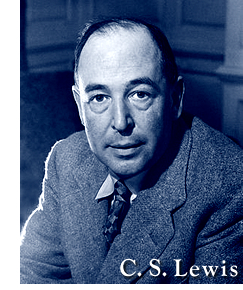
This is not to say that death, for the Christian, is not a mystery. We know that death is the last great door through which we must walk, the mark of a broken world. Yet we know also that through death God has declared the end of that broken hold on our lives, that the one who loses his life will save it, and that by Christ’s death the Spirit works Christ’s life in us even now. As C.S. Lewis once said of the Christian, “Of all men, we hope most of death; yet nothing will reconcile us to…its ‘unnaturalness.’ We know that we were not made for it; we know how it crept into our destiny as an intruder; and we know Who has defeated it.” In the riddle of life and death, the psalmist expounds this certainty of God’s action. “But God will ransom my soul from the power of the grave, for he will receive me.”

Jill Carattini is managing editor of A Slice of Infinity at Ravi Zacharias International Ministries in Atlanta, Georgia.

Alistair Begg – God’s Generosity

Alistair Begg

The Lord bestows favor and honor.  Psalms 84:11

God is wonderfully generous by nature; to give is His delight. His gifts are immeasurably precious and are given as freely as the light of the sun. He gives grace to His own because He wills it, to His redeemed because of His covenant, to the called because of His promise, to believers because they seek it, to sinners because they need it. He gives grace abundantly, seasonably, constantly, readily, sovereignly; the value of the blessings is doubled by the manner in which it is given.

Grace in all its forms He freely supplies to His people: Comforting, preserving, sanctifying, directing, instructing, assisting grace He generously and constantly pours into their souls, and He will always do so, whatever may happen. Sickness may come, but the Lord will give grace; poverty may descend on us, but grace will definitely be supplied; death must come, but grace will light a candle in the darkest hour. Reader, how blessed it is as years roll on, and the leaves again begin to fall, to enjoy this unfading promise, “The LORD bestows favor and honor.”

The little conjunction “and” in this verse is a diamond rivet binding the present with the future: Favor and honor always go together. God has married them, and no one can separate them. The Lord will never deny a soul honor to whom He has freely granted favor; indeed, honor is nothing more than favor in its Sunday best, favor in full bloom, favor like autumn fruit, mellow and perfected. How soon we may have honor none can tell! It may be that before this month of October has run out we will see the Holy City; but if the interval is longer or shorter, we shall be honored before long. The honor of heaven, the honor of eternity, the honor of Jesus, the honor of the Father—the Lord will certainly give all this to His chosen. What a wonderful promise from a faithful God!

Two golden links of one celestial chain;

Who owns favor shall surely honor gain.

________________________________________

The family reading plan for October 1, 2014 * Ezekiel 34 * Psalm 83, 84

________________________________________

Devotional material is taken from “Morning and Evening,” written by C.H. Spurgeon, revised and updated by Alistair Begg.

Charles Spurgeon – The remembrance of Christ

CharlesSpurgeon

“This do in remembrance of me.” 1 Corinthians 11:24

Suggested Further Reading: Luke 22:14-20

Our Saviour was wiser than all our teachers, and his remembrancers are true and real aids to memory. His love tokens have an unmistakable language, and they sweetly win our attention. Behold the whole mystery of the Lord’s table. It is bread and wine which are lively emblems of the body and blood of Jesus. The power to excite remembrance consists in the appeal thus made to the senses. Here the eye, the hand, the mouth find joyful work. The bread is tasted, and entering within, works upon the sense of taste, which is one of the most powerful. The wine is sipped—the act is palpable; we know that we are drinking, and thus the senses, which are usually clogs to the soul, become wings to lift the mind in contemplation. Again, much of the influence of this ordinance is found in its simplicity. How beautifully simple the ceremony is—bread broken and wine poured out. There is no calling that thing a chalice, that thing a paten, and that a host. Here is nothing to burden the memory—here is the simple bread and wine. He must have no memory at all who cannot remember that he has eaten bread, and that he has been drinking wine. Note again, the deep relevance of these signs—how full they are of meaning. Bread broken—so was your Saviour broken. Bread to be eaten—so his flesh is meat indeed. Wine poured out, the pressed juice of the grape—so was your Saviour crushed under the foot of divine justice: his blood is your sweetest wine. Wine to cheer your heart—so does the blood of Jesus. Wine to strengthen and invigorate you—so does the blood of the mighty sacrifice.

For meditation: We forget him when we absent ourselves from his table without good cause; we forget him when we attend the Communion Service as an optional add-on. “Remember Jesus Christ” (2 Timothy 2:8).

Sermon no. 2

1 October (Preached 7 January 1855)

John MacArthur – How to Be Noble Minded

John MacArthur

“[The Bereans] were more noble-minded than those in Thessalonica, for they received the word with great eagerness, examining the Scriptures daily, to see whether these things were so” (Acts 17:11).

God honors spiritual discernment.

On his second missionary journey, Paul, accompanied by Silas, preached the gospel of Jesus Christ in the city of Thessalonica. They weren’t there long before the gospel took root and many turned from their idolatry to serve the true and living God (1 Thess. 1:9). In 1 Thessalonians 2:13 Paul says, “We also constantly thank God that when you received from us the word of God’s message, you accepted it not as the word of men, but for what it really is, the word of God.” Their open response to God’s Word made them an example to all the believers in that area (1 Thess. 1:7).

But as exemplary as the Thessalonians were, their fellow believers in Berea were even more so. God called them “noble- minded” (Acts 17:11). They were eager to hear what Paul and Silas had to say, but tested it against God’s prior revelation in the Old Testament before receiving it as a message from God. They had learned to examine everything carefully and hold fast to the truth (1 Thess. 5:21).

The church today, however, has an appalling lack of that kind of discernment. Many believers are duped by novel teachings and outright heresies. They’re “tossed here and there by waves, and carried about by every wind of doctrine” (Eph. 4:14). We desperately need a new breed of Bereans who will raise high the banner of sound doctrine and never compromise it.

With that goal in mind, our studies this month will focus on the character and benefits of God’s Word. You’ll learn that it’s the source of spiritual growth, spiritual service, blessing, victory, truth, and knowledge. You’ll see its infallibility, inerrancy, authority, inspiration, and sufficiency.

I pray that by this month’s end, your commitment to learning and applying biblical truth will be stronger than ever, and you will indeed be a modern-day, noble-minded Berean.

Suggestions for Prayer; Ask God to give you a greater love for His wonderful Word.

For Further Study; Read Acts 17:1-15.

  • Why did Paul and his companions leave Thessalonica and Berea?
  • What do Paul’s experiences tell you about what you might expect as you share Christ with others?


Joyce Meyer – Stir Up the Gift

Joyce meyer

That is why I would remind you to stir up (rekindle the embers of, fan the flame of, and keep burning) the [gracious] gift of God, [the inner fire] that is in you. —2 Timothy 1:6

In your spiritual life, you are either aggressively moving forward or slipping backward. Either you grow, or you start to die. There is no such thing as dormant Christianity. It is vital and essential to keep pressing on.

In this passage of Scripture Timothy needed some encouragement. Paul strongly encouraged him to get back on track, remember the call on his life, resist fear, and remember that God had not given him “the spirit of fear; but of power, and of love, and of a sound mind” (2 Timothy 1: 7 KJV). If you find you are feeling stagnant or slipping back into old patterns of thought and behavior, stir up the gift that is within you tonight and press forward in Him.


Campus Crusade for Christ; Bill Bright – Because You Believe

dr_bright

“You believed that God would do what He said; that is why He has given you this wonderful blessing” (Luke 1:45).

So much of the life you and I live as Christians depends on simple belief. Do we really trust God to do what He says He will do?

This particular verse, of course, concerns Mary. No doubt she was chosen to be the mother of Jesus because of the faith God knew she possessed. In any case, God honored that faith by bestowing upon her the highest privilege any mother could have.

Even taken out of context, the meaning is the same: If we truly believe God will do what He says, the wonderful blessing He promises will be ours. And that applies to every area of our lives – spiritual, physical, material.

What is your greatest need today? If you are a housewife and mother, it may be for patience and love. If you are a business or professional man or woman, it may be for wisdom or strength or courage. If you are a student, it may be for persistence, commitment, application.

In all probability, you cannot think of a circumstance or situation which is beyond the ability of God to control. The promises of God are both general and specific, so that they will meet the need of every heart and life.

We may expect a great blessing from God today. Why? Because we are going to believe He will do what He said.

Bible Reading: Luke 1:39-44

TODAY’S ACTION POINT: “Dear Lord, I will believe you for supernatural living in every situation and circumstance of my life this day.”


Presidential Prayer Team; C.H. – He’s Got the Whole World

ppt_seal01

“He’s in good hands.” “All hands on deck.” “Her hands are tied.” There are multiple expressions involving hands. Hands can construct, destroy, express love and bring aid. God certainly knew what He was doing when He created your five-finger appendages.

And the Lord said to Joshua, “Do not fear them, for I have given them into your hands. Not a man of them shall stand before you.”

Joshua 10:8

Today’s verse shows God placing His power in Joshua’s hands. The people in Gibeon were frightened by their enemies lying in wait for them and sent a message for Joshua to come quickly. When he came, God confused those enemies and struck them with hailstones. He delivered them into Joshua’s hands.

Perhaps the best hands phrase is from Jesus’ final moments on Earth: “Father, into your hands I commit my spirit!” (Luke 23:46) Maybe, like the Gibeonites, life is overwhelming you today, and you fear enemies will attack at every possible opportunity. Follow Christ’s example, and place yourself in your Heavenly Father’s hands. Then pray for this country to experience peace over fear, and ask God to inspire your nation’s leaders to commit themselves into the hands of the Almighty.

Recommended Reading: Joshua 10:1-15

Greg Laurie – “Looking unto Jesus”  

greglaurie

We also, since we are surrounded by so great a cloud of witnesses, let us lay aside every weight, and the sin which so easily ensnares us, and let us run with endurance the race that is set before us, looking unto Jesus, the author and finisher of our faith. —Hebrews 12:1–2

In the ancient Greek games, a judge would stand at the finish line holding, in plain sight, the laurel leaves that would be rewarded to the victor. As runners came down the final stretch, they were exhausted, perhaps in agony, and feeling as though they couldn’t go another step. But suddenly there was the prize in sight, and a new burst of energy would kick in.

This is the picture behind the phrase looking unto Jesus in Hebrews 12:2. We have to keep our eyes on Jesus Christ. And our prize is the privilege of standing before Him and receiving the crown of righteousness that He will give us.

That is why we try to live godly lives and why we try to reach people for Him. It isn’t for brownie points. It isn’t for applause. It isn’t for notoriety. It’s so we can hear Jesus say to us on that final day, “Well done, good and faithful servant.” No, we can’t earn our salvation because He has already provided it. But we want to please the One who laid down His life for us. Ultimately, we want to be able to say, “Lord, I took the life You gave me and tried to make a difference. Here it is. I offer it to you.”

Looking unto Jesus. . . . That keeps you going, doesn’t it? After all, you can get discouraged at times. People will let you down. They will disappoint you. They won’t appreciate your hard work or notice your efforts. Not bothering to understand your real motives, they’ll criticize that which they don’t (or won’t) understand. And that is when you need to remind yourself, I am not running my race for this person or that person. I am running for You, Lord. And I will keep running . . . with my eyes fixed on You.

Today’s devotional is an excerpt from Every Day with Jesus by Greg Laurie, 2013

Max Lucado – Before Amen Challenge

Max Lucado

I’m a recovering prayer wimp. For years my prayers seemed to zig, then zag, then zig again. Maybe you can relate. Perhaps your prayer life could use a tune up, a reboot?

If that sounds overwhelming, I’m inviting you to a simpler plan. Four minutes, plus four weeks, equals forever change! Every day for four weeks, pray for four minutes, focusing on these core elements of prayer: “Father, You are good. I need help. They need help. Thank you.”

It’s that simple. Really!  Talking with God doesn’t have to be complicated or complex. The power isn’t in the words we pray—but in the One who hears them!

Sign on at BeforeAmen.com. Every day for 4 weeks, pray four minutes—then get ready to connect with God like never before!

Ravi Zacharias Ministry – The Way of Grace and the Way of Nature

Ravi Z

As a young girl, one of my favorite games was hide and seek. Gathering all of our friends from the street on which we lived, we played this favorite childhood game that offered the entire neighborhood as a hiding place. The familiar call “Where are you?” echoed down the streets as the seeker looked far and wide to find our hiding places.

A cosmic game of hide and seek is often how many view the search for God. “Where are you?” is the question that echoes throughout the ages as human beings seek for God in a vast universe often filled with inexplicable mystery.

This is no trivial game. Atheist Bertrand Russell was once asked what he would say if after death he met God, to which he replied: “God, you gave us insufficient evidence.”(1) While those who have found God quite evident would balk at Russell’s impudence, it is helpful to remember that theists often wrestle with a similar struggle. Many of the biblical writers themselves have depicted God as hidden. “Why do you stand afar off, O Lord? Why do you hide yourself in times of trouble?” (Psalms 10:1). Indeed, the psalmist accuses God of being “asleep” to his plaintive cries: “Arouse, yourself, why do you sleep, O Lord? Awake, and do not reject us forever. Why do you hide your face, and forget our affliction and our oppression?” (Psalm 44:23-24). Even blameless Job wondered aloud if in fact God viewed him as the enemy: “Why do you hide your face and consider me the enemy?” (Job 13:24). And from the place of his deepest suffering, Jesus himself cried out using the words of the poets of Israel, “My God, my God, why have you forsaken me?”

Clearly, the hiddenness of God is problematic for theists and atheists alike. Indeed, the belief in a God who can be easily found, and who has acted in time and space, makes the experience of God’s hiddenness all the more poignant and perplexing.

“Where are you?” serves as one of the central questions in the film The Tree of Life. Recipient of the highest prize awarded at the 2011 Cannes Film Festival, the film explores the paradoxical experience of both God’s astounding presence and God’s apparent absence. The questions concerning God’s whereabouts are posed by an adult man in the throes of a life-crisis resulting from family tragedy. Through a series of cinematic visions, the man reflects back on his life as his question “Where are you?” sounds a thematic refrain when tragic events ensue. It is this question that takes the man on a search for God, not only through recalling the events of his childhood in a small Texas town, but also as he contemplates the grandeur of the cosmos at the dawn of creation.

As the film begins, we hear the voice of this man’s mother extolling a life of grace, as opposed to a life lived according to nature, for the self alone. To the oft-repeated question, “Where are you?” the film suggests God’s presence in this life through grace. The life that is grace-filled lives for others, revels in the beauty and wonder of the created world, and extends a gracious forgiveness toward others. It is this grace-filled life that the now adult Jack remembers as a clue to God’s whereabouts. The gracious way in which his mother lived, and the way his younger brother extended forgiveness to the young Jack after he viciously shot him in the hand with a pellet gun provide the first hints for God’s hiding place. Jack recalls, “Brother, mother, it was they who led me to your door.” In these grace-filled human encounters, the doorway is opened to God’s dwelling place.

This gracious way is set in contrast to the way of nature, which competes and wrestles for control of Jack. The way of nature seeks to make its way in the world forcefully; its acquisitive nature clawing after worldly success, fortune, and power. It is a battle waged within every human being, and the film suggests that it is a path that leads one away from God; it is the way that hides us from God’s grace and God’s presence.

For indeed, the game of hide and seek is not one-sided. The film opens with a quotation from the book of Job: “Where were you when I laid the foundations of the earth…when the morning stars sang together, and all the sons of God shouted for joy?” A cinematic kaleidoscope of those foundations—from a one-celled organism to the galaxies beyond invites the viewer to see the gracious hand of God touching all that makes up the universe. From the dawn of time to, by contrast, this seemingly insignificant family living in 1950s Waco, Texas, the film shimmers with God’s presence. We often fail to accept the invitation, the film suggests, as we succumb to the way of nature—a way that reduces one’s vision only to self-interest. But God’s glorious grace is all around us. Sometimes abundantly obvious, sometimes subtle, God’s gracious presence beckons to us in this world and in our relationships with one another. “Always did you seek me” Jack recognizes as he wrestles with his own propensity to hide. Always do you seek for us—we humans who play hide and seek—from the very foundation of the world.

Margaret Manning Shull is a member of the speaking and writing team at Ravi Zacharias International Ministries in Bellingham, Washington.

(1) Cited in Dr. Paul K. Moser’s booklet, Why Isn’t God More Obvious: Finding the God who Hides and Seeks (Norcross, GA: RZIM, 2000), 1.

Charles Stanley – How the Truth Can Set You Free

Charles Stanley

Ephesians 1:5-9

People the world over desire to be accepted and appreciated. Generally speaking, all of us want our peers to express approval so we can experience the feeling of acceptance. Though Christians understand that emotions are unreliable indicators of truth, believers also fall into this pattern of searching for approval.

Truthfully, one of our most priceless possessions is God’s acceptance of us as we are now. Thanks to Jesus Christ, we own a full measure of God’s grace. The Father does not say, “When you clean up your life, I’ll accept you.” Grace plus performance is not a workable formula in God’s economy. If being a Spirit-filled believer meant achieving some lofty standard of behavior on our own, we would all wear ourselves out in the attempt.

Performance-based faith is a worldly idea. People alter their clothes, habits, finances, and jobs to gain acceptance from peers. The only problem is that the people who like your appearance today won’t like it tomorrow. It is true you can’t please everybody, but you can please the Lord by recognizing that He accepts you unconditionally. We have all the status we need: We are children of God and ambassadors of Jesus Christ, living in the kingdom of light!

If we ignore our acceptance by God, then we will end up in the world’s cycle of effort and activity, attempting to earn the Lord’s acknowledgement. Freedom and intimacy are rooted in His freely given acceptance. Instead of shielding ourselves from His judgment, we can bask in God’s gracious love.

Our Daily Bread — A Fresh Start

Our Daily Bread

Luke 5:17-26

Those who are well have no need of a physician, but those who are sick. —Luke 5:31

In many countries, health laws prohibit reselling or reusing old mattresses. Only landfills will take them. Tim Keenan tackled the problem and today his business employs a dozen people to extract the individual components of metal, fabric, and foam in old mattresses for recycling. But that’s only part of the story. Journalist Bill Vogrin wrote, “Of all the items Keenan recycles . . . it’s the people that may be his biggest success” (The Gazette, Colorado Springs). Keenan hires men from halfway houses and homeless shelters, giving them a job and a second chance. He says, “We take guys nobody else wants.”

Luke 5:17-26 tells how Jesus healed the body and the soul of a paralyzed man. Following that miraculous event, Levi answered Jesus’ call to follow Him and then invited his fellow tax collectors and friends to a banquet in honor of the Lord (vv.27-29). When some people accused Jesus of associating with undesirables (v.30), He reminded them that healthy people don’t need a doctor—adding, “I have not come to call the righteous, but sinners, to repentance” (v.32).

To everyone who feels like a “throwaway” headed for the landfill of life, Jesus opens His arms of love and offers a fresh beginning. That’s why He came! —David McCasland

The power of God can turn a heart

From evil and the power of sin;

The love of God can change a life

And make it new and cleansed within. —Fasick

Salvation is receiving a new life.

Bible in a year: Isaiah 9-10; Ephesians 3

Insight

The religious leaders accused Jesus of blasphemy for claiming divine attributes for Himself (Luke 5:21). Blasphemy is showing contempt or a lack of reverence for God or something sacred (v.20). A violation of the third commandment, it was punishable by death (Lev. 24:15-16).

Alistair Begg – Least Within or Greatest Without

Alistair Begg

A living dog is better than a dead lion.  Ecclesiastes 9:4

Life is a precious thing, and in even its humblest form it is superior to death. This is eminently true in spiritual matters. It is better to be the least in the kingdom of heaven than the greatest out of it. The lowest degree of grace is superior to the noblest development of unregenerate nature. Where the Holy Spirit implants divine life in the soul, there is a precious deposit that none of the refinements of education can equal. The thief on the cross excels Caesar on his throne; Lazarus among the dogs is better than Cicero among the senators; and the most unlettered Christian is in the sight of God superior to Plato. Life is the badge of nobility in the realm of spiritual things, and men without it are only coarser or finer specimens of the same lifeless material, needing to be made alive, for they are dead in trespasses and sins.

A living, loving gospel sermon, however unlearned in matter and lacking in style, is better than the finest discourse devoid of unction and power. A living dog keeps better watch than a dead lion and is of more service to his master; and so the poorest spiritual preacher is infinitely to be preferred to the exquisite orator who has no wisdom but that of words, no energy but that of self.

The same holds true of our prayers and other religious exercises: If we are quickened in them by the Holy Spirit, they are acceptable to God through Jesus Christ, though we may think them to be worthless things, while our grand performances in which our hearts were absent, like dead lions, are mere carcasses in the sight of the living God. We need living groans, living sighs, living despondencies rather than lifeless songs and dead calms. Anything is better than death. The snarlings of the dog of hell will at least keep us awake, but dead faith and dead profession—what greater curses can a man have? Quicken us, quicken us, O Lord!

________________________________________

The family reading plan for September 30, 2014 * Ezekiel 33 * Psalm 81, 82

________________________________________

Devotional material is taken from “Morning and Evening,” written by C.H. Spurgeon, revised and updated by Alistair Begg.

Charles Spurgeon – Soul murder—who is guilty?

CharlesSpurgeon

‘Deliver me from bloodguiltiness, O God, thou God of my salvation; and my tongue shall sing aloud of thy righteousness.’ Psalm 51:14

Suggested Further Reading: 1 Corinthians 8:1–13

Every man, especially in a great city like this, is responsible not only for himself but for his neighbours, and there are some of us who are like the church clock—other people set their watches by us. It becomes such of us as are religious teachers to be particularly careful. There are some things which I feel I might do, as far as I am concerned, which I believe I might do without suffering any personal hurt, but which I would not do for your sakes and which I dare not do for the sake of many who would take license from my example to do a great deal more than I would do, and would make me the horse on which they would put the saddle of their sin. Christian parents, you must not always say, ‘I can do this.’ Yes, but would you like everybody else to do it, because, if it is unsafe for one, it seems to me, you have no business to touch it. ‘If meat make my brother to offend, I will eat no flesh while the world standeth,’ is a grand old Christian saying of one who was not a whit behind the very chief of the apostles. We must be careful even of things indifferent, but when it comes to those things which are positively evil, the ill example of a Christian is ten times worse than that of one who is not a Christian, for if I see a sinner commit sin, his example is poison, but it is labelled. The inconsistent life of a Christian is unlabelled poison, and I am very likely to be injured by it. Inconsistent Christians, false professors, you that have a name to live and are dead, take care lest bloodguiltiness lie at your door, and much of it too.

For meditation: No man is perfect. Spurgeon was a cigar-smoker. This became the subject of controversy in later years. He did not regard smoking as a sin in itself, but justified his habit on the grounds that it relieved his physical pain, soothed his weary brain and helped him to sleep. However, non-smokers criticised him for setting an example which led others into a body-destroying habit. Do you eat or drink anything or do something else which could cause others to stumble (Romans 14:21)?

Sermon no. 713

30 September (1866)