Tag Archives: current-events

John MacArthur – Desiring God’s Word


“The judgments of the Lord are more desirable than gold, yes, than much fine gold; sweeter also than honey and the drippings of the honeycomb” (Ps. 19:10).

You should value Scripture more than all earthly treasures.

I have a friend who has a beautiful collection of rare Bibles. My favorite is one of the earliest printed copies, dating back to sixteenth-century England. The first time I held it in my hands I noticed that the top third of every page was covered with a dark stain. Tears filled my eyes when I realized it was from the blood of its original owner.

My friend explained that when Bloody Mary ruled England, she delighted in terrorizing Protestants and murdering as many as she could. Her soldiers would execute their victims through some bloody means, then take his or her Bible and dip it into the blood. Some of those Bibles have been preserved and are known as Martyrs’ Bibles. Scientists have confirmed that the dark stains on every page of my friend’s Bible are, indeed, human blood.

That same Bible is well worn from being studied. And many of its pages have water stains on them—perhaps from tears. Obviously it was someone’s most precious possession, and his or her blood is there to prove it.

Psalm 19:10 captures the heart of such people, extolling the preciousness of God’s Word. To David, Scripture was more valuable than the best gold and purest honey. Meditating on it meant more to him than the richest and sweetest things in life. He knew its ability to satisfy every spiritual appetite.

As precious as God’s Word is, many Christians take it for granted and become complacent in their studies. Some go for long periods without gaining fresh insights from its pages.

Perhaps you know someone who is in that situation. If so, ask the Lord for wisdom as you gently encourage him or her toward greater faithfulness in the Word. At the same time be careful not to become negligent yourself.

Suggestions for Prayer

  • Thank God for the example of those who have loved His Word to the cost of their lives.
  • Ask Him to give you the desire to feed on His truth daily and the drive to satisfy that desire.

For Further Study

Read 1 Peter 2:1-2 as a reminder to keep your heart sensitive to the precious gift of God’s Word.

Joyce Meyer – Taking the Pressure Off Other People


First of all, then, I admonish and urge that petitions, prayers, intercessions, and thanksgivings be offered on behalf of all men. – 1 Timothy 2:1

Love and acceptance are universal needs people have. This includes the people in our lives. If we demand that people change to be more like us or to suit our liking, we are putting a tremendous strain on those relationships.

I remember the years I furiously tried to change my husband, Dave, and each of our children in different ways. Those were frustrating years, because no matter what I tried, it didn’t work. My efforts to change the people I loved weren’t helping matters. In fact, I often just made things worse.

As humans, all of us require space, or freedom, to be who we were created to be. We want to be accepted as we are. We don’t want people giving us the message, even subtly, that we must change in order to be approved or loved.

This doesn’t just mean we accept sin in other people and merely put up with it. It just means that the way to change is prayer, not pressure. If we love people and pray for them, God will work. For change to last, it must come from the inside out. Only God can cause that type of heart change.

Nagging is not an effective tool for change. Only prayer and God’s love will do the job.

From the book Closer to God Each Day by Joyce Meyer.

Campus Crusade for Christ; Bill Bright – Reasons for Trials


“He…comforts and strengthens us in our hardships and trials. And why does He do this? So that when others are troubled, needing our sympathy and encouragement, we can pass on to them this same help and comfort God has given us” (2 Corinthians 1:3,4).

For two years, Annette had suffered through the agony of her beloved husband’s terminal cancer. Meanwhile, their only son had been drawn into drug addiction through the influence of an undesirable group of students in the local high school. She was devastated. Her whole life was filled with heartache and sorrow. She had nothing to live for. Then a neighbor told her of Jesus – how He could give her peace of heart and peace of mind and could provide the purpose she needed in her life. He could even change her son.

So Annette received the wonderful gift of God’s love, the Lord Jesus Christ, and began to pray for her son. At first he was antagonistic, but gradually he became aware of the dramatic transformation in his mother, and in answer to her prayers, along with those of her new-found friends in the local church, he too came to worship the Savior and make Him Lord of his life.

In the meantime, Annette was suffering great financial difficulty because of the huge doctor and hospital bills and her lack of ability to work during her husband’s illness. But God wonderfully comforted and strengthened her so that now she can witness joyfully of His gracious mercy and faithfulness in her behalf. She and her son are ministering effectively to others who are experiencing heartache and tragedy similar to those which once plagued them.

Are you experiencing difficulties, sorrows, heartaches, disappointments? Ask the Lord to show you how to translate them into victories so that He can use you to be a blessing to those around you who are experiencing similar difficulties.

Bible Reading: II Corinthians 1:3-7

TODAY’S ACTION POINT: Knowing that God is faithful in His love and wisdom, I will trust the indwelling Holy Spirit for the power to accept the trial or adversity I face today, and will expect God to use it to comfort and help someone else through me.


Presidential Prayer Team; J.K. – Do Wrong, Refuse Right


Satan can lead you where you do not want to go. “For I do not do the good I want, but the evil I do not want is what I keep on doing.” (Romans 7:19) However, if your goal is to do what the Lord commands, even if you’re not sure what that is, Benjamin Franklin’s advice, “When in doubt, don’t,” is good to follow.

The aim of our charge is love that issues from a pure heart and a good conscience and a sincere faith.

I Timothy 1:5

Paul charged Timothy to keep his heart pure and his conscience aware of what was good – and to be ready to do it – in order to have his service acceptable to God. The heart can harden if you know what you are doing is wrong or if you refuse to do what is right. If you are guided by the words of Scripture and seek the Lord’s will in prayer, your faith can be sincere…one that never doubts God’s mercy nor waivers in times of distress.

Hold firm to your faith. Intercede for those in this nation who have strayed…doubting God’s goodness and grace. Then with a pure heart and a good conscience, seek to do what is right and acceptable to the Lord.

Recommended Reading: II Timothy 1:3-14

Greg Laurie – Talking ’bout My Generation


“The righteous man walks in his integrity; His children are blessed after him.” —Proverbs 20:7

Having lived over 60 years now, I have been able to see a few generations: my grandparents’ generation, my parents’ generation, my generation, and now my children’s and grandchildren’s generations.

What happens from choices that were made decades ago can still come back to affect us—for better or worse, depending on what kind of choices they were. The choices of time are binding in eternity.

Contrast two men from the 19th century: Max Jukes and Jonathan Edwards.

Max Jukes lived in New York. He did not believe in Christ, or in raising his children in the way of the Lord. He refused to take his children to church, even when they asked to go. Of his 1,026 descendants:

  • 300 were sent to prison for an average term of 13 years
  • 190 were prostitutes
  • 680 were admitted alcoholics

His family, thus far, has cost the state in excess of $420,000 and has made no contribution to society.

Jonathan Edwards also lived in New York, at the same time as Jukes. He was known to have studied 13 hours a day and, in spite of his busy schedule of writing, teaching, and pastoring, he made it a habit to come home and spend an hour each day with his children. He also saw to it that his children were in church every Sunday. Of his 929 descendants:

  • 430 were ministers
  • 86 became university professors
  • 13 became university presidents
  • 75 authored good books
  • 7 were elected to the United States Congress
  • 1 was Vice President of the United States

Edwards’ family never cost the state one cent.

We tend to think that our decisions only affect ourselves, but they have ramifications for generations to come.

Night Light for Couples – Finding the Strength to Forgive


“If you hold anything against anyone, forgive him, so that your Father in heaven may forgive you your sins.” Mark 11:25

Forgiveness is never easy, but it’s the vital first step toward healing. A woman once wrote to tell “Dear Abby” that her husband of two years had had an affair with a young widow, who then carried his child. The wife wanted to die; she also wanted to kill her husband and the widow. But she knew those weren’t the answers she needed. Instead she prayed to God, and the Lord gave her the strength to forgive both the husband and the widow.

The baby was born in the home of the husband and wife and raised as their own. He turned out to be their only child. In fifty years, wife and husband never discussed the incident again. “But,” the wife wrote, “I’ve read the love and gratitude in his eyes a thousand times.”

By praying for God’s help, this woman received peace, a loving marriage, and a child she otherwise wouldn’t have had. The next time anger and resentment rise up in your throat, get on your knees and ask the Lord for the healing work He wants to do in your heart. We believe He will hear and answer that prayer.

Just between us…

  • Who in your life has been most difficult to forgive? Why?
  • Is there someone you have never forgiven?
  • How has God honored the times you’ve forgiven someone?
  • Do we have anything that calls for forgiveness between us? What?
  • How will forgiving now make our marriage stronger in the future?

Dear Lord Jesus, forgiveness sometimes costs so much and hurts even more! But You forgave us—and now You ask us to forgive others. Teach us the heal- ing power of forgiveness. Help us to bring this gift of love to our marriage again and again. Amen.

From Night Light For Couples, by Dr. James & Shirley Dobson

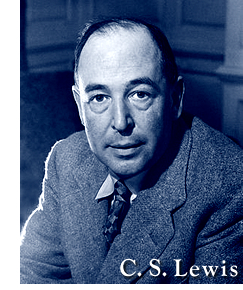
C.S. Lewis Daily – Today’s Reading


On evil

I think one may be quite rid of the old haunting suspicion—which raises its head in every temptation—that there is something else than God—some other country . . . into which He forbids us to trespass—some kind of delight wh. He “doesn’t appreciate” or just chooses to forbid, but which wd. be real delight if only we were allowed to get it. The thing just isn’t there. Whatever we desire is either what God is trying to give us as quickly as He can, or else a false picture of what He is trying to give us—a false picture wh. would not attract us for a moment if we saw the real thing. Therefore God does really in a sense contain evil—i.e., contains what is the real motive power behind all our evil desires. He knows what we want, even in our vilest acts: He is longing to give it to us. He is not looking on from the outside at some new “taste” or “separate desire of our own.” Only because He has laid up real goods for us to desire are we able to go wrong by snatching at them in greedy, misdirected ways. The truth is that evil is not a real thing at all, like God. It is simply good spoiled. That is why I say there can be good without evil, but no evil without good. You know what the biologists mean by a parasite—an animal that lives on another animal. Evil is a parasite. It is there only because good is there for it to spoil and confuse.

Thus you may well feel that God understands our temptations—understands them a great deal more than we do. But don’t forget Macdonald again—“Only God understands evil and hates it.” Only the dog’s master knows how useless it is to try to get on with the lead knotted round the lamp-post. This is why we must be prepared to find God implacably and immovably forbidding what may seem to us very small and trivial things. But He knows whether they are really small and trivial. How small some of the things that doctors forbid would seem to an ignoramus.

From The Collected Letters of C.S. Lewis, Volume II

Compiled in Words to Live By

Our Daily Bread — For This I Have Jesus


Read: Isaiah 49:13-20

Bible in a Year: Jeremiah 1-2; 1 Timothy 3

The Lord comforts his people and will have compassion on his afflicted ones. —Isaiah 49:13

There is rarely a problem-free season in our lives, but sometimes the onslaught is terrifying.

Rose saw her entire family, except for her two little daughters, slaughtered in the Rwandan Genocide of 1994. Now she is a widow among many widows with little money. But she refuses to be defeated. She has adopted two orphans and simply trusts God to provide for the food and school fees for her family of five. She translates Christian literature into the local language and organizes an annual conference for other widows. Rose wept as she told me her story. But for every problem in her life she has one simple remedy. “For this,” she said, “I have Jesus.”

God knows exactly what you are facing today. Isaiah reminds us that God’s knowledge of us is so intimate that it is as if our names were written on the palms of His hands (Isa. 49:16). We may sometimes neglect the needs of others, even those who are closest to us, but God is aware of every detail of our lives. And He has given us His Spirit to guide, to comfort, and to strengthen us.

Think of the challenges you face at this moment, and then write these words beside each one as a reminder of His faithfulness and care: “For this, I have Jesus.” —Marion Stroud

Thank You, Jesus, for being near to me right now. I’m grateful for Your faithfulness.

Life takes on perspective in the light of Christ.

INSIGHT: The book of Isaiah is a book of extremes. In chapters 1-2 Isaiah describes how far away from God the people of Israel have wandered. In chapter 3 he warns of the punishment and judgment that is coming because of their sin and disobedience. Later he discusses God’s provision to bring them back to Himself (ch. 4) and how much they will flourish despite the current and coming disasters (ch. 49). In God’s eyes there is always hope for redemption, restoration, and blessing. J.R. Hudberg

Ravi Zacharias Ministry – Available Hills


Public radio program This American Life ran a special report on a certain sub-culture of people whose prize possessions are their car stereos. They are called “decibel drag racers” and people flock across international borders to join them in competition. Like actual drag racing, cars line up across the track, except in this competition they will not be going anywhere. The winner is the owner of the car stereo that can play at the loudest possible decibel. Oddly enough (that is, more odd than the fact that these systems are too powerful to play music), most of the cars that win this competition are not even drivable. The world record holder at the time of this interview had 900 pounds of concrete poured into the floor of his van. Wind shields usually only make it through three competitions before cracking (and these are not normal windshields). Yet one competitor still seems to entirely miss the irony that there is no longer any room for himself in his car. “We need more batteries,” he laments. “But that’s all the room we have.”(1)

To anyone outside of this extreme audio sport world, “irony” is perhaps a generous word to describe the phenomenon. The TAL reporter was far more articulate: “Everybody wants to be the king of a hill,” he concluded. “But the number of aspiring kings always dwarfs the number of available hills, so in this country we build more hills.”(2) I’m not sure there is a better way to describe it.

There is a word in Greek that captures my imagination as much as undrivable cars and manmade hills. Cheiropoietos is a combination of two other Greek words, the first meaning “hand” and the second “to make”—thus, the rough translation, “made with hands.” The word makes one of its first appearances in the Septuagint, the early Greek version of the Old Testament. In something like a satire, the prophet Isaiah questions the effectiveness of Bel and Nebo, the god of the Babylonians and the god of the Chaldeons. Isaiah describes a procession out of the city and into exile where Bel and Nebo only burden down donkeys. They “stoop and bow down together,” Isaiah writes “unable to rescue the burden, they themselves go off into captivity” (Isaiah 46:2). In calamity, the people who serve these gods are not bowing before them. Idols made with hands must be carried out of the city gates by the very hands that made them. Isaiah is perplexed by the irony they fail to notice:

Some pour out gold from their bags

and weigh out silver on the scales;

they hire a goldsmith to make it into a god,

and they bow down and worship it.

They lift it to their shoulders and carry it;

they set it up in its place, and there it stands.

From that spot it cannot move.

Though one cries out to it, it does not answer;

it cannot save him from his troubles.(3)

The irony of things worshipped is often lost on the worshipper. The prophet Jeremiah called it a “discipline of delusion.” Much like a prized vehicle that cannot carry you home from the competition, idols that cannot answer the cries of the worshippers who made them are not worth crying to in the first place. Whether building idols or building hills, anything that can be fashioned at our own hands is not worth worshipping.

But for those of us who have tried and failed anyway, there is yet hope. The book of Isaiah is not the last time cheiropoietos appears in Scripture. In the New Testament, cheiropoietos is contrasted with the word acheiropoietos—that which is “made with hands” is set in stark comparison to that which is “made without hands.” Thus in a letter to the Colossians, the apostle Paul encourages believers to see that we are not self-made men and women, but believers transformed by something entirely different. “[Y]ou have come to fullness in Christ, who is the head of every ruler and authority. In him also you were circumcised with a circumcision made without hands, by putting off the body of the flesh in the circumcision of Christ; when you were buried with him in baptism, you were also raised with him through faith in the power of God, who raised him from the dead.”

A self-made man standing on a man-made hill is of no comparison to the God who made the mountains, the one whose very hands are begotten not made. Far more worthy of wonder than gods that must be carried is the God who takes up our infirmities and carries our sorrows, who was wounded for our transgressions, crushed for our iniquities, and bore the sins of many in his hands.

Jill Carattini is managing editor of A Slice of Infinity at Ravi Zacharias International Ministries in Atlanta, Georgia.

(1) David Segal, This American Life, Episode 279, December 10, 2004.

(2) Ibid.

(3) Isaiah 46:6-7.

Charles Spurgeon – The chaff driven away


“The ungodly are not so: but are like the chaff which the wind driveth away.” Psalm 1:4

Suggested Further Reading: 1 Peter 2:11-17

Christian habits are the best business habits, if men would but believe it. When a man mixes his religion with his business and allows every act of his life to be guided by it, he stands the best chance in this world, if I may be allowed such a secular expression, for “Honesty is the best policy” after all, and Christianity is the best honesty. The sharp cutting competition of the times may be called honesty—it is only called so on earth, it is not called so by God, for there is a good deal of cheating in it. Honesty in the highest sense—Christian honesty—will be found after all to be the best policy in everything, and there will ordinarily be a prosperity, even worldly prosperity, attending a good man in the patient industrious pursuit of his calling. But if he does not have that success he craves, still there is one thing he knows, he would have it if it were best for him. I often know Christian men talk in this fashion; “Well I do but very little business,” says one, “but I have enough coming in to live upon comfortably and happy. I never cared much for push and competition; I never felt that I was fit for it, and I sometimes thank God that I never thrust myself out into the rough stream, but that I was content to keep along shore.” And I have marked this one thing, and as a matter of fact I know it cannot be disproved, that many such humble-minded men are the very best of Christians, they live the happiest lives, and whatsoever they do certainly does prosper, for they get what they expected though they did not expect much, and they get what they want though their wants are not very large.

For meditation: Honesty honours God, and God honours those who honour him (1 Samuel 2:30). Dishonesty in the early church was strikingly exposed (Acts 5:1-11).

Sermon no. 280

23 October (1859)

Joyce Meyer – God Even Cares About Remotes and Car Keys


But the Counselor, the Holy Spirit, whom the Father will send in my name, will teach you all things and will remind you of everything I have said to you.- John 14:26 NIV 1984

Countless times over the years the Holy Spirit has reminded me where things are that I have misplaced and to do things I have forgotten to do. He has also kept me on the right track by reminding me of what God’s Word says about certain issues at key times of decision in my life.

I learned I could trust God to help with big decisions by taking small needs to Him too. One time we had some family members over and wanted to watch a movie, but we couldn’t find the remote control. We searched everywhere for it, but nothing was producing the remote control. I decided to pray. So silently in my heart I said, Holy Spirit, show me where the remote control is, please. Immediately in my spirit I thought of the bathroom and, sure enough, that’s where it was.

The same thing happened to me concerning my car keys one day when I needed to leave. I was in a time crunch and couldn’t find my keys. I searched frantically to no avail and then decided to pray. In my spirit I saw the keys on the front seat of my car, and that is exactly where they were.

One of the gifts of the Holy Spirit discussed in 1 Corinthians 12 is the word of knowledge. God gave me a word of knowledge about the remote control, as well as the misplaced keys. We can count on the Holy Spirit to remind us of things we need to be reminded of. If we needed no help, we would always perfectly remember everything and never need to be reminded; but if we are honest, we all know that is not the case.

If the Lord cares enough to speak to us about remote controls and lost keys, think how eager He must be to talk to us about more intimate things.

Trust in Him: If you need help learning to trust God with the big decisions in your life, as I did, start by taking your small needs to Him. He cares about all your needs, no matter how insignificant they may seem!

From the book Trusting God Day by Day by Joyce Meyer.

Greg Laurie – Steps of Faith


Two of the men who had explored the land, Joshua son of Nun and Caleb son of Jephunneh, tore their clothing. They said to all the people of Israel, “The land we traveled through and explored is a wonderful land! And if the Lord is pleased with us, he will bring us safely into that land and give it to us. It is a rich land flowing with milk and honey.”—Numbers 14:6–8

When I first began preaching, I was told that I wasn’t qualified to preach. I had been a Christian for two years and had no proper theological training. I started a Bible study and was preaching around Orange County, California, when an opportunity opened up in Riverside. And pretty soon, it turned into a church. Then I was told that I wasn’t qualified to be a pastor. People told me it would never work and that I would surely fail.

When we started the Harvest Crusades, we were told, “That won’t work. Crusades are over with. Crusades will die with Billy Graham.” (By the way, Billy Graham was told that crusades would die with Billy Sunday.) When we went to the Pacific Amphitheatre and then to Angel Stadium, people said, “That’s good for California, but it won’t work anywhere but California.” We’ve since held crusades in such places as Hawaii, the Pacific Northwest, the East Coast, the South, the Midwest, and Australia.

Sometimes we want to put God in a box. That is how it was when the Lord commanded Moses to send twelve men to spy out the Promised Land. Ten men came back and reported obstacles, challenges, giants, and defeat. But the other two saw the challenges for what they were. Joshua and Caleb saw that God would give them the victory if they would obey Him.

There always will be people who are very small in their thinking. There always will be people who will discourage us from what God might be calling us to do. Even so, we need to take bold steps of faith. So what if everything isn’t a complete success? We learn lessons from partial failures—and even outright failures.

Joshua and Caleb saw God for who He is. And so should we.

Max Lucado – Don’t Put Your Trust in Stuff


Don’t put your trust in stuff! Paul told Timothy in 1 Timothy 6:17, “Command those who are rich in this present world not to be arrogant nor to put their hope in wealth, which is so uncertain, but to put their hope in God, who richly provides us with everything for our enjoyment.”

The rich in this world—that’s you…that’s me…and that’s okay. Prosperity is a common consequence of faithfulness. Paul didn’t tell the rich to feel guilty about being rich; he just urged caution. The abundance or lack of money will only be felt for one life. Don’t get tangled up in it. If you and I stockpile earthly treasures and not heavenly treasures, what does that say about where we put our trust? Glory Days happen to the degree that we trust God. Whom do you trust? God or King More?

From Glory Days

C.S. Lewis Daily


TO MARY WILLIS SHELBURNE: On being overconcerned about the past of others and of our own.

5 June 1961

We must beware of the Past, mustn’t we? I mean that any fixing of the mind on old evils beyond what is absolutely necessary for repenting our own sins and forgiving those of others is certainly useless and usually bad for us. Notice in Dante that the lost souls are entirely concerned with their past. Not so the saved. This is one of the dangers of being, like you and me, old. There’s so much past, now, isn’t there? And so little else. But we must try very hard not to keep on endlessly chewing the cud. We must look forward more eagerly to sloughing that old skin off forever—metaphors getting a bit mixed here, but you know what I mean.

From The Collected Letters of C.S. Lewis, Volume III

Compiled in Yours, Jack

Our Daily Bread — The Joy of Your Presence


Read: Psalm 145:1-18

Bible in a Year: Isaiah 65-66; 1 Timothy 2

Great is the Lord and most worthy of praise; he is to be feared above all gods. —Psalm 96:4

“Man’s chief end is to glorify God and enjoy Him forever,” says the Westminster Catechism. Much of Scripture calls for joyful gratitude and adoration of the living God. When we honor God, we celebrate Him as the Source from which all goodness flows.

When we praise God from our heart we find ourselves in that joyful state for which we were created. Just as a beautiful sunset or a peaceful pastoral scene points to the majesty of the Creator, so worship draws us into a close spiritual union with Him. The psalmist says, “Great is the Lord and most worthy of praise . . . . The Lord is near to all who call on him” (Ps. 145:3,18).

God does not need our praise, but we need to praise God. By basking in His presence we drink in the joy of His infinite love and rejoice in the One who came to redeem and restore us. “In your presence there is fullness of joy,” the psalmist says. “At your right hand are pleasures forevermore” (Ps. 16:11 esv). —Dennis Fisher

Dear Lord, You are the great and mighty God, the Creator of the universe. I will praise Your name always. There is no God besides You.

Worship is a heart overflowing with praise to God.

INSIGHT: Psalm 145 is a declaration of David’s praise. While some psalms recall God’s past deliverances, this psalm focuses entirely on God’s help in the present. Bill Crowder

Ravi Zacharias Ministry – The Good Story


In publishing his godless Bible for those with no faith, A. C. Grayling may have expected a mixed reception. The ‘religious Bible’ (as he calls the Christian original) often sparks controversy, so one might have assumed that his would prompt a powerful reaction.(1)

But although eyebrows were certainly raised, support given, and criticism leveled, I couldn’t help feeling that there is something a little flat about it all. Perhaps it was because we were in the midst of celebrating the 400-year anniversary of the King James translation of the Bible with its majestic impact on the English language, that one struggled to muster any strong reaction to this book. One of the repeated observations made about Grayling’s moral guide for atheists is that it just doesn’t seem to be as good or interesting as the original.

Jeannette Winterson, author of Oranges Are Not the Only Fruit, had this to say:

“I do not believe in a sky god but the religious impulse in us is more than primitive superstition. We are meaning-seeking creatures and materialism plus good works and good behaviour does not seem to be enough to provide meaning. We shall have to go on asking questions but I would rather that philosophers like Grayling asked them without the formula of answers. As for the Bible, it remains a remarkable book and I am going to go on reading it.”

Perhaps it has something to do with what seems to be a fundamental misunderstanding on Grayling’s part: the Bible is not merely a book containing moral guidance, as he seems to think it is. While Christians would say that it does contain the moral law of God and shows us how to live our lives, the actual text of the Bible is much more besides.

It is the history of a people and a grand narrative of redemption for all people. At its heart, it is the story of a relationship, and not a collection of platitudes. As the New Testament opens with God coming in human form, we encounter Jesus walking the earth, not simply to restate a moral code, but to offer us peace with God through himself. It’s about a personal God to encounter, not a set of propositions to understand or laws to follow. This is drama with a capital D.

The Bible also contains narrative history, at its most fascinating with well-preserved accounts recording personal perspectives on historical events. Whether it be a prophet like Jeremiah, writing in the 7th century BC, or the gospel writer Mark in the 1st century AD, this is compelling writing whatever our religious convictions. Who could not notice the honesty and detail of Mark’s turn of phrase when he recounts that “Jesus was in the stern sleeping on a cushion, the disciples woke him and said to him ‘Teacher don’t you care if we drown?’” (Mark 4:38). As history alone the Bible is compelling.

In as much as Grayling’s ‘Good Book’ cobbles together some of the finest moral teaching from our history, it will surely be useful to some. But from an atheist perspective is this really a legitimate task? Without God what is morality other than personal perspective or social contract? Do we need Grayling’s personal perspective any more than our own? And is he really in a position to tell us what a socially agreed set of morals should be? Great atheists of the past, like Bertrand Russell, rejected religious moral values arguing against overarching morality—do they really want Grayling to reconstruct one? “I don’t think there is a line in the whole thing that hasn’t been modified or touched by me,” he says. While his own confidence in his wisdom is clearly abundant, will others feel the same way? Readers might also note that from the 21st century, his is the only voice to make the cut and be included in the work.

In calling his worthy tome The Good Book, Grayling, perhaps unwittingly, references the story about a rich young ruler found in the Gospel of Mark. The man approaches Jesus and addresses him as “Good teacher.” “Why do you call me good?” Jesus answered. “No one is good—except God alone.” Jesus preempts centuries of philosophical debate about the nature of morality and locates goodness as an absolute in the being of God. We are challenged to question: “Without God, what is goodness?” As the debate over his book continues it will be intriguing to find out how Grayling knows his godless Bible to be a benchmark of “goodness.”

In the meantime, no doubt the Bible will continue to top best-seller lists, and engage audiences spanning all ages, backgrounds, and cultures. I for one will keep reading it.

Amy Orr-Ewing is EMEA Director for Ravi Zacharias International Ministries and Director of Programmes for the Oxford Centre for Christian Apologetics (OCCA).

(1) Originally printed in Pulse Magazine, Issue 8, Summer 2011, 10-11.

Alistair Begg – The Body of Divinity in Miniature


I will love them freely. Hosea 14:4

This sentence is a body of divinity in miniature. Whoever grasps its meaning is a theologian, and whoever is able to dive into its fullness is a learned professor! It is a summary of the glorious message of salvation that was delivered to us in Christ Jesus our Redeemer.

The sense hinges upon the word “freely.” This is the glorious, the suitable, the divine way by which love streams from heaven to earth, a spontaneous love flowing out to those who neither deserved it, purchased it, nor sought after it. It is, indeed, the only way in which God can love such as we are.

The text is a death-blow to all sorts of fitness: “I will love them freely.”

Now, if there were any fitness necessary in us, then He would not love us freely; at least, this would be a hindrance and a drawback to the freeness of it. But it stands: “I will love them freely.”

We complain, “Lord, my heart is so hard.”

“I will love them freely.”

“But I do not feel my need of Christ as I ought to.”

“I will not love you because you feel your need; I will love you freely.”

“But I do not feel that softening of spirit that I should desire.”

Remember, the softening of spirit is not a condition, for there are no conditions; the covenant of grace has no conditionality whatever. So we without any fitness may rest upon the promise of God that was made to us in Christ Jesus when He said, “Whoever believes in him is not condemned.”1 It is blessed to know that the grace of God is free to us at all times, without preparation, without fitness, without money, and without price!

“I will love them freely.” These words invite apostates to return: Indeed, the text was specially written for such- “I will heal their apostasy; I will love them freely.”

Apostate, surely the generosity of the promise will immediately break your heart, and you will return and seek your injured Father’s face.

1) John 3:18

The Family Bible Reading Plan

  • 2 Kings 3
  • 2 Thessalonians 3

Devotional material is taken from “Morning and Evening,” written by C.H. Spurgeon, revised and updated by Alistair Begg.

Charles Spurgeon – The High Priest standing between the dead and the living


“And Aaron took as Moses commanded, and ran into the midst of the congregation; and behold, the plague was begun among the people: and he put on incense, and made an atonement for the people. And he stood between the dead and the living; and the plague was stayed.” Numbers 16:47, 48

Suggested Further Reading: Hebrews 4:14-5: 10

Jesus, the propitiator, is to be looked upon as the ordained one—called of God as was Aaron. Settled in eternity as being the predestined propitiation for sin, he came into the world as an ordained priest of God; receiving his ordination not from man, neither by man; but like Melchisedec, the priest of the most high God, without father, without mother, without descent, having neither beginning of days nor end of life, he is a priest for ever after the order of Melchisedec. Stand back, sons of Korah, all of you who call yourselves priests. I can scarce imagine that any man in this world who takes to himself the title of a priest, unless he takes it in the sense in which all God’s people are priests,—I cannot imagine that a priest can enter heaven. I would not say a thing too stern or too severe; but I do most thoroughly believe that an assumption of the office of priest is so base an assumption of the priestly office of Christ, that I could as well conceive of a man being saved who called himself God, as conceive of a man being saved who called himself a priest; if he really means what he says, he has so trampled upon the priestly prerogative of Christ, that it seems to me he has touched the very crown jewels, and is guilty of a blasphemy, which, unless it be repented of, shall surely bring damnation on his head. Shake your garments, you ministers of Christ, from all priestly assumption; come out from among them; touch not the unclean thing. There are no priests now specially to minister among men. Jesus Christ and he only is the priest of his Church. He has made all of us priests and kings unto our God.

For meditation: Because the Christian has a Father in heaven, he is not to call any man his spiritual father on earth (Matthew 23:9); because the Christian has a great High Priest in heaven (1 Timothy 2:5), he is not to regard any man as his priest on earth. We are no longer living in Old Testament times!

Sermon no. 341

22 October (Preached 21 October 1860)

John MacArthur – Fearing God


“The fear of the Lord is clean, enduring forever” (Ps. 19:9).

Fearing God leads to reverential attitudes and actions.

In the Old Testament, to fear God was to view Him with reverential awe and bow to His sovereign authority. In Psalm 34 David wrote, “Come, you children, listen to me; I will teach you the fear of the Lord. Who is the man who desires life, and loves length of days that he may see good? Keep your tongue from evil, and your lips from speaking deceit. Depart from evil, and do good; seek peace, and pursue it” (vv. 11- 14). His son Solomon added, “The fear of the Lord is the beginning of knowledge. . . . Fear the Lord and turn away from evil” (Prov. 1:7; 3:7).

The concept of fearing God isn’t limited to the Old Testament. Paul said, “Work out your salvation with fear and trembling” (Phil. 2:12), “Let us cleanse ourselves from all defilement of flesh and spirit, perfecting holiness in the fear of God” (2 Cor. 7:1) and, “Be subject to one another in the fear of Christ” (Eph. 5:21).

Our fear of God compels us to worship Him and conform our lives to His will. If you fear Him, pleasing Him will be your greatest delight and displeasing Him, your greatest disappointment.

In Psalm 19:9 David uses “fear” as a synonym for God’s Word, implying that Scripture is God’s manual on how to worship Him. “Clean” (v. 9) is a comprehensive term that speaks of the absence of sin, corruption, filthiness, defilement, imperfection, and error. The message Scripture conveys is always “flawless, like silver refined in a furnace of clay, purified seven times” (Ps. 12:6, NIV).

Because it is so perfect, Scripture endures forever (Ps. 19:9). That’s why Jesus said, “Heaven and earth will pass away, but my words will not pass away” (Mark 13:31). It never needs to be updated to accommodate contemporary thinking. It stands forever as authoritative and unyielding. Those who judge it, slander it, or ignore it are in grave peril. Far better to fear God and bow to His revealed will.

Suggestions for Prayer

Read Psalm 33 as a prayer of praise to the Lord.

For Further Study

Memorize Proverbs 3:5-7 as a reminder always to seek God’s will and approval.

Joyce Meyer – Pray


Do not fret or have any anxiety about anything, but in every circumstance and in everything, by prayer and petition (definite requests), with thanksgiving, continue to make your wants known to God. Philippians 4:6

Far too many times we treat prayer as a last-ditch effort. The reasons vary—we try to fix a problem on our own, we assume God is too busy with other things, or we feel God is mad at us and won’t listen to our prayers. But when we fail to pray the result is the same: We carry burdens we do not need to bear.

For many believers, life is much harder than it has to be because we do not realize how powerful prayer is. If we did, we would pray about everything, not as a last resort, but as a first response.

In James 5:13, the apostle James offers a simple, three-word solution to some of life’s challenges: “He should pray.” The message to us in this verse is that no matter what happens over the course of a day, we can go to God in prayer. There is a great benefit in this decision—the more you pray, the closer to God you will be.

Anytime you have a problem, make prayer your first response. If you have a need, don’t hesitate to tell God what it is. When you are discouraged or feel like giving up, let God be the first person you talk to about how you are feeling. He loves you, and when you go to Him in prayer, you will be amazed at what a difference it will make in your life.

Whatever situation you find yourself in, make prayer your first response not your last resort.

From the book Closer to God Each Day by Joyce Meyer.