Tag Archives: holy spirit

Presidential Prayer Team; P.G. – What’s In a Name?


Few American parents give thought to the meanings of names when deciding on monikers for their newborns. Trendiness, how it sounds, or paying tribute to a loved one is usually primary considerations. Biblical names, though, portray character traits or chart in advance the life of the child.

We give thanks to you, O God; we give thanks, for your name is near.

Psalm 75:1

God’s Hebrew names portray His character. Elohim (Creator), Adonai (Lord), Jehovah Jireh (Provider), Jehovah Shalom (Peace), Yahweh (Covenant Keeper), El Shaddai (Almighty), Jehovah Shammah (God Who is There), Jehovah Rapha (Healer), Jehovah Sabaoth (Provider) and Jehovah Nissi (My Banner). Jesus said God’s name is holy…hallowed…and today’s verse reminds you that His very name is near to you.

A good way to pray is to call God by one of His names, consistent with the focus of your prayer. Do you want Him to keep His promises? Call Him Yahweh. Or if you ask Him to show Himself to America’s s leaders, you may want to address Him as Adonai. Call on the name of the Lord, find power in His name, and proclaim His name – for ultimately those who call on the name of the Lord will find salvation.

Recommended Reading: John 17:1-11

Greg Laurie – The Way of Cain


Woe to them! For they have gone in the way of Cain, have run greedily in the error of Balaam for profit, and perished in the rebellion of Korah. —Jude 1:11

Woe to them! For they have gone in the way of Cain, have run greedily in the error of Balaam for profit, and perished in the rebellion of Korah. (Jude 1:11)

The Bible warns us about “the way of Cain” (see Jude 1:11). What is the way of Cain? For one thing, it is to worship God with impure motives. Cain brought his offering to the Lord, but he didn’t bring it in faith. No matter how great your gift may be, if your heart is wrong, then it will mean nothing.

The way of Cain is also to have a heart and life that are filled with jealousy, envy, and hatred. There always will be people who will do better than you. There always will be someone who is better looking, more successful or more intelligent than you. So will you go through life frustrated and filled with jealousy and envy? Or, are you going to say, “God, everything I have is a gift from You anyway, and I am going to thank You for it. I don’t want to destroy my life through envy and jealousy”?

Lastly, the way of Cain is to lie to God about what you have done. There is only one way to deal with sin, and that is to tell the truth because God knows anyway. God knew what Cain was about to do, and He warned him. But Cain did what he thought he should do, and sin pounced on him, consumed him, and mastered him just as God said it would.

It is the same for those of us today as well. Don’t walk in the way of Cain. Instead, walk in the way of Abel. Hebrews 11:4 tells us that “by faith Abel offered to God a more excellent sacrifice than Cain, through which he obtained witness that he was righteous, God testifying of his gifts; and through it he being dead still speaks.” The way of Abel leads to blessing.

Max Lucado – Our Redeemer


See the cross on the hill? Can you hear the soldiers pound the nails? Jesus’ enemies smirk. “This time,” Satan whispers. “This time I will win.” For a sad Friday and a silent Saturday it appeared he had.

What Satan intended as the ultimate evil, God used for the ultimate good. God rolled the rock away and Jesus walked out on Sunday morning. And if you look closely, you can see Satan scampering from the cemetery with his forked tail between his legs. “Will I ever win?” he grumbles. No…he won’t.

Do you believe no evil is beyond God’s reach?  That He can redeem every pit, including the one in which you find yourself?  Trust God. He will get you through this. Will it be easy or quick? I hope so, but it seldom is. Yet, God will make good out of this mess. That’s His job.

From You’ll Get Through This

Night Light for Couples – Deny Yourself


“If anyone would come after me, he must deny himself and take up his cross and follow me.” Matthew 16:24

Television advertisers are experts at “rattling the cages” of viewers. They understand the philosophy of today’s audience: Look out for number one. That’s why we’re bombarded with slogans such as “Have it your way”; “You deserve a break today”; and “Because I’m worth it.” Their goal is to appeal to our self‐centered nature and manipulate us into buying a product. Frequently, they succeed.

The “I’m Third” approach to life is in direct contradiction to the message of these ads. And well it should be! Jesus tells us that our first obligation in following Him must be to deny ourselves—to let go of the steering wheel, so to speak, and let the Lord drive. Secondly, we are to love and care for others. Try implementing these priorities. They will lead to a better marriage in this life and eternal rewards in the next.

God first, others second, myself third. A simple phrase, but it contains far more wisdom for living life to the fullest than anything you’ll see or hear on a television ad.

Just between us…

  • Do we have an “I’m Third” kind of marriage?
  • Do we know a couple who model this philosophy?
  • How do you feel about putting my desires ahead of your own?
  • What, if anything, do we need to change to create an “I’m Third” marriage?
  • How can we specifically ask God to help us make this happen?

Dear Jesus, we hear Your invitation to follow You in a life of self-denial. Tonight we make You Lord of our marriage. Help us to live every day by Your example— in obedience to the Father and in loving service to each other. Amen.

From Night Light For Couples, by Dr. James & Shirley Dobson

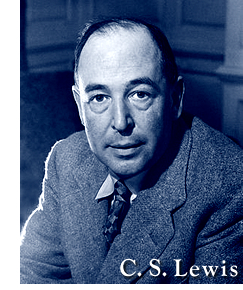
C.S. Lewis Daily – Today’s Reading


On masculine and feminine

For a good wife contains so many persons in herself. What was H. not to me? She was my daughter and my mother, my pupil and my teacher, my subject and my sovereign; and always, holding all these in solution, my trusty comrade, friend, shipmate, fellow-soldier. My mistress; but at the same time all that any man friend (and I have good ones) has ever been to me. Perhaps more. If we had never fallen in love we should have none the less been always together, and created a scandal. That’s what I meant when I once praised her for her “masculine virtues.” But she soon put a stop to that by asking how I’d like to be praised for my feminine ones. It was a good riposte, dear. Yet there was something of the Amazon, something of Penthesileia and Camilla. And you, as well as I, were glad it should be there. You were glad I should recognize it.

Solomon calls his bride Sister. Could a woman be a complete wife unless, for a moment, in one particular mood, a man felt almost inclined to call her Brother? . . .

There is, hidden or flaunted, a sword between the sexes till an entire marriage reconciles them. It is arrogance in us to call frankness, fairness, and chivalry “masculine” when we see them in a woman; it is arrogance in them to describe a man’s sensitiveness or tact or tenderness as “feminine.” But also what poor, warped fragments of humanity most mere men and mere women must be to make the implications of that arrogance plausible. Marriage heals this. Jointly the two become fully human. “In the image of God created He them.” Thus, by a paradox, this carnival of sexuality leads us out beyond our sexes.

From A Grief Observed

Compiled in Words to Live By

Charles Stanley – Jesus, Our Rock


Malachi 3:6

People will sometimes say, “The only constant is change.” Fortunately, this is not true. There is One who never changes: Jesus Christ always remains the same. What a comforting truth! But it’s hard to find refuge in someone we don’t know well. So let’s explore the Lord’s actions to learn more about His nature.

  • Jesus forgave others. He showed mercy, not judgment, to those who recognized their sin. For example, Jesus had compassion on the woman caught in adultery and stopped her death penalty with a few wise words. Then, instead of pronouncing condemnation, He said that her sins were forgiven (John 8:1-11).
  • Jesus comforted the hurting. He visited Mary and Martha, who were mourning the loss of their brother Lazarus (John 11:1-45).
  • Jesus provided for needs. After spending three days healing all kinds of disabilities, He was concerned that the large crowd hadn’t eaten. He could have sent all 4,000 away to find their own food, but He provided more than enough to satisfy their hunger (Mark 8:1-9).
  • Jesus interceded for His disciples. Just before He was crucified, He asked the Father to protect and sanctify His followers, which includes you and me (John 17:15, 17, 19-20).
  • Jesus strengthened believers and gave them power to do God’s work. In Acts 1:8, the Lord sent His disciples out to share the gospel, assuring them, “You will receive power when the Holy Spirit has come upon you.”

Jesus still forgives, still comforts, still provides, still intercedes, and still empowers. What a blessing that we can find refuge in our amazing Lord!

Bible in One Year: Proverbs 22-25


Our Daily Bread — The Likes of Us


Read: Matthew 9:35-38

Bible in a Year: Psalms 10-12; Acts 19:1-20

Ask the Lord of the harvest, therefore, to send out workers into his harvest field. —Matthew 9:38

In the late 19th century, William Carey felt a call to travel to India as a missionary to share the good news of Jesus. Pastors around him scoffed: “Young man, if God wants to save [anyone] in India, He will do it without your help or mine!” They missed the point of partnership. God does very little on earth without the likes of us.

As partners in God’s work on earth, we insist that God’s will be done while at the same time committing ourselves to whatever that may require of us. “Your kingdom come. Your will be done,” Jesus taught us to pray (Matt. 6:10). These words are not calm requests but holy demands. Give us justice! Set the world aright!

We have different roles to play, we and God. It is our role to follow in Jesus’ steps by doing the work of the kingdom both by our deeds and by our prayers.

We are Christ’s body on earth, to borrow Paul’s metaphor in Colossians 1:24. Those we serve, Christ serves. When we extend mercy to the broken, we reach out with the hands of Christ Himself. —Philip Yancey

Lord, You have called us Your friends. In some small way, help us to show Your love to this hurting world so they will know You.

Expect great things from God; attempt great things for God. William Carey

INSIGHT: Matthew’s gospel presents Jesus to the Jewish people as their long-promised Messiah. Matthew primarily uses two methods to make this powerful assertion, both of which were intended to resonate deeply with his audience. First, he repeatedly uses Old Testament Scriptures that describe Christ and are fulfilled in Jesus. Second, a critical part of Matthew’s argument for Jesus as the King of the Jews was Jesus’ compassionate power on display. This is seen in Matthew 9 where Jesus rescues the broken, the hurting, the marginalized, and the hated.


Ravi Zacharias Ministry – Gaps


Cognitive dissonance, the study of psychology tells us, is the internal tension that results when our experience doesn’t match our professed beliefs and values. It is that sense of unease when we encounter something that contradicts what we have held to be true. We often experience this tension in the course of academic training as we learn new ideas. Or we can be jolted as we meet new people with vastly different backgrounds and cultures from our own.

But perhaps dissonance is felt most acutely when it occurs in the realm of faith commitments and expectations. Why is it that even when the right thing is done, the good action taken, nothing appears to change in my life or circumstances? If suffering is merely an illusion, why do so many people experience so much pain? How is it that marriage can be so difficult and yet God’s ideal for relationships? How is it that prayer seemingly goes unanswered even in the face of faithful and persistent prayers? How do I reconcile personal and global suffering with a view of a good and benevolent Divinity governing the world?

Some, to be sure, might claim to have never experienced (or noticed) cognitive dissonance as a reality in their own lives. There are always quick explanations offered for those who don’t find it quite as easy to reconcile the gaps between beliefs and experience: We have drifted away from our moral center. We have not studied enough, or prayed enough. We have not understood right teaching. Perhaps there are times when all of these explanations may be true.

But is it always so easy to explain dissonance away? I asked this question anew when I looked at the questions raised by John the Baptist as presented in the New Testament. John the Baptist was the cousin of Jesus of Nazareth. Like Jesus, he had an extraordinary beginning, having been born to parents beyond child-bearing years. The last of the great, Hebraic prophets, the gospels portray John with all the intensity and moral outrage of Jeremiah, Ezekiel, or Malachi. John was fearless in his proclamation issuing the call of repentance to sinners and the religious leaders alike. He even baptized Jesus in preparation for his own itinerant ministry. He was resolute in his stand against immorality and hypocrisy. He understood his unique and limited role in preparation for the Messiah. Even as his own disciples came undone and complained that the crowds who once clamored to see him were now flocking to Jesus, John stood clear in his calling: “You yourselves bear me witness, that I have said, ‘I am not the Messiah,’ but ‘I have been sent before him’” (John 3:26-28).

Yet knowing all of this background creates a dramatic contrast when we hear John speak after he is imprisoned by Herod. His resolve was shaken. Both Matthew and Luke’s gospels record his own experience with dissonance: “Now when John in prison heard of the works of Jesus, he sent word by his disciples, and said to him, ‘Are you the expected one, or shall we look for someone else?’”(2) His question belies the ‘gap’ between the reality he envisioned and his current reality in a cold prison cell. If Jesus is the Messiah, John must have wondered, why am I sitting in this jail? The Messiah John proclaimed would “thoroughly clear his threshing floor” and “burn up the chaff with unquenchable fire” (Matthew 3:12). The Messiah was coming to rid Israel—and indeed the world—of evil. Yet in John’s day to day existence in his lonely prison cell, evil had won the day. “Are you the expected one, or shall we look for someone else?”

John’s dissonance is not unlike the gaps between belief and experience. Yet perhaps, according to author Scott Cairns, “[These also] can become illuminating moments in which we see our lives in the context of a terrifying, abysmal emptiness, moments when all of our comfortable assumptions are shown to be false, or misleading, or at least incomplete.”(1) Surely, John thought, the Messiah would free him from prison, bring justice, and bind up all the wicked like chaff to be burned. Yet, what was expected was not experienced. John experienced the terrifying and abysmal emptiness that came in a Jesus who was free from his expectations and of his own assumptions.

Jesus acknowledged that his ministry would be disruptive, and even be misunderstood. In responding to John’s doubts, Jesus said, “Blessed is the one who keeps from stumbling over me” (Matthew 11:6). Like John before us, those who seek to follow Jesus often stumble over him. The gaps between what we believe and what we experience create fissures in faith into which many fall. Yet, as Cairns suggests, might mining those gaps uncover the treasure of encountering Jesus in new ways? Might mining the gaps we experience hold the treasure of new insight and the beauty of a more faithful devotion if we are willing to let go of “comfortable assumptions” and cherished expectations? If so, then might all the faithful dig deep and find that what is precious and most valuable is often found in the fissures of dissonance.


Margaret Manning Shull is a member of the speaking and writing team at Ravi Zacharias International Ministries in Bellingham, Washington.


(1) Scott Cairns, The End of Suffering (Brewster MA: Paraclete Press, 2009), 8.

(2) Matthew 11:3; Luke 7:20.


Alistair Begg – Don’t Defile True Doctrine


If you wield your tool on it you profane it.

Exodus 20:25

God’s altar was to be built of unhewn stones, that no trace of human skill or labor might be seen upon it. Human wisdom delights to trim and arrange the doctrines of the cross into a system more artificial and more congenial to the depraved tastes of fallen nature; instead, however, of improving the Gospel carnal wisdom pollutes it, until it becomes another gospel and not the truth of God at all.

All alterations and amendments of the Lord’s own Word are defilements and pollutions. The proud heart of man is very anxious to have a hand in the justification of the soul before God; preparations for Christ are dreamed of, humblings and repentings are trusted in, good works are put forth, natural ability is much vaunted, and by all means the attempt is made to lift up human tools upon the divine altar.

It would be best if sinners would remember that so far from perfecting the Savior’s work, their carnal confidences only pollute and dishonor it. The Lord alone must be exalted in the work of atonement, and not a single mark of man’s chisel or hammer will be endured. There is an inherent blasphemy in seeking to add to what Christ Jesus in His dying moments declared to be finished or to improve that in which the Lord Jehovah finds perfect satisfaction. Trembling sinner, away with your tools, and fall upon your knees in humble supplication; accept the Lord Jesus to be the altar of your atonement, and rest in Him alone.

Many professors may take warning from this morning’s text as to the doctrines that they believe. There is among Christians far too much inclination to square and reconcile the truths of revelation. This is a form of irreverence and unbelief; let us strive against it and receive truth as we find it, rejoicing that the doctrines of the Word are unhewn stones, and so are all the more fit to build an altar for the Lord.

Devotional material is taken from “Morning and Evening,” written by C.H. Spurgeon, revised and updated by Alistair Begg.

Charles Spurgeon – An exposition of 1 Corinthians 15


“And that he was buried, and that he rose again the third day according to the scriptures: And that he was seen of Cephas, then of the twelve: After that he was seen of above five hundred brethren at once; … After that he was seen of James; then of all the apostles. And last of all he was seen of me also, as of one born out of due time.” 1 Corinthians 15:4-8

Suggested Further Reading: Matthew 28:11-15

The resurrection of Jesus Christ from the dead is one of the best attested facts on record. There were so many witnesses to behold it, that if we do in the least degree receive the credibility of men’s testimonies, we cannot and we dare not doubt that Jesus rose from the dead. It is all very easy for infidels to say that these persons were deceived, but it is equally foolish, for these persons could not every one of them have been so positively deceived as to say that they had seen this man, whom they knew to have been dead, afterwards alive; they could not all, surely, have agreed together to help on this imposture; if they did, it is the most marvellous thing we have on record, that not one of them ever broke faith with the others, but that the whole mass of them remained firm. We believe it to be quite impossible that so many rogues should have agreed for ever. They were men who had nothing to gain by it; they subjected themselves to persecution by affirming this very fact; they were ready to die for it, and did die for it. Five hundred or a thousand persons who had seen him at different times, declared that they did see him, and that he rose from the dead; the fact of his death having been attested beforehand. How, then, dare any man say that the Christian religion is not true, when we know for a certainty that Christ died and rose again from the dead? And knowing that, who shall deny the divinity of the Saviour? Who shall say that he is not mighty to save? Our faith has a solid basis, for it has all these witnesses on which to rest, and the more sure witness of the Holy Spirit witnessing in our hearts.

For meditation: The task of inventing myths in connection with the resurrection has always been left to the enemies of Christ. His followers had the more straightforward role of simply passing on what they had seen and heard (Acts 4:20).

Part of nos. 66-67
14 July (Given on 17 February 1856)

John MacArthur – Elect in Christ


“You are a chosen race” (1 Pet. 2:9).

Election is the spiritual privilege from which all others flow.

Unlike those who are destined to destruction because of their rejection of Christ (1 Pet. 2:8), Christians are an elect race of people, bound together by God’s redeeming grace. That’s cause for great celebration!

First Peter 2:9 is an allusion to Deuteronomy 7:6-9, which says, “You are a holy people to the Lord your God; the Lord your God has chosen you to be a people for His own possession out of all the peoples who are on the face of the earth. The Lord did not set His love on you nor choose you because you were more in number than any of the peoples, for you were the fewest of all peoples, but because the Lord loved you and kept the oath which He swore to your forefathers, the Lord brought you out by a mighty hand, and redeemed you from the house of slavery, from the hand of Pharaoh king of Egypt. Know therefore that the Lord your God, He is God.”

Like Israel, the church is the redeemed community of God, “chosen according to the foreknowledge of God the Father, by the sanctifying work of the Spirit” (1 Pet. 1:1- 2). Before the foundation of the world, God placed His love on you, then brought you into His kingdom by granting you saving grace. That’s the doctrine of election.

Many people misunderstand election, but it’s a wonderful doctrine that brings marvelous benefits. It exalts God by demonstrating His love and grace toward miserable sinners. It eliminates pride by affirming that you are totally dependent on God’s grace. It should promote such gratitude in your heart that you long to live in holiness and serve Him at any price. It should also give you joy and strength, knowing that God will never let you go and His purposes will be accomplished in you. You can face any challenge with utmost confidence in His provisions.

Rejoice in your election. Worship God and yield to His Spirit’s leading so His choice of you will be evident to all who know you.

Suggestions for Prayer

What has the spiritual privilege of being chosen by God meant in your life? Express your answer to God in prayer, thanking Him for His wondrous grace.

For Further Study

Read Romans 5. What benefits of election does Paul mention?

Joyce Meyer – Believe in Prayer


Don’t worry about anything; instead, pray about everything. Tell God what you need, and thank him for all he has done. —Philippians 4:6 NLT

How many problems have you solved by worrying? How much time have you spent worrying about things that didn’t end up happening? Has anything ever gotten better as a result of your worrying about it? Of course not!

The instant you begin to worry or feel anxious, give your concern to God in prayer. Release the weight of it and totally trust Him to either show you what to do or take care of it Himself.

Prayer is the blueprint for a successful life. During His time on Earth, Jesus prayed. He entrusted everything to God—even His reputation and life. We can do the same. Don’t complicate your communication with God. Believe in Him and ask Him for what you need through simple, confident prayers.

Power Thought: Worry accomplishes nothing. I trust in the Lord.

Campus Crusade for Christ; Bill Bright – Awards for Faithfulness


“Stop being afraid of what you are about to suffer – for the devil will soon throw some of you into prison to test you. You will be persecuted for ‘ten days.’ Remain faithful even when facing death and I will give you the crown of life – an unending, glorious future” (Revelation 2:10).

I find this a very timely word of caution, for we live in a day when it appears that the enemy is making his last fling. I would not attempt to set dates, for it may be years, decades or even centuries before the culmination of all things.

But the fact remains that committed believers are facing persecution and testing as perhaps seldom before. You and I may be called upon to suffer for the cause of Christ. By faith, we are not to fear, knowing that an “unending, glorious future” awaits us.

This promise might apply equally to the physical suffering we encounter from time to time as a part of the natural order of things. If we can accept such suffering as part of God’s plan for us – one of the “all things” of Romans 8:28 that is working together for our good – we will be among those victors who are able to “count it all joy.”

As we consider these possibilities, we may be optimistic, even cheerful, knowing that we are already on the winning side – more than conquerors. And we need not be afraid, for “God has not given us the spirit of fear, but of power, and of love, and of a sound mind.”

Bible Reading: Revelation 2:8-11

TODAY’S ACTION POINT: I will count on God’s promise of Romans 8:28 to do only that which is good for me, regardless of the circumstances. He will enable me to live supernaturally.

Presidential Prayer Team; A.W. – From Slavery to Freedom


Zanzibar, Africa was home to Stone Town, the last legally operating slave market in the world. In the 1800’s, David Livingstone, a Scottish missionary, made a plea to abolish slavery and the inhumane trafficking of humans in that very location. In 1873, the edict was signed making slave trade illegal, and the market in Zanzibar was eventually replaced on that site by the Anglican cathedral Christ Church. Today, an altar stands where the whipping post was once positioned.

God settles the solitary in a home; he leads out the prisoners to prosperity.

Psalm 68:6

Today’s verse reminds you that God brings freedom and provision. Many people are suffering in spiritual slavery, trapped in mental and emotional prisons, often of their own making. Yet God changes places of slavery to places of freedom. He hears the cries of the oppressed and breaks their chains of bondage.

What is holding you captive today? Know God can break you free. Ask Him to go to the very place of slavery in your life and transforms it into a place of worship. Then ask Him to lead the nation’s leaders to His truth so they, too, can know the release of His freedom in their hearts.

Recommended Reading: John 8:31-38

Greg Laurie – The Green-Eyed Monster


Abel also brought of the firstborn of his flock and of their fat. And the Lord respected Abel and his offering, but He did not respect Cain and his offering. And Cain was very angry, and his countenance fell.

—Genesis 4:4–5

If you want to be a miserable person, then be an envious person. It is not necessarily a bad thing to admire something that someone else has. When we say, “I envy you. You are going on vacation,” we aren’t necessarily using envy in the worst sense of the word.

To envy is to be angry when someone else has something that you don’t have. A literal definition of the word envy is “a malignant or hostile feeling.” So it is not a matter of saying, “You have a lot. Wow, that is really great! I wish I had that!”

Rather, it’s an attitude that says, I am actually angry with you that you have those things and I don’t have them.

Envy has been described as a small-town sin; it breeds on proximity. We don’t tend to envy someone who is famous and successful. Instead, we envy our neighbors, a relative, or a coworker. We are fine as long as we are all equal, as long as we are all on the same playing field. But if one begins to succeed, if one gets an opportunity we think we should have had, if one has something wonderful happen, we become envious.

We don’t know exactly what caused Cain to murder his brother Abel, but I think it is safe to say that envy and jealousy played a part. Abel’s sacrifice was accepted, and Cain’s was not. Envy unchecked can become a major problem, and Cain’s envy led to murder. Cain was not mastered by God, so he became enslaved by the Devil.

Shakespeare called envy the green-eyed monster, and it’s a green-eyed monster that can strangle you. Be a jealous person, and you will give the Devil a foothold just as Cain did—and you will face the repercussions.

Night Light for Couples – What a Man Needs


“It is not good for the man to be alone. I will make a helper suitable for him.” Genesis 2:18

Wife, do you understand the needs of your husband? Let’s face it, a man’s career is usually extremely important to his self‐esteem. He is made that way. Many women complain about their husbands’ “workaholism,” which may be valid, and yet husbands deserve thanks for the effort they invest. Compared to the man who sits around the house doing little or nothing, the hard worker is an honorable man. God has assigned two key tasks to men: to provide for and to protect their families. If your husband meets those two requirements, you need to let him know that you appreciate how hard he works.

Several years ago a survey was taken to determine what men wanted in their homes. The result was surprising: It was tranquility. Is your home a peaceful haven for your husband and your family—a place where he can “recharge his batteries” and enjoy the company of his family?

Whatever his specific needs and wants, your husband—and your marriage—will benefit immeasurably when you make him a priority in your life. Scripture says that a woman was designed to be a “helper” for her husband (who, in turn, is commanded to love his wife as Christ loved the church). And after all, there’s no one better for the job than you.

Just between us…

  • (wife) Do you feel that I appreciate how hard you work?
  • (wife) What do I do for you that you most appreciate?
  • (wife) What things could I do to show my love for you this week?

(wife) Heavenly Father, thank You for my husband. I want to understand and serve him in ways that refresh and encourage him. Show me how to bless him with beautiful gifts like appreciation, support, and tranquility. Amen.

From Night Light For Couples, by Dr. James & Shirley Dobson

C.S. Lewis Daily – Today’s Reading


The Christian idea of marriage is based on Christ’s words that a man and wife are to be regarded as a single organism—for that is what the words ‘one flesh’ would be in modern English. And the Christians believe that when He said this He was not expressing a sentiment but stating a fact—just as one is stating a fact when one says that a lock and its key are one mechanism, or that a violin and a bow are one musical instrument. The inventor of the human machine was telling us that its two halves, the male and the female, were made to be combined together in pairs, not simply on the sexual level, but totally combined. The monstrosity of sexual intercourse outside marriage is that those who indulge in it are trying to isolate one kind of union (the sexual) from all the other kinds of union which were intended to go along with it and make up the total union. The Christian attitude does not mean that there is anything wrong about sexual pleasure, any more than about the pleasure of eating. It means that you must not isolate that pleasure and try to get it by itself, any more than you ought to try to get the pleasures of taste without swallowing and digesting, by chewing things and spitting them out again.

From Mere Christianity

Compiled in A Year with C.S. Lewis

Charles Stanley – The Foundation of Unwavering Faith


Hebrews 13:8

In our ever-changing world, families move, friendships drift, allegiances shift, and technology advances by quantum leaps. If we seek security in people, possessions, or positions, we’re doomed to be disappointed.

Yet we all need somewhere to turn during the storms of life. The one true anchor for our soul is Jesus Christ, who Scripture assures us will not change. To find comfort in Him, we must learn who He is, what He does, and how He works. Today we will explore a few details about His life and character.

John 1:1 reveals that Jesus was Deity from the beginning. Fully God and fully man, He was born of a virgin, lived 33 years on Earth, was crucified despite His innocence, and rose after three days. He is the Way, the Truth, and the Life—the Christ, the Son of the Living God (John 14:6; Matt. 16:16-17). Our Lord fulfilled countless prophesies in the Old Testament, such as Isaiah 53. Like us, Jesus has feelings—He wept for hurting people and felt angry when people misused the temple. Most importantly, His resurrection defeated death, and He still lives today.

God’s character never varies. Of course, as situations change, He acts accordingly. But the merciful, loving, compassionate, and holy Jesus we know in Scripture is the same Messiah we can cling to today.

Where do you turn in trying times? Difficult circumstances are inevitable. Prepare yourself for them by learning who Jesus is—He’s the only true shelter and rock that will not change. What a wonderful Savior!

Bible in One Year: Proverbs 19-21

Ravi Zacharias Ministry – Commending Christ


Author John Stackhouse describes the discipline of “apologetics” as the Christian work of commending the faith as much as it is about defending the faith.(1) Commending the faith, he argues, is something the Christian community does wherever it is—with one another, with neighbors, with the world. Consequently, it is also something the Christian community does whether they are aware of it or not.

In his sermon before the Areopagus, the apostle Paul commended the gospel with reason and rhetoric that would not have gone unrecognized. This is the “good news,” he professed, and the “good life” depends on it. To the Athenian philosophers, he commended the gospel in terms that mattered deeply to them. “Since we are God’s offspring,” he said quoting an Athenian poet, “we ought not to think that the deity is like gold, or silver, or stone, an image formed by the art and imagination of mortals.”(2) For on the contrary, he told them, the real and present Deity is now calling people everywhere to turn around and come near.

The apostle then followed this bold notion with a proof that would have caused as much, if not more, commotion in first century Athens as in hyper-rational modernity and cynical post-modernity. We know that God is the true creator, sustainer, and friend, he reasoned, because God “has given this proof… by raising [Christ] from the dead.”(3) Paul is telling the story of God in the world here, but he is also telling his own story. This Deity he commends to the Athenian philosophers is the risen Christ who appeared to him on Damascus road, who became ‘friend’ instead of ‘foe,’ and turned his own philosophy and consequently his life around.

Paul’s use of the resurrection as proof of all he has proclaimed to the Athenians is interesting on several levels. To begin with, while the apostle clearly sought to ground his Mars Hill message on a common foundation, he ended with a proof that must have seemed to some like a foreign tidal wave. For the Athenians, resurrection of the body was absurd and unreasonable, as much of an obstacle to them as the scandalizing cross to men and women of Jerusalem. While the philosophers of the Areopagus may have believed in the immortality of the soul, the body was what confined and imprisoned this soul. In their minds, there was a radical distinction between matter and spirit. Bodily resurrection did not make any more sense than a god with a body! For the Athenians, and indeed for all of us, this very proof required a radical turn of heart, mind, soul, and body. For some, this babbler’s new teaching was immediately labeled absurd. When they heard of this resurrection of the dead, reports Luke, there were scoffs and sneers.

Yet Paul’s apologetic, which was carefully researched, powerfully worded, and respectfully delivered, was not here ending on a careless note. On the contrary, he was ending with the chorus itself. For Paul, all of the words uttered up until this point would merely be noise had they not come from this very refrain. For if Christ has not been raised, both preaching and faith itself is useless, as he said elsewhere. Though it would have been a foreign language to the crowd at the Areopagus, Paul commended the resurrection as the very proof of his apologetic—for the entirety of his message was authoritative only and specifically because the resurrection had indeed occurred. Authors Stanley Hauerwas and William Willimon note the central task of commending the Gospel: “Our claim is not that this tradition will make sense to anyone or will enable the world to run more smoothly. Our claim is that it just happens to be true. This really is the way God is. This really is the way God’s world is.”(4) For Paul, and for the apologist, the important Christian act of finding common ground must never involve burying what is real and living: Christ is risen from the dead.

This single event is the theological core of Paul’s identity and his highest apologetic. It is also the very pillar which makes abundantly clear that the true work of apologetics does not belong to Christians. Writes Stackhouse, “Spiritual adepts throughout the ages warn us that mere argument accomplishes little even within our own hearts.”(5) No one knew this better than the apostle Paul, who would never have otherwise considered Jesus anymore than one to despise: the work of conversion belongs to the Holy Spirit.

Thus, there were many at the Areopagus that day who sneered at Paul’s philosophical conclusions. There were also many who responded in the same manner they responded to any teaching considered at the Areopagus—namely, with fascination, with discussion, and with barren hearts and minds. But likewise, there were a number who believed. Among them was Dionysius, a member of the Areopagus, also a woman named Damaris, and a number of others.(6) By the grace of God, the risen Christ was commended and the obstacles that kept him from sight were overcome.

Jill Carattini is managing editor of A Slice of Infinity at Ravi Zacharias International Ministries in Atlanta, Georgia.

(1) The discipline of apologetics derives its name from the Greek word apologia, meaning defense. “Always be ready to give an answer (apologia) to anyone who asks you to give a reason for the hope that is in you” (1 Peter 3:15).

(2) Acts 17:29.

(3) Acts 17:31.

(4) Stanley Hauerwas and William Willimon, Resident Aliens (Nashville: Abingdon Press, 1989), 101.

(5) John Stackhouse, Jr. Humble Apologetics: Defending the Faith Today (New York: Oxford University Press, 2002), 82.

(6) cf. Acts 17:34.

Alistair Begg – Evaluate Your Anger


God said to Jonah, “Do you do well to be angry…?”

Jonah 4:9

Anger is not always or necessarily sinful, but it has such a tendency to run wild that whenever it displays itself, we should be quick to question its character, with this inquiry, “Do you do well to be angry?” It may be that we can answer, “Yes.” Very frequently anger is the madman’s firebrand, but sometimes it is Elijah’s fire from heaven. We do well when we are angry with sin, because of the wrong that it commits against our good and gracious God; or with ourselves because we remain so foolish after so much divine instruction; or with others when the sole cause of anger is the evil that they do. He who is not angry at transgression becomes a partaker in it. Sin is a loathsome and hateful thing, and no renewed heart can patiently endure it. God himself is angry with the wicked every day, and it is written in His Word, “O you who love the LORD, hate evil.”1

Far more frequently it is to be feared that our anger is not commendable or even justifiable, and then we must answer, “No.” Why should we be fretful with children, passionate with servants, and wrathful with companions? Is such anger honorable to our Christian profession or glorifying to God? Is it not the old evil heart seeking to gain dominion, and should we not resist it with all the might of our newborn nature?

Many professors give way to temper as though it were useless to attempt resistance; but let the believer remember that he must be a conqueror in every point, or else he cannot be crowned. If we cannot control our tempers, what has grace done for us? Someone told Mr. Jay that grace was often grafted on a crab-stump. “Yes,” he said, “but the fruit will not be crabs.”

We must not make natural infirmity an excuse for sin, but we must fly to the cross and pray the Lord to crucify our tempers, and renew us in gentleness and meekness after His own image.

1) Psalm 97:10

Devotional material is taken from “Morning and Evening,” written by C.H. Spurgeon, revised and updated by Alistair Begg.