Tag Archives: holy spirit

John MacArthur – Security in Christ


“This is contained in Scripture: ‘Behold I lay in Zion a choice stone, a precious corner stone, and he who believes in Him shall not be disappointed'” (1 Pet. 2:6).

Christ is the fulfillment of all Messianic promises, and in Him you are eternally secure.

First Peter 2:6 is a paraphrase of Isaiah 28:16, which says, “Thus says the Lord God, ‘Behold, I am laying in Zion a stone, a tested stone, a costly cornerstone for the foundation, firmly placed. He who believes in it will not be disturbed.'” Isaiah was speaking of the Messiah—the coming Christ of God. Peter, writing under the inspiration of the Holy Spirit, applied Isaiah’s prophecy to Jesus.

In Isaiah’s prophecy, “Zion” refers to Jerusalem, which stands atop Mount Zion. Mount Zion is sometimes used figuratively in Scripture to refer to the New Covenant of grace, whereas Mount Sinai represents the Old Covenant of law. Isaiah was saying that God would establish the Messiah as the cornerstone of His New Covenant Temple, the church.

The analogy of believers as stones and Christ as the cornerstone would have great meaning for the Jewish people. When the Temple in Jerusalem was built, the stones used in its construction were selected, cut, and shaped in the stone quarry according to precise plans (1 Kings 6:7). Only then were they taken to the building site and set into place. The most important stone was the cornerstone, to which the various angles of the building had to conform.

God used a similar process to build His New Covenant Temple. Its stones (individual believers) are elect and shaped by the Holy Spirit to fit into God’s master plan for the church. Jesus Himself is the precious cornerstone, specially chosen and prepared by the Father to be the standard to which all others conform. He is the fulfillment of all Messianic promises, and the One in whom you can trust without fear of disappointment. That means you are secure in Him!

Live today in the confidence that Christ cannot fail. He will always accomplish His purposes.

Suggestions for Prayer

Praise God for keeping His promises and for giving you security in Christ.

For Further Study

Read Galatians 4:21-31.

  • Who was the bondwoman and what did she represent?
  • To whom did Paul liken believers?

Joyce Meyer – “In” But Not “Of”


I have given and delivered to them Your word (message) and the world has hated them, because they are not of the world [do not world], just as I am not of the world.- John 17:14

The verse for today teaches us that as believers we are in the world but not of the world, which means that we cannot take a worldly view of things. Not becoming like the world in our ways and attitudes requires constant vigilance. Watching too much graphic violence in the form of entertainment, as happens in the world, can sear or harden our consciences and reduce our sensitivity to God’s voice. Many people in the world today are desensitized to the agonies real people suffer because they see tragedies portrayed so often on television.

The news media frequently delivers negative reports or tragic stories in unemotional, matter-of-fact ways and we often see and hear these things without feeling. We hear of so many terrible things that we no longer respond to it with the appropriate emotions of compassion or outrage we should display.

I believe these things are part of Satan’s overall plan for the world. He wants us to become hard-hearted and unengaged emotionally when we become aware of horrible events that take place around us. He does not want us to care about those affected by such things. But, as Christians, we should care, we should feel, and we should pray. Whenever we hear about what is happening in the world, we should ask God for His perspective and inquire as to how He wants us to respond. We then need to listen for His response and act accordingly. This is one way we can be in the world but not of the world.

Campus Crusade for Christ; Bill Bright – Strength out of Weakness


“And he said unto me, My grace is sufficient for thee: for my strength is made perfect in weakness. Most gladly therefore will I rather glory in my infirmities, that the power of Christ may rest upon me” (2 Corinthians 12:9, KJV).

On thousands of occasions, under all kinds of circumstances, I have found God’s promise to be true in my own experiences and in the lives of multitudes of others.

Charles Spurgeon rode home one evening after a heavy day’s work. Feeling very wearied and depressed, he suddenly recalled the Scripture, “My grace is sufficient for thee.”

Immediately he compared himself to a tiny fish in the Thames river, apprehensive lest its drinking so many pints of water in the river each day might drink the Thames dry. Then he could hear Father Thames say, “Drink away, little fish, my stream is sufficient for thee.”

Then he pictured a little mouse in Joseph’s granaries in Egypt, afraid lest its consumption of the corn it needed might exhaust the supplies and it would starve to death. Then Joseph would come along and sense its fear, saying “Cheer up, little mouse, my granaries are sufficient for thee.”

He thought of himself as a mountain climber reaching the lofty summit and dreading lest he might exhaust all the oxygen in the atmosphere. Then he would hear the Creator Himself say, “Breathe away, O man, and fill thy lungs ever. My atmosphere is sufficient for thee.”

“Then,” Spurgeon told his congregation, “for the first time in my life I experienced what Abraham must have felt when he fell upon his face and laughed.”

What kinds of needs do you have today? Are they needs for which our heavenly Father is not sufficient? Can you trust Him? Is there anyone who has proven himself to be more trustworthy?

Bible Reading: II Corinthains 12:1-10

TODAY’S ACTION POINT: In every type of need, burden and problem I face today – whether my own or that of someone else – I will count on the sufficiency of Christ to handle it, and to enable me to live supernaturally.

Presidential Prayer Team; C.P. – Never Alone


What do you think of when you read the word “helper?” You might think of elves, Santa’s little helpers. You may imagine superhero sidekicks such as Batman’s helper Robin. An army of volunteers for organizations such as the Red Cross may cross your mind. A helper is usually a secondary position. But amazingly, today’s verse says that God is your helper.

Behold, God is my helper; the Lord is the upholder of my life.

Psalm 54:4

God helping people did not end in the Old Testament. The Spirit helps you pray when you don’t know how you should pray (Romans 8:26). Because Jesus suffered temptations, He will help you when you are tempted (Hebrews 2:18). Put your confidence in the Lord’s help so you can say, “The Lord is my helper; I will not fear; what can man do to me?” (Hebrews 13:6)

Because of Jesus, you can draw near to God’s throne to receive mercy and help (Hebrews 4:16). Remember to take advantage of the grace He offers you in time of need. You do not have to go through hard times alone. In addition, use your freedom to pray and seek God’s help for the nation’s great needs.

Recommended Reading: Romans 8:26-39

Greg Laurie – Is There Someone You Need to Forgive?


“Therefore, as the elect of God, holy and beloved, put on tender mercies, kindness, humility, meekness, longsuffering; bearing with one another, and forgiving one another . . .” —Colossians 3:12–13

The film Les Misérables, adapted from Victor Hugo’s book by the same name, is the story of Jean Valjean, who was sent to prison for stealing a loaf of bread to feed his family.

Upon his release, Valjean goes to a monastery, where he is shown kindness by the bishop. But at night, he runs off with the bishop’s silver and is captured by the police. While being questioned, the bishop tells the police that he gave the silver to Valjean. Once the police leave, the bishop gives Valjean two silver candlesticks and tells him that he has been spared by God and that he must make an honest man of himself.

The bishop says, “Jean Valjean, my brother, you no longer belong to evil, but to good. It is your soul that I buy from you and I give it to God.” Valjean, wanting to start a new life, under a new identity, breaks his parole conditions and is then pursued by an officer known as Javert.

Javert hunts Valjean, but Valjean just wants to live in peace. Later in the story, Valjean has an opportunity to kill Javert, but instead sets him free. Valjean also showed many acts of kindness, including adopting Cosette, the daughter of a prostitute named Fantine—a forgiven man, becomes a forgiving man.

We all love stories like that. But what about when we have someone to forgive?

Paul reminds us in the Book of Ephesians, “And do not bring sorrow to God’s Holy Spirit by the way you live. Get rid of all bitterness, rage, anger, harsh words, and slander, as well as all types of evil behavior. Instead, be kind to each other, tenderhearted, forgiving one another, just as God through Christ has forgiven you!” (Ephesians 4:30–32 NLT, emphasis added). Is there someone that you need to forgive?

When you forgive someone, you set a prisoner free: yourself!

Night Light for Couples – Doing What Comes Naturally


“Surely I was sinful at birth, sinful from the time my mother conceived me.” Psalm 51:5

Humanistic and Christian psychologists differ significantly in how they view human nature. Secular psychologists see children as born “good,” or at least “morally neutral.” They believe children learn to do wrong from parental mistakes and a corrupt society.

As Christians, however, we know otherwise. Deep within our character is a self‐will that is inborn, part of our genetic nature. We desire to control people, our circumstances, our environment—we want what we want, and we want it now. Adam and Eve demonstrated this when they ate the forbidden fruit. Toddlers stamp their little feet and throw temper tantrums. Husbands and wives illustrate the same willfulness when they argue about how to spend money—or about whether the toilet paper should roll from the front or the back. King David referred to this basic human nature when he wrote, “In sin did my mother conceive me.”

Only Jesus Christ can help us deal with the depravity that leads us to be selfish, arrogant, and disobedient. He has promised to do for us what we are powerless to accomplish on our own. Let’s talk about that.

Just between us…

  • Do you agree that humans are born with a bent toward sin? Why or why not?
  • Is there an area of your life that used to be a struggle, but that you’ve given over to God with positive results?
  • Do you think selfishness is a problem in our marriage?
  • How can we encourage each other in this area?

Father, we admit our sinful and selfish ways. We look to You for forgiveness and healing. Thank You for Your mercies. We need Your power to change— and we reach for it together. Amen.

From Night Light For Couples, by Dr. James & Shirley Dobson

Streams in the Desert for Kids – How to Please God


Hebrews 11:6

When we are facing a tough, extreme, or tragic situation, our faith is either strengthened or destroyed. Consider the intensity of a fire. Most things can’t withstand its heat, as it can consume entire forests and neighborhoods in a matter of days. But the same fire doesn’t burn up gold. Instead, it purifies it.

When Shadrach, Meshach, and Abednego faced the furnace, they confirmed they would praise only the living God. It was a death sentence. They could have decided to save themselves by doing what the king wanted, but their faith would have been unreliable—burned up in the midst of danger. Instead they went against the king by keeping their loyalty to the Lord. Their faith was purified. Whether God saved them or decided not to, their faith didn’t waver because the holy object of their faith never wavers. (And God did save them in the most dramatic way: after they were thrown into the fire, they walked out unharmed!)

In an impossible situation, faith recognizes that the only hope is in God. If you are facing a desperate time, remember that your faith is being purified. If you don’t know all the answers, your faith is being developed. You may be overwhelmed by uncertainty and doubt, but your faith is being strengthened.

Dear Lord, Because you are trustworthy, I have faith in you. When I am desperate, I will turn to you. Amen.

Charles Stanley – Moving Beyond Our Fears


Luke 1:68-75

The Scriptures distinguish between two kinds of fear: healthy and unhealthy. For example, a protective type of anxiety helps prevent avoidable harm by warning us not to touch a hot stove or walk on thin ice. And we are commanded to have a proper fear of God. This includes an overwhelming sense of awe because of who He is—namely, Judge and sovereign King. It also involves a lifestyle of respectful obedience that honors Him.

Unhealthy fear causes us to feel tense, uncomfortable, or threatened. Its source may be a childhood experience or an authority figure’s repeated negative words. The feeling of distress becomes rooted in our thinking and colors our decision-making. Even when there’s no longer any basis for this anxiety, it may continue to inhibit us.

The imagination is also a source of fear. We can get caught up in “what if” thinking, such as, What if something goes wrong? or What if the outcome I want doesn’t come about?

This kind of agitation can block God’s best in our life. His purposes often require that we move beyond where we feel most comfortable. Learning new skills, changing jobs, or trying a different way of ministering to others could be part of what He expects. Such challenges present the opportunity to trust the Lord and obey Him.

Fear doesn’t come from God (2 Tim. 1:7). Let the Holy Spirit guide you from a place of disquiet into the freedom that is ours in Christ. There you will discover the ability to follow His plan without being hindered by overwhelming fear.

Bible in One Year: Proverbs 9-12

Our Daily Bread — Help for a Heavy Load


Read: Numbers 11:4-17

Bible in a Year: Job 41-42; Acts 16:22-40

[The men] shall bear the burden of the people with you, that you may not bear it yourself alone. —Numbers 11:17

It’s amazing what you can haul with a bicycle. An average adult with a specialized trailer (and a bit of determination) can use a bicycle to tow up to 300 pounds at 10 mph. There’s just one problem: Hauling a heavier load means moving more slowly. A person hauling 600 pounds of work equipment or personal possessions would only be able to move at a pace of 8 miles in one hour.

Moses carried another kind of weight in the wilderness—an emotional weight that kept him at a standstill. The Israelites’ intense craving for meat instead of manna had reduced them to tears. Hearing their ongoing lament, an exasperated Moses said to God, “I am not able to bear all these people alone, because the burden is too heavy for me” (Num. 11:14).

On his own, Moses lacked the resources necessary to fix the problem. God responded by telling him to select 70 men to stand with him and share his load. God told Moses, “[The men] shall bear the burden of the people with you, that you may not bear it yourself alone” (v. 17).

As followers of Jesus, we don’t have to handle our burdens alone either. We have Jesus Himself, who is always willing and able to help us. And He has given us brothers and sisters in Christ to share the load. When we give Him the things that weigh us down, He gives us wisdom and support in return. —Jennifer Benson Schuldt

Who has come alongside you? Have you thanked them?

God’s help is only a prayer away.

Share your thoughts on today’s devotional on Facebook or odb.org.


Ravi Zacharias Ministry – Remembering Jesus


There is some truth to the idea that the ethics we truly live by are best discovered when they are enacted over the highest precipices—those thresholds of life, death, and weighted decision—or else the very lowest precipices, those places where comfort lures boredom and indifference. In the spaces where it is hardest to remember doctrine, standards, and philosophy, there we discover where the battle of moral decision is truly waged. In other words, it is far easier to recall ethical moorings at the university or in church than it is in the turbulent hallways of the Emergency Room or the consuming distraction of affluence.

This aspect of memory is one that Christian ethicists address and the God of scripture lauds. “Fix it in mind, take it to heart… Remember the former things, those of long ago; I am God, and there is no other; I am God, and there is none like me. I make known the end from the.”(1) Remembering, for the follower of this Creator, is to be an active pursuit: “These truths I give you today are to be upon your hearts. Impress them on your children. Talk about them when you sit at home and when you walk along the road, when you lie down and when you get up. Tie them as symbols on your hands and bind them on your foreheads. Write them on the door frames of your houses and on your gates.”(2) Not only is it true that what we remember affects who we are and shapes our affections, but what we remember deeply, what we have ingrained into our very identity, is far more likely be recalled when crisis, pain, or comfort make it hard to remember everything else.

In John Bunyan’s abiding allegory, Pilgrim’s Progress, Great Heart points to a place called “Forgetful Green” and says to Christian’s son, “That place is the most dangerous place in all these parts.” Building on this imagery, ethicist Allen Verhey described the temptation of forgetfulness in “the Forgetful Green of health and in the great medical powers to heal,” as well as in the “Forgetful Straits of pain and suffering and in the final powerlessness of medicine.”(3) That is to say, if we will not actively remember the story in which we are participants—moments where God has acted mightily, the times humanity has learned in tears, the reality of our immortality and the autonomy of God even in this—then in sickness and in health we will undoubtedly forget.

In fact, this story, which is the Christian’s, much of the world has already forgotten and bids us to forget as well. Leon Kass, member and former chair of the President’s Council on Bioethics, argues that “victory over mortality is the unstated but implicit goal of modern medical science.”(4) Having experienced the unwelcomed surrender to Hospice in the medical treatment of loved ones, I can relate to the sentiment. Though in a hospital ward where death was a daily reality and prognosis grim, we were devastated and even angry at the doctor’s recommendation of Hospice care. At that one word, we were forced to admit what we were trying to ignore. Yet this was arguably one of the last gifts we received. We were forced to remember the hope we had long professed but altogether misplaced in the halls of medicine.

In a conversation with my mother once about medical ethics, I was surprised to hear her comparison of her work as a nurse in the hospital as opposed to work in a nursing home. She said surprisingly there really was not much of a difference in the attitudes toward death and dying. Though in a place where patients were far more openly facing their final days, death was still ignored by patients and families, care was rarely addressed in terms of providing for a good death, and aging and dying were realities slow to set in. In fact, even the terminology and goals of treatment were still focused on curing as opposed to palliative care. As nurses they were required to write up plans for improvement for each resident, and despite illness or age very few had “do not resuscitate” orders.

If we spend our whole lives trying to forget the reality of death, it follows that being near death would not necessarily change our vision or jolt our memory. As Kass observes, “In parallel with medical progress, a new moral sensibility has developed that serves precisely medicine’s crusade against mortality: Anything is permitted if it saves life, cures disease, prevents death.”(5) But the incoherence of this medical philosophy even beside the weakest, most ailing patients shouts of the need for some hard questions and a call to remember: Is our obsession with youth a celebration of life or a denial of life’s end? What is a good death? Does it involve an acceptance of immortality? And for those who profess to remember Jesus, those who follow one who died and was buried, do we really answer counterculturally?

In this world confused about life and death, participants in Christ’s story are people who can mourn and lament, who can weep at gravesides and in cancer wards, who can decline treatment when it ceases to give life, and embrace death when it draws near. What does it look like to live and die as those who follow the one who rose above the seeming victory of the grave? This one, I would argue, is the one we do well to remember with all that is in us, wherever we stand.

Jill Carattini is managing editor of A Slice of Infinity at Ravi Zacharias International Ministries in Atlanta, Georgia.

(1) Isaiah 46:8-10.

(2) Deuteronomy 6:4-9.

(3) Allen Verhey, Remembering Jesus: Christian Community, Scripture, and the Moral Life (Grand Rapids: Eerdman’s, 2002), 90.

(4) “Go Gently into That Good Night,” Christianity Today, Jan. 2, 2007.

(5) Ibid.

 

Alistair Begg – Citizens of Heaven


Fellow citizens with the saints.

Ephesians 2:19

What is meant by our being citizens in heaven? It means that we are under heaven’s government. Christ, the King of Heaven, reigns in our hearts; our daily prayer is, “Your will be done, on earth as it is in heaven.”1 The proclamations issued from the throne of glory are freely received by us: The decrees of the Great King we cheerfully obey.

Then as citizens of the New Jerusalem, we share heaven’s honors. The glory that belongs to beatified saints belongs to us, for we are already sons of God, already princes of the blood imperial; already we wear the spotless robe of Jesus’ righteousness; already we have angels for our servants, saints for our companions, Christ for our Brother, God for our Father, and a crown of immortality for our reward. We share the honors of citizenship, for we have come to the general assembly and the Church of the firstborn, whose names are written in heaven.

As citizens, we have common rights to all the property of heaven. Ours are its gates of pearl and walls of chrysolite, ours the azure light of the city that needs no candle nor light of the sun, ours the river of the water of life and the twelve kinds of fruit that grow on the trees planted on its banks; there is nothing in heaven that does not belong to us. “The present or the future”2-all is ours.

Also as citizens of heaven we enjoy its delights. Do they rejoice in heaven over sinners that repent-prodigals who have returned? So do we. Do they chant the glories of triumphant grace? We do the same. Do they cast their crowns at Jesus’ feet? Such honors we have we cast there too. Are they charmed with His smile? It is just as sweet to us who live below. Do they look forward, waiting for His second advent? We also look and long for His appearing. If, then, we are citizens of heaven, let our walk and actions be consistent with our high dignity.

1) Matthew 6:10

2) 1 Corinthians 3:22

Devotional material is taken from “Morning and Evening,” written by C.H. Spurgeon, revised and updated by Alistair Begg.

Charles Spurgeon – The call of Abraham


“By faith Abraham when he was called to go out into a place which he should after receive for an inheritance, obeyed; and he went out, not knowing whither he went.” Hebrews 11:8

Suggested Further Reading: John 10:1-6

Follow the guide of divine providence and precept, lead it wherever it may. Let us follow the Shepherd, with a ready mind, because he has a perfect right to lead us wherever he pleases. We are not our own, we are bought with a price. If we were our own, we might be discontented with our circumstances, but since we are not, let this be our cry, “Do what thou wilt, O Lord, and though thou slay me, yet will I trust in thee;” we are not true to our profession of being Christians, if we pick and choose for ourselves. Picking and choosing are great enemies to submission. In fact, they are not at all consistent with it. If we are really Christ’s Christians, let us say, “It is the Lord, let him do what seemeth him good.” And then in the next place we ought to submit because wherever he may lead us, if we do not know where we go, we do know one thing, we know with whom we go; we do not know the road, but we do know the guide. We may feel that the journey is long, but we are quite sure that the everlasting arms that carry us are strong enough, even if the journey is very long. We do not know what may be the inhabitants of the land into which we may come, Canaanites or not; but we do know that the Lord our God is with us, and he shall surely deliver them into our hands. Another reason why we should follow with simplicity and faith all the commands of God, is this, because we may be quite sure they shall all end well. They may not be well apparently while they are going on, but they will end well at last.

For meditation: God is well able to guide his children in the right way (Isaiah 30:21); we know the one who is the Way himself (John 14:4-6).

Sermon no. 261

10 July (1859)

John MacArthur – The Sacrifice of Praise


“Offer up spiritual sacrifices acceptable to God through Jesus Christ” (1 Pet. 2:5).

Praise consists of reciting God’s attributes and mighty works.

“Praise the Lord” is a common expression today. Some see it as a catchy slogan, others commercialize it, still others reduce it to nothing more than “P.T.L.” But despite such attempts to trivialize it, praising the Lord remains the believer’s expression of love and gratitude to a God who has been abundantly gracious to him. That was the cry of David’s heart when he said, “I will bless the Lord at all times; His praise shall continually be in my mouth. My soul shall make its boast in the Lord; the humble shall hear it and rejoice. O magnify the Lord with me, and let us exalt His name together” (Ps. 34:1-3). That will be the song of believers for time and eternity!

God desires and deserves your praise. That’s why Hebrews 13:15 says, “Through [Christ] . . . let us continually offer up a sacrifice of praise to God, that is, the fruit of lips that give thanks to His name.” But what is praise? Is it merely saying “praise the Lord” over and over again, or is there more to it?

Two aspects of praise are obvious in Scripture. First is reciting God’s attributes. That was the typical means of praise in the Old Testament. For example, Psalm 104 says, “Bless the Lord, O my soul! O Lord my God, Thou art very great; Thou art clothed with splendor and majesty, covering Thyself with light as with a cloak” (vv. 1-2).

The second aspect of praise is reciting God’s works. Psalm 107:21-22 says, “Let them give thanks to the Lord for His lovingkindness, and for His wonders to the sons of men! Let them also offer sacrifices of thanksgiving, and tell of His works with joyful singing.”

Praise involves reciting God’s attributes from a heart of love, giving Him honor and reverence for who He is. It also involves reciting what He has done on behalf of His people. Your praise should follow the same pattern so it will be an acceptable spiritual sacrifice to your loving God.

Suggestions for Prayer

Read Psalm 103 as a prayer of praise to God.

For Further Study

Scripture mentions other spiritual sacrifices that believers should offer. Read Romans 15:16, Ephesians 5:2, Philippians 4:10-18, Hebrews 13:16, and Revelation 8:3, noting what those sacrifices are.

Campus Crusade for Christ; Bill Bright – We Are Held Securely


“No one who has become part of God’s family makes a practice of sinning, for Christ, God’s Son, holds him securely and the devil cannot get his hands on him” (1 John 5:18).

“I am enjoying my new-found liberty. I know that I am a Christian. I know that I am going to heaven, but for the moment I want to do my own thing. I recognize that the Lord may discipline me for the things that I am doing which the Bible says are wrong. I was reared in a very strict, legalistic Christian family and church and I have never enjoyed life before, but now I am having a ball. I don’t see anything wrong with drinking and sex and the other so-called sins that I have been told all my life were so terribly wrong.”

Do you believe that person is a Christian? Of course I have no way of judging, but according to the Word of God it is quite likely that this person has never really experienced a new birth. Can you imagine a beautiful butterfly going back to crawl in the dirt as it did as a caterpillar?

It is possible of course, for a Christian, one who has experienced new life in Christ, to sin, and even to continue in sin for a period of time, but never with a casual, flippant indifference to God’s way as this person expressed.

In the second chapter of the same epistle, the writer says the same thing in different words: “How can we be sure that we belong to Him? By looking within ourselves: are we really trying to do what He wants us to? Someone may say, ‘I am a Christian; I am on my way to heaven; I belong to Christ.’ But if he doesn’t do what Christ tells him to do, he is a liar. But those who do what Christ tells them to will learn to love God more and more. That is the way to know whether or not you are a Christian. Anyone who says he is a Christian should live as Christ did” (1 John 2:3-6).

Though it is not possible for us in this life to know the perfection that our Lord experienced, there will be that heartfelt desire to do what He wants us to do. Therefore, anyone who is a child of God will not make a practice of sinning. Those who are inclined should consider the possibility that they could be forever separated from God on judgement day.

Bible Reading: I John 5:1-21

TODAY’S ACTION POINT: I am assured of my own salvation through faith in Christ which is demonstrated by the transformation of my attitudes and actions. I will encourage professing Christians, whose lives do not reflect God’s desires, to appropriate by faith the fullness of the Holy Spirit and His power in their daily walk so that they, too, can have the assurance of their salvation and their place in God’s special kingdom.

Presidential Prayer Team; J.K. – Which Will It Be?


Business tycoon and billionaire Howard Hughes came from a long line of preachers, but you would never have known it at the end of his life. It took one generation for him to separate himself from the religious identity of his family and become entwined with the world’s pleasures. It cost him his mental, physical and spiritual well-being.

Tell the next generation that this is God, our God forever and ever.

Psalm 48:13-14

One generation believing that they can do what is right in their own eyes, or one generation that will grab on to a faith in Christ that cannot be shaken. Which will it be for today? Blogger Jayne Fossett wrote, “We must embed the gospel so deep within our conscience that it transforms the way we think, which, in turn, will transform the way we live.”

Talk of your faith to your children and your friends by celebrating all that God has done for you. Tell them of His goodness, His grace…and the freedom you have in obeying and trusting Him. Encourage this generation to see God’s hand in their lives, making Him the firm foundation that is forever. Then intercede for the leaders of this land…that they may seek the God of their fathers.

Recommended Reading: Isaiah 51:1-6

Greg Laurie – The Truth about Lying


“You shall not bear false witness against your neighbor.” – Exodus 20:16

There are times when it is hard for us to tell the truth. I am not talking about telling a bold-faced lie. Rather, I am talking about those situations in which it’s difficult to tell the truth because you don’t want to hurt someone’s feelings.

There are many ways we can lie. For example, think of those times when someone asks for your opinion on something. “What do you think?” they will say.

So you might tell a little white lie. “Well, I have never seen anything quite like it!” or “That’s one of the most fascinating performances I’ve ever seen!”

Then there are those instances when someone calls, and you don’t want to answer the phone. So you say, “Tell them I’m not home.”

What about those times when you say, “I forgot,” and you didn’t forget, or “It was the traffic,” and it wasn’t the traffic, or “I am so glad you called. I was just getting ready to call you,” and you weren’t.

There are other ways we can lie as well, and that is through gossip. Gossip topples governments, wrecks marriages, ruins careers, destroys reputations, and causes nightmares. It spawns suspicions and generates grief. Even the very word hisses when we say it: gossip. It really is from the Serpent. Proverbs 20:19 says, “He who goes about as a talebearer reveals secrets; Therefore do not associate with one who flatters with his lips.”

A helpful principle before you repeat something can be summed up in one word: THINK. Ask yourself these questions the next time you’re about to repeat information:

T—Is it truthful? Are you sure it’s true?

H—Is it helpful?

I—Is it inspiring?

N—Is it necessary?

K—Is it kind?

If it doesn’t pass that test, then don’t say it.

Max Lucado – God in the Crisis


Calamities can leave us off balance and confused. Consider the crisis of Joseph’s generation as recorded in Genesis 47. “Now there was no bread in all the land; for the famine was very severe, so that the land of Canaan languished because of the famine.” Joseph faced a calamity on a global scale. Joseph told his brothers, “God sent me before you to preserve life. For these two years the famine has been in the land, and there are still five years in which there will be neither plowing nor harvesting. And God sent me before you.” Joseph began and ended his crisis with God. God preceded the famine. God would outlive the famine.

How would you describe your crisis? Do you recite your woes more naturally than you do heaven’s strength? You are assuming God isn’t in the crisis. He is. Even a famine was fair game for God’s purpose!

From You’ll Get Through This

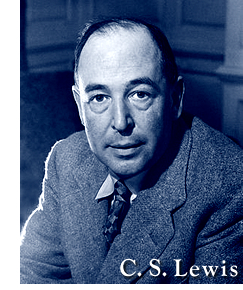
C.S. Lewis Daily – Today’s Reading On the present moment


Never, in peace or war, commit your virtue or your happiness to the future. Happy work is best done by the man who takes his long-term plans somewhat lightly and works from moment to moment “as to the Lord.” It is only our daily bread that we are encouraged to ask for. The present is the only time in which any duty can be done or any grace received.

From The Weight of Glory

Compiled in Words to Live By

Charles Stanley – The Landmine of Fear


Psalm 27:1-4

Fear has been a part of man’s emotional makeup since the fall. When Adam and Eve rebelled against the Lord, they hid themselves from Him and were afraid (Gen. 3:10). Things haven’t changed much. Anxiety often affects our thinking and controls our actions. It can keep us boxed in and unwilling to venture into unknown territory.

Let truth help you defeat fear. Remember that God is . . .

Almighty. Through the Savior’s perfect life and His sacrifice on the cross, our two greatest enemies have been defeated—Satan and death. Jesus set us free from slavery to sin; the devil has lost control over our lives. What’s more, we no longer face eternal separation from God. Jesus’ physical death has become the gateway to heaven, where we can live with the Father forever.

Always with us. Though He called Abraham to move away from all that was familiar, the Lord Himself promised to remain nearby. In Matthew 28:20, Jesus gives us similar reassurance. Through the indwelling Holy Spirit, we as believers have God not only near us but also in us. Nothing can ever separate us from His love—not past mistakes, present circumstances, or difficult people (Rom. 8:38-39).

Actively involved. God promises His help, and He always keeps His word. He knows what is happening in our lives and can turn hardships into a time of spiritual growth and ultimate blessing.

God Himself is the reason we should not be afraid. Grasp the truth of His power, presence, and involvement, and use them to disarm the landmine of fear.

Bible in One Year: Proverbs 5-8

Our Daily Bread — Grace in Our Hearts


Read: Ephesians 2:4-10

Bible in a Year: Job 38-40; Acts 16:1-21

Let your speech always be with grace. —Colossians 4:6

A few years ago, four-star General Peter Chiarelli (the No. 2 general in the US Army at that time) was mistaken for a waiter by a senior presidential advisor at a formal Washington dinner. As the general stood behind her in his dress uniform, the senior advisor asked him to get her a beverage. She then realized her mistake, and the general graciously eased her embarrassment by cheerfully refilling her glass and even inviting her to join his family sometime for dinner.

The word gracious comes from the word grace, and it can mean an act of kindness or courtesy, like the general’s. But it has an even deeper meaning to followers of Christ. We are recipients of the incredible free and unmerited favor—grace—that God has provided through His Son, Jesus (Eph. 2:8).

Because we have received grace, we are to show it in the way we treat others—for example, in the way we speak to them: “The words of a wise man’s mouth are gracious” (Eccl. 10:12). Grace in our hearts pours out in our words and deeds (Col. 3:16-17).

Learning to extend the grace in our hearts toward others is a by-product of the life of a Spirit-filled follower of Christ Jesus—the greatest of grace-givers. —Cindy Hess Kasper

Dear heavenly Father, help me today to season my words with grace. May all that I say and do be gracious to others and pleasing to You, O Lord, my strength and my redeemer.

God’s grace in the heart brings out good deeds in the life.

INSIGHT: Salvation is God’s gift and can never be earned by our good works. Paul reminds us that through Christ “we have redemption through His blood, the forgiveness of sins, according to the riches of His grace” (Eph. 1:7). In today’s passage, Paul emphasizes this grace by repeating the phrase “by grace you have been saved” (2:5,8). While we are not saved by our good works, we are saved so that we can do good works (v. 10). Paul reminds us to be “fruitful in every good work” (Col. 1:10) and “zealous for good works” (Titus 2:14).