Tag Archives: holy spirit

Greg Laurie – Stand Your Ground


So Pharaoh said, “I will let you go, that you may sacrifice to the Lord your God in the wilderness; only you shall not go very far away. Intercede for me.”—Exodus 8:28

It would have been tempting for Moses to compromise with Pharaoh. But God had told Moses to go three days’ journey into the wilderness (see Exodus 3:18), and Moses would accept nothing less. I love that. Moses was a stickler for details.

So many good believers have been brought down by the same strategy that Pharaoh used. “Oh man, pray for me. Intercede for me.”

It’s like when a Christian guy decides to do a little so-called missionary dating. He says to himself, “I will reach her for the Lord. We’ll talk. I’ll bring up my faith. I’ll get her to go to church with me.”

So they go out to dinner. He brings up his faith, and she doesn’t respond all that much. So he talks a little more about his faith the next time—and a little more the next time. Finally they agree to go to church together. But somehow dinner just went a little bit longer than they thought it would, and they don’t make it to church.

You don’t bring people to Christ by making concessions. If you come down to where they are, why would they want to go up to where you were? Stand your ground. Have some conviction.

Jesus said, “You are My friends if you do whatever I command you” (John 15:14). If God says something, He says it for a reason. He says what He means, and He means what He says. We need to do what He says as He says to do it.

Here is the bottom line: If you want to be a Christian, then be a Christian. If you don’t want to be a Christian, then don’t be a Christian. Either go for it or don’t go for it. Make a decision and do it.

Max Lucado – Let God Define Good


Nothing in the Bible would cause us to call a famine good or a heart attack good or a terrorist attack good. These are terrible calamities, born out of a fallen earth. Yet every message in the Bible compels us to believe that God will mix them with other ingredients, and bring good out of them.

But we must let God define good. Our definition includes health, comfort, and recognition. His definition? In the case of His Son, Jesus Christ, the good life consisted of struggles, storms, and death. But God worked it all together for the greatest of good– His glory and our salvation! At some point we all stand at this intersection. Is God good when the outcome is not? Do you want to know heaven’s clearest answer to the question of suffering? Just take a look at Jesus!

From You’ll Get Through This

Night Light for Couples – Our Night of Magic


by Charlotte Carpenter

A slow but steady rain came down all that wintry morning and froze where it fell—on the ground, the trees, the buildings. By mid-afternoon the rain had stopped, and we looked on a crystal world. We were accustomed to the white hoarfrost of winter, but this was something else—a hard, clear coating of solid ice. Our five children, ages five to sixteen, returned from school exclaiming about how good the sledding would be on the steep hill in our pasture.

They took out at once, but they never reached their destination, for between home and hill lay a gently rolling, treeless meadow. Here they found that their sleds would speed over the ice from fence to fence with only the weight of their bodies to keep them going. What fun they had. When they came home to chores and supper, they were so excited. “Mom and Dad, you’ve got to come with us down to the pasture tonight,” they said. They had never seen ice so slippery that they didn’t need a hill for coasting on their sleds.

Why should fortyish parents risk life and limb by going out on a dangerously slick night? They begged until we simply could not refuse them.

Gingerly we made our way to the meadow. Even with rubber footgear, we found it hard to walk. The sleds we pulled kept sliding into the backs of our legs. It was very cold, and my husband, the practical one, carried an armload of wood to build a fire.

We will never forget the unbelievably beautiful sight that met our eyes when we reached the meadow. The moon and stars, shining brilliantly as they do only on clear, cold nights, turned the meadow into a lake of glass. We built our fire at the top of a slight incline. The ice reflected us, and the leaping flames danced on the ice.

Again and again the children and sleds flew over the ground. If two rode together, the sled went faster—so fast the riders could barely turn in time to avoid crashing into the fence. The littlest ones rode back to the starting point, easily pulled by older brothers. We parents envied them—the hardest part for us was walking back after the ride. We left most of the sledding to our children and stayed near the fire, absorbed in the dreamlike magic of the night.

We all felt so good when we started back that we hardly noticed our cold feet and tired bodies.

“Will the ice still be here tomorrow?” one of the children asked.

“Probably not if the sun shines,” I answered. And sure enough, by midmorning the ice was gone, leaving only an expanse of brown grass.

To this day, when we’re in the meadow, whether it’s covered with the luxuriant green of summer or the white snow of winter, we remember the wonder of that night. Despite six other witnesses I harbor a slight doubt that it was real, for the experience seems like something we must have imagined.

My husband and I learned several things that night: to enjoy an interlude of joy when it comes; not to put off our children when they find something wonderful and so unusual that it may never happen again; and not to say, “We’re too busy now. It will have to wait.” We go with them to see a new calf, a robin on the lawn, a butterfly or bug. We share their excitement over a ballgame, a school play, or graduation. For now we know this: Refuse to take the time, and you will miss something precious to hold in memory. A magical sledding on glass in the starlight may happen only once in a lifetime.

Looking ahead…

Young children view the world with a unique blend of awe and urgency. Everything, from a rainbow to a chocolate sundae, is new and exciting to them. And everything needs to be experienced right now!

We sometimes get impatient with this perspective—yet we could learn from it. For as we plow through our endless list of chores and responsibilities, postponing time with our loved ones, life hurtles by— like a sled in a meadow of ice. Before we know it, we’re standing before heaven’s gates, wondering how we got there so fast. Don’t miss the precious nights of magic on the way.

– James C Dobson

From Night Light For Couples, by Dr. James & Shirley Dobson

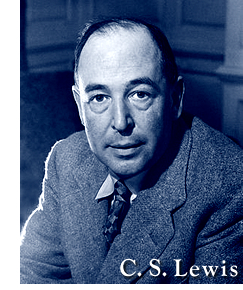
C.S. Lewis Daily – Today’s Reading


TO EDWARD LOFSTROM: On his need to think less and to fulfill his daily duties with charity and justice.

8 March 1959

I very much doubt if any book, least of all a book by me, would much help anyone in the condition you describe. For a book can offer only thoughts and thoughts are not what such a person, perhaps, needs most. One can argue against egoism, but then egoism is not his trouble. If he were a real egoist he would be either bliss- fully unconscious of the fact or else fully convinced that egoism was the rational attitude. You, on the other hand, suffer from a more than ordinary horror of egoism which you share with us all. And therefore, as you will see, the thing you need is not to think more or better about it but to think less: to act unselfishly—that is, charitably and justly—and leave the state of your feelings for God to deal with in His own way and His own time. And this of course you know better than I do.

But how to do it? For the very effort to forget something is itself a remembering of that something! I think, if I were in your shoes I should try to regard this sense of self-imprisonment not at all as a sin but as a mere tribulation, like rheumatism, to be endured in the same way. It has no doubt its medical side: diet, exercise, and recreations might all be considered. And, though this is a hard saying, your early upbringing may have something to do with it. Great piety in the parents can produce in the child a mistaken sense of guilt: may lead him to regard as sin what is really not sin at all but merely the fact that he is a boy and not a mature Christian. At any rate, remember: ‘I cannot turn one hair black or white: but I can brush my hair daily and go to the barber at regular intervals.’ In other words we must divert our efforts from our general condition or frame of mind (which we can’t alter by direct action of the will) to what is in our power—our words and acts. Try to remember that the ‘bottomless sea’ can’t hurt us as long as we keep on swimming. You will be in my prayers.

From The Collected Letters of C.S. Lewis, Volume III

Charles Stanley – Lessons from the Prophet Jonah


Jonah 1

The Lord’s commands are clear—He tells believers when to act, where to go, and what to do. He also provides the means for following His directions. The prophet Jonah was told to leave immediately for a certain city and cry out this warning: “Yet forty days and Nineveh will be overthrown” (Jonah 3:4). Instead, Jonah did something foolish (and altogether human). He ran.

Because he was a prophet, we can assume Jonah had studied the Scriptures and knew God intimately. Even so, displeasure over his assignment clouded his judgment, and he became convinced he could flee the Lord’s presence. Jonah was wrong. God sent a great storm and isolated him for three days inside a smelly fish. In other words, the Lord didn’t relent until the prophet agreed to comply.

Jonah learned that running away from the Lord doesn’t release us from His commands. Whether we refuse outright or quietly choose to pursue our own agenda, we simply cannot silence His call. Our Father will neither forget a directive nor change His mind about it, and so the Holy Spirit continues prompting us until we do as instructed.

People who run from divine direction may attempt to silence the Spirit’s reminders by filling their life with distractions. They know what God wants from them but are too proud, stubborn, or scared to comply. What we must understand is that God will pursue us—stripping away diversions and crutches to get our attention. Wise believers obey Him promptly rather than waste time and talent by running.

Bible in One Year: Psalms 76-78

Our Daily Bread — Worth It All

Read: 1 Corinthians 15:30-38

Bible in a Year: Job 3-4; Acts 7:44-60

What you sow is not made alive unless it dies. —1 Corinthians 15:36

By the end of the 4th century, followers of Christ were no longer being fed to the lions for the entertainment of Roman citizens. But the games of death continued until the day one man jumped out of the crowd in a bold attempt to keep two gladiators from killing each other.

His name was Telemachus. As a desert monk, he had come to Rome for the holidays only to find himself unable to tolerate the bloodlust of this popular pastime. According to the 5th-century bishop and church historian Theodoret, Telemachus cried out for the violence to stop but was stoned to death by the crowd. The Emperor Honorius heard about his courageous act and ordered an end to the games.

Some may question Telemachus. Was his action the only way to protest a tragic blood sport? The apostle Paul asked a similar question of himself: “Why do we stand in jeopardy every hour?” (1 Cor. 15:30). In 2 Corinthians 11:22-33, he chronicled some of his travails for the love of Christ, many of which could have killed him. Had it all been worth it?

In Paul’s mind the matter was settled. Trading things that will soon come to an end for honor that will last forever is a good investment. In the resurrection, a life that has been lived in behalf of Christ and others is seed for an eternity we will never regret. —Mart DeHaan

Give us courage, Father, to make and live by choices that show the difference the love of Jesus makes in our lives. Help us not to trade away eternal values for convenience and comfort.

Now is the time to invest in eternity.

INSIGHT: First Corinthians 15 is known by many as the resurrection chapter, for it is a key passage that defends the truth of Jesus’ resurrection and the believer’s hope of a future resurrection, after which we will live forever with Christ. Other accounts in the Bible of people who were raised from the dead include the widow’s son in Zarephath (1 Kings 17), Jairus’s daughter (Mark 5), a widow’s son (Luke 7), and Lazarus (John 11). In these instances, however, those raised from the dead would later die of natural causes.

Alistair Begg – Climbing a Mountain


Get you up to a high mountain. Isaiah 40:9

Our knowledge of Christ is somewhat like climbing one of the mountains in Wales. When you are at the base you see only a little: the mountain itself appears to be only half as high as it really is. Confined in a little valley, you discover scarcely anything but the rippling brooks as they descend into the stream at the foot of the mountain. Climb the first rising knoll, and the valley lengthens and widens beneath your feet. Go higher, and you see the country for four or five miles around, and you are delighted with the widening prospect. Higher still, and the scene enlarges; until at last, when you are on the summit and look east, west, north, and south, you see almost all of England lying before you. There is a forest in some distant county, perhaps two hundred miles away, and here the sea, and there a shining river and the smoking chimneys of a manufacturing town, or the masts of the ships in a busy port. All these things please and delight you, and you say, “I could not have imagined that so much could be seen at this elevation.”

Now, the Christian life is of the same order. When we first believe in Christ, we see only a little of Him. The higher we climb, the more we discover of His beauty. But who has ever gained the summit? Who has known all the heights and depths of the love of Christ that passes knowledge? When Paul had grown old and was sitting gray-haired and shivering in a dungeon in Rome, he was able to say with greater emphasis than we can, “I know whom I have believed,”1 for each experience had been like the climbing of a hill, each trial had been like ascending another summit, and his death seemed like gaining the top of the mountain, from which he could see the whole panorama of the faithfulness and love of Him to whom he had committed his soul. Get up, dear friend, into a high mountain.

1) 2 Timothy 1:12

Devotional material is taken from “Morning and Evening,” written by C.H. Spurgeon, revised and updated by Alistair Begg.

Charles Spurgeon – The sound in the mulberry trees


“When thou hearest the sound of a going in the tops of the mulberry trees, that then thou shalt bestir thyself: for then shall the Lord go out before thee, to smite the host of the Philistines.” 2 Samuel 5:24

Suggested Further Reading: 2 Timothy 2:14-19

If any of your acquaintance have been in the house of God, if you have induced them to go there, and you think there is some little good doing but you do not know, take care of that little. It may be God has used us as a foster mother to bring up his child, so that this little one may be brought up in the faith, and this newly converted soul may be strengthened and edified. But I’ll tell you, many of you Christians do a deal of mischief, by what you say when going home. A man once said that when he was a lad he heard a certain sermon from a minister, and felt deeply impressed under it. Tears stole down his cheeks, and he thought within himself, “I will go home to pray.” On the road home he fell into the company of two members of the church. One of them began saying, “Well, how did you enjoy the sermon?” The other said, “I do not think he was quite sound on such a point.” “Well,” said the other, “I thought he was rather off his guard,” or something of that sort; and one pulled one part of the minister’s sermon to pieces, and another the other, until, said the young man, before I had gone many yards with them, I had forgotten all about it; and all the good I thought I had received seemed swept away by those two men, who seemed afraid lest I should get any hope, for they were just pulling that sermon to pieces which would have brought me to my knees. How often have we done the same! People will say, “What did you think of that sermon?” I gently tell them nothing at all, and if there is any fault in it—and very likely there is, it is better not to speak of it, for some may get good from it.

For meditation: If you must have the sermon for Sunday lunch, beware of devouring someone’s faith along with it (Mark 4:4,15).

Sermon no. 147
25 June (Preached 31 May 1857)

John MacArthur – Showing Mercy


“So speak and so act, as those who are to be judged by the law of liberty. For judgment will be merciless to one who has shown no mercy; mercy triumphs over judgment” (James 2:12-13).

Showing mercy is characteristic of a regenerate person.

Divine judgment has never been a popular topic of conversation. Godly people throughout history have been ridiculed, persecuted, and even killed for proclaiming it. In their efforts to win the approval of men, false teachers question or deny it. But James 2:12-13 reminds us that judgment will come, so we’d better live accordingly.

The basis for divine judgment is God’s Word, which James called “the law of liberty” (v. 12). It is a liberating law because it frees you from sin’s bondage and the curse of death and hell. It is the agency of the Spirit’s transforming work, cutting deep into your soul to judge your thoughts and motives (Heb. 4:12). It gives you the wisdom that leads to salvation, and equips you for godly living (2 Tim. 3:15-17). It imparts truth and discernment, freeing you from error and spiritual deception. It is in every sense a law of freedom and liberation for those who embrace it.

The law liberates believers but condemns unbelievers. The phrase “judgment will be merciless to one who has shown no mercy” (v. 13) speaks of unrelieved judgment in which every sin receives its fullest punishment. That can only mean eternal hell! If the Word is at work in you, its effects will be evident in the way you speak and act. If you are impartial and merciful to people in need, that shows you are a true Christian and have received God’s forgiveness and mercy yourself. If you show partiality and disregard for the needy, the law becomes your judge, exposing the fact that you aren’t truly redeemed.

Are you a merciful person? Do you seek to provide for others without favoritism? When you fail to do so, do you confess your sin and seek forgiveness and restoration? Those are marks of true faith.

Suggestions for Prayer

Praise the Lord for His great mercy toward you, and be sure to show mercy to those around you.

For Further Study

Read Luke 1:46-55 and 68-79. Follow Mary’s and Zacharias’s example by rejoicing over God’s mercy toward His people.

Joyce Meyer – Be Kind and Encouraging


It [Love] is not conceited (arrogant and inflated with pride); it is not rude (unmannerly) and does not act unbecomingly. Love (God’s love in us) does not insist on its own rights or its own way, for it is not self-seeking; it is not touchy or fretful or resentful; it takes no account of the evil done to it [it pays no attention to a suffered wrong]. 1 Corinthians 13:5

I have learned that one of the secrets to my own personal peace is letting people be who God made them to be, rather than trying to make them be who I would like them to be. I do my best to enjoy their strengths and be merciful toward their weaknesses because I have plenty of my own. I don’t need to try to take the speck out of their eye while I have a telephone pole in my own.

A woman I know was widowed not long ago, and she was telling me about her relationship with her husband. This woman is pretty strong-willed and likes things to go her way. She told me that when she was first married, she noticed a lot of things about her husband that annoyed her. Like any good wife, she told her husband about his annoying traits and habits so he could change.

Gradually it dawned on her that although she was very good about telling her husband all the things about him that needed to change, he never returned the favor! As she wondered why, she realized that somewhere along the line her husband had made a decision not to look at—or for— her flaws. He knew she had plenty! But he wasn’t going to focus on them. It occurred to her that she could continue to point out all his annoying traits—or she could choose not to, just as her husband had done.

At the end of our conversation, she told me that in the twelve years they were married, her husband never said an unkind word to her. I think we can all take a lesson from that.

Trust in Him Ask God to help you be kind to everyone. Don’t say an unkind word today—focus on the strengths of the people you come in contact with, and do all that you can to encourage them.


Campus Crusade for Christ; Bill Bright – Crown of Life


“Blessed is the man that endureth temptation: for when he is tried, he shall receive the crown of life, which the Lord hath promised to them that love Him” (James 1:12, KJV).

In Christian art, the crown is usually pictured entwined with the cross. This suggests that endurance of trial leads to victory, as the above verse indicates.

Temptation often comes at our weakest – rather than our strongest – moments. When we have reached the limit of our love and our patience, for example, we are tempted to be unlike Christ in one way or another. Remember, Jesus’ temptation began after forty days of fasting.

People usually are impressed – favorably or unfavorably – when they see how we act under pressure. It is possible for one weak act to spoil a whole lifetime of witness.

The beatitude, or blessing, in Matthew 5:10; says, “Blessed are they which are persecuted for righteousness’ sake: for theirs is the kingdom of heaven” (KJV). The crown of life is promised to those who successfully stand up under the testing of their faith. The Christian life is a spiritual conflict from the moment of birth until we go to be with the Lord. The flesh wars against the Spirit and the Spirit against the flesh. There is absolutely no hope for victory until one discovers the availability of the supernatural resources of the indwelling Holy Spirit.

A young student who came to me for counsel said, “I have given up. I can’t live the Christian life. There is no hope for me.”

“Good,” I replied. “At last you have recognized that you cannot live the Christian life. Now there is hope for you, for the Christian life is a supernatural life and the only one who can live it is Jesus Christ Himself.”

Surrender your life totally, completely to Him and recognize moment by moment, day by day, that the Holy Spirit is the only one who will enable you to endure temptation. By faith you must draw upon His supernatural resources to live a supernatural life. Only then will you be victorious and fruitful for the glory of God.

Bible Reading: James 5:7-11

TODAY’S ACTION POINT: Today and every day I will remember to draw upon the supernatural resources of the indwelling Christ who will enable me to be victorious over temptation and to live the supernatural life as a testimony to His faithfulness.

Presidential Prayer Team; J.R.- Inside Job


Among the important laws you’ve probably never heard of is the Refrigerator Safety Act, passed by Congress on August 2, 1956. “It shall be unlawful,” the Act provides, “for any person to introduce or deliver for introduction into interstate commerce any household refrigerator…unless it is equipped with a device, enabling the door thereof to be opened from the inside.” What was the point of this? Before that date, many children got trapped in refrigerators – playing hide and seek and other such games – and suffocated.

Pilate said to them, “You have a guard of soldiers. Go, make it as secure as you can.”

Matthew 27:65

This type of problem didn’t enter into Pilate’s thinking when he ordered soldiers to secure the tomb containing the body of Jesus. He wanted to make sure the Savior stayed inside…and not because he thought Jesus might come back to life, but because of fears His body would be stolen by followers. But when Jesus arose, He wasn’t going to be stopped by two soldiers, or two million.

Are you discouraged when it seems much is against you? A single word spoken by God can roll back the schemes and evil intentions of any man. As you pray for America today, remember that the Lord hears the righteous when they call!

Recommended Reading: Psalm 37:12-19

Greg Laurie –The Easiest Place to Get a Hardened Heart


Beware, brethren, lest there be in any of you an evil heart of unbelief in departing from the living God; but exhort one another daily, while it is called “Today,” lest any of you be hardened through the deceitfulness of sin. —Hebrews 3:12–13

Where is one of the easiest places to get a hardened heart? Any place where God’s people gather. It isn’t in a bar or around a bunch of people who are doing wicked things. No, the easiest place to get a hardened heart is where you hear the Word of God being taught. Knowledge brings responsibility. And the same sun that softens the wax hardens the clay. The same message that transforms one life can cause another to say, “I don’t believe.”

If you go to church or a Bible study week after week, hearing the Word of God but refusing to believe it, you can actually get an irreparably hardened heart. I am not saying that you shouldn’t go to church. But I am saying that you should go to church with the right heart, with an open heart. Otherwise, you could get a hardened heart. You could be judged by the very message that should have set you free.

That’s why preachers’ kids and others who were raised in the church are often some of the most notorious sinners. They’ve taken God’s Word for granted and hardened their hearts against it.

The J. B. Phillips translation of Hebrews 3:12–14 says, “You should therefore be most careful, my brothers, that there should not be in any of you that wickedness of heart which refuses to trust, and deserts the cause of the living God. Help each other to stand firm in the faith every day, while it is still called ‘today’, and beware that none of you becomes deaf and blind to God. For we continue to share in all that Christ has for us so long as we steadily maintain until the end the trust with which we began.”

May God help us to keep tender hearts.

Max Lucado – Keep Waiting—God is at Work


I’m convinced the Sabbath was created for frantic souls like me, people who need a weekly reminder that the world will not stop if I do.

In one of the most dramatic examples of waiting in the Bible, Daniel prays for people who had been oppressed for seventy years. He abstained from food and drink for twenty-one days, as he labored in prayer, persisted, pleaded, and agonized. No response. On the twenty-second day an angel of God appeared. He revealed to Daniel that his prayer had been heard on the first day.

From an earthly perspective, nothing was happening. But from a heavenly perspective a battle was raging in the heavens. God was working! What if Daniel had given up…lost faith…or walked away from God? Consider these better questions: What if you give up? Lose faith? Walk away? Don’t! God is at work. Keep waiting!

From You’ll Get Through This


Night Light for Couples – Beautiful Music


“Lean not on your own understanding.” Proverbs 3:5

I can’t tell you the number of times, especially during our early years together, that the requirements of being a godly wife and mother have seemed to be completely out of reach for me.

Perhaps you face similar feelings tonight. You want to keep growing, trying, getting better, but you’re not sure if you can hope for success. If so, I want to share one of my favorite stories with you. It reminds me how the Lord can turn our small, sincere efforts into a masterpiece….

Wishing to encourage her young son’s progress on the piano, a mother took her small boy to a Paderewski concert. After they were seated, the mother spotted a friend in the audience and walked down the aisle to greet her. The little boy seized the opportunity to explore the wonders of the concert hall. After wandering a while, he eventually made his way through a door marked “No Admittance.”

Then the house lights dimmed. The mother returned to her seat for the beginning of the concert only to discover that her son was missing. Before she could start her search, the curtains parted and the spotlights shone on the impressive Steinway grand piano on stage. There, innocently picking out “Chopsticks,” sat her little boy. The mother froze in horror. The audience began to murmur with irritation. Meanwhile backstage, the great piano master overheard the childish playing and the rumblings from the audience. Quickly he donned his jacket and made his entrance. Moving to the piano, he whispered in the boy’s ear, “Don’t quit. Keep playing!” Then Paderewski leaned over, reached around both sides of the boy, and began to improvise a countermelody to harmonize with the boy’s rendition of “Chopsticks.”

Music—at once childlike and mellow, simple and profound—filled the auditorium. Everyone sat mesmerized, none more so than the boy’s awestruck mother….

Do your efforts to grow and flourish in your marriage feel inadequate, timid, unpromising? You’re not in this alone! Remember that the Lord’s loving arms are around you. Lean on His strength and guidance. You’ll grow in ways you never thought possible and make music together more wonderful than you ever imagined.

Our encouragement to you is simple: “Don’t quit. Keep playing!” With the blessing of the Master, your efforts together will become something beautiful and unforgettable.

– Shirley M Dobson

From Night Light For Couples, by Dr. James & Shirley Dobson

Charles Stanley – Expect Conflict


2 Corinthians 4:5-10

Contrary to popular but poor theological teaching, salvation does not guarantee an easy life. It is tempting to present Christianity as a safe haven from which to watch the world swirl past—then one could open the door to allow in joy and blessing, but hardship could not squeeze through. That brand of religion might sell well in the world marketplace, but it isn’t real.

The truth is, Christians cannot escape conflict or ridicule. The biblical principles we hold dear often seem like foolishness to nonbelievers. What’s more, defending our faith and sharing the gospel will frequently draw criticism or anger from listeners. But Scripture counsels against keeping quiet and blending in (Matt. 5:14-15). In fact, we are to welcome disagreement as a way to grow our faith.

Consider this: Our belief system is named for a man who so thoroughly challenged the status quo that religious leaders called for His death. Jesus Christ was at the center of controversy during His ministry and very likely all through life. That’s why the biblical record so often shows Him slipping away for time alone with God—He was seeking direction and receiving strength. While Jesus was fully God, He was also fully human. He knew the sting of rejection and the taste of fear, just as we do (Heb. 4:15).

As believers, we are called to be peacemakers, but that doesn’t mean isolating ourselves from all who oppose the church. Accept conflict as inevitable and reach out anyway. You can have a powerful impact simply by being the person God called you to be—His child.

Bible in One Year: Psalms 71-75

Our Daily Bread — Walking on Water


Read: Matthew 14:22-33

Bible in a Year: Job 1-2; Acts 7:22-43

Be of good cheer! It is I; do not be afraid. —Matthew 14:27

When I learned to sail, I had to walk along a very unsteady floating platform to reach the little boats in which we had our lessons. I hated it. I don’t have a good sense of balance and was terrified of falling between the platform and the boat as I attempted to get in. I nearly gave up. “Fix your eyes on me,” said the instructor. “I’m here, and I’ll catch you if you slip.” I did what he said, and I am now the proud possessor of a basic sailing proficiency certificate!

Do you avoid taking risks at all costs? Many of us are reluctant to step out of our comfort zones in case we fail, get hurt, or look stupid. But if we allow that fear to bind us, we’ll end up afraid to do anything.

The story of Peter’s water-walking adventure and why it supposedly failed is a popular choice for preachers (Matt. 14:22-33). But I don’t think I’ve ever heard any of them discuss the behavior of the rest of the disciples. In my opinion, Peter was a success. He felt the fear but responded to the call of Jesus anyway. Maybe it was those who never tried at all who failed.

Jesus risked everything for us. What are we prepared to risk for Him? —Marion Stroud

Father, thank You for stretching out Your hand and saying, “Come.” Help me to get out of the boat, knowing that it is totally safe to walk on water with You.

“Life is either a daring adventure, or nothing.” Helen Keller

INSIGHT: The Sea of Galilee is partially ringed with a series of hills and valleys, which makes it vulnerable to sudden storms. The winds can whip through these ravines in such a way that they lash the waters of the Galilee quite violently, causing what might otherwise be a typical storm to be deadly and threatening to anyone on the water. These violent storms can rise with little warning. This could explain why seasoned fishermen who made their living on the Sea of Galilee could be periodically caught in potentially life-threatening storms.

Ravi Zacharias Ministry – Teachers in the Dark


Doubt everything, find your own light.(1) So recommends the Buddha in his last words. It sounds like good advice, but then the human heart invariably presses on to doubt itself! After all, what kind of assurance can we have that this light is real light or true? The hunger for meaning, the quest for understanding, the search for answers and solutions are central features of the human condition.

For instance, what is the nature of reality? What is existence all about? What is the purpose of life, if any, and what should we try to give answers to?

A much-neglected resource for reflection in this area is the book of Ecclesiastes, from the preacher, or Qoheleth in Hebrew. It is a book that speaks profoundly to our times by asking questions, by setting out contradictions, and by forcing the reader to feel what absurdity as an outlook is really like.

As the book opens, we are confronted with its most famous words, “Vanity, vanity, all is vanity and a striving after wind.” Or in another translation of Ecclesiastes 1:2: “‘Meaningless! Meaningless!’ says the Teacher, ‘Utterly Meaningless! Everything is meaningless.’” Not a very inspiring start! He has devoted himself to explore life, to examine what is good for humanity to do under the sun, and his observations have yielded some depressing results: Everything in life seems to be bound by inevitability. Human freedom appears to be constrained by overwhelming necessities, leading to a sense of helplessness. And the endless cycle of repetition leads to a sense of boredom, pointlessness, and despair.

Many a sage, philosopher, and guru have come to similar conclusions. What is unique to Ecclesiastes is how the author tackles the issues and what he leads us to see. By laying out the vanities of life, the propensities of youth, the all-encompassing reach of death, and the vast urgency of wisdom as a potential life-philosophy, he engages a chaotic world with some serious reflections. The writer takes us on a journey through life, and he deals with the questions and exasperations that we all inevitably encounter. His own desire was to try and figure things out so he could live well and be content, and encourage others to do the same. He likely hoped to discover the key or missing ingredient, the clues to true and lasting success and happiness.

Instead, the world he begins to see is one that displays both good and bad at the same time. He sees the superiority of wisdom, yet even the wise are reduced by death. He sees injustice being done and oppressors prevailing, yet he also notes there is a higher justice. He cites the sayings and actions of wise people but then goes on to point out how quickly they are forgotten! It is the tone that wears on us. We see ambiguity and fuzziness, a mixture of pain and problems, food, friends, wisdom, and a spiritual hunger. These things all dwell in the same world at the same time, and this is a difficult reality for many of us to digest. Like Qoheleth, we want better answers, tidier analysis, more comforting visions—and we have them, but not here, in doubt and darkness.

Qoheleth shows us the futility of life without God. He makes us feel what life is like from an honest look at how things truly are.

He gives us a severe picture of reality and suggests that God is still worth seeking somewhere in the midst of it. Even prior to the coming of the Messiah, Qoheleth paints our stark need for the God who is there.

While the world as we know it is indeed disordered and damaged, and to find answers in the world itself is absurd, God does not abandon us to absurdity. Into this world, into its pain and confusion, God, too, became flesh and dwelt among us. And it ended for Jesus as tragically as anything we observe under the sun. He went to the cross with the full force of every ugly, honest reality of Ecclesiastes on his shoulders. And he stood with us in that darkness, giving us an equally severe image of a God worth seeking in the midst of it.

Stuart McAllister is regional director of the Americas at Ravi Zacharias International Ministries in Atlanta, Georgia.

(1) Terry Breverton, Immortal Words: History’s Most Memorable Quotations and the Stories Behind Them (London: Quercus Publishing Place, 2009), 13.


Alistair Begg – Who is Privileged?


A woman in the crowd raised her voice and said to him, “Blessed is the womb that bore you, and the breasts at which you nursed!” But he said, “Blessed rather are those who hear the word of God and keep it!” Luke 11:27-28

It is fondly imagined by some that it must have been a very special privilege to be the mother of our Lord, because they suppose that she had the benefit of looking into His very heart in a way in which we cannot hope to do. There may be an appearance of plausibility in this notion, but not much. We do not know that Mary knew more than others; what she did know she did well to store in her heart; but she does not appear from anything we read in the Gospels to have been a better-instructed believer than any of Christ’s other disciples. All that she knew we also may discover.

Are you surprised by this? Here is a text to prove it: “The friendship of the LORD is for those who fear him, and he makes known to them his covenant.”1 Remember the Master’s words–“No longer do I call you servants, for the servant does not know what his master is doing; but I have called you friends, for all that I have heard from my Father I have made known to you.”2

The Divine Revealer of secrets tells us His heart, and He keeps nothing back that is needful for us. His own assurance is, “If it were not so, would I have told you . . . ?”3 Does He not today reveal Himself to us in a way that He does not to the world? And since this is so we will not ignorantly cry, “Blessed is the womb that bore you,” but we will intelligently bless God that, having heard the Word and kept it, we first of all have as real a communion with the Savior as His mother had, and in the second place as true an acquaintance with the secrets of His heart as she can be supposed to have obtained. Happy soul to enjoy this privilege!

1) Psalm 25:15

2) John 15:15

3) John 14:2

Devotional material is taken from “Morning and Evening,” written by C.H. Spurgeon, revised and updated by Alistair Begg

Charles Spurgeon – The desire of the soul in spiritual darkness


“With my soul have I desired thee in the night.” Isaiah 26:9

Suggested Further Reading: Psalm 42

There are times when all the saints can do is to desire. We have a vast number of evidences of piety: some are practical, some are experimental, some are doctrinal; and the more evidences a man has of his piety the better, of course. We like a number of signatures, to make a deed more valid, if possible. We like to invest property in a great number of trustees, in order that it may be all the safer; and so we love to have many evidences. Many witnesses will carry our case in the courts better than a few: and so it is well to have many witnesses to testify to our piety. But there are seasons when a Christian cannot get any. He can get scarcely one witness to come and attest his godliness. He asks for good works to come and speak for him. But there will be such a cloud of darkness about him, and his good works will appear so black that he will not dare to think of their evidences. He will say, “True, I hope this is the right fruit; I hope I have served God; but I dare not plead these works as evidences.” He will have lost assurance, and with it his enjoyment of communion with God. “I have had that fellowship with him,” perhaps he will say, and he will summon that communion to come and be in evidence. But he has forgotten it, and it does not come, and Satan whispers it is a fancy, and the poor evidence of communion has its mouth gagged, so that it cannot speak. But there is one witness that very seldom is gagged, and one that I trust the people of God can always apply, even in the night: and that is, “I have desired thee—I have desired thee in the night.”

For meditation: The light shines best in the darkness (John 1:5); the people of God have proved it when all else has failed them (Psalm 73:21-26; Jonah 2:1-7).

Sermon no. 31
24 June (1855)