Tag Archives: holy spirit

Alistair Begg – It’s Spring


His cheeks are like beds of spices, mounds of sweet-smelling herbs.Song of Songs 5:13

Here we are in the month when flowers come! March winds and April showers have done their work, and the earth is all dressed with beauty. Come, my soul, put on your springtime clothes and gather garlands of heavenly thoughts. You know where to go, for the “beds of spices” are well known, and you have so often smelled the perfume of “sweet-smelling herbs” that you will go at once to Him who is altogether lovely and find all loveliness and all joy in Him.

His cheek, which once was so rudely smitten with a rod, often covered with tears of sympathy and defiled by man–that cheek smiles with mercy and is a fragrant aroma to my heart. You did not hide Your face from shame and spitting, O Lord Jesus, and therefore I will find my dearest delight in praising You. Your face was furrowed by the plow of grief, and blood flowed freely from Your thorn-crowned brow; such marks of unbounded love fill my soul far more than words can tell. If I may not see the whole of His face, I would behold His cheeks, for the least glimpse of Him is exceedingly refreshing to my spiritual sense and yields a variety of delights.

In Jesus I find not only fragrance but a bed of spices; not one herb, but all kinds of sweet herbs. He is to me parsley, sage, rosemary, and thyme. When He is with me, it is May all year round, and my soul goes forth to wash its happy face in the morning-dew of His grace and to solace herself with the singing of the birds of His promises. Precious Lord Jesus, let me in very deed know the blessedness that dwells in abiding, unbroken fellowship with You. I am a poor, worthless one whose cheek You have deigned to kiss! O let me kiss You in return with the kisses of my lips.

Devotional material is taken from “Morning and Evening,” written by C.H. Spurgeon, revised and updated by Alistair Begg.

Charles Spurgeon – War! War! War!

“Fight the Lord’s battles.” 1 Samuel 18:17

Suggested Further Reading: James 3:13-18

It is the Christian’s duty always to have war with war. To have bitterness in our hearts against any man that lives is to serve Satan. We must speak very strongly and sternly against error, and against sin; but against men we have not a word to say, though it were the Pope himself. I have no enmity in my heart against him as a man, but as anti-Christ. With men the Christian is one. Are we not every man’s brother? “God hath made of one flesh all people that dwell upon the face of the earth.” The cause of Christ is the cause of humanity. We are friends to all, and are enemies to none. We do not speak evil, even of the false prophet himself, as a man; but, as a false prophet, we are his sworn opponents. Now, Christians, you have a difficult battle to fight, because you fight with all evil and hostility between man and man: you are to be peacemakers. Go wherever you may, if you see a quarrel you are to abate it. You are to pluck firebrands out of the fire, and strive to quench them in the waters of lovingkindness. It is your mission to bring the nations together, and weld them into one. It is yours to make man love man, to make him no more the devourer of his kind. This you can only do by being the friends of purity. Smite error, smite sin, and you have done your best to promote happiness and union among mankind. Oh, go, Christian, in the Spirit’s strength, and smite your own anger—put that to the death; smite your own pride—level that; and then smite every other man’s anger. Make peace wherever you can, scatter peace with both your hands.

For meditation: “Blessed are the peacemakers.” (Matthew 5:9) Men need to hear of the Prince of Peace (Isaiah 9:6) who alone can give them peace with God and, as a result, peace with man (Ephesians 2:14-17).

Sermon no. 250
1 May (1859)

John MacArthur – The Master’s Men


“The names of the twelve apostles are these: The first, Simon, who is called Peter, and Andrew his brother; and James the son of Zebedee, and John his brother; Philip and Bartholomew; Thomas and Matthew the tax-gatherer; James the son of Alphaeus, and Thaddaeus; Simon the Zealot, and Judas Iscariot, the one who betrayed Him” (Matt. 10:2-4).

God uses unqualified people to accomplish His purposes.

We live in a qualification-conscious society. Almost everything you do requires you to meet someone else’s standards. You must qualify to purchase a home, buy a car, get a credit card, or attend college. In the job market, the most difficult jobs require people with the highest possible qualifications.

Ironically, God uses unqualified people to accomplish the world’s most important task: advancing the kingdom of God. It has always been that way: Adam and Eve plunged the human race into sin. Lot got drunk and committed incest with his own daughters. Abraham doubted God and committed adultery. Jacob deceived his father. Moses was a murderer. David was too, as well as an adulterer. Jonah got upset when God showed mercy to Nineveh. Elijah withstood 850 false priests and prophets, yet fled in terror from one woman—Jezebel. Paul murdered Christians. And the list goes on and on.

The fact is, no one is fully qualified to do God’s work. That’s why He uses unqualified people. Perhaps that truth is most clearly illustrated in the twelve disciples, who had numerous human frailties, different temperaments, different skills, and diverse backgrounds, yet Christ used them to change the world.

This month you will meet the disciples one by one. As you do, I want you to see that they were common men with a very uncommon calling. I also want you to observe the training process Jesus put them through, because it serves as a pattern for our discipleship as well.

I pray you will be challenged by their strengths and encouraged by the way God used them despite their weaknesses and failures. He will use you too as you continue yielding your life to Him.

Suggestions for Prayer; Memorize Luke 6:40. Ask God to make you more like Christ.

For Further Study; Read 2 Timothy 1:3-5, noting the weaknesses Timothy may have struggled with, and how Paul encouraged him. How might Paul’s words apply to you?

Joyce Meyer – God’s Good Plan for Your Life


For we are God’s [own] handiwork (His workmanship), recreated in Christ Jesus, [born anew] that we may do those good works which God predestined (planned beforehand) for us [taking paths which He prepared ahead of time], that we should walk in them [living the good life which He prearranged and made ready for us to live]. Ephesians 2:10

Since before we were born, God has had a unique plan for each of us. It is not a plan of failure, misery, poverty, sickness, and disease. God’s plan is a good plan, a plan for life and health, happiness, and fulfillment. In Jeremiah 29:11 we read, For I know the thoughts and plans that I have for you, says the Lord, thoughts and plans for welfare and peace and not for evil, to give you hope in your final outcome.

It would benefit every one of us if we would say to ourselves several times a day, God has a good plan for my life. Each of us needs to be firmly convinced of that truth to keep us from being affected by our changing circumstances and emotions. You may be asking, “If God has such a wonderful plan for my life, why am I not living in it?” I understand why you would ask that question. It does seem strange that if God loves us so much and has such good plans for us, we should have to suffer and go through pain.

What you must remember is that we have an enemy who is out to destroy God’s wonderful plan. Although God had a good plan for my life, I ended up in an abusive environment because the devil came and disrupted that good plan. But there is something else, something really awesome about God, we need to understand. God doesn’t like it when someone hurts us and tries to undermine His plan for us. While He is making us lie down in green pastures to restore our soul (see Psalm 23:2-3), He is getting up to do something about our situation!

It should be a great comfort to us to know that what we cannot do for ourselves, the Lord will do for us—if we will trust ourselves to Him.

Campus Crusade for Christ; Bill Bright – The Lord Forgave You


“Since you have been chosen by God who has given you this new kind of life, and because of His deep love and concern for you, you should practice tenderhearted mercy and kindness to others. Don’t worry about making a good impression on them but be ready to suffer quietly and patiently. Be gentle and ready to forgive; never hold grudges. Remember, the Lord forgave you, so you must forgive others” (Colossians 3:12,13).

  1. C. Penney, a devout Christian whom I knew personally, built one of America’s leading businesses on the principle of the Golden Rule, taught by our Lord:

“Do unto others as you would have them do unto you.”

He and other gentle men have developed tenderness and sensitivity to others through their years of maturing, often through many difficult and trying experiences. So should we as Christians seek to develop gentle spirits through the trials and tribulations that God permits us to go through.

Do you lack gentleness in your life?

Do you have a tendency to be arrogant, proud, boastful?

Are you overbearing or even coarse and rude with others?

By faith you can become a gentle person. By faith you can confess your sins and know that they have been forgiven. By faith you can appropriate the filling of the Spirit of Christ. By faith you can practice tenderhearted mercy and kindness to others.

The Lord has commanded us to be gentle people, so by faith we can ask for that portion of the fruit of the Spirit, gentleness and love, and know that He is changing us for the better.

As I have cautioned with regard to other Christlike traits, this is one which usually develops over an extended period of time, usually through the maturing process that comes only with time and trials and sometimes tribulation. Pray that God will give you patience with yourself as you mature into the gentle and humble person He wants you to be.

Bible Reading: Colossians 3:14-17

TODAY’S ACTION POINT:  God’s promise to me is that He forgives; with His help I will forgive and practice tenderhearted mercy and kindness to others, with the prayer that I may be more and more conformed to the image of my Lord.

Presidential Prayer Team; P.G. – Loneliness Cure


Mother Theresa said, “Loneliness is the leprosy of modern society. And no one wants anybody to know they’re a leper.” God understands loneliness. He created Heaven and Earth, beasts, birds, and fish, and said everything was good. Then He made man, looked at him and said, “It is not good that man should be alone.”

It is not good that the man should be alone.

Genesis 2:18

While yours may not be the loneliness of an Adam waiting for an Eve, you may still feel the emptiness caused by the lack of close communion with others. Jesus, in His commandment, offered a solution: “Love one another.” To do that requires you to extend yourself, a difficult thing for a lonely person to do. But someone has to be first! Be sympathetic, tender, and zealous to do good for others. If you are among those blessed with many friends, you can still lovingly befriend someone you know who may be lonely.

God, who created people to need one another, hears the cries of even the ones who are lonely in a crowd. Pray about the scourge of loneliness in America, even as you pray for the nation’s leaders who often find it is lonely at the top.

Recommended Reading: I Peter 3:8-16

Greg Laurie – Opened to Earth, Closed to Heaven


And they heard the sound of the Lord God walking in the garden in the cool of the day, and Adam and his wife hid themselves from the presence of the Lord God among the trees of the garden.

—Genesis 3:8

If you happen to hear a dirty joke and don’t get it, way to go. All too often, we know more about this wicked world than we need to know. And we know far too less about God’s Word, which we need to grow. Writing to the believers in Rome, the apostle Paul said, “I want you to be wise in what is good, and simple concerning evil” (Romans 16:19).

When Adam and Eve sinned, their eyes were opened to Earth and closed to Heaven. Then God showed up. It appears from the way it is stated in the text that this was a daily occurrence. And normally it would have been a welcomed visit. But this time Adam wasn’t waiting for the Lord’s arrival. Rather, he was hiding.

It’s interesting to note when God came to Adam. It wasn’t in the heat of the day, lest Adam would think God was coming to him in the heat of His passion. Nor did God come to Adam in the early morning, lest Adam would think God couldn’t wait to punish him for his sin. No, God came to Adam in the cool of the day, loving and patient, yet hurt and demanding confession.

Sometimes when we sin, we will find a way to rationalize it. We might even assume that maybe God is okay with it because the consequences aren’t yet evident. But God is never okay with sin. And know this: The Bible says, “Your sin will find you out” (Numbers 32:23). If you were to translate that from the original language, it ultimately would read like this: Your sin will find you out. It will come out—maybe today, maybe tomorrow, maybe a month from now, or maybe ten years from now. But it will find you out.

Max Lucado – Letting God’s Spirit Lead


In Acts 8:26-27, an angel of the Lord said to Philip, “Go to that chariot of the Ethiopian and stay near it. So Philip ran toward the chariot.” The two have a Bible study in the chariot. It’s so convincing that the Ethiopian is baptized that day. Philip teaches, the Ethiopian obeys, and the gospel is sent to Africa.

Romans 8:14 says, “the true children of God are those who let God’s Spirit lead them.” You invite a couple over for coffee. Nothing heroic. Just a nice evening with friends. But from the moment they enter, you feel led to inquire, you feel a concern that won’t be silent. So you ask. You catch a glimpse of what it means to be led by the Spirit. Has it occurred to you? You have the same Spirit working within you that Philip did! Think about that.

From When God Whispers Your Name

Charles Stanley – God’s Promises to the Generous


2 Corinthians 9:6-11

The principle of sowing and reaping is a universal truth ordained by God; it applies not only in agriculture, but also in the area of giving. Despite the fact that the Lord promises an abundant harvest for those who give generously, many Christians still struggle with releasing their grip on money.

Some fear that they won’t have enough if they give. Others, pulled by greed, are unwilling to sacrifice pleasures and comforts. Those who succumb to their fears or stinginess will miss out on the great harvest God wants to give them.

In the midst of a chaotic economy and uncertain times, we can find our security in the Lord. His ways are often the opposite of our natural tendencies. The world says that to have enough, we must acquire more. Today’s passage says that in giving generously, we will have an abundance of both provision for our needs (bread) and resources to continue our generosity (seed).

Beyond this, the Lord also promises that the harvest of our righteousness will increase, and we will be “enriched in everything for all liberality” (v. 11). God’s riches encompass so much more than earthly wealth. Generosity produces godly character, which is valuable now and in eternity.

Although we have been given the promise of a bountiful harvest, it will be realized only by those who sow abundantly. In following God’s plan for giving, you can be free of worry because the One who guarantees you a harvest is also the omnipotent Lord who is able to produce it.

Ravi Zacharias Ministry – Through Glass, Darkly


There’s a scene a few chapters into the comedy science-fiction novel, The Restaurant at the End of the Universe, where Zaphod Beeblebrox, the two-headed former president of the galaxy, is in a spot of trouble. A few moments earlier, he had been standing on the bridge of a starship, now he suddenly found himself mysteriously teleported to a café on the strange, alien planet of Ursa Minor Beta. Puzzled at what has just happened, Zaphod instinctively reached into his pocket for his sunglasses:

“[He] felt much more comfortable with them on. They were a double pair of Joo Janta Super-Chromatic Peril Sensitive Sunglasses, which had been specially designed to help people develop a relaxed attitude to danger. At the first hint of trouble they turn totally black and thus prevent you from seeing anything that might alarm you.”(1)

What was science-fiction in 1980 when Douglas Adams wrote this passage has become reality in the twenty-first century: augmented reality, to be precise, the new buzzword in computing. Augmented reality is a technology that allows computer-driven data to overlay your view of the real world. Originally developed for military applications (for example, projecting flight information onto the visor of a fighter jet pilot), augmented reality is now breaking in to the world of consumer gadgetry.

One example is Google Glass, recently launched (to a select few, willing to pay $1,500 to get their heads on a beta version of the product) by the California-based Internet search company.(2) At first glance, Glass appears fairly innocuous, looking like a pair of designer spectacles, albeit fashioned by a designer whose aesthetic was more “geek” than “chic.” Pop on Glass, however, and a small computer display just above one lens beams a constant stream of information into your field of view. Now you need never be without the weather, news, travel information, the web, your latest email or tweets, all overlaying your view of the outside world.

Particular controversy has been caused because Google Glass comes equipped with a camera and that raises all manner of privacy issues. The US Congress actually sent a list of questions to Google, one of which was “Will it ship with facial recognition software?” Although Google replied “No,” other software developers have stepped into the gap. One such developer is Stephen Balaban, whose company has launched facial recognition software for Google Glass. In an interview with technology website Ars Technica, the 23 year-old programmer explained his excitement at what a Google Glass headset equipped with his software could do. Balaban waxed lyrical about the wonder of having a conversation with a stranger, all the while your Glass headset looking them up and feeding you information about them:

“I think that would be a fantastic experience to not only understand who you’re talking to but to bring context to a conversation. I would love to live in a world where the things that you have in common with somebody and the shared experiences are available on the fly. I think that makes conversation far more efficient. I think that makes interactions with conversations better. You can relate to them in ways that you couldn’t otherwise.”(3)

Those words haunted me for days afterward: “makes conversation more efficient.” The subtext, the assumption, the worldview reflected here is one that Neil Postman famously called “technopoly,” the idea that technology is king, that there is no human problem that technology cannot solve.(4) Balaban’s statement assumes that what we lack, what we need is more information. I think he’s dead wrong. What most people are crying out for is not more information but deeper relationships.

Yet despite our relational need, we are drawn to technology like moths to a flame. In her book Alone Together: Why We Expect More From Technology and Less From Each Other, sociologist Sherry Turkle describes the increasing trend we have to outsource relationships to technology, to computers and robots. In one chapter, she recounts the story of Callie, an eleven year-old girl who as part of a research project got to take home two robotic toys. Turkle describes what happened at the end of the three week study when it was time to return the robots:

“Callie is very sad when her three weeks with My Real Baby and AIBO come to an end…Before leaving My Real Baby, Callie opens its box and gives the robot a final, emotional good-bye. She reassures My Real Baby that it will be missed and that ‘the researchers will take good care of you.’ Callie has tried to work through a desire to feel loved by becoming indispensable to her robots. She fears that her parents forget her during their time away (they travel a lot for work); now, Callie’s concern is that My Real Baby and AIBO will forget her… Disappointed by people, she feels safest in the sanctuary of an as-if world.”(5)

As human beings we are designed for relationship and any attempt to outsource this to or augment this basic need with technology is doomed to failure because what we yearn for is not robots but relationship, not programs but persons, not computers but communion. The Christian worldview explains where this desire for relationship, for intimacy comes from: because we are created in the image of a God who, as the doctrine of the Trinity makes clear, is himself persons-in-relation. Theologian Colin Gunton writes:

“To be made in the image of God is to be endowed with a particular kind of personal reality. To be a person is to be made in the image of God: that is the heart of the matter. If God is a communion of persons inseparably related, then… it is in our relatedness to others that our being human consists.”(6)

The God of the Bible is the God who is relational: walking and talking in the garden of Eden with Adam and Eve, appearing to Abraham, speaking to Moses “as a man talks to his friend” and, ultimately, stepping into history in the incarnation. In many other religions, such as Islam, you achieve salvation, wisdom, nirvana—whatever it is you are seeking—through knowing the right things, through information. In Christianity, by contrast, the question is not what you know but whom you know—Jesus Christ. God so loved the world that God did not send mere information, did not simply augment reality with some new set of moral commandments, but instead God gave himself. And, says the Bible, this theme continues right through into the New Creation, where God will once again walk and talk with us. One day, we shall no longer see as in a glass darkly, but we shall see face to face. For relationship we were made and for relationship, with and through Christ, we are destined.

Andy Bannister is a member of the speaking team at Ravi Zacharias International Ministries in Toronto, Canada.

(1) Douglas Adams, The Restaurant at the End of the Universe (London: Pan Books, 1980), 33.

(2) Jason Koebler, “Google Opens ‘Glass’ Project to ‘Explorers’ Willing to Pay $1,500,” US News, 20 Feb 2013 (http://www.usnews.com/news/articles/2013/02/20/google-opens-glass-project-to-explorers-willing-to-pay-1500/, accessed 25 June 2013).

(3) Cyrus Farivar, “Google may not like it, but facial recognition is coming soon to Glass,” Ars Technica, 8 June 2013 (online at http://arstechnica.com/business/2013/06/google-may-not-like-it-but-facial-recognition-is-coming-soon-to-glass/, accessed 24 June 2013).

(4) Neil Postman, Technopoly: The Surrender of Culture to Technology (New York: Bloomsbury, 2007).

(5) Sherry Turkle, Alone Together: Why We Expect More from Technology and Less from Each Other (New York: Basic Books, 2011), 78-79.

(6) Colin E. Gunton, The Promise of Trinitarian Theology, 2d Ed. (Edinburgh: T & T Clark, 1997), 113.

Alistair Begg – Are You a Grumbler?


And all the people of Israel grumbled.Numbers 14:2

There are grumblers among Christians now, just as there were in the camp of Israel of old. There are those who, when punished, cry out against the affliction. They ask, “Why am I afflicted? What have I done to be chastened in this manner?”

A word with you, grumbler! Why should you grumble against the dealings of your heavenly Father? Can He treat you more severely than you deserve? Consider what a rebel you once were, but He has pardoned you! Surely, if He in His wisdom considers it necessary to chasten you, you should not complain. After all, are you punished as severely as your sins deserve? Consider the corruption that is in your heart, and then will you wonder that so much of the rod is necessary to root it out? Weigh yourself, and discern how much dross is mingled with your gold; and do you think the fire is too hot to purge away the amount of dross you have? Doesn’t your proud rebellious spirit prove that your heart is not thoroughly sanctified? Aren’t those grumbling words contrary to the holy, submissive nature of God’s children? Isn’t the correction necessary?

But if you will grumble against the chastening, pay attention, for it will go hard with grumblers. God always chastises His children twice if they do not respond properly the first time. But know this–“He does not willingly afflict or grieve the children of men.”1 All His corrections are sent in love, to purify you and to draw you nearer to Himself. Surely it must help you to bear the chastening with submission if you are able to recognize your Father’s hand. “For the Lord disciplines the one he loves, and chastises every son whom he receives.”2 “. . . nor grumble the way some of them did and were destroyed by the Destroyer.”3

1) Lamentations 3:33    2) Hebrews 12:6     3) 1 Corinthians 10:10

Devotional material is taken from “Morning and Evening,” written by C.H. Spurgeon, revised and updated by Alistair Begg.

Charles Spurgeon – The beginning, increase, and end of the divine life


“Though thy beginning was small, yet thy latter end should greatly increase.” Job 8:7

Suggested Further Reading: 2 Corinthians 13:5-9

If thou art saved—though the date be erased—yet do thou rejoice and triumph evermore in the Lord thy God. True, there are some of us who can remember the precise spot where we first found the Saviour. The day will never be forgotten when these eyes looked to the cross of Christ and found their tears all wiped away. But thousands in the fold of Jesus know not when they were brought in; be it enough for them to know they are there. Let them feed upon the pasture, let them lie down beside the still waters, for whether they came by night or by day they did not come at a forbidden hour. Whether they came in youth or in old age, it matters not; all times are acceptable with God, “and whosoever cometh,” come he when he may, “he will in no wise cast out.” Does it not strike you as being very foolish reasoning if you should say in your heart, “I am not converted because I do not know when?” Nay, with such reasoning as that, I could prove that old Rome was never built, because the precise date of her building is unknown; nay, we might declare that the world was never made, for its exact age even the geologist cannot tell us. We might prove that Jesus Christ himself never died, for the precise date on which he expired on the tree is lost beyond recovery; nor doth it signify much to us. We know the world was made, we know that Christ did die, and so you—if you are now reconciled to God, if now your trembling arms are cast around that cross, you too are saved—though the beginning was so small that you cannot tell when it was. Indeed, in living things, it is hard to put the finger upon the beginning.

For meditation: An ongoing Christ-experience in the present without a crisis experience in the past is far more valid than an isolated crisis experience in the past without the evidence of an ongoing Christ-experience in the present.

Sermon no. 311
30 April (Preached 29 April 1860)

John MacArthur – Realizing Your Reward


“Blessed are you when men cast insults at you, and persecute you, and say all kinds of evil against you falsely, on account of Me. Rejoice, and be glad, for your reward in heaven is great, for so they persecuted the prophets who were before you” (Matt. 5:11-12).

The sacrifices you make for Christ’s sake in this life will be abundantly compensated for in Heaven.

God’s promise for those who are persecuted for His sake is that their reward in heaven will be great (Matt. 5:11). Jesus said, “Everyone who has left houses or brothers or sisters or father or mother or children or farms for My name’s sake, shall receive many times as much, and shall inherit eternal life” (Matt. 19:29).

Focusing on that promise instead of your present circumstances is how you can experience happiness amid suffering. That was Paul’s great confidence even as he faced certain death. In 2 Timothy 4:8 he declares, “In the future there is laid up for me the crown of righteousness, which the Lord, the righteous Judge, will award to me on that day; and not only to me, but also to all who have loved His appearing.”

Another source of joy in trials is knowing that you share the fate of the prophets themselves (Matt. 5:12). Those godly men suffered untold hardships for proclaiming God’s message. That’s a noble group to be identified with!

One final word of encouragement from Matthew 5:11: persecution will not be incessant! Jesus said, “Blessed are you when. . . .” The Greek word translated “when” means “whenever.” You won’t always be persecuted, but whenever you are, you will be blessed. In addition, God will govern its intensity so you will be able to bear it (1 Cor. 10:13). He knows your human weaknesses and will supply the necessary grace and peace to get you through. That’s why you can rejoice when otherwise you might be devastated and filled with grief.

If you are willing to make sacrifices now, you will receive incomparable rewards in the future. How shortsighted are those who protect themselves now by denying Christ or compromising His truth rather than sacrificing the present for the sake of eternal blessing and glory!

Suggestions for Prayer; Thank God for the example of the prophets and others who have suffered for Him.

For Further Study; Read Matthew 21:33-39 and Hebrews 11:32-38.

  • How did Jesus illustrate the persecution of God’s prophets?
  • What is Scripture’s commendation to those who suffered.

Joyce Meyer – Living in God’s Grace


But he said to me, “My grace is sufficient for you, for my power is made perfect in weakness.” 2 Corinthians 12:9 NIV

The truth that God wants you to enjoy your life is a blessing that every believer can be thankful for. But one of the main things that will keep you from enjoying your life is works of the flesh. A work of the flesh is our energy, our efforts trying to do what only God can do.

Trying to do God’s job always leads to frustration. Trusting God to do what only He can do always leads to joy because “what is impossible with men is possible with God” (Luke 18:27).

The Bible says that God’s grace is sufficient for us. Grace is God’s undeserved favor and the power of God to meet our needs and solve our problems. We become frustrated when we try to achieve by works a life that God designed us to receive by grace.

So rest in His grace today and be thankful for the joy that grace promises to bring.

Prayer of Thanks I am grateful, Father, for Your grace in my life. Help me to always receive grace through faith in You and trust You to do what only You can do.


Campus Crusade for Christ; Bill Bright – Self-Control Is Better


“It is better to be slow-tempered than famous; it is better to have self-control than to control an army” (Proverbs 16:32).

You and I know from experience that it is not easy to discipline our emotions, our passions or our self-will. In fact, apart from God’s help, it is an impossibility.

  • A lustful person who does not control his thoughts quenches and grieves the Spirit.
  • An overweight person, because he cannot control his appetite, quenches and grieves the Spirit.
  • A Christian who places undue emphasis on material possessions quenches and grieves the Holy Spirit.
  • A gossip who cannot control his tongue quenches and grieves the Spirit.
  • A husband, wife, or child who fails to live according to the commands of Ephesians chapter 5 quenches and grieves the Holy Spirit.
  • A student who fails to study adequately because of poor discipline quenches and grieves the Spirit.

Many pages would be required to list all the ways in which lack of self-control quenches and grieves the Holy Spirit.

The spirit, mind and body are the three aspects of our being over which we are told to practice self-control.

What is man’s spirit?

It is his immaterial being – man without his body, if you will. The Bible gives many characteristics of the spirit of man. It is that which communicates with the Spirit of God.

Man’s spirit is the center of emotions (1 Kings 21:5), the source of passions (Ezekiel 3:14) and the seat of volition or exercise of the will (Proverbs 16:32). Our spirit is subject to divine influence while housed in our mortal body (Deuteronomy 2:30and Isaiah 19:14), and leaves the body at the time of physical death (Ecclesiastics 12:7 and James 2:26).

Bible Reading: Proverbs 15:1-5

TODAY’S ACTION POINT:  Drawing upon this enabling power of the Holy Spirit, I will practice the vital discipline of self-control.

Presidential Prayer Team; C.P. – Sonlight


A scientific website says, “The sun is as bright as four trillion 100-watt light bulbs.” But the sun has nothing on the Son of God. How beautiful that eternal city will be, with the glory of God lighting up the place!

The city has no need of sun or moon to shine on it, for the glory of God gives it light.

Revelation 21:23

Revelation 21 describes wonderful things about the New Jerusalem: made of pure gold with walls of precious jewels, no night, nothing unclean. But the most marvelous thing of all is the very presence of God. “He will dwell with them, and they will be his people, and God himself will be with them as their God. He will wipe away every tear from their eyes, and death shall be no more, neither shall there be mourning, nor crying, nor pain anymore, for the former things have passed away.” (Revelation 21:3-4)

No one likes to think of the fate of the unsaved (Revelation 21:8), but they need prayer. Intercede for all those who have yet to yield to Jesus as Lord – the true light of this world and the one to come.

Recommended Reading: I Peter 5:1-11

Greg Laurie – Distorting God’s Word


Now the serpent was more cunning than any beast of the field which the Lord God had made. And he said to the woman, “Has God indeed said, ‘You shall not eat of every tree of the garden’?” —Genesis 3:1

A story is told of the comedian W. C. Fields and how, shortly before he died, he was flipping through the pages of a Bible. When asked what he was doing, Fields replied, “Looking for loopholes.”

In the same way, I think the Devil has been reading the Bible for a long time, looking for loopholes. In the Garden of Eden, he twisted the Scriptures. He took God’s words to Adam, which invited him to eat from every tree in the Garden (with one exception), and he twisted them into a prohibition designed to cast doubt on God’s goodness.

He said to Eve, in effect, “If God really loved you, He would let you eat from any tree you want. But because He is saying that you can’t eat from that tree, He clearly doesn’t love you.”

The Devil’s first words to Eve ended in a question mark, designed to cast doubt on God’s love: Has God indeed said . . . ? He was quoting God, yet he completely twisted what God said.

The same was true of Satan’s temptation of Jesus, where he said, “If You are the Son of God, throw Yourself down [from the temple]. For it is written: ‘He shall give His angels charge over you,’ and, ‘In their hands they shall bear you up, lest you dash your foot against a stone’ ” (Matthew 4:6). How interesting. The Devil was quoting the Scriptures, though he left out part of the original text.

Notice that with Eve, he questioned God’s Word. He didn’t deny that God had spoken; he simply questioned whether God had really said what Eve thought He had said. That is what the Devil will do with God’s Word. He will misquote it. He will mischaracterize it. And he will distort it.

Max Lucado – A Trashy World


We live in a trashy world. Unwanted garbage comes our way on a regular basis. Haven’t you been handed a trash sack of mishaps and heartaches? Surely you have. What are you going to do with it?

You have several options. You could take the trash bag and cram it under your coat and pretend it isn’t there. But you and I know you won’t fool anyone. Besides, sooner or later it’ll start to stink. Or you could disguise it. Paint it green, put it on the front lawn and tell everyone it’s a tree. Again, no one will be fooled. So what will you do?

If you follow the example of Christ, you’ll learn to see tough times differently. God loves you the way you are, but he refuses to leave you that way. He wants you to have a hope-filled heart—just like Jesus!

From Just Like Jesus

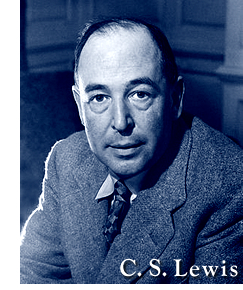
C.S. Lewis Daily – On kindness


Love is something more stern and splendid than mere kindness. For about a hundred years we have so concentrated on one of the virtues—“kindness” or mercy—that most of us do not feel anything except kindness to be really good or anything but cruelty to be really bad. Such lopsided ethical developments are not uncommon, and other ages too have had their pet virtues and curious insensibilities. And if one virtue must be cultivated at the expense of all the rest, none has a higher claim than mercy. . . . The real trouble is that “kindness” is a quality fatally easy to attribute to ourselves on quite inadequate grounds. Everyone feels benevolent if nothing happens to be annoying him at the moment. Thus a man easily comes to console himself for all his other vices by a conviction that “his heart’s in the right place” and “he wouldn’t hurt a fly,” though in fact he has never made the slightest sacrifice for a fellow creature. We think we are kind when we are only happy: it is not so easy, on the same grounds, to imagine oneself temperate, chaste, or humble. You cannot be kind unless you have all the other virtues. If, being cowardly, conceited and slothful, you have never yet done a fellow creature great mischief, that is only because your neighbour’s welfare has not yet happened to conflict with your safety, self-approval, or ease. Every vice leads to cruelty.

From The Problem of Pain

Compiled in Words to Live By

Night Light for Couples – Black Sunday


“If he sins against you seven times in a day, and seven times comes back to you and says, ‘I repent,’ forgive him.” Luke 17:4

Every family has moments they’d rather forget—moments that later call for understanding and forgiveness. When our children lived at home, we found that Sunday was often the most frustrating day of the week, especially during the “get ’em ready for church” routine. But Black Sunday was uniquely chaotic!

Jim and I began the day by getting up late, which meant that everyone had to rush to prepare for church. Then there was the matter of spilled milk at breakfast and the black shoe polish on the floor. Finally, Ryan, who was dressed first, managed to slip out the back door and get himself dirty from head to toe. As these irritations mounted, the criticism and accusations flew back and forth. At least one spanking was delivered and another three or four were promised.

After the Sunday evening service we called the family together. We described the day we’d had and asked each person to forgive us for our part in it. We also gave each member of the family a chance to express his or her feelings. Ryan was given his first shot, and he fired it at me. “You’ve been a real grouch today, Mom!” he said with feeling. “You’ve blamed me for everything all day long.” Danae then poured out her hostilities and frustrations. Finally, Jim and I had an opportunity to explain the tensions that had caused our overreaction. It was a valuable time of ventilation and honesty that drew us together once more. We then had prayer as a family and asked the Lord to help us live and work together in love and harmony.

No matter how hard we try, we will experience times when we fail to live up to our Christian principles. When those times arrive, discussion and forgiveness are the best methods for soothing wounded relationships. I urge you at those moments to actively seek forgiveness from each other and from God and freely offer forgiveness in return.

While you’re at it, forgive yourself. If God can post a “No Fishing” sign by the sea where your sins are thrown, then so can you and I. –  Shirley M Dobson

From Night Light For Couples, by Dr. James & Shirley Dobson