Tag Archives: holy spirit

John MacArthur – Defining True Religion


“This is pure and undefiled religion in the sight of our God and Father, to visit orphans and widows in their distress, and to keep oneself unstained by the world” (James 1:27).

True religion produces holiness and sacrificial love.

In this verse James continues his practical and penetrating assessment of true faith. So far he has said in effect, “Don’t just study the Bible—obey it! Don’t just dabble in external religion—have pure speech!” Now he adds, “Don’t just say you’re religious—demonstrate sacrificial love! Don’t just claim to love God—live a pure life!” Shallow claims to Christianity meant nothing to him. He wanted to see godly attitudes and righteous deeds.

The apostle John used the same approach when he wrote, “The one who says he abides in [Christ] ought himself to walk in the same manner as He walked. . . . The one who loves his brother abides in the light and there is no cause for stumbling in him. But the one who hates his brother is in the darkness and walks in the darkness, and does not know where he is going because the darkness has blinded his eyes” (1 John 2:6, 10-11). “Light” in that passage represents truth and righteousness; “darkness” speaks of error and sin. If you are truly saved, you are in the light and show it by your love for others.

In our society, the definition of religion is very broad. Almost any belief system qualifies. But to God, any religion that doesn’t produce holiness and sacrificial love is not true religion. That narrows the field considerably because anyone who isn’t saved through faith in Jesus Christ remains in bondage to sin and has no capacity to live a holy and selfless life.

How about you? Do you flee from sin and reach out to those in need? If so, you have true religion. If not, receive Christ now. He alone is the source of holiness and love.

Suggestions for Prayer

If you are a believer, God’s love is already shed abroad in your heart through the indwelling Holy Spirit (Rom. 5:5). Ask God to increase your capacity to love others as Christ loves you.

For Further Study

Read 1 John 3:10-18, noting John’s comparison of the children of God with the children of the devil.

Joyce Meyer – Free in Christ


In [this] freedom Christ has made us free [and completely liberated us]; stand fast then, and do not be hampered and held ensnared and submit again to a yoke of slavery [which you have once put off]. Galatians 5:1

As your relationship with God matures, you will find yourself living less by rules and regulations and more by the desires of your heart. As you learn more of the Word, you will find His desires filling your heart, and it will be easier for you to discern God’s will. God wants you to know His heart well enough that you will want to follow the prompting, leading, and guidance of the Holy Spirit.

Once you are free in Christ, stand fast in that liberty and do not become ensnared with legalism, which is the yoke of bondage you have put off. God wants to bring you into a new place, a place full of freedom to follow your heart.

Power Thought: I am free to live for Christ.

Campus Crusade for Christ; Bill Bright – The Simple, Wonderful Message


“He brought them out and begged them, ‘Sirs, what must I do to be saved?” They replied, ‘Believe on the Lord Jesus and you will be saved, and your entire household” (Acts 16:30- 31).

The story is told of a man who was very fond of the famous general, Robert E. Lee. He was eager for his four-year-old son to admire and respect this great, southern, Civil War general as much as he did. So every day, as they strolled through the park near their home, they would stop in front of the statue of General Lee astride his beautiful horse, Traveler, and the father would say to his little David, “Say good morning to General Lee,” The little lad would dutifully wave his hand in obedience to his father’s instructions and say, “Good morning, General Lee.” Months passed and one day, as they again stood in front of the statue of General Lee, the father said, “Say good morning to General Lee,” which the boy did. But as they walked on through the park together, David asked, “Daddy, who is that man riding General Lee?”

One of the biggest problems we have in life is communication. To David’s young mind the horse was more important that the rider. We all have a tendency to filter information through our own experiences. What I say is not necessarily what you hear, and what you say may not be what I hear. This is true even in communicating the gospel.

The most joyful news ever announced is found in Luke 2:10,11:” ‘Don’t be afraid!’ the angel said. ‘I bring you the most joyful news ever announced, and it is for everyone! The Savior – yes, the Messiah, the Lord – has been born tonight in Bethlehem!'” Yet that simple message has been diluted and profaned through the centuries.

One evening, I presented this message to a very mature, intelligent layman.

“Does it make sense?” I inquired.

It was as though a light suddenly went on and, for the first time, he understood what the gospel was all about. “Of course it does,” he answered.

“Would you like to receive Christ right now?”

“Of course I would. If what you say is true, I should think everyone would want to know Christ.”

If Spirit-filled, trained communicators properly presented the gospel, the majority of people would want to receive Christ.

Bible Reading: John 1:9-14

TODAY’S ACTION POINT: I will seek to present the good news of God’s love and forgiveness through Jesus Christ in such a logical, joyful, Spirit-filled way that those who hear will want to know my wonderful Savior. And I will trust God to use me to train other Christians as well to be better communicators of the greatest news the world has ever heard.

Presidential Prayer Team; A.W. – Incredible Trust


Many famous quotes have the words “if you can” in them. Walt Disney said, “If you can dream it, you can do it.” Henry Ford said, “If you think you can do a thing or think you can’t do a thing, you’re right.”

And Jesus said to him, “‘If you can?’ All things are possible for one who believes.”

Mark 9:23

In Mark 9, Jesus, Peter, James and John left His transfiguration and came upon a crowd. The people were criticizing the disciples because they couldn’t heal a young boy. Jesus questioned the father and he described his boy’s illness. The father said to Jesus, “If you can do anything, have compassion and help us.” Today’s verse records the Lord’s response. He wanted them to understand there’s no “if” involved. He can. Period.

Through Him, you can, too. Are you doubting your abilities today? You can do all things through Christ (Philippians 4:13). Know in your heart and mind He can accomplish anything according to His will. Pray for spiritual strength for yourself, the nation and its leaders to remember how powerful God is…and to trust in Him for the incredible!

Recommended Reading: Ephesians 3:14-21


Night Light for Couples – Tranquility


“Be at peace with each other.” Mark 9:50

If you don’t protect yourselves from outside stresses, married life can seem more like a marathon than a stroll in the park. With relentless pressure at work, a demanding schedule of carpooling and sports, and the stress of keeping up with home and church duties, moms and dads can begin to lose heart. Then fatigue and irritability set in, angry words are spoken, and soon every member of the family is at one another’s throats.

All of us, especially at the end of pressure‐packed days, need a safe retreat. As a working husband or wife, you need a chance to unwind privately for a while when you first come home. School kids (teenagers, too) need uninterrupted “down time” on a regular basis. No one can keep up a frenetic schedule for long without it affecting his or her attitude.

Jesus told His followers to “be at peace with each other.” If you’re finding hopefulness in short supply in your marriage, maybe it’s time you get off the treadmill of continuous stress. If it’s just the expectations of others that is keeping you on the run, say “no” more often. Take an afternoon off. Get a babysitter so you can have some time to yourself. Set aside quiet time regularly—and guard it. Slow down your mealtimes together. Simplify.

As you make a priority of creating tranquility at home, you’ll feel your heart lifting and hope returning.

Just between us…

  • When you feel overwhelmed by demands, do you ever lose hope?
  • How can we do a better job of protecting each other’s “down time”?
  • How can tranquility at home promote a better spiritual life?

Dear God, forgive us when we allow external demands to dictate the quality of our home life. Give us the foresight and discipline to create a sanctuary of peace and renewal. Amen.

From Night Light For Couples, by Dr. James & Shirley Dobson

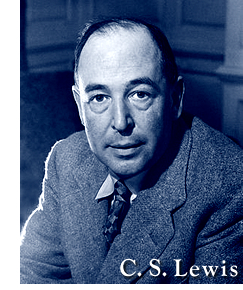
C.S. Lewis Daily – Today’s Reading


TO MRS. JOHNSON: On the real meaning of heaven—enjoying God forever.

25 May 1957

It was nice to hear from you again. I can’t remember how up to date you are with my news. Did I tell you that a new element of both beauty and tragedy had entered my life? I am newly married, and to a dying woman (She was the Joy Davidman whose Smoke on the Mountain, a lively modern treatment of the Ten Commandments, you may have read. An American). She is, and I try to be, very brave. I acquired two schoolboy stepsons. I myself am, not dangerously, but painfully and disablingly, ill with a slipped disc. So life is rather full. . . .

. . . Of course Heaven is leisure (‘there remaineth a rest for the people of God’ [Hebrews 4:9]): but I picture it pretty vigorous too as our best leisure really is. Man was created ‘to glorify God and enjoy Him forever.’ Whether that is best pictured as being in love, or like being one of an orchestra who are playing a great work with perfect success, or like surf bathing, or like endlessly exploring a wonderful country or endlessly reading a glorious story—who knows? Dante says Heaven ‘grew drunken with its universal laughter.’

Pray for us both.

From The Collected Letters of C.S. Lewis, Volume III

Compiled in Yours, Jack

The Collected Letters of C. S. Lewis

Charles Stanley – A Balanced Schedule


Proverbs 16:1-3

The Lord wants us to reach our full potential—to become the people He’s designed us to be and achieve the tasks He’s planned for us to do. In our pressurized society, we need to have balanced schedules if we’re going to live according to God’s purposes.

Consider the following five areas. When any is out of balance, our relationship with the Lord and others will be affected, diminishing our effectiveness as servants of Christ.

  1. To develop our relationship with the Lord and receive guidance, our top priority should be to spend private time with Him each day…
  2. Time with family and friends is also essential because relationships are such an important part of God’s plans for our lives.
  3. The area in which we are most likely to become imbalanced is our work. Although the Lord doesn’t approve of laziness, He doesn’t want us to be overly consumed with our careers either.
  4. If we are to accomplish the Lord’s purposes in our lives, we need to take care of our bodies, allocating adequate time for exercise, rest, and recreation.
  5. The Scriptures also clearly command meeting together regularly with other believers for worship (Heb. 10:24-25). While some people have limitations that hinder doing this, most of us have no excuse for being too busy for church.

These general areas all need space in your life, but I cannot tell you how to allocate time for them. The Lord has specific plans for each person, and He is the only one who can accurately direct your schedule. Seek His guidance, listen for His voice, and make the changes He brings to mind.

Bible in One Year: Psalms 15-18

John MacArthur – Speaking from a Pure Heart


“If anyone thinks himself to be religious, and yet does not bridle his tongue but deceives his own heart, this man’s religion is worthless” (James 1:26).

Your speech reveals the condition of your heart.

In verse 22 James talked about the delusion of hearing the Word without obeying it. Here he talks about the deception of external religious activity without internal purity of heart.

That’s a common deception. Many people confuse love of religious activity with love for God. They may go through the mechanics of reading the Bible, attending church, praying, giving money, or singing songs, but in reality their hearts are far from God. That kind of deception can be very subtle. That’s why James disregards mere claims to Christianity and confronts our motives and obedience to the Word. Those are the acid tests!

James was selective in the word he used for “religious.” Rather than using the common Greek word that speaks of internal godliness, he chose a word that refers to external religious trappings, ceremonies, and rituals— things that are useless for true spirituality.

He focuses on the tongue as a test of true religion because the tongue is a window to the heart. As Jesus said, “The mouth speaks out of that which fills the heart” (Matt. 12:34). Corrupt speech betrays an unregenerate heart; righteous speech demonstrates a transformed heart. It doesn’t matter how evangelical or biblical your theology is, if you can’t control your tongue, your religion is useless!

You can learn much about a person’s character if you listen long enough to what he says. In the same way, others learn much about you as they listen to what you say. Do your words reveal a pure heart? Remember Paul’s admonition to “let no unwholesome word proceed from your mouth, but only such a word as is good for edification according to the need of the moment, that it may give grace to those who hear” (Eph. 4:29). Make that your goal each day so you can know the blessing and grace of disciplined speech!

Suggestions for Prayer

Ask the Lord to guard your tongue from speaking anything that might dishonor Him. Be aware of everything you say.

For Further Study

Read James 3:1-12.

  • What warning does James give?
  • What analogies does he use for the tongue?

Campus Crusade for Christ; Bill Bright – Produce Lovely Fruit


“You didn’t choose Me! I chose you! I appointed you to go and produce lovely fruit always, so that no matter what you ask for from the Father, using My name, He will give it to you” (John 15:16).

Some time ago I asked a leading theologian and dean of faculty of a renowned theological seminary if he felt that one could be a Spirit-filled person without sharing Christ as a way of life.

His answer was an emphatic, “No!” On what basis could he make such a strong statement? The answer is obvious. Our Savior came to “seek and to save the lost” and He has “chosen and ordained” us to share the good news of His love and forgiveness with everyone, everywhere.

To be unwilling to witness for Christ with our lips is to disobey this command just as much as to be unwilling to witness for Him by living holy lives is to disobey His command. In neither case can the disobedient Christian expect God to control and empower his life.

There are those who say, “I witness for Christ by living a good life.” But it is not enough to live a good life. Many non-Christians live fine, moral, ethical lives.

According to the Lord Jesus, the only way we can demonstrate that we are truly following Him is to produce fruit, which includes introducing others to our Savior as well as living holy lives. And the only way we can produce fruit is through the power of the Holy Spirit.

Bible Reading: John 15:7-15

TODAY’S ACTION POINT: My part of the “bargain” is to share the good news which will produce lovely fruit; God’s part is to provide the wisdom, love and power, through the enabling of the Holy Spirit, to be a fruitful witness. “Lord help me to be faithful in my part, knowing You will be faithful in Yours.”

Presidential Prayer Team; C.H. – Overcomer


“What goes up must come down.” Sir Isaac Newton’s popular quote is in reference to the law of gravity. The Earth operates through scientific laws put into practice by God Himself. Even the most powerful rulers are still subject to these laws.

And in the fourth watch of the night he came to them, walking on the sea.

Matthew 14:25

Jesus, however, is ruler over all. He is “the head of all rule and authority.” (Colossians 2:10) Even the laws of nature must obey Jesus. He proved this when, late one night, He walked on the water to join His disciples in their boat. Not fully understanding who Jesus was, His followers were frightened. Jesus truly is the King of all kings.

When praying and thinking about your problems, remember Christ can do anything. All men and all of nature must obey the Son of God. If He can command those things, He can handle whatever life throws at you. Ask God to give this nation’s people and leaders the same peace He gives His followers in the face of difficulty: “I have said these things to you, that in me you may have peace. In the world you will have tribulation. But take heart; I have overcome the world.” (John 16:33)

Recommended Reading: Matthew 14:22-33


Greg Laurie – Home!


“We are citizens of heaven, where the Lord Jesus Christ lives.” —Philippians 3:20

My granddaughter Allie is a little homebody.

She will come to visit Cathe and me, and will be so excited (we have lots of toys and fun things for the grandkids to do), but without warning, Allie will just say “home” and walk out the door!

Have you ever felt that way? Like everything this world offers just leaves you cold? We each have a longing deep inside of us for “home.” This world is not our home, but it is our location at present. One day, we will truly go home.

The Bible says of our lives on earth, “We are here for only a moment, visitors and strangers in the land as our ancestors were before us. Our days on earth are like a passing shadow, gone so soon without a trace” (1 Chronicles 29:15 NLT).

When you become a Christian, you become a citizen of heaven, your real home. Philippians 3:20 says, “But we are citizens of heaven, where the Lord Jesus Christ lives. And we are eagerly waiting for Him to return as our Savior” (NLT).

We long for something that this earth can never deliver on. That’s why we will always be a bit “out of tune” with this world and all it celebrates—because we, as followers of Jesus, know there is something more. Much more.

Heaven should draw us, engage us, pull us in its direction. We should long for it. As Augustine wrote, “You have formed us for Yourself, and our hearts are restless till they find rest in You.”

Thus, we see this world for what it is: empty, temporal, and passing.

  1. M. Bounds said, “Heaven ought to draw and engage us. Heaven ought to so fill our hearts and hands, our conversations, our character, and our features, that all would see that we are foreigners, strangers to this world. The very atmosphere of this world should be chilling to us and noxious, its suns eclipsed and its companionship dull and insipid. Heaven is our native land and home to us. And death to us is not the dying hour, but the birth hour!”

Night Light for Couples – The World’s Most Opposite Couple


“We must obey God rather than men!” Acts 5:29

Authors and counselors Chuck and Barb Snyder describe themselves as the “World’s Most Opposite Couple”—and it may be true. Chuck says the only things they have in common are the same wedding anniversary and the same children. He’s driven; she’s laid‐back. She enjoys soft classical music; he prefers country western at maximum volume. She’s left‐handed; he’s right‐handed. And so it goes. Perhaps in part because of their differences, the Snyders have experienced nearly every imaginable conflict in marriage— over scheduling, communication, home life, finances, discipline of the children, and more. In over forty years of marriage, however, the Snyders have learned to appreciate their differences. They have faced, and weathered, more than their share of storms. The key, Chuck says, is nothing fancy—simply obedience to the Lord. If there’s hope for the World’s Most Opposite Couple, there’s hope for the rest of us, too.

Just between us…

  • Were you attracted by my “opposite” traits when we were dating?
  • Have we survived despite our differences, or because of them?
  • Do we accept the uniqueness of each other as God designed us, or do we struggle to “redesign” each other in our own images?
  • Which of my traits that are different from yours do you appreciate most?

Heavenly Lord, thank You for the differences that You weave together to make our marriage strong. Help us to respect, appreciate, and affirm these unique qualities more each day. Amen.

From Night Light For Couples, by Dr. James & Shirley Dobson

Streams in the Desert for Kids – Heavenly Music


Revelation 15:3

We cannot even begin to understand what God is going to do in the future. The book of Revelation gives us a tiny peek into that time. People who are believers will stand beside a sea that looks like glass mixed with fire. These believers will be singing praises to God.

Here is the praise song that they will sing:

Great and marvelous are your deeds,

Lord God Almighty.

Just and true are your ways,

King of the nations.

Who will not fear you, Lord,

and bring glory to your name?

For you alone are holy.

All nations will come

and worship before you,

for your righteous acts have been revealed.

Revelation 15:3–4

On earth and in heaven we get to trust and praise God for who he is and what he has done for us. During good days or bad, peaceful times or stormy ones, God is always good, always in control, always with us.

Dear Lord, It is wonderful to know that we don’t have to wait for heaven or even for good days to sing songs of praise to you. Thank you for saving us. Amen.

Charles Stanley – Through Times of Trial


Genesis 50:18-21

If anyone had ample opportunity to become embittered by life’s trials, it was Joseph. His brothers treated him with contempt even before they tossed him into a pit. Then, he was sold into slavery, transported to a foreign land, framed for a crime, and left to waste away in prison—all within a relatively short period of time. Despite the many injustices he suffered, this boy who grew up in bondage became a man of diligent work ethic and gentle spirit.

It’s almost impossible to understand how Joseph could seem so forgiving, peaceful, and even joyful. His secret to maintaining grace under pressure was a constant focus on God. He must have spent many hours recalling Jacob’s stories about the Lord’s faithfulness to their family—and also the divine revelations about his own future as a leader (Gen. 37:8-9). In spite of his numerous afflictions, Joseph trusted that those God-given dreams would become reality.

Imagine what kind of man Joseph might have become after 13 years of suffering and injustice. Had Joseph dwelled on his unfair circumstances, he’d likely have become cynical and vengeful. With a mind full of escape plots and revenge tactics, he might have failed at being a good worker—so instead of achieving greatness, Joseph would probably have toiled at unfulfilling menial tasks.

With his spiritual eyes trained on God’s glory, Joseph persevered through great trials. In the end, he certainly had the power to punish his brothers for their treachery, but he chose to forgive. That decision probably wasn’t easy. Yet because Joseph placed himself under God’s protection, his heart was unhindered by negative emotions.

Bible in One Year: Psalms 8-14

Our Daily Bread — Don’t Lose Heart


Read: Galatians 6:1-10

Bible in a Year: Ezra 3-5; John 20

In due season we shall reap if we do not lose heart. —Galatians 6:9

Cooking can become tedious work when I do it three times a day, week after week. I get tired of peeling, cutting, slicing, mixing, and then waiting for food to bake, grill, or boil. But eating is never tedious! It’s actually something we truly enjoy even though we do it day after day.

Paul used the illustration of sowing and reaping because he knew that doing good can be tiring (Gal. 6:7-10). He wrote, “Let us not grow weary while doing good, for in due season we shall reap if we do not lose heart” (v.9). It’s difficult to love our enemies, discipline our children, or pray without ceasing. However, reaping the good we have sown isn’t tedious! What a joy when we do get to see love conquering strife, or children following God’s ways, or answers to prayer.

While the cooking process can take hours, my family usually finishes a meal in 20 minutes or less. But the reaping that Paul talks about will be eternal. As we have the opportunity, let’s do what is good and wait for the blessings in God’s timing. Don’t lose heart today as you go about following God’s ways. Remember that joy is guaranteed for more than a lifetime. —Keila Ochoa

Dear Lord, help me not to become weary of doing good today. I’m thankful that some day I will be with You for a joy-filled eternity!

Keep running the race with eternity in view.

INSIGHT: The churches of Galatia, a province in ancient Asia Minor (modern-day Turkey), were recipients of this emotionally charged letter from Paul. He had founded these churches (Gal. 1:8; 4:13,19), yet they had fallen away from the gospel of grace that he had preached to them. Instead, they had begun embracing a blend of the gospel and legalistic Judaism. Because grace (rooted in God’s kindness) and legalism (rooted in our performance) are incompatible, Paul responded with this letter in which he expresses deep concern for their spiritual condition.


Ravi Zacharias Ministry – At the Border of Faith and Doubt


It seemed like yet another routine border crossing in what was then Communist-ruled Czechoslovakia.(1) The year was 1981; Leonid Brezhnev was the head of the Soviet Union, and half of Europe languished under the Communist vision and control. As a young and eager Christian, I had joined a mission whose primary task was to help the church in Eastern Europe. This involved transporting Bibles, hymn books, and Christian literature to believers behind what Winston Churchill called the “Iron Curtain.”

It was indeed an iron curtain: a vast barrier made of barbed-wire fences, mine fields, exclusion zones, guard towers, heavily armed soldiers, and dogs. Although designed allegedly to keep the West out, it was in actuality a vast system of control to keep those under this tyranny in. On this occasion my task was to transit through Czechoslovakia into Poland to deliver my precious cargo of Bibles and books to a contact there.

The literature was concealed in specially designed compartments, and my colleague and I had gone through our routine preborder procedures. We bowed our heads and prayed that God would protect us. We then proceeded to the border crossing between Austria and Czechoslovakia.

It was a cold, bleak, early winter day. It all seemed normal. We entered Czechoslovakia, and the huge barrier descended behind us. We were now locked in. As usual, the unfriendly border guards took our passports, and then the customs inspector arrived. I had been trained to act casual, to pray silently, and to respond to questions. I sensed this time it was different. The man ignored me, concentrated on the structure of our vehicle, and was soon convinced we had something concealed. I became quite tense. They eventually took the keys from me and locked my colleague and me in separate rooms. The guards broke into the special compartments in our vehicle, where they discovered the Bibles and literature.

My colleague and I were handcuffed, not allowed to speak to each other, and put in separate cells with people who spoke no English. The small rooms smelled of disinfectant and had only two bunk beds and a hole in the floor that served as the toilet. The light was kept on all night and some basic food was brought three times a day. The rules were rigid and enforced: no sitting or lying on the beds during the day. This meant shuffling backward and forward for hours in a highly restricted space, then facing a difficult night as we sought to sleep under the glare of the constant light.

Time became blurred. Was it morning, day, evening? I found myself alone, in a hostile place, without anything to read, without anyone to talk to, without any idea when or if we might be released, and with seeming unlimited (and empty) time on my hands. There is nothing like empty time and constricted space to bring to the surface feelings, questions, and doubts.

Contrary to some of the more starry-eyed testimonies I have read, I did not experience overwhelming grace or a profound sense of God’s presence. I did have the assurance that God was there, that God knew what was going on, and that “my times were in his hands” (see Psalm 31:15). My feelings, however, became a source of torment. For some reason I had an initial impression that we would be released quickly and expelled from the country. As the first few days passed with no communication and I had no idea what was happening, I began to wrestle to some degree with doubt. It was intense, it was real, and it was filling my mind and clouding my thoughts and my heart. My doubts seemed to focus on uncertainty as to what God was doing and whether I could actually trust what I thought was his leading. I also was struggling with how much I might be asked to face.

I can well remember a point of surrender. After several days, I resigned myself to the possibility that my imprisonment could last for years. I might not get out for a long time, so I had to make the best of what was and to rest in God. It is a point where we accept the hardship, where we still believe in greater good, and where we surrender to what seems like inevitability. I think I came to relinquish my sense and need for control (I had none anyway) and simply accept that God would be there as promised, and therefore, to rest in Him.

I had crossed an important point that I subsequently discovered in the writings of Dietrich Bonhoeffer, Richard Wurmbrand, Alexander Solzhenitsyn, and Vaclav Havel. Scholar Roger Lundin remarks:

“To Bonhoeffer, this is the distinctive ‘difference between Christianity and all religions.’ Our suffering, wrote Bonhoeffer only months before his 1943 arrest, teaches us ‘to see the great events of world history from below, from the perspective of the outcast, the suspects, the maltreated, the powerless.’ The interpretive key to human experience is to be found not in our preference for Eden but in our power to share in the sufferings of God and the world: ‘We have to learn that personal suffering is a more effective key, a more rewarding principle for exploring the world in thought and action than personal good fortune.’”(2)

As those raised in comfort and convenience, the very nature of all this may frighten or repel us. If the message we have believed or the model we have been taught has raised false expectations, then we are going to be subject to doubt and fear, and worse, reject the whole thing. But the gospel and Christianity are concerned with reality, and hence with truth. By this I mean what the true nature of life really is and means. Christianity is not an escape system for us to avoid reality, live above it, or be able to redefine it. Christianity is a way that leads us to grasp what reality is and, by God’s grace and help, to navigate through it to our eternal home.

As I sat thinking, praying, and hoping in the custody of the Czechoslovakian authorities, I was surprised one day when the door opened and I was summoned forth, signaled not to speak, and then led out to a waiting car with my colleague. We were driven in silence to the border. We were handed our passports and our severely damaged vehicle, and we were then expelled from the country. We crossed into Austria and were able to talk for the first time in nearly two weeks. We shared our stories, and we stopped and prayed. We heard missing details; we discovered ways that God worked in us. We spoke of our struggles, our doubts, and our overall confidence.

It would be presumptuous to turn our limited experience and insight into a major pattern for all, yet in the midst of it we were able to detect broader strokes, hidden meanings, and real possibilities. Like Joseph so many centuries before, we could look back on all that happened, reflect on it and say, “They meant it for evil, but God meant it for good” (Genesis 50:20).

Stuart McAllister is regional director for the Americas at Ravi Zacharias International Ministries in Atlanta, Georgia.

(1) Excerpted from Stuart McAllister’s chapter “The Role of Doubt and Persecution in Spiritual Transformation” in Ravi Zacharias, ed., Beyond Opinion: Living the Faith We Defend (Nashville: Thomas Nelson, 2007). Copyright © 2007 by Ravi Zacharias. Used by permission of Thomas Nelson.

(2) Dietrich Bonhoeffer, Letters, 17, 370, quoted in Roger Lundin, From Nature to Experience: The American Search for Cultural Authority (Lanham, MD: Rowman & Littlefield Publishers, Inc., 2005), 40.

Alistair Begg – Getting on the Scales


You have been weighed in the balances and found wanting. Daniel 5:27

It is good to regularly weigh ourselves on the scale of God’s Word. You will find it a holy exercise to read some Psalm of David and, as you meditate upon each verse, to ask yourself, “Can I say this? Have I felt as David felt? Has my heart ever been broken on account of sin, as his was when he penned his penitential psalms? Has my soul been full of true confidence in the hour of difficulty as his was when he sang of God’s mercies in the cave of Adullam or in the holds of Engedi? Do I take the cup of salvation and call upon the name of the Lord?”

Then turn to the life of Christ, and as you read, ask yourself how far you are conformed to His likeness. Endeavor to discover whether you have the meekness, the humility, the lovely spirit that He constantly urged and displayed. Then take the epistles, and see whether you can go with the apostle in what he said of his experience. Have you ever cried out as he did, “Wretched man that I am! Who will deliver me from this body of death”? Have you ever felt his self-abasement? Have you seemed to yourself the chief of sinners, and less than the least of all the saints? Have you known anything of his devotion? Could you join with him and say, “For to me to live is Christ, and to die is gain”?

If in this way we read God’s Word as a test of our spiritual condition, we will often have good reason to pause and say, “Lord, I feel I have never yet been here. O bring me here! Give me the true penitence about which I am reading. Give me real faith; give me warmer zeal; inflame me with more fervent love; grant me the grace of meekness; make me more like Jesus. Do not allow me to be ‘found wanting’ when weighed in the balances of the Bible, in case I be found wanting in the scales of judgment.” “Judge not, that you be not judged.”

Devotional material is taken from “Morning and Evening,” written by C.H. Spurgeon, revised and updated by Alistair Begg.

Charles Spurgeon – The scales of judgement


“Tekel; Thou art weighed in the balances, and art found wanting.” Daniel 5:27.

Suggested Further Reading: Psalm 62

Into those scales I must go. God will not take me on my profession. I may bring my witnesses with me; I may bring my minister and the deacons of the church to give me a character, which might be thought all-sufficient among men, but God will tolerate no subterfuge. Into the scales he will put me, do what I may; whatever the opinion of others may be of me, and whatever my own profession. And let me remember, too, that I must be altogether weighed in the scales. I cannot hope that God will weigh my head and pass over my heart—that because I have correct notions of doctrine, therefore he will forget that my heart is impure, or my hands guilty of iniquity. My all must be cast into the scales. Come, let me stretch my imagination, and picture myself about to be put into those scales. Shall I be able to walk boldly up and enter them, knowing whom I have believed, and being persuaded that the blood of Christ and his perfect righteousness shall bear me harmless through it all; or shall I be dragged with terror and dismay? Shall the angel come and say, “Thou must enter.” Shall I bend my knee and cry, “Oh, it is all right,” or shall I seek to escape? Now, thrust into the scale, do I see myself waiting for one solemn moment. My feet have touched the bottom of the scales, and there stand those everlasting weights, and now which way are they turned? Which way shall it be? Do I descend in the scale with joy and delight, being found through Jesus’ righteousness to be full weight, and so accepted; or must I rise, light, frivolous, unsound in all my fancied hopes, and kick the beam?

For meditation: We all ought to check our weight before God does (2 Corinthians 13:5). The scales of God’s judgement will show in our favour only if Jesus Christ, the Rock of Ages, is in us. Do you need to put on weight?

Sermon no. 257
12 June (1859)

John MacArthur – Persevering in the Word


“One who looks intently at the perfect law, the law of liberty, and abides by it, not having become a forgetful hearer but an effectual doer, this man shall be blessed in what he does” (James 1:25).

Doers of the Word are persevering learners.

The phrase “and abides by it” in James 1:25 demands our close attention. “Abide” translates a Greek word that means “to stay beside,” “remain,” or “continue.” The idea is that a doer of the Word continually and habitually gazes into God’s perfect law. In other words, he is a persevering learner.

When you have that level of commitment to the Word, you will be an effectual doer—one who is in union with God’s will and seeks to obey it above all else. As you do, God will bless you. That doesn’t necessarily mean you’ll be successful in the eyes of the world, but your priorities and perspectives will be right and the Lord will honor what you do.

This verse is a call to carefully examine yourself in light of God’s standards. That’s not a popular thing in our society because many people have an aversion to serious spiritual thought and self-examination. I believe that’s why Christian television, music, and other forms of entertainment are so popular. Escaping reality through entertainment is far more appealing to most people than gazing into the mirror of God’s Word and having their spiritual flaws and blemishes exposed. But if you desire to be like Christ, you must see yourself for what you are and make any needed corrections. To do that, you must continually examine your life in the light of Scripture.

Can you imagine what the church would be if every Christian did that? Can you imagine the changes in your own life if you did it more consistently? Only the Holy Spirit can enable you to be a doer of the Word. So yield to His leading through prayer and confession as you continue to study and apply God’s Word.

Suggestions for Prayer

Whenever you study Scripture, ask the Spirit to illuminate your mind and heart, and to use the Word to transform you more and more into the image of Christ.

For Further Study

Read Colossians 3:16-17, noting what Paul says about responding to the Word.

Joyce Meyer – Don’t Take In Criticism


Now Miriam and Aaron talked against Moses [their brother] because of his Cushite wife, for he had married a Cushite woman. And they said, Has the Lord indeed spoken only by Moses? Has He not spoken also by us? And the Lord heard it. Now the man Moses was very meek (gentle, kind, and humble). Numbers 12:1–3

Sometimes the people who are criticized the most are the ones who try to do something constructive with their lives. It amazes me how people who do nothing want to criticize those who try to do something. After many years of suffering over the criticisms of people and trying to gain their approval, I finally decided that if God is happy with me, that is enough.

Each time someone criticizes you, try making a positive affirmation about yourself to yourself. Don’t just stand by and take in everything anyone wants to dump on you. Establish independence! Have your own attitude about yourself and don’t be defeated by criticism.

During Winston Churchill’s last year in office, he attended an official ceremony. Several rows behind him two gentlemen began whispering. “They say Churchill is getting senile.” “They say he should step aside and leave the running of the nation to more dynamic and capable men.” When the ceremony was over, Churchill turned to the men and said, “Gentlemen, they also say he is deaf!”

Lord, at the end of the day, I want You to be happy with the way I lived, whether others criticize me or not. If You are happy with me, that’s enough! Amen.