Tag Archives: human-rights

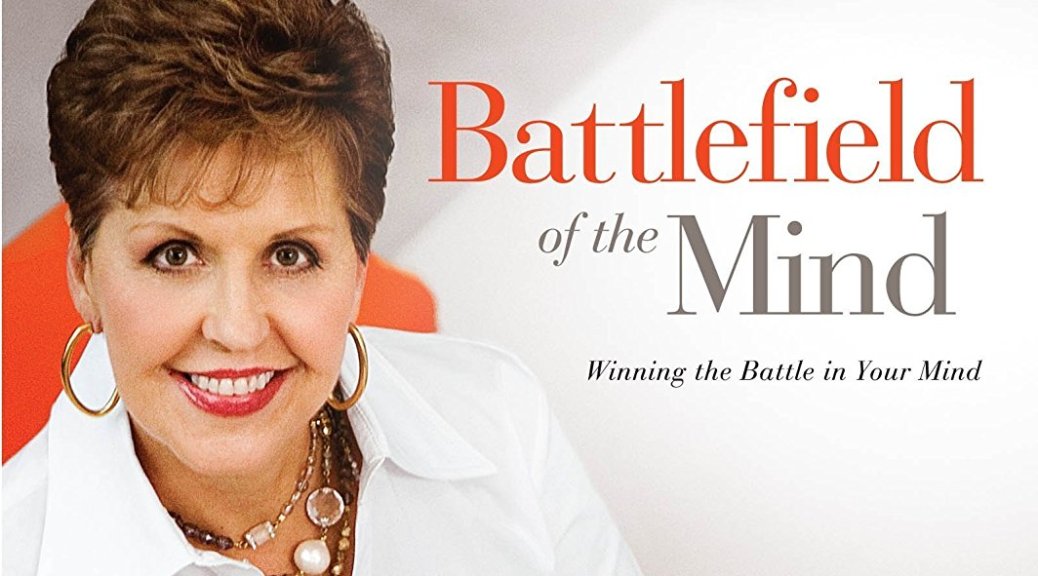
Joyce Meyer – Enjoying the Journey


But Martha was very busy and distracted with all of her serving responsibilities; and she approached Him and said, “Lord, is it of no concern to You that my sister has left me to do the serving alone?…” — Luke 10:40

I believe that life should be a celebration. Far too many believers don’t even enjoy life, let alone celebrate it. Many people truly love Jesus Christ and are on their way to heaven, but very few are enjoying the trip. For many years I was one of those people…I was like Martha!

Martha was busy doing what I used to do—running around trying to make everything perfect in order to impress God and everyone else. I complicated my relationship with the Lord because I had a legalistic approach to righteousness. I only felt good about myself when I was accomplishing something. And I resented people like Martha’s sister, Mary, who enjoyed themselves. I thought they should be working like I was working.

My problem was that I was all Martha and no Mary. I loved Jesus, but I had not learned about the simple life He desired me to live. The answer, I discovered, was rooted in faith, discovering what it means to sit at the feet of Jesus, listen to His words, and trust God with all my heart and soul.

Prayer Starter: Father, I ask for Your grace to truly enjoy and celebrate life. Help me to also enjoy my relationship with You and always remember what is truly important. In Jesus’ Name, Amen.


http://www.joycemeyer.org

Campus Crusade for Christ; Bill Bright – No Darkness in Him


“This is the message God has given us to pass on to you: That God is light and in Him is no darkness at all. So if we say we are His friends, but go on living in spiritual darkness and sin, we are lying. But if we are living in the light of God’s presence, just as Christ does, then we have wonderful fellowship and joy with each other, and the blood of Jesus His Son cleanses us from every sin” (1 John 1:5-7).

One of the first passages of Scripture that I memorized as a new Christian was the first chapter of 1 John. This passage has been a beacon to me through the years as a simple reminder that in God is light and the only reason that I do not live perpetually in that light is because at times I deliberately sin.

Steve had lost his joy and enthusiasm for Christ, and as a new Christian was perplexed. He could not understand what had happened to him. As we counseled together, it became apparent that he had allowed some of his old natural habit patterns to creep back into his life.

I suggested that he make a list of all the things that were wrong in his life and confess them to the Lord in accordance with 1 John 1:9. A few days later, with joyful enthusiasm he came to share with me how his heart had been kindled afresh with the love of God as he was now walking in the light as God is in the light, having wonderful fellowship with the Lord Jesus Christ.

How does one walk in the light? Do not tolerate unconfessed sin. Meditate upon the Word of God. Spend time in prayer talking to God and letting Him talk to you. Share your faith in Christ with others. Obey the commandments of God.

Are you walking in the light as God is in the light? Are you experiencing the joy of the Lord? Are you constrained by the love of Christ to share Him with others?

Bible Reading:I John 1:6-10

TODAY’S ACTION POINT:  I shall always seek to walk in the light as God is in the light in order that I may experience wonderful fellowship with my Lord. When I find myself walking in darkness, I shall pause to confess my sins and by faith claim God’s forgiveness and cleansing so that I may be restored to once again walk in the light with God.


http://www.cru.org

Max Lucado – In the Storm


Listen to Today’s Devotion

After Jesus’ disciples fought a raging storm for nine cold hours, at about 4:00 AM the unspeakable happened. They spotted someone coming on the water. “A ghost!” they said, crying out in terror. (Matthew 14:26 MSG). They didn’t expect Jesus to come to them this way.

Neither do we. We expect him to come in the form of peaceful hymns on Easter Sundays or quiet retreats. We expect to find Jesus in morning devotionals and meditations. We never expect to see him in a divorce or a foreclosure. We never expect to see him in a storm. But it’s in a storm that he does his finest work, for it is in storms that he has our keenest attention.

Jesus replied to the disciples’ fear with an invitation worthy of inscription on every church cornerstone and residential archway, “Don’t be afraid,” he said. “Take courage. I am here!” (Matthew 17:27).

Read more Fearless

For more inspirational messages please visit Max Lucado.

Home

Denison Forum – Professor who reviled Barbara Bush will not be punished


A California State University, Fresno, professor will not be punished for calling Barbara Bush “an amazing racist” and cheering her death.

The university’s president condemned Randa Jarrar’s statements as “insensitive, inappropriate and an embarrassment to the university.” However, he stated that she was acting as a private citizen using her personal Twitter account, so her statements didn’t violate school policies.

In other California news, a former police officer has been identified as the so-called “Golden State Killer.” He is believed to have committed twelve killings and at least fifty rapes across California from 1976 to 1986.

Closer to home, Dallas police officer Rogelio Santander died yesterday. He was one of three victims of a gunman who was caught shoplifting at a Home Depot in our area.

His tragic death reminds us that our police officers are on the front lines every day, willing to die so we can live. They deserve our intercession and encouragement today.

And the husband of the woman killed last week on Southwest Airlines Flight 1380 has now spoken to reporters. When Michael Riordan learned that his wife had died, “I immediately thought of the kids and how do you tell your kids their mom was gone.”

A very hard question

Continue reading Denison Forum – Professor who reviled Barbara Bush will not be punished

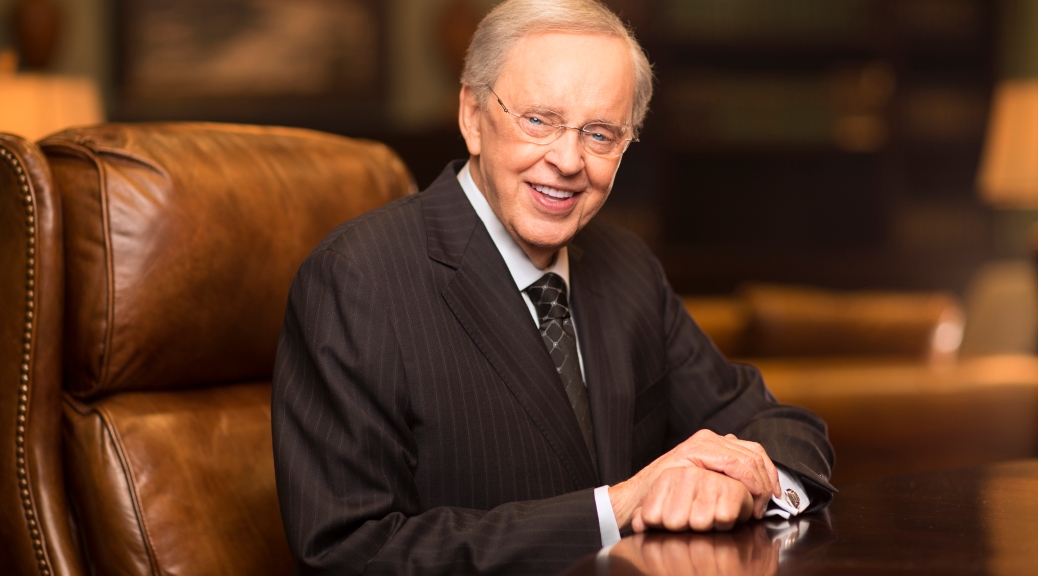
Charles Stanley – Comfort in Jesus


Hebrews 4:14-16

What brings you comfort when you are suffering or going through stressful times? Although well-meaning friends may assure you that everything will be all right, the person who truly comforts is the one who puts an arm around your shoulder and says, “I’m familiar with the pain you are feeling, and I know it hurts.”

Jesus is that kind of comforter for us. He came to earth as a human, experienced pain and suffering, and faced temptation without giving in to sin. He comes alongside to help us by being …

Our Friend. “Greater love has no one than this, that one lay down his life for his friends” (John 15:13). Jesus isn’t a companion in word only; He demonstrated that He is the best possible friend because He willingly went to the cross to save us from our sins. He sacrificed Himself for us so we could be with Him forever.

Our High Priest. He became the Mediator between holy God and sinful mankind by offering His own blood as a sacrifice to reconcile us to the Father. Now we have immediate access to God in time of need.

Our Intercessor. Jesus sits at the Father’s right hand, interceding for us. We don’t always pray correctly, but what a comfort to know that the One who is perfect speaks to the Father on our behalf.

On whom do you lean during difficult times? Although people may disappoint us with quick-fix responses to our hurt, Jesus Christ understands our pain and offers unlimited compassion and help when we come to Him.

Bible in One Year: 2 Kings 10-12


http://www.intouch.org/

Our Daily Bread — Amnesia


Read: Daniel 4:28–37 | Bible in a Year: 2 Samuel 21–22; Luke 18:24–43

My understanding returned to me; and I blessed the Most High. Daniel 4:34 nkjv

Emergency Services in Carlsbad, California, came to the rescue of a woman with an Australian accent who couldn’t recall who she was. Because she was suffering from amnesia and had no ID with her, she was unable to provide her name or where she had come from. It took the help of doctors and international media to restore her health, tell her story, and reunite her with her family.

Nebuchadnezzar, king of Babylon, also lost sight of who he was and where he had come from. His “amnesia,” though, was spiritual. In taking credit for the kingdom he’d been given, he forgot that God is the King of Kings, and everything he had was from Him (Daniel 4:17, 28–30).

Father, when we forget who we are, help us to remember where we’ve come from and that we belong to You.

God dramatized the king’s state of mind by driving him into the fields to live with wild animals and graze like a cow (vv. 32–33). Finally, after seven years Nebuchadnezzar looked up to the skies, and his memory of who he was and who had given him his kingdom returned. With his senses restored, he declared, “I, Nebuchadnezzar, praise and exalt and glorify the King of heaven” (v. 37).

What about us? Who do we think we are? Where did we come from? Since we are inclined to forget, who can we count on to help us remember but the King of Kings?

Father, we are so inclined to forget who we are, where we’ve come from, and that we belong to You. Help us to remember that in Christ we are Your children—known, loved, gifted, and cared for—now and forever.

When we forget who we are, our Father cares.


http://www.odb.org

Ravi Zacharias Ministry – The Scene of Miracle

The 1748 essay “Of Miracles” by David Hume was influential in leading the charge against the miraculous, thoughts that were later sharpened (though also later recanted) by Antony Flew. Insisting the laws of a natural world incompatible with the supernatural, the new atheists continue to weigh in on the subject today. With them, many Christian philosophers and scientists, who are less willing to define miracle as something that must break the laws of nature, join the conversation with an opposing gusto. Physicist and Anglican priest John Polkinghorne, for instance, suggests that miracles are not violations of the laws of nature but rather “exploration of a new regime of physical experience.”(1)

The possibility or impossibility of the miraculous fills books, debates, and lectures. What it does not fill is that moment when a person finds herself—rationally or otherwise—crying out for intervention, for help and assurance, indeed, for the miraculous. “For most of us” writes C.S. Lewis, “the prayer in Gethsemane is the only model. Removing mountains can wait.”(2) To this I would simply add that often prayer is both: both the anguished cry of Gethsemane—”please, take this from me”—prayed at the foot of an impossible mountain.

Continue reading Ravi Zacharias Ministry – The Scene of Miracle

Joyce Meyer – Learning to Expect Good Things

All the days of the desponding and afflicted are made evil [by anxious thoughts and forebodings], but he who has a glad heart has a continual feast [regardless of circumstances]. — Proverbs 15:15 AMPC

Shortly after I began to seriously study the Bible, I felt an oppressive atmosphere around me. Everything seemed gloomy—as if something bad was going to happen. It wasn’t anything I could explain, just a vague, dreaded sense of something evil or wrong about to happen.

“Oh, God,” I prayed. “What’s going on? What is this feeling?” I had hardly uttered the question when God spoke to me. “Evil forebodings.” I had to meditate on that for several minutes. I had never heard the phrase before. God had spoken to me, and I stayed quiet before Him so I could hear the answers.

I realized, first of all, that my anxieties weren’t real—that is, they were not based on true circumstances or situations. I was having problems—as most of us do —but they were not as critical as the devil was making it appear. My acceptance of his lies, even though they were vague, was opening the door for the evil forebodings.

I eventually realized that I had lived in the midst of similar gloomy feelings most of my life. I was expecting something bad to happen instead of aggressively expecting something good. I felt a dread, an unexplained anxiety around me. I couldn’t put my finger on anything specific—only that sense of something evil or terrible.

The Living Bible says, “When a man is gloomy, everything seems to go wrong.” That’s how I felt, as if something—maybe everything—was wrong or was about to go wrong.

As previously stated, I realized that for most of my life, I had been miserable because of evil thoughts and anxious forebodings. As I continued to meditate on evil forebodings, God broke through and gave me a clear revelation. I was miserable because my thoughts were miserable—my thoughts were poisoning my outlook. My thoughts robbed me of the ability to enjoy my life.

I should have been saying, “Thank You, God, for today. Thank you for Dave and my children and my friends and all Your blessings.” But, instead of being positive, I found myself even dreading to answer the phone when it rang, for fear it might be bad news.

All of this gloom and doom that surrounded me began in my abusive childhood. I endured a great deal of misery, and most of my life was unhappy and filled with disappointments. I began to live in a vague fear and dread of the future. I had not been taught to let go of what was behind.

I couldn’t rejoice in what I had now and the good things going on in my life. I focused on the past and what might lie ahead—and what lay ahead was usually gloom and doom and chaos because that was what I was expecting.

Satan had built a stronghold in my mind, and I was trapped until I learned I could tear down that negative, evil stronghold by applying God’s Word to my life and circumstances.

I once had a friend whom I’ll call Marlene. She lived in a state of constant chaos. One day she had health problems. The next day Marlene’s son had lost his job, and they were going to have to support him and his family. As soon as that was over, another traumatic situation would erupt.

Marlene was a Christian, but she lived in fear of bad news. Marlene would not have known how to live a life that was not filled with chaos. All of her conversation was negative and gloomy. Even her countenance was sad and gloomy.

I realized that I had started to become like Marlene—I was miserable because I had allowed Satan to rob me of the ability to enjoy my life. It took a while before I was able to be positive most of the time, but little by little, my thinking changed, and so did my life.

I no longer live in evil forebodings, expecting to hear at any moment of a new problem. Now I purposely expect good things to happen in my life. I realize now that I can choose my thoughts. I don’t have to accept Satan’s lies.

Like everyone else, negative things do happen to me from time to time, but I don’t become negative because of them. I remain positive, and that helps me enjoy my life even in the midst of the storms.

Prayer Starter: Father, I thank You for the great future You have planned for me. Please help me to choose positive thoughts that line up with Your Word and expect Your goodness in every area of my life. In Jesus’ Name, Amen.


http://www.joycemeyer.org

Campus Crusade for Christ; Bill Bright – When He’s in Control


“But when the Holy Spirit controls our lives, He will produce this kind of fruit in us:…self-control” (Galatians 5:22,23).

Sue insisted that she was Spirit-filled, and she frequently challenged others to be filled with the Spirit. But there was no evidence that the Holy Spirit was in control of her life, because she was completely undisciplined in everything she did. She knew nothing about self-control. She knew all about the Holy Spirit, in her mind, but there was no evidence that He was in her life – and in control of her life.

Dr. Henrietta Mears, as director of Christian education at the First Presbyterian Church in Hollywood, had one of the greatest spiritual ministries of her time. Hundreds of young men and women became church members and missionaries under her influence. She lived in a palatial home, owned priceless antiques and dressed beautifully. Most people assumed that she was a woman of great wealth. Actually, she was a person of relatively modest means. She simply knew how to take her regular salary, a modest inheritance, plus savings, and maximize them for God’s glory.

For example, she would advise young people, “Do not eat in expensive restaurants where you spend excessively except on rare occasions. Instead, prepare your own lunch, and over a period of a year you can save enough money by not eating out to take a trip around the world and enrich your spirit, your soul and your cultural sensitivities. Or you can use the money you save to buy something which will enhance the beauty of your home or person.”

We see disciplined people all around us in the world. Athletes discipline themselves to strict training, soldiers are drilled in military discipline, artists and writers are disciplined to sharpen their talents through dedicated practice. On the other hand, we also see examples of a lack of discipline in the lives of many people around us.

Whether a person is a Christian or a non-believer, the development of self-control as a quality of character seems to be difficult for most people. Yet we are told in the Bible that the Spirit-filled Christian will exhibit self- control as a part of the fruit of the Spirit.

Bible Reading:I Chronicles 28:9-13

TODAY’S ACTION POINT:  I acknowledge that to walk in the fullness and control of the Holy Spirit will enable me to demonstrate a life of discipline and self-control. Therefore, by faith, and with the help of the Holy Spirit, I shall live a life of discipline and self-control for the glory of God. Self- control is essential for supernatural living.


http://www.cru.org

Max Lucado – A Greenhouse of Prayer


Listen to Today’s Devotion

All people are God’s people—including the small people who sit at our tables. Wise are the parents who regularly give their children back to God.

Parents, we can do this. We can take our parenting fears to Christ. In fact, if we don’t, we’ll take our fears out on our kids! A family with no breathing room suffocates a child. Fear can also create permissive parents who are high on hugs and low on discipline.

How can we avoid the two extremes? We pray. Jesus makes no comments about spanking, sibling rivalry, or schooling. Yet his actions speak volumes about prayer. Each time a parent prays, Christ responds. His message to moms and dads? Bring your children to me. Raise them in a greenhouse of prayer.

Read more Fearless

For more inspirational messages please visit Max Lucado.

Home

Denison Forum – A “true American hero”: The faith of the Southwest Airlines pilot


Tammie Jo Shults is now famous as the pilot who landed Flight 1380 after an engine exploded in the air. She guided the plane down after a twenty-thousand-foot drop in six minutes, then walked down the aisle hugging passengers. Passengers described her as having “nerves of steel” and being a “true American hero.”

What you may not know is that she is also a committed Christian.

Shults has led the children’s worship program at First Baptist Church of Boerne, Texas. She has also taught Sunday school for children, middle schoolers, high schoolers, and adults. According to Staci Thompson, a longtime friend and church staff member, the congregation was “impressed” but not “shocked” at Shults’s heroics.

Her courage under fire comes from her training: three decades ago, Shults became one of the first female fighter pilots in the US military. But even more, it comes from her Lord. Thompson says her friend “wants people to know that God was there with her” on Flight 1380 and “that he helped her in getting control of that plane and landing that plane.”

“It was because of him, not her,” Thompson said. “She was just a teammate and a co-captain. He was the captain.” God’s grace was the source of her strength.

Why are stories of grace so appealing to us?

Signals of grace

GQ magazine has placed the Bible on its list of “21 Books You Don’t Have to Read.” The more our culture rejects biblical truth, the more it needs biblical truth.

The Colson Center’s John Stonestreet has an article I encourage you to read. It’s on AB 2943, a bill passed by the California Assembly that adds “conversion therapy” to its list of “deceptive business practices” prohibited by state law.

Under the bill, a bookstore could sell Hitler’s Mein Kampf but not a book suggesting that same-gender sexual orientation could or should be altered. David French of the National Review correctly calls this legislation “extraordinarily radical.”

The more bad news we see, the more good news we want to see. But I think there’s something more to the popularity of stories of grace.

Sociologist Peter Berger identified “signals of transcendence” that point us from the temporal to the eternal. Perhaps stories of grace in a world of grief and guilt are such “signals.” They remind us that what matters most in life is that which we cannot earn but only receive.

What do you value most today? I would list my family, friends, and the privilege of this ministry. None were earned—all have been given to me.

All are by grace.

The folly of self-sanctification

In John 10, Jesus described himself as “the door of the sheep” (v. 7), demonstrating that he is the only way to eternal life. But he is also the only way to abundant life: “The thief comes only to steal and kill and destroy. I came that they may have life and have it abundantly” (v. 10).

“Abundant” translates perisson, a word which can be rendered “extraordinary, above all human means.” The abundant life of Christ is available only from Christ. Nothing we do, no matter how well-intentioned, can do what only God can do.

But we try.

Americans embrace the pioneer spirit, the cultural DNA that rewards hard work, initiative, and self-reliance. Add our fallen desire to be our own god (Genesis 3:5) and our desire to impress others with what we do and have, and you have a recipe for self-sanctification.

But we can no more sanctify ourselves than we can save ourselves. Salvation comes in three tenses: we have been saved, we are being saved, and we will be saved. All three depend on the grace of God.

Three reasons to spend time with God

If we cannot sanctify ourselves, why does the Bible call us to the spiritual disciplines of prayer, Bible study, worship, solitude, meditation, and all the rest?

One: Spiritual disciplines position us to receive what grace intends to give. Just as you had to open this email or web page to read its content, so you must pray and read Scripture to hear God’s voice.

Two: Spiritual disciplines reinforce our need for God. We pray, read Scripture, and worship because we need what only God can provide. “Not by might, nor by power, but by my Spirit, says the Lord of hosts” (Zechariah 4:6).

Three: Spiritual disciplines invite other people to join us in following Jesus. Our Lord often prayed in the presence of his disciples as a model for them to follow (cf. Luke 11:1). Our public expressions of faith encourage others to trust in our Father.

Grace in three tenses

You have been saved by grace. You are being saved by grace. You will be saved by grace.

Conversely, you become more like Jesus by spending more time with Jesus. What will you do today to “grow in the grace and knowledge of our Lord and Savior Jesus Christ” (2 Peter 3:18)?

John Piper: “Heaven is too great, hell is too horrible, and eternity is too long that we should putter around on the porch of eternity.”


Denison Forum

Charles Stanley – The Moments That Sustain Us


Psalm 145:1-21

Every believer experiences moments of challenge or discomfort. The question is, How do we deal with them? King David discovered that remaining strong and fruitful during trying circumstances begins with praising the Lord. Then, once his focus shifted upward, he was ready to meditate on the glorious splendor of God’s majesty and also on His wonderful works (Psalm 145:5).

Meditation involves Bible reading but goes far beyond skimming a section the way we might with any other book. Instead, we need to pray over the verses, asking God to show us by His Spirit what the passage means, what it says about Him, and how we can apply His words to our life.

What keeps us from meditating upon the Lord and His Word? We live in such a busy culture that it’s often difficult for us to slow down, settle our racing thoughts, and sit quietly with God’s Word before us. As we try to concentrate, our minds are bombarded with thoughts of all we need to do. Being with the Lord may not seem as urgent as our other tasks, but it’s much more important.

Meditating on Scripture increases our thirst for God, enlarges our perspective of Him, teaches us to think biblically, and increases our discernment. The insights we gain from His Word bring encouragement, reminding us of God’s constant presence and strengthening us for whatever lies ahead.

The spiritual benefits of time alone with the Lord are worth whatever sacrifice we have to make. Through meditation, our heart begins to digest the truths we know intellectually so they can impact our everyday life.

Bible in One Year: 2 Kings 7-9


http://www.intouch.org/

Our Daily Bread — he Waiting Place


Read: Psalm 70 | Bible in a Year: 2 Samuel 19–20; Luke 18:1–23

Be still before the Lord and wait patiently for him. Psalm 37:7

“Waiting for the fish to bite or waiting for wind to fly a kite. Or waiting around for Friday night . . . . Everyone is just waiting”—or so Dr. Seuss, author of many children’s books, says.

So much of life is about waiting, but God is never in a hurry—or so it seems. “God has His hour and delay,” suggests an old, reliable saying. Thus we wait.

Be still before the Lord and wait patiently for him. Psalm 37:7

Waiting is hard. We twiddle our thumbs, shuffle our feet, stifle our yawns, heave long sighs, and fret inwardly in frustration. Why must I live with this awkward person, this tedious job, this embarrassing behavior, this health issue that will not go away? Why doesn’t God come through?

God’s answer: “Wait awhile and see what I will do.”

Waiting is one of life’s best teachers for in it we learn the virtue of . . . well, waiting—waiting while God works in us and for us. It’s in waiting that we develop endurance, the ability to trust God’s love and goodness, even when things aren’t going our way (Psalm 70:5).

But waiting is not dreary, teeth-clenched resignation. We can “rejoice and be glad in [Him]” while we wait (v. 4). We wait in hope, knowing that God will deliver us in due time—in this world or in the next. God is never in a hurry, but He’s always on time.

Dear Lord, thank You for Your loving presence. Help us to make the most of our waiting through trust in and service for You.

God is with us in our waiting.

By David H. Roper

INSIGHT

David wrote Psalm 70 (a song of lament or complaint) from a place of waiting. He waited for God to deliver him, to save him from “those who want to take [his] life” and “desire [his] ruin” (vv. 1–2). We don’t know the setting and circumstances of this lament, but we do know that for years David ran from King Saul and his army who wished to kill him (1 Samuel 19:1–2, 11; 20:30–33; 21:10–15; 23:15). David also waited for years to rule Israel, even though the prophet Samuel had anointed him king while David (Jesse’s youngest son) still watched his father’s sheep and Saul still reigned (16:1–13). We see Psalm 70 stated (in slightly different words) in Psalm 40:11–17. Though David waited for deliverance—and endured hardship as he did—he was still able to exclaim wholeheartedly, “The Lord is great!” (40:16; 70:4) and “You are my help and my deliverer” (40:17; 70:5).

When have you cried out to God, longing for Him to rescue you from a difficult situation? How can you praise Him as you wait?

Alyson Kieda


http://www.odb.org

Ravi Zacharias Ministry – Of Supermen and Sacrifice

One of Friedrich Nietzsche’s sustained critiques of Christianity was that it promoted weakness as a virtue. He argued in his book On the Genealogy of Morals that Christianity promotes a “slave morality.”(1) Looking at the Beatitude sayings of Jesus as the centerpiece of this morality, Nietzsche railed against this unique vision of life, particularly as it was embodied in Jesus as the “suffering servant.” The moral solution, for Nietzsche, was to argue for the exact opposite; the will to power by the ubermensch, serving no one and dominating all others was the virtue of assertive power.

While one might either recoil at Nietzsche’s criticism or agree with his radical vision of power, the clarity of his insights into the heart of Christianity cannot be dismissed easily. For in Jesus’s very first sermon, he declares that the poor in spirit, the meek, those who have been persecuted, and the peacemakers are blessed.(2) Indeed, Jesus extends an radical call to what Nietzsche would deem weakness: “Do not resist him who is evil; but whoever slaps you on your right cheek, turn to him the other also. And if anyone wants to sue you, and take your shirt, let him have your coat also. And whoever shall force you to go one mile, go with him two. Give to him who asks of you, and do not turn away from him who wants to borrow from you.” If this wasn’t enough, Jesus elsewhere tells his followers that “whoever wishes to save his life shall lose it; but whoever loses his life for my sake and the gospel’s shall save it.”(3)

Continue reading Ravi Zacharias Ministry – Of Supermen and Sacrifice

Joyce Meyer – You Can Be Brave

But to as many as did receive and welcome Him, He gave the right [the authority, the privilege] to become children of God, that is, to those who believe in (adhere to, trust in, and rely on) His name. — John 1:12

“To get” means to obtain by struggle and effort, but “to receive” means to simply take in what is being offered. Our relationship with God was never intended to be complicated and based upon our own works. The more we learn how to receive from God by faith, the simpler and more enjoyable our walk with Him becomes.

You can keep your relationship with God simple by receiving His unconditional love and believing His Word no matter what you think or how you feel. You can receive by faith all that He offers, even though you know full well that you don’t deserve it. And you can choose to lean on, trust in, and rely on Him to meet every need you have instead of worrying and trying to figure things out.

And with His help (grace), you can obey Him and grow in spiritual maturity by knowing His will and receiving His best for your life!

Prayer Starter: Father, thank You for the incredible privilege of being Your child. Today, by faith, I choose to receive the blessings You have for me—Your love, mercy, forgiveness, strength, wisdom, joy, peace, and every good thing You have in store for my life. Help me to receive from You with simple child-like faith. In Jesus’ Name, Amen.


http://www.joycemeyer.org

Campus Crusade for Christ; Bill Bright – Poor, Blind and Naked


“You say, ‘I am rich, with everything I want; I don’t need a thing!” And you don’t realize that spiritually you are wretched and miserable and poor and blind and naked” (Revelation 3:17). 

George had come for a week of lay training at Arrowhead Springs. Following one of my messages on revival, in which I explained that most Christians are like the members of the church at Ephesus and Laodicea, as described in Revelation 2 and 3, he came to share with me how, though he was definitely lukewarm and had lost his first love, he frankly had never read those passages, had never heard a sermon such as I had presented and therefore did not realize how wretched and miserable and poor and blind and naked he was.

If there were such an instrument as a “faith thermometer,” at what level would your faithfulness register? Hot? Lukewarm? Cold?

Jesus said to the church at Laodicea, “I know you well – you are neither hot nor cold; I wish you were one or the other! But since you are merely lukewarm, I will spit you out of my mouth!” (Revelation 3:15).

Again, I ask you, where does your faithfulness register on that faith thermometer?

The greatest tragedy in the history of nations is happening right here in America. Here we are, a nation founded by Christians, a nation founded upon godly principles, a nation blessed beyond all the nations of history for the purpose of doing God’s will in the world. But most people in this country, including the majority of church members, have without realizing it become materialistic and humanistic, all too often worshiping man and his achievements instead of the only true God.

Granted, the opinion polls show meteoric growth in the number of people in America who claim to be born-again Christians. But where does their faith register on the faith thermometer? America is a modern-day Laodicea. We are where we are today because too many Christians have quenched the Holy Spirit in their lives.

Bible Reading:Revelation 3:14-19

TODAY’S ACTION POINT:  Realizing that America cannot become spiritually renewed without individual revival, I will humble myself, and pray, and seek God’s face, and turn from my wicked ways. By faith I will claim revival in my own heart.


http://www.cru.org

Max Lucado – Stop Being Uneasy About Your Life


Listen to Today’s Devotion

Worry has more questions than answers, more work than energy, and thinks often about giving up. There’s not enough time, luck, credit, wisdom, or intelligence. We’re running out of everything it seems, and so we worry.  But worry doesn’t work. You can dedicate a decade of anxious thoughts to the brevity of life, and not extend it by one minute. Worry accomplishes nothing.

God doesn’t condemn legitimate concern for responsibilities but rather the continuous mind-set that dismisses God’s presence. Destructive anxiety subtracts God from the future and tallies up the challenges of the day without entering God into the equation. Jesus gives us this challenge: “Your heavenly Father already knows all your needs. Seek the Kingdom of God above all else and live righteously; and he will give you everything you need” (Matthew 6:32-33).

Read more Fearless

For more inspirational messages please visit Max Lucado.

Home

Denison Forum – The royal baby: Good news on a hard day

Prince William and Catherine, Duchess of Cambridge, announced the birth of their third child yesterday. They followed centuries of tradition by notifying the sovereign first, in this case, Queen Elizabeth. Per tradition, they also did not reveal the gender of their child until he was born.

The royal baby will have a first name, then two or three middle names, typically names that have been used in the family for centuries. The latest royal baby might not be named until tomorrow, but betting companies have made “Arthur” the clear favorite for his first name.

Carl Sandburg was right: “A baby is God’s opinion that the world should go on.”

The fragility of life: Four examples

The royal baby’s birth was wonderful news on a hard day.

Continue reading Denison Forum – The royal baby: Good news on a hard day

Charles Stanley – The Truth About Salvation


1 John 5:11-13

Satan wants both Christians and non-Christians to be confused about salvation, but for different reasons.

When it comes to unbelievers, the devil’s purpose is to have them think they’re saved by doing good works—in other words, by being a “good” person. His motive is to keep the lost man or woman lost. This is an all-too-effective strategy, even among many who attend church regularly. Assuming their good deeds will outweigh their bad deeds, they consider themselves heaven-bound when in reality, they’re actually on the road to horrifying, irreversible disappointment (Matt. 7:21-23).

Satan has a different purpose for creating confusion among God’s followers. Though Jesus taught that salvation can never be lost (John 10:28-29), the enemy sows seeds of doubt in an effort to keep believers off-balance—wondering what the Lord will do next, fearing His judgment, and working ever more feverishly to earn His acceptance. More than a few Christians have burned themselves out in this misguided attempt to please the Lord. On top of that, they have allowed Satan to enslave them with fear and short-circuit their effectiveness for God’s kingdom.

The solution is to know the Bible and trust what it teaches. Scripture is clear that we’re saved by faith, not by works (Eph. 2:8-9)—and that salvation is permanent (Rom. 8:38-39). God wants His children reassured about these truths, confident, and spiritually productive. His desire is that our relationship with Him will be so exciting and joyful that we reflect Jesus to those around us.

Bible in One Year: 2 Kings 4-6


http://www.intouch.org/

Our Daily Bread — The Secret of Peace


Read: 2 Thessalonians 3:16–18 | Bible in a Year: 2 Samuel 16–18; Luke 17:20–37

The Lord of peace himself give you peace. 2 Thessalonians 3:16

Grace is a very special lady. One word comes to mind when I think of her: peace. The quiet and restful expression on her face has seldom changed in the six months I have known her, even though her husband was diagnosed with a rare disease and then hospitalized.

When I asked Grace the secret of her peace, she said, “It’s not a secret, it’s a person. It’s Jesus in me. There is no other way I can explain the quietness I feel in the midst of this storm.”

To trust in Jesus is peace.

The secret of peace is our relationship to Jesus Christ. He is our peace. When Jesus is our Savior and Lord, and as we become more like Him, peace becomes real. Things like sickness, financial difficulties, or danger may be present, but peace reassures us that God holds our lives in His hands (Daniel 5:23), and we can trust that things will work together for good.

Have we experienced this peace that goes beyond logic and understanding? Do we have the inner confidence that God is in control? My wish for all of us today echoes the words of the apostle Paul: “May the Lord of peace himself give you peace.” And may we feel this peace “at all times and in every way” (2 Thessalonians 3:16).

Dear Lord, please give us Your peace at all times and in every situation.

To trust in Jesus is peace.

By Keila Ochoa

INSIGHT

Paul, Silas, and Timothy were the first to share the gospel in Thessalonica. The response to the gospel of free grace in Christ was remarkably positive (Acts 17:1–4), but—as is often the case—the positive response to the gospel was accompanied by opposition and persecution (Acts 17:5–6; 1 Thessalonians 1:6; 2:2). Thus Paul was forced to leave the city of Thessalonica sooner than he had hoped (Acts 17:9–10). His concern for the new congregation there motivated him to write two inspired letters to that young church. As he completed his second letter, Paul stressed the peace that only Jesus Christ can offer (2 Thessalonians 3:16). The apostle was no stranger to trials, yet his confidence that everything would work out in God’s sovereignty gave him a deep, abiding peace that he wanted other believers to experience. The Prince of Peace is the source of the believer’s spiritual rest.

For further study on experiencing peace in the midst of trials see Navigating the Storms of Life at discoveryseries.org/hp061.

Dennis Fisher


http://www.odb.org