Tag Archives: jesus christ

John MacArthur – Holy Hatred


“Hate evil, you who love the Lord” (Ps. 97:10).

God’s hatred for evil is an extension of His love.

After spending this month exploring fifteen characteristics of godly love, it might seem odd to shift suddenly to the topic of hatred. Additionally, “holy hatred” will sound like a contradiction in terms to those who view all hatred as evil. But love and hate are inseparable. You can’t truly love something and be complacent about the things that oppose or threaten it.

If you love your spouse, you hate anything that would defile or injure him or her. If you love your children, you hate anything that would harm them. If you love good, you hate evil. If you love unity, you hate discord. If you love God, you hate Satan. That’s why Scripture says, “Hate evil, you who love the Lord” (Ps. 97:10) and, “The fear of the Lord is to hate evil; pride and arrogance and the evil way, and the perverted mouth, I [God personified] hate” (Prov. 8:13).

Unquestionably God is a God of love. First John 4 says, “Beloved, let us love one another, for love is from God; and every one who loves is born of God and knows God. The one who does not love does not know God, for God is love. . . . Beloved, if God so loved us, we also ought to love one another. . . . And we have come to know and have believed the love which God has for us. God is love, and the one who abides in love abides in God, and God abides in him” (vv. 7-8, 11, 16).

How are we to respond to that love? The psalmist wrote, “From Thy precepts I get understanding; therefore I hate every false way. . . . I hate those who are double-minded, but I love Thy law. . . . I esteem right all Thy precepts concerning everything, I hate every false way. . . . I hate and despise falsehood, but I love Thy law” (Ps. 119:104, 113, 128, 163).

Is that your prayer? Do you hate the things that oppose God? Are you offended by what offends Him? Remember, holy hatred is as much a part of godly love as any of its other characteristics. If you love God, you must necessarily hate evil.

Suggestions for Prayer

Ask God to increase your love for Him and your hatred for evil.

For Further Study

Meditate on Psalm 119:101-104 and commit it to memory.

Campus Crusade for Christ; Bill Bright – To Be Approved


“Study to show thyself approved unto God, a workman that needeth not to be ashamed, rightly dividing the word of truth” (2 Timothy 2:15, KJV).

Most of all of my adult life has been centered around the university world – as a student, a teacher, and one who works with students, professors and administrators in the intellectual realm. I count many of the leading scholars of our time as beloved friends, yet if I had to choose between a Ph.D. from the most prestigious university in the world and a thorough knowledge of and comprehension of the Word of God, I would gladly choose the latter. Fortunately, it is not necessary to choose because one can have both academic training and a knowledge of God’s Word.

A recommendation which I have made to our two sons and to thousands of our staff and students with whom we work is that degrees are very important in today’s world, but they will not only be meaningless and worthless in terms of eternity, but can contribute to one’s moral and spiritual disintegration unless at the same time one is studying to show himself approved unto God. In all of our academic pursuits and in our commitment to excellence in the business and professional realms, we must be careful to give God and His Holy inspired Word their rightful place in our daily schedule. Ultimately, it is our knowledge of God learned through the study of Scripture and our response to Him that makes all the difference in our life-style. It makes the difference in the choosing of our mate, in the rearing of our children, in the choosing of our friends, our business or professional career, in all of our attitudes and actions and in the contribution which we make to society. Let us give priority to priorities, the highest of which is to seek after God through the diligent study of His holy revelation to man and to encourage others to join with us in rightly dividing the word of truth.

Bible Reading: II Timothy 2:19-25

TODAY’S ACTION POINT: With God’s help I will seek not only to be a student of God’s Word but also to acquire the ability to teach His word to others.

Presidential Prayer Team; A.W. – Staying in the Light


Henry Durbanville’s book The Best Is Yet to Be contains the story of a young woman who loved to grow flowers but lived in the attic of a dilapidated tenement house in London. She grew the plants as best she could in an old cracked teapot. She entered her flowers into a show where she surprisingly won an award. When asked how she grew award-winning flowers in such unlikely conditions, she said she constantly moved them to always be in the sunlight.

She did not depart from the temple, worshiping with fasting and prayer night and day.

Luke 2:37

Today’s verse is about another woman who knew the importance and reward of staying in the light…of her Lord. Anna was a prophetess who was widowed for 84 years. She continually prayed and fasted in the temple, longing to see the “redemption of Jerusalem.” (Luke 2:38) Present when Mary and Joseph brought Jesus to His purification ceremony, she knew she’d been awarded the privilege of seeing the Messiah. Anna tirelessly and persistently abided in God and her wish was fulfilled. Her joy was made complete.

What amazing things might you see accomplished in your life and in the nation through prayer, fasting and abiding in Christ? Pray and read the Bible…and you’ll find out. Stay in His light!

Recommended Reading: John 15:1-11

Greg Laurie – The Message Proclaimed


“And how shall they hear without a preacher? And how shall they preach unless they are sent? As it is written: ‘How beautiful are the feet of those who preach the gospel of peace, who bring glad tidings of good things!’ ” —Romans 10:14–15

From the original Greek, we could translate the final question in Romans 10:14 as, “How shall they hear without one preaching?” The Phillips translation puts it this way, “How can they hear unless someone proclaims Him?” Therefore, we see the emphasis is not on a preacher, but on preaching.

We may think the work of evangelism is only for those who are called to be evangelists. Granted, there are people in the church whom God has raised up to be evangelists, and certainly evangelism is not limited to those who preach to hundreds or thousands at a time. I have seen many individual believers who obviously have this gift.

While it is true that some are called to be evangelists, it is also true that every Christian is called to evangelize. Many times, however, we avoid sharing our faith, deciding instead to just live it out, be a good witness, and leave the preaching to others.

Yet in 1 Corinthians 1:21, it says, “For since, in the wisdom of God, the world through wisdom did not know God, it pleased God through the foolishness of the message preached to save those who believe.”

This does not mean that we need to scream and yell and wave a Bible to get the point across. What it does mean is that we are to recognize the primary way God has chosen to reach the lost is through the proclamation of the gospel–by people. God has chosen the agency of His proclaimed Word to bring people to salvation.

Max Lucado – Only the Meek Will See

A small cathedral outside Bethlehem marks the supposed birthplace of Jesus. Behind the altar is a cave, a little cavern lit by silver lamps. You can enter the main edifice and admire the ancient church. You can also enter the quiet cave where a star embedded in the floor recognizes the birth of the King. There is one stipulation, however. You have to stoop. The door is so low you can’t possibly go in standing up.

The same is true of the Christ. You can see the world standing tall, but to witness the Savior, you have to get on your knees. So while theologians consulted their commentaries, and the elite were looking around to see who was watching, the successful checking their calendars, the meek were kneeling. They were kneeling in front of Jesus. May God find you doing the same.

From The Applause of Heaven

Night Light for Couples – Romance


by Bill and Lynne Hybels

Romance was never my strong suit. I proposed to Lynne in her parents’ garage; I took my Harley‐Davidson on our honeymoon; I thought our best anniversary was the one we spent watching a video of Rocky III. I had to learn the gentle art of romance. For starters, I figured it meant flowers. Beyond that, I didn’t have a clue, but I knew I could get the flower job done. As confirmation from God that I was moving in the right direction, who do you think set up shop right out of the trunk of his ’58 DeSoto at the corner opposite our church? The flower man! So, quite regularly, on my way home from work or meetings, I would pull over to the side of the road, buy a bunch of roses or carnations from the flower man, and take them home to Lynne. What a husband! I thought as I handed over my three bucks.

Yet when I proudly presented the flowers to Lynne, fully expecting her to hire the Marine Corps Band to play “Hail to the Chief,” her response was lukewarm.

“Gee, thanks,” she said. “Where’d you get these?”

“Where else? My buddy, the flower man—you know, the guy with the ’58 DeSoto at Barrington and Algonquin. I’m a volume buyer now. I stop there so often that he gives me a buck off, and if they’re a little wilted, he gives me two bucks off. I figure they’ll perk up when you put them in water.”

“Of course,” she said.

I kept it up consistently for quite a while—until Lynne’s lack of enthusiasm for the gift drained my enthusiasm.

Some time later, on our regularly scheduled date night, Lynne and I decided to clear the air of anything that might be bothering either of us. We do that now and then. We sat down in a cheap restaurant (not only am I unromantic, I’m also Dutch) and asked, “What’s going on? Is there anything we need to talk about? Is there anything amiss in our relationship?”

On that particular evening, Lynne took out her list and started checking off the items.

“Ooooh, you’re right on that one. Eeeh, that one, too. Yep. Guilty as charged. Guilty. Guilty. You’re right again.”

She ended her list, and I was in a pile. “I really am sorry,” I said, “but trust me. I’m going to do better.” “Now, what about you?” she asked. I really didn’t have any complaints, but after hearing her list, I thought I should say something. I scrambled. “Well, I do have one little problem. Have you noticed the absence of the flowers lately?” “No,” she said. “I haven’t really paid attention.” How could she say that? “We have a problem,” I said. “I can’t figure it out. Hundreds of thousands of husbands pass by that corner. Do they stop for flowers? No. Do I stop? Yes! What gives? What is your problem?”

Her answer made my head spin. She looked me straight in the eyes and said quietly, “The truth is, Bill, I’m not impressed when you give me half‐dead flowers that come out of the trunk of a ’58 DeSoto that you were lucky enough to run across on your way home from work. The flowers are cheap, and the effort is minimal. The way I see it, you’re not investing enough time or energy to warrant a wholehearted response from me. You’re not thinking about what would make me happy; you’re just doing what’s convenient for you.”

“Okay, let’s get this straight,” I said. “You would be happier if I got up from my desk in the middle of my busy day, threw my study schedule to the wind, walked all the way across the parking lot, got in my car, and made a special trip to Barrington, where I’d have to pay quadruple the price just because it said Barrington on the bag? And you wouldn’t mind if the extra time it took crimped my workout schedule at the Y…. And you wouldn’t mind if I came home late because of all the extra running around I would have to do to get you expensive flowers? Is that what you’re telling me? That would make you happy?”

Without batting an eyelash, Lynne said, “Yes, that would make me happy.” I couldn’t believe it! “What are you talking about? What you’re ask‐

ing for is impractical, uneconomical, and an inefficient use of time.” “That’s a great definition of romance, Bill. You’re learning!”

Looking ahead…

Whether we’ve been with our partner for one year or forty, we’re all still trying to master the definition—and execution—of romance in our marriages. As Bill Hybels learned, there’s far more to romantic love than meets the eye. What his wife needed was a heart‐to‐heart and soul‐to‐soul relationship. This kind of relationship seems natural to women, but sometimes men have a hard time figuring it out.

So just what is romance? We’ll talk about that in the week ahead. For tonight, spend a few minutes telling each other what romance means to you. You might hear something important that you’ve missed before.

– James C Dobson

From Night Light For Couples, by Dr. James & Shirley Dobson

Charles Stanley – Success Blockers


Isaiah 41:10-11

Our almighty God desires that we reach His goals for our lives. But we also have an enemy who would love to prevent our progress. Scripture identifies obstacles that can impede achievement. However, if we know what the roadblocks are, it is easier to identify and overcome them.

  • First, when we experience fear, our focus shifts from Jesus to the very thing we want to avoid. Such apprehension can become bondage. The antidote is to bring our focus back to the Lord.
  • Second, doubt is a lack of assurance that God will help us to succeed. Past failures, negative influences, and ignorance of His Word can all lead to this obstacle.
  • Third, excuses are an effort to make disobedience more comfortable. “I haven’t had the same opportunities others have” or “I am too busy” are false justifications, as was Adam’s attempt to blame Eve for his bad decision. God always gives us what we need in order to obey Him.
  • Fourth, procrastination—or delaying an action that causes discomfort—also inhibits success. Related to that is a fifth roadblock: laziness. This ungodly behavior can, for obvious reasons, prevent us from achieving God’s purpose for our lives.

Wise people check their habits and behavior to identify anything that inhibits following Christ fully. If any of these roadblocks are hindering you, push them aside. Find scriptures to help battle temptations. And ask God for strength so you can live freely and purposefully in the way He has planned.

Bible in One Year: Ezekiel 1-3

Our Daily Bread — Purpose in Routine


Read: 1 Corinthians 9:19-27

Bible in a Year: Psalms 120-122; 1 Corinthians 9

I run with purpose in every step. —1 Corinthians 9:26

A rolling-ball clock in the British Museum struck me as a vivid illustration of the deadening effects of routine. A small steel ball traveled in grooves across a tilted steel plate until it tripped a lever on the other side. This tilted the plate back in the opposite direction, reversed the direction of the ball and advanced the clock hands. Every year, the steel ball traveled some 2,500 miles back and forth, but never really went anywhere.

It’s easy for us to feel trapped by our daily routine when we can’t see a larger purpose. The apostle Paul longed to be effective in making the gospel of Christ known. “I do not run like someone running aimlessly; I do not fight like a boxer beating the air” (1 Cor. 9:26 niv). Anything can become monotonous—traveling, preaching, teaching, and especially being confined in prison. Yet Paul believed he could serve Christ his Lord in every situation.

Routine becomes lethal when we can’t see a purpose in it. Paul’s vision reached beyond any limiting circumstance because he was in the race of faith to keep going until he crossed the finish line. By including Jesus in every aspect of his life, Paul found meaning even in the routine of life.

And so can we. —David C. McCasland

Lord, give us renewed vision and energy to pursue the goal of making Christ known in the midst of our daily routine.

Jesus can transform our routine into meaningful service for Him.

INSIGHT: To illustrate his unwavering resolve to preach the gospel to as many people as possible (1 Cor. 9:18-23), Paul used two athletic metaphors—a runner who keeps his eye on the finish line, and the targeted and precise punches of a boxer. These examples picture the passion, focus, commitment, dedication, and hard work needed to carry out his resolve. In 2 Timothy 4:7-8, Paul used the same two metaphors. While athletes compete to win a prize bestowed by men, Paul sought to win an eternal crown awarded by Jesus. Faithful believers will receive various types of crowns as their reward (2 Tim. 4:8; James 1:12; 1 Peter 5:4; Rev. 2:10). J.R. Hudberg

Ravi Zacharias Ministry – The Stories We Tell


Have you ever had the feeling that an experience you had, whether good or bad, was like a scene from a novel or a movie—like you were a part of at least a small story? With the ubiquitous presence of Facebook pages and blogging platforms, I suspect this phenomenon grows all the more common an experience (and likely one that increasingly communicates we are the leading characters of these stories). If the answer is yes, it’s probably because our lives, after all, do tell a story—and perhaps the increasing presence of such outlets to tell these stories affirms it. Every human being has a unique story unfolding as they live out their lives. Just think of it: literally billions of different stories going on all at once, intertwining, overlapping, as we love each other, hate each other, struggle together, and laugh together. Every minute new human stories are beginning in birth and old ones are concluding in death.

“The deepest convictions of our heart are formed by stories and reside there in the images and emotions of [a] story….Life is not a list of propositions, it is a series of dramatic scenes. As Eugene Peterson said, ‘We live in a narrative, we live in a story. We have a beginning and an end, we have a plot, we have character.’ Story is the language of the heart. Our souls speak not in the naked facts of mathematics or the abstract propositions of systematic theology; they speak the images and emotions of story.”(1)

We love stories because life itself is a story. We each have a story that takes place in a particular context, culture, and time in history. Depending on how we grew up, the dynamics of our families, and a million other factors, our stories are going to come out differently.

But is there any common element that runs through all of our stories, an element that we see in every life?

You may have never thought about it this way, but the Christian message really introduces a story of its own; and if it is indeed true, it’s a story that explains the “plot” of each and every human life story. What is this lot? It’s a love story. It’s the story of God’s love for us individually and collectively, God’s seeking to win our hearts again and again, and our responses to this movement toward us. We see this in the well known text of John 3:16: For God so loved the world that he gave his only begotten Son. I would challenge you to look at your life, look at where you are now and where you’ve been, and see if you do not find evidence of God drawing you closer to who God truly is. See if you can find God calling to you in the circumstances of your life, even in hard or painful times, whispering to you in joy, in mystery, in fear, in pain.

God is the ultimate author, God’s story the account that makes sense of our lives and brings beauty into our own stories. As one human author put it, your life could be the very poetry of God.

Ravi Zacharias is founder and chairman of the board of Ravi Zacharias International Ministries.

(1) Brent Curtis, The Sacred Romance (Nashville: Thomas Nelson, 1997), 39.


Alistair Begg – Doubt and Unbelief


How long will they not believe in me…? Numbers 14:11

Strive with all diligence to keep out the monster of unbelief. It is so dishonoring to Christ that He will withdraw His visible presence if we insult Him by tolerating it. It is true it is a weed that we can never entirely remove from the soil, but we must aim at its root with zeal and perseverance. Among hateful things it is the most to be defeated. Its hurtful nature is so poisonous that he that uses it and he upon whom it is used are both harmed by it. In your case, believer, it is most wicked, for the mercies of your Lord in the past increase your guilt in doubting Him now. When you distrust the Lord Jesus, He may well cry out, “Behold, I will press you down in your place, as a cart full of sheaves presses down.” To doubt is to crown His head with thorns of the sharpest kind.

It is very cruel for a well-beloved wife to mistrust a kind and faithful husband. The sin is needless, foolish, and unwarranted. Jesus has never given the slightest ground for suspicion, and it is hard to be doubted by those to whom our conduct is consistently affectionate and true. Jesus is the Son of the Highest and has unlimited wealth; it is shameful to doubt Omnipotence and distrust His sufficiency. The cattle on a thousand hills will be enough for our most hungry feeding, and the granaries of heaven are not likely to be emptied by our eating. If Christ were only a cistern, we might soon exhaust His fullness, but who can drain a fountain? Countless believers throughout the ages have drawn their supplies from Him, and not one of them has complained at the insufficiency of His resources.

Dispel this lying traitor unbelief, for his only errand is to cut the bonds of communion and make us mourn an absent Savior. Bunyan tells us that unbelief has “as many lives as a cat”; if so, let us kill one life now, and continue the work until the whole nine are gone. Down with you, traitor, my heart detests you.

The Family Bible Reading Plan

  • 1 Samuel 19
  • 1 Corinthians 1

Devotional material is taken from “Morning and Evening,” written by C.H. Spurgeon, revised and updated by Alistair Begg.

Charles Spurgeon – Reigning grace


“That as sin hath reigned unto death, even so might grace reign through righteousness unto eternal life by Jesus Christ our Lord.” Romans 5:21

Suggested Further Reading: Romans 5:12-17

An awful contemplation is that of the reign of sin. Permitted to come into this world as a usurper—having mounted its throne upon the heart of man by flattering blandishments, and crafty pleasantries, it was not long before it fully developed itself. Its first act was to smite Eden with blast and mildew by its breath; its next act was to slay the second child of man and that by the hand of the eldest born. Since then, its reign has been scarlet with blood, black with iniquity, and fraught with everything that can make the heart of man sad and wretched. Oh sin, thou tyrant monster, all the demons that ever sat upon the throne of Rome, were never such as thou art; and all the men, who from the wild north, have come forth as the scourges of man, the destroying angels of our race, though they have waded up to their knees in the blood of mortals, have never been so terrible as thou art. Thou hast reigned unto death, and that a death eternal—a death from which there shall be no resurrection—a death which casts souls into an eternal grave—a grave of fire. Our apostle now changes the subject, and represents man under the gracious state, as rejoicing in another government, ruled by another king. Just as sin has reigned, and with despotic and irresistible power has ground his subjects in the very dust, and then cast them into the flames, so does grace with irresistible goodness, constrain the chosen multitude to yield obedience, and thus prepares them for eternal bliss. See, it lifts up the beggar from the dunghill, and makes him to sit among princes. Mark its shining course, and behold it blessing the sons of man wherever it stretches out its silver sceptre, chasing away the misery of night, and giving the joy of gospel day.

For meditation: Refugees from the dominion of darkness are accepted as citizens of the kingdom of God’s beloved Son (Colossians 1:13) and they will never be sent back to their former home.

Sermon no. 330

27 August (Preached 26 August 1860)

John MacArthur – The Triumph of Love


“[Love] endures all things” (1 Cor. 13:7).

Love triumphs over opposition.

Endurance is the final characteristic of love that Paul mentions in this passage. The Greek word translated “endures” in verse 7 is a military term that speaks of being positioned in the middle of a violent battle. It refers not to withstanding minor annoyances, but incredible opposition. Love does that without ceasing to love.

Stephen is a good example of enduring love. He preached God’s message without compromise, but his enemies stoned him to death. His last act was to fall on his knees, crying out with a loud voice, “Lord, do not hold this sin against them!” (Acts 7:59). A lesser man might have hated his tormentors, but not Stephen. He forgave them and beseeched God to do likewise, following the example of his Lord, who on the cross prayed, “Father, forgive them; for they do not know what they are doing” (Luke 23:34). That’s the endurance of godly love.

Love bears all hurts, sins, and disappointments. It never broadcasts them but makes every attempt to reconcile and restore sinners. Love believes the best about others and is never cynical or suspicious. Even when it’s under severe attack, it forgives and clings to the hope of God’s power and promises. That kind of love should characterize every believer.

Your love may not be perfect, but it should be obvious. If you’re struggling with implementing love in some area of your life, remember these five keys:

  • Acknowledge that love is a command (Rom. 13:8-10).
  • Agree that you have the spiritual resources to love others as God loves you (Rom. 5:5).
  • Understand that loving others is normal Christian behavior (1 John 4:7-10).
  • Realize that love is the Spirit’s work (Gal. 5:22).
  • Be fervent in your love for others (1 Pet. 1:22; 4:8).

Godly love should be your highest purpose and greatest joy (Matt. 22:36-40). As you love others, you glorify Christ and make Him known to the world.

Suggestions for Prayer

Review the fifteen characteristics of love from 1 Corinthians 13:4-7, asking God to increase each of them in your life.

For Further Study

Reread each reference in the five keys for implementing love in your life, and commit at least one to memory.

Joyce Meyer – Meditation Produces Success


My son, give attention to my words; Incline your ear to my sayings. Do not let them depart from your eyes; Keep them in the midst of Your heart; For they are life to those who find them, and health to all their flesh. – Proverbs 4:20-22 NKJV

When we refer to “meditating,” we mean we ponder something and give it our full attention. A French couple helped me see that meditation is like eating. They will take a bite of food after they have enjoyed the way it looks on the plate. They comment on the pleasant aroma and often mention one or two special ingredients. They chew slowly and deliberately, and they sometimes even comment on how it makes the inside of their mouth feel.

That seems a bit too much for most Americans, but that’s a good picture of meditating on God’s Word. We don’t just wolf down a few words or a verse and hurry on to the next. We pause to reflect on a word, a phrase, or a concept. We compare that scripture with others that come to mind. We feel in no hurry to dash to the end of the chapter. The words are there for us to savor and enjoy. We should learn to be more concerned about quality than quantity: It is more important to get a deep understanding of one verse of Scripture than it is to read five chapters and understand nothing.


Meditating on God’s Word demands discipline. We live in such a fast paced world that few of us make time to meditate. We should form a habit of setting aside time just to sit and think about God’s Word and the wonderful promises He has made to those who believe in Him. The blessed person mentioned in Psalm 1 is the person who meditates on God’s Word “by day and by night.” The expression “by day and by night” means that it is a major part of a person’s life. It’s a way of say¬ing that thinking about the Word of God should be a regular part of daily activity: This will require casting down wrong thoughts when they come and choosing to think on things that will benefit us. If we keep ourselves focused, it pays off spiritually.

I spend time with God in prayer and in study of His Word each morning, but I also apply the Word to situations that I deal with all throughout the day. During the writing of this devotion, I got some bad news by phone, and my response was to quote and think about various promises in God’s Word His Word strengthens us and helps us keep our peace and joy.

I titled this “Meditation Produces Success” because it’s important for us to understand that contemplating the meaning of Scripture isn’t simply a good thing to do or an activity reserved for scholars. It’s God’s command to all of us. It is a requirement for true success.

I thought of the instructions to Joshua as he prepared to lead the people into the Promised Land. The first few verses of the book of Joshua provide God’s direction for him. There were at least two million people going into the land, and the responsibility of leading them was immense.

God promised to be with Joshua as He was with Moses, and He urged the new leader to be very courageous. Then He said, This Book of the Law shall not depart out of your mouth, but you shall meditate on it day and night, that you may observe and do according to all that is written in it. For then you shall make your way prosperous, and then you shall deal wisely and have good success (Joshua 1:8).

The instructions seem clear. Joshua had the commands of God, and his primary responsibility was to contemplate those words. By immersing himself in the law, he was learning to understand the mind of God more fully. God went on to say that if Joshua kept his mind and heart on the law, he would be prosperous and successful.

Too often people focus on their problems instead of meditating on God’s promises. As they do, their problems seem to get bigger, and God’s power diminishes.

God doesn’t want Satan to fill your mind. He doesn’t want you to give him the opportunity to inject wrong and negative thoughts into your head. For the devil to control your life, all he needs to do is to control your thoughts. Make a decision right now that you will not allow him to do that. Don’t let him defeat you.

Father God, You have told me to meditate on Your Word, and I ask You to help me do that. I want Your Word to be the focus of my life. When problems come, help me turn to Your Word immediately. When Satan attacks my mind, remind me to counterattack with Your Word. As I meditate on Your Word regularly, I believe I will see good progress in my life. I ask this in Jesus’ name. Amen.

Campus Crusade for Christ; Bill Bright – He Fulfills God’s Promises 


“Jesus Christ, the Son of God–isn’t one to say ‘yes’ when he means ‘no’. He always does exactly what He says. He carries out and fulfills all of God’s promises, no matter how many of them there are and we have told everyone how faithful He is giving glory to His name” (2 Corinthians 1:19,20).

From Genesis to Revelation the Word of God contains thousands of promises which we as believers in Christ can claim. We are reminded in Matthew 28:18 that all authority in heaven and earth has been given to Him, and in Colossians 2:2,3 that God’s great secret plan now at last made known is Christ Himself; that in Him lie hidden all the mighty untapped treasures of wisdom and knowledge, “For in Christ there is all of God in a human body; so you have everything when you have Christ, and you are filled with God through your union with Christ” (Colossians 2:9,10).

So make a list of all the promises of God that apply to you, and claim those promises in the name of the Lord Jesus Christ. For “He always does exactly what He says. He carries out and fulfills all of God’s promises.” Begin to live supernaturally by drawing upon the supernatural resources of God, claiming His promises by faith.

Bible Reading: II Corinthians 1:15-19

TODAY’S ACTION POINT: I refuse to live the typical Christian existence. I want my life to be characterized by the supernatural, so by faith in the name of the Lord Jesus Christ, I will claim those promises which will enable me to live supernaturally as a testimony that I serve the Lord Jesus Christ.

Presidential Prayer Team; C.P. – Wise Advice


If God gave you one wish, what would it be? Though God loved Solomon from the time he was born (II Samuel 12:24), when God said to ask for whatever he wanted, Solomon found God’s favor by asking for wisdom instead of riches and power (II Chronicles 1:11-12).

Fear God and keep his commandments, for this is the whole duty of man.

Ecclesiastes 12:13

Before Solomon was born he was chosen to build the temple, something his father David wanted to do (I Chronicles 28:3). When Solomon prayed and dedicated the temple, God showed up in a mighty way (II Chronicles 7:1). Even though Solomon was a great king, he had his faults. He sinned against God through his activities with women from other countries (Nehemiah 13:26). In Ecclesiastes, Solomon looked back on his life – his riches, his education and his accomplishments – and he concluded that all of it was vanity. He summed up the purpose of life with today’s verse.

Today, you have that advice gleaned from all of Solomon’s wisdom and experience, not to mention Jesus’ greatest commands to love God and others. Seek to live a life pleasing to God, then pray that He will rise up national leaders like Solomon who will humble themselves in prayer and rely on God’s wisdom.

Recommended Reading: Matthew 6:19-33

Greg Laurie – Who Will Go?


“Also I heard the voice of the Lord, saying: ‘Whom shall I send, and who will go for Us?’ Then I said, ‘Here am I! Send me.’ ” — Isaiah 6:8

God said in the presence of Isaiah, “Whom shall I send, and who will go for Us?” In a sense, God is still asking this question. Whom shall I send? Who will go for us? Will you go? Will you stand in the gap?

If God’s Holy Spirit were to search among us today, I wonder if He would find men or women willing to stand in the gap. Willing to pray. Willing to be available. Willing to reach out to those who do not know Him.

A lot of Christians will say, “I’m too timid. I’m afraid of this and that.” But I think a lot of Christians don’t really have a burden for those who don’t know the Lord. I think if that burden is burning with enough passion, a believer will work through the obstacles.

That is not to say there aren’t things we should learn so we can share our faith more effectively. But if the burden is really there, a believer will go out and do something with it.

The bottom line is that sharing our faith isn’t really a big deal to many of us. This is why it is so important that we have a God-given burden for unbelievers.

I would rather make every mistake to be made in sharing my faith than to never do anything. At least I will hopefully learn something from my mistakes.

But when we do nothing for fear of being rejected or for fear we will not meet with resounding success, we are really missing what God has called us to do.

Max Lucado – God Makes His Point


There are certain things everyone knows not to do. You don’t try to lasso a tornado. You don’t fight a lion with a toothpick. You don’t sneeze into the wind. You don’t go bear hunting with a cork gun. And you don’t send a shepherd boy to battle a giant. You don’t, that is, unless you’re out of options. Saul was. And it’s when we’re out of options that we are most ready for God’s surprises.

Was Saul ever surprised! The king tried to give David some equipment. What do you want, boy? Shield? Sword? Grenades? Rifles? A helicopter?” David had something else in mind. Five smooth stones and an ordinary leather sling. The soldiers gasped. Saul sighed. Goliath jeered. David swung. And God made His point. Anyone who underestimates what God can do with the ordinary has rocks in his head!

From The Applause of Heaven

Night Light for Couples –No Fear


“Do not let your hearts be troubled. Trust in God.” John 14:1

When Focus on the Family was in its early stages and our children were young, Jim often traveled. One night when he was away, I awoke with a start at 2 A.M. I was afraid and didn’t know why. After a few minutes of worrying, I forced myself out of bed and sank to my knees on the floor.

“Oh, Lord,” I prayed, “I don’t know why I’m so frightened. I ask You to watch over our home and protect our family. Send Your guardian angel to be with us.” I climbed back into bed and fell asleep about a half hour later.

The next morning one of our teenage neighbors ran over from across the street. “Mrs. Dobson, did you hear what happened? A burglar robbed your next‐door neighbor’s house last night!” It was true. A thief had broken in and escaped with the family’s vacation money, about $500. Then my neighbor told me that the police had determined the time of the robbery—about 2 A.M., the same time I had awakened in fear!

My mind reeled at the thought. “If a burglar wanted to break into our house,” I said, “he would probably try to get in through the bathroom window near our children’s bedrooms. Let’s go look.” We walked to the window and saw that the screen was bent and the window sill splintered. Someone had indeed tried to break in. What had stopped him?

I am convinced that God protected us that night through my panicked prayer. In a frantic moment my trust was tested and God again proved faithful. I can’t explain why He sometimes allows us to experience fearful situations even though we are praying. But I know that even in those threatening circumstances, He is “an ever‐present help in trouble” (Psalm 46:1). That is why we can say, with the psalmist, “We will not fear…. The Lord Almighty is with us” (Psalm 46:2, 7).

– Shirley M Dobson

From Night Light For Couples, by Dr. James & Shirley Dobson

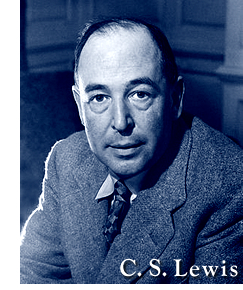
C.S. Lewis Daily – Today’s Reading


TO GENIA GOELZ, who had asked Lewis for a prayer in her struggle to believe: Lewis’s prayer for a daily increase in obedience and faith.

18 March 1952

Don’t bother at all about that question of a person being ‘made a Christian’ by baptism. It is only the usual trouble about words being used in more than one sense. Thus we might say a man ‘became a soldier’ the moment that he joined the army. But his instructors might say six months later ‘I think we have made a soldier of him’. Both usages are quite definable, only one wants to know which is being used in a given sentence. The Bible itself gives us one short prayer which is suitable for all who are struggling with the beliefs and doctrines. It is: ‘Lord I believe, help Thou my unbelief.’6 Would something of this sort be any good?: Almighty God, who art the Father of lights and who has promised by thy dear Son that all who do thy will shall know thy doctrine: [John 7:17] give me grace so to live that by daily obedience I daily increase in faith and in the understanding of thy Holy Word, through Jesus Christ our Lord. Amen.

From The Collected Letters of C.S. Lewis, Volume II

Compiled in Yours, Jack

Charles Stanley – Success God’s Way

Proverbs 3:5-6

What causes some people to fail and others to achieve their goals? One theory is that background, education, and ability are the main factors. But why, then, do we hear stories of victory achieved by people who have come from difficult backgrounds, struggled with disabilities, or had little instruction? Surely, something else determines whether we accomplish our objectives.

Contrary to the word’s common definition—which usually involves fame, fortune, or power—true success means becoming the people God wants us to be and reaching the goals He has set for our lives. Hebrews 12:1 offers His perspective on this: “Therefore, since we have so great a cloud of witnesses surrounding us, let us also lay aside every encumbrance and the sin which so easily entangles us, and let us run with endurance the race that is set before us.”

Here, we see the keys to success. First, it is important to find encouragement from the lives of other believers who have seen Christ’s faithfulness and followed His direction. Next, we should get rid of anything that holds us back from obeying God. Finally, we are to persevere, even through difficult or discouraging times. Today’s passage answers our original question: We achieve success only by relying on Jesus for guidance and strength.

God has a wonderful plan for blessing and fulfillment in your life, and part of His plan is that you live with purpose and perseverance. The Father’s guidance will become clearer as you read His Word, pray for direction, and seek godly counsel. Does your definition of success for your life match the good plan God has for you?

Bible in One Year: Lamentations 3-5