Tag Archives: Jesus

Joyce Meyer – Choose to Be Changed


But we have the mind of Christ (the Messiah) and do hold the thoughts (feelings and purposes) of His heart. —1 Corinthians 2:16

Do you get mad every time somebody tries to correct you, or tell you what to do, because you always have to be right? If you answered yes, I am sure that you are not a happy person. You cannot change others, but you can allow God to change you so that things don’t bother you anymore.

With Jesus Christ as your Savior, you can learn how to live a different way. You can have peace. You can sleep well at night. You can like yourself. You can restore relationships that have been ruined. Your mind can be renewed to be like Jesus’, if you read His Word and ask Him to help you live the abundant life He came to give you (see John 10:10).

From the book Starting Your Day Right by Joyce Meyer.

Campus Crusade for Christ; Bill Bright – Recipe for Growth


“As newborn babes, desire the sincere milk of the word, that ye may grow thereby” (1 Peter 2:2, KJV).

Sam was very impatient with himself. Though he was a new Christian, he could not understand why he was not as spiritual as some of the other students who had walked with the Lord for several years.

I explained to him the Christian life, like physical life, involves a process of growth. A person begins as a baby and goes through various stages of childhood, adolescence and young adulthood to reach Christian maturity. Very few, if any, Christians, I explained to him, become spiritually mature overnight.

Lane Adams, a beloved colleague, gifted teacher, preacher and author, said, “I shrink inside when I think of the times I have mounted the pulpit, recited the conversion experience of the apostle Paul, and then indicated that he went out and turned the world upside down for Jesus Christ immediately.”

He continued, “This simply was not the case. There is a difference of opinion among scholars concerning New Testament dating, but it seems rather plain that many years went by before the Holy Spirit laid the dramatic burden on Paul as a missionary of the cross.”

If you strongly desire to serve the Lord in some particular way, such as teaching, ask the Holy Spirit in faith to empower you to become an effective teacher. Now, it may be that the Holy Spirit will see fit to make you a great teacher overnight, but this is most unlikely. So if it does not happen, do not be discouraged. Have faith!

Continue to ask and believe that the Holy Spirit will make you an effective teacher of the Word of God and be willing to work hardand long to develop your natural ability. The Bible reminds us that “faith without works is useless.”

If we are unique members of the Body of Christ, and we are, if we possess special tasks to accomplish, and we do, then the Holy Spirit will empower us to carry out those tasks. God does indeed have a plan for each of our lives. And He gives us the direction and power of His Holy Spirit to accomplish that plan as we continue to trust and obey Him.

Bible Reading: 2 Peter 3:14-18

TODAY’S ACTION POINT: Recognizing that I am in the process of maturing spiritually, I shall seek to accelerate my spiritual growth by hiding the Word of God in my heart, spending time in prayer, walking in the Spirit and sharing my faith in Christ with others as a way of life.

Presidential Prayer Team; A.W. – See and Seek


Many traditional Christmas songs are about God’s glory. It’s a central theme because Christ’s birth was the revelation of the glory of the Lord. The Bible says “the glory of the Lord shone around” (Luke 2:9) and the angels shouted “glory to God in the highest” (Luke 2:14).

Moses said, “Please show me your glory.”

Exodus 33:18

But why wait until Christmas to seek God’s glory? Mark Lee, the guitarist for Third Day, wrote about their song “Show Me Your Glory” in the liner notes of their album. He said, “Both Moses and Peter shared similar experiences. God revealed Himself to Moses and Peter witnessed Jesus in all His glory at the Transfiguration. Their lives were never the same. I think that is what happens with all Christians on some level. We get a glimpse of how awesome God is and can’t ever again settle for the ordinary things of this world.”

This holiday season, seek more of God’s glory…but don’t let it stop at Christmas. Continue every day into the coming year to discover how awesome God is and let it transform you. Pray, too, for the people of the nation and its leaders to really see and seek the salvation available through Christ.

Recommended Reading: Luke 2:8-20

Greg Laurie – “According to Your Word”


Then Mary said, “Behold the maidservant of the Lord! Let it be to me according to your word.” And the angel departed from her.—Luke 1:38

Many times we wonder what the will of God is for our lives. Let me suggest that you simply say, “Lord, I am willing to obey, even though I don’t completely understand what it is that You’re asking me to do.”

That is what Mary did. She didn’t fully understand what the angel Gabriel was telling her, but she obeyed just the same. She took a leap of faith. This is the attitude God looks for in His servants: childlike faith and obedience.

The Bible gives us great direction for knowing God’s will:

I beseech you therefore, brethren, by the mercies of God, that you present your bodies a living sacrifice, holy, acceptable to God, which is your reasonable service. And do not be conformed to this world, but be transformed by the renewing of your mind, that you may prove what is that good and acceptable and perfect will of God. (Romans 12:1–2)

Notice this passage begins with presenting ourselves to God. It doesn’t say, “Find out first what God’s will is, and then determine if you want to obey it.” Rather, we are to commit ourselves to God. As the J. B. Phillips New Testament puts it, “Don’t let the world around you squeeze you into its own mould, but let God re-mould your minds from within, so that you may prove in practice that the plan of God for you is good.”

First commit yourself to Him. Then you will know the will of God. We should never be afraid to commit an unknown future to a known God. The condition of an enlightened mind is a surrendered heart.

Maybe the reason we don’t know God’s will is because we haven’t said, “I accept it, and I will obey it.” Have you said that to God?

Max Lucado – Revamped Expectations


How do you respond when you hear something like this: I’m sorry—you didn’t get the job. We just felt our other candidate was more qualified!

It’s not easy when God doesn’t do what we want, is it? Never has been. Never will be. But faith is the conviction that God knows more than we do about this life and He will get us through it. Remember, disappointment is cured by revamped expectations!

I like the story about the fellow who went to the pet store for a singing parakeet. He was a bachelor and his house was too quiet. The store owner had just the bird for him, so the man bought it. The next day the bachelor came home to a house full of music. He went to the cage to feed the bird and noticed for the first time that the parakeet had only one leg. He felt cheated. So he called and complained. “What do you want,” the store owner responded, “a bird who can sing or a bird who can dance?” Good question for times of disappointment!

From Grace for the Moment

Night Light for Couples – Many Troubles


“’I hate divorce,’ says the Lord God of Israel.” Malachi 2:16

Who would know better than the architect of marriage that living with another person day in and day out isn’t always easy? God understands what we’re going through, even in our worst circumstances. When Paul stated that “those who marry will face many troubles in this life” (1 Corinthians 7:28), he wasn’t kidding! Fortunately, God has given us a blueprint in Scripture for success and fulfillment in our marriage relationship. The Lord designed marriage for our benefit, and He knows that destroying this partnership is harmful to us in countless ways.

No wonder God hates divorce. He has made it clear that the concept of separating permanently from one’s marriage partner is not only unacceptable, but abhorrent. The only exception He has recorded for us is in the case of adultery, and even in that situation there is room for forgiveness and reconciliation if we follow Christ’s merciful example.

Our encouragement to you as a husband and wife who seek God’s best is a very personal one. As Jim and I have sought out and followed the Word of God, we have found all the stability and fulfillment in our marriage that He has promised! And you will, too. Marriage is His idea, after all, and His principles and values naturally produce harmony between people. It’s sinful behaviors that kill a relationship.

When your time of “many troubles” strikes, Satan will be ready at just the right moment to suggest the “solution” of divorce. Perhaps you’ve already arrived at this place in the past. Surely you know and love couples who have come to this moment, and have chosen to believe Satan’s lie.

My prayer is that you will believe God instead.

– Shirley M Dobson

From Night Light For Couples, by Dr. James & Shirley Dobson

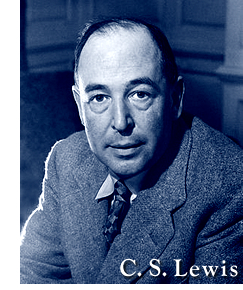
C.S. Lewis Daily – Today’s Reading


Screwtape shows Wormwood how to transform a minor trespass into a major sin:

Success here depends on confusing him. If you try to make him explicitly and professedly proud of being a Christian, you will probably fail; the Enemy’s warnings are too well known. If, on the other hand, you let the idea of ‘we Christians’ drop out altogether and merely make him complacent about ‘his set’, you will produce not true spiritual pride but mere social vanity which, by comparison, is a trumpery, puny little sin. What you want is to keep a sly self-congratulation mixing with all his thoughts and never allow him to raise the question ‘What, precisely, am I congratulating myself about?’ The idea of belonging to an inner ring, of being in a secret, is very sweet to him. Play on that nerve. Teach him, using the influence of this girl when she is silliest, to adopt an air of amusement at the things the unbelievers say. Some theories which he may meet in modern Christian circles may here prove helpful; theories, I mean, that place the hope of society in some inner ring of ‘clerks’, some trained minority of theocrats. It is no affair of yours whether those theories are true or false; the great thing is to make Christianity a mystery religion in which he feels himself one of the initiates.

From The Screwtape Letters

Compiled in A Year with C.S. Lewis

Ravi Zacharias Ministry – A Kingdom for Faint Hearts


“The kingdom of God is for the gullible,” I read recently. “You enter by putting an end to all your questions.”

It is true that Jesus moved all over Judea pronouncing the reign of God and the kingdom of heaven as if it were a notion he wanted the simplest soul to get his mind around. But simplicity never seemed what crowds walked away with. With looming paradox in every statement, he made it clear that this kingdom was approaching, that it was here, that it was among us, that they needed to enter it, that they need to wait for it, that they desperately need the one who reigns within it. He insisted, the kingdom “has come near you” (Luke 10:9). Yet he pled to the Father, “Thy kingdom come” (Matthew 6:10). Even in his metaphors, the contrast of so many different and dynamic realities turned the clarity of any individual picture into a great and ambiguous portrait. He assigned the kingdom imagery such as a mustard seed, a treasure in a field, a great banquet, yeast and pearls, among others.

Contrary to putting an end to one’s questions with a childish simplicity, the kingdom of God incites inquiry all the more. What is the nature of this kingdom? Can it be all of these things? Who is this messenger? And what kind of proclamation requires the herald to pour out his very life to tell it? Whatever this kingdom is, it unmistakably introduces to a world far different from the one around us, one we cannot quite get our minds around, with tensions and dynamisms reminiscent of the promise of God to answer our cries “with great and unsearchable things you do not know.”(1) But one thing it absolutely does not do is ask us to stop thinking or to stop trying to reconcile this curious kingdom Jesus describes with the curious world around us. His is certainly a kingdom that challenges any sort of thoughtless, gullible obedience, that compels not blindness or gullibility but sight. It is a kingdom with a king whose very authority exposes present obsessions as wood and reforms numbed minds with great and surprising reversals of life as a gift.

Jesus pointed crowds to a God who opens the eyes of the blind and raises the dead, who claims the last will be the first and the servant is the greatest. But lest we are tempted to leave his statements as hopeful moralisms, his proclamations did not cease with mere words. He put these claims into equally curious action, placing this kingdom before the crowds in such a way that would have absolutely stymied contemporary attempts to dismiss his life as mere religion, abstraction, gullibility, or sentimentality. Even his opposition saw him as a certain and credible threat to their own power and authority:

“Then the whole assembly rose and led Jesus off to Pilate. And they began to accuse him, saying, ‘We have found this man subverting our nation. He opposes payment of taxes to Caesar and claims to be Christ, a king.’

So Pilate asked Jesus, ‘Are you the king of the Jews?’

‘Yes, it is as you say,’ Jesus replied.

Then Pilate announced to the chief priests and the crowd, ‘I find no basis for a charge against this man.’

But they insisted, ‘He stirs up the people all over Judea by his teaching.  He started in Galilee and has come all the way here…’ So with loud shouts they insistently demanded that he be crucified, and their shouts prevailed.”(2)  The way of proclamation led to the way of the passion, the path of commotion to the path of accusation, a road strewn with signs of the authority of another kingdom to a road that demanded death and mocked a king.

It is tempting to lose sight of this revolutionary figure in the sentimentalism of Christmas manger scenes and familiar carols. And yet this is the child born into our world: one who is still subverting nations and threatening our every sense of authority. The kingdom he proclaimed in birth and in death mercifully continues to unravel our own. His is not a kingdom for the gullible, nor for the faint of heart and sight. Yet, both heart and sight he provides for the weary, taking us beyond familiar borders of the world we know to the very threshold of the good and hopeful kingdom of God, where in both our longing to see in fullness and in our relishing here and now, we discover the one who reigns.

Jill Carattini is managing editor of A Slice of Infinity at Ravi Zacharias International Ministries in Atlanta, Georgia.

(1) Jeremiah 33:3.

(2) Luke 23:1-23, emphasis mine.

Charles Spurgeon – The root that beareth wormwood


‘Lest there should be among you a root that beareth gall and wormwood.’ Deuteronomy 29:18

Suggested Further Reading: 2 Peter 2:4–9

Ask Noah, as he looks out of his ark, ‘Does sin bring bitterness?’ and he points to the floating carcases of innumerable thousands that died because of sin. Turn to Abraham: does sin bring bitterness? He points to the smoke of Sodom and Gomorrah that God destroyed because of their wickedness. Ask Moses, and he reminds you of Korah, Dathan and Abiram, who were swallowed up alive. Turn to Paul, and you do not find Paul speaking with the honeyed phrases of these modern deceivers, who would make people believe that sin will not be punished. ‘He that despised Moses’ law died without mercy under two or three witnesses: of how much sorer punishment, suppose ye, shall he be thought worthy, who hath trodden under foot the Son of God, and hath counted the blood of the covenant, wherewith he was sanctified, an unholy thing, and hath done despite unto the Spirit of grace?’ Listen to James or Jude, or Peter, and you hear them speak of chains of darkness and flaming fire. Hear John as he writes of the wrath of God and of the winepress of it, out of which the blood flows up to the horse’s bridles. Let the Saviour himself speak to you. He cries, ‘These shall go away into everlasting punishment.’ He is the author of those words, ‘Where their worm dieth not, and the fire is not quenched.’ It is he who speaks of the outer darkness, where there is weeping and wailing and gnashing of teeth. The Bible tells you (and O that you might hear it as God’s own voice to you!), not that sin will end in pleasure and joy, but that the wrath of God will abide upon you if you do not turn from sin; that the soul that sinneth, it shall die; that God’s curse is upon the wicked, and that everlasting punishment is the portion of the impenitent.

For meditation: A life of pleasure and sin which has no room for the Lord Jesus Christ can be great fun in the short term, but it will all end in everlasting tears (Ecclesiastes 11:8–9; Luke 12:19–21; 16:19,25). The wise person takes eternity into account (Ecclesiastes 12:1; Hebrews 11:24–26).

Sermon no. 723

2 December (1866)

John MacArthur – Jesus: Our Great High Priest


“The point in what has been said is this: we have such a high priest, who has taken His seat at the right hand of the throne of the Majesty in the heavens” (Heb. 8:1).

Since Jesus serves as our High Priest, we have access to God.

Access to God was always a problem for the Jewish people. Exodus 33:20 declares that no man can see God and live. Once each year, on the great Day of Atonement (Yom Kippur), the Jewish high priest entered into the Holy of Holies, where God’s presence dwelt in a unique sense, to approach God on behalf of the people.

God’s covenant with Israel was the basis for their communion with Him. And the sacrificial system that accompanied the Old Covenant gave the people an outward act to represent their inner repentance. But their sacrifices were incessant because their sin was incessant. They needed a perfect priest and sacrifice to provide access to God permanently. That’s exactly what Jesus was and did.

Hebrews 10 says that Jesus offered His body as a sacrifice for mankind’s sins once for all, then sat down at the right hand of the Father (vv. 10, 12). That was a revolutionary concept to Jewish thinking. A priest on duty could never sit down because his work was never done. But Jesus introduced a new and wonderful element into the sacrificial system: one sacrifice, offered once, sufficient for all time. That was the basis of the New Covenant.

Our Lord’s priesthood is permanent and perpetual: “Because He abides forever, [He] holds His priesthood permanently. Hence, also, He is able to save forever those who draw near to God through Him, since He always lives to make intercession for them” (Heb. 7:24-25). That’s the central message of the book of Hebrews.

It wasn’t easy for the Jewish people to accept the need for a new covenant. Most rejected Christ outright. Similarly, many people today reject His priesthood, supposing they can gain access to God on their own terms. But they’re tragically mistaken. Jesus Himself said, “No one comes to the Father, but through Me” (John 14:6).

Suggestion for Prayer

Praise God for receiving you into His presence through His Son, Jesus Christ.

For Further Study

Read Hebrews 10:19-25, noting how God wants you to respond to Christ’s priesthood.

Joyce Meyer – Please Don’t Make Me Wait!


I wait for the Lord, I expectantly wait, and in His word do I hope.—Psalm 130:5

Waiting! It’s a big part of our everyday lives, and most of us don’t particularly enjoy it…or have time for it. Especially busy people who usually have way more to do in a day than they can possibly accomplish! But I can tell you from experience that our attitude about waiting can make all the difference in the world.

Like the Israelites who spent forty years making an eleven-day trip, I was stuck in a modern-day wilderness of my own. I had many wrong attitudes that contributed to the prevention of my progress, but one of the major roadblocks for me was an impatient attitude that made me want to scream: “Please don’t make me wait for anything. I deserve everything immediately!” I had a long and interesting journey before I learned that waiting is part of our walk with God. We will wait—that is a given—but it is how we wait that determines how difficult the wait will be.

When you arrive for an appointment with your doctor or dentist, you have to wait your turn. The first thing the receptionist tells you is, “Please have a seat while you’re waiting.” Being seated indicates that a person is resting, and that’s exactly what we should do, both in the doctor’s office and in the wilderness experiences of our lives. While we’re waiting for God to do the things that we asked for Him to do, we should rest in Him.

Another attitude that prevented me from making progress was “I will do it my way or not at all.” This stubborn attitude is one that many people have to deal with. If it is not dealt with, the Promised-Land living becomes a blurry image and never a reality—something we see off in the future but never experience.

But it doesn’t have to be that way. When we are serious about making some changes in our attitudes and allow the Holy Spirit to help us, we can take a shortcut through the wilderness instead of going the long way around!

Trust in Him: Having a good attitude in a trying situation is at least 90 percent of the battle. There will always be trials in life, but as we trust God and continue to do what He is showing us to do, we will always come out victorious.

From the book Trusting God Day by Day by Joyce Meyer

Campus Crusade for Christ; Bill Bright – He Gives Richly


“Tell those who are rich not to be proud and not to trust in their money, which will soon be gone, but their pride and trust should be in the living God who always richly gives us all we need for our enjoyment” (1 Timothy 6:17).

Arthur S. DeMoss was a gifted and godly businessman. He had built one of the most successful businesses of its kind in America and in the process had amassed a huge fortune of an estimated half a billion dollars. Then suddenly an economic recession began and stock in his company plummeted. He lost $360 million in a period of only four months – an average of $3 million a day – more than anybody had ever lost in such a short time. One would have thought he would have been devastated. Instead, in order to avoid decreasing his Christian giving, he (personally) borrowed funds, at an incredibly high rate of interest, to enable him to increase his giving. As we talked together during that period, he was rejoicing in the Lord.

“The Lord gave me everything I have,” he said. “It all belongs to Him and if He wants to take it away that’s His business. I don’t lose any sleep. I still have a wonderful family and my life-style remains unchanged. I am prepared to do anything that God wants me to do. If He takes away everything I own and wants me to go to the mission field, I’m ready to do it. All He needs to do is tell me.”

Art had his trust completely in the Lord and not in his vast fortune. God honored his faith and obedience and ultimately restored all that he had lost and much more. Art has gone to be with the Lord, but his fortune is still being used for the glory of God.

Paul’s answer to the believers of his day is just as appropriate to the believers of our time. No person should be unduly impressed with his wealth and look down with pride and arrogance on those whom he considers to be inferior. Riches are uncertain because they can be taken away from us. In the personal emergencies of life one cannot depend upon material possessions for strength and comfort. In times of tragedy – the loss of a loved one, a financial reversal, or some other disappointment – material possessions do not insure peace. Our trust must be in the living God who is able to supply all of our needs and do for us what riches cannot do.

Bible Reading: 1 Timothy 6:6-16

TODAY’S ACTION POINT:> I will not take the blessing of God for granted and will not place my trust in any earthy possession. My confidence will be in Him who is the source of the supernatural life.

Greg Laurie – A Messed-Up Family Tree


“I, Jesus, have sent My angel to testify to you these things in the churches. I am the Root and the Offspring of David, the Bright and Morning Star.”—Revelation 22:16

In the first century, Jesus was not a unique name. Many boys were named Jesus, which meant “Jehovah is salvation.” But there was only one person who has embodied that name in all it was, and that is the Lord Jesus.

The angel Gabriel told Mary, “He will be great, and will be called the Son of the Highest; and the Lord God will give Him the throne of His father David” (Luke 1:32). That word great is from the Greek word megas, the same word from which we get our English term mega, conveying the idea of bigness and magnitude. Jesus would be the very definition of the word great—mega, if you will.

Gabriel also said that He would come from “the throne of His father David” (verse 32). David is a unique figure in Scripture, described on one hand as the sweet psalmist of Israel and a man after God’s own heart. But we also know of David’s foibles and shortcomings. Two names connected with David sum up his life: Goliath and Bathsheba. Goliath represents David’s greatest victory, while Bathsheba represents his greatest defeat. David was a flawed man, yet Jesus was called “the Root and the Offspring of David” (Revelation 22:16). And as Jesus was engaged in His ministry, He was referred to as the Son of David. Clearly Jesus was connected to this man.

So if you think you have a dysfunctional family, take a look at Jesus’ family tree. Some of the most unsavory characters who made it into the most exclusive genealogy in human history include prostitutes, liars, cheats, adulterers, and even a murderer.

What does this say to us? Even before Jesus was born into that family tree, His ancestry pointed to one thing: Christ came into the world to save sinners.


Max Lucado – God is For You!


God IS for you! In fact, the Bible says, “God will rejoice over you!”  Turn to the sidelines and hear God cheering your run. Look past the finish line; that’s God applauding your steps. Listen for him in the bleachers, shouting your name. Are you too tired to continue? He’ll carry you. Are you too discouraged to fight? He’s picking you up. God is for you!

In Isaiah 49:15 God asks, “Can a mother forget the baby at her breast and have no compassion on the child she has borne?” Can you imagine a mother feeding her infant and later asking, “What was that baby’s name?” No. Can a mother forget? No way! And neither can God!

From Grace for the Moment

Night Light for Couples – The Second Time Around


“I will forgive their wickedness and will remember their sins no more.” Jeremiah 31:34

Many of you reading these discussions about the consequences of divorce have already taken that fateful step— willingly or not—and then remarried. You may also be facing the unique challenge of raising children from two sets of parents. We assure you that it has not been our intention to heap additional guilt on you. We have a loving God who offers forgiveness to those who truly seek His will. Only He knows the condition of your spiritual “heart” and the circumstances that led to the end of your first marriage. If you have not dealt with those matters before God, we urge you to do so tonight.

Our hope is that you will reaffirm the sanctity of your present marriage and fight to preserve it with all your heart and soul. With the Lord’s help, you can still forge a marriage that lasts a lifetime. We encourage you to learn from the mistakes of your previous relationships, rely wholeheartedly on God’s principles for marriage, and make the firm decision that nothing will tear you away from your mate.

Remember, there are no second‐class members of God’s family. God still wants to give you His best. And as you seek Him together, He will.

Just between us…

  • What would be (or is) most difficult about a second marriage?
  • Is God willing to forgive those who divorce for the wrong reasons?
  • What do you think is the most painful part of a divorce? How can we use this information to keep our marriage strong?

Father, forgive our sins and selfish mistakes. We cast all our hopes for our marriage on Your truths, and together we wholeheartedly seek to obey Your will for us. Thank You for Your mercies, which are new every morning. Amen.

From Night Light For Couples, by Dr. James & Shirley Dobson

C.S. Lewis Daily – Today’s Reading


On the incarnation

The Second Person in God, the Son, became human Himself: was born into the world as an actual man—a real man of a particular height, with hair of a particular colour, speaking a particular language, weighing so many stone. The Eternal Being, who knows everything and who created the whole universe, became not only a man but (before that) a baby, and before that a foetus inside a Woman’s body. If you want to get the hang of it, think how you would like to become a slug or a crab.

From Mere Christianity

Compiled in Words to Live By

Charles Stanley – Praise: An Expression of Love


Psalms 150

Most of us have some idea what being in love feels like. When we’re apart, we constantly think about the object of our affection and look forward to spending time together. We often relate stories and describe attributes so everyone knows how wonderful this special person is. In a word, we praise our loved one.

First Samuel 13:14 describes King David as a man after God’s own heart. One way he sought to honor his beloved Lord was to offer Him praise. The book of Psalms records David’s worship in words, with sentiments such as “Because Your lovingkindness is better than life, my lips will praise You” (Ps. 63:3). David also danced with abandon, expressing his passion and devotion before God—he didn’t care what others would think (2 Sam. 6:14).

Do we love God with the same unashamed enthusiasm David exhibited? Some people are more prone to fervent, emotional displays than others, but too many of us allow embarrassment or timidity to stifle our praise. Timid believers wonder what those around them will think if they sing loudly. Others worry that co-workers or friends will consider them fanatical if they talk about God too much.

The Lord is worthy of praise. He is our Friend, our Rock, and our Protector. What’s more, He saved us from death! If we let ourselves get caught up in others’ opinions, we could forget that His is the only one that matters. Ever since creation, the Lord has deserved and received praise offerings for His glory. Don’t let fear or embarrassment keep you from praising the Lord. Give God His due.

Bible in One Year: 1 Corinthians 14-16

Our Daily Bread — The Meaning of a Name


Read: Matthew 1:18-25

Bible in a Year: Ezekiel 40-41; 2 Peter 3

You are to give him the name Jesus. —Matthew 1:21

According to a New York Times article, children in many African countries are often named after a famous visitor, special event, or circumstance that was meaningful to the parents. When doctors told the parents of one child that they could not cure the infant’s illness and only God knew if he would live, the parents named their child Godknows. Another man said he was named Enough, because his mother had 13 children and he was the last one! There’s a reason for everyone’s name, and in some cases it also conveys a special meaning.

Before Jesus was born, an angel of the Lord told Joseph, “[Mary] will give birth to a son, and you are to give him the name Jesus, because he will save his people from their sins” (Matt. 1:21). Jesus is the Greek form of Joshua, which means “the Lord saves.” In that day and culture, many children would have been named Jesus, but only one came into this world to die so that all who receive Him might live eternally, forgiven and freed from the power of sin.

Charles Wesley wrote these words we often sing as Christmas nears: “Come, Thou long-expected Jesus, born to set Thy people free; from our fears and sins release us; let us find our rest in Thee.”

Jesus came to turn our darkness into light, to transform our despair into hope, and to save us from our sins. —David McCasland

Heavenly Father, in Jesus we see Your loving purpose and boundless grace. We humbly acknowledge Your Son as the One who came to save us from our sins.

Jesus’ name and mission are the same—He came to save us.

INSIGHT: Joseph is a popular biblical name. The first Joseph in the Bible is Jacob’s son who, after being sold into slavery by his brothers, rose to great influence in Egypt (Gen. 37-50). Two other Josephs are mentioned in the Old Testament period: a musician (1 Chron. 25:2, 9) and one in the lineage of Christ (see Luke 3:24, 30). In the New Testament we begin with the earthly father of Jesus (Luke 2; Matt. 1). Next is Joseph of Arimathea, who assisted in Jesus’ burial (Matt. 27:57). Finally, we read of Joseph Barsabbas (Acts 1:23), who was considered to fill Judas’ vacated apostolic office; and Joseph the encourager, better known as Barnabas (Acts 4:36).

Ravi Zacharias Ministry – Season of Darkness and Light


Those of us who make our home in the Northern Hemisphere must welcome the encroaching darkness of the winter months. At the height of winter in Kotzebue, Alaska, for example, daylight is but a mere two hours. Where I live, the light begins to recede around 4:30 PM. When the winter sun is out it simply rides the southern horizon with a distant, hazy glow.

Perhaps it seems strange to some, but I love the shorter-days and the darkening skies of winter. For me, the darkness of winter invokes nostalgia for the days of huddling around the fireplace, hot coffee, and curling up with a good book. Indeed, there are some gifts that can only be enjoyed in the darkness of winter and in this season of lessening light.

Of course, darkness and night evoke ominous images as well. Pre-Christian inhabitants of the Northern Hemisphere—who did not separate natural phenomenon from their religious and spiritual understanding—saw the departing sunlight as the fleeing away of what they believed was the Sun God. Darkness indicated distance from this receding god and what followed was a loss of hope, the presence of absence and the cessation of life.(1) Like these ancient peoples, darkness often creates fear. We fear what we cannot see in the dark, and what is seen inhabits the mysterious realm of shadows. Darkness has always represented chaos, evil, and death, and therefore is rarely thought of in either romantic or nostalgic terms.

For many—even those who live in sun-filled hemispheres—the darkness of life is a daily nightmare. Despair, chronic loneliness, doubt, and isolation conspire to prevent even the dimmest light. The darkness that comes only as a visitor during the night is for many a perpetual reality. Is there any reason to hope that the light might be found even in these dark places?

It is not by accident that the season of Advent for Christians coincides with the earthly season of fading light and increasing darkness. With its focus on waiting, repentance, and longing, Christians view Advent as a season of somber reflection. Yet, even as the light recedes in winter, the season of Advent offers surprising gifts in the shorter days, in the womb of pregnant possibility, and in the often anxious anticipation that accompanies waiting in the darkness. Those pre-Christian peoples who watched their sun-god disappear found that there were gifts that could be had even in this dark season. The wheels of carts used for hauling and carrying goods, were taken off and decorated with greens and garlands. Those ordinary objects now hung on their walls as mementos of beauty and hope. Taking the wheels off of their carts meant the cessation of work and a time to watch and wait. As Gertrud Muller Nelson writes about this ancient ritual, “Slowly, slowly they wooed the sun-god back. And light followed darkness. Morning came earlier. The festivals announced the return of hope after primal darkness.”(2)

While the dark is mysterious and often ominous, it is also a place of unexpected treasures. As one author notes, “[S]pring bulbs and summer seeds come to life in the unlit places underground. Costly jewel stones lie embedded in the dark interiors of ordinary rocks. Oil, gas, and coal reserves lie far beneath the light of the earth’s surface. The dark depths of the ocean teem with life.”(3) Indeed, unique gifts from earth, sky, and sea can only be observed in the dark.

Spiritual gifts, too, often emerge out of the darkness. The writer of Genesis paints a picture of the Spirit of God hovering over the primordial chaos and the darkness that covered the surface of the deep. Out of the darkness of chaos came the light of creation. The covenant promises of God to give children and land to Abram were forged “when the sun was going down…and terror and great darkness fell upon him.” Moses received the Law in the “thick darkness where God was.” God’s abiding presence was the gift from the darkness. Speaking through the prophet Isaiah, the God of Israel promises: “I will give you the treasures of darkness, riches stored in secret places, so that you may know that I am the Lord, the God of Israel, who summons you by name.” Indeed, the long-awaited Messiah would be revealed to those “who walk in darkness” and who “live in a dark land.”(4) Unlike the sun-god of the pre-Christian understanding, the God of the biblical writers did not flee as the sun faded away, but could be found in the darkest and remotest places.

For those who dwell in the dark season of despair or discouragement, the promise of treasures of darkness may spark a light of hope. “The recovery of hope,” writes Muller Nelson, “can only be accomplished when we have had the courage to stop and wait and engage fully in the winter of our dark longing.”(5)

The hope of Advent is that God is in the darkness with us even though our experience of God may seem as clear as shifting shadow. The hope of Advent is that God’s coming near to us in the person of Jesus is not hindered by the darkness of this world or of our own lives. We may fear our dark despair hides us from God, but the treasure of God’s presence waits even there—for darkness is as light to God.

Margaret Manning Shull is a member of the speaking and writing team at Ravi Zacharias International Ministries in Bellingham, Washington.

(1) Gertrud Muller Nelson, To Dance With God: Family Ritual and Community Celebration (Mahwah, New Jersey: Paulist Press, 1986), 63.

(2) Ibid., 63.

(3) Sally Breedlove, Choosing Rest: Cultivating a Sunday Heart in a Monday World (Colorado Springs: NavPress, 2002), 133.

(4) Genesis 15:12; Exodus 20:21; Deuteronomy 5:22; Isaiah 45:3; Isaiah 9:2.

(5) Gertrud Muller Nelson, 63.

Alistair Begg – Winter in the Soul


You have made summer and winter. Psalm 74:17

My soul, begin this wintry month with God. The cold snows and the piercing winds all remind you that He keeps His covenant with day and night and serve to assure you that He will also keep that glorious covenant that He has made with you in the person of Christ Jesus. He who is true to His Word in the revolutions of the seasons of this poor sin-polluted world will not prove unfaithful in His dealings with His own well-beloved Son.

Winter in the soul is by no means a comfortable season, and if it is upon you just now, it will be very painful to you: But there is this comfort, namely, that the Lord makes it. He sends the sharp blasts of adversity to nip the buds of expectation. He scatters the frozen dew like ashes over the once fresh green meadows of our joy. He dispenses His icy morsels, freezing the streams of our delight.

He does it all; He is the great Winter King and rules in the realms of frost, and therefore you cannot murmur. Losses, crosses, heaviness, sickness, poverty, and a thousand other ills are of the Lord’s sending and come to us with wise design. Frosts kill harmful insects and restrain raging diseases; they break up the clods and sweeten the soul. O that such good results would always follow our winters of affliction!

How we prize the fire just now! How pleasant is its cheerful glow! Let us in the same manner prize our Lord, who is the constant source of warmth and comfort in every time of trouble. Let us draw near to Him, and in Him find joy and peace in believing. Let us wrap ourselves in the warm garments of His promises, and keep working, unlike the lazy man who refuses to plow because it is too cold; in the summer he will have nothing and will be forced to beg for bread.

Family Bible Reading Plan

  • 1 Chronicles 29
  • 2 Peter 3

Devotional material is taken from “Morning and Evening,” written by C.H. Spurgeon, revised and updated by Alistair Begg.