Tag Archives: Jesus

Charles Spurgeon – Free-will—a slave


“And ye will not come unto me, that ye might have life.” John 5:40

Suggested Further Reading: John 6:60-65

It is certain that men will not come unto Christ, that they might have life. We might prove this from many texts of Scripture, but we will take one parable. You remember the parable where a certain king had a feast for his son, and invited a great number to come; the oxen and fatlings were killed, and he sent his messengers inviting many to the supper. Did they go to the feast? No; but they all, with one accord, began to make excuse. One said he had married a wife, and therefore he could not come, whereas he might have brought her with him. Another had bought a yoke of oxen, and went to prove them; but the feast was in the night-time and he could not prove his oxen in the dark. Another had bought a piece of land, and wanted to see it; but I should not think he went to see it with a lantern. So they all made excuses and would not come. Well the king was determined to have the feast; so he said, “Go into the highways and hedges,” and invite them—stop! Not invite—“compel them to come in;” for even the ragged fellows in the hedges would never have come unless they were compelled. Take another parable; a certain man had a vineyard; at the appointed season he sent one of his servants for his rent. What did they do to him? They beat that servant. He sent another; and they stoned him. He sent another and they killed him. And, at last, he said “I will send them my son, they will reverence him.” But what did they do? They said, “This is the heir, let us kill him, and cast him out of the vineyard.” So they did. It is the same with all men by nature. The Son of God came, yet men rejected him.

For meditation: When you thank God for your salvation, do you give him all the credit for your conversion as well (John 15:16)?

Sermon no. 52

1 December (Preached 2 December 1855)

John MacArthur – The Preeminence of Christ


“God . . . has spoken to us in His Son, whom He appointed heir of all things, through whom also He made the world. And He is the radiance of His glory and the exact representation of His nature, and upholds all things by the word of His power. When He had made purification of sins, He sat down at the right hand of the Majesty on high” (Heb. 1:1-3).

Christ is superior to everyone and everything.

The book of Hebrews was addressed to an audience composed of Jewish Christians, Jewish non-Christians who were intellectually convinced about Jesus but hadn’t yet committed themselves to Him, and Jewish non-Christians who didn’t believe the gospel at all.

The author’s goal was to demonstrate Christ’s superiority over everyone and everything that had preceded Him, whether Old Testament persons, institutions, rituals, or sacrifices. He specifically contrasted Christ with angels, Moses, Joshua, Aaron and his priesthood, the Old Covenant, and the sacrificial system.

The Jewish believers needed this focus on Christ’s superiority because most of them were suffering some form of persecution because of their Christian testimony. Some were in danger of confusing the gospel with Jewish ceremonies and legalism, and drifting back into their former practices.

Those who were intellectually convinced but spiritually uncommitted needed to be warned not to stop at that point, but to go all the way to saving faith. They were in danger of committing the greatest sin any person can commit: rejecting Jesus Christ as Savior and Lord.

Those who didn’t believe in Christ as all needed to see that Jesus was in fact who He claimed to be. To such people the author explains the unique priesthood of Christ, and the urgency of turning to Him in faith.

Within your circle of friends and associates, you probably have Christians who are weak of faith and need your encouragement and instruction. Be available to minister to them whenever possible.

Undoubtedly you also know people who are intellectually convinced that Jesus is who He claimed to be, but aren’t willing to embrace Him as their Lord. Don’t be shy about urging them to move on to salvation.

To those who reject Christ outright, boldly proclaim the gospel and trust the Holy Spirit to convict their hearts.

Suggestion for Prayer

Praise Christ for His preeminence and surpassing grace.

For Further Study

Read Hebrews 1-2. To whom does the writer compare Christ? Be specific.

Joyce Meyer – Wisdom Encourages Patience


A man’s wisdom gives him patience. —Proverbs 19:11 NIV

People often ask me, “How can I learn contentment and stability?” One way, straight out of the Bible, is patience.

God wants us to use wisdom, and wisdom encourages patience. Wisdom silently tells us to wait a little while, until the emotions settle down, before you do or say something. Then check to see if you really believe it’s the right thing to do. Emotions urge us toward haste, telling us we must do something and do it right now! But godly wisdom tells us to be patient and wait until we have a clear picture of what we are to do and when we are to do it. I like to say it like this: Let emotions subside and then decide. We need to be able to step back from our situations and see them from God’s perspective. Then we need to make decisions based on what we know rather than what we feel.

Power Thought: I have the wisdom to develop patience and emotional stability.

From the book the book Power Thoughts Devotional by Joyce Meyer.

Campus Crusade for Christ; Bill Bright – Strength and Peace


“He will give His people strength. He will bless them with peace” (Psalm 29:11).

Scott, a professing atheist with the morals of an alley cat, insisted that he had peace in his heart. Though rare, it is possible for people to harden their hearts so much that God ceases to draw them to Himself, and they experience a counterfeit peace.

The psalmist, of course, is talking about a different kind of peace. Ocean voyagers in the storm are at peace because they know the ship is sound and the pilot is skillful. In the same way, we as believers are at peace because we serve God who gives His people strength and blesses them with peace.

“His people,” of course, refers to those who have placed their trust and faith in His Son, Jesus Christ, as Lord and Savior. None other may claim such a wonderful promise.

Significantly, “strength” comes before “peace.” This is God’s strength: “Who would certainly fail without it. Then this very same strength results in peace, God’s peace “that passes all understanding.”

God’s strength enables us to contend with the powers of darkness, within the world and within our own natural depravity.

Peace, the great blessing of the gospel is two-fold:

  1. Peace with God through Christ, and
  2. Peace of mind.

Strength and peace to live the abundant, supernatural life is available to all His people. You may claim your share today by faith.

Bible Reading: Psalm 71:9-16

TODAY’S ACTION POINT: Those two great blessings, strength and peace, will be mine today in direct proportion to my faith and trust in Him, who is my peace.

Presidential Prayer Team; J.R. – Beyond the Trinkets


On this first day of December, you are likely to be reminded – via television commercials, electronic billboards and, yes, emails like this one – that Christmas is near. Every retailer is clamoring for your attention…not because they care about you, but because of what they can extract from your wallet, purse and credit cards.

Joshua fell on his face…and said to him, “What does my lord say to his servant?”

Joshua 5:14

Will you make this Christmas season all about the One who truly does care for you? The One whose love and ultimate sacrifice has furnished the priceless gift of eternal life? As you begin what may be your most hectic month of the year today, let it begin with this question and prayer: “What has my Lord to say to his servant?” Ask for new perspective, new energy, and new blessings to make this Christmas season a holy and sacred tribute to Him – focused not on shopping and stores, but on the Savior.

If you do that, the meaning and import of the season will be deeply impressed upon your heart, and you will in turn change the hearts of your loved ones and your neighbors long after the brief pleasure of the toys and trinkets have faded away.

Recommended Reading: Psalm 119:15-20

Greg Laurie – Surprised to Be Chosen


But when she saw him, she was troubled at his saying, and considered what manner of greeting this as.

—Luke 1:29

When the angel Gabriel appeared to Mary and told her that she would be the mother of the Messiah, she was honestly surprised that God would select someone like her.

Though Mary was a virtuous woman, she was not a sinless woman. Mary was a sinner just like us. Privileged? Yes. Called by God? Yes. Sinful? Again, yes. Later, in what has been called the Magnificat, or Mary’s Song, she said, “My spirit has rejoiced in God my Savior” (Luke 1:47). Even Mary needed a Savior.

When people are truly godly, they never boast of their devotion. They will not speak of what they have done for God. Rather, they will always speak of what God has done for them. That is why John described himself in his gospel as the disciple whom Jesus loved. John boasted of God’s love for him rather than his love for God.

Had Mary been like many other young women of her time, she would have married a poor man, given birth to numerous children, and wouldn’t have traveled more than a few miles from her home. Then she would have died like thousands of others before her, another person who entered and left the human stage. But God chose her, despite the fact that Mary was a nobody living in a nothing town in the middle of nowhere.

Mary was handpicked to fulfill prophecy: “Therefore the Lord Himself will give you a sign: Behold, the virgin shall conceive and bear a Son, and shall call His name Immanuel” (Isaiah 7:14). I seriously doubt that Mary, in her wildest dreams, ever read that verse and thought, That is me. I’m going to be the virgin Isaiah spoke of. I’m going to be the mother of the Messiah.

God can use you where you are.

Max Lucado – The Winner’s Circle


For all we don’t know about the next life—this much is certain. The day Christ comes will be a day of reward. A day in the winner’s circle!  Those who went unknown on earth will be known in heaven. Those who never heard the cheers of men will hear the cheers of angels. Those who missed the blessing of a father will hear the blessing of their heavenly Father. The small will be great. The forgotten will be remembered. The unnoticed will be crowned and the faithful will be honored!

Ephesians 6:8 says, “The Lord will reward everyone for whatever good he or she does, whether slave or free.” The winner’s circle is not reserved for a handful of the elite, but for a heaven full of God’s children who “will receive the crown of life that God has promised to those who love Him!” (James 1:12).

From Grace for the Moment

Night Light for Couples – No Fault?


“Anyone who divorces his wife, except for marital unfaithfulness, and marries another woman commits adultery.” Matthew 19:9

One reason divorce has become so common today is the advent of “no‐fault” divorce laws, first introduced in California in 1969. Over the following fifteen years, every state in America adopted some form of no‐fault legislation. And to what result? According to the Statistical Abstract of the United States, since these laws began taking effect the number of divorces in this country has increased 279 percent.

In essence, no‐fault divorce has nullified the sacredness of marriage in the eyes of the law, making it an unenforceable contract. A man and woman can abandon their family more easily than they can abrogate almost any other agreement that bears their signature. In terms of the law, it matters not that they’ve made a solemn promise before God, friends, relatives, a member of the clergy, or a licensed representative of the state.

However, no matter how easy the laws make it to get a divorce, it will always remain infinitely difficult to repair the damage.

Just between us…

  • What would you say to the couple who insist, “Our divorce is nobody’s fault. We just didn’t get along, so we’re going our separate ways”?
  • Do we know anyone who has sought a divorce, only to regret the move?
  • Are we committed to staying together, even through tough times?

Lord, the courts have made it so easy to tear apart that which You have bound

together. Forgive us, forgive our land, and bring us to repentance. Help us keep Your commands as the ultimate law of our marriage and family. Amen.

From Night Light For Couples, by Dr. James & Shirley Dobson

Charles Stanley – Know Your God


2 Peter 1:12-21

Throughout the world, and even within the church, we can find a wide variety of beliefs about the Lord. To avoid confusion and deception, we need to recognize that His Word is without error and that it reveals the truth we need to understand about our amazing triune God.

The inerrancy of the Bible. Unless a person has a firm belief in this doctrine, all of his or her ideas about the Lord will be subjective. Scripture is God’s thoughts written without error by men who were governed by the Holy Spirit. Fulfilled prophecy is proof that this book is never wrong (Isa. 48:3).

An accurate understanding of God. The Lord is one divine being expressed in three persons—Father, Son, and Holy Spirit. They are equal in every way, but their jobs differ. Think of the Father as the initiator, the Son as the implementer, and the Spirit as the energizer. All three were involved in creation as well as the plan of salvation.

The Son, who existed in eternity past, came to earth by being born of a virgin. He is the God-man, having added humanity to His deity. He lived a perfect life, died a sacrificial death for our sins, rose bodily from the grave, and ascended to the Father in heaven.

The Holy Spirit is our power source. He indwells every believer in Christ, transforming character, revealing truth, and enabling obedience to God.

Our Creator wants us to know Him. Isn’t that amazing? He invites us to enjoy an intimate relationship with Him. Every day we have the privilege of opening His Word and speaking with our loving God. He’s waiting for you . . .

Bible in One Year: 1 Corinthians 11-13

Our Daily Bread — The Heavenly Manifest


Read: Luke 10:17-24

Bible in a Year: Ezekiel 37-39; 2 Peter 2

Rejoice that your names are written in heaven. —Luke 10:20

At the Kenya Airways check-in counter, I presented my passport for verification. When the agents searched for my name on their manifest—the document that lists names of passengers—my name was missing. The problem? Overbooking and lack of confirmation. My hope of reaching home that day was shattered.

The episode reminded me of another kind of manifest—the Book of Life. In Luke 10, Jesus sent His disciples on an evangelistic mission. On their return, they happily reported their success. But Jesus told them: “Do not rejoice that the spirits submit to you, but rejoice that your names are written in heaven” (v. 20). The focus of our joy is not merely that we are successful but that our names are inscribed in God’s book.

But how can we be sure of that? God’s Word tells us, “If you declare with your mouth, ‘Jesus is Lord,’ and believe in your heart that God raised him from the dead, you will be saved” (Rom. 10:9).

In Revelation 21, John makes a breathtaking description of the Holy City that awaits those who trust Christ. Then he writes, “Nothing impure will ever enter it, nor will anyone who does what is shameful or deceitful, but only those whose names are written in the Lamb’s book of life” (v. 27).

The Book of Life is God’s heavenly manifest. Is your name written in it? —Lawrence Darmani

Father in heaven, thank You for the gift of Your Son, who promised to prepare a place for us. Thank You too, that You are preparing us for that place.

God opens the gates of heaven to those who open their hearts to Him.

INSIGHT: Two important concepts appear in today’s passage: Jesus is the one who gives us the authority to carry on His work on earth, and God is the one who writes our names “in heaven” (v. 20). Notice that in both cases it is not our doing but God’s. Salvation is a gift of God’s grace; our part is to accept this gift.


Ravi Zacharias Ministry – The Unstoppable Story


“You can’t stop stories being told,” Dr. Parnassus tells his relentless foe with religious assurance in The Imaginarium of Doctor Parnassus. The world of belief-systems and worldviews is indeed a complicated playground of stories, storytellers, and allegiances—and this is one film which certainly attests to that complicated dance. What makes the interplay of story most complicated is perhaps what is often our inability to name or even to perceive these interacting powers in the first place. That which permeates our surroundings, subconsciously molds our understanding, and continuously informs our vision of reality, is not always easy to articulate. The dominate culture shapes our world in ways we seldom even realize, and often in ways we cannot realize, until something outside of our culture comes along and introduces us, and the scales fall from our eyes.

Further complicating the great arena of narratives is the fact that we often do not even recognize certain systems for the metanarratives that they are, or else we grossly underestimate the story’s power on our own. Whatever version or versions of the story we utilize to understand human history—atheism, capitalism, pluralism, consumerism—their roots run very deep in the human soul. This is why Bishop Kenneth Carder can refer to the global market economy as a “dominant god,” or consumerism, economism, and nationalism as religions.(1) These deeply rooted ideologies are challenged only when a different ideology or imagination comes knocking, when a different faith-system comes along and upsets the imagination that powerfully orders our world.

This is perhaps one reason that the biblical imagination presented in Scripture calls again and again to remember the story, to tell of the acts of God in history, and to bear in mind and vision the one who is near. For into this world of belief-systems and worldviews, God tells the story of creation and the pursuit of its redemption, and then Christ comes in our own flesh and proclaims a kingdom entirely other. The narrative imagination we discover in Scripture introduces us not only to a new world but a world that jarringly shows us our own.

The signs and scenes leading to the incarnation alone challenge many of our cultural norms, turning upside down ideas of authority, power, and glory, presenting us a kingdom that reverses everything we know. What kind of a king crouches down to his subjects to feed the masses or wash their feet? What kind of a leader tells those under him that the way to the top requires a dedication to the bottom? What kind of God comes as child and leaves on a cross? What kind of meal lifts us to another kingdom where we are brought into the presence of the host and asked to taste him? Yet these are the stories he told and Christians tell; this is the imagination he gives us to see him, the world, our selves and neighbors. “And he took bread, gave thanks and broke it, and gave it to them, saying, ‘This is my body given for you; do this in remembrance of me’” (Luke 22:19). Not long after their meal, his physical body was broken, too.

The story of the Christian is one that remembers the very first and the very last moments of a rabbi and his disciples—a child born, a teacher present, a meal shared, a lamb revealed, feet washed by one who claimed to be both king and servant. It is a story that invites its hearers into a kingdom entirely different than the many stories before them, connecting them with a God who somehow reigns within a realm that is here and now, and also approaching. In the Lord’s Supper, Christians are literally “taking in” this biblical imagination, which unites followers with Christ in such a way that helps us to live as he lived in a world of stories.

When the apostle Paul called early followers of Christ not to be conformed to this world but to be transformed by the renewing of their minds so that they might discern what is the will of God—”what is good and acceptable and perfect,” he was reminding them that there are overlapping and contradicting stories all around them, but that it is the story of God that earns the role of orienting narrative. In other words, Christ does not leave his followers with the option of living unaware of all the subconscious ways in which we are formed by the world of stories. Living into the kingdom of God means recognizing the power of God’s story beside every competing narrative—not necessarily shutting each one out, but interpreting every other story through the Story. Living further into the biblical imagination presented in Scripture, the Christian’s very life, like that of Christ’s, shows the world the subversive power of an imagination that moves far beyond the systems of “postmodernism,” “consumerism,” and “nationalism.”

Whether Christian, atheist, or Hindu, no one can avoid being in the world. We cannot escape the world’s formative stories, nor should we want to escape the particular place where we have been planted.(3) Yet, nor do we want it to become so much our home that we cannot see all the dust on the windows or feel the draft of a roofless shelter. For the Christian, the more we find ourselves living into the imagination of this different kingdom, a world breathed by the Father, proclaimed by Christ, and revealed by the Spirit, the unchallenged, unseen storylines of our worlds come sharply into focus. And the more we taste and see of the goodness of God, the more we taste and see of Christ in the land of the living. Like Paul, at times something like scales fall from our eyes and the Spirit compels us to get up and re-experience our baptisms, going further into the biblical imagination, where our voices regain strength in telling and retelling the unstoppable story.(4)

Jill Carattini is managing editor of A Slice of Infinity at Ravi Zacharias International Ministries in Atlanta, Georgia.

(1) Kenneth Carder, “Market and Mission: Competing Visions for Transforming Ministry,” Lecture, Duke Divinity School, Oct. 16, 2001, 1.

(2) Lesslie Newbigin, The Open Secret: An Introduction to the Theology of Mission (Grand Rapids, Eerdmans, 1995), 95.

(3) Jesus himself prayed, “My prayer is not that you take them out of the world, but I ask that you protect them from the evil one” (John 17:15).

(4) “And immediately something like scales fell from his eyes, and his sight was restored. Then he got up and was baptized, and after taking some food, he regained his strength” (Acts 9:18-19).

Alistair Begg – Much More Than This


And Amaziah said to the man of God, “But what shall we do about the hundred talents that I have given to the army of Israel?” The man of God answered, “The Lord is able to give you much more than this.”

2 Chronicles 25:9

This seemed to be a very important question for the king of Judah, and possibly it is of even more significance for the tried and tested Christian. To lose money is never pleasant, and when it involves principle, we are not always ready to make the sacrifice. “Why lose what could be put to good use? Is it not possible to pay too much for truth? Remember the children and our small income!”

All these things and a thousand more would tempt the Christian to participate in dishonest gain or prevent him from carrying out his conscientious convictions when they involve serious loss. Not everyone views these matters in the light of faith; and even with the followers of Jesus, the idea that “we all have to live” carries quite a bit of weight.

“The LORD is able to give you much more than this” is a very satisfactory answer to the anxious question. Our Father holds the funds, and what we lose for His sake He can repay a thousandfold.

Our part is to obey His will, and we may rest assured that He will provide for us. The Lord will be no man’s debtor in the end.

Christians know that an ounce of contentment is more valuable than a ton of gold. The person wearing a threadbare coat over a good conscience has found a spiritual treasure far more desirable than any he may have lost.

God’s smile and a dungeon are enough for a true heart; His frown and a palace would be hell to the trusting soul.

Let the worst become worse still, let all the talents go, we have not lost our treasure, for that is above, where Christ sits at the right hand of God. In the meantime, even now the Lord makes the meek to inherit the earth, and He keeps back nothing that is good from those whose walk is blameless.

The Family Bible Reading Plan

  • 1 Chronicles 28
  • 2 Peter 2

Devotional material is taken from “Morning and Evening,” written by C.H. Spurgeon, revised and updated by Alistair Begg.

Charles Spurgeon – Manasseh


“Then Manasseh knew that the Lord he was God.” 2 Chronicles 33:13

Suggested Further Reading: Romans 1:18-25

It takes ten thousand times more faith to be an unbeliever than to be a believer in God’s revelation. One man comes to me and tells me I am credulous, because I believe in a great First Cause who created the heavens and the earth, and that God became man and died for sin. I tell him I may be, and no doubt am very credulous, as he conceives credulity, but I conceive that which I believe is in perfect consistency with my reason, and I therefore receive it. “But,” saith he, “I am not credulous—not at all.” Sir, I say, I should like to ask you one thing. You do not believe the world was created by God. “No.” You must be amazingly credulous, then, I am sure. Do you think this Bible exists without being made? If you should say I am credulous, because I believe it had a printer and a binder, I should say that you were infinitely more credulous, if you assured me that it was made at all, and should you begin to tell me one of your theories about creation—that atoms floated through space, and came to a certain shape, I should resign the palm of credulity to you. You believe, perhaps, moreover, that man came to be in this world through the improvement of certain creatures. I have read that you say that there were certain monads—that afterwards they grew into fishes—that these fishes wanted to fly, and then wings grew—that by and by they wanted to crawl, and then legs came, and they became lizards, and by many steps they then became monkeys, and then the monkeys became men, and you believe yourself to be cousin ape to an orang-utan. Now, I may be very credulous, but really not so credulous as you are.

For meditation: If Manasseh, the greatest of idolaters (2 Chronicles 33:3), could be converted and worship the one true God, your most ardent evolutionist neighbours or colleagues can be converted and worship the God who created them!

Sermon no. 105

30 November (1856)

Joyce Meyer – Who Is Your Confidence In?


For we . . .glory and pride ourselves in Jesus Christ, and put no confidence or dependence [on what we are] in the flesh and on outward privileges and physical advantages and external appearances.—Philippians 3:3

Today’s scripture destroys any reason to believe we can put confidence in anything we can do or have done. It clearly tells us that our confidence cannot be in “the flesh,” but instead must be “in Christ Jesus.”

It is freeing to finally see that our worth and value are not based on what we do, but on who we are in Christ. God has assigned value to us by allowing Jesus to die for us. By that very act, God the Father is saying to each one of us, “You are very valuable to Me, and I will pay any price to see that you have the good life I originally intended for you.”

Once we recognize who we are in Christ, then and only then can we effectively begin to pray about the things we do for Him, but He wants us to do them in response to what He has done for us and in us. He wants our good works to flow out of our love for Him, not out of a sense of mere duty or obligation.

Meditate on what God has done for you in Christ and the value He has placed on you by sending His Son to die for you. It will help you fall more deeply in love with Him daily and enable you to serve Him from a position of love rather than duty or obligation.

Love Yourself Today: Confess that God loves you and you are valuable. Appreciate what God has done for you, and serve Him because you love and adore Him.

From the book Love Out Loud by Joyce Meyer.

Campus Crusade for Christ; Bill Bright – Peace and Joy


“Always be full of joy in the Lord; I say it again, rejoice! Let everyone see that you are unselfish and considerate in all you do. Remember that the Lord is coming soon. Don’t worry about anything; instead, pray about everything; tell God your needs and don’t forget to thank Him for His answers. If you do this you will experience God’s peace, which is far more wonderful than the human mind can understand. His peace will keep your thoughts and your hearts quiet and at rest as you trust in Christ Jesus” (Philippians 4:4-7).

Don and Ann wanted with all their hearts to please the Lord and worked at being victorious Christians. They diligently kept their quiet time and memorized Scripture, and they were faithful in church attendance. They did everything right. But as they said, “Even though we’ve claimed the fullness of the Holy Spirit by faith and tried to understand and apply identification truths [in which they sought to identify themselves with Christ, his crucifixion, burial and resurrection,] we just don’t seem to be enjoying the Christian life. There’s something missing.”

“In Philippians 4,” I told them, “you will find a surefire spiritual formula for victory in the Christian life. Just allow the Holy Spirit to make this passage a reality to you and apply the following as He enables you:

As an act of your will, decide that you’re going to be full of the joy of the Lord. You are the one who decides whether you’re going to rejoice or be discouraged and sad. Demonstrate before all men an unselfish, considerate attitude. Remember that the Lord can come at any moment, and be prepared.

Do not worry about anything.
Pray about everything.
Thank Him in faith for His answers.”

The results of practicing these steps is the most priceless and wonderful experience one can know, the supernatural peace of God that cannot be purchased or acquired in any other way. In order to succeed in this formula for supernatural living, of course, you must already be studying the Word of God, applying its truths to your life daily, living in the power of the Holy Spirit and sharing your faith in Christ with others.

Bible Reading: Isaiah 12:1-5

TODAY’S ACTION POINT: Today, as an act of my will, I shall claim the supernatural resources of God by faith and continue to experience and share the abundant life which is the heritage of all who trust and obey Him

Presidential Prayer Team; A.W. – Gap Standers


John Knox, the founder of the Presbyterian Church, lived in Scotland in a time of great religious turmoil. He was a leader who passionately prayed for God to reform the church, revive his nation and save his countrymen. His prayers made an impact. It is reported that Mary Queen of Scots said, “I fear the prayers of John Knox more than all the assembled armies of Europe.”

I sought for a man among them who should build up the wall and stand in the breach…but I found none.

Ezekiel 22:30

Today’s scripture focuses on a time of religious turmoil for the nation of Israel. God was looking for someone to lead His people and come to Him on their behalf so they would not be defeated. He found no one – and Judah was destroyed.

Today the United States is in spiritual turmoil. God is still looking for leaders to pray and help return the nation to Him. Spend some time today thanking God for those in the country who are already standing in the gap – and pray for more to rise up to help unify the Christian church, revive the nation and save their countrymen.

Recommended Reading: Psalm 33:8-20


Greg Laurie – A Thermometer or a Thermostat?


Now in the sixth month the angel Gabriel was sent by God to a city of Galilee named Nazareth.—Luke 1:26

It’s interesting how cities are known for certain things. Rome is known as the Eternal City. Paris is called the City of Lights. New York is the City that Never Sleeps. And Las Vegas has been nicknamed Sin City.

Nazareth, too, could have been called Sin City in the first century. Overrun by Roman soldiers, it was one of those places you went through on the way to another place. Nazareth also was known for its sin. One commentator described it as a hotbed of corruption. This is why, when Nathanael heard that Jesus was from Nazareth, he asked, “Can anything good come out of Nazareth?” (John 1:46).

Imagine if Jesus were born today. We might expect Him to be born in Jerusalem, or maybe in Rome, London, or Paris. But what if He were born in Las Vegas? The Savior has arrived: Jesus of Las Vegas. That’s what it would have been like to use the term Jesus of Nazareth.

In that wicked city, however, lived a young woman of royal blood. Living in an impure world, Mary was pure. She showed it is possible to live a holy life in an unholy place. We often blame our wicked culture for the way we are, but the fact is that it’s our job as followers of Jesus to permeate and affect our culture.

Here’s a question to ask yourself: Are you a thermometer or a thermostat? A thermometer is affected by its surroundings. Depending on the temperature, it goes up or down. In contrast, a thermostat affects its surroundings. Unlike the thermometer, it controls the environment around it.

Do you merely react to what is happening around you, or do you have some kind of impact on it? Are you changing the culture, or is the culture changing you?

Max Lucado – Press Into God’s Promises


Our God is a promise-keeping God. Others may make a promise and forget it. But if God makes a promise, he keeps it. Does God’s integrity make a difference? When your daughter is on life support, it does. When you are pacing the ER floor, it does. When you are wondering what to do and you have to choose between faith or fear; God’s purpose or random history; a God who knows and cares or a God who isn’t there? We all choose.

Promised Land people choose to trust God’s promises. They choose to believe that God is up to something good even though all we see looks bad. Press into God’s promises. When fears surface, respond with this thought: But God said … And when doubts arise, but God said… And when guilt overwhelms you, but God said…  Search the Scriptures like a miner digging for gold and trust the promises you find.

From Glory Days

Night Light for Couples – Hazardous to Your Health


“So guard yourself in your spirit, and do not break faith with the wife of your youth.” Malachi 2:15

Writer Pat Conroy, after telling his three daughters that he and his wife were divorcing, said he felt like he had “doused my entire family with gasoline and struck a match.” The painful effects resulting from such stress and guilt are not just a temporary problem. Dr. David Larson, a Washington, D.C., psychiatrist and researcher, has observed that all types of cancer strike divorced individuals more frequently than married people. He has also noted that premature death rates are significantly higher among divorced people and that being divorced and a nonsmoker is only slightly less hazardous than staying married and smoking a pack or two a day. In the 1960s, the surgeon general declared cigarettes harmful to the smoker’s health. More recently, researchers have warned us about the dangers of foods high in fat and cholesterol. Perhaps it’s time someone issued a warning about the health risks of marital conflict. Ripping “one flesh” apart is one of the most devastating experiences in life. There must be a better way to deal with conflict.

Just between us…

  • Is the state of our marriage affecting our health?
  • How is divorce hazardous to a person’s spiritual life? (See Malachi 2:13–16.)
  • What can we do this week to promote our physical and emotional health?

Dear God, we receive this reminder that the damage done by broken marriages extends to the body, mind, and spirit. We humbly ask for Your help to make divorce “not an option” for our future. Amen.

From Night Light For Couples, by Dr. James & Shirley Dobson

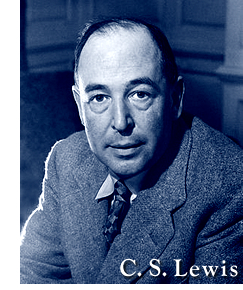
C.S. Lewis Daily – Today’s Reading


And now we begin to see what it is that the New Testament is always talking about. It talks about Christians ‘being born again’; it talks about them ‘putting on Christ’; about Christ ‘being formed in us’; about our coming to ‘have the mind of Christ’.

Put right out of your head the idea that these are only fancy ways of saying that Christians are to read what Christ said and try to carry it out—as a man may read what Plato or Marx said and try to carry it out. They mean something much more than that. They mean that a real Person, Christ, here and now, in that very room where you are saying your prayers, is doing things to you. It is not a question of a good man who died two thousand years ago. It is a living Man, still as much a man as you, and still as much God as He was when He created the world, really coming and interfering with your very self; killing the old natural self in you and replacing it with the kind of self He has. At first, only for moments. Then for longer periods. Finally, if all goes well, turning you permanently into a different sort of thing; into a new little Christ, a being which, in its own small way, has the same kind of life as God; which shares in His power, joy, knowledge and eternity.

From Mere Christianity

Compiled in A Year with C.S. Lewis