Tag Archives: Jesus

Ravi Zacharias Ministry – Only Human


The recognition of one’s humanity can be an uncomfortable pill to swallow. Life’s fragility, life’s impermanence, life’s intertwinement with imperfection and disappointment—bitter medicines are easier to accept. The Romantic poets called it “the burden of full consciousness.” To look closely at humanity can indeed be a realization of dread and despair.

For the poet Philip Larkin, to look closely at humanity was to peer into the absurdity of the human existence. Whatever frenetic, cosmic accident that brought about a species so endowed with consciousness, the sting of mortality, incessant fears of failure, and sieges of shame, doubt, and selfishness was, for Larkin, a bitter irony. In a poem titled “The Building,” he describes the human condition as it is revealed in the rooms of a hospital, where one finds “Humans, caught/On ground curiously neutral, homes and names/Suddenly in abeyance; some are young,/ Some old, but most at that vague age that claims/The end of choice, the last of hope; and all/ Here to confess that something has gone wrong./ It must be error of a serious sort,/ For see how many floors it needs, how tall…”(1)

With or without Larkin’s sense of dread, the confession that “something has gone wrong” is often synonymous with the acknowledgment of humanity. “I’m only human,” is a plea for leniency with regards shortcoming; in Webster’s dictionary, “human” itself is an adjective for imperfection, weakness, and fragility. Nevertheless, there are some outlooks and religions that stand diametrically opposed to this idea, seeing humanity with limitless potential, humans as pure, the human spirit as divine. In a vein not unlike the agnostic Larkin, the new atheists see the cruel realities of time and chance as reason in and of itself to dismiss the rose-colored lenses of God and religion. Yet quite unlike Larkin’s concluding outlook of meaninglessness and despair, they often (inexplicably) suggest a rose-colored view of humanity.(2) Still other belief-systems emphasize the depravity of humanity to such a leveling degree that no person can stand up under the burden of guilt and disgust.

In deep contrast to such severe or optimistic readings, Jesus of Nazareth adds an entirely different dimension to the conversation. The Jesus admits in his own flesh that while there is indeed an error of a serious sort, the error is not in “humanness” itself. He provides a way for the great paradox of humanity to be rightly acknowledged: both the deep and sacred honor of being human and yet the profound disgrace of all that is broken. So the Christian’s advantage is not that they find themselves less fallen or closer to perfection than others, nor that they find in their religion a means of simply escaping this world of fragility, brokenness, guilt, suffering, and error. The Christian’s advantage is Christ himself. The human Son of God mediates on our behalf, bringing us back to a full and forgiven humanity. In his life, death, and resurrection, the Christian is able to see their own broken humanity and a world that has gone awry in light of God’s severe and merciful pursuit. In his vicarious humanity, we encounter our own.

“[H]umanity’s mystery,” as one writer expounds, “can be explained only in the mystery of the God who became human. If people want to look into their own mystery—the meaning of their pain, of their work, of their suffering, of their hope—let them put themselves next to Christ… If I find, on comparing myself with Christ, that my life is a contrast, the opposite of his, then my life is a disaster. I cannot explain that mystery except by returning to Christ, who gives authentic features to a person who wants to be genuinely human.”(3)

The author of these words was well acquainted with the paradox of human nature and the God who became human to bring the world to authentic humanity. Oscar Romero was a Salvadoran priest who saw the very worst and the weakest of humanity in the corruption, violence, and suffering of a country at war within itself. A witness to ongoing violations of human rights, Romero spoke out on behalf of the poor and the victimized. In both the abused and the abusers, he saw the image of God, glimpses of Christ, and the dire need for Christ’s true humanity. For his outcries, Romero was assassinated in the middle of a church service. He was holding up the broken bread of communion, the very sign of Christ’s human body on earth, given for a broken and hungry world.

Surrounded by reasons to be despairing of humanity, there is yet this startling image of a human who gives us cause to reconsider our despair, one whose only brokenness was at our own hands. Christ is more than someone who came to fix what was wrong. He is the image of all that is right, the bread of life for those who seek to be genuinely human.

Jill Carattini is managing editor of A Slice of Infinity at Ravi Zacharias International Ministries in Atlanta, Georgia.


(1) Philip Larkin, Collected Poems (New York: Farrar, Straus and Giroux, 1993), 191.

(2) Various Atheist bus campaigns offer well-known examples of this, one a few years ago declaring, “There’s probably no God. Now stop worrying and enjoy your life.” See Ariane Sherine, “The Atheist Bus Journey,” The Guardian, January 6, 2009, http://www.guardian.co.uk/.

(3) Oscar Romero, The Violence of Love (San Francisco: Harper & Row, 1988), 112.

Alistair Begg – Complete Fellowship


Fellowship with him. 1 John 1:6

When we were united by faith to Christ, we were brought into such complete fellowship with Him that we were made one with Him, and His interests and ours became mutual and identical.

We have fellowship with Christ in His love. What He loves we love. He loves the saints – so do we. He loves sinners – so do we. He loves the poor perishing race of man and longs to see earth’s deserts transformed into the garden of the Lord – so do we.

We have fellowship with Him in His desires. He desires the glory of God – we also work for the same. He desires that the believers may be with Him where He is – we desire to be with Him there too. He desires to drive out sin – behold, we fight under His banner. He desires that His Father’s name may be loved and adored by all His creatures – we pray daily, “Your kingdom come, your will be done, on earth as it is in heaven.”

We have fellowship with Christ in His sufferings. We are not nailed to the cross, nor do we die a cruel death, but when He is reproached, we are reproached; and it is a very sweet thing to be blamed for His sake, to be despised for following the Master, to have the world against us.

The disciple should not be above His Lord. In our measure we fellowship with Him in His labors, ministering to men by the word of truth and by deeds of love.

Our meat and our drink, like His, is to do the will of Him who has sent us and to finish His work.

We also have fellowship with Christ in His joys. We are happy in His happiness; we rejoice in His exaltation. Have you ever tasted that joy, believer? There is no purer or more thrilling delight to be known this side of heaven than that of having Christ’s joy fulfilled in us, that our joy may be full. His glory awaits us to complete our fellowship, for His Church will sit with Him upon His throne as His well – beloved bride and queen.

The Family Bible Reading Plan

  • 1 Chronicles 18
  • James 5

Devotional material is taken from “Morning and Evening,” written by C.H. Spurgeon, revised and updated by Alistair Begg.

Charles Spurgeon – Love’s commendation


“But God commendeth his love toward us, in that, while we were yet sinners, Christ died for us.” Romans 5:8

Suggested Further Reading: Hebrews 2:5-9

I could almost conceive a parliament in heaven. The angels are assembled; the question is proposed to them: “Cherubim and seraphim, cohorts of the glorified, ye spirits that like flames of fire, at my bidding fly, ye happy beings, whom I have created for my honour! Here is a question which I condescend to offer for your consideration: Man has sinned; there is no way for his pardon but by someone suffering and paying blood for blood. Who shall it be?” I can conceive that there was silence throughout the great assembly. Gabriel spoke not: he would have stretched his wings and flapped the heavens in a moment, if the deed had been possible; but he felt that he could never bear the guilt of a world upon his shoulders, and, therefore, still he sat. And there the mightiest of the mighty, those who could shake a world if God should will it, sat still, because they felt all powerless to accomplish redemption. I do not conceive that one of them would have ventured to hope that God himself would assume flesh and die. I do not think it could have entered even into angelic thought to conceive that the mighty Maker of the skies should bow his awful head and sink into a grave. I cannot imagine that the brightest and most seraphic of these glorified ones would for an instant have suffered such a thought to abide with him. And when the Son of God, rising from his throne, spoke to them and said, “Principalities and powers! I will become flesh, I will veil this Godhead of mine in robes of mortal clay, I will die!” I think I see the angels for once astonished.

For meditation: Man had sinned; man must suffer. Only a real, yet sinless man could take his place; God the Son alone qualified for the task (Romans 8:3).

Sermon no. 104

23 November (1856)

John MacArthur – From Jacob to Israel


“By faith Jacob, as he was dying, blessed each of the sons of Joseph, and worshiped” (Heb. 11:21).

Jacob’s life typifies the spiritual pilgrimage from selfishness to submission.

Jacob’s life can be outlined in three phases: A stolen blessing, a conditional commitment, and a sincere supplication.

From the very beginning it was God’s intention to bless Jacob in a special way. But Jacob, whose name means “trickster,” “supplanter,” or “usurper,” tricked his father into blessing him instead of his older brother, Esau (Gen. 27:1-29). As a result, Jacob had to flee from Esau and spend fourteen years herding flocks for his Uncle Laban.

As Jacob traveled toward Laban’s house, God appeared to him in a dream (Gen. 28:10-22) and made him the recipient of the covenant promises first made to his grandfather, Abraham, then to his father, Isaac.

Jacob’s response is revealing, for he “made a vow, saying, ‘If God will be with me and will keep me on this journey that I take, and will give me food to eat and garments to wear, and I return to my father’s house in safety, then the Lord will be my God'” (vv. 20-21, emphasis added). Jacob’s conditional vow said in effect, “God, if you’ll give me what I want, I’ll be your man.”

Despite Jacob’s selfish motives, God did bless him, but He humbled him too. By the time he left Laban’s house, Jacob was ready to yield to God’s will unreservedly. Note his change of heart in Genesis 32:10: “I am unworthy of all the lovingkindness and of all the faithfulness which Thou hast shown to [me].”

Then the Lord appeared in the form of a man and wrestled with Jacob all night (v. 24). Jacob refused to let Him go until he received a blessing. That wasn’t a selfish request, but one that came from a heart devoted to being all God wanted him to be. That’s when the Lord changed Jacob’s name to “Israel,” which means “he fights or persists with God.”

Like Abraham and Isaac before him, Jacob never saw the fulfillment of God’s covenant promises. Yet on his spiritual journey from Jacob to Israel, from selfishness to submission, he learned to trust God and await His perfect timing.

Suggestions for Prayer

Pray for grace to consistently pursue God’s will, and patience to wait on His perfect timing.

For Further Study

Read Jacob’s story in Genesis 27-35.

Joyce Meyer – Spiritual Warfare


And let the peace (soul harmony which comes) from Christ rule (act as umpire continually) in your hearts [deciding and settling with finality all questions that arise in your minds, in that peaceful state] . . . And be thankful (appreciative), [giving praise to God always]. —Colossians 3:15

You are waging spiritual warfare when you give radical praise to God in the midst of your need and lack. When you are thankful to God for all He has done and is doing, you are defeating the enemy. When you hold your peace in the midst of the storm, you are warring with spiritual weapons (see 2 Corinthians 10:4-5).

Jesus said, Peace I leave with you; My [own] peace I now give and bequeath to you… [Stop allowing yourselves to be agitated and disturbed; and do not permit yourselves to be fearful and intimidated and cowardly and unsettled](John 14:27). Jesus has given you peace! Put it on, and wear it everywhere you go.

From the book Starting Your Day Right by Joyce Meyer.

Campus Crusade for Christ; Bill Bright – Everything Belongs to Us


“Now we are no longer slaves, but God’s own sons. And since we are His sons, everything He has belongs to us, for that is the way God planned” (Galatians 4:7).

In the sense of being under the servitude of sin, you and I are no longer servants or slaves. We are sons, children of God, adopted into His family, and are to be treated as sons.

What a glorious privilege is ours in Christ!

In our exalted position as sons, of course we are to be treated as sons. We are to share God’s favors, His blessings. And as sons, it follows that we have responsibilities – not only to our heavenly Father, but also to other sons (and daughters) in Christ.

All that God has, Paul is saying, belongs to us as well for we are His sons. But there is another side to our exalted position – obedience to the Lord. And His calling is sure: “Follow Me and I will make you fishers of men.”

If we are following our Lord, we are becoming fishers of men – soul-winners. We are regularly and naturally, as a part of our daily routine, sharing the good news of the gospel with those whose lives we touch.

That does not necessarily mean buttonholing people and making a nuisance of ourselves; it does mean being available for God’s Holy Spirit to speak through us in every conversation as He chooses. It also means being “prayed up,” with no unconfessed sin in our lives.

Bible Reading: Revelation 8

TODAY’S ACTION POINT: With the Power of the Holy Spirit available to me by faith, I will behave like a child of the King – a son of the Most High. I will live a supernatural life for the Glory of God

Presidential Prayer Team; A.W. – The Right Direction


During the presidential campaign in 1912, Woodrow Wilson said, “A nation which does not remember what it was yesterday, does not know what it is today, nor what it is trying to do. We are trying to do a futile thing if we do not know where we came from or what we have been about.” Today, America fits this description. In 2014, the National Center for Education Statistics found only 18 percent of eighth grade students are proficient in United States history, 27 percent in geography and 23 percent in civics. America was founded on Christian principles, but those ideals cannot survive if not taught and reinforced.

Let us test and examine our ways, and return to the Lord!

Lamentations 3:40

In today’s verse, the prophet Jeremiah gives the solution. Jerusalem and Judea had been destroyed by Babylon. Judgment had come because the people had turned away from God. But there was still hope even in judgment – if the people examined where they went wrong and returned to the Lord.

Are you concerned for the direction of the nation? If so, pray each day for Godly leaders to rise up and set the course for America back towards God. Pray also for those who do not know the Lord personally to develop a relationship with Him.

Recommended Reading: Joel 2:12-17

Greg Laurie – For He Is Good


Sing praise to the Lord, you saints of His, and give thanks at the remembrance of His holy name.—Psalm 30:4

It seems as though merchants today don’t really know what to do with this holiday called Thanksgiving. When it comes to other observances, like Halloween, they make a lot of money from their marketing efforts. And of course, Christmas is a financial windfall. But Thanksgiving? Well, they sell more turkeys than they usually do. But they don’t really know what to do with this holiday, which is spiritual in its origins.

In 1863, President Lincoln designated November 26 as a day of national Thanksgiving. We celebrated it annually on that day until 1942, when President Franklin Roosevelt designated Thanksgiving as the fourth Thursday in November.

And just so we aren’t fuzzy about which God we should give thanks to, this is what the pilgrims wrote in the Mayflower Compact, in 1620:

We whose names are underwritten, the loyal subjects of our dread sovereign lord King James, by the grace of God, of Great Britain, France, and Ireland King, Defender of the Faith, etc.

Having undertaken, for the glory of God, and advancement of the Christian faith, and honor of our king and country, a voyage to plant the first colony in the northern parts of Virginia. . . .

They were not just coming to our fair shores to simply bring European civilization; they were coming to bring the gospel of the Lord Jesus Christ. It’s very easy during our feasting to forget about the One whom we are celebrating.

The primary reason we are put on this earth is to glorify God and to give Him thanks. Yet praise and worship are a sacrifice sometimes. The Bible doesn’t say, however, to give thanks to the Lord because we feel good. Rather, it says, “Give thanks to the Lord, for He is good!” (1 Chronicles 16:34). He is worthy of our praise.

Max Lucado – An Heir of God’s Estate


Long after Joshua had distributed the land of Canaan, seven of the tribes were still in the military camp. Joshua scolded them in Joshua 18:3, “How long will you neglect to go and possess the land which the Lord God of your fathers has given you?” They marched out of the wilderness and conquered the land; yet when the time came to inherit their unique parcels, they grew lazy.

Don’t make the same mistake. You are an heir with Christ of God’s estate. He has placed his Spirit in your heart as a down payment. What God said to Joshua in Joshua 1:3 he says to you. “Every place that the sole of your foot will tread upon I have given to you.” But you must possess it. You must deliberately receive what God so graciously gives! Find your lot in life and live in it!

From Glory Days


Night Light for Couples – A Tale of Two Homes


“If a house is divided against itself, that house cannot stand.” Mark 3:25

Suppose that you’re seven years old. You arrive home from school, and your mother welcomes you with a smile and a snack. Later your father comes home. Mom and Dad greet each other with a kiss and loving words. Dad gives you a warm hug. That night, after you finish your homework, the three of you enjoy a family game. Finally, you say your prayers and fall asleep.

Now put yourself in another seven‐year‐old’s place. You come home from school to a mother who, when she’s home at all, is on the phone or watching television. You eat a bag of candy by yourself. Later your father returns. Mom complains about the unfinished garage project. Dad replies angrily and walks past you to the kitchen. You watch television all evening, then crawl into bed and fall asleep listening to your parents argue.

One home is safe and nurturing; the other lonely and contentious. Too often, children grow up in homes like the latter—or worse. So ask yourself: Which scenario best describes your family? Further, how would you describe the mood of your household? Divided or united? Amiable or argumentative? Supportive or sarcastic? Every day, the story of your home is etching itself into the spirit and memory of your children.

Just between us…

  • How does the way we were brought up affect the mood in our household today?
  • How do you think our children would describe our home?
  • How can we make sure our home is a positive environment?

Loving Lord, we know that our relationship sets the tone for our children’s growing-up experience. Help us make our marriage the starting point of a good home and of a happy, Christ-honoring childhood for our kids. Amen.

From Night Light For Couples, by Dr. James & Shirley Dobson

Charles Stanley – Christians in the Workplace


Philippians 2:5-8

The gospel’s effectiveness is greatly hindered by Christians who act differently at church than they do elsewhere. The way we live for God should permeate all areas of life. The workplace is no exception.

Our behavior reflects our faith. So if we claim to be Christians, then our coworkers will equate our attitudes and actions with Jesus. Do those around you at the office see a positive reflection of God in your work ethic?

Let’s look at a scriptural model for the believer to follow. For one thing, as we read in today’s passage, we should view ourselves as servants and be willing to put the needs of others before our own. Next, our true boss is Christ; therefore, we work diligently and with integrity, knowing that our reward is from Him (Col. 3:23). Then, since all authority on earth is God- given (Rom. 13:1), we should obey our superiors gladly—unless, of course, our human bosses tell us to do something that goes against Scripture. And finally, all those we work with and for have worth from the Creator, so we should treat them with respect (1 John 4:7-8).

Think about the Golden Rule—Do unto others as you’d have others do unto you—and how it applies here. Putting it a different way, imagine yourself as the boss and ask, How would I like my employees to work, whether I was watching or not?

We are to work as though God is our boss. That means doing tasks with joy, a servant attitude, respect for others, diligence, and obedience. Imagine what the workplace could be if all believers approached their jobs this way.

Bible in One Year: Romans 1-3


Our Daily Bread — The Main Event


Read: Luke 10:38-42

Bible in a Year: Ezekiel 18-19; James 4

One thing is needed, and Mary has chosen that good part. nkjv —Luke 10:42

While watching a fireworks display during a celebration in my city, I became distracted. Off to the right and the left of the main event, smaller fireworks occasionally popped up in the sky. They were good, but watching them caused me to miss parts of the more spectacular display directly above me.

Sometimes good things take us away from something better. That happened in the life of Martha, whose story is recorded in Luke 10:38-42. When Jesus and His disciples arrived in the village of Bethany, Martha welcomed them into her home. Being a good host meant that someone had to prepare the meal for the guests, so we don’t want to be too hard on her.

When Martha complained that her sister Mary wasn’t helping, Jesus defended Mary’s choice to sit at His feet. But the Lord wasn’t saying that Mary was more spiritual than her sister. On occasion Martha seems to have shown more trust in Jesus than Mary did (John 11:19-20). And He wasn’t being critical of Martha’s desire to look after their physical needs. Rather, what the Lord wanted Martha to hear is that in the busyness of our service, listening to Him is the main event. —Anne Cetas

Dear Lord, help me to remember that my service for You is important, but it can never take the place of intimate fellowship with You.

Jesus longs for our fellowship.

INSIGHT: Mary and Martha appear on three occasions in the Gospel accounts (Luke 10; John 11 and 12). They were friends of Jesus and sisters of Lazarus, whom Jesus raised from the dead (John 11:17-37). It is interesting to note the significant interaction Jesus had with them. In Jesus’ day women were not regarded as reliable witnesses, yet Mary and Martha played a large role in witnessing Jesus’ miracles and message.

Alistair Begg – He Tends His Flock


Israel served for a wife, and for a wife he guarded sheep. Hosea 12:12

In conversation with Laban, Jacob described what he had done: “These twenty years I have been with you. . . . What was torn by wild beasts I did not bring to you. I bore the loss of it myself. From my hand you required it, whether stolen by day or stolen by night. There I was: by day the heat consumed me, and the cold by night, and my sleep fled from my eyes.”1

Even more arduous than this was the life of our Savior here below. He watched over us until He was able to say, “Of those whom you gave me I have lost not one.”2 His hair was wet with dew, and His locks with the drops of the night. Sleep departed from His eyes, for all night He was in prayer wrestling for His people.

One night Peter must be pleaded for; suddenly another claims His tearful intercession. No shepherd sitting beneath the cold skies, looking up to the stars, could ever utter such complaints because of the hardness of his toil as Jesus Christ might have brought, if He had chosen to do so, because of the sternness of His service in order to procure His bride.

Cold mountains and the midnight air,

Witnessed the fervor of His prayer;

The desert His temptations knew,

His conflict and His victory too.

It is helpful to meditate upon the spiritual parallel of Laban having required all the sheep at Jacob’s hand. If they were torn by beasts, Jacob must make it good; if any of them died, he must guarantee their replacement.

Was not the toil of Jesus for His Church the toil of One who was under obligation to bring every believing one safe to the hand of Him who had committed them to His charge? Look upon toiling Jacob, and you see a representation of Him of whom we read, “He will tend His flock like a shepherd.”3

1) Genesis 31:38-40

2) John 18:93) Isaiah 40:11

The Family Bible Reading Plan

  • 1 Chronicles 17
  • James 4

Devotional material is taken from “Morning and Evening,” written by C.H. Spurgeon, revised and updated by Alistair Begg.

Charles Spurgeon – The loved ones chastened


“As many as I love, I rebuke and chasten: be zealous therefore, and repent.” Revelation 3:19

Suggested Further Reading: Job 12:1-6

See how the righteous are cast down. How often is virtue dressed in the rags of poverty! How frequently is the most pious spirit made to suffer from hunger, and thirst, and nakedness! We have sometimes heard the Christian say, when he has contemplated these things, “Surely, I have served God in vain; it is for nothing that I have chastened myself every morning and vexed my soul with fasting; for lo, God hath cast me down, and he lifteth up the sinner. How can this be?” The wise of the heathen could not answer this question, and they therefore adopted the expedient of cutting the intricate knot. “We cannot tell how it is,” they might have said; therefore they flew at the fact itself, and denied it. “The man that prospers is favoured of the gods; the man who is unsuccessful is obnoxious to the Most High.” So said the heathen, and they knew no better. Those more enlightened people who talked with Job in the days of his affliction, did not get much further; for they believed that all who served God would have a hedge about them; God would multiply their wealth and increase their happiness; while they saw in Job’s affliction, as they conceived, a certain sign that he was a hypocrite, and, therefore God had quenched his candle and put out his light in darkness. And alas! Even Christians have fallen into the same error. They have been apt to think that if God lifts a man up, there must be some excellence in him; and if he chastens and afflicts, they are generally led to think that it must be an exhibition of wrath. Now hear the text, and the riddle is all made clear; listen to the words of Jesus, speaking to his servant John, and the mystery is solved. “As many as I love, I rebuke and chasten: be zealous therefore, and repent.”

For meditation: God is good to his children, both providing for them and disciplining them (Deuteronomy 8:1-5). Teachings such as the “Prosperity Gospel” and “Healing being in the Atonement” miss the point that such blessings are guaranteed to the believer only in the Glory (Revelation 21:3-7).

Sermon no. 164

22 November (1857)

John MacArthur – The Reluctant Patriarch


“By faith Isaac blessed Jacob and Esau, even regarding things to come” (Heb. 11:20).

When you disobey God, you forfeit joy and blessing.

Isaac is a fascinating Old Testament character. He was Abraham’s long-awaited son, the covenant child, the child of promise. Yet aside from that, he was rather ordinary, passive, and quiet. Just over two chapters of Genesis center on him, whereas the other patriarchs (Abraham, Jacob, and Joseph) command about twelve chapters each.

In the final analysis, Isaac believed God and submitted to His will. But overall, his spiritual character seems more reluctant than resolute.

After a famine prompted Isaac to move his family to Gerar (a Philistine city on the border between Palestine and Egypt), he received a vision from the Lord. In it God passed on to Isaac the covenant promises He had made to Abraham: “Sojourn in this land and I will be with you and bless you, for to you and to your descendants I will give all these lands, and I will establish the oath which I swore to your father Abraham. And I will multiply your descendants as the stars of heaven, and will give your descendants all these lands; and by your descendants all the nations of the earth shall be blessed” (Gen. 26:3-4).

You would think such promises would infuse Isaac with boldness and confidence, yet no sooner had he received them, then he lied to the men of Gerar about his wife, Rebekah, because he feared they might kill him to have her (v. 7).

It was only with great difficulty and prodding that the Lord finally brought Isaac into the Promised Land, where He once again repeated the covenant promises (vv. 23-24).

Later in his life Isaac even sought to bless his son Esau after Esau had sold his birthright to Jacob (25:33). Only after he realized that God’s choice of Jacob was irreversible did Isaac acquiesce.

Isaac is a vivid reminder of how believers can forfeit joy and blessing by disobeying God. But he’s also a reminder of God’s faithfulness—even toward reluctant saints.

Is your obedience reluctant or resolute?

Suggestions for Prayer

  • Thank God for His unwavering faithfulness to you.
  • Seek His forgiveness when your obedience is reluctant or withheld altogether.
  • Ask Him to teach you to love Him in the same unwavering, resolute way He loves you.

For Further Study

Read of Isaac in Genesis 25:19—26:34.

Joyce Meyer – You Don’t Have to Burn Out


And Jesus said to them, The Sabbath was made on account and for the sake of man… —Mark 2:27

Are you excessively tired all the time, and even after sleeping, do you wake up feeling tired all over again? You may be experiencing some of the symptoms of exhaustion, or what is commonly called “burnout.” Long periods of overexertion and stress can cause constant fatigue, headaches, sleeplessness, gastrointestinal problems, tenseness, a feeling of being tied in knots, and an inability to relax. Some other signals of “burnout” are crying, being easily angered, negativity, irritability, depression, cynicism (scornful, mocking of the virtues of others), and bitterness toward others’ blessings and even their good health.

“Burnout” can cause us to not exercise self-control, and when this happens, we will no longer produce good fruit in our daily lives. “Burnout” steals our joy, making peace impossible to find. When our bodies are not at peace, everything seems to be in turmoil.

God established the law of resting on the Sabbath to prevent “burnout” in our lives. The law of the Sabbath simply says we can work six days, and rest one day. We need to rest and worship and play. Even God rested after six days of work. He, of course, never gets tired, but gave us this example so we would follow the pattern. In Exodus 23:10–12, we find that even the land had to rest after six years, and the Israelites were not to plant in it the seventh year. During this rest, everything recovered and prepared for future production.

Today in America, almost every business is open seven days a week. Some of them are even open twenty-four hours a day, seven days a week. When we make ourselves available at all times, we are in danger of “burnout.” People today are quick to argue that they cannot afford to take a day off, but I say they cannot afford not to.

Trust in Him: Some people feel guilty anytime they try to rest, but that guilty feeling is not from God. God wants us to live balanced lives, and if we don’t, we open a door for the devil to bring some kind of destruction (see 1 Peter 5:8). Trust God that your resting time is just as valuable as your working time.

From the book Trusting God Day by Day by Joyce Meyer.

Campus Crusade for Christ; Bill Bright – Mighty Weapons


“I use God’s mighty weapons, not those made by men, to knock down the devil’s strongholds. These weapons can break down every proud argument against God and every wall that can be built to keep men from finding Him. With these weapons I can capture rebels and bring them back to God, and change them into men whose hearts’ desire is obedience to Christ” (2 Corinthians 10:4,5).

Joe came to share with me how his leader in a particular Christian organization had been most unfair to him. He was being relieved of his responsibilities and replaced by another who, in his opinion, was not nearly as well qualified. As we talked it became apparent that Satan easily could sabotage the ministry.

After listening to Joe’s grievances for some time, seeking to know the truth of the matter, I inquired as to his walk with God. “Is there any sin in your life? Do you know for sure that you’re filled with the Holy Spirit?” Then I brought the other party into private conference and inquired as to his relationship with God. “Is there any sin in your life? Do you know for sure that you’re filled with the Holy Spirit?” Both assured me that they were filled with the Spirit and that they genuinely desired to know and do the will of God. I was convinced that they were both sincere.

How then could two men without sin in their lives and who claimed to be filled with the Holy Spirit be at such odds? I sought further truth. In the meantime, we brought to bear the weapons of prayer and the Word of God. God says that when brothers are at odds we should claim in prayer the release of His supernatural wisdom to resolve the matter, and, finally, claim by faith that Satan will be routed, that all of his influence will be overcome.

The counseling required several hours. I talked to one individual, then the other, then both of them together. Finally, we were on our knees praising God and then embracing each other, and the men genuinely felt that their relationship with each other and with the Lord had been fully restored. Satan had lost another battle. Another miracle had happened. Another tragedy had been averted and the Body of Christ had been spared another scandal.

What are those weapons? A holy life, the Holy Spirit, prayer, the Word of God, faith, truth – these are the weapons of God for supernatural warfare. Learn how to use them for His glory.

Bible Reading: Ephesians 6:10-17

TODAY’S ACTION POINT: Whenever Satan attacks me, or I observe conflicts in the Body of Christ due to his influence, I will seek to defeat him by using God’s mighty weapons and will teach other Christians how to apply them in times of spiritual battle

Presidential Prayer Team; C.H.- Greater Benefits


Reading a paper or hard copy of a text is better than reading it from an electronic device, shows a new study. Students’ retention level is much higher after reading printed text. Another way to increase retention is to hand write notes versus typing them. There is something that happens in the brain when you physically write the words.

Blessed is the one who reads aloud the words of this prophecy…and who keep what is written in it.

Revelation 1:3

Retention is just the thing John is referring to in today’s passage. Those who read and hear the Word of God are more likely to “keep what is written.” Many Christians only open their Bibles on Sunday, but John says those who read aloud and keep God’s commands are blessed.

Find time to read the Bible today and every day. Speak it and write it down. There are benefits even greater than increased retention. “I have stored up your word in my heart, that I might not sin against you.” (Psalm 119:11) Ask God to bless the reading of His Word both in your life and the lives of your national leaders.

Recommended Reading: Psalm 119:9-16

Night Light for Couples – Balloons and Children


“My time has not yet come.” John 2:4

I (jcd) once attended a wedding in a beautiful garden setting. After the minister told the groom to kiss the bride, about 150 colorful, helium‐filled balloons were released into the blue sky. Within a few seconds the balloons were scattered, some rising hundreds of feet overhead and others cruising toward the horizon. A few balloons struggled to clear the upper branches of the trees, while the showoffs became mere pinpoints of color in the sky.

Like balloons, some boys and girls are born with more helium than others. They soar effortlessly to the heights, while others wobble dangerously close to the trees. Their frantic folks run along underneath, huffing and puffing to keep them airborne.

Are you a parent of a low‐flying child? Over the years, I’ve worked with hundreds of families whose children were struggling in one way or another. Based on what I’ve seen, let me pass along a word of encouragement to worried parents: Sometimes the child who has the most trouble getting off the ground eventually reaches the greatest height!

Just between us…

  • What kinds of balloons do our kids most resemble?
  • Do we tend to panic when our low‐fliers drift in the wrong direction?
  • Do we love them any less than those who soar?
  • How can we avoid prematurely judging how a child will turn out?
  • How can we pump more “helium” into our relationship with our low‐flier?

Heavenly Father, tonight we ask for wisdom and patience as we raise our children. We let go of our own requirements and timelines for their lives. We trust Your providence and grace. Every day, help us obey You in this great calling of being a parent. Amen.

From Night Light For Couples, by Dr. James & Shirley Dobson

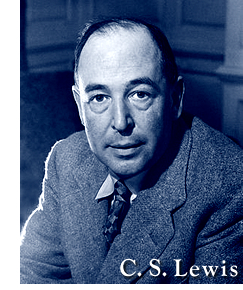
C.S. Lewis Daily – Today’s Reading


The Teacher explains our power to choose:

‘There are only two kinds of people in the end: those who say to God, “Thy will be done,” and those to whom God says, in the end, “Thy will be done.” All that are in Hell, choose it. Without that self-choice there could be no Hell. No soul that seriously and constantly desires joy will ever miss it. Those who seek find. To those who knock it is opened.’

From The Great Divorce

Compiled in A Year with C.S. Lewis