Tag Archives: Jesus

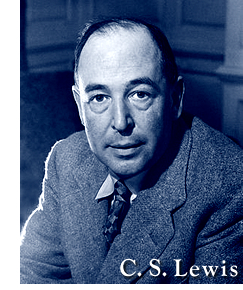
C.S. Lewis Daily – Today’s Reading


Though Christian charity sounds a very cold thing to people whose heads are full of sentimentality, and though it is quite distinct from affection, yet it leads to affection. The difference between a Christian and a worldly man is not that the worldly man has only affections or ‘likings’ and the Christian has only ‘charity’. The worldly man treats certain people kindly because he ‘likes’ them: the Christian, trying to treat every one kindly, finds himself liking more and more people as he goes on—including people he could not even have imagined him- self liking at the beginning.

This same spiritual law works terribly in the opposite direction. The Germans, perhaps, at first ill-treated the Jews because they hated them: afterwards they hated them much more because they had ill-treated them. The more cruel you are, the more you will hate; and the more you hate, the more cruel you will become — and so on in a vicious circle for ever.

Good and evil both increase at compound interest. That is why the little decisions you and I make every day are of such infinite importance. The smallest good act today is the capture of a strategic point from which, a few months later, you may be able to go on to victories you never dreamed of. An apparently trivial indulgence in lust or anger today is the loss of a ridge or railway line or bridgehead from which the enemy may launch an attack otherwise impossible.

From Mere Christianity

Compiled in A Year with C.S. Lewis

Charles Stanley – Our Top Priority


Luke 10:38-42

Jesus had great affection for Martha, her sister Mary, and her brother Lazarus (John 11:5). One day He sent word to them that He and His disciples were coming to visit. The women started preparing their home, as there was a lot to accomplish before the men arrived. Martha, however, in all her busyness, lost sight of the importance of spending time with the Lord.

But let us not be quick to judge her. We know that in our relationship with Jesus, He is to have first place above all else in life. Thoughts, attitudes, and actions are to flow out of our intimate connection with Him. But, as we have all no doubt discovered, this is not easy to do. Our own selfish nature clamors for supremacy, and the world with all its temptations encourages us to indulge ourselves. Even while carrying out the Lord’s work, we can lose sight of our first priority—deepening our intimacy with Christ.

When Jesus arrived, Mary stopped what she was doing so she could listen to His words and learn from Him. Martha, distracted by all that was still to be done, kept working. The Lord affirmed Mary’s choice to be with Him and urged Martha to follow her sister’s example. Both women expressed their love and care for Jesus through their actions, but Mary chose the better way.

Nothing should supersede the believer’s relationship with Christ; both character and conduct should reflect His likeness (Eph. 4:24). During Jesus’ visit, Martha—with the best of intentions—let her service for Him become more important than time with Him. If friends observed your life, what would they say matters most to you?

Bible in One Year: Luke 14-16

Our Daily Bread — You Missed the Chance


Read: 1 Corinthians 13

Bible in a Year: Jeremiah 12-14; 2 Timothy 1

If I have the gift of prophecy and can fathom all mysteries and all knowledge, and if I have a faith that can move mountains, but do not have love, I am nothing. —1 Corinthians 13:2

I heard the saddest words today. Two believers in Christ were discussing an issue about which they had differing opinions. The older of the two seemed smug as he wielded Scripture like a weapon, chopping away at the things he saw as wrong in the other’s life. The younger man just seemed weary of the lecture, weary of the other person, and discouraged.

As the exchange drew to a close, the older man commented on the other’s apparent disinterest. “You used to be eager,” he started, and then abruptly quit. “I don’t know what it is you want.”

“You missed the chance to love me,” the young man said. “In all the time you’ve known me, what has seemed to matter most to you is pointing out what you think is wrong about me. What do I want? I want to see Jesus—in you and through you.”

Had this been said to me, I thought, I would have been devastated. In that moment I knew the Holy Spirit was telling me there had been people I had missed the chance to love. And I knew there were people who couldn’t see Jesus in me either.

The apostle Paul tells us that love must be the underlying motive in anything we do; in everything we do (1 Cor. 13:1-4). Let’s not miss the next chance to show love. —Randy Kilgore

Ask the Holy Spirit to show you today who it is you’ve missed the chance to love. Then ask Him to give you another opportunity. Start your conversation with these words: “I’m sorry . . .”

Love beats lectures every time.

INSIGHT: First Corinthians 13 is often referred to as “the love chapter.” Jesus said that love would be the distinguishing characteristic of a Christian. Hours before He went to the cross He said: “A new command I give you: Love one another. As I have loved you, so you must love one another. By this everyone will know that you are my disciples, if you love one another” (John 13:34-35). Sim Kay Tee

Ravi Zacharias Ministry – What Poverty Is Blessed?


Early in his ministry, according to Matthew’s Gospel, Jesus preached a very public sermon. This sermon, unlike any other, has not only been a great treasure of literature, but also stands as the foundation of Jesus’s teaching ministry. The introductory illustration of this famous sermon given on a mountainside is a collection of sayings by Jesus about who is blessed in the kingdom of God. They are called the “Beatitudes.”

These beatitudes spoken by Jesus have been widely admired across religious, political, and social realms. Persons as diverse as Jimmy Carter, Gandhi, and the rock musician, Sting, have all quoted these sayings of Jesus. Indeed, Dallas Willard notes, “[A]long with the Ten Commandments, the twenty-third psalm, and the Lord’s prayer…[the Beatitudes] are acknowledged by almost everyone to be among the highest expressions of religious insight and moral inspiration.”(1)


The exact nature of this religious insight and moral inspiration has been the subject of numerous biblical commentaries and writings. Biblical commentator, Craig Keener notes that there are more than 36 discrete views about the sermon’s message.(2) Perhaps the difficulties in interpretation lie with the implications of the Beatitudes themselves. As one author notes, the Beatitudes are “a statement of the world turned upside down, where those who mourn are comforted rather than abandoned or merely pitied, where those who hunger and thirst for righteousness are satisfied, not ignored or shouted down, where the meek inherit the earth rather than being ground into dust.”(3) In other words, much is at stake.  A world “turned upside down” serves as inspiration to some and bad news for others. Indeed, Luke’s account of the sermon adds a series of four-fold “woes” for those who have contributed to mourning, humiliation, and injustice (Luke 6:17-26).


The first beatitude of Jesus is on the “poor in spirit.” I’ve often wondered what it means to be poor in spirit and certainly wondered if being a follower of Jesus included depression or a perpetual frown. The poor in spirit, according to various commentators, include the dispossessed and abandoned ones. In Jesus’s society, these were the persons without hope in this world, the forgotten ones who were left behind. In every way, these were the ones who recognized that they had nothing to offer God in terms of the spiritual requirements of their religious traditions. They were the spiritually destitute. In the ancient world, poverty was often viewed as a spiritual curse whereas riches and prosperity were seen as divine blessing. Poverty and calamity were understood as the results of wrong behavior, as we see in the story of Job. Job’s friends assumed he had done something wrong to bring on his suffering.

And that is why this declaration by Jesus that the poor are blessed and the kingdom of God belongs to them would have shocked its first hearers.

And yet, extending the reach of the kingdom of God to the poor in spirit was part of the messianic mission as foretold by the prophets. Jesus himself understood this, and during a visit to his home synagogue in Nazareth, he read from the scroll of Isaiah: “The Spirit of the Lord is upon me, because he has anointed me to preach good news to the poor… to proclaim the year of the Lord’s favor.” Indeed, Matthew’s gospel gives us a concrete picture of this mission of Jesus in his healing of those who were poor in spirit because of various illnesses. Just before Jesus gave his public sermon, he proclaimed the gospel of the kingdom in word and deed by healing “every kind of disease and every kind of sickness among the people” (Matthew 4:23). These were the crowds who followed him up the mountain where he began to teach. Looking around at those who just received a tangible expression of the kingdom of God coming among them, Jesus proclaimed that these ones—these spiritually destitute ones—were blessed.

The power of the blessings of Jesus is that they are given at the beginning of his sermon, and they are given to those who have done nothing to deserve them. As Fred Craddock notes, “If the blessings were only for the deserving, very likely they would be stated at the end of the sermon, probably prefaced with the conditional clause, ‘If you have done all these things.’”(4) On the contrary, God blesses because God’s grace knows no bounds. For by grace we are saved through faith and not of ourselves…it is the gift of God. There is no one beyond God’s reach, no one who is beyond hope. In the kingdom of God, even the spiritually destitute can come and find their place.

Margaret Manning Shull is a member of the speaking and writing team at Ravi Zacharias International Ministries in Bellingham, Washington.

(1) Dallas Willard, The Divine Conspiracy (San Francisco: Harper San Francisco, 1998), 98.

(2) Craig S. Keener, A Commentary on the Gospel of Matthew (Grand Rapids: William B. Eerdmans, 1999), 160.

(3) Mary Hinkle Shore, “It’s the Indicatives, Stupid!” in Pilgrim Preaching: Readings for Preachers and Others, November 1, 2003, http://www.pilgrimpreaching.org.

(4) Fred Craddock, “Hearing God’s Blessing,” The Christian Century, January 24, 1990, 74.

Alistair Begg – Four Trustworthy Sayings


The saying is trustworthy… 2 Timothy 2:11

Paul has four of these “trustworthy” sayings.

  • The first occurs in 1 Timothy 1:15, “The saying is trustworthy and deserving of full acceptance, that Christ Jesus came into the world to save sinners.”
  • The next is in 1 Timothy 4:8-9, “Godliness is of value in every way, as it holds promise for the present life and also for the life to come. The saying is trustworthy and deserving of full acceptance.”
  • The third is in 2 Timothy 2:11, “The saying is trustworthy, for: If we have died with him, we will also live with him.”
  • And the fourth is in Titus 3:8, “The saying is trustworthy, and I want you to insist on these things, so that those who have believed in God may be careful to devote themselves to do good works.”

We may trace a connection between these faithful sayings. The first one lays the foundation of our eternal salvation in the free grace of God, as shown to us in the mission of the great Redeemer. The next affirms the double blessedness that we obtain through this salvation-the blessings of time and of eternity. The third shows the nature of the life to which the chosen people are called; we are ordained to die with Christ with the promise that “if we have died with him, we will also live with him.” The last sets out the active form of Christian service, bidding us to diligently maintain good works.

So we have the root of salvation in free grace, then the privileges of that salvation in the life that now is and in that which is to come; and we have also the two great branches of dying with Christ and living with Christ, loaded with the fruit of the Spirit.

Treasure up these faithful sayings. Let them be the guides of your life, your comfort, and your instruction. The apostle of the Gentiles proved them to be trustworthy, and they are still trustworthy; not one word will fall to the ground. They are worthy of all acceptance; let us accept them now and prove their reliability.

Let these four trustworthy sayings be written on the four corners of my house.

The Family Bible Reading Plan

  • 2 Kings 8
  • 1 Timothy 5

Devotional material is taken from “Morning and Evening,” written by C.H. Spurgeon, revised and updated by Alistair Begg.

Charles Spurgeon – None but Jesus


“He that believeth on him is not condemned.” John 3:18

Suggested Further Reading: Hebrews 12:5-11

You are never liable as a believer to punishment for your sins. You will be chastised on account of them, as a father chastises his child; that is part of the gospel dispensation; but you will not be smitten for your sins as the lawgiver smites the criminal. Your Father may often punish you as he punished the wicked, but never for the same reason. The ungodly stand on the ground of their own demerits; their sufferings are awarded as their due deserts. But your sorrows do not come to you as a matter of desert; they come to you as a matter of love. God knows that in one sense your sorrows are such a privilege that you may account of them as a boon you do not deserve. I have often thought of that when I have had a sore trouble. I know some people say, “You deserved the trouble.” Yes, my dear brethren, but there is not enough merit in all the Christians put together, to deserve such a good thing as the loving rebuke of our heavenly Father. Perhaps you cannot see that; you cannot think that a trouble can come to you as a real blessing in the covenant. But I know that the rod of the covenant is as much the gift of grace as the blood of the covenant. It is not a matter of merit; it is given to us because we need it. But I question whether we were ever so good as to deserve it. We were never able to get up to so high a standard as to deserve so rich, so gracious a providence as this covenant blessing—the rod of our chastening God.

For meditation: When disciplined by his heavenly Father, the Christian is experiencing a beatitude (Job 5:17; Psalm 94:12)!

Sermon no. 362

27 October (Preached 17 February 1861)

John MacArthur – Learning Truth


“All Scripture is inspired by God and profitable for teaching, for reproof, for correction, for training in righteousness” (2 Tim. 3:16).

Scripture is a manual of divine truth.

This month we’ve considered many benefits of Scripture. Second Timothy 3:16 lists four more that will be the focus of our studies as we draw this month to a close: teaching truth, reproving sin and error, correcting behavior, and training in righteousness. We’ve touched on each of those to some extent in our past studies, but they warrant additional discussion from this verse, which is Scriptures most concise statement on its own power and purpose.

First, the Bible is profitable for teaching. The Greek word translated “teaching” refers more to content than to the process of teaching. Scripture is God’s manual of divine truth for patterning your thoughts and actions.

As a believer, you have the capacity to understand and respond to Scripture. That’s because the Holy Spirit indwells you and imparts spiritual discernment, wisdom, and understanding (1 John 2:27). You have “the mind of Christ” (1 Cor. 2:16).

But having the ability to understand spiritual truth doesn’t guarantee you’ll exercise that ability. God said to the Israelites through the prophet Hosea, “My people are destroyed for lack of knowledge” (4:6). His truth was available to them, but they ignored it and lived in disobedience.

I’ve heard many people lament that they could have avoided much grief if only they had known the Bible more thoroughly—if only they had taken the time to learn what God expected of them in a particular situation. Perhaps you’ve felt that way. The best way to avoid making that mistake in the future is to faithfully, prayerfully, patiently, and thoroughly saturate your mind with biblical truth, then discipline yourself to live according to its principles. Now that’s the challenge of a lifetime, but it’s the only way to profit from biblical teaching and avoid unnecessary heartaches.

I pray you will be encouraged today as you study God’s Word and diligently apply it to your life.

Suggestions for Prayer

Ask God to use the circumstances you face today to draw you closer to Him and motivate you to dig deeper into His Word.

For Further Study

Read Exodus 24:1-8. What was the Israelites’ response to God’s Word? What is yours?

Joyce Meyer – The Joy of Spiritual Growth


He is the one we proclaim, admonishing and teaching everyone with all wisdom, so that we may present everyone fully mature in Christ. – Colossians 1:28 NIV

As your relationship with God matures, you will find yourself living less by guidelines, rules, and regulations, and more by the desires of your heart. As you learn more of the Word, you will find His desires fill your heart with thanksgiving and joy. God wants you to know His heart well enough that you will want to follow the prompting, leading, and guidance of the Holy Spirit.

Once you are free in Christ, stand fast in that liberty and do not become ensnared with the joy stealer of legalism, which is the yoke of bondage that you have put off (see Galatians 5:1). God wants to bring you into a new place that is full of freedom, so follow your heart, because that is where His law abides.

Prayer of Thanks: Thank You, Father, that the more time I spend in Your Word, the more I love it. I pray that Your Word would fill my heart so that my desires will begin to line up with Your instruction and direction for my life. Thank You that You are bringing me to maturity in You.

From the book The Power of Being Thankful by Joyce Meyer.


Campus Crusade for Christ; Bill Bright – You Will Rejoice


“You have sorrow now, but I will see you again and then you will rejoice; and no one can rob you of that joy” (John 16:22).

Once you and I truly experience the joy of the Lord, no one can rob us of that joy!

That does not mean that we will never experience disappointment, sorrow or grief; but it does mean that deeps down underneath it all is the joy that comes as a gift from God, the fruit of the Spirit. And that is the kind of joy that no one can take away.

Underneath the tears, the heartache, lies the calm, sweet peace that God gives tothose who walk in faith and obedience. And that is a part of the joy that He promises.

Jesus’ promise to see His disciples again, of course, refers to after the resurrection. “You will be so firmly persuaded that I have risen,” He says to them, “and that I am the Messiah, that neither the threats nor the persecutions of men will ever be able to shake your faith, or produce doubt or unbelief and thus take away your joy.”

Jesus’ prediction, as we know, was remarkably fulfilled, for after He revealed Himself to them following the resurrection, not one of the apostles ever doubted for a moment that He has risen from the dead. No trial or persecution was able to shake their faith – so that their joy remained.

You and I have certainties of faith that are unshakable, and thus they produce joy – joy that will remain forever and ever.

Bible Reading: John 16:20-24

TODAY’S ACTION POINT: I will remember to praise and thank God for the unshakable joy that He alone gives.

Greg Laurie – Call It What It Is


If we confess our sins, He is faithful and just to forgive us our sins and to cleanse us from all unrighteousness.—1 John 1:9

Sometimes we need to take drastic measures to be free from a sin. Jesus said, “If your right eye causes you to sin, pluck it out and cast it from you; for it is more profitable for you that one of your members perish, than for your whole body to be cast into hell” (Matthew 5:29).

Jesus wasn’t speaking literally here. He was using an expression that was commonly understood in that culture. The right eye was thought to be the best eye. So when Jesus made that statement, He was saying, “Do whatever it takes to be free from that sin.”

We have to call sin what it is. Don’t call it a mistake or a weakness; that is the verbiage we use to soften what we do. Call it a sin. We are all human, and we all make mistakes. But there is a big difference between that and going out and overtly sinning.

After David committed adultery with Bathsheba and his sin was exposed, he admitted it and made this statement to God: “Against You, You only, have I sinned, and done this evil in Your sight—that You may be found just when You speak, and blameless when You judge” (Psalm 51:4).

David didn’t say, “Lord, I am weak and human, and I make mistakes.” Rather, he said he had sinned against God. That’s what it means to confess your sin. Start by calling it a sin.

The Bible says, “If we confess our sins, He is faithful and just to forgive us our sins and to cleanse us from all unrighteousness” (1 John 1:9). If you want to be forgiven of your sin, you must first confess it. The word confess means to agree with God. It means seeing sin the way God sees it.

Presidential Prayer Team; C.P.  – Standing Out


When Zechariah prophesied about the restoration of Israel, he said that in those days people would grab hold of a Jew’s robe and want to go with them because they heard that God was with them (Zechariah 8:23). When Peter and John answered the Scribes and Pharisees with boldness, the religious leaders took note that the apostles had been with Jesus (Acts 4:13).

Not by might, nor by power, but by my Spirit, says the Lord of hosts.

Zechariah 4:6

A life that is centered in Christ will be evident to others. Jesus said, “By this all people will know that you are my disciples, if you have love for one another.” (John 13:35) Even more, God is not just with believers in Him; His Holy Spirit resides within them (I Corinthians 6:19).

Are you living your life through His indwelling Spirit in such a way that you stand out from the crowd? Do people know you are a Christian because of your love? If not, abide in Him through prayer, read the Bible and practice acts of kindness. Trust that God will accomplish His will through you by His Spirit. Then pray for the eyes of people in America to be opened to see the love of Jesus in the Christians around them.

Recommended Reading: John 15:4-17

Max Lucado – God Uses Failures


What was I thinking taking this job? I should have done better. It’s all my fault. The voices—you’ve heard them all. When you lost your job, flunked the exam, or when your marriage went south…when you failed. The voices began to howl, laughing at you. You heard them and you joined them. You disqualified yourself and berated yourself. You sentenced yourself to hard labor in the Leavenworth of poor self-worth. Oh, the voices of failure. Failure finds us all.

But God’s Word is written for failures. It’s full of folks who were foul-ups. David was a failure, yet God used him. Jonah was in the belly of a fish and God heard his prayer. Perfect people? No. Perfect messes? You bet! A surprising and welcome discovery of the Bible is this: God uses failures! Miss this truth and you miss your Glory Days. God’s grace is greater than your failures.

From Glory Days

Night Light for Couples – Admit You’re Wrong


“If we confess our sins, he is faithful and just and will forgive us our sins.” 1 John 1:9

It is very difficult for parents to ask their children for forgiveness. They feel that it somehow damages their authority to admit they have done wrong and promise to do better next time. But I (jcd) believe it is healthy for a mom and dad to model for a child how to apologize when they have done something wrong.

One evening years ago, I was especially grouchy with my ten‐year‐old daughter, Danae. I blamed her for things that weren’t her fault and upset her needlessly. After I went to bed, I realized that I needed to apologize. The next morning I said, “Danae, I’m sure you know that daddies are not perfect human beings. I know I wasn’t fair with you last night. I was terribly grouchy, and I’m asking you to forgive me.” Danae put her arms around me, then shocked me to my toes when she said, “I knew you were going to have to apologize, Daddy, and it’s okay. I forgive you!”

If parents never admit their wrongs, their children often remember the offenses well into adulthood. Instead of clearing the air and reestablishing the relationship, the hurt feelings are stored in the memory bank to fester. Furthermore, by admitting a wrong, the parent says on the record that things will change—that he or she will try not to make the same mistake in the future. Healthy families follow these principles of forgiveness… from the top down!

Just between us…

  • Why is it easy to overlook the need to ask our children for pardon?
  • When we ask for forgiveness from our kids, what do we demonstrate?

Heavenly Father, it’s never easy to admit we’re wrong—especially to children. Give us the courage to seek forgiveness from our kids whenever it’s warranted. May our family grow up without lingering bitterness and hurt. Amen.

From Night Light For Couples, by Dr. James & Shirley Dobson

C.S. Lewis Daily – Today’s Reading


TO MARY WILLIS SHELBURNE: On the lessons learned about grieving.

24 September 1960

As to how I take sorrow, the answer is ‘In nearly all the possible ways.’ Because, as you probably know, it isn’t a state but a process. It keeps on changing—like a winding road with quite a new landscape at each bend. Two curious discoveries I have made. The moments at which you call most desperately and clamorously to God for help are precisely those when you seem to get none. And the moments at which I feel nearest to Joy are precisely those when I mourn her least. Very queer. In both cases a clamorous need seems to shut one off from the thing needed. No one ever told me this. It is almost like ‘Don’t knock and it shall be opened to you.’ I must think it over.

My youngest stepson is the greatest comfort to me. My brother is still away in Ireland.

From The Collected Letters of C.S. Lewis, Volume III

Compiled in Yours, Jack

Our Daily Bread — Hidden in My Heart


Read: Psalm 119:9-16

Bible in a Year: Jeremiah 9-11; 1 Timothy 6

I have hidden your word in my heart. —Psalm 119:11

I’m getting used to reading digital magazines, and I feel good that I’m saving trees. Plus, I don’t have to wait for the magazines to come in the mail. I do, however, miss the print editions because I like to run my fingers through the glossy pages and cut out my favorite recipes.

I also have a digital edition of the Bible on my reading device. But I still have my favorite printed Bible—the one I have underlined and read many times. We don’t know the future of the printed page, but one thing we do know: The best place for God’s Word is not on our cell phones, electronic reading devices, or bedside table.

In Psalm 119 we read about treasuring the Scriptures in our hearts: “I have hidden your word in my heart” (v. 11). Nothing compares to pondering God’s Word, learning more of Him, and putting it into practice in our daily lives. The best place for His Word lies deep in our souls.

We may have many excuses for not reading, meditating, or memorizing, but we need God’s Word. I pray that God will help us store His Word in the best place possible—our hearts. —Keila Ochoa

Lord, give me the desire to read Your Word. Then implant it in my heart and thoughts and help me live it out.

The best place for God’s Word is our hearts.

INSIGHT: Psalm 119 is the longest chapter in the Bible, celebrating God’s law and its importance. Today’s passage is one of the most well known in Scripture. Verse 11 is often quoted and memorized and spells out the outcome of knowing the Bible: “I have hidden your word in my heart that I might not sin against you.” Having knowledge about God is not enough. Knowing and meditating on God’s law is what leads to changed behavior. J.R. Hudberg

Ravi Zacharias Ministry –   Call of Curiosity


In an interview with Mars Hill Review producer Ken Myers, historian John Lukacs spoke of what surprised him most when he first arrived in America to teach at the university. He noticed in the students he taught a total lack of curiosity—and he claims it has only grown worse in passing years. Anything we learn, says Lukacs, is compelled by the curiosity which first caused us to pursue it, to follow a topic where it leads, and in so doing, find out how very little we know.(1) This principle is highlighted in the French 16th century term for an intellectual historian. Such a scholar was called a “curieux,” notes Lukacs. That is, one who is curious.

Sometimes I wonder if curiosity has been replaced by a fascination with the current scandal, gossip, or mystery plastered about the media. Television ratings remind us that there is always something fantastic about a new revelation, a long-lost document, or some controversial new evidence. We are quickly pulled in by the promise of a scandal. We are easily taken with a good mystery. And we are compelled to be up on the latest public frenzy. But I’m afraid such fascination shows not an attitude of curiosity towards knowledge, but an attitude of passivity that eagerly waits to consume the next new thing.

It is not surprising then to watch whatever latest media revelation become a public fascination. Such was the case with James Cameron’s documentary called “The Lost Tomb of Jesus,” as he claimed there was new evidence that a tomb in Jerusalem held the remains of Jesus, his wife, and their son. “It doesn’t get bigger than this,” Cameron said at the press release. “We’ve done our homework; we’ve made the case; and now it’s time for the debate to begin.”(2) The foundations of Christianity were hardly devastated, as some of the headlines promised. But the heads of the masses were indeed turned, if only for a moment. Before the premiere of the documentary, the film’s companion book jumped to the top five best selling books online. The coming and going of May 21, 2011 and Harold Camping’s failed prediction of the end of the world presently held a similar attention. Searches related to his false predictions were top trends on both Google and Twitter for weeks. Not surprising, many used the story as further reason to laugh off religion in general.(3)

When it comes to faith, the novelty of “evidence” that promises to hold our curiosity seems to capture the minds of many. But it is almost always a fleeting fascination based on fantastic speculation, intellectual biases, and poor scholarship. In this sense, neither Cameron nor Camping have produced anything new at all. The end of the world has had no shortage of predictors, despite the fact that even Jesus himself claimed not to know the hour. And of new evidence against belief, there is always a new story. New Testament professor Ben Witherington articulates the state of our culture as it pertains to the latest “findings” that promise to undermine Christianity: “We are a Jesus-haunted culture that is so historically illiterate that anything can now pass for knowledge of Jesus.”(4) And as such, we are easily excited.

But curiosity is bigger than the latest scandal. The claims of Christ will continue to be buried in new doubt and evidence, and Christ will continue to rise above the tombs that claim to hold him. Whether or not you believe this, it is admirable to want an honest investigation, a curious pursuit of history, knowledge, and truth.

The shadows of mystery and suspense are indeed captivating, and the latest findings and failings offer a ready labyrinth to explore. But here we are not meant to reside. The mysteries of Christ and the decisive events of history are best explored not with a love of the newest speculation but with a mind and heart for true mystery. Christ has come into the world; we need not look to the latest scandal to find ourselves standing in awe.

Jill Carattini is managing editor of A Slice of Infinity at Ravi Zacharias International Ministries in Atlanta, Georgia.

(1) Mars Hill Audio Journal, Issue 75.

(2) “Jesus Tomb Found, says Film-maker,” BBC News, February 26, 2007.

(3) Darrell Dawsey, “The Atheist Perspective: Laughing off the ‘Rapture’ when we should be laughing off religion,” MLive.com, May 23, 2011.

(4) Ben Witherington, “Tomb of the (Still) Unknown Ancients,” Opinion Journal, March 2, 2007.

Alistair Begg – Giving Generously


You looked for much, and behold, it came to little. And when you brought it home, I blew it away. Why? Declares the Lord of Hosts. Becasuse of my house that lies in ruins, while each of you busies himself with his own house. Haggai 1:9

Grudging souls limit their contributions to the ministry and missionary operations and call such saving good economy; little do they dream that in doing so they are impoverishing themselves. Their excuse is that they must care for their own families, and they forget that to neglect the house of God is a sure way to bring ruin upon their own houses. Our God has a method in providence by which He can cause our endeavors to succeed beyond our expectation, or He can defeat our plans to our confusion and dismay; by a turn of His hand He can steer our vessel in a profitable channel or run it aground in poverty and bankruptcy. It is the teaching of Scripture that the Lord enriches the generous and leaves the miserly to discover that withholding leads to poverty.

In a very wide sphere of observation, I have noticed that the most generous Christians of my acquaintance have always been the happiest, and almost invariably the most prosperous. I have seen the generous giver rise to financial levels of which he never dreamed; and I have as often seen the mean, ungenerous soul descend to poverty by the very stinginess by which he thought to rise. Men trust good stewards with larger and larger sums, and so it frequently is with the Lord; He gives by cartloads to those who give by bushels. Where wealth is not bestowed, the Lord makes a little much by the contentment that the sanctified heart feels in his portion from which a tithe has been dedicated to the Lord.

Selfishness looks first at home, but godliness seeks first the kingdom of God and His righteousness; yet in the long run selfishness is loss, and godliness is great gain. It requires faith to act toward our God with an open hand, but surely He deserves it from us; and all that we can do is a very poor acknowledgment of our amazing indebtedness to His goodness.

The Family Bible Reading Plan

  • 2 Kings 7
  • 1 Timothy 4

Devotional material is taken from “Morning and Evening,” written by C.H. Spurgeon, revised and updated by Alistair Begg.

Charles Spurgeon – The wounds of Jesus


“He showed them his hands and his feet.” Luke 24:40

Suggested Further Reading: Isaiah 25:6-9

There are three things in Christ that death never met with before, all of which are fatal to it. There was in Christ, innocence. Now, as long as man was innocent, he could not die. Adam lived as long as he was innocent. Now, Christ was about to die; but death sucked in innocent blood; he sucked in his own poison and he died. Again, blessedness is that which takes away the sting of death. Now Christ, even when he was dying, was “God over all, blessed for ever.” All that death had ever killed before was under the curse; but this man was never by nature under the curse, because for our sakes he was not born into this world a cursed man. He was the seed of woman it is true, but still not of carnal generation. He did come under the curse when he took upon himself our sins, but not for his own sins. He was in himself blessed. Death sucked in blessed blood; he had never done that before—all others have been under the curse—and that slew death. Yet another thing. Death had never met before with any man who had life in himself. But when death drank Christ’s blood it drank life. For his blood is the life of the soul, and is the seed of life eternal. Wherever it goes, does it not give life to the dead? And death, finding that it had drunk into its own veins life in the form of Jesus’ blood, gave up the ghost; and death itself is dead, for Christ has destroyed it, by the sacrifice of himself; he has put it away; he has said, “Oh death, where is thy sting? Oh grave, where is thy victory?”

For meditation: On the cross Jesus was making the arrangements for death’s own funeral (1 Corinthians 15:26; Revelation 20:14).

Sermon no. 254

26 October (Preached 30 January 1859)

John MacArthur – Passing on a Godly Heritage


“From childhood you have known the sacred writings which are able to give you the wisdom that leads to salvation through faith which is in Christ Jesus” (2 Tim. 3:15).

Planting and nurturing the seed of God’s Word in a child’s mind can produce an abundant spiritual harvest.

Not long ago I met with a group of Christian leaders to consider several candidates for a significant ministry position. During our meeting it dawned on me that each candidate’s father was a prominent pastor. Each candidate had grown up in a family that daily taught and exemplified biblical truth.

That illustrates the enormous impact a Christian heritage can have on a person—whether he pursues the pastorate or not. And by no means is it fathers only who influence their children toward righteousness. Quite the contrary: A godly mother usually has far more opportunity to do so.

Dr. G. Campbell Morgan had four sons—all of whom followed his example by becoming ministers. It’s reported that at a family reunion a friend asked one of the sons, “Which Morgan is the greatest preacher?” “That’s easy,” the son replied, “Mother!”

Timothy knew the benefits of a spiritual heritage like that. His mother, Eunice, and grandmother, Lois (2 Tim. 1:5) taught him the sacred writings, which give the wisdom that leads to salvation (2 Tim. 3:15). Even as a child, Timothy was being equipped for the ministry God would later call him to. The spiritual training he received as a child—and the reservoir of biblical knowledge he accumulated in those early years—were crucial elements in his adult ministry.

If you are a parent, the most precious gift you can give your child is a godly upbringing that will serve as the foundation for his or her future ministries.

Suggestions for Prayer

  • Praise God for those who have instructed you in the Word and encouraged you in righteousness.
  • If you are a parent, pray that your children will exceed you in the faith.
  • Be faithful to pray for the young people around you and set a godly example for them to follow.

For Further Study

Read 1 Samuel 1:1—2:10. What characteristics of a godly mother did Hannah display?


Joyce Meyer – Casting Our Cares Upon God


Therefore humble yourselves [demote, lower yourselves in your own estimation] under the mighty hand of God, that in due time He may exalt you, casting the whole of your care [all your anxieties, all your worries, all your concerns, once and for all] on Him, for He cares for you affectionately and cares about you watchfully. – 1 Peter 5:6-7

It is important that we learn to humble ourselves and cast our care on the Lord. We shouldn’t struggle to believe that God wants us to lay all of our concerns at the foot of the cross, when He so clearly has told us in His Word to do exactly that.

The word casting refers to throwing, hurling, arising, sending, striking, thrusting, driving out, or expelling—all rather forceful terms. It seems to be difficult for some of us to believe that God considers worry or care a sin. So we may actually have to become spiritually violent about casting our care upon the Lord and abiding in the secret place of the Most High, under the shadow of the Almighty.

It literally took me years to be set totally free from the ¬burden of guilt and condemnation. I knew mentally and ¬spiritually that I had been made the righteousness of God in Christ because of what He had done for me on Calvary, but I still had a hard time accepting it and living in it emotionally. The devil kept attacking my feelings, making me feel guilty and condemned. I worried about my past—how could I ever overcome it? I fought against those thoughts for years until finally I got fed up. I told the devil, “No! I am not going to believe your lies! Jesus has made me the righteousness of God, and I have made up my mind that I am going to have what He died to give me!”

I knew from the Bible that I had been made right with God through the shed blood of His Son, Jesus Christ. I was doing my best to keep my mind set on all that Jesus had sacrificed for me. I confessed scriptures, but the enemy still attacked my mind and my feelings until there arose in me a holy anger that finally set me free.

I became angry enough to rise up against the principalities, powers, and wickedness in high places that tried to keep me from enjoying all the blessings God intended for me. Too often, we get mad at other people when our anger should be directed to the source of the problem—the devil and his demons.

Just as anger at Satan can be a form of righteous violence, so can casting our care on the Lord. We can resist Satan, worry and anxiety, and guilt and condemnation, until we get so fed up that we react with a holy anger. When he tries to force us to carry a burden of care, we can stop him in his tracks and say, “No! I will not carry that care. I am casting it upon the Lord!”

Every one of us has certain spiritual issues that must be settled once and for all. We need to cast on the Lord whatever issues we may have that hinder us from walking in the fullness of joy, peace, and rest the Lord intends for us.

Peter says to cast your cares on God. The Greek word translated care in 1 Peter 5:7 means “to draw in different directions; to distract.” Why does the devil give us care? His whole purpose is to distract us from our fellowship with God. When the enemy tries to lay problems on us, we have the privilege of taking those problems and casting them on God. If you throw them, God catches them and takes them away. God knows how to wipe away the cares that Satan lays on you.

God has provided two wonderful weapons you can use to overcome the devil’s plan. First, you humble yourself, turning yourself totally over to God. Then when the devil tries to burden you with worry or some other heavy load, you cast it on God—who is happy to take it away because He cares for you.

As I’ve thought about worry, I’ve also figured out that it’s an act of pride on our part. Those who worry still think they can solve their own problems. Isn’t that pride? Aren’t we saying, “I can work this out by myself”? Those who are proud or full of themselves still think they are strong and can defeat their problems themselves. The truly humble are those who know their weaknesses, but in their weaknesses, they know their strength is in Jesus Christ.

Paul understood that and wrote to the Corinthians: But He said to me, My grace (My favor and loving-kindness and mercy) is enough for you [sufficient against any danger and enables you to bear the trouble manfully]; for My strength and power are made perfect (fulfilled and completed) and show themselves most effective in [your] weakness. Therefore, I will all the more gladly glory in my weaknesses and infirmities, that the strength and power of Christ (the Messiah) may rest (yes, may pitch a tent over and dwell) upon me! (2 Corinthians 12:9).

We fail God when we insist on shouldering our burdens instead of giving them to the Lord. Only God can deliver us, and He wants us to know that. In every situation, He wants us to first humble ourselves and then throw off the cares and worries the devil tries to lay on us. It is possible—in fact, it’s an order. I want to encourage you to place yourself totally into God’s hands and allow Him to be the Manager of your life.

Dear Lord Jesus, I thank You. Even before the problems come, You have told me how to defeat the enemy of my mind. You have also given me Your own example of defeating him. In Your name, Lord Jesus, teach me to humble myself and to cast all my cares and concerns on You. Amen.

From the book Battlefield of the Mind Devotional by Joyce Meyer.