Tag Archives: Joy

Charles Stanley – The Power of Patience


Hebrews 6:9-15

Picture waiting in a checkout line that hasn’t moved for 10 minutes. Many of us would feel frustrated. We live in a generation that expects instant results.

Everyone struggles with some degree of impatience. We’re born with this trait—think about a three-month-old who wants milk in the middle of the night. The inborn reaction is to fuss at the first hint of discomfort and to keep at it until the need is met. Patterns from our old flesh nature, like impatience, make this a continual battle for most people, but one that is very worthwhile to fight.

Let’s consider the biblical definition of patience. The word can refer to both longsuffering and perseverance—that is, not giving up and yielding under pressure. It reveals itself when we are willing to wait without frustration while suffering or experiencing some strong desire. What’s more, patience means accepting whatever the Lord chooses to give (or not to give) and willingly receiving it on His timetable. In the meantime, we should pray, obey, and persist as we seek God’s direction. The danger of impatience is that we might miss the Lord’s perfect plan and blessing. But when we trust our Father’s will and timing, we will know inner peace.

What causes you stress? Carefully examine whether you are taking matters into your own hands or releasing the circumstance to almighty God. Follow Psalm 37:7, which says, “Rest in the Lord and wait patiently for Him.” Seek His way and His timing. Anything else can be destructive.

Bible in a Year: Psalms 119

Our Daily Bread — A Letter from the Battlefield


Read: 2 Timothy 4:1-8

Bible in a Year: Job 25-27; Acts 12

I have fought the good fight, I have finished the race, I have kept the faith. —2 Timothy 4:7

For more than two decades, Andrew Carroll has been urging people not to throw away the letters written by family members or friends during a time of war. Carroll, director of the Center for American War Letters at Chapman University in California, considers them an irreplaceable link to tie families together and open a door of understanding. “Younger generations are reading these letters,” Carroll says, “and asking questions and saying, ‘Now I understand what you endured, what you sacrificed.’ ”

When the apostle Paul was imprisoned in Rome and knew his life would soon end, he wrote a letter to a young man whom he considered a “son in the faith,” Timothy. Like a soldier on the battlefield, Paul opened his heart to him: “The time of my departure is at hand. I have fought the good fight, I have finished the race, I have kept the faith. Finally, there is laid up for me the crown of righteousness, which the Lord, the righteous Judge, will give to me on that Day, and not to me only but also to all who have loved His appearing” (2 Tim. 4:6-8).

When we read the letters in the Bible that the heroes of the Christian faith have left for us and grasp what they endured because of their love for Christ, we gain courage to follow their example and to stand strong for those who come after us. —David C. McCasland

Lord, give us strength for the spiritual battles we face today, knowing that You have won the ultimate victory and that we will one day live eternally with You.

Run the race with eternity in view.

INSIGHT: Titus and 1 Timothy were probably written after the apostle Paul was released from house arrest in Rome (ad 61-62) and during his fourth missionary journey (ad 62-63; see Acts 28:30-31). When persecution broke out under Emperor Nero, Paul was imprisoned again. During this second Roman imprisonment, Paul wrote 2 Timothy (ad 65-67). This time he knew his death was imminent (4:6-7). Paul warns that a time is coming when Christians will not “endure sound doctrine” and will turn away from the truth (vv. 3-7). To counter false teaching, Timothy is to “preach the word! Be ready in season and out of season. Convince, rebuke, exhort, with all longsuffering and teaching” (v. 2).

Ravi Zacharias Ministry – Pluralism as Privilege


One is never more aware of pluralism’s sticky presence then when sitting in a round table discussion about faith. Like a wad of well-chewed gum that has been stepped in again and again, the strings of religious thought and life are many, and often messy, sticking to our souls at times unbeknownst and unannounced. In the end, the sticky web is not only hard to identify for what it once was, but everyone feels polluted by it. On a bad day, this is my hopeless image of the pluralistic world around me. In this picture, pluralism is far more than a mere plurality of options, but an intricate, gooey mesh of amalgamating outlooks, ideas, objectives, and practices—through which all shoes must step.

Our current cultural landscape takes on both kinds of pluralism in this sense—plurality and relativism. There are more options and isms at our reach than we know what to do with. There is also the sense that all of these options are relative, easily mingled, and chosen by personal preference. For the Christian who confesses one choice that is not relative, chosen not because it is preferred but because it is true, the oddity is obvious. The unpopular stance leaves the pluralist convinced of Christian arrogance and the Christian wondering if he must resign himself to a life of cultural naysaying. And while the former will likely hold onto the conviction of Christianity’s arrogance, perhaps for the later there is another option. The Christian indeed lives in a world where the challenge of pluralism is great because the scope of pluralism is extraordinary. Yet while this may lend itself to gloomy pictures of being stuck in horrific webs of chewing gum, the reality of this pluralistic context can also carry with it images of opportunity and hope.

As it did for Paul who used the signs of all religions to specifically encounter one, pluralism can present an occasion for believers to engage a world that is “very religious in every way” (Acts 17:22). It can bring out questions that may not otherwise have been asked, both for ourselves and others—Is Buddhism really claiming anything different than Christianity? Is this particular belief cultural whim or sustainable hope?—thus serving as a catalyst for examination and discovery. Our pluralistic context can also offer a chance to live without the social power to which Christians have grown accustomed, without the cultural control, or the comfortable existence that so often becomes the faith’s downfall. Author John Stackhouse adds: “[M]ulticulturalism and extensive religious plurality can offer an opportunity for Christians to shed the baggage of cultural dominance that has often impeded or distorted the spread of the gospel. It may be, indeed, that the decline of Christian hegemony can offer the Church the occasion to adopt a new and more effective stance of humble service toward societies it no longer controls.”(1)

There is no doubt the present world of faith is riddled with the stickiness of choice and the command of preference. But for those willing to receive it, our current context can be a fruitful gift. Like Paul, we will no doubt discover that the obstacles often stand taller than we realized and the words we have to offer fall short. Our pluralistic world wants very little to do with a great many of the things Christians profess. For the Christian, this means it is all the more vital to live the apologetic we attempt to preach among the barrage of choices before our neighbors. While we cannot profess that following Christ will bring fortune or erase hardship, or that discipleship will come easily or without cost, we can portray the coherence of the Christian worldview, the primacy of Christ beside life’s inescapable questions, and the hopeful reality of forgiveness, transformation, and new life. In the words of one of the first believers to recognize the apologetic of authentic living in a world of many gods, idols, and ideologies: we are to act justly, to love mercy, and to walk humbly with the God we profess. This, the world will notice whether they are listening or not.

Into this unique culture, the Christian offers the message of Christ crucified, a message that runs counter to every culture that has ever heard it.


Jill Carattini is managing editor of A Slice of Infinity at Ravi Zacharias International Ministries in Atlanta, Georgia.

(1) John Stackhouse, Jr., Humble Apologetics: Defending the Faith Today (New York: Oxford University Press, 2002), 36.

Alistair Begg – A Living Nightmare


The ugly, thin cows ate up the seven attractive, plump cows. Genesis 41:4

Pharaoh’s dream has too often been my waking experience. My days of laziness have ruinously destroyed all that I had achieved in times of zealous endeavor; my seasons of coldness have frozen all the genial glow of my periods of fervency and enthusiasm; and my fits of worldliness have thrown me back from my advances in the divine life. I had need to beware of lean prayers, lean praises, lean duties, and lean experiences, for these will eat up the fat of my comfort and peace.

If I neglect prayer for never so short a time, I lose all the spirituality to which I had attained; if I draw no fresh supplies from heaven, the old corn in my granary is soon consumed by the famine that rages in my soul. When the caterpillars of indifference, the worms of worldliness, and the snares of self-indulgence lay my heart completely desolate and make my soul languish, all my former fruitfulness and growth in grace avails me nothing whatever.

How anxious should I be to have no lean-fleshed days, no ill-favored hours! If every day I journeyed toward the goal of my desires I would soon reach it, but backsliding leaves me still far from the prize of my high calling and robs me of the advances that I had so strenuously made.

The only way in which all my days can be like the fat cows is to feed them in the right meadow, to spend them with the Lord, in His service, in His company, in His fear, and in His way. Why should not every year be richer than the past, in love and usefulness and joy? I am nearer the celestial hills; I have had more experience of my Lord and should be more like Him.

O Lord, keep far from me the curse of leanness of soul; let me not have to bemoan such leanness, but may I be well-fed and nourished in Your house, that I may praise Your name.

Devotional material is taken from “Morning and Evening,” written by C.H. Spurgeon, revised and updated by Alistair Begg.

Charles Spurgeon –


An earnest invitation

“Kiss the Son, lest he be angry, and ye perish from the way, when his wrath is kindled but a little. Blessed are all they that put their trust in him.” Psalm 2:12

Suggested Further Reading: Psalm 1

Those that trust in him are blessed; and I would observe, first, that they are really blessed. It is no fiction, no imaginary blessing; it is a real blessedness which belongs to those who trust in God: a blessedness that will stand the test of consideration, the test of life, and the trial of death; a blessedness into which we cannot plunge too deeply, for none of it is a dream, but all a reality. Again, those that trust in him have not only a real blessedness, but they oftentimes have a conscious blessedness. They know what it is to be blest in their troubles, for they are in their trials comforted, and they are blest in their joys, for their joys are sanctified. They are blest and they know it, they sing about it and they rejoice in it. It is their joy to know that God’s blessing is come to them not in word only but in very deed. They are blessed men and blessed women.

“They would not change their blest estate
For all the world calls good and great.”

Then, further, they are not only really blessed, and consciously blessed, but they are increasingly blessed. Their blessedness grows. They do not go downhill, as the wicked do, from bright hope to black despair. They do not diminish in their delights, the river deepens as they wade into it. They are blessed when the first ray of heavenly light streams on their eyeballs; they are blessed when their eyes are opened wider still, to see more of the love of Christ; they are blessed the more their experience widens, and their knowledge deepens, and their love increases. They are blessed in the hour of death, and, best of all, their blessedness increases to eternal blessedness,—the perfection of the saints at the right hand of God. “Blessed are all they that put their trust in him.”

For meditation: How often do you take time to count your blessings in Christ?

Sermon no. 260
3 July (1859)

John MacArthur – Christ: The Living Stone


“Coming to [Christ] as to a living stone” (1 Pet. 2:4).

Jesus is the only source of eternal life and the foundation upon which the church is built.

Peter’s description of Christ as “a living stone” is paradoxical because stones aren’t alive. In fact, we sometimes speak of something being “stone dead.” Yet Peter’s symbolism is profound because it beautifully incorporates three realities about Christ.

First, Jesus is the long-awaited Jewish Messiah. The Old Testament referred to the Messiah as a stone, and Peter incorporated those texts into His description of Jesus in 1 Peter 2:6-8: “Behold I lay in Zion a choice stone, a precious corner stone, and he who believes in Him shall not be disappointed” (Isa. 28:16); “The stone which the builders rejected, this became the very cornerstone” (Ps. 118:22); and “A stone of stumbling and a rock of offense” (Isa. 8:14). The parallel is obvious and would be especially meaningful to Peter’s Jewish readers. The expectations of pious Jews throughout history were realized in Christ. God had kept His promise to send the Messiah!

Second, Jesus is a stone in that He is the focal point of His spiritual house, the church. The Greek word translated “stone” in verse 4 sometimes referred to the stones used in building projects. They were cut and chiseled to fit perfectly into a specific location, and were practically immovable. Not only is Jesus a stone; He is the cornerstone, which is the most important stone in the entire building. From Him the church draws its spiritual symmetry.

Finally, Jesus is living. That’s an appropriate description because everything Peter said in this epistle is based on the fact that Jesus is alive. That’s the believer’s hope and the basis for every spiritual privilege you have. You “have been born again to a living hope through the resurrection of Jesus Christ from the dead” (1 Pet. 1:3, emphasis added).

Interestingly, the literal rendering of 1 Peter 2:4 is, “Coming to Him as to living stone.” Christ is a unique stone—the stone that possesses life. All who come to Him receive eternal life (cf. 1 John 5:11).

Suggestions for Prayer

Praise the Lord for His unchangeable character and irrevocable promises.

For Further Study

Read Acts 2:22-47.

  • What was the central point in Peter’s sermon?
  • How did the people respond to his preaching?
  • How many people were baptized?
  • What were some of the activities of the early church?

Joyce Meyer – Things Unseen


Since we consider and look not to the things that are seen but to the things that are unseen; for the things that are visible are temporal (brief and fleeting), but the things that are invisible are deathless and everlasting.— 2 Corinthians 4:18

As believers, we know the spiritual realm exists and that what happens there affects what happens on earth. We know that there is more to life than meets the eye, and as we grow spiritually, we come to value the things that are invisible more than the things we can see. When we understand that there are invisible, everlasting spiritual realities that affect our earthly lives, we begin to perceive that God is inviting us to interact with Him, to perceive things spiritually, and to partner with Him to accomplish them on earth—and that only happens through prayer.

As we partner with God through prayer, we bring things out of the spiritual realm into our lives. These gifts of God that come from heaven are already stored up for us, but we will never have them unless we pray and ask God for them. He is doing such wonderful things for us, and we receive and enjoy those things through the power and the privilege of prayer.

The Lord’s Prayer says, “Your will be done on earth even as it is in heaven.” When we pray that way we are partnering with God through prayer so that the purposes and plans He has in the spiritual realm will come to pass on earth—in our lives and in the lives of those around us. Through prayer we have the privilege of bringing heaven to earth!

Loving God Today: Remember that the spiritual realm is real and that what happens there affects your life on earth.

Campus Crusade for Christ; Bill Bright – Mercy and Grace


“Let us therefore come boldly unto the throne of grace, that we may obtain mercy, and find grace to help in time of need” (Hebrews 4:16).

Though prayer has been a vital, integral part of my life since I became a Christian, I am always discovering new challenges and new facets of prayer. I find one of the most powerful, exciting and fulfilling privileges God has given to man to be that of prayer based on the authority of God’s Word.

Man instinctively prays, even if only to false gods built of sticks and stones. Whenever he is faced with tragedy, heartache, sorrow or danger, he prays.

There is a serious danger in this “ignorant” kind of praying, however. It is a well-established fact of philosophy and history that man always assimilates the moral character of the object he worships. People who have prayed to gods of blood, fire and war have become militaristic, ruthless and sadistic.

This same principle applies to the Christian, who can pray to the one true God. “As we behold His [Christ’s] face, we are changed into the same image from glory to glory.” This explains the scriptural emphasis of praying worshipfully to the only true, righteous, holy and loving God.

In spite of this potential metamorphosis, however, the lives of few Christians today are impotent and fruitless compared to those of the first century. This is because the average Christian spends so little time at the throne of grace, so little time beholding the face of our Lord. And, as a result, he does not really believe that mercy and grace are available to enable him to live a supernatural life.

Bible Reading: Hebrews 3:1-6

TODAY’S ACTION POINT: Knowing I can come boldly to the throne of grace and receive mercy, cleansing, forgiveness and help for my every need, challenge and opportunity – from my Lord Jesus Himself, our great high priest – I will spend more time in His presence and not be satisfied with an impotent, fruitless life.

Presidential Prayer Team; J.K. – Wisdom Words


The young man who shot nine people in a church last month was in part influenced by a website filled with words of hate and prejudice. Terrorists come in all shapes and sizes – their evil deeds bare the effects of impure, lying words etched in their minds…words that lead them to inhumane acts of violence.

The words of the Lord are pure words, like silver refined in a furnace.

Psalm 12:6

God’s Word, however, remains the only Word that is pure and true, leading men to do what is good and right. One commentator stated that the Bible is just what you need. “It gives us that light, pardon, liberty, purity, joy, for which we sigh.” Scripture has been tried by criticism and analysis, science and experience, and it still comes forth as pure as refined silver. Human words can cause you to be a slave to something evil or discouraging, but the Word of God uplifts, speaks of good, and gives freedom that He only can provide.

As you enter into Independence Day weekend, remember the One who gave the founders of this country the wisdom to establish these United States. Then give Him thanks for the freedoms you enjoy, and pray for those who are missing out on the greatest words ever written.

Recommended Reading: Colossians 3:12-17

Greg Laurie – Because He Said So


“I, even I, am the LORD, and besides Me there is no savior.”—Isaiah 43:11

As children are growing up, they will hear their parents say things they don’t like, such as when Mom or Dad says, “Do you think that I have a money tree somewhere?” or “You don’t know the sacrifices I had to make when I was your age!” Then there is my favorite parental saying: “Because I said so!”

Kids today may vow to never say that to their children, but when they’re adults and their children keep pressing them, they may find themselves blurting out, “Because I said so!” (Then they’ll think, I can’t believe I just said that!)

Sometimes we may look at God’s laws, standards, and absolutes and say, “I struggle with that. I don’t know about that. How can I know it’s true?”

Meanwhile God is saying to us, “Because I said so. Really, you know it is true because I said so.”

God is the source of truth. God is truth. So if God says it is true, then it is true. You may or may not agree with it. You may not fully understand it. But that doesn’t change what it is.

I have seen a lot of drama played out in real time in many lives. I have seen what happens to men and women who get married, work on having a strong marriage, stay married, and raise their children in the way of the Lord. Of course every family has its challenges. And every family has its tragedies. But I’ve seen in the long run how it works when we pass on these biblical truths from generation to generation.

I have also seen what happens when couples get divorced, get remarried, and get divorced again. I’ve seen how problems get passed from generation to generation.

So let’s just take God at His Word.

Max Lucado – The Spite House


In 1882 in New York City, Joseph Richardson owned a narrow strip of land 5 feet wide and 104 feet long. Next door was a normal-sized lot owned by a man who wanted to erect an apartment building. He offered Richardson $1,000 for his plot. Deeply offended, Richardson demanded $5,000 which the builder refused to pay. The builder built the apartment building, assuming the slender lot would remain vacant and the view exposed. But Richardson built a house instead—blocking the view! Dubbed the “Spite House”, Richardson spent the last fourteen years of his life in the narrow residence that seemed to fit his narrow state of mind.

Revenge builds a lonely, narrow house. Space enough for one person. No wonder God insists we “keep a sharp eye out for the weeds of bitter discontent!” (Heb. 12:14-17).

From You’ll Get Through This

Night Light for Couples – “Shmily”

“Shmily”

by Laura Jeanne Allen

My grandparents were married for over half a century. From the time they met each other they played their own special game. The goal of their game was to write the word “shmily” in a surprise place for the other to find. They took turns leaving “shmily” around the house, and as soon as one of them discovered it, it was his or her turn to hide it once more. They dragged “shmily” with their fingers through the sugar and flour containers to await whoever was preparing the next meal. They smeared it in the dew on the windows overlooking the patio where my grandma always fed us warm, homemade pudding with blue food coloring. “Shmily” was written in the steam on the bathroom mirror, where it would reappear after every hot shower. At one point, my grandmother even unrolled an entire roll of toilet paper to leave “shmily” on the very last sheet. There was no end to the places “shmily” popped up. Little notes with a hastily scribbled “shmily” were found on dashboards and car seats or taped to steering wheels. The notes were stuffed inside shoes and left under pillows. “Shmily” was written in the dust upon the mantel and traced in the ashes of the fireplace. This mysterious word was as much a part of my grandparents’ house as the furniture.

It took me a long time before I fully appreciated my grandparents’ game. Skepticism has kept me from believing in true love—one that is pure and enduring. However, I never doubted my grandparents’ relationship. They had love down pat. It was more than their flirtatious little games; it was a way of life. Their relationship was based on a devotion and passionate affection that not everyone experiences.

Grandma and Grandpa held hands every chance they could. They stole kisses as they bumped into each other in their tiny kitchen. They finished each other’s sentences and shared the daily crossword puzzle and word jumble. My grandma whispered to me about how cute my grandpa was, how handsome an old man he had grown to be. She claimed that she really knew “how to pick ’em.” Before every meal they bowed their heads and gave thanks, marveling at their blessings: a wonderful family, good fortune, and each other.

But there was a dark cloud in my grandparents’ life: My grandmother had breast cancer. The disease had first appeared ten years earlier. As always, Grandpa was with her every step of the way. He comforted her in their yellow room, painted that way so that she could always be surrounded by sunshine, even when she was too sick to go outside.

Now the cancer was again attacking her body. With the help of a cane and my grandfather’s steady hand, she went to church with him every Sunday. But my grandmother grew steadily weaker until, finally, she could not leave the house anymore. For a while, Grandpa would go to church alone, praying to God to watch over his wife. Then one day, what we all dreaded finally happened. Grandma was gone.

“Shmily.” It was scrawled in yellow on the pink ribbons of my grandmother’s funeral bouquet. As the crowd thinned and the last mourners turned to leave, my aunts, uncles, cousins, and other family members came forward and gathered around Grandma one last time. Grandpa stepped up to my grandmother’s casket and, taking a shaky breath, began to sing to her. Through his tears and grief, the song came, a deep and throaty lullaby.

Shaking with my own sorrow, I will never forget that moment. For I knew that, although I couldn’t begin to fathom the depth of their love, I had been privileged to witness its unmatched beauty.

S‐h‐m‐i‐l‐y: See How Much I Love You. Thank you, Grandma and Grandpa, for letting me see.

Looking ahead…

Is there any doubt that this tender couple knew the joy that springs from true love? That they understood the meaning of intimacy and commitment in marriage? Through a simple message sent in simple ways— traced in a flour container or on the bathroom mirror—this husband and wife continually expressed their love to each other for over fifty years. And when the time came for “Grandpa” to face the world alone, through his tears he sang his bride a lullaby that told her one last time, “See how much I love you!”

So many couples today reach the end of their days without ever experiencing such genuine love—the kind that includes stealing kisses, finishing each other’s sentences, and holding hands whenever possible. They sincerely desire a deep, intimate love, but they assume it will just “happen” somewhere along the way. When it doesn’t, disillusionment and even divorce follow.

We’ll talk this week about true love—what it means and how you can achieve it in marriage. I’ll close tonight’s reading with this question: What does true love mean to you?

– James C. Dobson

From Night Light For Couples, by Dr. James & Shirley Dobson

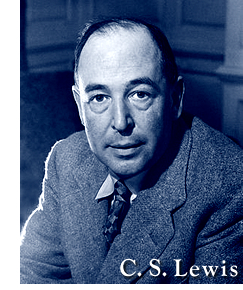
C.S. Lewis Daily – Today’s Reading – On freedom (and predestination)


It will be too late then to choose your side. There is no use saying you choose to lie down when it has become impossible to stand up. That will not be the time for choosing: it will be the time when we discover which side we really have chosen, whether we realised it before or not. Now, today, this moment, is our chance to choose the right side. God is holding back to give us that chance. It will not last forever. We must take it or leave it.

Every time you make a choice you are turning the central part of you, the part of you that chooses, into something a little different from what it was before. And taking your life as a whole, with all your innumerable choices, all your life long you are slowly turning this central thing either into a heavenly creature or into a hellish creature: either into a creature that is in harmony with God, and with other creatures, and with itself, or else into one that is in a state of war and hatred with God, and with its fellow-creatures, and with itself. To be the one kind of creature is heaven: that is, it is joy and peace and knowledge and power. To be the other means madness, horror, idiocy, rage, impotence, and eternal loneliness. Each of us at each moment is progressing to the one state or the other.

From Mere Christianity

Compiled in Words to Live By

Mere Christianity. Copyright © 1952, C. S. Lewis

Charles Stanley – Recognizing the Voice of God


John 10:3-5, 14-16

Have you ever been in a car with someone who is looking for a specific broadcast on the radio? While constantly adjusting the frequency, he cocks his ears and listens carefully. Station after station is rejected until he hears the familiar voice he’s been seeking.

In our Christian life, we know the importance of recognizing God’s voice and tuning others out. When making decisions, we want to be sure we hear the right Person. The Bible assures us that as believers, we can distinguish God’s voice from all others (John 10:27).

What are some of the conditions for recognizing His voice?

  1. Be in range. The Lord’s voice is heard through Scripture. Take time to reconnect with God through His Word. Let the Holy Spirit bring to mind the truths related to your situation.
  2. Be tuned to the right station. God always speaks words that are consistent with Scripture—He will never contradict it. Compare what you are hearing with His Word, and seek godly advice to be sure you have the whole counsel of God.
  3. Be willing to make the necessary adjustments. Sometimes what God says conflicts with what seems logical to human reasoning. Or, it might clash with our fleshly desires. It can be tempting to dismiss a voice that disagrees with our preconceived ideas, but God’s children need to align themselves with His directions regardless.

Our Savior is calling; how easily do you recognize His voice? To know His voice better, spend more time in His Word. Today is a good time to start.

Bible in a Year: Psalms 112-118

Our Daily Bread — Fiery Conversation


Read: James 3:2-10

Bible in a Year: Job 22-24; Acts 11

Let your speech always be with grace, seasoned with salt. —Colossians 4:6

Where I come from in northern Ghana, bush fires are regular occurrences in the dry season between December and March. I’ve witnessed many acres of farmland set ablaze when the winds carried tiny embers from fireplaces or from cigarette butts carelessly thrown by the roadside. With the dry grassland vegetation, all that is needed to start a devastating fire is a little spark.

That is how James describes the tongue, calling it “a world of evil among the parts of the body. It corrupts the whole body, sets the whole course of one’s life on fire, and is itself set on fire by hell” (James 3:6 niv). A false statement made here or backbiting there, a vicious remark somewhere else, and relationships are destroyed. “The words of the reckless pierce like swords,” says Proverbs 12:18, “but the tongue of the wise brings healing” (niv). Just as fire has both destructive and useful elements, so “death and life are in the power of the tongue” (18:21).

For conversation that reflects God’s presence in us and pleases Him, let it “always be with grace” (Col. 4:6). When expressing our opinions during disagreements, let’s ask God to help us choose wholesome language that brings honor to Him. —Lawrence Darmani

Guide my conversation today, Lord. May the words I choose bless and encourage others and build them up rather than tear them down. May You be pleased with what You hear.

Anger can make us speak our mind when we should be minding our speech.

INSIGHT: The book of James is often referred to as “the Proverbs of the New Testament.” The emphasis on wisdom and behavior throughout its five brief chapters makes the comparison understandable. James’s well-known warning about the explosive threat hiding behind our lips is sandwiched between verses about the relationship between faith and deeds (2:14-26) and between wisdom and deeds (3:13-18). It seems that James is suggesting that faith and wisdom are both significantly demonstrated in our ability to control our tongue. In other words, our speech puts our faith and our wisdom on display for everyone to see.

Ravi Zacharias Ministry –  Spaghetti Monsters and One Less God


Among atheist advocates, it has become fashionable to dismiss theism with the mantra that unbelievers, like theists, are atheist with regard to a host of entities considered to be divine at sundry times throughout history. Atheists, we are told, merely acknowledge one less God than theists. If believers understood why they reject Zeus, the argument goes, they would understand why atheists reject their God.

Unfortunately, dismissing theism on such grounds betrays a paltry acquaintance with the very idea of God, let alone the God revealed in the Bible. It is true that many concepts of God present us with entities that are nothing more than glorified human beings. But anyone who is familiar with the relevant religious and philosophical literature on the subject does not need to be told that such untutored notions of God are just pointless red herrings. Popular level atheism may be fodder for invigorating debates on the Internet, but it has little, if anything at all, to do with God.

Take, for instance, the idea of God defended by such a prominent ancient philosopher as Aristotle. Whereas Zeus and his associates held sway at the popular level, David Conway notes that Aristotle defended a God who was unchanging, immaterial, all-powerful, omniscient and indivisible; a God who possessed “perfect goodness and necessary existence.”(1) That is a striking parallel to the God worshipped in the major monotheistic religions of the world. Even among the so-called animistic religions, it is a mistake to think that the concept of God is limited to spirits in natural objects and events, even in cases where the latter are venerated. As Timothy Tennent notes, adherents of these religions acknowledge a being who is the ground of all being.(2)

God is not one being among other beings; God is being itself. In philosophical parlance, God exists necessarily—God cannot not exist! Every other entity finds the reason for its existence in God. Spaghetti monsters and teapots in orbit are material objects that would stand in need of explanation, even if they really did exist, since they do not exist necessarily. But we can also dismiss such examples precisely because we know enough about spaghetti and teapots to know what it would take to get them to play the roles detractors of faith in God assign to them. To say they are infinitely under qualified is a gross understatement.

But not only is God the ground of Being and the reason everything else exists, the Bible tells us that, ultimately, reality is personal. For God, the Being from whom all things came, exists as a Trinity—three Persons in One Being. These truths about God—God’s necessary existence as the grounding of all of reality, the relationships that exist within the Trinity and God’s personal nature—are profound truths about the glory and majesty of God. Only the Christian faith can countenance them all. Thus far from being a problem for Christianity, the Trinity solves a major difficulty for humanity by providing us with a coherent explanation for our origin and purpose; both in this life and in the life to come. The Bible also tells us that human beings are made in the image of God. Our powerful relational capacities are therefore not accidental: they are a reflection of reality at its very core. As a matter of fact, our capacity for relationship can only be fully satisfied when we are properly related to God.

Religious systems that conceive of God as a personal Being who nevertheless exists as a single entity cannot sufficiently account for the fullness of God since such a God lacks anyone with whom he can be in relationship. For example, such a God would have to create out of the necessity to actualize his love. But within the Trinity, there is the eternal unity and community sustained by the self-sufficiency of God.

A common objection to the claim that God, who is love, would not have had someone to love before He created is to ask how God was able to actualize attributes such as anger and mercy, which are also relational in nature, before creation. If mercy can exist in God as a latent capacity sans creation, why can’t love exist in the same way? Once again, there is a serious misconception of the nature of perfect relationships lurking in this objection. Attributes such as anger and mercy are not necessary to the nature of God. They are contingent upon there being imperfect, sentient creatures. They are by definition absent in a perfect relationship, such as the one that exists among the members of the Trinity. They will one day be eternally absent from those who choose to follow God’s way, for “when he appears we shall be like him, because we shall see him as he is” (1 John 3:2b). No criticism of faith in God that fails to take into account the fullness of God and the perfection promised those from whom sin will be eternally purged touches the essence of the Gospel message.

J.M. Njoroge is a member of the speaking team at Ravi Zacharias International Ministries in Atlanta, Georgia.

(1) Quoted by Antony Flew in There is a God: How the World’s Most Notorious Atheist Changed His Mind (San Francisco: HarperOne, 2008), 92.

(2) Timothy Tennent, “African Traditional Religion in Practice,” https://www.biblicaltraining.org, accessed June 23, 2015.

Alistair Begg – Fear Not


Our heart is glad in him. Psalm 33:21

Blessed is the fact that Christians can rejoice even in the deepest distress; although trouble may surround them, they still sing; and like many birds, they sing best in their cages. The waves may roll over them, but their souls soon rise to the surface and see the light of God’s countenance; they have a buoyancy about them that keeps their head always above the water and helps them to sing amid the tempest, “God is with me still.”

To whom shall the glory be given? Oh, to Jesus-it is all by Jesus. Trouble does not necessarily bring consolation with it to the believer, but the presence of the Son of God with him in the fiery furnace fills his heart with joy. He is sick and suffering, but Jesus visits him and makes his bed for him. He is dying, and the cold, chilly waters of Jordan are gathering about him up to the neck, but Jesus puts His arms around him and cries, “Fear not, beloved; to die is to be blessed; the waters of death have their fountainhead in heaven; they are not bitter-they are sweet as honey, for they flow from the throne of God.”

As the departing saint wades through the stream, and the billows gather around him, and heart and flesh fail him, the same voice sounds in his ears: “Fear not, for I am with you; be not dismayed, for I am your God.”1 As he nears the borders of the infinite unknown and is almost frightened to enter the realm of shades, Jesus says, “Fear not, little flock, for it is your Father’s good pleasure to give you the kingdom.”2 Thus strengthened and consoled, the believer is not afraid to die; no, he is even willing to depart, for since he has seen Jesus as the morning star, he longs to gaze upon Him as the sun in his strength. Truly, the presence of Jesus is all the heaven we desire. He is at once

The glory of our brightest days;

The comfort of our nights.

1) Isaiah 41:10

2) Luke 12:32

Devotional material is taken from “Morning and Evening,” written by C.H. Spurgeon, revised and updated by Alistair Begg.

Charles Spurgeon – Personal service


“O Lord, truly I am thy servant; I am thy servant, and the son of thine handmaid: thou hast loosed my bonds.” Psalm 116:16

Suggested Further Reading: Romans 6:15-23

A liberty to be holy is a grander liberty than a licence to be sinful. A liberty to be conscientious; a liberty to know forgiven sin; a liberty to trample upon conquered lusts, this is an infinitely wider liberty than that which would permit me to be the comfortable slave of sin, and yet indulge the elusive hope that I may one day enter the kingdom of heaven. The largest expressions that can ever be used by the boldest minister of free grace, cannot here be exaggerations. Luther may exhaust his thunders, and Calvin may spend his logic, but after all the grand things that have been spoken about the liberty wherewith Christ has made us free, we are freer than those men knew. Free as the very air he breathes is the Christian, if he lives up to his privileges. If he is in bondage at all, it is because he has not as yet yielded his spirit fully to the redeeming and emancipating influence of the gospel of the Lord Jesus Christ. In the fullest and widest sense therefore, the believer may cry, “Thou has loosed my bonds.” Nor is this liberty merely consistent with the profoundest and most reverent service, but the service is, indeed, a main characteristic of the exalted freedom. “Truly I am thy servant; I am thy servant and the son of thine handmaid.” This does not conflict with the sentence that follows it,—“Thou hast loosed my bonds.” This fact of my being God’s servant is to me a proof and evidence, and a delightful fruit and effect of my having had my bonds loosed by the great emancipator, the Lord Jesus Christ. Service then, as well as liberty!

For meditation: The Christian has been freed from being a slave of sin in order to become a servant of God. Does your lifestyle illustrate this (Galatians 5:13)?

Sermon no. 312
2 July (Preached 3 May 1860)

John MacArthur – Coming to Christ


“Coming to [Christ] as to a living stone” (1 Pet. 2:4).

Jesus Christ is the source of every spiritual privilege.

Often Christians speak of salvation as “coming to Christ.” That’s an accurate, biblical description, for Jesus Himself said, “Come to Me, all who are weary and heavy-laden, and I will give you rest” (Matt. 11:28); “I am the bread of life; he who comes to Me shall not hunger, and he who believes in Me shall never thirst” (John 6:35); “If any man is thirsty, let him come to Me and drink” (John 7:37). Those are metaphors for salvation.

Coming to Christ initiates all your spiritual privileges because in Him God “granted to us everything pertaining to life and godliness” (2 Pet. 1:3). Paul said, “Blessed be the God and Father of our Lord Jesus Christ, who has blessed us with every spiritual blessing in the heavenly places in Christ” (Eph. 1:3).

The Greek word translated “coming” in 1 Peter 2:4 conveys more than initially turning to Christ for salvation. It implies remaining with Him. In the Greek translation of the Old Testament it was used of those who drew near to God for ongoing worship. It was also used of Gentile proselytes—those who chose to identify themselves with God’s people.

When you came to Christ, a permanent relationship of intimate personal communion was established. Before that, you were rebellious toward God, without hope, and alienated from God’s promises. Now you’ve been born again to a living hope, you abide in Him and in His Word, and you have wonderful spiritual privileges.

Indeed, you are a privileged person, and the greatest of those privileges is your personal relationship with Christ Himself. Continue to draw near to Him today through prayer and worship.

Suggestions for Prayer

Tell Jesus how much you love Him and how you want your relationship with Him to be all it should be.

For Further Study

Read Ephesians 2:1-22.

  • How did Paul describe our spiritual condition before salvation?
  • How are sinners reconciled to God?
  • What analogy did Paul use to describe our relationship as Christians to Jesus Christ?

Joyce Meyer – Freedom of a Child


Then little children were brought to Jesus, that He might put His hands on them and pray; but the disciples rebuked those who brought them. But He said, Leave the children alone! Allow the little ones to come to Me, and do not forbid or restrain or hinder them, for of such [as these] is the kingdom of heaven composed. Matthew 19:13–14

Children seem to be able to make a game out of anything. They quickly adjust, don’t have a problem letting other children be different than they are, and are always exploring something new. They are amazed by everything!

Oswald Chambers wrote in My Utmost for His Highest: “The freedom after sanctification is the freedom of a child, the things that used to keep the life pinned down are gone.” We definitely need to watch and study children and obey the command of Jesus to be more like them (see Matthew 18:3). It is something we have to do on purpose as we get older. We all have to grow up and be responsible, but we don’t have to stop enjoying ourselves and life.

Don’t let the world steal your confidence. Remember that you have been created on purpose by the hand of God. He has a special, unique, wonderful plan for you. Go for it! Don’t shrink back, conform, or live in fear.

Lord, I can’t be a child again, but I can have the freedom and the wonder of a child. I come to You as a child now, and I ask You to renew a childlike faith in me. Amen.