Tag Archives: Joy

Campus Crusade for Christ; Bill Bright – Finished with Sin


“He personally carried the load of our sins in His own body when He died on the cross, so that we can be finished with sin and live a good life from now on. For his wounds have healed ours!” (1 Peter 2:24).

Following one of my messages a young woman in her early 20’s asked for counsel. She was weighted down with her guilt and sin. In fact, she was so distraught that she would not look me in the eye. All the while I was counseling her she was under such deep conviction that all I could see was the top of her head.

I asked, “Do you believe that Jesus Christ is the Son of God?” She nodded in the affirmative. “Do you believe that He died on the cross for your sins?” Again she responded affirmatively. “Would you like to invite Him into your life and ask Him to cleanse you with His precious blood, which He shed on the cross for your sins, and make you a new creature in Christ?” Again, she nodded. Together we knelt in prayer and through her sobs she surrendered to Christ, acknowledging the wickedness and filth of a life of gross immorality. She confessed to God her disobedience of her father and mother whose hearts had been broken by her prodigal ways.

After some time on our knees it was obvious that God had touched her, had forgiven and cleansed her. The sobbing had passed and now she was at peace. The Spirit within me bore witness that she had become a new creature in Christ. As we stood to our feet, she looked at me with her eyes still glistening with tears and her face radiant with joy. She now knew the reality of our promise for today. Jesus had taken the load of her sins on His own body and she was cleansed. With His wounds He had healed her and now she could live a life for the glory of God.

Who, but Jesus, could work such a miracle? Is it any wonder that those who know Him in this way want, like apostle Paul, to tell everyone who will listen about Him? He alone can forgive our sin and liberate us from the darkness and gloom of Satan’s kingdom.

Bible Reading: I Peter 2:21-25

TODAY’S ACTION POINT: With great joy and deep gratitude I will praise the Lord that He has taken upon Himself the load of my sin and through His death on the cross has paid the penalty which I could never have paid through my own effort. As an expression of my gratitude and through the enabling of the Holy Spirit, I commit myself to live a good life, a supernatural life that will glorify my God and Savior.

Presidential Prayer Team; J.R. – Authority Abuse


When Romanian dictator Nicolae Ceausescu began a speech before 80,000 of his “supporters” on December 21, 1989, he had no way of knowing he was four days from being executed by firing squad. The ruthless communist leader had carefully staged the event, as always, with strict instructions to the crowd as to where they would stand, and when they would cheer and lift up the signs bearing his image. But the throng, primed for revolution, began booing and jeering. The state-run video feed of Ceausescu’s utter shock and dismay to realize he was being publicly insulted is among the most iconic in history.

Now therefore, O kings, be wise; be warned, O rulers of the earth.

Psalm 2:10

“Be wise; be warned” is the message of Scripture to kings. They should, Psalm 2:11 says, “serve the Lord with fear, and rejoice with trembling.” Power over people is limited to what God allows…and when a leader abuses his authority, the end can come with devastating swiftness.

As you celebrate your freedom in the coming days, ask God to help America’s leaders remember that God’s blessings upon the nation can be withdrawn – and surely will be – if those in positions of authority do not serve the Lord. Pray that His name will be lifted up today and always!

Recommended Reading: Deuteronomy 11:13-28

Greg Laurie – It Starts with the Family


“Honor your father and your mother, that your days may be long upon the land which the Lord your God is giving you.”—Exodus 20:12

Few things in life can bring us as much pleasure or pain as our families. When things are working well in the family, it’s great. When things are not going so well, it’s tough. Parents have tension with children. Children have tension with parents. Husbands have tension with wives. Wives have tension with husbands. Then there are the in-laws. Families are complex. But God established the family.

In the Ten Commandments, before a word is said about how we treat one another, God starts with the family: “Honor your father and your mother, that your days may be long upon the land which the Lord your God is giving you” (Exodus 20:12).

In Genesis we have God bringing Adam and Eve together. He started with the family. He created the family. And He—and He alone—defines the family. God loves the family.

There is only one picture that God gives to a lost world to show His love for the church and the church’s love for Him. That is marriage. He says, “Husbands, love your wives, just as Christ also loved the church and gave Himself for her” (Ephesians 5:25), and “Wives, submit to your own husbands, as to the Lord” (verse 22).

Effectively, here is what God is saying: “Look at this Christian couple right here. See the way that husband loves his wife? That is how I love this church, My people. See how that wife loves her husband? That is how My church loves Me.”

Because of that, when a Christian family starts to unravel and when Christian people get divorced, that is devastating in many ways to the testimony of believers in a given community.

It has been said that a family can survive without a nation, but a nation cannot survive without the family.

Max Lucado – God’s Transforming Power

Family pain is often the deepest pain because it was inflicted so early, and because it involves people who should have been trustworthy. You were too young to process the mistreatment. You didn’t know how to defend yourself. Besides the perpetrators of your pain were so large. Your dad, mom, uncle, big brother—they towered over you, usually in size, always in rank. When they judged you falsely, you believed them. All this time you’ve been operating on faulty data. “You’re stupid. . .slow. . .dumb, like your daddy.

Decades later these voices of defeat still echo in your subconscious. But they don’t have to! Romans 12:2 says, “Let God transform you into a new person by changing the way you think.” And 1st Corinthians 13:11 adds, “Let Him replace childish thinking with mature truth!” You are not who they said you were. You are God’s child!

From You’ll Get Through This


Night Light for Couples – Still the One


We’ve talked this week about the brevity of life and the importance of making the most of the time the Lord has given us. Our journey as marital partners will someday come to an end. First one of us, and then the other, will stand before God, give an account of our days, and begin our eternal journey. Jim and I certainly look forward to that heavenly reward, but we are also enjoying our time together on this earth. Jim has recovered fully from a heart attack and a stroke, either of which could have taken his life. Those experiences have made our relationship all the sweeter and more precious. I will always thank God for bringing us together in a marriage that has continued now for more than four decades.

One of the most delightful experiences during that time came in a Marriage Encounter seminar we participated in years ago. I knew that Jim loved and needed me during the early years of our marriage, but I had begun to quietly wonder if I still held the most prominent place in his heart. On the final day of the seminar, without discussing it ahead of time, we wrote each other letters addressing just this issue. I’ll never forget the moment we came together and shared these thoughts.

Jim concluded his letter to me, in part, with these words:

I love you, S. M. D. (Remember the monogrammed shirt?) I love the girl who believed in me before I believed in myself. I love the girl who never complained about huge school bills and books and hot apartments and rented junky furniture and no vacations and humble little Volkswagens. You have been with me—encouraging me, loving me, and supporting me since August 27, 1960. And the status you have given me in our home is beyond what I have deserved.

If we love one another, God lives in us and his love is made complete in us. 1 John 4:12

So why do I want to go on living? It’s because I have you to take the journey with. Otherwise, why make the trip? The half that lies ahead promises to be tougher than the years behind us. Autumn is coming. Even now, I can feel a little nip in the air—and I try not to look at a distant, lone cloud that passes near the horizon. With whom, then, will I spend that final season of my life?

None but you, Shirls. The only joy of the future will be in experiencing it as I have the past twenty‐one years—hand‐in‐hand with the one I love, a young miss named Shirley Deere, who gave me everything she had—including her heart. Thank you, babe, for making this journey with me. Let’s finish it— together!

May the Lord continually sustain and enrich your marriage. God’s blessings to you both… and good night.

– Shirley M Dobson

From Night Light For Couples, by Dr. James & Shirley Dobson

Charles Stanley – When God Speaks


1 Samuel 3:1-21

The story of Samuel and how he learned to recognize God’s voice provides an important lesson for all believers. The Bible tells us that in Samuel’s day, communication from the Lord—by word or vision—was rare (l Sam. 3:l). At the same time, we are informed in verse 12 that God had been saying a lot to the priest Eli about his family and their evil conduct. It appears, however, that there had been very little listening.

Fortunately, young Samuel put an end to all that. At first he, too, was unable to recognize God’s voice. Even though he was immersed in religious activity, the Bible tells us that the word of the Lord had not yet been revealed to him (v. 7). When God first spoke to Samuel, the boy had to appeal to his religious superiors before he could understand what was going on.

What this suggests is that when we think we hear God’s voice, we shouldn’t hesitate to discuss it with our spiritual leaders or other mature Christians. Prayer and wise consultation of this sort can help recognize who really is speaking. The devil seeks to imitate the voice of God, so we must carefully discern the source of the message.

Once we hear from God and get our bearings spiritually, we must not shrink from testifying to what we heard. At first Samuel was fearful about sharing the message with Eli, but he finally did so. And remember, we should never ask God to speak if we are not prepared to act on the message we hear.

Bible in a Year: Psalms 107-111

Our Daily Bread — Raise Your Hand


Read: John 4:7-15,28-30

Bible in a Year: Job 20-21; Acts 10:24-48

God did not send His Son into the world to condemn the world, but that the world through Him might be saved. —John 3:17

The St. Olaf Choir from Northfield, Minnesota, is renowned for making beautiful music. One reason for its excellence is the selection process. Applicants are chosen based not only on how well they sing but also on how they sound as part of the whole. Another reason is that all members agree to make the choir their first priority and commit to a rigorous rehearsal and performance schedule.

One of the things that intrigues me the most about this choir is what happens during rehearsals. Whenever members make a mistake, they raise their hand. Instead of trying to hide the blunder, they call attention to it! This allows the conductor to help each singer learn the difficult part, and it increases the likelihood of a flawless performance.

I think this is the kind of community Jesus was establishing when He told Nicodemus that God sent His Son into the world to save it, not condemn it (John 3:17). Shortly after this conversation, Jesus encountered a Samaritan woman at the public well. He made it easy for her to admit failure by promising her a better way of life where she could enjoy His forgiveness (John 4).

As members of Christ’s body on Earth, we should not fear admitting our wrongs but welcome it as an opportunity to together experience and rejoice in the forgiveness of God. —Julie Ackerman Link

Lord, it’s our tendency to hide our sins and flaws. May we come to You in full honesty, understanding that we are loved and forgiven by You.For further help in understanding the gift of forgiveness, read The Forgiveness of God at discoveryseries.org/q0602

We can’t put our sins behind us until we are ready to face them.

INSIGHT: Jesus crossed racial, cultural, theological, gender, and social boundaries when He spoke to the woman at the well. Samaritans were the descendants of the Israelites who intermarried with the Assyrians. Because of this, Samaritan customs and theology often differed from those of the Jews. The Samaritan woman was also an outcast among her own people for her failed relationships and immoral behavior. What a wonderful picture of the Savior reaching beyond all barriers with His love.


Ravi Zacharias Ministry –   A Servant Like This


For his fluency with words and unrivaled poetic voice, Isaiah has been called the “Shakespeare of the prophets.” His words are assuredly lyrical; they were also political and prophetic, enduring well beyond his life.

The 53rd chapter of the book of Isaiah offers the image of a servant who embodies a severe faithfulness despite unjust opposition. “He was oppressed and he was afflicted,” writes Isaiah, “but he did not open his mouth” (53:7a). The prophet describes a sufferer of flint-like submission in the face of extreme violence. “He was led like a lamb to the slaughter, and as a sheep before her shearers is silent, so he did not open his mouth” (v.7b). He describes a servant who is crushed and anguished, stricken, and yet somehow satisfied. “As a result of the anguish of his soul,” writes Isaiah, “he will see it and be satisfied; by his knowledge the righteous one, my servant, will justify the many, and he will bear their iniquities” (v.11). Whether Isaiah had in mind someone who fit the description or merely longed to see God’s words come to fruition, the prophet offers an image of one who changes all the rules.

Isaiah utters words abundantly verified in Jesus Christ. Almost 700 years after Isaiah’s description of the suffering servant, Jesus was carrying sorrows and curing infirmities; he was suffering rejection, hatred, and affliction (v.4). He was despised and brushed aside without regard (v.3). He was taken away by a perversion of justice (v.8). He was assigned a grave with the wicked (v.9). Yet he set his face “like a flint” upon the will of God (Isaiah 50:7, Luke 9:51). He was cut off from the land of the living, so that many would live (Isaiah 53:8b).

Whether you hear it as an exile in ancient Israel, a tax collector in 1st century Jerusalem, or cultural observer in contemporary times, Isaiah’s description of the suffering servant is one that warrants contemplation. Even Isaiah, out of whose mouth the description emerged, was compelled to ask with bewilderment: “Who shall consider it?” Who can imagine a man in such circumstances? Who knows what to do with a servant like this? “Who has considered that he was cut off from the land of the living for the transgression of my people, to whom the stroke was due?” (v.8a). So asks the prophet who would not live to see the suffering servant he described. How much more so should we who see the face of the prophecy consider this description of Christ?

Isaiah 53 describes a Christ oppressed and afflicted but silent, even dumb, in the face of his oppressors. Like a sheep submitting to its shearers, he did not object; he didn’t even open his mouth. He was taken from justice and afflicted by people who seemed to hold some real sense of power over him. Yet he did it all willingly and silently, as if he were allowing them the power in the first place. He was a victim of violence though he had committed no violence himself. He was categorized as wicked though a deceitful word was never on his lips. Who is able to fathom it? Isaiah seems at once to ask both a rhetorical question and a pessimistic one. Will anyone consider it? Is anyone really catching all of this? Who is really in control here—the silent one or the ones who think they are silencing him?

This metaphor of the submissive sheep is pervasive in Isaiah’s description, immediately hastening images of sacrifice, blood, and atonement. Like a lamb, the sufferer was led to slaughter. In the case of most sacrificial animals, they go unsuspectingly; they follow without much thought. But this is clearly not the case in this metaphor. Isaiah describes a man who is led and killed, but he does not go unknowingly. While it may be natural in certain conditions for a man to follow people who end up harming him, it would not be natural for that man to follow silently in the midst of harm. A ewe might not cry with its shearers, but it would certainly bleat if you hit it repeatedly. This lamb went to his death submitting to those who led him, but it was far from unintentional. He followed with a depth of thought we have difficulty considering.

In fact, there is something altogether silencing about the one who remains still and submissive while the ultimate injustice weighs on his shoulders. Isaiah describes a servant who seems immobilized and powerless. It is the unnamed crowd in each verse that seems to be in control. It is they who afflict him, oppress him, and strike him. It is they who lead him to the slaughter and put him in a grave. Yet is it not entirely significant that this nameless crowd, which seems to hold all the power, remains at least structurally inconsequential? There is no real description offered of the oppressors in the entire chapter. “They” did not earn the subject of more than one sentence, perhaps because “they” are not the point. He is.

It is still ours to consider: What if Jesus chose this path for himself? What if he chose to remain silent, to be weak in our nameless hands, to pour himself out even unto death? What if he chose to take on the violence that would bring us peace? What do we do with a servant like this?

Jill Carattini is managing editor of A Slice of Infinity at Ravi Zacharias International Ministries in Atlanta, Georgia.

Alistair Begg – An Abiding Stream


It shall continue in summer as in winter. Zechariah 14:8

The streams of living water that flow from Jerusalem are not dried up by the parching heats of sultry midsummer any more than they are frozen by the cold winds of blustering winter.

Rejoice, O my soul, that you are spared to testify of the faithfulness of the Lord. The seasons change, and you change, but your Lord abides evermore the same, and the streams of His love are as deep, as broad, and as full as ever. The heats of business cares and scorching trials make me need the cooling influences of the river of His grace; I may go at once and drink to the full from the inexhaustible fountain, for in summer and in winter it pours forth its flood. The upper springs are never scanty, and blessed be the name of the Lord, the lower springs cannot fail either.

Elijah found Cherith dried up, but Jehovah was still the same God of providence. Job said his brethren were like deceitful brooks, but he found his God an overflowing river of consolation. The Nile is the great confidence of Egypt, but its floods are variable; our Lord is evermore the same. By turning the course of the Euphrates, Cyrus took the city of Babylon; but no power, human or infernal, can divert the current of divine grace.

The tracks of ancient rivers have been found all dry and desolate, but the streams that take their rise on the mountains of divine sovereignty and infinite love shall ever be full to the brim. Generations melt away, but the course of grace is unaltered. The river of God may sing with greater truth than the brook in the poem–

Men may come, and men may go,

But I go on forever.

How happy you are, my soul, to be led beside such still waters! Never wander to other streams, lest you hear the Lord’s rebuke, “What do you gain by going to Egypt to drink the waters of the Nile?”1

1) Jeremiah 2:18

Devotional material is taken from “Morning and Evening,” written by C.H. Spurgeon, revised and updated by Alistair Begg.

Charles Spurgeon – The necessity of increased faith


“And the apostles said unto the Lord, Increase our faith.” Luke 17:5

Suggested Further Reading: Romans 4:13-25

The apostles said to the Lord, “Increase our faith!” They went to the right person. They did not say to themselves, “I will increase my faith;” they did not cry to the minister, “Preach a comforting sermon, and increase my faith;” they did not say, “I will read such-and-such a book, and that will increase my faith.” No, they said to the Lord, “Increase our faith.” Faith’s author can alone increase it. I could inflate your faith till it turned into presumption, but I could not make it grow. It is God’s work to feed faith, as well as to give it life at first; and if any of you desire to have a growing faith, go and take your burden this morning to God’s throne, crying, “Lord, increase our faith!” If you feel that your troubles have been increased, go to the Lord, and say, “Increase our faith!” If your money is accumulating, go to the Lord, and say, “Increase our faith;” for you will want more faith as you get more prosperity. If your property is diminishing, go to him, and say, “Increase our faith,” so that what you lose in one scale you may gain in the other. Are you sickly and full of pain this morning? Go to your Master, and say, “Increase our faith, so that I may not be impatient, but be able to bear it well.” Are you tired and weary? Go and supplicate, “Increase our faith!” Have you little faith? Take it to God, and he will turn it into great faith. There is no hot-house for growing tender plants in like a house that is within the curtains—the tabernacle of God, where his glory dwells.

For meditation: The Christian has no need to undertake pilgrimages and to seek out so-called holy men to increase his faith. The expert in increasing faith is the very one in whom we have faith, who lives in us by his Spirit (Hebrews 12:2).

Sermon no. 32

1 July (1855)

John MacArthur – Enjoying Spiritual Privileges


“Coming to Him as to a living stone . . . you also, as living stones, are being built up as a spiritual house for a holy priesthood. . . . You are a chosen race, a royal priesthood, a holy nation, a people for God’s own possession. . . . You are the people of God. . . . You have received mercy” (1 Pet. 2:4-10).

You have enormous privileges in Christ.

A university student once confessed to a pastor, “I’ve come to the conclusion that I don’t believe in God.” “I see,” the pastor replied. “Please tell me about the God you don’t believe in.” The student proceeded to describe a vengeful, unfair, arbitrary cosmic ogre who delighted in watching earthlings stumble through life in search of meaning and direction. After listening to that portrayal of God, the pastor wisely replied, “I don’t believe in that God either.”

Like that student, most people have a warped view of God because they can’t see beyond their circumstances and the conditions that plague our fallen world. Their distorted world view keeps them from understanding God’s goodness and mercy. But we as believers understand because we see beyond the physical realm and experience His grace and kindness in many ways.

Scripture speaks pointedly about the duties and responsibilities of Christians, but all of that is balanced by the rights and benefits that we have in Christ. In writing to Christians who were experiencing severe persecution, the apostle Peter reminded them of their privileges and called them to praise God for His abundant grace (1 Pet. 2:9). That is your calling as well.

This month we will consider many of those privileges, including your union with Christ, access to God, priestly role, spiritual security, election, dominion, and inheritance. The implications of them all are staggering and should be a source of great joy and thanksgiving as you study them from God’s Word.

Suggestions for Prayer

  • Thank God for the privilege of being His child.
  • Pray that He will strengthen and encourage you with the truths you learn from these studies.
  • Regardless of your circumstances, learn to focus on God’s glory and grace, allowing them continually to fill your heart with praise and worship.

For Further Study

Read 1 Peter 1:3-9 and 2:4-10. Make a list of the spiritual privileges Peter mentions.

Joyce Meyer – Make the Sacrifice


Through Him, therefore, let us constantly and at all times offer up to God a sacrifice of praise, which is the fruit of lips that thankfully acknowledge and confess and glorify His name. Hebrews 13:15

We often interpret the “sacrifice of praise,” mentioned in the verse for today, to mean nothing more than praising God when we do not feel like praising Him, and that can certainly be a type of sacrifice. But, I believe the writer of Hebrews is actually making reference to the Old Testament sacrificial system that required the blood of animals to atone for people’s sins.

We, however, live in New Testament times, when we no longer need to put slain sheep and goats and bulls on an altar. Instead, the sacrifice—the offering—God wants from us today is to hear right words coming out of our mouths. Just as the smoke and the aroma of the animal sacrifices went up before His throne under the Old Covenant, the praise from our hearts rises up as a sacrifice before Him today. In Hebrews 13:15, the Lord was really saying, “The sacrifice I want now is the fruit of your lips thankfully acknowledging Me.”

We need to apply this scripture to our everyday lives, making sure we speak God’s praises every chance we get. We need to tell people about all the great things He’s doing for us; we need to thank Him and tell Him we love Him. In our hearts and with our mouths, we should say continually, “Lord, I love You. Thank You so much for everything You’re doing in my life. Lord, I praise You for taking care of everything that concerns me today.” We need to be people of praise, acknowledging God “constantly and at all times,” continually offering up to Him the sacrifice of praise.

Campus Crusade for Christ; Bill Bright – Power for Healing


“Is anyone sick? He should call for the elders of the church and they should pray over him and pour oil upon him, calling on the Lord to heal him. And their prayer, if offered in faith, will make him well; and if his sickness was caused by some sin, the Lord will forgive him” (James 5:14,15).

Many years ago the principal of a missionary school in Hong Kong asked me to address the student body the following day. He and others involved in the school had prayed for years for revival to come to the student body and faculty. “God has impressed me,” he said, “that you are to be His instrument for that revival.” God encouraged my heart and gave me such a sense of great excitement and anticipation that I could hardly go to sleep that night.

But early in the morning, some kind of serious amoebic illness struck me and I could hardly get out of bed. Believing that God was going to use me in spite of my illness, though, I claimed His supernatural power and was dressed and ready when the principal arrived to take me to the anticipated meeting. A famous Asian evangelist who, for several years, had been ill with a mysterious disease that even the finest medical specialists were unable to diagnose had also gotten out of his sickbed to be my interpreter.

Here we were, two very sick men delivering a message on revival. However, I had hardly spoken more than a sentence or two when I felt the supernatural healing touch of God upon me. The power was reflected in my message and God did send revival, not only to the students and faculty, but also to this speaker.

Later, as we rejoiced together, the principal asked if I would join in praying for my interpreter who was still very ill. We gathered around and laid hands on him – the principal, his wife and I. By faith we claimed his healing and I went on my way. Within days the man was miraculously restored to the fullness of health and within weeks on his first evangelistic speaking tour in several years, proclaiming the good news of God’s love and forgiveness through Jesus Christ.

Unfortunately, the major denominations have left the emphasis on healing to some who have prostituted this great truth, cheapened it, and made it a laughing matter, not only among evangelical believers, but in the secular world at large. Though many for whom we pray are not healed – else no one would die – we must remember that it is a privilege and power available to believers that we can claim for the glory of our risen Savior.

Bible Reading: James 5:13-19

TODAY’S ACTION POINT: I will pray for those who are ill and claim God’s supernatural healing power in their behalf.

Presidential Prayer Team; P.G. – Freedom’s Charge


America’s freedoms are under attack – that’s the warning given by some of the candidates for the next presidential election. The Bill of Rights guarantees certain freedoms and liberties to all Americans, and without these first ten amendments to the nation’s Constitution, some say, the nation would rapidly descend into tyranny.

For you alone, O Lord, make me dwell in safety.

Psalm 4:8

Liberty, however, always comes with conditions: you must treasure it, defend it and use it responsibly. In Galatians, Paul urges Christians not to use liberty as a license. It does not mean that everyone can do what is right in his own eyes (as they did in Judges 21:25), as that would lead to eventual anarchy. “‘All things are lawful,’ but not all things are helpful. ‘All things are lawful,’ but not all things build up,” is the caution of I Corinthians 10:23.

As Peter Marshall, former chaplain of the U.S. Senate, once prayed before that chamber, “Teach us that liberty is not only to be loved but also to be lived. Help us see that our liberty is not the right to do as we please, but the opportunity to please to do what is right.” Make that your own prayer today – and your intercession for those who are officially charged with protecting America’s freedoms.

Recommended Reading: Galatians 5:1-14

Greg Laurie – Let Him Lift That Load


For the person who keeps all of the laws except one is as guilty as a person who has broken all of God’s laws.—James 2:10

The Ten Commandments were not given to make us holy; they were given to show us that we are not holy. The commandments were given to show us that we need Jesus. The Bible says they are like a schoolmaster (kind of an old King James word). The idea is that of a disciplinarian. The commandments were given to say, in essence, “You can’t do this on your own.”

They are like a moral mirror. When you look at them, you say, “Uh-oh. I’m not measuring up.” Every one of us has broken the commandments.

Someone may say, “Yeah, that might be true, but I haven’t broken that many. I’ve only broken a couple of them.”

Maybe. Or maybe not. The Bible says, “For the person who keeps all of the laws except one is as guilty as a person who has broken all of God’s laws” (James 2:10). If you have broken even one commandment, it’s enough to keep you from God and to separate you from Him.

The commandments were given to drive us into the open arms of Jesus. That’s why Jesus said, “Come to me, all of you who are weary and carry heavy burdens, and I will give you rest” (Matthew 11:28).

Have you ever been carrying around something that was very heavy and had someone say, “Here, let me take that from you”? That is what Jesus is saying. “Let Me lift that load. Let Me ease your pain. Let Me give you relief. Right now. Come to Me,” He says.

That is the message of what happened at the Cross. He died for our sins and paid the price for every wrong we have ever done. And if we will turn from our sins and believe in Him, then we will be forgiven.

Max Lucado – He Wants Your Heart Whole

God gives us more by going deeper than we ask. He wants not only your whole heart—He wants your heart whole. Why? Hurt people hurt people. Think about it. Why do you fly off the handle? Why do you avoid conflict? Why do you seek to please everyone? Might your tendencies have something to do with an unhealed hurt in your heart? God wants to help you for your sake.

Your family history has some sad chapters. But your history doesn’t have to be your future. The generational garbage can stop here and now.You don’t have to give your kids what your ancestors gave you. Talk to God about the scandals and scoundrels. Invite Him to relive the betrayal with you. The process may take a long time. It may take a lifetime. Difficult for certain. But let God do His work!

From You’ll Get Through This

Night Light for Couples – Last Call


“The great day of the Lord is near— near and coming quickly.” Zephaniah 1:14

Think about the people you love. Have you thanked them recently for what they mean to you? If the Lord called you home this evening, would you feel satisfied that you had told them everything you needed to say? In the last months of my (jcd) mother’s life, she had end‐stage Parkinson’s disease and was unable to communicate or understand us. One day, however, the Lord granted us a reprieve. When Shirley and I visited the nursing home, my mother instantly recognized us, and I was able to thank her for being a good mother, for staying true to Jesus, and for sacrificing to put me through college.

She smiled; she understood. I told her that my father was waiting for her in heaven and that Jesus would say, “Well done! Thou good and faithful servant.” I prayed for her and thanked the Lord for her love in my life. She returned our love, and we said good‐bye.

That was the last rational conversation I had with my mother, and I will always be thankful for those final moments together. In this temporary existence, we must always seize opportunities to communicate soul to soul. Cherish each moment with your partner, family, and friends. Tell them how important they are to you. Above all, live each day so that when the final call comes, Jesus will say, “Well done! Thou good and faithful servant.”

Just between us…

  • Do we tell our loved ones what they mean to us?
  • What would you like to say to me “soul to soul”?
  • Are we ready for the Lord to call us home? What should we do to prepare?

Dear Lord, thank You for my lifetime partner. May we never miss an opportunity to say the words that really count. Help us to live without regrets, always ready for the homeward call of Jesus. Amen.

From Night Light For Couples, by Dr. James & Shirley Dobson

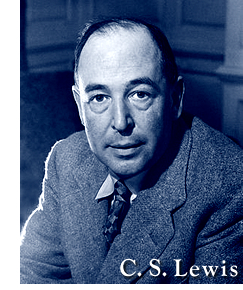
C.S. Lewis Daily – Today’s Reading


[One of the most unpopular of the Christian virtues] is laid down in the Christian rule, ‘Thou shalt love thy neighbour as thyself.’ Because in Christian morals ‘thy neighbour’ includes ‘thy enemy’, and so we come up against this terrible duty of forgiving our enemies.

Every one says forgiveness is a lovely idea, until they have something to forgive, as we had during the war. And then, to mention the subject at all is to be greeted with howls of anger. It is not that people think this too high and difficult a virtue: it is that they think it hateful and contemptible. ‘That sort of talk makes them sick,’ they say. And half of you already want to ask me, ‘I wonder how you’d feel about forgiving the Gestapo if you were a Pole or a Jew?’

So do I. I wonder very much. Just as when Christianity tells me that I must not deny my religion even to save myself from death by torture, I wonder very much what I should do when it came to the point. I am not trying to tell you in this book what I could do—I can do precious little—I am telling you what Christianity is. I did not invent it. And there, right in the middle of it, I find ‘Forgive us our sins as we forgive those that sin against us.’ There is no slightest suggestion that we are offered forgiveness on any other terms.

From Mere Christianity

Compiled in A Year with C.S. Lewis

Charles Stanley – The Decisions That Lead to Contentment


Romans 8:28-39

Think about a circumstance in your life you’d change if you could. Are you frustrated? Worried? Angry? To experience the freedom of contentment in the midst of it—whether a hardship or unfulfilled desire—you must accept the situation as having been allowed by God, even if He didn’t cause it.

In these situations, I often pray, “Lord, I choose to accept this as though it’s coming from You. No matter what I see, I’m choosing to look to You.” Then I can rest in His omnipotence and the knowledge that I’m a child of the living God. Instead of feeling like a helpless, hopeless victim of my circumstance, I know I’m cared for and guided by my sovereign Father through whatever may come.

The second crucial decision is total submission. This doesn’t mean approaching God insincerely and saying, “Well, Lord, I just want to thank You for this! It’s all just so sweet, Jesus.” No, it’s not. Be honest and admit, “This is painful and I don’t like it. But I choose to submit to You because You are trustworthy and loving. I’m willing to persevere until You accomplish in me whatever You want. I choose to draw from Your strength for everything I need.” My friend, if you make this decision and follow through, your fears will lose their power.

Either you believe Romans 8:28 or you don’t. And if you do, you can entrust yourself to the Lord, knowing that He ?has your best interest at heart, will take care of you, and won’t ever leave your side. When you embrace these truths, you’ll have no reason to be anxious.

Bible in One Year: Psalms 103-106

Our Daily Bread — Our Daily Bread — Christ the Redeemer


Read: Job 19:23-29

Bible in a Year: Job 17-19; Acts 10:1-23

I know that my Redeemer lives. —Job 19:25

The famous statue Christ the Redeemer overlooks the city of Rio de Janeiro. The statue is a model of Christ with His arms extended so that His body forms the shape of a cross. Brazilian architect Heitor da Silva Costa designed the figure. He imagined that the city’s residents would see it as the first image to emerge from the darkness at dawn. At dusk, he hoped the city dwellers would view the setting sun as a halo behind the statue’s head.

There is value in keeping our eyes on our Redeemer each day, during the good times and the difficult times. As he suffered, Job said, “I know that my Redeemer lives, and He shall stand at last on the earth” (Job 19:25).

The cry of Job’s heart points us to Jesus—our living Savior who will visit the earth again one day (1 Thess. 4:16-18). Keeping our eyes on Jesus means remembering that we have been rescued from our sin. Jesus “gave Himself for us, that He might redeem us from every lawless deed and purify for Himself His own special people” (Titus 2:14).

Anyone who has accepted Jesus as Savior has a reason to be glad today. No matter what we endure on earth, we can have hope today and look forward to enjoying eternity with Him. —Jennifer Benson Schuldt

Dear Jesus, You are my rescuer. Because You died and rose again, I am free from the consequences of my sin forever. Thank You for redeeming my life.

Through His cross and resurrection, Jesus rescues and redeems.

INSIGHT: Accused of secret sin that had caused his suffering, Job maintained his innocence. In verse 25 he speaks of a Redeemer who will one day vindicate him. The word used here for “Redeemer” frequently refers in the Old Testament to the kinsman-redeemer, the person who defended or avenged the cause of another, or who provided protection or legal aid for close relatives who could not do so for themselves (Deut. 19:6-12; Num. 35:19-27; Prov. 23:10-11; Jer. 50:34). Some see a correlation between the Old Testament kinsman-redeemer and the redemptive ministry of Jesus Christ.