Tag Archives: Joy

Presidential Prayer Team; G.C. – Nature


Since Ian Fleming’s death in 1964, seven other authors have written novels authorized to feature his fictional British Secret Service agent James Bond. How is it possible to faithfully represent a character born out of another person’s imagination? Regardless of the situation, the character must be consistent. For example, James Bond would never wear a bad fitting suit, whether in mortal combat or sitting at the roulette table. It’s not in his nature.

Please grant me success today and show steadfast love to my master.

Genesis 24:12

Today’s verse is a prayer by the servant of Abraham. Concerned for his son Isaac to have a proper wife, Abraham sent a trusted servant out to choose a girl with particular qualities. As you can tell by the servant’s prayer, he was intent on keeping his master’s confidence by carrying out his will.

As you go on your way today, remember who you represent and make sure your actions and words are consistent with His character. Pray, too, for America’s leaders to faithfully fulfill their charter. God will hear your prayers, answering in mercy – because that is in His nature.

Recommended Reading: II Peter 1:2-8

Greg Laurie – A Supreme Act of Faith


Thus Noah did; according to all that God commanded him, so he did. —Genesis 6:22

Noah’s decision to build an ark required a supreme act of faith. There was no body of water nearby. In fact, it had never rained on Earth before. At that time, God had placed a water canopy over the planet that created a greenhouse effect of sorts. So in one of the greatest acts of faith in human history, Noah cut down his first gopher tree to start building the ark.

It was such a bold act of faith that Noah was memorialized in Hebrews 11, known as the Hall of Faith: “By faith Noah, being divinely warned of things not yet seen, moved with godly fear, prepared an ark for the saving of his household, by which he condemned the world and became heir of the righteousness which is according to faith” (verse 7).

This verse gives us a number of important insights into what made Noah tick. First of all, we read that he was “divinely warned.” God spoke to Noah. Romans 10:17 says that “faith comes by hearing, and hearing by the word of God.” Your faith will grow when you read what the Bible says and then take the next step and put it into action.

We also read that Noah “moved with godly fear.” Noah had a reverence for, or a fear of, the Lord. And a good definition I have heard for the fear of the Lord is “a wholesome dread of displeasing Him.”

Noah’s walk with God caused him to work for God. And one must always precede the other. If you walk with God, you will want to work for God. Works don’t save you; faith does. But if your faith is real, then it will produce works. That is how Noah’s faith worked when God told him to build the ark.

Max Lucado – What Really Matters


A man once went to a minister for counseling.

“I’ve lost everything,” he told the minister.

“Oh I’m so sorry to hear you’ve lost your faith,” the minister responded.

“No,” the man corrected him, “I haven’t lost my faith.”

“Well, then I’m sad to hear you’ve lost your character.”

“I didn’t say that,” the man corrected. “I still have my character.”

“I’m so sorry you’ve lost your salvation,” said the minister.

“That’s not what I said,” the man objected.

“You have your faith, your character, and your salvation. Seems to me,” the minister observed, “that you’ve lost none of the things that really matter.”

You and I could pray like the Puritan. He sat down to a meal of bread and water.  He bowed his head and declared, “All this and Jesus, too?” What will you gain with contentment? You may gain joy—and the faith to say, “The Lord is my Shepherd, I shall not want!”

From Traveling Light


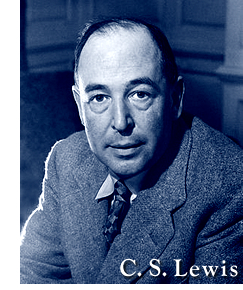
C.S. Lewis Daily – Today’s Reading


Very often the only way to get a quality in reality is to start behaving as if you had it already. That is why children’s games are so important. They are always pretending to be grown-ups—playing soldiers, playing shop. But all the time, they are hardening their muscles and sharpening their wits so that the pretence of being grown-up helps them to grow up in earnest.

Now, the moment you realise ‘Here I am, dressing up as Christ,’ it is extremely likely that you will see at once some way in which at that very moment the pretence could be made less of a pretence and more of a reality. You will find several things going on in your mind which would not be going on there if you were really a son of God. Well, stop them. Or you may realise that, instead of saying your prayers, you ought to be downstairs writing a letter, or helping your wife to wash- up. Well, go and do it.

From Mere Christianity

Compiled in A Year with C.S. Lewis

Night Light for Couples – Shocking with Kindness


“So in everything, do to others what you would have them do to you, for this sums up the Law and the Prophets.” Matthew 7:12

While standing in line at a grocery store checkout a few years ago, I (jcd) noticed that the elderly woman in front of me had filled her cart with more food than she could pay for. “I just don’t understand where my money is,” she said as she desperately searched the depths of her purse. I whispered to the checker, “Total her bill, then accept whatever money she has, and put the rest on my bill.” I paid an extra eight dollars to make up the difference. The old woman never knew I had helped her, but after she shuffled away, the checker had big tears in her eyes.

“I’ve been doing this work for twenty years,” she said, “and I’ve never seen anyone do something like that before.”

It was no big deal—an insignificant eight dollars—yet kind gestures are so rare today that many people find them shocking. As a husband and wife commissioned to demonstrate God’s compassion to our world, we can make a tremendous impact through simple acts of kindness.

Just between us…

  • What small kindness did I do for you this week that you appreciated?
  • Am I treating you and others around us as kindly as I should?
  • How does “shocking kindness” contribute to our witness for Christ?
  • How can we be shockingly kind more often?

O Lord, Your kindness changed us forever. Your love broke into our lives most unexpectedly. Thank You so much! Empower us to love just like that. Amen.

  • From Night Light For Couples, by Dr. James & Shirley Dobson

Charles Stanley – When We Are Lonely


Hebrews 13:1-5

God created humanity for companionship with Himself and each other. He doesn’t want people to suffer the emotional turmoil of loneliness. That’s why His Word contains pledges of His constant presence as well as instructions to prevent loneliness among church members.

The Lord stressed His unceasing presence because He knows our need for assurance, especially when we feel deserted or isolated. His vow never to forsake believers is found throughout the Bible: This comforting word was spoken to Joshua, the Israelites, and the disciples who were about to witness Jesus’ ascension (Joshua 1:5; Matthew 28:20). Some biblical saints picked up the theme in their writing as well. David often sought God’s solace (Psalms 25:16). And the apostle Paul preached that nothing compared with drawing close to Christ (Philippians 3:8). God wants every believer to trust implicitly that He is near.

The church is designed to meet our need for person-to-person connection. A spiritual body works much like a human body—parts are both independent and interdependent, each needing others in order to function well. We require support from our brothers and sisters in Christ. Knowing this, Paul admonished people to accept one another (Romans 15:7), bear each other’s burdens (Galatians 6:2), and avoid judging (Romans 14:13).

Loneliness can cripple a person emotionally and spiritually. Human beings are not designed to walk through this world alone. We are made for relationship, which God gladly supplies. Lest we forget that the Lord is near, He gave the Bible this consistent theme: I love you and I am with you always.

Our Daily Bread — Tell Your Story


Read: 1 Timothy 1:12-20

Bible in a Year: 2 Kings 13-14; John 2

Your awe-inspiring deeds will be on every tongue; I will proclaim Your greatness. —Psalm 145:6 NLT

Michael Dinsmore, a former prisoner and relatively new Christian, was asked to give his testimony in a prison. After he spoke, some inmates came to him and said, “This is the most exciting meeting we’ve ever been to!” Michael was amazed that God could use his simple story.

In 1 Timothy, after Paul had charged Timothy to stay the course preaching the gospel (1:1-11), he shared his personal testimony to encourage the young man (vv.12-16). He told about God’s mercy in his own life. Paul said that he had mocked the Lord, but He changed him. In His mercy, God not only counted him faithful and gave him a job to do, but He also enabled him to do His work (v.12). Paul considered himself the worst of sinners, but God saved him (v.15).

The Lord is able! That is what Paul wanted Timothy to see, and what we need to see too. Through Paul’s testimony, we see God’s mercy. If God could use someone like Paul, He can use us. If God could save the worst of sinners, then no one is beyond His reach.

Our story of God’s work in our lives can encourage others. Let those around you know that the God of the Bible is still at work today! —Poh Fang Chia

Father, thank You for the salvation You offer and that no one, including me, is beyond the reach of Your mercy, grace, and transforming power. Help me share my story with others so that people can see Your love.

No one is beyond the reach of God’s love.

INSIGHT: Before Paul’s conversion he put Christian believers in prison and was present for at least one murder—that of Stephen, who was stoned for preaching about Christ (Acts 7:59–8:1). Yet after his conversion Paul sums up his former life in just three words, telling Timothy that he was “a blasphemer, a persecutor, and an insolent man” (1 Tim. 1:13). He then tells what God has done for him (vv. 13-17), reminding us that it is not who we were that is important; it is what God has done for us.

Ravi Zacharias Ministry – The March of Easter


Romans 8:1-2.

When I imagine the women who came to the tomb to see the body of Jesus the day after he was crucified, I understand their sickened panic. The body had been taken somewhere unbeknownst and unknown to them. It was out of their sight, out of their care. He was out of their sight—not an empty shell, not “just” a body, but the one they loved. Mary Magdalene was devastated. She ran to Peter in horror: “They have taken the Lord out of the tomb, and we don’t know where they have put him!”

There is something about the human spirit that inherently seems to understand the importance of caring for the dead, of moving them carefully from the place of death to a place of rest, finality, and farewell. What we have come to know commonly as the funeral is based on this fundamentally human behavior. It is understood that the dead cannot remain among the living, and yet their removal from society is never a task met with levity. Evidences of tender ceremony are noted in the oldest human burial sites ever found.(1) This movement of the dead from the place of the living to a place of parting is full of tremendous symbolic meaning.

For British statesman and avowed atheist Roy Hattersley, this meaning and symbolism has been a complicated part of the imagination with which he views the world. For years he has disapproved of the funeral service, finding it a paradoxical attempt to soften the blow of utter darkness, with clergy fulsome about the dead man’s virtues and discreet about his vices, and congregations gathered more as a matter of form than feeling. In the mind (or at the funeral) of one who remains committed to the unpleasant truth that life simply ends as haphazardly as it began, there is no room or reason for the promise of resurrection and the pomp of certain comfort.

And yet, Hattersley writes in The Guardian of an experience that almost converted him to the belief that funerals ought to be encouraged nonetheless. His conclusion was forged as he sang the hymns and studied the proclamations of a crowd that seemed sincere: “[T]he church is so much better at staging farewells than non-believers could ever be,” he writes. “‘Death where is thy sting, grave where is they victory?‘ are stupid questions. But even those of us who do not expect salvation find a note of triumph in the burial service. There could be a godless thanksgiving for and celebration of the life of [whomever]. The music might be much the same. But it would not have the uplifting effect without the magnificent, meaningless words.”(2)

Hattersley’s attempt to remain consistent from his views of life to his experience of death is admirable. For it is indeed peculiar that an uncompromising atheist can conclude there is something almost necessary in a distinctly Christian burial. If what makes for human existence is, in essence, the material, bodies without any inherent facet of the sacred, then the act of moving a body to the place of farewell is far more a matter of mere disposal than hallowed journey. In other words, Hattersley realizes positions like his leave no room for a “decent send-off,” a beautiful, last farewell. And yet, he is far from alone in his need for it. As Thomas Long notes in his comprehensive study of the funeral practice, “[D]eath and the sacred are inextricably entwined.”(3)

The Christian burial is moved by this understanding, taking its cue from no less than the death and resurrection of the human Son of God. Human beings are seen neither as “just” bodies nor as souls in temporary shells, but as dust—indeed, as material—material into which God has breathed life. Human beings are embodied within a story that the Christian funeral tells again and again: Christ has died, Christ is risen, Christ will come again. Because Jesus traveled through death to God before us, Christians believe it possible to make the same journey. Because Christ has journeyed from birth to tomb to the Father, we take this journey again and again with those we love and let go—with both lament and hope.

In this embodied gospel of death and resurrection, suffering and redemption, humanity’s instinctive need to accompany a body from here to there is strikingly met with the particulars of “here” and “there”—namely, life here among the Body of Christ to life resurrected in the presence of the Father. And so, we go the distance with the bodies we love, we accompany them to the grave, we weep at their tombs and we follow them with singing: because it is a journey we do not want to miss.

Jill Carattini is managing editor of A Slice of Infinity at Ravi Zacharias International Ministries in Atlanta, Georgia.

(1) Thomas Long, Accompany Them with Singing: The Christian Funeral (Louisville: Westminster John Knox Press, 2009), 3.

(2) Roy Hattersley, “A Decent Send-off,” The Guardian, January 16, 2006, accessed March 20, 2010, http://www.guardian.co.uk/world/2006/jan/16/religion.uk2.

(3) Thomas Long, Accompany Them with Singing: The Christian Funeral (Louisville: Westminster John Knox Press, 2009), 4.

Alistair Begg – It Is Good


I am with you always.

Matthew 28:20

It is good that there is One who is always the same and who is always with us. It is good that there is one stable rock amidst the billows of the sea of life. Let us not set our soul’s affections upon rusting, moth-eaten, decaying treasures but set our hearts upon Him who remains faithful forever. Let us not build our house upon the moving quicksands of a deceitful world but base our hopes upon this rock that, amid descending rain and roaring floods, shall stand immovably secure.

My soul, I charge you, lay up your treasure in the only secure cabinet; store your jewels where you can never lose them. Put your all in Christ; set all your affections on His person, all your hope in His merit, all your trust in His efficacious blood, all your joy in His presence, and then you may laugh at loss and defy destruction. Remember that all the flowers in the world’s garden fade by turns, and the day comes when nothing will be left but the black, cold earth and death will soon put out your candle.

How sweet to have the sunlight when the candle is gone! The dark flood must soon roll between you and all you have; so join your heart to Him who will never leave you; trust Him who will go with you through the surging current of death’s stream and who will bring you safely to the celestial shore and have you sit with Him in heavenly places forever. In the sorrows of affliction, tell your secrets to the Friend who sticks closer than a brother. Trust all your concerns to Him who can never be taken from you, who will never leave you, and who will never let you leave Him, even “Jesus Christ [who] is the same yesterday and today and forever.”1 “I am with you always” is enough for my soul to live upon no matter who forsakes me.

1) Hebrew 13:8

Devotional material is taken from “Morning and Evening,” written by C.H. Spurgeon, revised and updated by Alistair Begg.

Charles Spurgeon – The form of sound words


“Hold fast the form of sound words, which thou hast heard of me, in faith and love which is in Christ Jesus.” 2 Timothy 1:13

Suggested Further Reading: Deuteronomy 6:4-7, 20-25

Let me exhort you, as much as lies in you, to give your children sound instruction in the great doctrines of the gospel of Christ. I believe that what Irving once said is a great truth. He said, “In these modern times you boast and glory, and you think yourselves to be in a high and noble condition, because you have your Sabbath-schools and British-schools, and all kinds of schools for teaching youth. I tell you,” he said, “that philanthropic and great as these are, they are the ensigns of your disgrace; they show that your land is not a land where parents teach children at home. They show you there is a want of parental instruction; and though they be blessed things, these Sabbath-schools, they are indications of something wrong, for if we all taught our children there would be no need of strangers to say to our children ‘Know the Lord.’” I trust you will never give up that excellent puritanical habit of catechising your children at home. Any father or mother who entirely gives up a child to the teaching of another has made a mistake. There is no teacher who wishes to absolve a parent from what he ought to do himself. He is an assistant, but he was never intended to be a substitute. Teach your children; bring out your old catechisms again, for they are, after all, blessed means of instruction, and the next generation shall outstrip those that have gone before it; for the reason why many of you are weak in the faith is this, you did not receive instruction in your youth in the great things of the gospel of Christ. If you had, you would have been so grounded, and settled, and firm in the faith, that nothing could by any means have moved you.

For meditation: Faithful teaching from his mother and grandmother had prepared Timothy for his further education from the apostle Paul (Acts 16:1-3; 2 Timothy 1:5, 3:14-15).

Sermon no. 79
11 May (1856)

John MacArthur – Leading Others to Christ (Andrew)


The twelve apostles included “Andrew” (Matt. 10:2).

Leading others to Christ should be a top priority in your life.

Andrew was Peter’s brother and a native of Bethsaida of Galilee. From the very start we see him leading people to Christ—beginning with his own brother.

The gospel of John records his first encounter with Jesus: “John [the Baptist] was standing with two of his disciples (Andrew and John), and he looked upon Jesus as He walked, and said, ‘Behold, the Lamb of God!’ And the two disciples heard him speak, and they followed Jesus. . . . One of the two who heard John speak, and followed Him, was Andrew, Simon Peter’s brother. He found first his own brother Simon, and said to him, ‘We have found the Messiah’ (which translated means Christ). He brought him to Jesus” (John 1:35-37, 40-42). Later Jesus called both Andrew and Peter to become His disciples, and they immediately left their fishing nets to follow Him (Matt. 4:20).

Our next glimpse of Andrew is in John 6:8-9. It was late in the day and thousands of people who were following Jesus were beginning to get hungry, but there wasn’t enough food to feed them. Then Andrew brought to Jesus a young boy with five barley loaves and two fish. From that small lunch Jesus created enough food to feed the entire crowd!

Andrew also appears in John 12:20-22, which tells of some Greeks who were traveling to Jerusalem to celebrate the Passover feast. They came to Philip and requested to see Jesus. Philip took them to Andrew, who apparently took them to Jesus.

Andrew didn’t always know how Jesus would deal with a particular person or situation, but he kept right on bringing them to Him anyway. That’s a characteristic every believer should have. Your spiritual gifts might differ from others, but your common goal is to make disciples (Matt. 28:19-20), and that begins with leading sinners to Christ. Make that your priority today!

Suggestions for Prayer; When was the last time you told an unbeliever about Jesus? Pray for an opportunity to do so soon.

For Further Study; Do you know how to present the gospel clearly and accurately? As a review read Romans 3:19-28, 1 Corinthians 15:1-8, Ephesians 2:8-10, and Titus 3:4-7.

Joyce Meyer – Doing Things God’s Way


I am the Way. John 14:6

Many people are hurting so badly, and they are crying out for help. The problem is, they are not willing to receive the help they need from God. No matter how much we may want or need help, we are never going to receive it until we are willing to do things God’s way. In John 14:6, Jesus said, “I am the Way.” What Jesus meant when He said, “I am the Way,” is that He has a certain way of doing things; and if we will submit to His way, everything will work out for us.

But so often we wrestle and struggle with Him, trying to get Him to do things our way. It just won’t work. Countless times have people have stood in front of me at the altar and told me all kinds of terrible things that are going on in their lives and how badly they are hurting, yet they absolutely refuse to do what they are told to do to receive the help they need. Too often people are trying to find some other way to get help rather than by doing things God’s way.

The Bible plainly teaches that if we will learn and act on the Word, God will bless our lives. Let me give you an example. The Bible teaches that we are to live in harmony and peace with others and to forgive those who have done us wrong. If we refuse to do that, what hope do we have of receiving what we need?

I remember how difficult it was for me the first time the Lord told me I had to go to my husband and tell him I was sorry for being rebellious against him. I thought I would die on the spot! I realize that one reason we don’t always do what we are told to do in the Word of God is because it is hard.

If we don’t do what we can do, then God won’t do what we can’t do. If we will do what we can do, God will do what we can’t do. It’s just that simple.

Campus Crusade for Christ; Bill Bright – Recognizing False Teachers


“Beware of false teachers who come disguised as harmless sheep, but are wolves and will tear you apart. You can detect them by the way they act, just as you can identify a tree by its fruit. You need never confuse grapevines with thorn bushes or figs with thistles” (Matthew 7:15,16). 

The secular press frequently quoted a famous professor in one of the most prestigious theological seminaries in the world, referring to him as the Protestant theologian of our time. As I talked with two of his students, whom I had the privilege of introducing to Christ, I asked, “What is your impression of Professor So-and-so?” They replied, “If the Bible is true, he is not a Christian.”

They went on to explain that he denied the deity of Christ, the authority of Scripture and all the basic tenets of the Christian faith. Yet he was so subtle, so brilliant and profound, that many pastors and Christian leaders who were not biblically oriented were deceived and looked upon him as a great scholar and theologian.

However, after he died, his wife wrote a highly revealing book in which she described his many sexual exploits as well as his other wrongdoings that were inconsistent with what the Bible teaches.

There are many false teachers in the seminaries and pulpits of the world, who represent another master, not our Lord Jesus Christ. They do not preach the inspired Word of God. Often brilliant, loving, gracious, considerate people, they are, nevertheless, well-described by our Lord as false teachers, wolves disguised as harmless sheep.

How can you recognize false teachers? The test is threefold: (1) What is their view of the Lord Jesus Christ? Is He truly the Son of God? Did He die on the cross for our sins? Was He raised from the dead? (2) Do they profess that the Bible is the authority of God, divinely inspired? (3) Do they live lives that are consistent with the teachings of Scripture? Or do they condone practices that are contrary to the Word of God? If they do the latter, beware, for they will rob you of the supernatural resources of God that are available to you.

As you meditate upon the entire passage of scripture for today, ask God to give you a discerning spirit that you may not be deceived by false teachers.

Bible Reading: Matthew 7:13-23

TODAY’S ACTION POINT: I shall meditate upon God’s Word and weigh those who profess to be His followers in light of their view of the Lord Jesus Christ, His holy, inspired Word, and how their lives are a witness to what God’s Word commands us to be I will instruct other believers and non-believers alike to be alert to the influence of false teachers.

Presidential Prayer Team; J.R. – Miracle of Birth


“Did you ever see a cowboy film,” the novelist Marian Keyes was once asked by a friend, “where someone has been caught by the Indians and tied between two wild stallions, each pulling in opposite directions?” “Yes,” Marian said, nodding. “That’s a bit what giving birth is like.”

Who would have said to Abraham that Sarah would nurse children?

Genesis 21:7

For all its pain, there is nothing as miraculous, incredible and hopeful as birth. America was very nearly destroyed by the Civil War, but Abraham Lincoln restored the nation’s spirits for the future when he spoke of a “new birth of freedom” in his Gettysburg Address. In John’s Gospel, Jesus’ concept of being “born again” left Nicodemus in wonderment. “How can a man be born when he is old? Can he enter a second time into his mother‘s womb and be born?” Nicodemus asked the Savior. Abraham’s wife Sarah, far beyond her childbearing years, thought the idea that she would give birth was laughable and ludicrous…until God made it happen.

It’s not too late – for you, for America or for those you love who seem beyond hope. New birth will be possible, even inevitable, when God hears your faithful prayers!

Recommended Reading: John 3:1-16

Greg Laurie – Why God Must Judge


“Say to them: ‘As I live,’ says the LORD God, ‘I have no pleasure in the death of the wicked, but that the wicked turn from his way and live. Turn, turn from your evil ways! For why should you die, O house of Israel?’ “—Ezekiel 33:11

God takes no pleasure in bringing judgment. In the New Testament we find Jesus grieving over the city of Jerusalem and weeping over her: “O Jerusalem, Jerusalem, the one who kills the prophets and stones those who are sent to her! How often I wanted to gather your children together, as a hen gathers her brood under her wings, but you were not willing!” (Luke 13:34).

And in Ezekiel 33, God said, “I have no pleasure in the death of the wicked, but that the wicked turn from his way and live” (verse 11).

Then why does God send judgment? Answer: Because He is a just God. Abraham rightly said, “Shall not the Judge of all the earth do right?” (Genesis 18:25). If people can flagrantly and continually break God’s laws, committing murder and perverting anything and everything that is right and good, would it be right for God to turn away and ignore it? Do you expect God to simply turn a blind eye to all injustice? Or do you expect Him to do something?

“But it is not loving to bring judgment,” someone might say.

Let’s say that you were the parent of a toddler who was playing in your backyard. Suddenly a wolf comes along, and you see that wolf climb over the fence and sprint toward your toddler. What are you going to do? Are you going to run and give that wolf a big hug? No. The wolf has become your enemy because he is trying to hurt your child. Because you love that child, you hate anything that would harm the one you love.

God is saying, in effect, “I love you, and I hate this wickedness and this sin. I want you to turn away from it.” God’s heart aches over our rebellion.

Max Lucado – The Power of Love


May I meddle for a moment? What’s the one thing separating you from joy? How do you fill in this blank: “I will be happy when____?” When I’m healed…when I’m promoted…when I’m married…when I’m single…when I’m rich?  With your answer firmly in mind, answer this. If your dream never comes true, if the situation never changes, would you be happy? If not, then you’re sleeping in the cold cell of discontent.

You need to know what you have in your Shepherd. You have a God who hears you, the power of love behind you, the Holy Spirit within you, and all of heaven ahead of you. If you have the Shepherd, you have grace for every sin, direction for every turn, a candle for every corner, and an anchor for every storm. You have everything you need!

From Traveling Light

Night Light for Couples – Someone Is Listening


“[The righteous] are always generous and lend freely; their children will be blessed.” Psalm 37:26

Be careful what you say in the presence of your babies. That’s the advice of a researcher at Johns Hopkins University, who tells us that children only eight months of age are capable of hearing and remembering words, good and bad. In a study by Dr. Peter Juscyzk, babies were exposed to three recorded stories for a period of about ten days. When they were tested in the lab two weeks later, they clearly recognized the words in the stories but failed to respond to those they hadn’t heard. According to Robin Chapman, a University of Wisconsin language specialist, the study demonstrates that very young children attend to the sounds of language and are able to pick out those that are familiar. Chapman concludes that “a lot of language learning is happening in the first year of life.”

Whether we like it or not, almost everything we say and do is observed and recorded—by the patrolman with a radar gun, by the convenience store video camera, and even by our young children. If our marriage models a spirit of generosity worth imitating, it will lead to blessings for everyone.

Just between us…

  • What are some of your earliest memories of your parents’ words and actions?
  • If we videotaped ourselves, would we be pleased by what we saw?
  • Besides each other, whom do we influence with our everyday words and deeds? Are we modeling a spirit of generosity for them?

Lord, we know that our every action has a tremendous impact on those around us, and we want to be mature, responsible and positive ambassadors for You. Help us glorify You in how we think, act, and speak. Amen.

From Night Light For Couples, by Dr. James & Shirley Dobson

Charles Stanley – Weathering the Storms of Life

Reflecting on the divine purpose in hardship can help us respond to trials in a God-honoring way. Let’s take a moment to fix our attention on the Lord and seek to understand the lessons He wants us to learn through life’s dark moments.

The disciples experienced several “mountaintop moments” in their time with Jesus. But when a storm arose while they were out on the Sea of Galilee, fear took over. Amidst the roaring waves and with the boat rocking, Jesus’ chosen ones failed to recall the lessons they had learned about the power and purposes of their leader. Even the appearance of Christ walking on water didn’t bring immediate relief (Matt. 14:26).

In our own strength, we lack sufficient resources and abilities to meet life’s challenges. So God provides what we need.

When trouble strikes, we sometimes forget our knowledge of God, too. We struggle to recall past answers to prayer, specific guidance provided by the Holy Spirit, and lessons learned in previous crises. Only the present seems real. Our minds spin with future implications, and our troubled emotions inhibit clear thinking.

In our own strength, we lack sufficient resources and abilities to meet life’s challenges. So God provides what we need. Our suffering is never a surprise to the Lord. He knows everything we are going through. More than that, He’s orchestrating our circumstances for His glory and our benefit, according to His good will.

Reflecting on the divine purpose in hardship can help us respond to trials in a God-honoring way. Let’s take a moment to fix our attention on the Lord and seek to understand four lessons He wants us to learn through life’s dark moments:

  1. One purpose for hardship is cleansing. Because of our own “flesh” nature and the self-absorbed world we live in, it’s easy to develop selfish attitudes, mixed-up priorities, and ungodly habits. The pressures that bear down on us from stormy situations are meant to bring these impurities to our attention and direct us to a place of repentance. Our trials are intended to purify and guide us back to godliness, not ruin our lives.
  2. A second reason we face difficulty is so we’ll be compassionate and bring comfort to others. God’s work in our lives is not intended solely for us. It’s designed to reach a world that does not recognize or acknowledge Him. The Lord uses our challenges to equip us for serving others. As we experience suffering, we will learn about God’s sufficiency, His comforting presence, and His strength to help us endure. Our testimony during times of difficulty will be authentic. Those to whom we minister will recognize we know and understand their pain. What credibility would we have with people in crisis if we never experienced a deep need?

He’s orchestrating our circumstances for His glory and our benefit, according to His good will.

  1. Third, God promises us He’ll provide a path through any trial we face. The disciples probably wondered how long the storm would last and whether they would make it safely to shore. Most likely, they wished it never happened. But, had they somehow avoided this storm, they would have missed the demonstration of Jesus’ power over the sea and wind. The frightening situation was transformed into a revelation of the Savior’s divine nature. God wants to make His power known through our trials, as well.
  2. The most important thing He gives us is an awareness of His presence. At first, the disciples believed they were alone in a terrifying storm. When they initially spotted Jesus, their fear increased. They thought He was a ghost. But as they recognized Him, their fear changed to relief and hope. Similarly, we may not sense God’s presence during a crisis. But He has promised to always be with us (Heb. 13:5-6). The assurance that the Lord will never leave provides immediate comfort, an infusion of courage, and a sense of confidence to endure.

No one enjoys suffering. But in the hands of almighty God, trials become tools. He uses hardship to shape believers into the people He intends them to be. Jesus allowed the disciples to experience the fear and anxiety of being in a boat on a raging sea. He permitted them to suffer because He had something far more important to teach them. He wanted the disciples to recognize their own helplessness, His sufficiency, and their dependence on Him.

Ask God to reveal His abiding presence in the midst of your trouble. And remember—He always provides for your spiritual needs to help you both endure and grow stronger in your Christian faith.

Our Daily Bread — No Need Is Too Trivial


Read: Isaiah 49:13-18

Bible in a Year: 2 Kings 10-12; John 1:29-51

As a father pities his children, so the LORD pities those who fear Him. —Psalm 103:13

Several mothers of small children were sharing encouraging answers to prayer. Yet one woman said she felt selfish about troubling God with her personal needs. “Compared with the huge global needs God faces,” she explained, “my circumstances must seem trivial to Him.”

Moments later, her little son pinched his fingers in a door and ran screaming to his mother. She didn’t say, “How selfish of you to bother me with your throbbing fingers when I’m busy!” She showed him great compassion and tenderness.

As Psalm 103:13 reminds us, this is the response of love, both human and divine. In Isaiah 49, God said that even though a mother may forget to have compassion on her child, the Lord never forgets His children (v.15). God assured His people, “I have inscribed you on the palms of My hands” (v.16).

Such intimacy with God belongs to those who fear Him and who rely on Him rather than on themselves. As that child with throbbing fingers ran freely to his mother, so may we run to God with our daily problems.

Our compassionate God doesn’t neglect others to respond to our concerns. He has limitless time and love for each of His children. No need is too trivial for Him. —Joanie Yoder

You take great delight in me, Lord, and quiet me with Your love. You rejoice over me with singing, like a mother singing a lullaby over her child. Thank You for Your tender love for me.

God holds His children in the palm of His hand.

INSIGHT: Isaiah has the most messianic references of any Old Testament prophetic book, containing extraordinary prophecies of both Christ’s miraculous birth and His atoning death. Today’s reading begins a section of prophecies about the Divine Servant, highlighted by the description of His suffering in Isaiah 53. This suffering comes to the Servant from God’s own hand and ultimately finds its fulfillment at the cross where Christ bore the sins of the world.

Ravi Zacharias Ministry – Curious Values


One bright spring morning in the early 1630s, a wealthy Dutch merchant was delighted to receive a visit from a sailor bringing a tip-off that a very valuable cargo had just arrived at the docks. As a reward for the information, the merchant presented the sailor with a fine red herring. Whilst the merchant was distracted for a moment, the sailor saw, lying among the debris on the shop counter, what he thought was an onion. Thinking it would go nicely with his fish breakfast, the sailor surreptitiously slipped it into his pocket. That, however, was no onion—it was a Semper Augustus tulip bulb and this was the height of the “Dutch Tulip Craze,” which saw bulbs valued higher than gold and sold for extraordinary sums of money. That one bulb alone was worth three thousand florins (over $1,000)! As soon as he spotted it missing, the furious merchant launched a search of the docks. Finally the sailor was found, sitting happily on a coil of ropes, chewing the last mouthful of his herring and “onion.”(1)

A central idea in economic theory is that something is worth what people are prepared to pay for it, despite it often having no inherent value. Your new mobile communication device may have cost hundreds of dollars but if you’re stranded alone on a desert island, as Tom Hanks found in the movie Cast Away, then your shiny piece of technology becomes completely useless compared to the more mundane basics of life such as food, water, and shelter.

What people are prepared to pay for something, what the market will bear, also tells you a lot about our culture’s priorities, which are often skewed to say the least. We may laugh at the foolishness of Dutch Tulip Mania, but our culture has its own peculiarities which would appear bizarre to anybody from another time and place. What does it say, for example, that in some luxury hotels you can pay $50 for a cup of Black Ivory, one of the world’s most expensive coffees, notable for the fact that the beans from which it has been brewed have been eaten, partially digested, and excreted by elephants?(2)

Our curiously skewed value system is reflected not just in the very expensive but also in the very cheap, even the free. In his book, You Are Not a Gadget, computer scientist and musician Jaron Lanier describes the increasing pressure that our digital culture places on artists, musicians, writers, and filmmakers to make their content available free on the Internet. Thus increasingly the only way to make money online is through advertising. Lanier suggests: If money is flowing to advertising instead of musicians, journalists and artists, then a society is more concerned with manipulation than truth or beauty.(3)

So much for objects, then, but what about people—does our worth and value as human beings derive from what somebody is prepared for pay for us? For example, a world famous sports personality like Tiger Woods earns 1,400 times the salary of the average nurse—what does that say about our culture’s values?(4) If our worth derives from our earning capability, what about those who cannot pay their way, such as children? Perhaps their worth derives from the joy they bring to others? In which case, what about those who have nothing to offer anybody: the very old, the homeless, the chronically disabled?

Realizing that human value and dignity cannot possibly be grounded in economics or utility, the last sixty years have seen politicians, lawyers, and activists push the development of human rights theory, a very different approach to the question. Listen to these powerful words from the 1948 Universal Declaration of Human Rights:

Recognition of the inherent dignity and of the equal and inalienable rights of all members of the human family is the foundation of freedom, justice and peace in the world… All human beings are born free and equal in dignity and rights.(5)

But what’s the basis for this idea; where, in short, is this noble sentiment grounded?(6) Not every worldview can bear the weight. Indeed, I frequently meet atheists who are deeply and passionately committed to causes like human rights, to fighting injustice, to alleviating poverty—in other words, atheists who believe that we are far more than just matter but are persons with inherent worth. The problem is that their assumptions cannot bear the weight of their aspirations. Human rights is too valuable an idea to build on sand, it needs a foundation, a worldview that can support it.

Among all the world’s peoples, the Dalits of India have experienced some of the greatest sadness, pain and persecution. They sit at the bottom of India’s highly stratified caste system, and are considered “untouchable.”(7) Dalit women often bear the brunt of this and two-thirds of them have been sexually abused and 750,000 trafficked into sexual slavery, yet the conviction rate for crimes against Dalits is just 5.3%.(8) How do you change a mind-set that says that a person is quite literally worthless, because of her caste, her family, her birthplace? Words like “all men are born equal” are just fine-sounding platitudes to those who daily experience such discrimination.

One Dalit religious leader summed up the problem in an interview. He said that by the time a child is fourteen, it is too late to change anything, as by then they have been told all of their life that they are worthless. The only way to correct this, he continued, is from a very young age to speak a different worldview into their lives. And the Dalits are finding that it is the biblical worldview, with its profound message that all of us bear God’s image, that is the most powerful corrective.

If you tell a child all their life that they are worthless, there will be implications. Here in the West, we are trying a different sociological experiment: discovering what will happen if you raise a generation of children to believe they are just accidental collocations of atoms, dancing to their DNA, nothing but a pack of neurons.(9) We may be unpleasantly surprised what happens when they become our future leaders and begin acting out that philosophy.

If atheism is true, then talk of “human rights” is meaningless, as nonsensical as assigning great monetary value to a tulip bulb. On the other hand—the Christian worldview, and only the Christian worldview—gives us a genuine basis for true human value, worth, and dignity. Only the Bible tells you that you are made in the image of God and that you are not merely matter, but that do you matter.

Andy Bannister is Canadian director and a member of the speaking team at Ravi Zacharias International Ministries in Toronto, Canada. His forthcoming book The Atheist Who Didn’t Exist: Or the Dreadful Consequences of Bad Arguments will be released by Monarch in July.

(1) The story is found in Charles Mackay, Extraordinary Popular Delusions and the Madness of Crowds, Volume 1 (London: Richard Bentley, 1841), 92-93 and is also retold in William H. Davidow, Overconnected: What the Digital Economy Says About Us (New York: Business Plus, 2011) 111.

(2) Eko Armunanto, ‘Elephant’s-poop coffee: The most expensive coffee – $50 a cup’, Digital Journal, 3 June 2013 (http://digitaljournal.com/article/351469, accessed 30 June 2013).

(3) Jaron Lanier, You Are Not a Gadget (New York: Random House, 2011), 83.

(4) See ‘The World’s Highest Paid Athletes”, Forbes, http://www.forbes.com/athletes/list/ (accessed 30 June 2013). The nurse’s salary was calculated using http://www.payscale.com.

(5) ‘The Universal Declaration of Human Rights’ (http://www.un.org/en/documents/udhr/, accessed 30 June 2013). Quotations from the Preamble and Article 1 (emphasis mine).

(6) See Michael J. Perry, ‘The Morality of Human Rights: A Nonreligious Ground?’, Emory Law Journal 54 (2005), 97-150.

(7) See http://www.dalitfreedom.net/about/about.aspx?page=2

(8) See Luke Harding, ‘Sex hell of Dalit women exposed,’ The Guardian, 9 May 2001 (http://www.guardian.co.uk/world/2001/may/09/lukeharding, accessed 1 July 2013) and http://idsn.org/caste-discrimination/key-issues/dalit-women/.

(9) Bertrand Russell, ‘A Free Man’s Worship,’